
Learning Where and How to Evolve Image-Generation Harnesses
Same model. Smarter harness.



Paper · Project & Gallery · Quick Start · Documentation · 中文
Jiabin Luo1 Yinan Liu2 Chunlei Meng3 Yufei Guo1,*
1 Peking University 2 Beijing University of Technology 3 Fudan University
* Corresponding author
EvoGen-Harness is the official implementation of our generator-agnostic framework for evolving the persistent system around a frozen image generator. Rather than optimizing only prompts or a fixed workflow, it exposes five responsibilities—Policy, Tools, Skills, Middleware, and Memory—to targeted improvement.
TRACE (Trajectory-Relative Attribution and Coordinated Evolution) answers two questions: where should the harness change, and how should it change? It aggregates visual evidence across stochastic executions, uses attribution to focus edit proposals, re-localizes residual failures, and keeps only validated updates. No-Patch is an explicit option when persistent change is not justified.
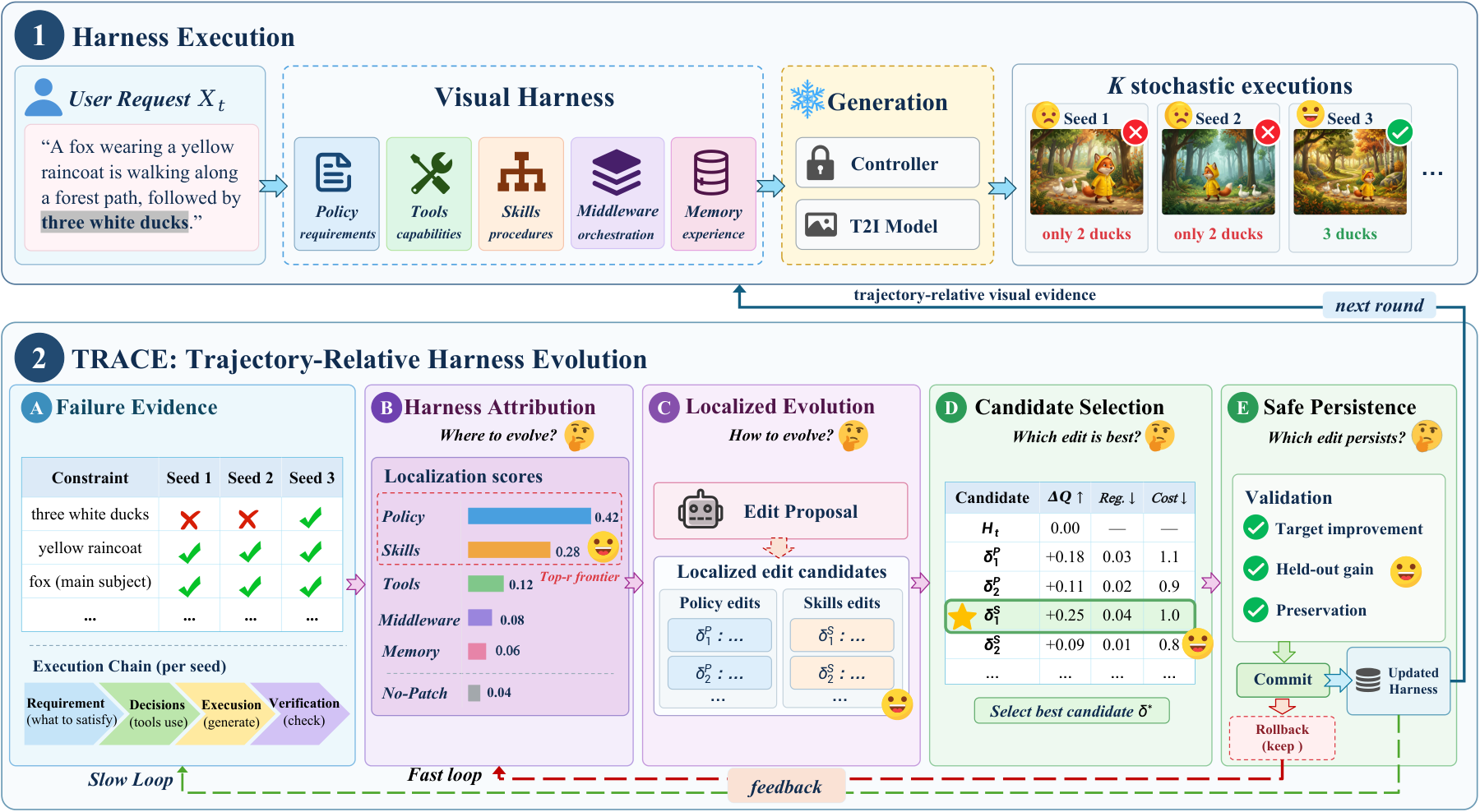
Figure 1 from the technical report. The image generator stays frozen; the external harness is what evolves.
| Responsibility | What evolves |
|---|---|
| Policy | Visual requirements, constraint interpretation, and priorities |
| Tools | Capability and limitation records—not tool implementations or model weights |
| Skills | Reusable procedures, prompt templates, and decomposition strategies |
| Middleware | Routing, verification, retry, and termination configuration |
| Memory | Persistent experience, failure patterns, and validated corrective knowledge |
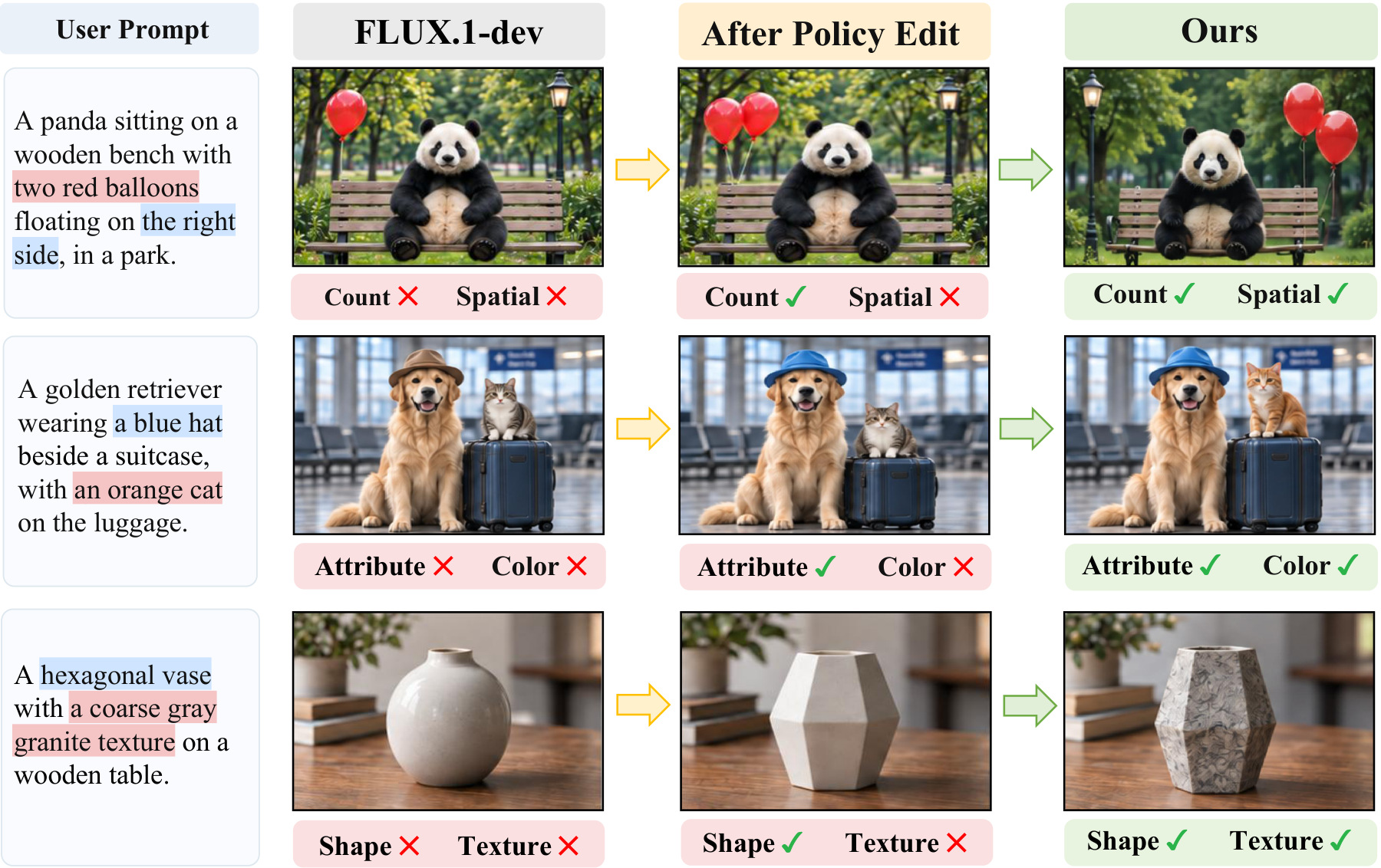
Figure 4: successive updates repair different visual constraints without changing generator weights. Explore the interactive comparisons for a closer look.
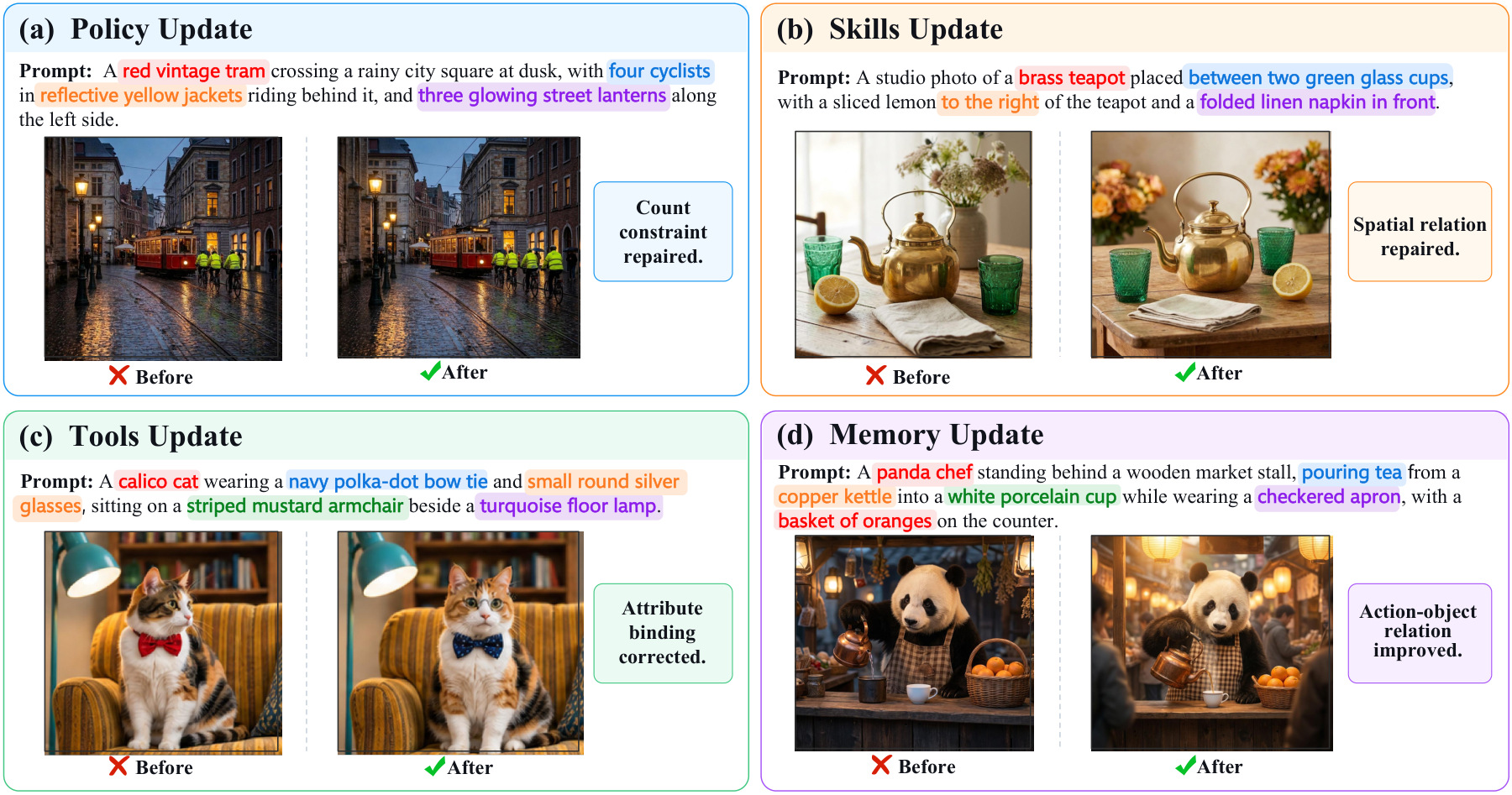
Figure 6: different persistent failures lead to different localized edits.
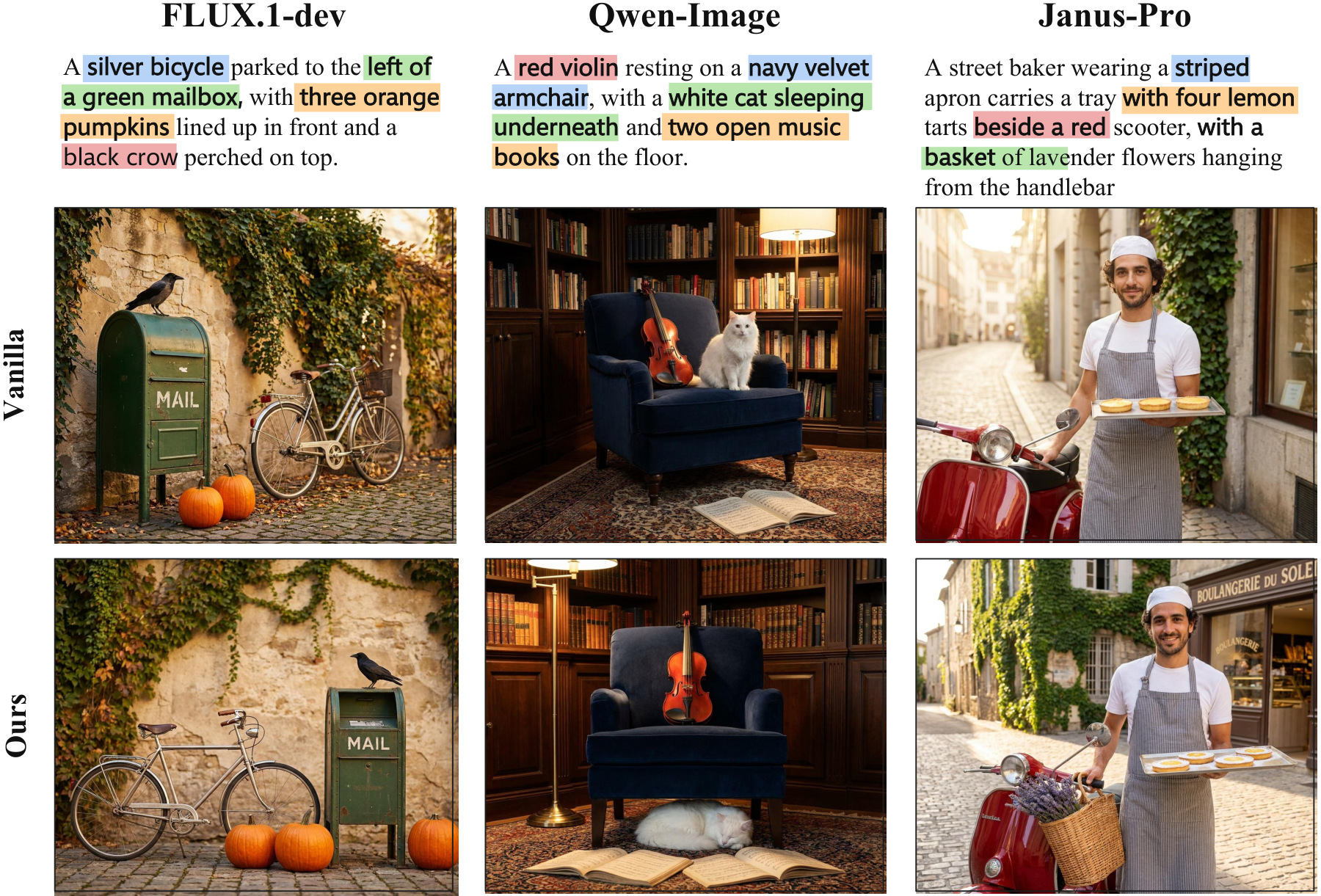
Figure 7: each frozen backbone is adapted separately. This is not a claim of zero-shot transfer of one final harness across all generators.
Overall scores from Tables 1–3 of the paper. Higher is better; Δ is an absolute score difference, not a percentage improvement.
| Benchmark | Metric | Strongest evaluated baseline | EvoGen-Harness | Δ |
|---|---|---|---|---|
| GenEval2 | Overall Soft-TIFA GM | 0.4456 | 0.7089 | +0.2633 |
| T2I-CompBench++ | Average of 8 metrics | 0.6087 | 0.6807 | +0.0720 |
| WISE | Overall WiScore | 0.6028 | 0.6780 | +0.0752 |
The strongest evaluated baseline in these three tables is Nano Banana. The main EvoGen-Harness configuration uses frozen FLUX.1-dev, GPT-4.1, and OWLv2 + NVILA internal verification. The paper also reports 87.9–91.4% responsibility attribution recall, 94.8% No-Patch accuracy, and 1.9% regression.
These are paper-reported results, not outputs of the CPU quick start below. The comparisons are system-level, not a claim of equal generator backbones or zero additional compute. See Tables 4–5 and 9 for same-backbone comparisons, inference cost, and evolution cost.
Run commands from the repository root. Python 3.11 is the reference version for the supplied GPU environment; the lightweight tools also run on newer Python versions.
git clone https://github.com/King-play/EvoGen-Harness.git
cd EvoGen-Harness
conda create -n genharness python=3.11 -y
conda activate genharness
pip install --upgrade pip
pip install -r requirements.txt
python -m gen_harness.cli --help
python -m pytest -q -rs
python scripts/check_release.py
python scripts/prepare_evolution.py --output runs/quickstart/evolution_tasks.jsonl
The last command validates and combines the included 500 target / 100 held-out / 100 preservation prompts. It does not download or re-sample data. Counts, checksums, disjointness, and the exact-match overlap scope in the supplied manifest are checked before writing a working copy. Details: evolution data.
python -m gen_harness.cli self-evolve-run \
  --harness examples/visual_harness \
  --tasks runs/quickstart/evolution_tasks.jsonl \
  --output-dir runs/quickstart/evolution \
  --backend-config configs/backends/flux1_dev_diffusers.json \
  --inspection-config configs/inspection/composite_owlv2_nvila_strong.json \
  --policy-extractor-config configs/policy_extractors/openai_chat_policy_extractor.json \
  --harness-localizer-config configs/patch_proposers/openai_chat_harness_localizer.json \
  --patch-proposer-config configs/patch_proposers/openai_chat_patch_proposer.json \
  --trace-dataset-protocol paper_p2 \
  --seeds 0,1,2,3 --max-rounds 3 --dry-run-budget
This is a budget-only check: no image generation, no paid API calls, and no harness updates. It checks the 500/100/100 split contract, not the full model environment. Do not simply remove --dry-run-budget before completing runtime setup and the evolution workflow.
Use the GPU installation and environment guide to install the supplied inference dependencies, set model paths, and configure the LLM endpoint. Then start with a small real generation run:
python -m gen_harness.cli generate \
  --dataset geneval2 \
  --harness examples/visual_harness \
  --tasks data/geneval2/geneval2_tasks_prompt_only_smoke32_2026_09_04.jsonl \
  --output-dir runs/geneval2_smoke \
  --backend-config configs/backends/flux1_dev_diffusers.json \
  --inspection-config configs/inspection/composite_owlv2_nvila_strong.json \
  --policy-extractor-config configs/policy_extractors/openai_chat_policy_extractor.json \
  --harness-localizer-config configs/patch_proposers/openai_chat_harness_localizer_fastloop.json \
  --patch-proposer-config configs/patch_proposers/openai_chat_patch_proposer_fastloop.json \
  --seeds 0 --limit 1
This command calls real models and may incur API costs. --limit 1 is a functional smoke test, not a benchmark result. examples/visual_harness is the supplied harness configuration; this release does not identify it as the historical final paper checkpoint.
The two LLM configuration pairs are intentionally distinct: the unsuffixed files are used for persistent TRACE evolution, and the *_fastloop.json files for transient per-request repair. All generation uses internal verification; official benchmark scores are computed separately after generation.
Persistent evolution, generation-time verification, and official scoring are separate stages. The complete three-benchmark workflows are collected below and in the evaluation guide.
After completing runtime setup, select your real archived harness and the official benchmark input locations. The path below is produced by the evolution workflow, not a bundled historical checkpoint:
export EVOGEN_EVAL_HARNESS="artifacts/my_run/final_harness"
Official benchmark labels and scores are never used during generation, localization, proposal, or fast-loop repair. The workflow is always:
Do not use --limit for a full benchmark run. Use it only for smoke tests.
python -m gen_harness.cli build-tasks \
  --dataset geneval2 \
  --benchmark-data /path/to/geneval2_data.jsonl \
  --output data/geneval2/tasks.jsonl

python -m gen_harness.cli generate \
  --dataset geneval2 \
  --harness "$EVOGEN_EVAL_HARNESS" \
  --tasks data/geneval2/tasks.jsonl \
  --output-dir runs/geneval2 \
  --backend-config configs/backends/flux1_dev_diffusers.json \
  --inspection-config configs/inspection/composite_owlv2_nvila_strong.json \
  --policy-extractor-config configs/policy_extractors/openai_chat_policy_extractor.json \
  --harness-localizer-config configs/patch_proposers/openai_chat_harness_localizer_fastloop.json \
  --patch-proposer-config configs/patch_proposers/openai_chat_patch_proposer_fastloop.json

python -m gen_harness.cli export-eval \
  --dataset geneval2 \
  --experiences runs/geneval2/gen_harness_generations.jsonl \
  --benchmark-data /path/to/geneval2_data.jsonl \
  --output runs/geneval2/image_map.json
Then run the official GenEval2 evaluator from $GENHARNESS_GENEVAL2_OFFICIAL_REPO with model weights from $GENHARNESS_GENEVAL2_EVAL_MODEL on runs/geneval2/image_map.json.
python -m gen_harness.cli build-tasks \
  --dataset t2icompbenchpp \
  --dataset-dir /path/to/T2I-CompBench++ \
  --output data/t2icompbenchpp/tasks.jsonl

python -m gen_harness.cli generate \
  --dataset t2icompbenchpp \
  --harness "$EVOGEN_EVAL_HARNESS" \
  --tasks data/t2icompbenchpp/tasks.jsonl \
  --output-dir runs/t2icompbenchpp \
  --backend-config configs/backends/flux1_dev_diffusers.json \
  --inspection-config configs/inspection/composite_owlv2_nvila_t2icompbenchpp.json \
  --policy-extractor-config configs/policy_extractors/openai_chat_policy_extractor.json \
  --harness-localizer-config configs/patch_proposers/openai_chat_harness_localizer_fastloop.json \
  --patch-proposer-config configs/patch_proposers/openai_chat_patch_proposer_fastloop.json

python -m gen_harness.cli export-eval \
  --dataset t2icompbenchpp \
  --tasks data/t2icompbenchpp/tasks.jsonl \
  --experiences runs/t2icompbenchpp/gen_harness_generations.jsonl \
  --manifest-dir runs/t2icompbenchpp/eval_manifests \
  --sample-root runs/t2icompbenchpp/eval_samples \
  --copy
Then run the official T2I-CompBench++ metrics from $GENHARNESS_T2ICOMPBENCHPP_OFFICIAL_REPO with assets from $GENHARNESS_T2ICOMPBENCHPP_ASSET_DIR on runs/t2icompbenchpp/eval_manifests and runs/t2icompbenchpp/eval_samples.
python -m gen_harness.cli build-tasks \
  --dataset wise \
  --benchmark-data /path/to/wise.jsonl \
  --output data/wise/tasks.jsonl

python -m gen_harness.cli generate \
  --dataset wise \
  --harness "$EVOGEN_EVAL_HARNESS" \
  --tasks data/wise/tasks.jsonl \
  --output-dir runs/wise \
  --backend-config configs/backends/flux1_dev_diffusers.json \
  --inspection-config configs/inspection/composite_owlv2_nvila_strong.json \
  --policy-extractor-config configs/policy_extractors/openai_chat_policy_extractor.json \
  --harness-localizer-config configs/patch_proposers/openai_chat_harness_localizer_fastloop.json \
  --patch-proposer-config configs/patch_proposers/openai_chat_patch_proposer_fastloop.json

python -m gen_harness.cli export-eval \
  --dataset wise \
  --tasks data/wise/tasks.jsonl \
  --experiences runs/wise/gen_harness_generations.jsonl \
  --output runs/wise/official_input.jsonl
Then run the official WISE/WiScore evaluator from $GENHARNESS_WISE_OFFICIAL_REPO with model weights from $GENHARNESS_WISE_EVAL_MODEL on runs/wise/official_input.jsonl.
/path/to/... denotes an external benchmark checkout/input that you must supply. The official evaluator variables describe separately installed tools, not automatic scoring triggered by this CLI. Keep the raw output mappings and score files; verify the harness snapshot after generation.
| Goal | Guide |
|---|---|
| Configure GPU, models, endpoint, and credentials | Installation |
| Evolve, snapshot, and freeze a persistent harness | TRACE workflow |
| Prepare and evaluate GenEval2, T2I-CompBench++, and WISE | Evaluation |
| Understand the module boundaries | Architecture |
gen_harness/             Core implementation and CLI
configs/                 Generator, verifier, policy, localizer, and proposer configs
examples/visual_harness/ Supplied five-responsibility harness
examples/tasks/          Small task-schema and usage examples
data/evolution/          P2 500/100/100 files, provenance, and checksums
data/geneval2/           Prompt-only benchmark inputs and smoke subsets
scripts/                 Verifier adapters and release helpers
tests/                   Unit and optional integration tests
assets/readme/           Locally bundled figures, badges, and light/dark logos
documentation/           Setup, evolution, evaluation, and release notes
artifacts/               Documented interface for separately archived real runs
The existing GitHub Pages site remains in docs/ when this code is merged into the live repository. This code archive deliberately does not replace that directory.
@misc{luo2026evogenharness,
  title         = {{EvoGen-Harness}: Learning Where and How to Evolve Image-Generation Harnesses},
  author        = {Jiabin Luo and Yinan Liu and Chunlei Meng and Yufei Guo},
  year          = {2026},
  eprint        = {2610.00383},
  archivePrefix = {arXiv},
  primaryClass  = {cs.LG},
  url           = {https://arxiv.org/abs/2610.00383}
}
Also available as BibTeX and CITATION.cff.
Learning Where and How to Evolve Image-Generation Harnesses
Same model. Smarter harness.
Paper · Project & Gallery · Quick Start · Documentation · 中文
Jiabin Luo1 Yinan Liu2 Chunlei Meng3 Yufei Guo1,*
1 Peking University 2 Beijing University of Technology 3 Fudan University
* Corresponding author
EvoGen-Harness is the official implementation of our generator-agnostic framework for evolving the persistent system around a frozen image generator. Rather than optimizing only prompts or a fixed workflow, it exposes five responsibilities—Policy, Tools, Skills, Middleware, and Memory—to targeted improvement.
TRACE (Trajectory-Relative Attribution and Coordinated Evolution) answers two questions: where should the harness change, and how should it change? It aggregates visual evidence across stochastic executions, uses attribution to focus edit proposals, re-localizes residual failures, and keeps only validated updates. No-Patch is an explicit option when persistent change is not justified.
Figure 1 from the technical report. The image generator stays frozen; the external harness is what evolves.
| Responsibility | What evolves |
|---|---|
| Policy | Visual requirements, constraint interpretation, and priorities |
| Tools | Capability and limitation records—not tool implementations or model weights |
| Skills | Reusable procedures, prompt templates, and decomposition strategies |
| Middleware | Routing, verification, retry, and termination configuration |
| Memory | Persistent experience, failure patterns, and validated corrective knowledge |
Figure 4: successive updates repair different visual constraints without changing generator weights. Explore the interactive comparisons for a closer look.
Figure 6: different persistent failures lead to different localized edits.
Figure 7: each frozen backbone is adapted separately. This is not a claim of zero-shot transfer of one final harness across all generators.
Overall scores from Tables 1–3 of the paper. Higher is better; Δ is an absolute score difference, not a percentage improvement.
| Benchmark | Metric | Strongest evaluated baseline | EvoGen-Harness | Δ |
|---|---|---|---|---|
| GenEval2 | Overall Soft-TIFA GM | 0.4456 | 0.7089 | +0.2633 |
| T2I-CompBench++ | Average of 8 metrics | 0.6087 | 0.6807 | +0.0720 |
| WISE | Overall WiScore | 0.6028 | 0.6780 | +0.0752 |
The strongest evaluated baseline in these three tables is Nano Banana. The main EvoGen-Harness configuration uses frozen FLUX.1-dev, GPT-4.1, and OWLv2 + NVILA internal verification. The paper also reports 87.9–91.4% responsibility attribution recall, 94.8% No-Patch accuracy, and 1.9% regression.
These are paper-reported results, not outputs of the CPU quick start below. The comparisons are system-level, not a claim of equal generator backbones or zero additional compute. See Tables 4–5 and 9 for same-backbone comparisons, inference cost, and evolution cost.
Run commands from the repository root. Python 3.11 is the reference version for the supplied GPU environment; the lightweight tools also run on newer Python versions.
git clone https://github.com/King-play/EvoGen-Harness.git
cd EvoGen-Harness
conda create -n genharness python=3.11 -y
conda activate genharness
pip install --upgrade pip
pip install -r requirements.txt
python -m gen_harness.cli --help
python -m pytest -q -rs
python scripts/check_release.py
python scripts/prepare_evolution.py --output runs/quickstart/evolution_tasks.jsonl
The last command validates and combines the included 500 target / 100 held-out / 100 preservation prompts. It does not download or re-sample data. Counts, checksums, disjointness, and the exact-match overlap scope in the supplied manifest are checked before writing a working copy. Details: evolution data.
python -m gen_harness.cli self-evolve-run \
  --harness examples/visual_harness \
  --tasks runs/quickstart/evolution_tasks.jsonl \
  --output-dir runs/quickstart/evolution \
  --backend-config configs/backends/flux1_dev_diffusers.json \
  --inspection-config configs/inspection/composite_owlv2_nvila_strong.json \
  --policy-extractor-config configs/policy_extractors/openai_chat_policy_extractor.json \
  --harness-localizer-config configs/patch_proposers/openai_chat_harness_localizer.json \
  --patch-proposer-config configs/patch_proposers/openai_chat_patch_proposer.json \
  --trace-dataset-protocol paper_p2 \
  --seeds 0,1,2,3 --max-rounds 3 --dry-run-budget
This is a budget-only check: no image generation, no paid API calls, and no harness updates. It checks the 500/100/100 split contract, not the full model environment. Do not simply remove --dry-run-budget before completing runtime setup and the evolution workflow.
Use the GPU installation and environment guide to install the supplied inference dependencies, set model paths, and configure the LLM endpoint. Then start with a small real generation run:
python -m gen_harness.cli generate \
  --dataset geneval2 \
  --harness examples/visual_harness \
  --tasks data/geneval2/geneval2_tasks_prompt_only_smoke32_2026_09_04.jsonl \
  --output-dir runs/geneval2_smoke \
  --backend-config configs/backends/flux1_dev_diffusers.json \
  --inspection-config configs/inspection/composite_owlv2_nvila_strong.json \
  --policy-extractor-config configs/policy_extractors/openai_chat_policy_extractor.json \
  --harness-localizer-config configs/patch_proposers/openai_chat_harness_localizer_fastloop.json \
  --patch-proposer-config configs/patch_proposers/openai_chat_patch_proposer_fastloop.json \
  --seeds 0 --limit 1
This command calls real models and may incur API costs. --limit 1 is a functional smoke test, not a benchmark result. examples/visual_harness is the supplied harness configuration; this release does not identify it as the historical final paper checkpoint.
The two LLM configuration pairs are intentionally distinct: the unsuffixed files are used for persistent TRACE evolution, and the *_fastloop.json files for transient per-request repair. All generation uses internal verification; official benchmark scores are computed separately after generation.
Persistent evolution, generation-time verification, and official scoring are separate stages. The complete three-benchmark workflows are collected below and in the evaluation guide.
After completing runtime setup, select your real archived harness and the official benchmark input locations. The path below is produced by the evolution workflow, not a bundled historical checkpoint:
export EVOGEN_EVAL_HARNESS="artifacts/my_run/final_harness"
Official benchmark labels and scores are never used during generation, localization, proposal, or fast-loop repair. The workflow is always:
Do not use --limit for a full benchmark run. Use it only for smoke tests.
python -m gen_harness.cli build-tasks \
  --dataset geneval2 \
  --benchmark-data /path/to/geneval2_data.jsonl \
  --output data/geneval2/tasks.jsonl

python -m gen_harness.cli generate \
  --dataset geneval2 \
  --harness "$EVOGEN_EVAL_HARNESS" \
  --tasks data/geneval2/tasks.jsonl \
  --output-dir runs/geneval2 \
  --backend-config configs/backends/flux1_dev_diffusers.json \
  --inspection-config configs/inspection/composite_owlv2_nvila_strong.json \
  --policy-extractor-config configs/policy_extractors/openai_chat_policy_extractor.json \
  --harness-localizer-config configs/patch_proposers/openai_chat_harness_localizer_fastloop.json \
  --patch-proposer-config configs/patch_proposers/openai_chat_patch_proposer_fastloop.json

python -m gen_harness.cli export-eval \
  --dataset geneval2 \
  --experiences runs/geneval2/gen_harness_generations.jsonl \
  --benchmark-data /path/to/geneval2_data.jsonl \
  --output runs/geneval2/image_map.json
Then run the official GenEval2 evaluator from $GENHARNESS_GENEVAL2_OFFICIAL_REPO with model weights from $GENHARNESS_GENEVAL2_EVAL_MODEL on runs/geneval2/image_map.json.
python -m gen_harness.cli build-tasks \
  --dataset t2icompbenchpp \
  --dataset-dir /path/to/T2I-CompBench++ \
  --output data/t2icompbenchpp/tasks.jsonl

python -m gen_harness.cli generate \
  --dataset t2icompbenchpp \
  --harness "$EVOGEN_EVAL_HARNESS" \
  --tasks data/t2icompbenchpp/tasks.jsonl \
  --output-dir runs/t2icompbenchpp \
  --backend-config configs/backends/flux1_dev_diffusers.json \
  --inspection-config configs/inspection/composite_owlv2_nvila_t2icompbenchpp.json \
  --policy-extractor-config configs/policy_extractors/openai_chat_policy_extractor.json \
  --harness-localizer-config configs/patch_proposers/openai_chat_harness_localizer_fastloop.json \
  --patch-proposer-config configs/patch_proposers/openai_chat_patch_proposer_fastloop.json

python -m gen_harness.cli export-eval \
  --dataset t2icompbenchpp \
  --tasks data/t2icompbenchpp/tasks.jsonl \
  --experiences runs/t2icompbenchpp/gen_harness_generations.jsonl \
  --manifest-dir runs/t2icompbenchpp/eval_manifests \
  --sample-root runs/t2icompbenchpp/eval_samples \
  --copy
Then run the official T2I-CompBench++ metrics from $GENHARNESS_T2ICOMPBENCHPP_OFFICIAL_REPO with assets from $GENHARNESS_T2ICOMPBENCHPP_ASSET_DIR on runs/t2icompbenchpp/eval_manifests and runs/t2icompbenchpp/eval_samples.
python -m gen_harness.cli build-tasks \
  --dataset wise \
  --benchmark-data /path/to/wise.jsonl \
  --output data/wise/tasks.jsonl

python -m gen_harness.cli generate \
  --dataset wise \
  --harness "$EVOGEN_EVAL_HARNESS" \
  --tasks data/wise/tasks.jsonl \
  --output-dir runs/wise \
  --backend-config configs/backends/flux1_dev_diffusers.json \
  --inspection-config configs/inspection/composite_owlv2_nvila_strong.json \
  --policy-extractor-config configs/policy_extractors/openai_chat_policy_extractor.json \
  --harness-localizer-config configs/patch_proposers/openai_chat_harness_localizer_fastloop.json \
  --patch-proposer-config configs/patch_proposers/openai_chat_patch_proposer_fastloop.json

python -m gen_harness.cli export-eval \
  --dataset wise \
  --tasks data/wise/tasks.jsonl \
  --experiences runs/wise/gen_harness_generations.jsonl \
  --output runs/wise/official_input.jsonl
Then run the official WISE/WiScore evaluator from $GENHARNESS_WISE_OFFICIAL_REPO with model weights from $GENHARNESS_WISE_EVAL_MODEL on runs/wise/official_input.jsonl.
/path/to/... denotes an external benchmark checkout/input that you must supply. The official evaluator variables describe separately installed tools, not automatic scoring triggered by this CLI. Keep the raw output mappings and score files; verify the harness snapshot after generation.
| Goal | Guide |
|---|---|
| Configure GPU, models, endpoint, and credentials | Installation |
| Evolve, snapshot, and freeze a persistent harness | TRACE workflow |
| Prepare and evaluate GenEval2, T2I-CompBench++, and WISE | Evaluation |
| Understand the module boundaries | Architecture |
gen_harness/             Core implementation and CLI
configs/                 Generator, verifier, policy, localizer, and proposer configs
examples/visual_harness/ Supplied five-responsibility harness
examples/tasks/          Small task-schema and usage examples
data/evolution/          P2 500/100/100 files, provenance, and checksums
data/geneval2/           Prompt-only benchmark inputs and smoke subsets
scripts/                 Verifier adapters and release helpers
tests/                   Unit and optional integration tests
assets/readme/           Locally bundled figures, badges, and light/dark logos
documentation/           Setup, evolution, evaluation, and release notes
artifacts/               Documented interface for separately archived real runs
The existing GitHub Pages site remains in docs/ when this code is merged into the live repository. This code archive deliberately does not replace that directory.
@misc{luo2026evogenharness,
  title         = {{EvoGen-Harness}: Learning Where and How to Evolve Image-Generation Harnesses},
  author        = {Jiabin Luo and Yinan Liu and Chunlei Meng and Yufei Guo},
  year          = {2026},
  eprint        = {2610.00383},
  archivePrefix = {arXiv},
  primaryClass  = {cs.LG},
  url           = {https://arxiv.org/abs/2610.00383}
}
Also available as BibTeX and CITATION.cff.






