When Activation Steering Works: A Geometric Predictor Across 12 Tasks and Two Model Families
TeX
0
0 commits
updated Jun 7, 2026








Suleman Imdad — M.S. in Artificial Intelligence, Johns Hopkins University (2026)
Code, task corpus, and per-task reports for the steering-taxonomy paper.
Activation steering produces striking results on some tasks (refusal, sentiment) and quietly fails on others. We characterize 12 tasks geometrically ($\bar{\cos}, \sigma$) and empirically ($\Delta$ vs baseline, $\Delta$ vs random-direction control) and derive a three-axis predictive rule that hits 79.2% out-of-sample accuracy across 48 (model, task) pairs from 4 models.
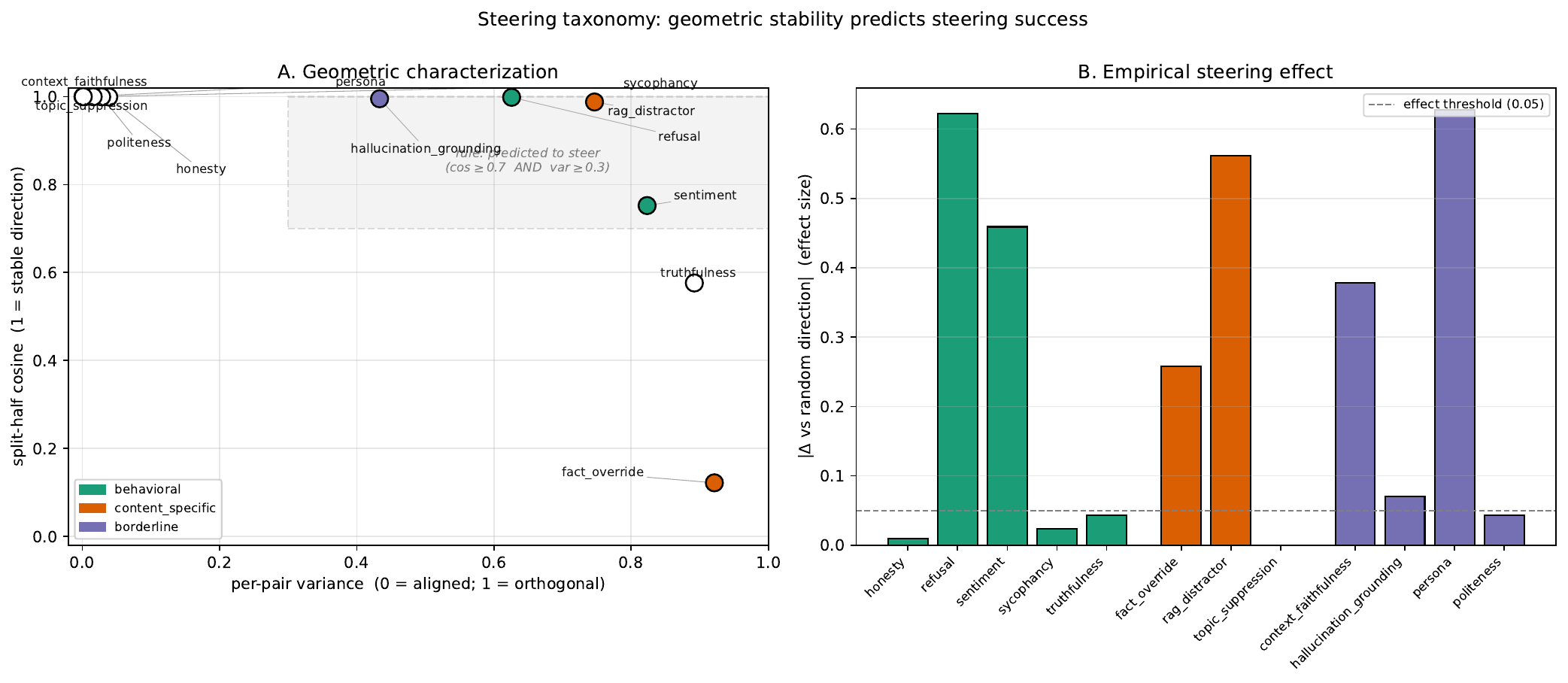
Figure 1. The 12 tasks plotted by their geometric signature
($\bar{\cos}$ vs $\sigma$, left). Filled markers = observed to steer.
Tasks in the shaded "predicted-to-steer" quadrant
(high $\bar{\cos}$ AND high $\sigma$) do steer in 4 of 4 cases; the three
exceptions are context_faithfulness, persona,
and fact_override — discussed below. The right panel ranks
tasks by direction-specific effect size $|\Delta_{\text{rand}}|$.
A unified, controlled protocol across 12 tasks characterizes each contrastive direction along two axes — a geometric axis (split-half cosine $\bar{\cos}$ and per-pair angular variance $\sigma$) and an empirical axis ($\Delta$ vs baseline, $\Delta$ vs random-direction control) — and derives a three-axis predictive rule.
flowchart LR
    A["200 contrastive<br/>pairs (x⁺, x⁻)"] --> B["Forward pass<br/>at layer ℓ"]
    B --> C["per-pair direction<br/>dᵢ = h(x⁺) − h(x⁻)"]
    C --> D["geometric features:<br/><b>cos̄</b>, <b>σ</b>"]
    C --> E["mean direction d̄"]
    E --> F["project d̄ out of<br/>residual stream"]
    F --> G["steered generation"]
    G --> H["empirical features:<br/>Δ vs baseline,<br/>Δ vs random control"]

    D --> R{"cos̄ ≥ 0.7<br/>AND σ ≥ 0.3?"}
    R -->|yes| K(["✅ predicts steer"])
    R -->|no| S{"structurally<br/>asymmetric<br/>contrast?"}
    S -->|yes| K
    S -->|no| N(["⛔ predicts no"])

    H -. validates .-> K
    H -. validates .-> N

    style K fill:#86efac,stroke:#16a34a,color:#000
    style N fill:#fca5a5,stroke:#dc2626,color:#000
    style D fill:#bfdbfe,stroke:#1d4ed8,color:#000
    style H fill:#fde68a,stroke:#ca8a04,color:#000
Cheap to compute — the geometric features cost only forward passes on the contrast pair set, no generation. A practitioner can run the diagnostic in seconds before committing GPU time to a full steered evaluation.
| Claim | Number |
|---|---|
| In-sample predictive-rule accuracy on Llama-3.2-3B-Instruct | 9 / 12 (75%) |
| Pooled out-of-sample LOO across 4 models, 48 (model, task) pairs | 79.2% |
| Cross-model CV (train on 3 models, test on the never-seen 4th) | 75–83% |
| Cross-family geometric agreement, $r(\bar{\cos})$ on every model pair | $\geq +0.998$ |
| Probe-baseline correlation with steering effect | −0.176 (uninformative) |
| Geometric composite $\bar{\cos} \cdot \sigma$ correlation | +0.436 |
| Seed-stability across 3 seeds × 7 tasks, max std of $\Delta_{\text{rand}}$ | 0.014 |
| Mechanism: SAE-feature count vs $\sigma$ on Gemma-2-9B + Gemma-Scope | r = +0.75 |
The full 3-axis rule applied to every task in the corpus:
| Task | Kind | $\bar{\cos}$ | $\sigma$ | Rule | Observed | ✓ |
|---|---|---|---|---|---|---|
refusal | 🧠 behavioral | 1.000 | 0.626 | 🟢 steer | 🟢 steer | ✅ |
sentiment | 🧠 behavioral | 0.752 | 0.823 | 🟢 steer | 🟢 steer | ✅ |
rag_distractor | 📄 content-specific | 0.988 | 0.747 | 🟢 steer | 🟢 steer | ✅ |
hallucination_grounding | ❓ borderline | 0.995 | 0.433 | 🟢 steer | 🟢 steer | ✅ |
context_faithfulness | ❓ borderline | 1.000 | 0.001 | 🟢 steer* | 🟢 steer | ✅ |
persona | ❓ borderline | 1.000 | 0.004 | 🟢 steer* | 🟢 steer | ✅ |
honesty | 🧠 behavioral | 0.999 | 0.039 | 🔴 no | 🔴 no | ✅ |
sycophancy | 🧠 behavioral | 1.000 | 0.016 | 🔴 no | 🔴 no | ✅ |
politeness | ❓ borderline | 1.000 | 0.028 | 🔴 no | 🔴 no | ✅ |
topic_suppression | 📄 content-specific | 1.000 | 0.001 | 🔴 no | 🔴 no | ✅ |
truthfulness | 🧠 behavioral | 0.576 | 0.892 | 🔴 no | 🔴 no | ✅ |
fact_override | 📄 content-specific | 0.122 | 0.921 | 🔴 no | 🟢 steer | ❌ |
11/12 = 91.7% in-sample on the 3-axis rule (geometry + asymmetry).
The 2-axis geometry-only rule gets 9/12 (the paper's headline);
asymmetry rescues context_faithfulness and persona (marked with *).
fact_override is the lone false negative across all 4 models —
its split-half cosine is essentially noise ($0.122 \pm 0.644$) yet
ablation moves the metric off-target (direction-specific perturbation,
not goal-directed steering).
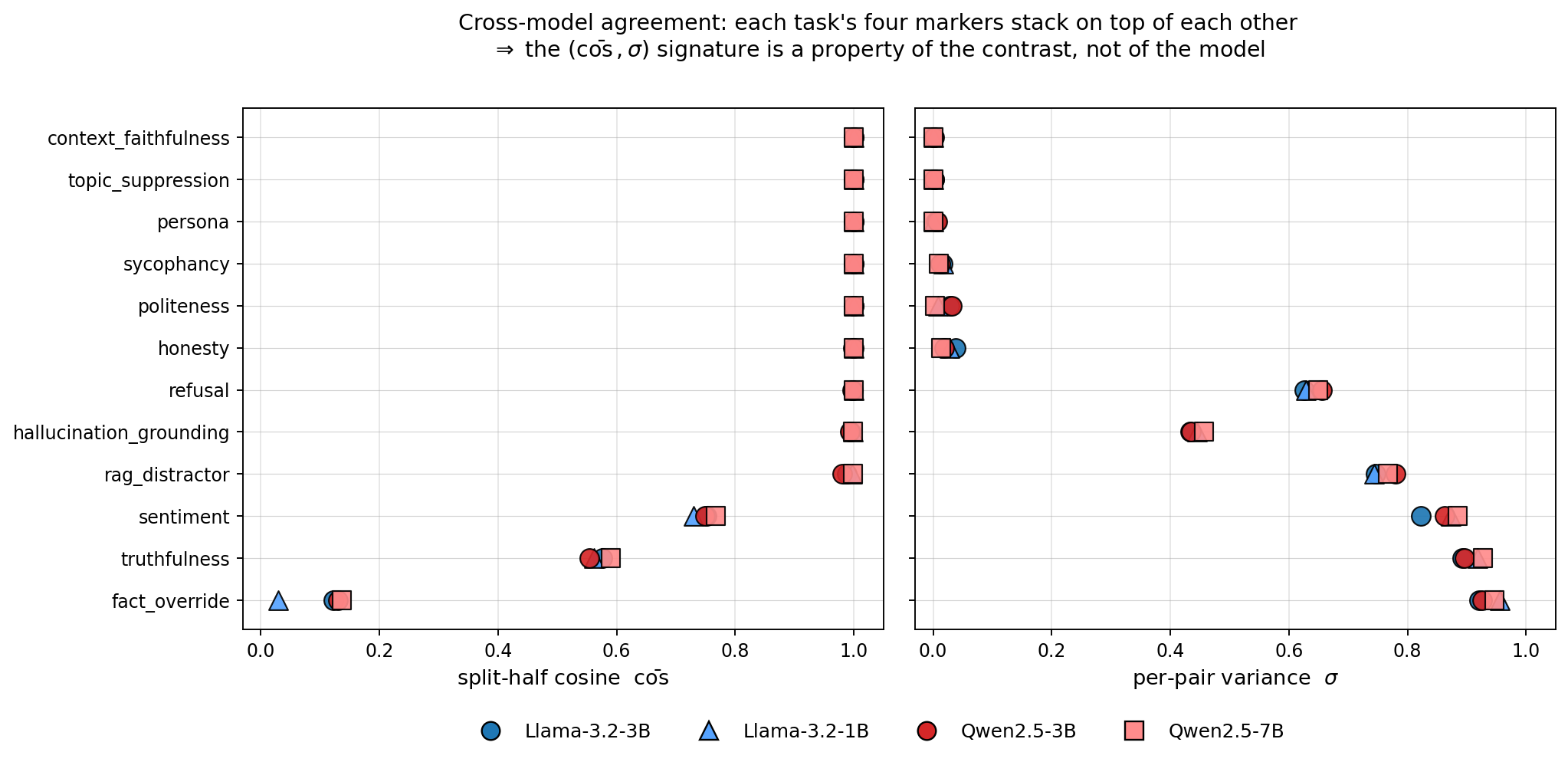
Figure 2. Pairwise comparison of split-half cosine (left) and
per-pair variance (right) between Llama-3.2-3B (the anchor) and the other
three models: Qwen-3B (red), Llama-1B (blue), Qwen-7B (orange). Every
point sits on the $y{=}x$ diagonal within a $\pm 0.05$ band.
$r(\bar{\cos}) \geq +0.998$ and $r(\sigma) \geq +0.999$ for all three
comparisons. A practitioner can compute the geometric diagnostic once
on whatever model is cheapest and accessible, and the result transfers.
steering_taxonomy/           Python package: protocol, runner, 12 task modules
taxonomy_paper.tex           ACL-format LaTeX source for the paper (anonymized)
taxonomy_reports/            Llama-3.2-3B per-task JSON reports
taxonomy_reports_qwen/       Qwen2.5-3B per-task reports
taxonomy_reports_llama1b/    Llama-3.2-1B per-task reports
taxonomy_reports_qwen7b/     Qwen2.5-7B per-task reports
taxonomy_multiseed/          3-seed runs on the 7 headline tasks
loo_cv.py                    LOO + cross-model CV implementation
loo_cv_augmented.json        Full LOO results table (3-axis rule)
probe_baseline.py            Supervised-probe baseline comparison
probe_baseline.json          Per-task probe accuracy + correlations
sae_decompose.py             Gemma-Scope SAE decomposition
sae_decomposition.json       Per-task SAE feature signatures
run_multi_seed.py            Seed-averaging runner
sensitivity_analysis.py      Threshold-plateau sensitivity sweep
analyze_taxonomy.py          Cross-task summary table generator
submissions/                 Four submission-ready paper versions
   arxiv/                    de-anonymized for arXiv
   arr/                      anonymized for ACL Rolling Review
   tmlr/                     TMLR format
   colm/                     COLM 2026 format
# 1. Install
python3.11 -m venv venv && source venv/bin/activate
pip install torch transformers datasets numpy scipy scikit-learn

# 2. Run the protocol on Llama-3.2-3B (1 model, 12 tasks, ~25 min on a 3090)
python -m steering_taxonomy.run \
    --model meta-llama/Llama-3.2-3B-Instruct \
    --layer 7 --n-pairs 200 --n-eval 100 \
    --output-dir taxonomy_reports

# 3. Analyze
python analyze_taxonomy.py                          # summary + accuracy table
python loo_cv.py --pooled --asymmetry               # out-of-sample validation
python probe_baseline.py                            # competing-predictor check

# 4. Cross-family + cross-scale: repeat (2) with --model overrides
#    Qwen2.5-3B at layer 9, Llama-3.2-1B at layer 4, Qwen2.5-7B at layer 7
#    -- all matching ~25% fractional network depth.
python sae_decompose.py \
    --model google/gemma-2-9b-it \
    --layer 9 \
    --sae-repo google/gemma-scope-9b-it-res \
    --sae-path layer_9/width_16k/average_l0_47/params.npz
Per-task directions are projected onto the SAE feature dictionary. The number
of features above 10% of peak coefficient correlates with $\sigma$ at $r=+0.75$:
structural-asymmetry tasks (context_faithfulness, persona) collapse onto
~220 features dominated by a single feature; high-$\sigma$ tasks
(refusal, sentiment, rag_distractor) spread across 1900–3900 features.
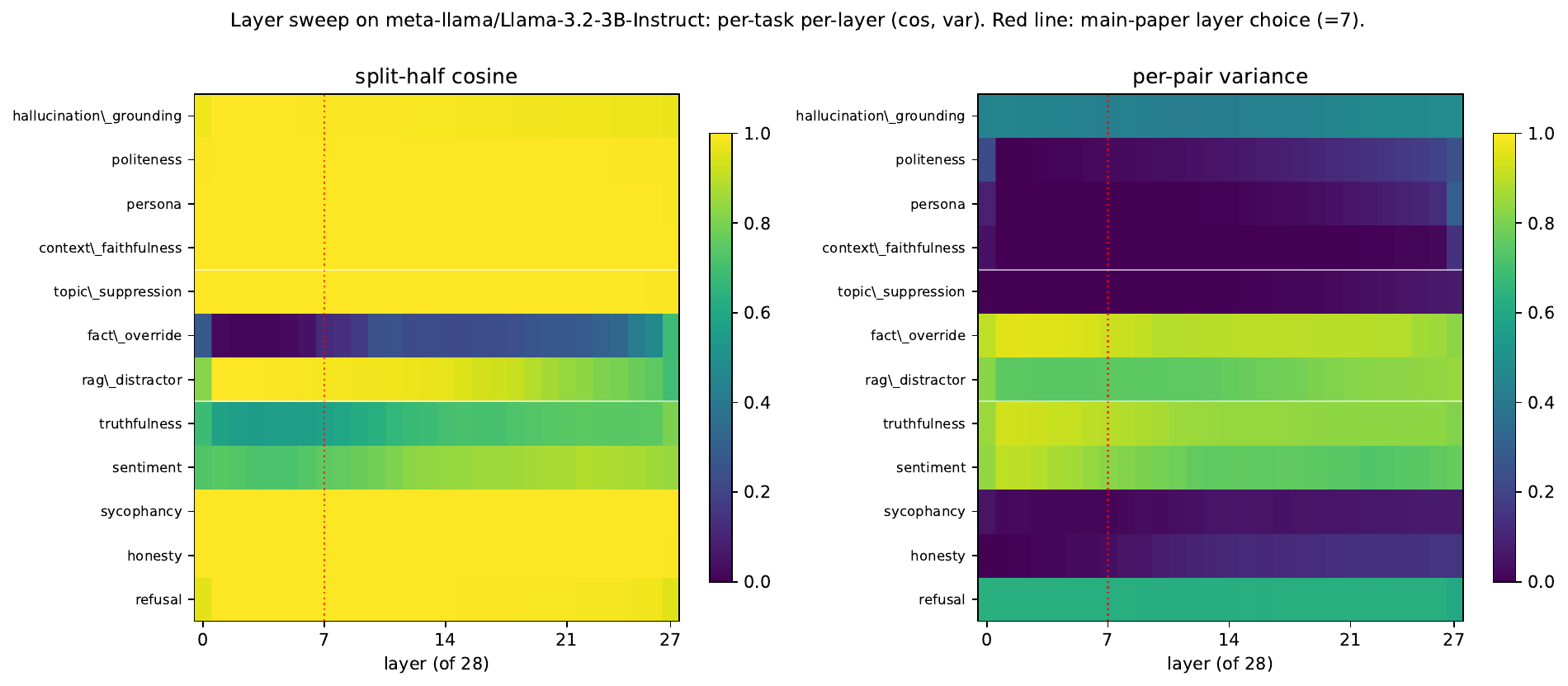
Figure 3. Sweeping all 28 layers of Llama-3.2-3B, the
$(\bar{\cos}, \sigma)$ signature classifies 8/12 tasks identically at
every layer. The remaining four agree with the main result at the
mid-network choice $\ell{=}7$ (red dashed line). The layer choice does
not drive the rule's success.
This repository originally housed MACH-1, an O(1) constant-time
activation-steering approach to RAG distractor suppression
(mach1_paper.tex, project_prototype.ipynb, latency_final.png).
MACH-1's negative pilot result (pilot_real_rag.py) motivated the
controlled cross-task study that became the steering-taxonomy paper
above. The MACH-1 artifacts are preserved in this repository's history.
Final PDF: submissions/arxiv/taxonomy_paper.pdf (de-anonymized for arXiv),
or the corresponding venue version under submissions/.
Per-venue submission instructions: submissions/SUBMISSIONS.md.
MIT — see LICENSE.
@misc{imdad2026steering,
  title  = {When Activation Steering Works:
            A Geometric Predictor Across 12 Tasks and Two Model Families},
  author = {Imdad, Suleman},
  year   = {2026},
  note   = {M.S.\ thesis work, Johns Hopkins University},
  url    = {https://github.com/real1900/o1-repe-rag-research}
}
When Activation Steering Works: A Geometric Predictor Across 12 Tasks and Two Model Families
TeX
0
0 commits
updated Jun 7, 2026
Suleman Imdad — M.S. in Artificial Intelligence, Johns Hopkins University (2026)
Code, task corpus, and per-task reports for the steering-taxonomy paper.
Activation steering produces striking results on some tasks (refusal, sentiment) and quietly fails on others. We characterize 12 tasks geometrically ($\bar{\cos}, \sigma$) and empirically ($\Delta$ vs baseline, $\Delta$ vs random-direction control) and derive a three-axis predictive rule that hits 79.2% out-of-sample accuracy across 48 (model, task) pairs from 4 models.
Figure 1. The 12 tasks plotted by their geometric signature
($\bar{\cos}$ vs $\sigma$, left). Filled markers = observed to steer.
Tasks in the shaded "predicted-to-steer" quadrant
(high $\bar{\cos}$ AND high $\sigma$) do steer in 4 of 4 cases; the three
exceptions are context_faithfulness, persona,
and fact_override — discussed below. The right panel ranks
tasks by direction-specific effect size $|\Delta_{\text{rand}}|$.
A unified, controlled protocol across 12 tasks characterizes each contrastive direction along two axes — a geometric axis (split-half cosine $\bar{\cos}$ and per-pair angular variance $\sigma$) and an empirical axis ($\Delta$ vs baseline, $\Delta$ vs random-direction control) — and derives a three-axis predictive rule.
flowchart LR
    A["200 contrastive<br/>pairs (x⁺, x⁻)"] --> B["Forward pass<br/>at layer ℓ"]
    B --> C["per-pair direction<br/>dᵢ = h(x⁺) − h(x⁻)"]
    C --> D["geometric features:<br/><b>cos̄</b>, <b>σ</b>"]
    C --> E["mean direction d̄"]
    E --> F["project d̄ out of<br/>residual stream"]
    F --> G["steered generation"]
    G --> H["empirical features:<br/>Δ vs baseline,<br/>Δ vs random control"]

    D --> R{"cos̄ ≥ 0.7<br/>AND σ ≥ 0.3?"}
    R -->|yes| K(["✅ predicts steer"])
    R -->|no| S{"structurally<br/>asymmetric<br/>contrast?"}
    S -->|yes| K
    S -->|no| N(["⛔ predicts no"])

    H -. validates .-> K
    H -. validates .-> N

    style K fill:#86efac,stroke:#16a34a,color:#000
    style N fill:#fca5a5,stroke:#dc2626,color:#000
    style D fill:#bfdbfe,stroke:#1d4ed8,color:#000
    style H fill:#fde68a,stroke:#ca8a04,color:#000
Cheap to compute — the geometric features cost only forward passes on the contrast pair set, no generation. A practitioner can run the diagnostic in seconds before committing GPU time to a full steered evaluation.
| Claim | Number |
|---|---|
| In-sample predictive-rule accuracy on Llama-3.2-3B-Instruct | 9 / 12 (75%) |
| Pooled out-of-sample LOO across 4 models, 48 (model, task) pairs | 79.2% |
| Cross-model CV (train on 3 models, test on the never-seen 4th) | 75–83% |
| Cross-family geometric agreement, $r(\bar{\cos})$ on every model pair | $\geq +0.998$ |
| Probe-baseline correlation with steering effect | −0.176 (uninformative) |
| Geometric composite $\bar{\cos} \cdot \sigma$ correlation | +0.436 |
| Seed-stability across 3 seeds × 7 tasks, max std of $\Delta_{\text{rand}}$ | 0.014 |
| Mechanism: SAE-feature count vs $\sigma$ on Gemma-2-9B + Gemma-Scope | r = +0.75 |
The full 3-axis rule applied to every task in the corpus:
| Task | Kind | $\bar{\cos}$ | $\sigma$ | Rule | Observed | ✓ |
|---|---|---|---|---|---|---|
refusal | 🧠 behavioral | 1.000 | 0.626 | 🟢 steer | 🟢 steer | ✅ |
sentiment | 🧠 behavioral | 0.752 | 0.823 | 🟢 steer | 🟢 steer | ✅ |
rag_distractor | 📄 content-specific | 0.988 | 0.747 | 🟢 steer | 🟢 steer | ✅ |
hallucination_grounding | ❓ borderline | 0.995 | 0.433 | 🟢 steer | 🟢 steer | ✅ |
context_faithfulness | ❓ borderline | 1.000 | 0.001 | 🟢 steer* | 🟢 steer | ✅ |
persona | ❓ borderline | 1.000 | 0.004 | 🟢 steer* | 🟢 steer | ✅ |
honesty | 🧠 behavioral | 0.999 | 0.039 | 🔴 no | 🔴 no | ✅ |
sycophancy | 🧠 behavioral | 1.000 | 0.016 | 🔴 no | 🔴 no | ✅ |
politeness | ❓ borderline | 1.000 | 0.028 | 🔴 no | 🔴 no | ✅ |
topic_suppression | 📄 content-specific | 1.000 | 0.001 | 🔴 no | 🔴 no | ✅ |
truthfulness | 🧠 behavioral | 0.576 | 0.892 | 🔴 no | 🔴 no | ✅ |
fact_override | 📄 content-specific | 0.122 | 0.921 | 🔴 no | 🟢 steer | ❌ |
11/12 = 91.7% in-sample on the 3-axis rule (geometry + asymmetry).
The 2-axis geometry-only rule gets 9/12 (the paper's headline);
asymmetry rescues context_faithfulness and persona (marked with *).
fact_override is the lone false negative across all 4 models —
its split-half cosine is essentially noise ($0.122 \pm 0.644$) yet
ablation moves the metric off-target (direction-specific perturbation,
not goal-directed steering).
Figure 2. Pairwise comparison of split-half cosine (left) and
per-pair variance (right) between Llama-3.2-3B (the anchor) and the other
three models: Qwen-3B (red), Llama-1B (blue), Qwen-7B (orange). Every
point sits on the $y{=}x$ diagonal within a $\pm 0.05$ band.
$r(\bar{\cos}) \geq +0.998$ and $r(\sigma) \geq +0.999$ for all three
comparisons. A practitioner can compute the geometric diagnostic once
on whatever model is cheapest and accessible, and the result transfers.
steering_taxonomy/           Python package: protocol, runner, 12 task modules
taxonomy_paper.tex           ACL-format LaTeX source for the paper (anonymized)
taxonomy_reports/            Llama-3.2-3B per-task JSON reports
taxonomy_reports_qwen/       Qwen2.5-3B per-task reports
taxonomy_reports_llama1b/    Llama-3.2-1B per-task reports
taxonomy_reports_qwen7b/     Qwen2.5-7B per-task reports
taxonomy_multiseed/          3-seed runs on the 7 headline tasks
loo_cv.py                    LOO + cross-model CV implementation
loo_cv_augmented.json        Full LOO results table (3-axis rule)
probe_baseline.py            Supervised-probe baseline comparison
probe_baseline.json          Per-task probe accuracy + correlations
sae_decompose.py             Gemma-Scope SAE decomposition
sae_decomposition.json       Per-task SAE feature signatures
run_multi_seed.py            Seed-averaging runner
sensitivity_analysis.py      Threshold-plateau sensitivity sweep
analyze_taxonomy.py          Cross-task summary table generator
submissions/                 Four submission-ready paper versions
   arxiv/                    de-anonymized for arXiv
   arr/                      anonymized for ACL Rolling Review
   tmlr/                     TMLR format
   colm/                     COLM 2026 format
# 1. Install
python3.11 -m venv venv && source venv/bin/activate
pip install torch transformers datasets numpy scipy scikit-learn

# 2. Run the protocol on Llama-3.2-3B (1 model, 12 tasks, ~25 min on a 3090)
python -m steering_taxonomy.run \
    --model meta-llama/Llama-3.2-3B-Instruct \
    --layer 7 --n-pairs 200 --n-eval 100 \
    --output-dir taxonomy_reports

# 3. Analyze
python analyze_taxonomy.py                          # summary + accuracy table
python loo_cv.py --pooled --asymmetry               # out-of-sample validation
python probe_baseline.py                            # competing-predictor check

# 4. Cross-family + cross-scale: repeat (2) with --model overrides
#    Qwen2.5-3B at layer 9, Llama-3.2-1B at layer 4, Qwen2.5-7B at layer 7
#    -- all matching ~25% fractional network depth.
python sae_decompose.py \
    --model google/gemma-2-9b-it \
    --layer 9 \
    --sae-repo google/gemma-scope-9b-it-res \
    --sae-path layer_9/width_16k/average_l0_47/params.npz
Per-task directions are projected onto the SAE feature dictionary. The number
of features above 10% of peak coefficient correlates with $\sigma$ at $r=+0.75$:
structural-asymmetry tasks (context_faithfulness, persona) collapse onto
~220 features dominated by a single feature; high-$\sigma$ tasks
(refusal, sentiment, rag_distractor) spread across 1900–3900 features.
Figure 3. Sweeping all 28 layers of Llama-3.2-3B, the
$(\bar{\cos}, \sigma)$ signature classifies 8/12 tasks identically at
every layer. The remaining four agree with the main result at the
mid-network choice $\ell{=}7$ (red dashed line). The layer choice does
not drive the rule's success.
This repository originally housed MACH-1, an O(1) constant-time
activation-steering approach to RAG distractor suppression
(mach1_paper.tex, project_prototype.ipynb, latency_final.png).
MACH-1's negative pilot result (pilot_real_rag.py) motivated the
controlled cross-task study that became the steering-taxonomy paper
above. The MACH-1 artifacts are preserved in this repository's history.
Final PDF: submissions/arxiv/taxonomy_paper.pdf (de-anonymized for arXiv),
or the corresponding venue version under submissions/.
Per-venue submission instructions: submissions/SUBMISSIONS.md.
MIT — see LICENSE.
@misc{imdad2026steering,
  title  = {When Activation Steering Works:
            A Geometric Predictor Across 12 Tasks and Two Model Families},
  author = {Imdad, Suleman},
  year   = {2026},
  note   = {M.S.\ thesis work, Johns Hopkins University},
  url    = {https://github.com/real1900/o1-repe-rag-research}
}



