
Benchmarking Multi-Agent Debate between Language Models for Truthfulness in Q&A.
Jupyter Notebook
62
7 commits
updated Mar 26, 2026
README
💬 DebateLLM - debating LLMs for truth discovery in medicine and beyond
👀 Overview
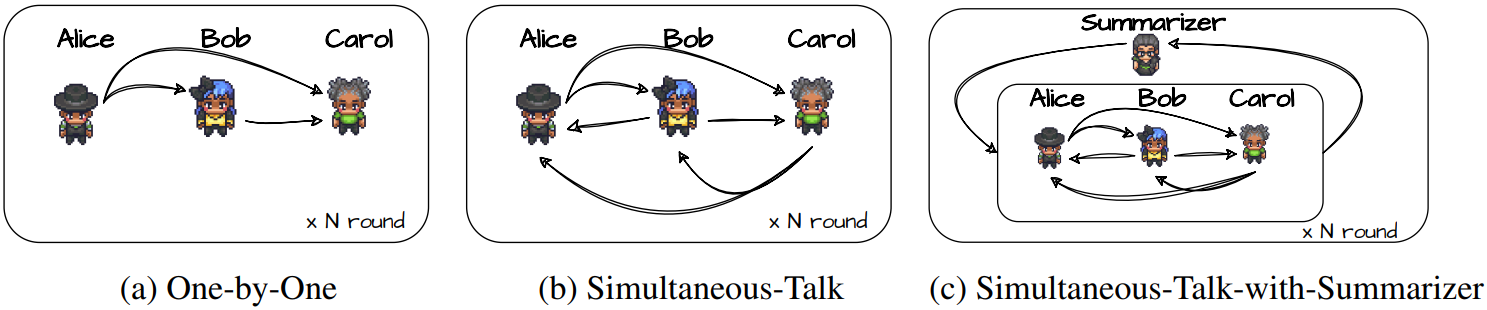
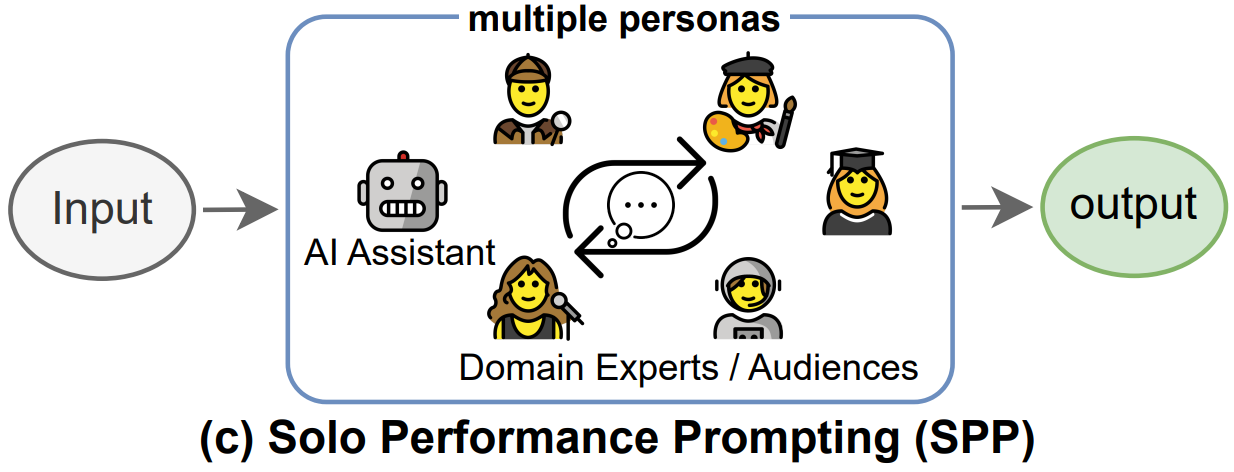
DebateLLM is a library that encompasses a variety of debating protocols and prompting strategies, aimed at enhancing the accuracy of Large Language Models (LLMs) in Q&A datasets.
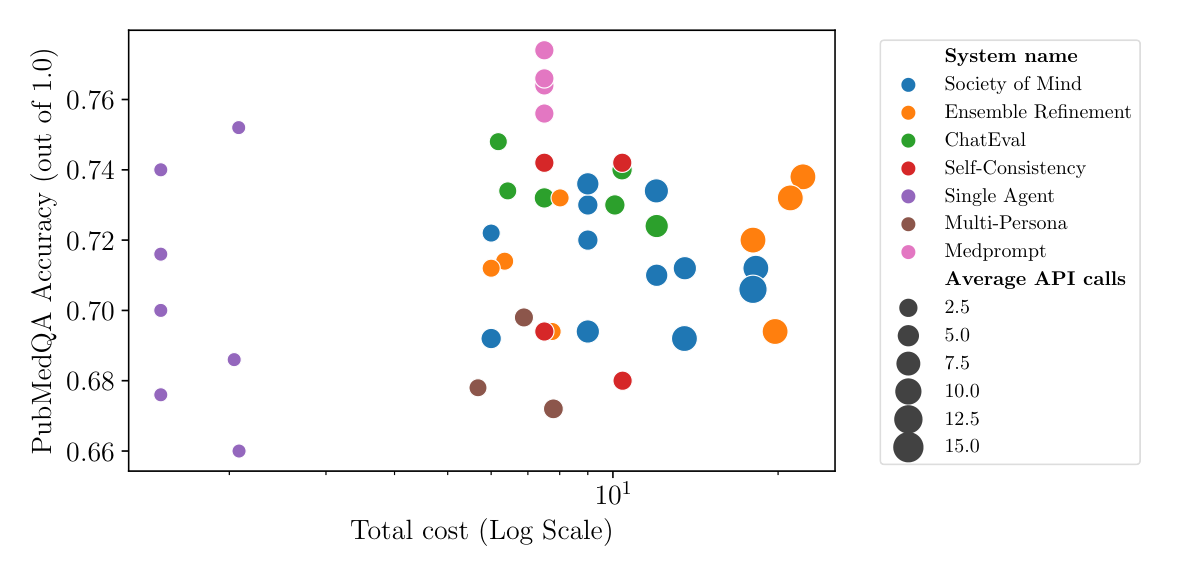
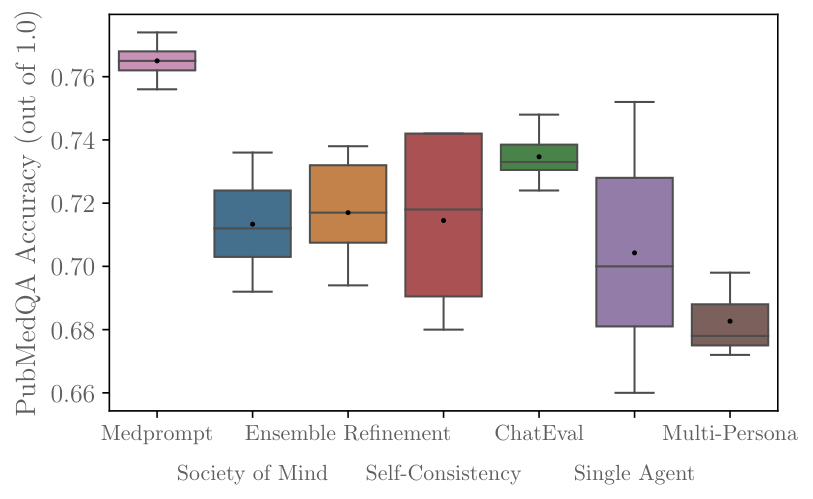
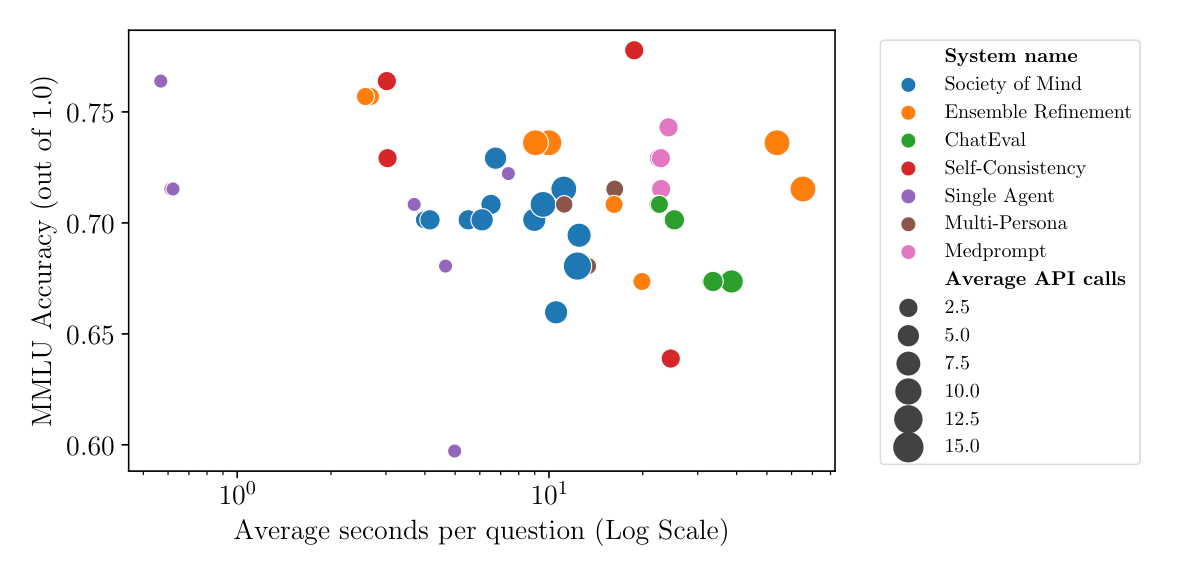
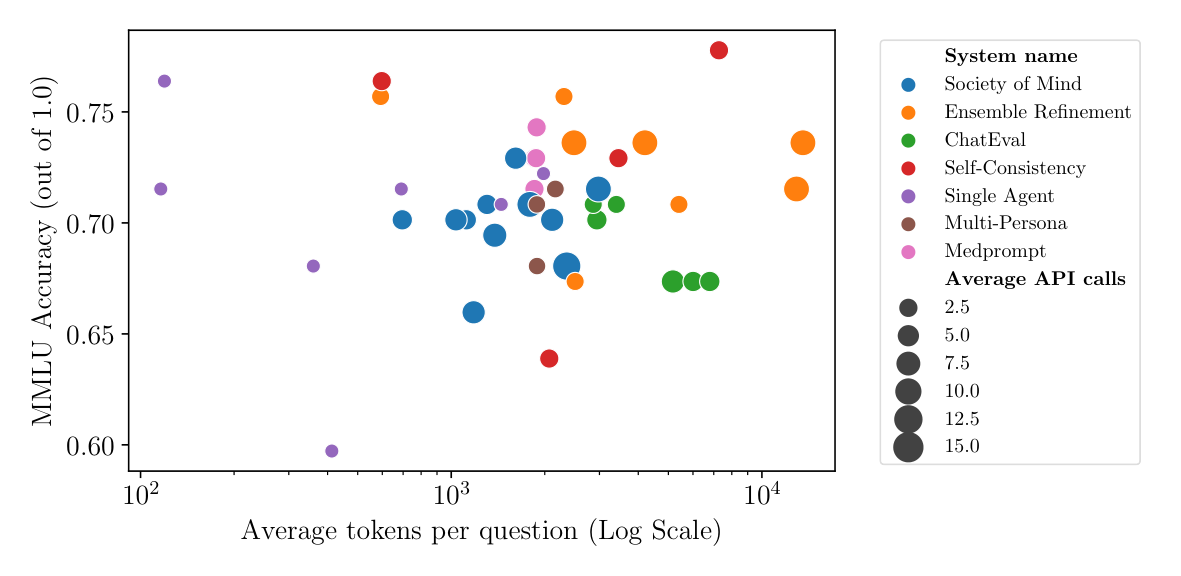
Our research (mostly using GPT-3.5) reveals that no single debate or prompting strategy consistently outperforms others across all scenarios. Therefore it is important to experiment with various approaches to find what works best for each dataset. However, implementing each protocol can be time-consuming. We therefore built and open-sourced DebateLLM to facilitate its use by the research community. It enables researchers to test various implementations from the literature on their specific problems (medical or otherwise), potentially driving further advancements in the intelligent prompting of LLMs.
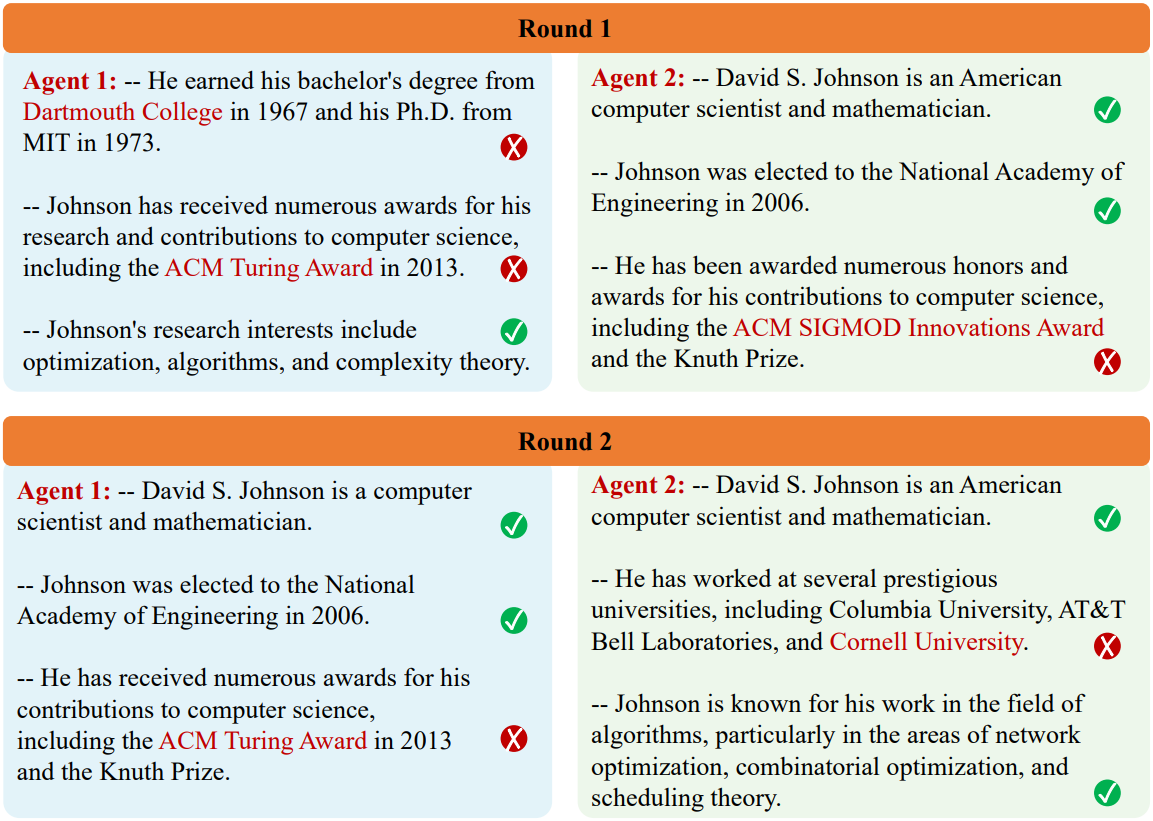
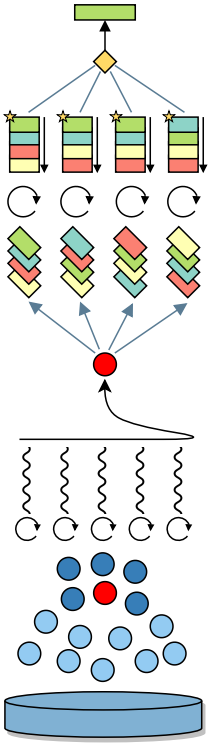
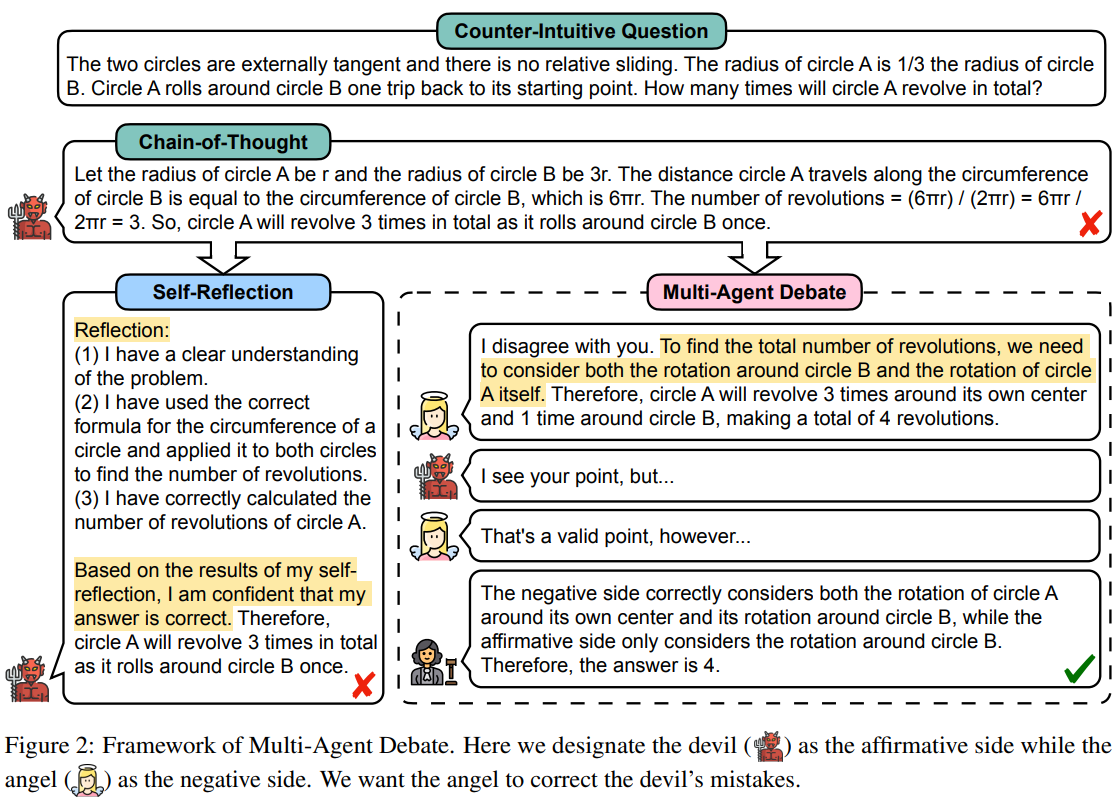
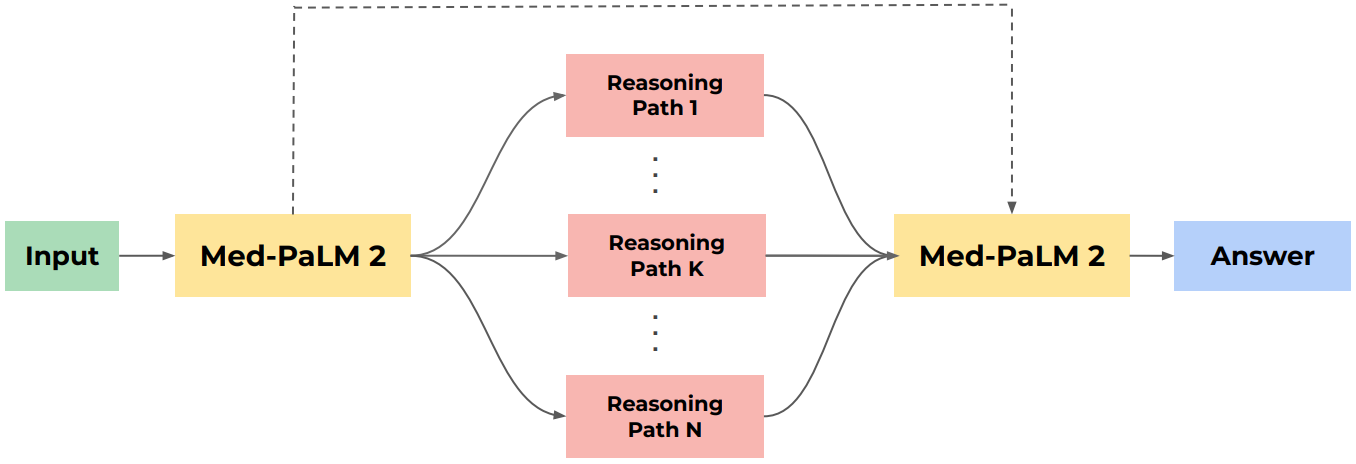
We have various system implementations:
🔧 Installation
To set up the DebateLLM environment, execute the following command:
make build_venv
🚀 Running an Experiment
To run an experiment:
-
Activate the Python virtual environment:
source venv/bin/activate -
Execute the evaluation script:
python ./experiments/evaluate.pyYou can modify experiment parameters by using Hydra configs located in the
conffolder. The main configuration file is found underconf/config.yaml. Changes at the database and system levels can be made by updating the configs inconf/datasetandconf/system.
To launch multiple experiments:
python ./scripts/launch_experiments.py
📊 Visualising Results
To visualize the results with Neptune:
- Run the visualisation script:
python ./scripts/visualise_results.py - The output results will be saved to ./data/charts/.
📊 Benchmarks
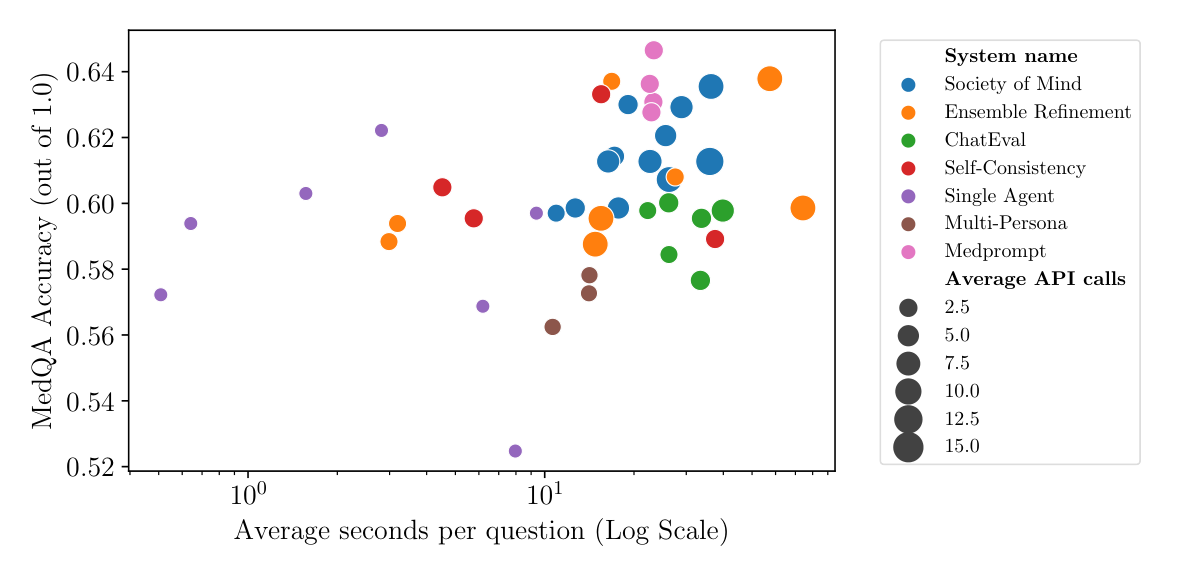
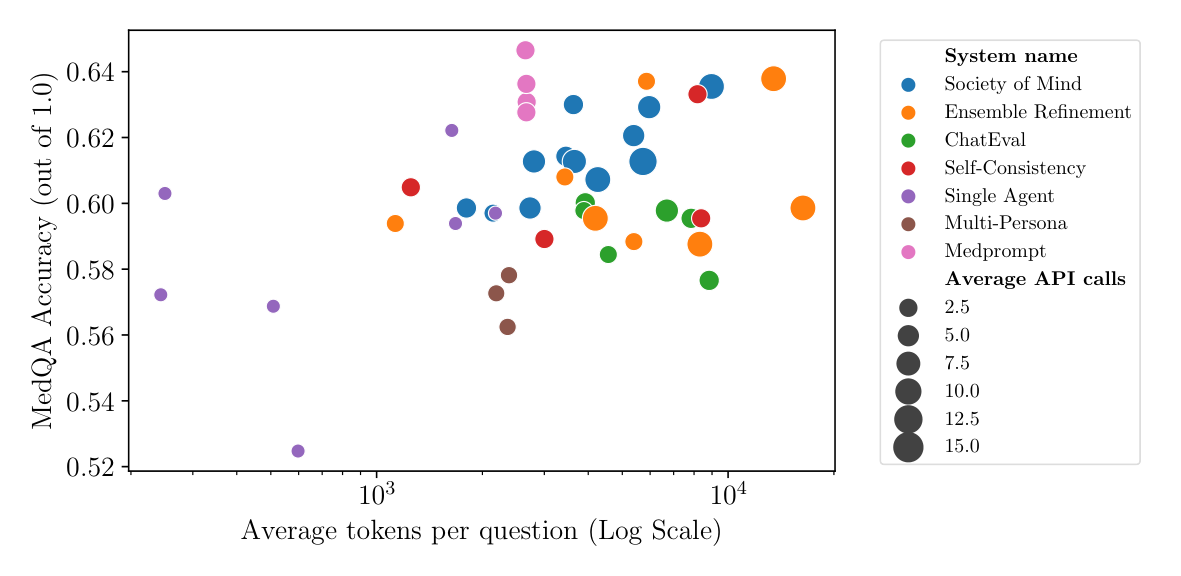
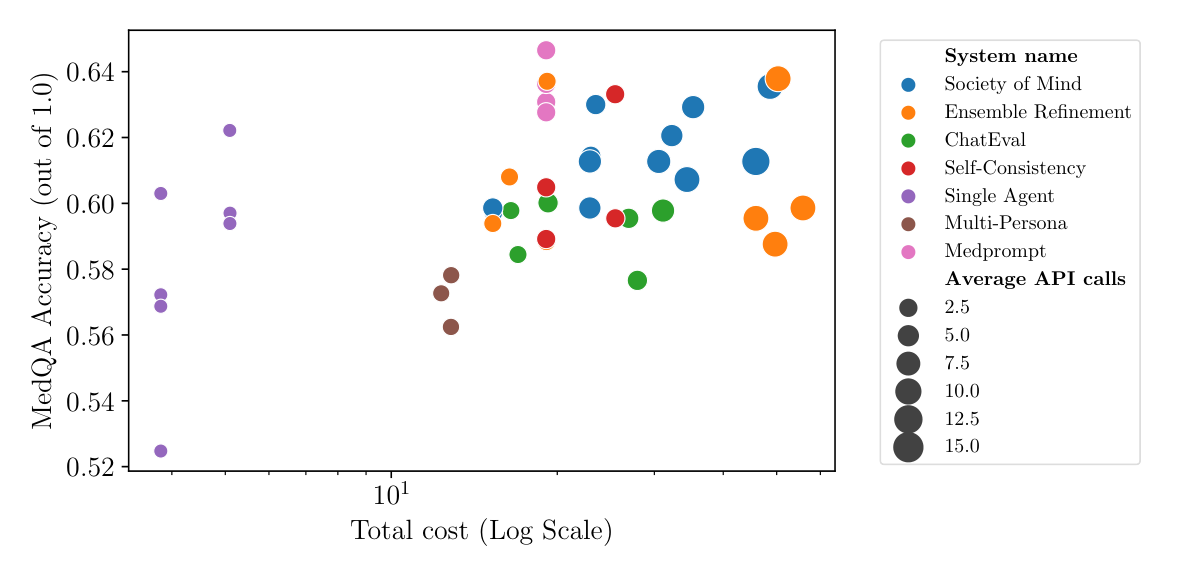
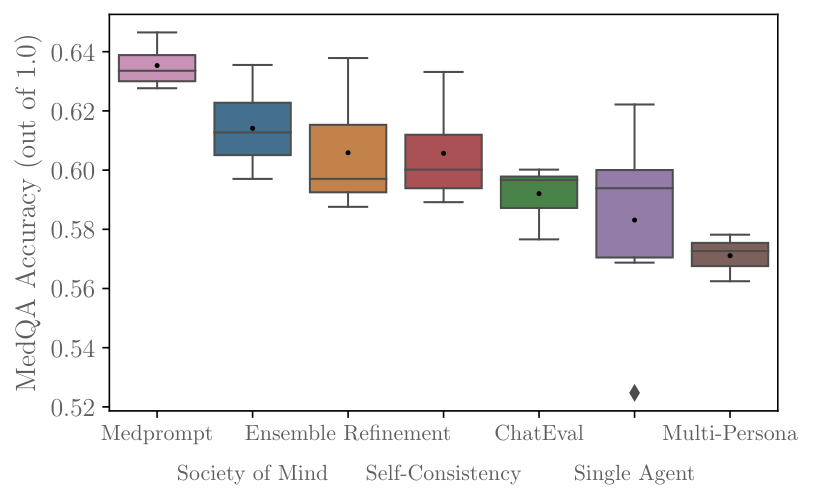
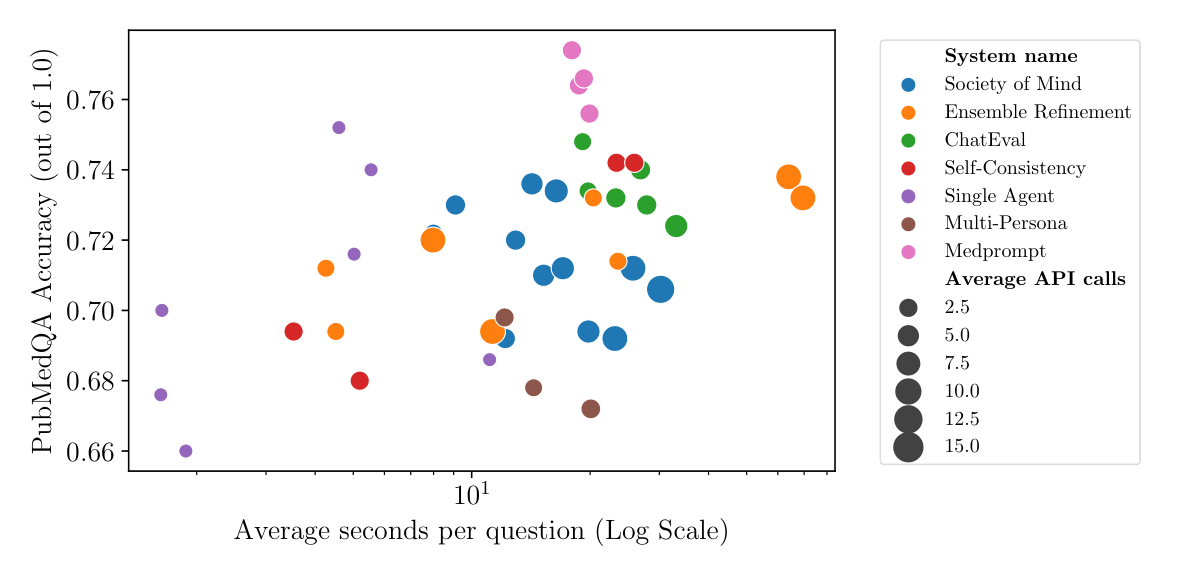
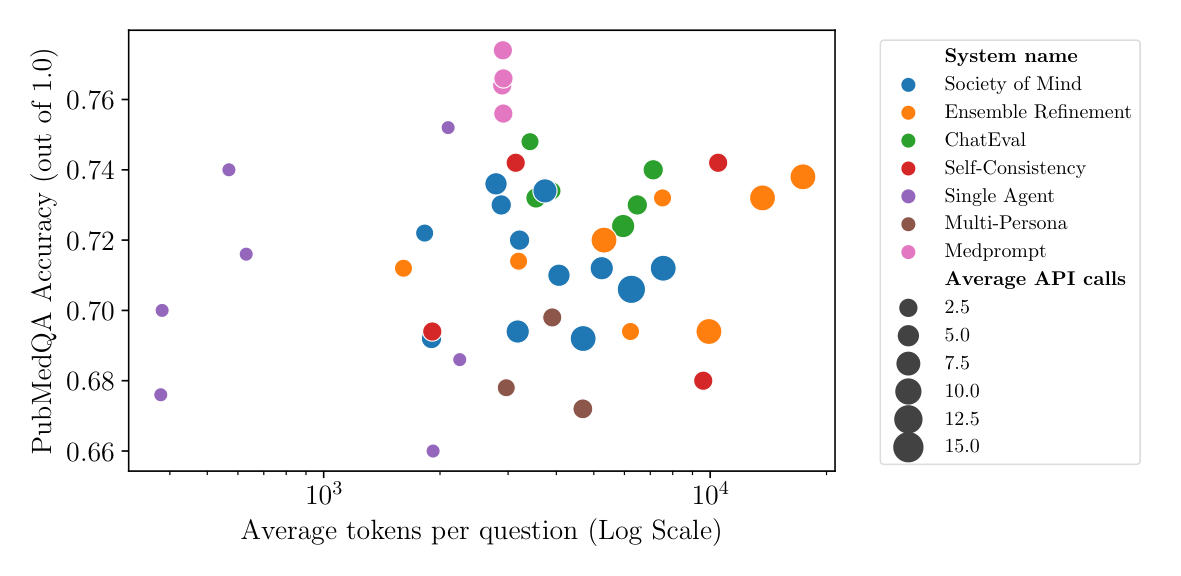
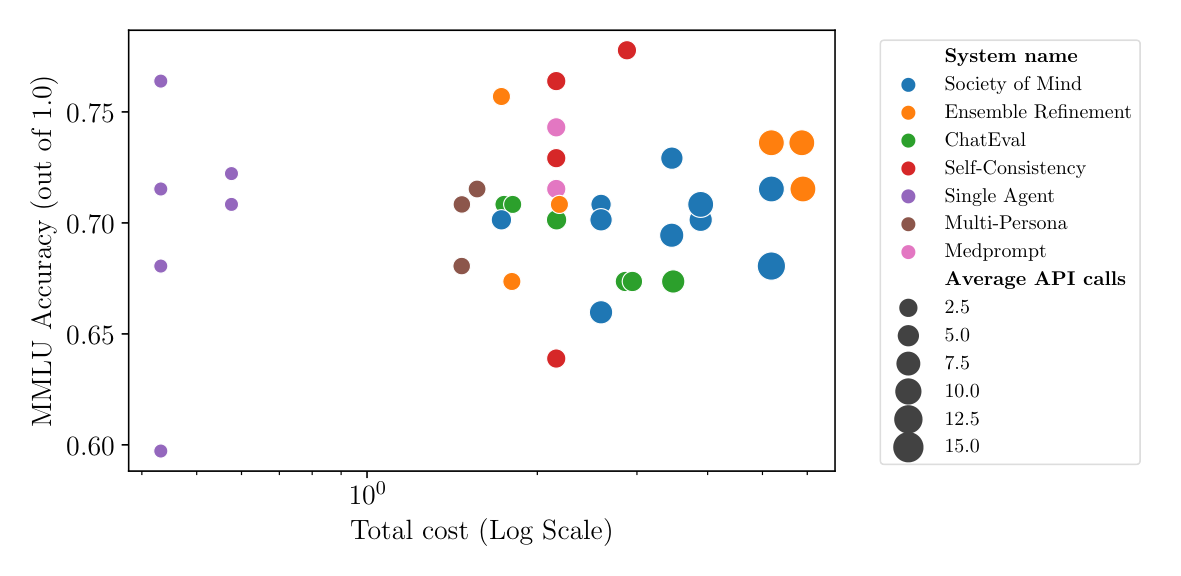
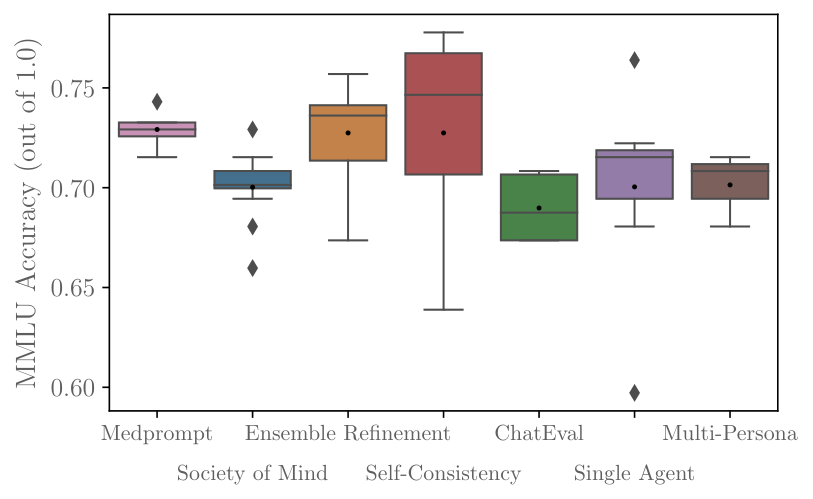
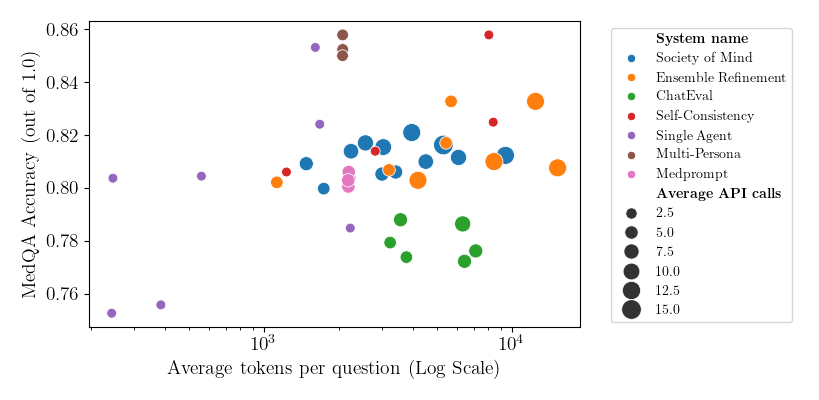
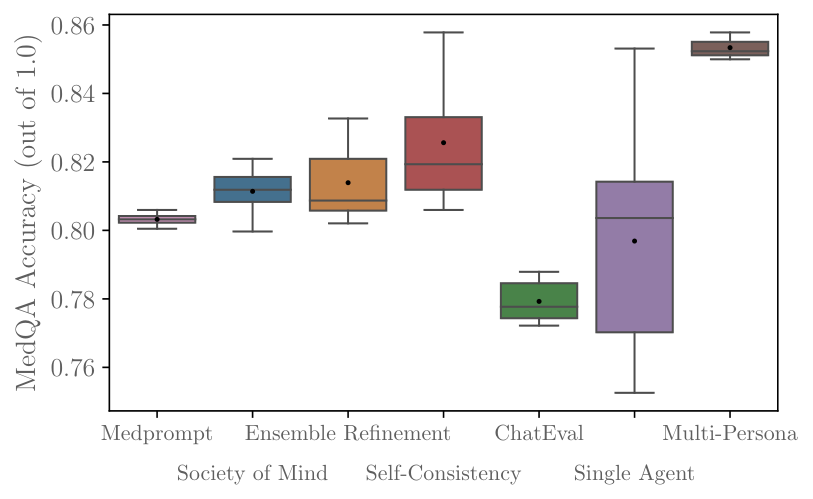
Our benchmarks showcase DebateLLM's performance on MedQA, PubMedQA, and MMLU datasets, focusing on accuracy versus cost, time efficiency, token economy, and agent agreement impact. For all our experiments we use GPT 3.5, unless specified otherwise. These visualizations illustrate the balance between accuracy and computational cost, the speed and quality of responses, linguistic efficiency, and the effects of consensus strategies in medical Q&A contexts. Each dataset highlights the varied capabilities of DebateLLM's strategies.
MedQA Dataset
PubMedQA Dataset
MMLU Dataset
Agent Agreement Analysis
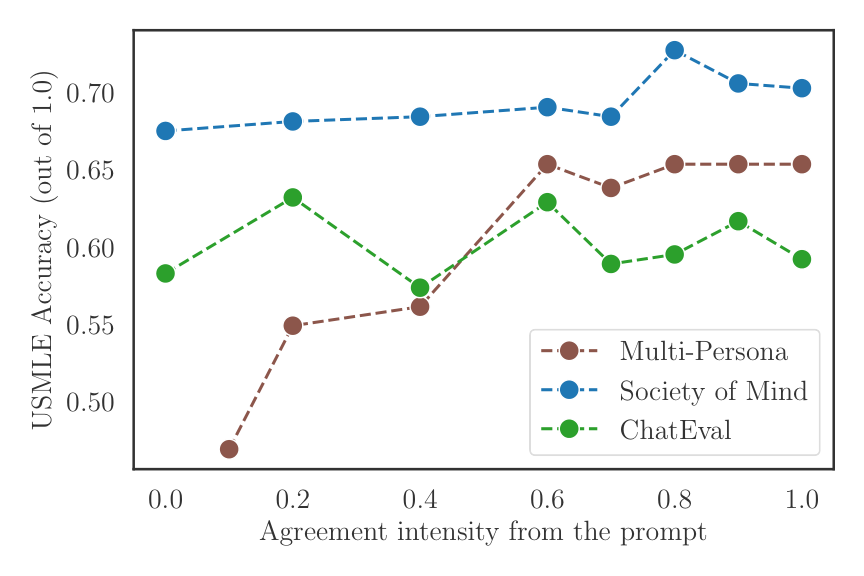
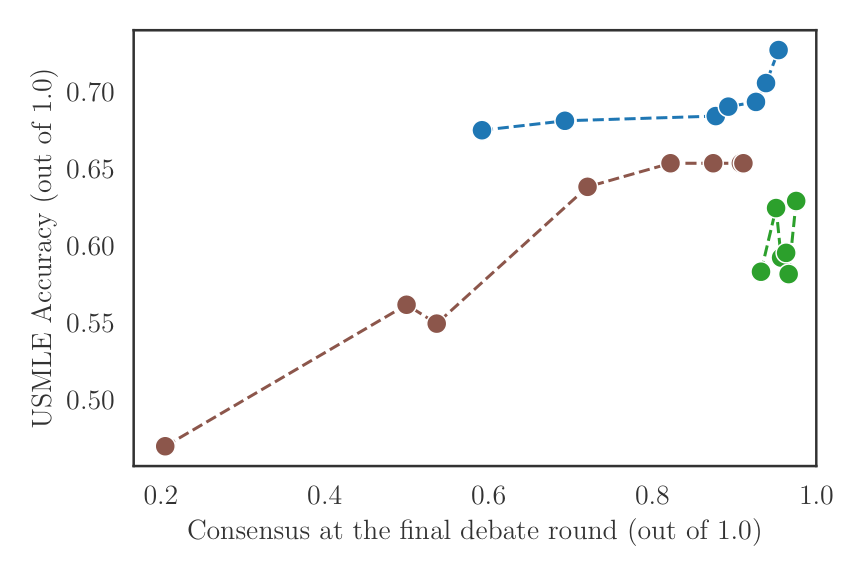
Modulating the agreement intensity provides a substantial improvement in performance for various models. For Multi-Persona, there is an approximate 15% improvement, and for Society of Minds (SoM), an approximate 5% improvement on the USMLE dataset. The 90% agreement intensity prompts applied to Multi-Persona demonstrate a new high score on the MedQA dataset, highlighted in the MedQA dataset cost plot as a red cross.
The benchmarks indicate the effectiveness of various strategies and models implemented within DebateLLM. For detailed analysis and discussion, refer to our paper.
GPT4 results
We also assessed GPT-4's capability on the MedQA dataset, applying the optimal agreement modulation value identified for Multi-Persona with GPT-3.5 on USMLE. The results suggest that these hyperparameter settings are indeed capable of transferring effectively to more advanced models. The results are shown below:
Contributing 🤝
Please read our contributing docs for details on how to submit pull requests, our Contributor License Agreement and community guidelines.
📚 Citing DebateLLM
If you use DebateLLM in your work, please cite our paper:
@article{smit2024mad,
  title={Should we be going MAD? A Look at Multi-Agent Debate Strategies for LLMs},
  author={Smit, Andries and Duckworth, Paul and Grinsztajn, Nathan and Barrett, Thomas D. and Pretorius, Arnu},
  journal={arXiv preprint arXiv:2311.17371},
  year={2024},
  url={https://arxiv.org/abs/2311.17371}
}
Link to the paper: Benchmarking Multi-Agent Debate between Language Models for Medical Q&A.
Contributors

6 commits

1 commits
Similar repos


Languages
Jupyter Notebook
72.0%
Python
26.7%
Benchmarking Multi-Agent Debate between Language Models for Truthfulness in Q&A.
Jupyter Notebook
62
7 commits
updated Mar 26, 2026
README
💬 DebateLLM - debating LLMs for truth discovery in medicine and beyond
👀 Overview
DebateLLM is a library that encompasses a variety of debating protocols and prompting strategies, aimed at enhancing the accuracy of Large Language Models (LLMs) in Q&A datasets.
Our research (mostly using GPT-3.5) reveals that no single debate or prompting strategy consistently outperforms others across all scenarios. Therefore it is important to experiment with various approaches to find what works best for each dataset. However, implementing each protocol can be time-consuming. We therefore built and open-sourced DebateLLM to facilitate its use by the research community. It enables researchers to test various implementations from the literature on their specific problems (medical or otherwise), potentially driving further advancements in the intelligent prompting of LLMs.
We have various system implementations:
🔧 Installation
To set up the DebateLLM environment, execute the following command:
make build_venv
🚀 Running an Experiment
To run an experiment:
-
Activate the Python virtual environment:
source venv/bin/activate -
Execute the evaluation script:
python ./experiments/evaluate.pyYou can modify experiment parameters by using Hydra configs located in the
conffolder. The main configuration file is found underconf/config.yaml. Changes at the database and system levels can be made by updating the configs inconf/datasetandconf/system.
To launch multiple experiments:
python ./scripts/launch_experiments.py
📊 Visualising Results
To visualize the results with Neptune:
- Run the visualisation script:
python ./scripts/visualise_results.py - The output results will be saved to ./data/charts/.
📊 Benchmarks
Our benchmarks showcase DebateLLM's performance on MedQA, PubMedQA, and MMLU datasets, focusing on accuracy versus cost, time efficiency, token economy, and agent agreement impact. For all our experiments we use GPT 3.5, unless specified otherwise. These visualizations illustrate the balance between accuracy and computational cost, the speed and quality of responses, linguistic efficiency, and the effects of consensus strategies in medical Q&A contexts. Each dataset highlights the varied capabilities of DebateLLM's strategies.
MedQA Dataset
PubMedQA Dataset
MMLU Dataset
Agent Agreement Analysis
Modulating the agreement intensity provides a substantial improvement in performance for various models. For Multi-Persona, there is an approximate 15% improvement, and for Society of Minds (SoM), an approximate 5% improvement on the USMLE dataset. The 90% agreement intensity prompts applied to Multi-Persona demonstrate a new high score on the MedQA dataset, highlighted in the MedQA dataset cost plot as a red cross.
The benchmarks indicate the effectiveness of various strategies and models implemented within DebateLLM. For detailed analysis and discussion, refer to our paper.
GPT4 results
We also assessed GPT-4's capability on the MedQA dataset, applying the optimal agreement modulation value identified for Multi-Persona with GPT-3.5 on USMLE. The results suggest that these hyperparameter settings are indeed capable of transferring effectively to more advanced models. The results are shown below:
Contributing 🤝
Please read our contributing docs for details on how to submit pull requests, our Contributor License Agreement and community guidelines.
📚 Citing DebateLLM
If you use DebateLLM in your work, please cite our paper:
@article{smit2024mad,
  title={Should we be going MAD? A Look at Multi-Agent Debate Strategies for LLMs},
  author={Smit, Andries and Duckworth, Paul and Grinsztajn, Nathan and Barrett, Thomas D. and Pretorius, Arnu},
  journal={arXiv preprint arXiv:2311.17371},
  year={2024},
  url={https://arxiv.org/abs/2311.17371}
}
Link to the paper: Benchmarking Multi-Agent Debate between Language Models for Medical Q&A.
Similar repos
Contributors
6 commits
1 commits
Languages
Jupyter Notebook
72.0%
Python
26.7%