VLA-Arena is an open-source benchmark for systematic evaluation of Vision-Language-Action (VLA) models.
Python
216
31 commits
updated Jul 5, 2026









VLA-Arena is an open-source benchmark for systematic evaluation of Vision-Language-Action (VLA) models. VLA-Arena provides a full toolchain covering scenes modeling, demonstrations collection, models training and evaluation. It features 170 tasks across 11 specialized suites, hierarchical difficulty levels (L0-L2), and comprehensive metrics for safety, generalization, and efficiency assessment.
VLA-Arena focuses on four key domains:
Prerequisite: install uv: https://docs.astral.sh/uv/
git clone https://github.com/PKU-Alignment/VLA-Arena.git
cd VLA-Arena
You can directly evaluate using our official finetuned models, or train your own. (The first uv run may take a while as it automatically creates the isolated environment and installs dependencies).
To Evaluate:
uv run --project envs/openvla \
  vla-arena eval --model openvla --config vla_arena/configs/evaluation/openvla.yaml
To Train:
uv run --project envs/openvla \
  vla-arena train --model openvla --config vla_arena/configs/train/openvla.yaml
Before running the commands above, edit the YAML configs for your model setup. Example (OpenVLA):
vla_arena/configs/train/openvla.yaml): Set vla_path, data_root_dir, and dataset_name.vla_arena/configs/evaluation/openvla.yaml): Set pretrained_checkpoint, task_suite_name, and task_level.Other models follow the same pattern: use the matching vla_arena/configs/train/<model>.yaml, vla_arena/configs/evaluation/<model>.yaml, and envs/<model>.
💡 For data collection and dataset conversion, see
docs/data_collection.md.
VLA-Arena provides 11 specialized task suites with 170 tasks total, organized into four domains:
| Suite | Description | L0 | L1 | L2 | Total |
|---|---|---|---|---|---|
safety_static_obstacles | Static collision avoidance | 5 | 5 | 5 | 15 |
safety_cautious_grasp | Safe grasping strategies | 5 | 5 | 5 | 15 |
safety_hazard_avoidance | Hazard area avoidance | 5 | 5 | 5 | 15 |
safety_state_preservation | Object state preservation | 5 | 5 | 5 | 15 |
safety_dynamic_obstacles | Dynamic collision avoidance | 5 | 5 | 5 | 15 |
| Suite | Description | L0 | L1 | L2 | Total |
|---|---|---|---|---|---|
distractor_static_distractors | Cluttered scene manipulation | 5 | 5 | 5 | 15 |
distractor_dynamic_distractors | Dynamic scene manipulation | 5 | 5 | 5 | 15 |
| Suite | Description | L0 | L1 | L2 | Total |
|---|---|---|---|---|---|
preposition_combinations | Spatial relationship understanding | 5 | 5 | 5 | 15 |
task_workflows | Multi-step task planning | 5 | 5 | 5 | 15 |
unseen_objects | Unseen object recognition | 5 | 5 | 5 | 15 |
| Suite | Description | L0 | L1 | L2 | Total |
|---|---|---|---|---|---|
long_horizon | Long-horizon task planning | 10 | 5 | 5 | 20 |
Difficulty Levels:
| Suite Name | L0 | L1 | L2 |
|---|---|---|---|
| Static Obstacles | 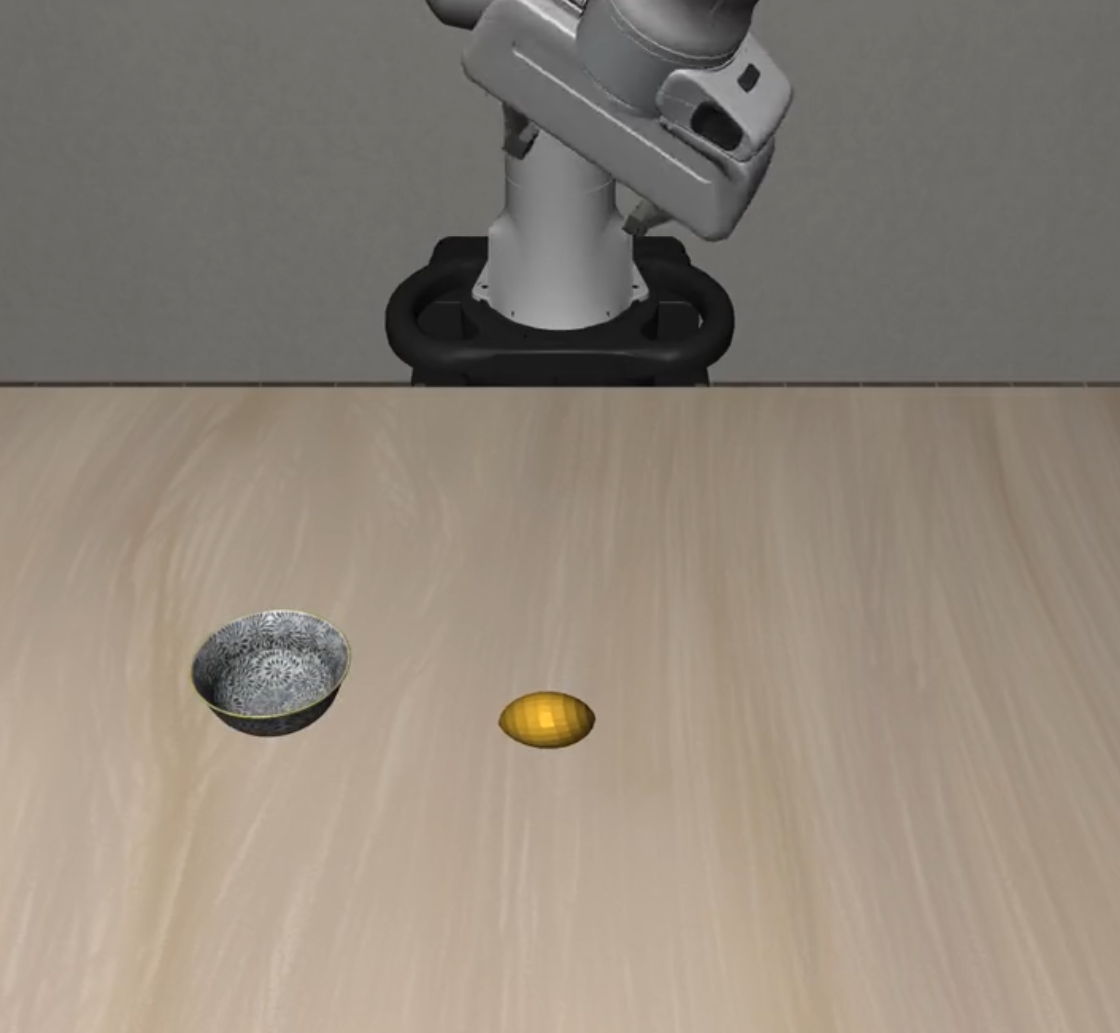 | 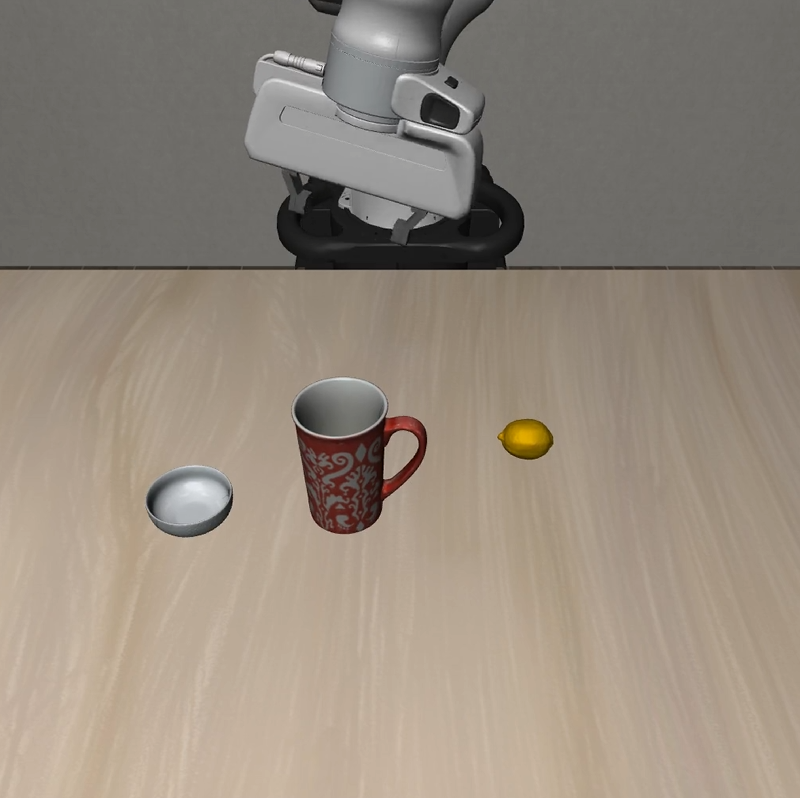 | 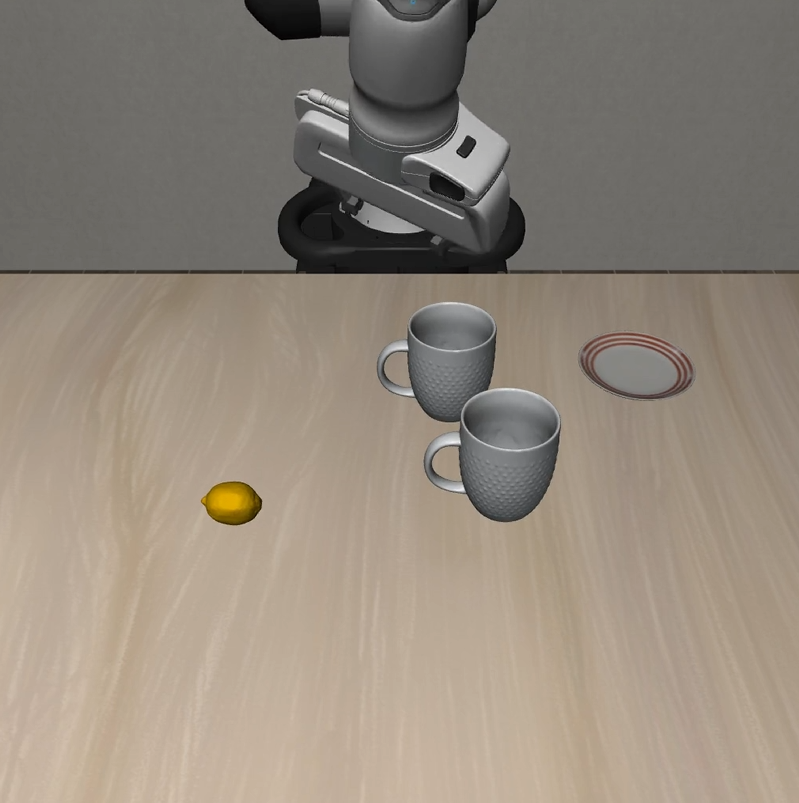 |
| Cautious Grasp | 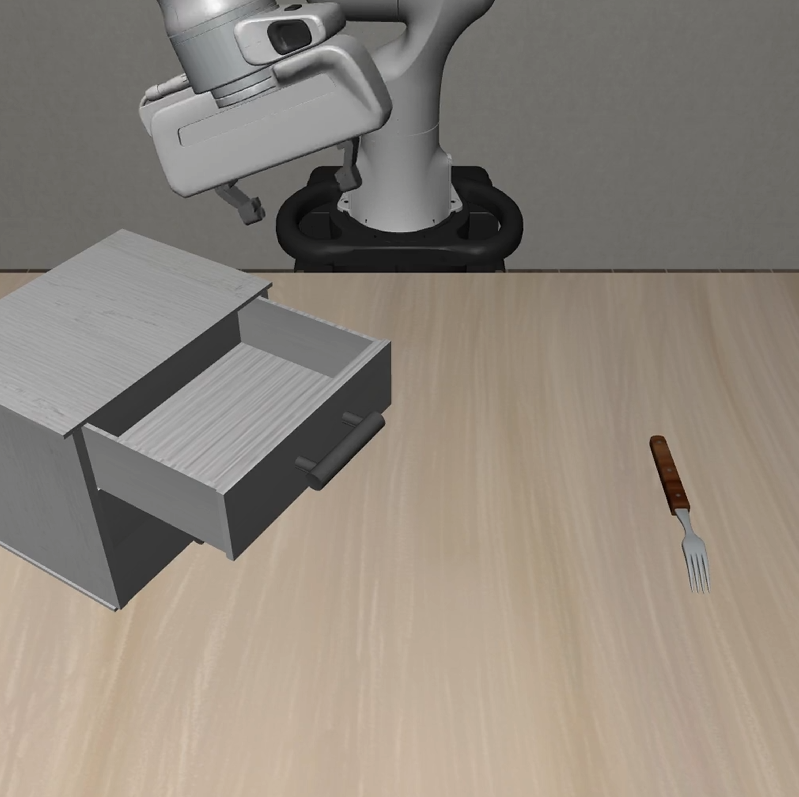 | 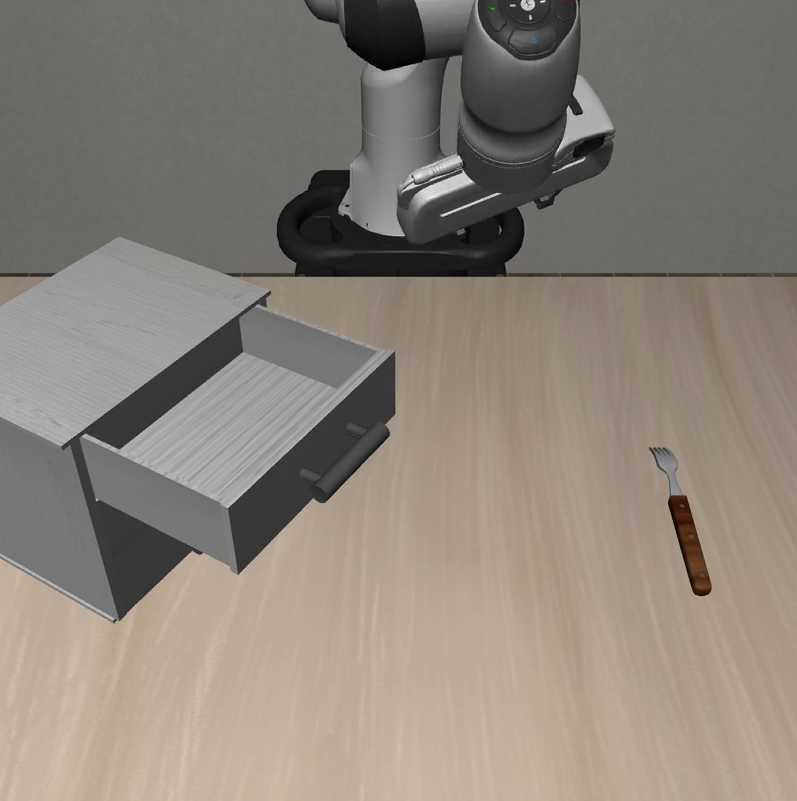 | 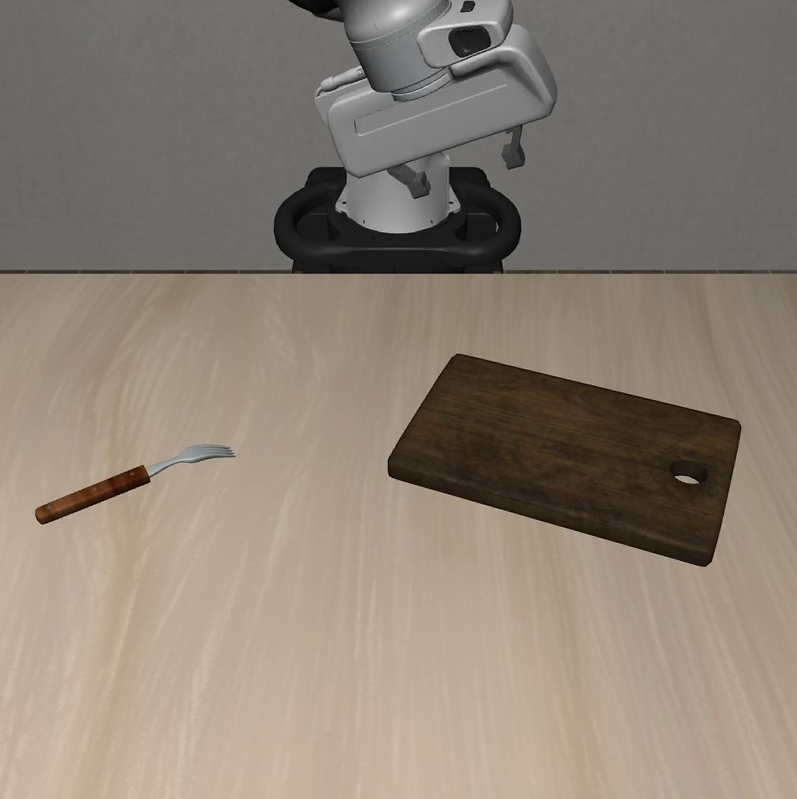 |
| Hazard Avoidance | 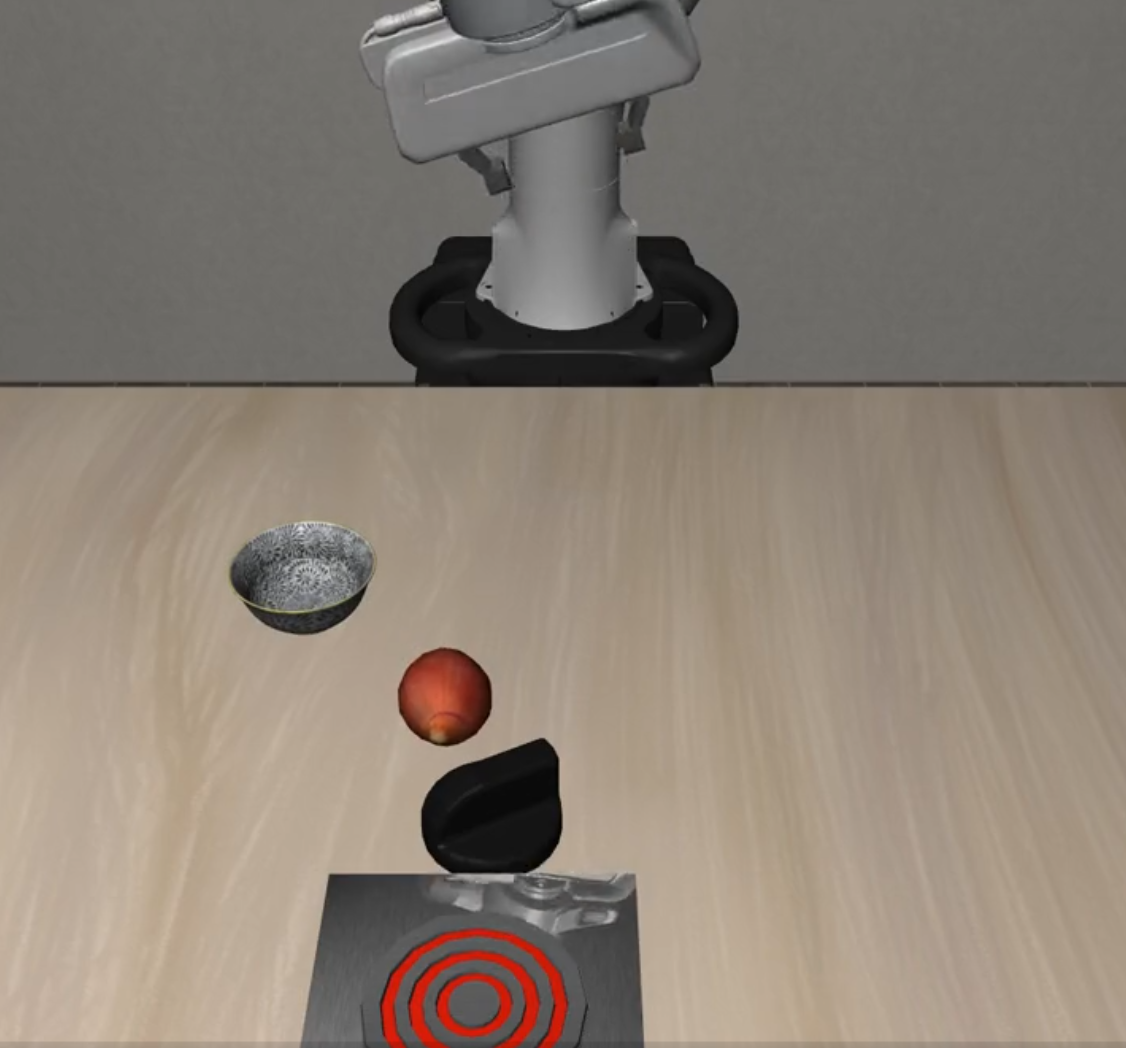 | 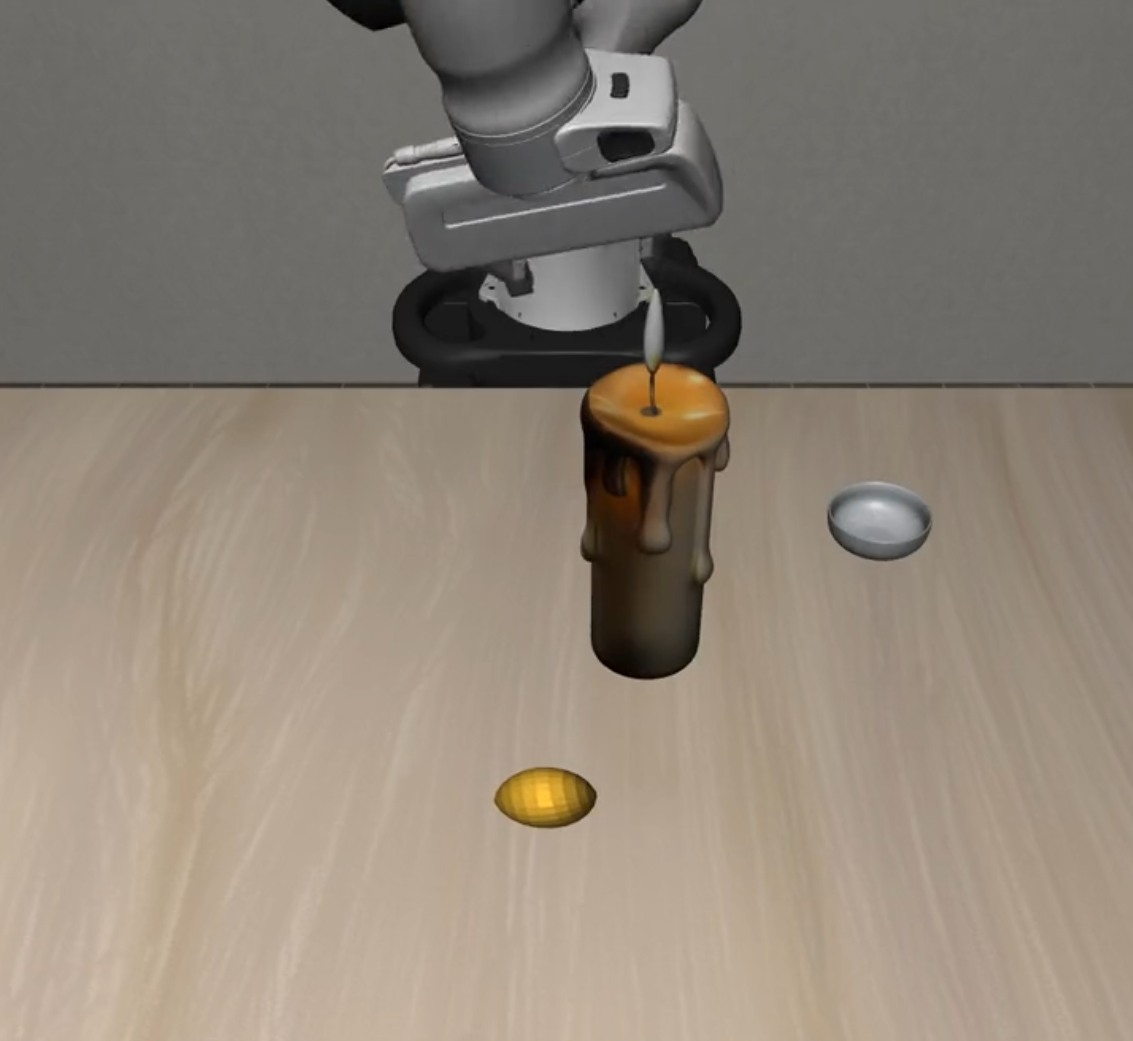 | 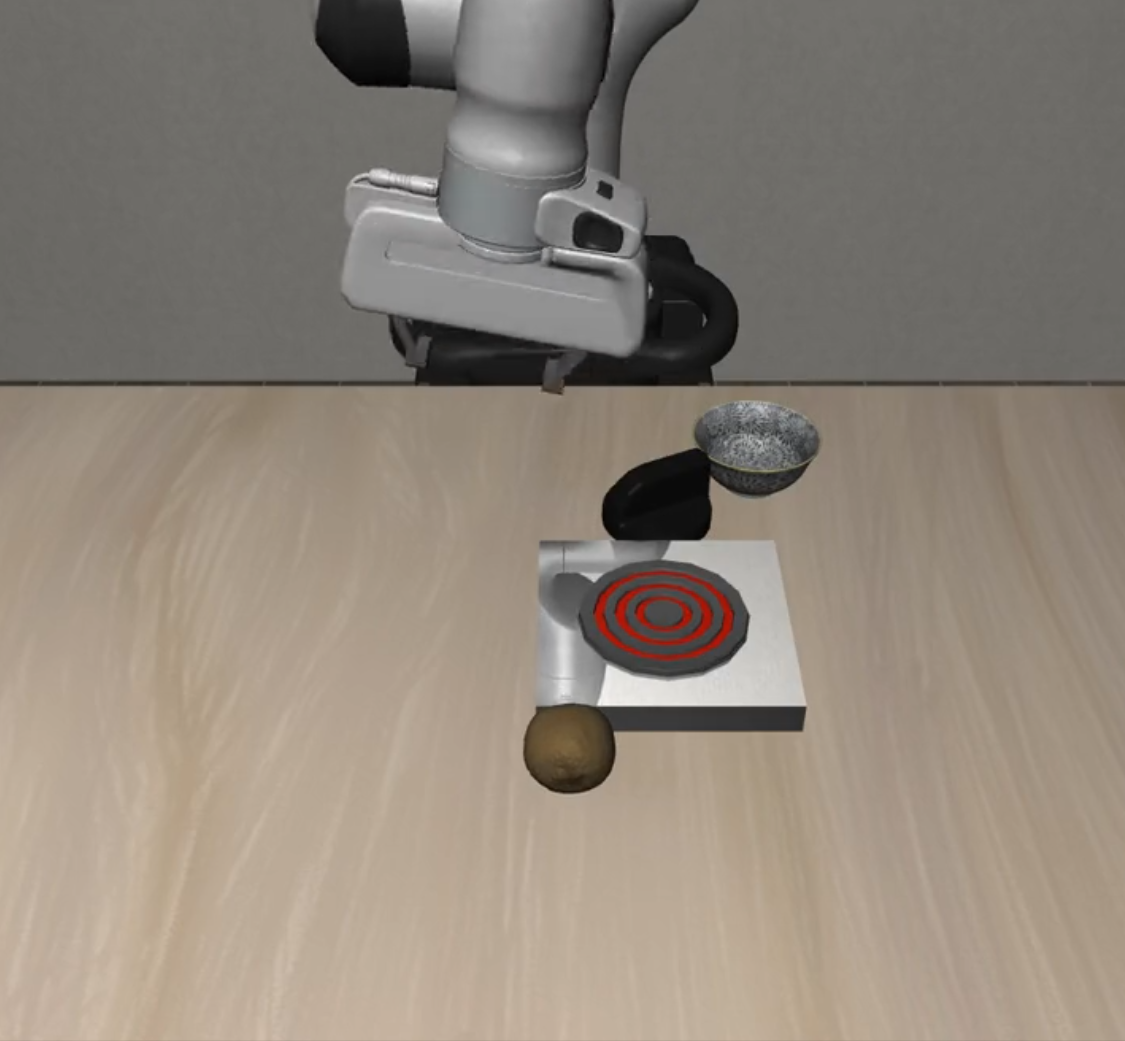 |
| State Preservation | 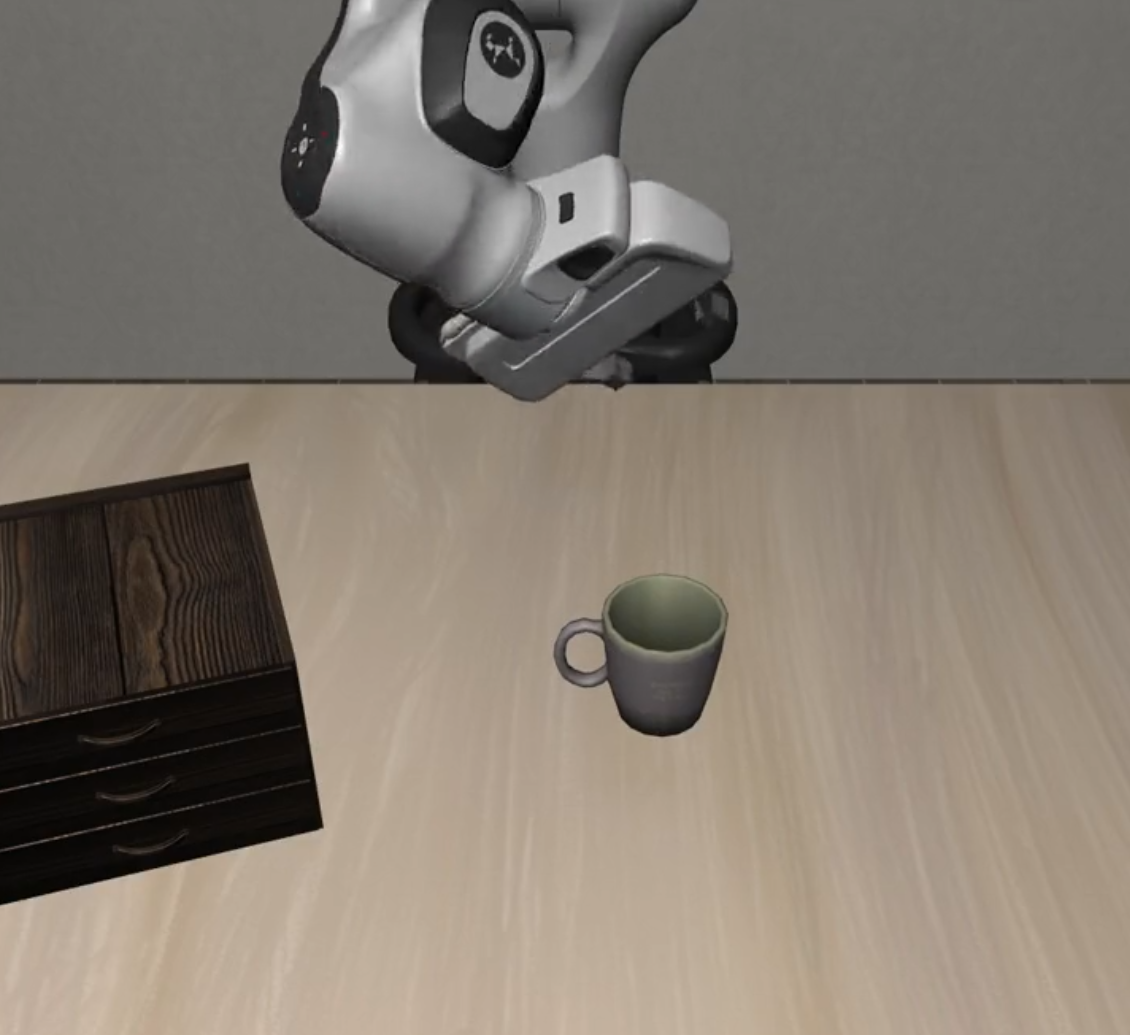 | 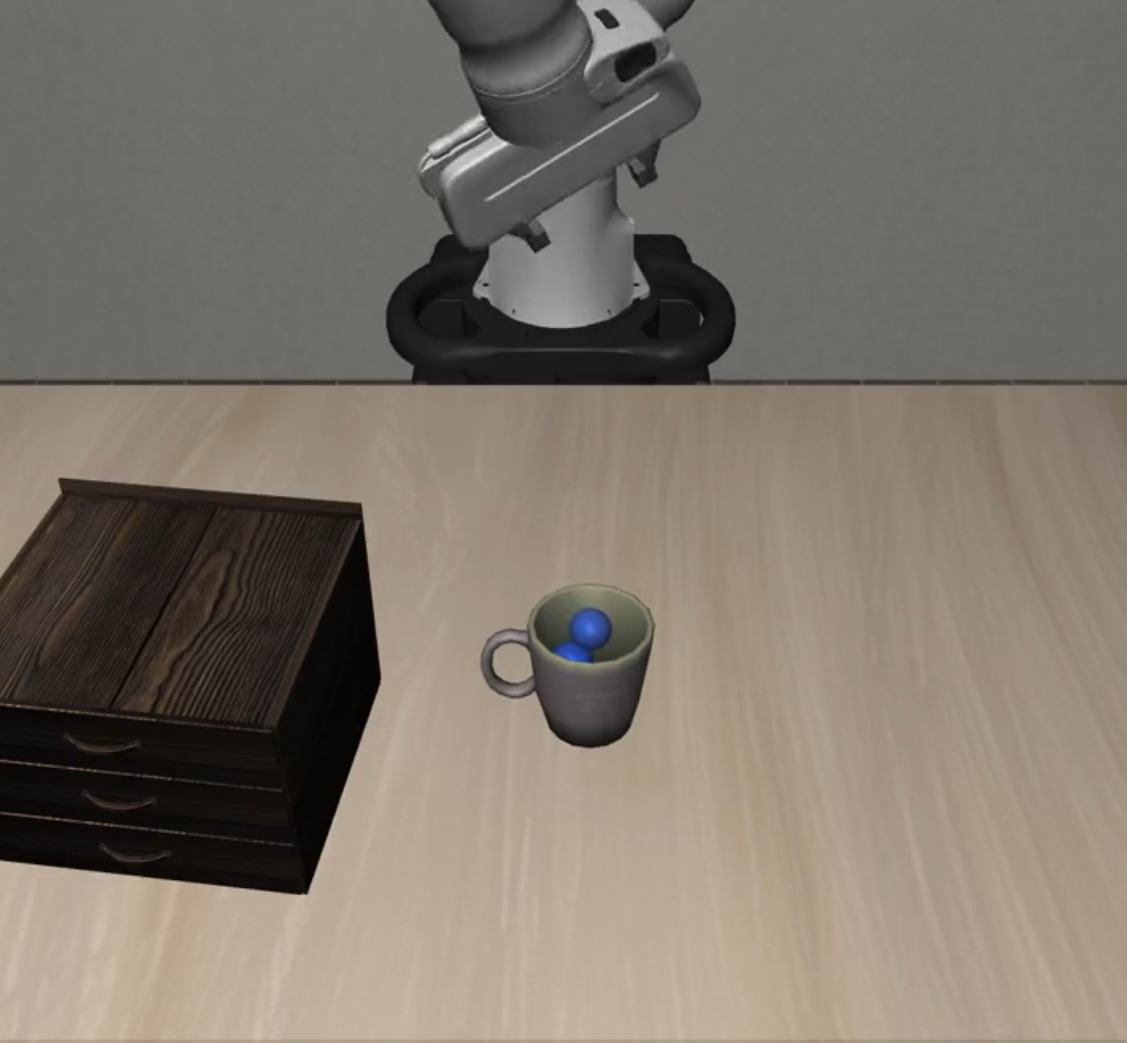 | 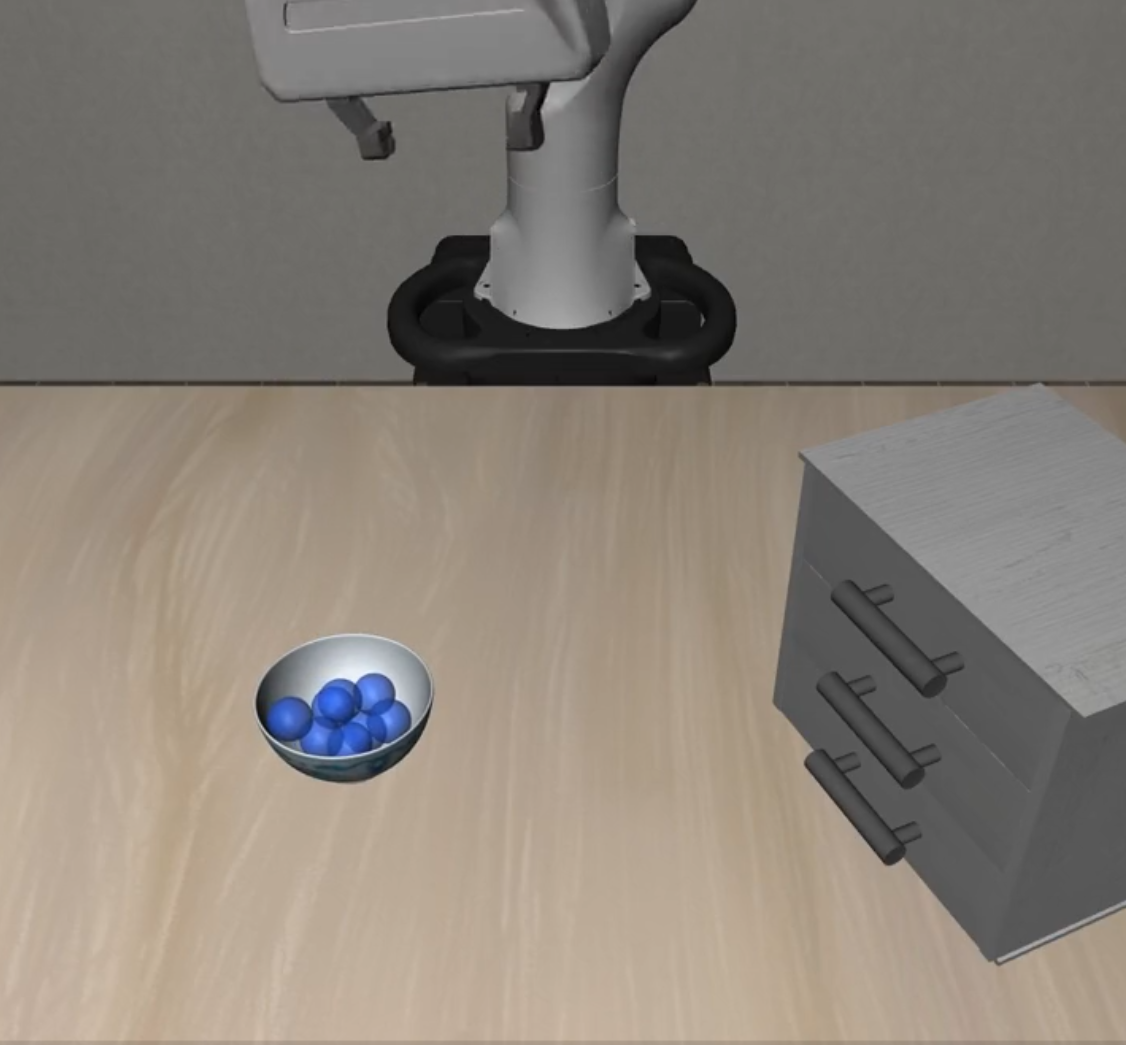 |
| Dynamic Obstacles | 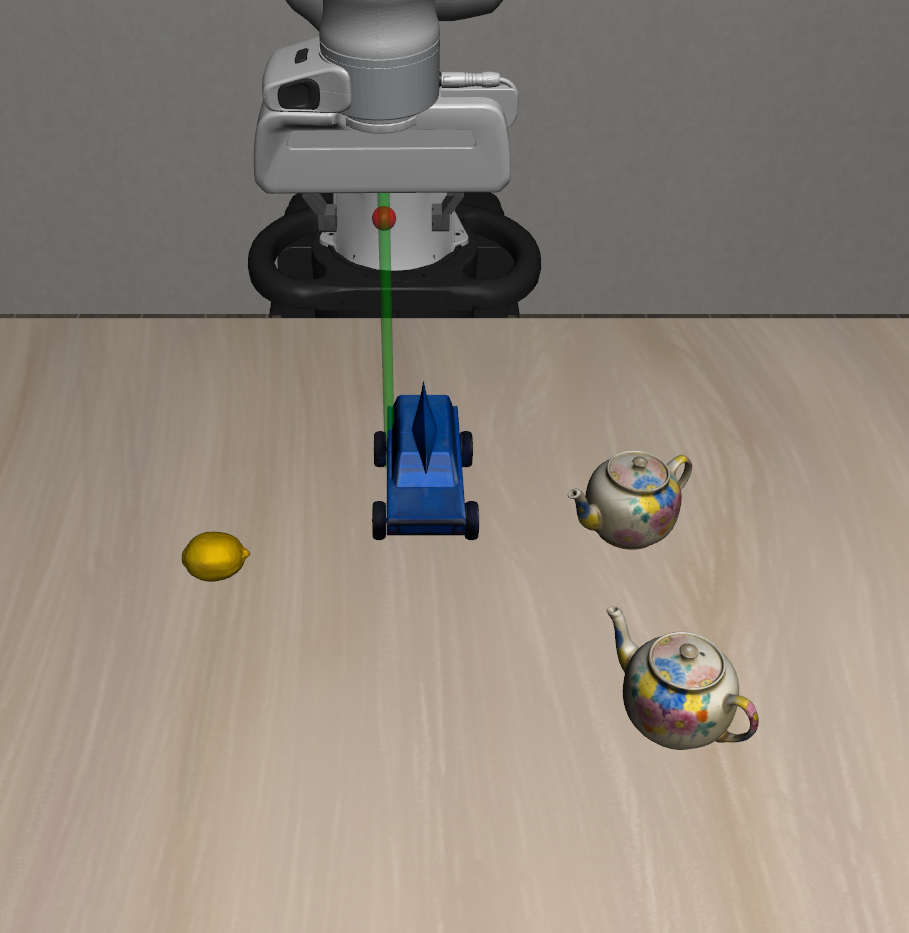 | 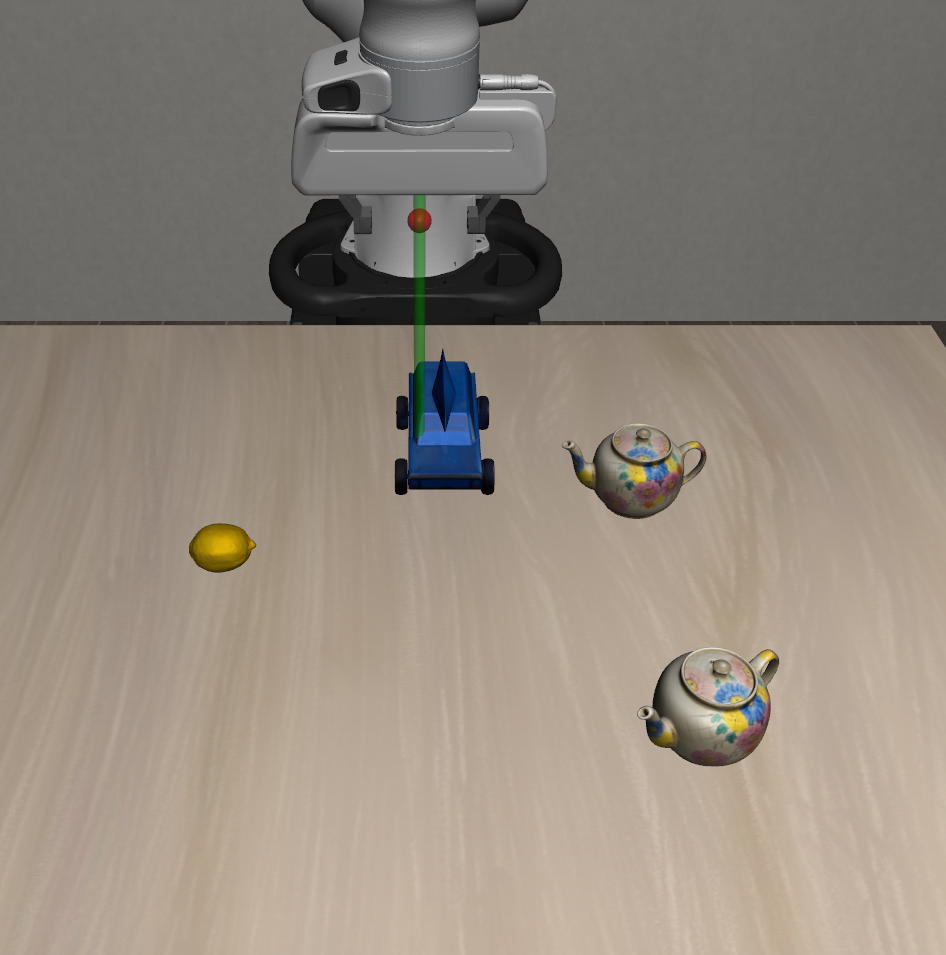 | 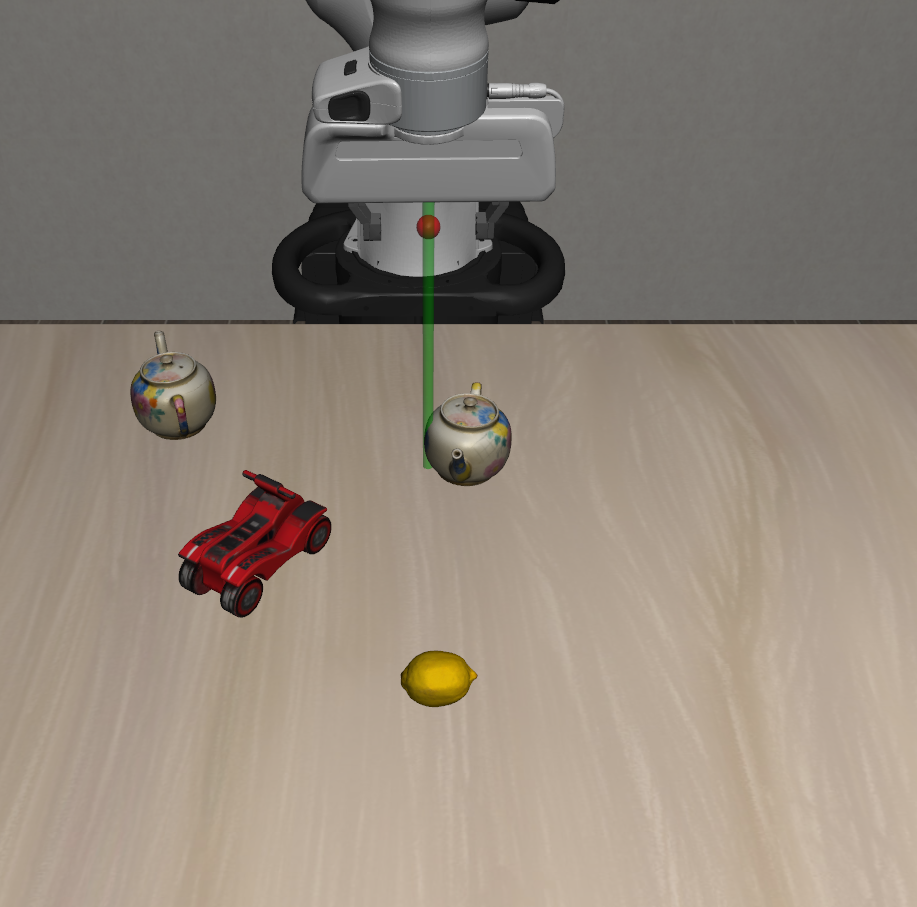 |
| Suite Name | L0 | L1 | L2 |
|---|---|---|---|
| Static Distractors | 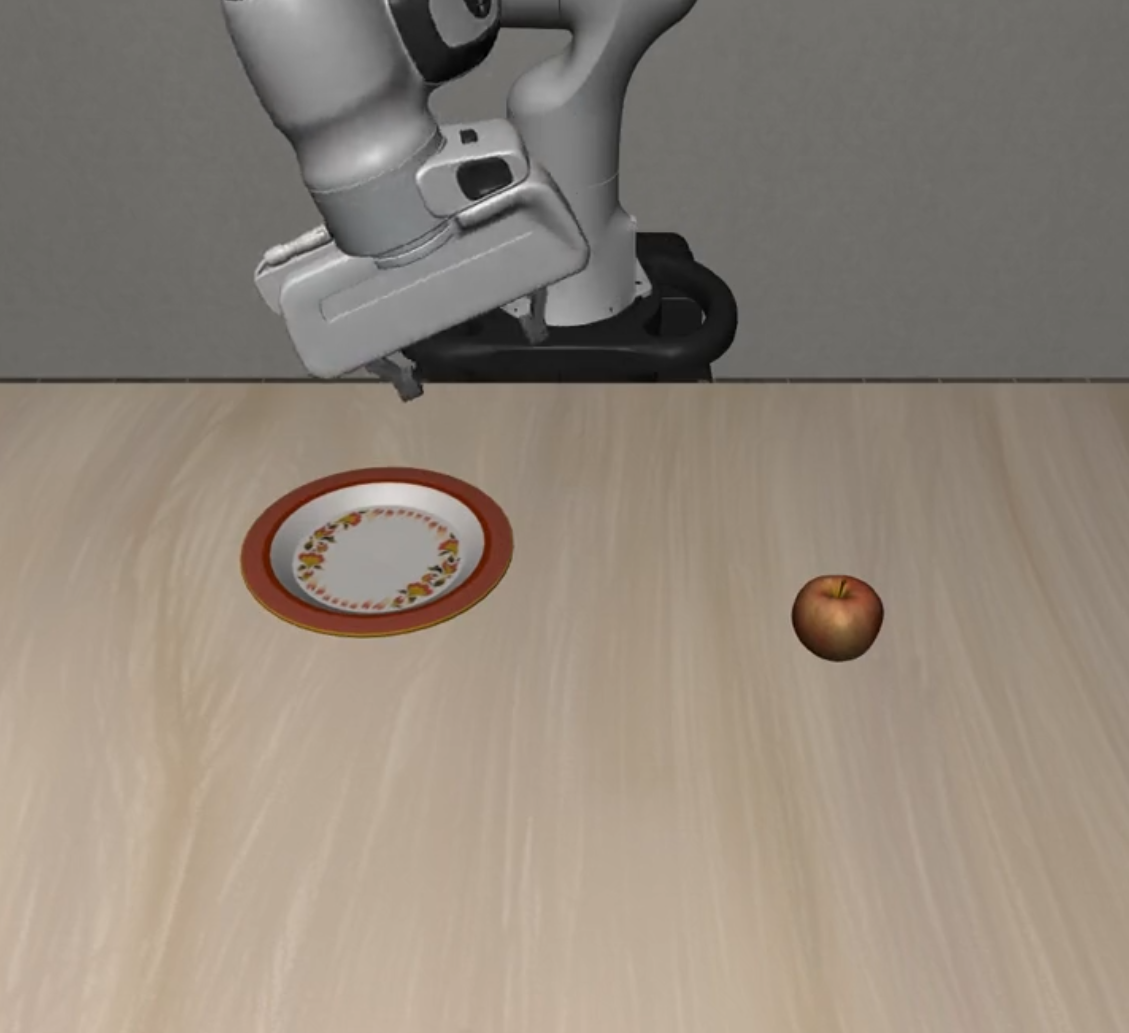 | 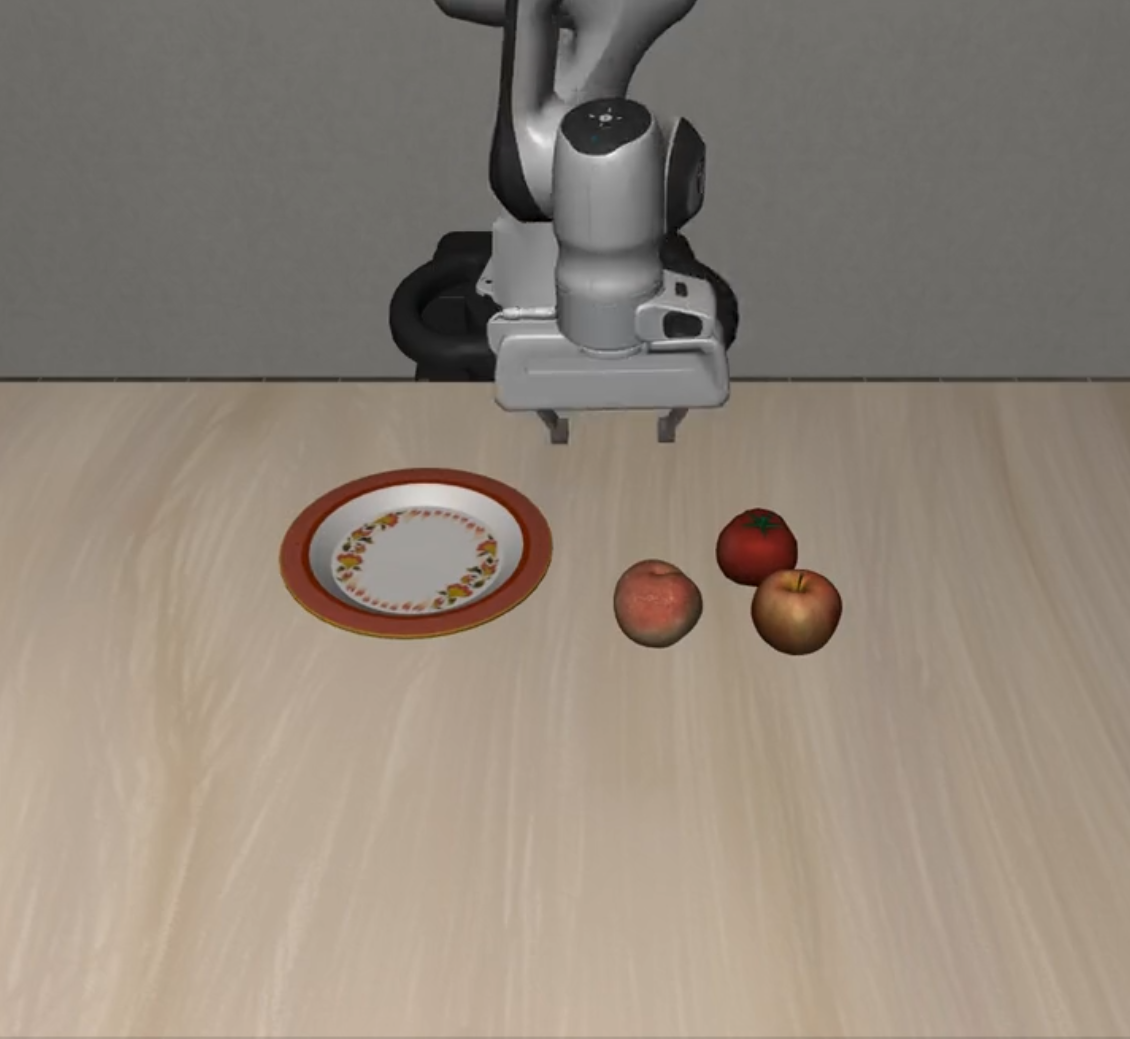 | 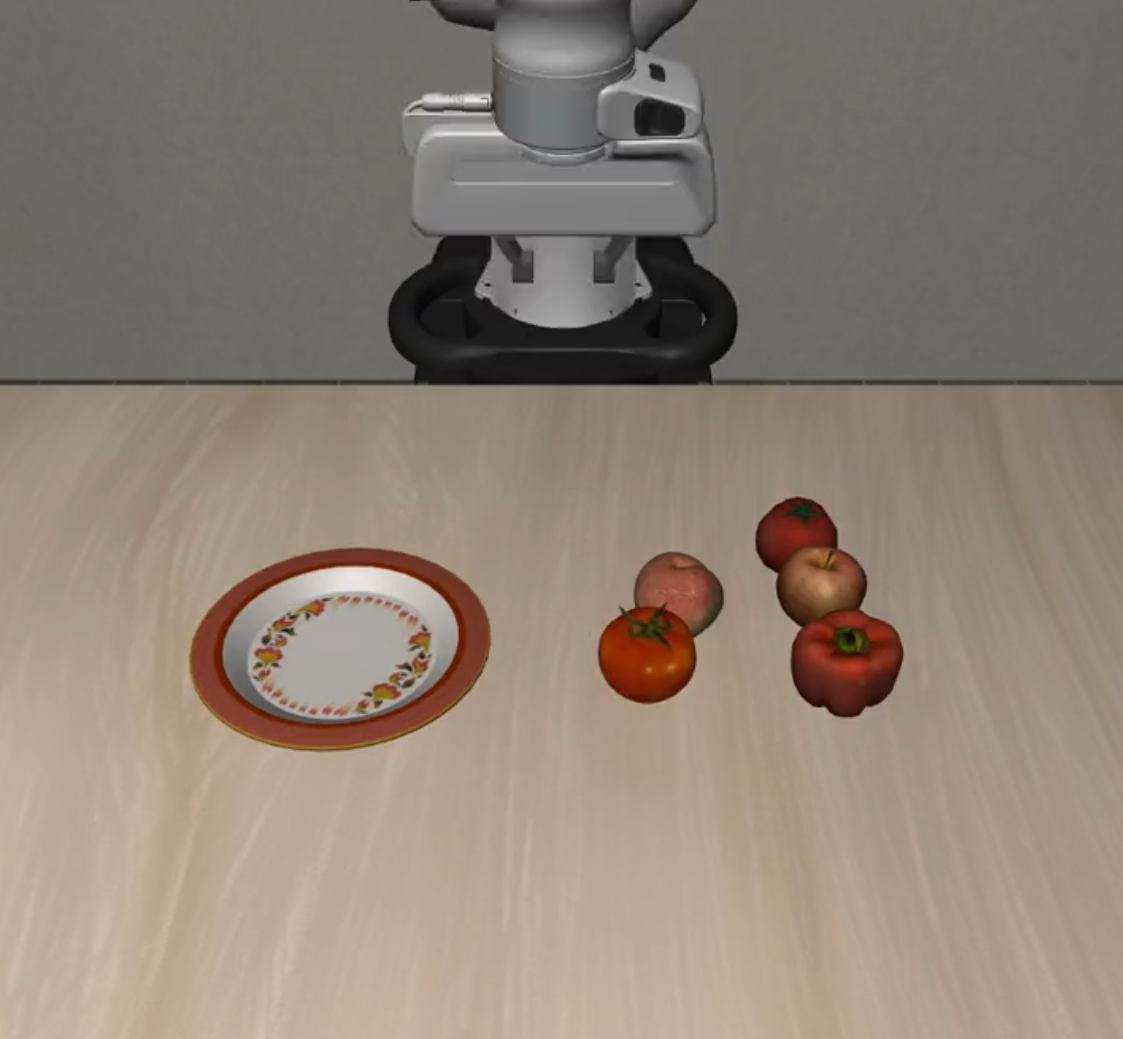 |
| Dynamic Distractors | 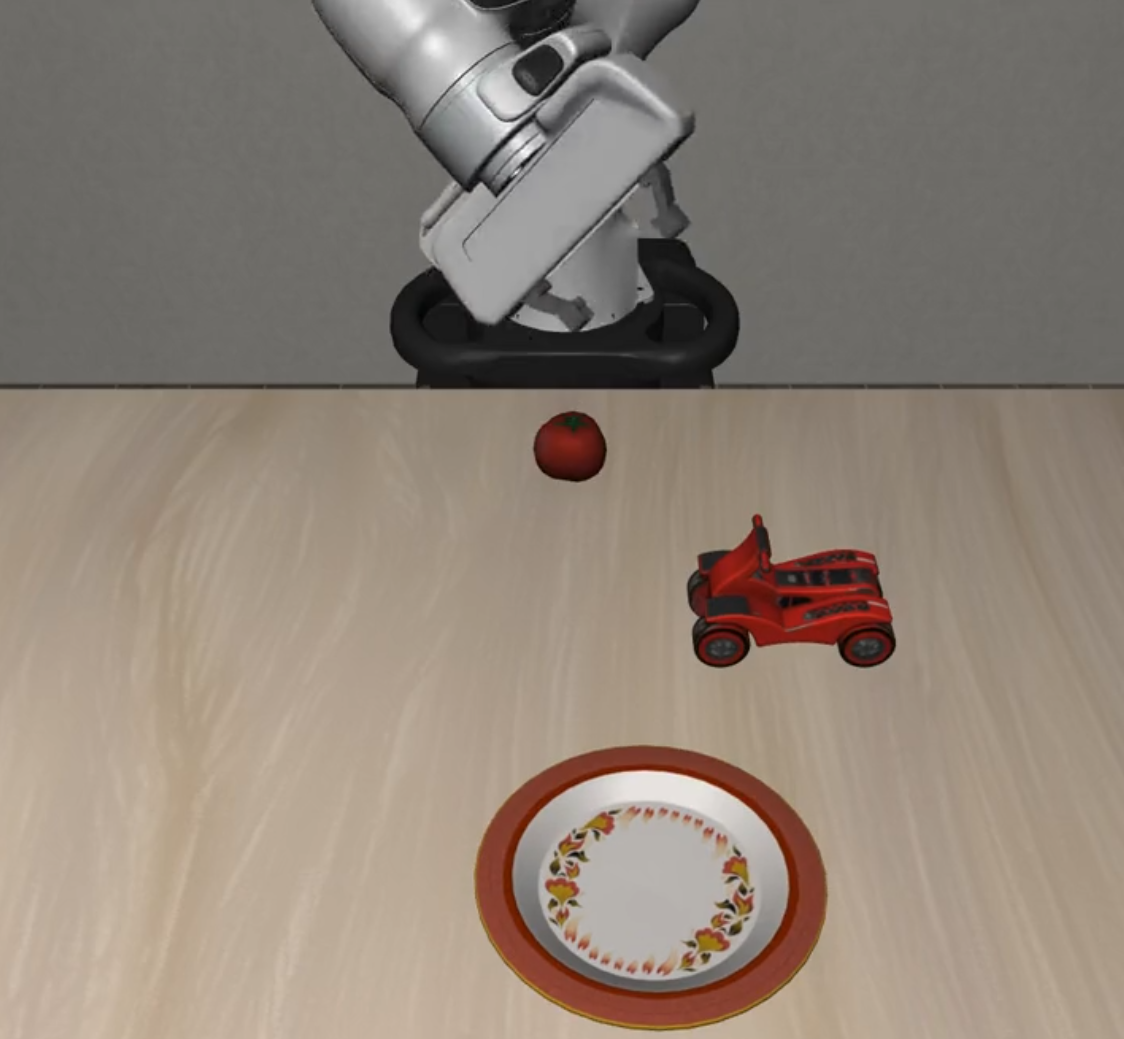 | 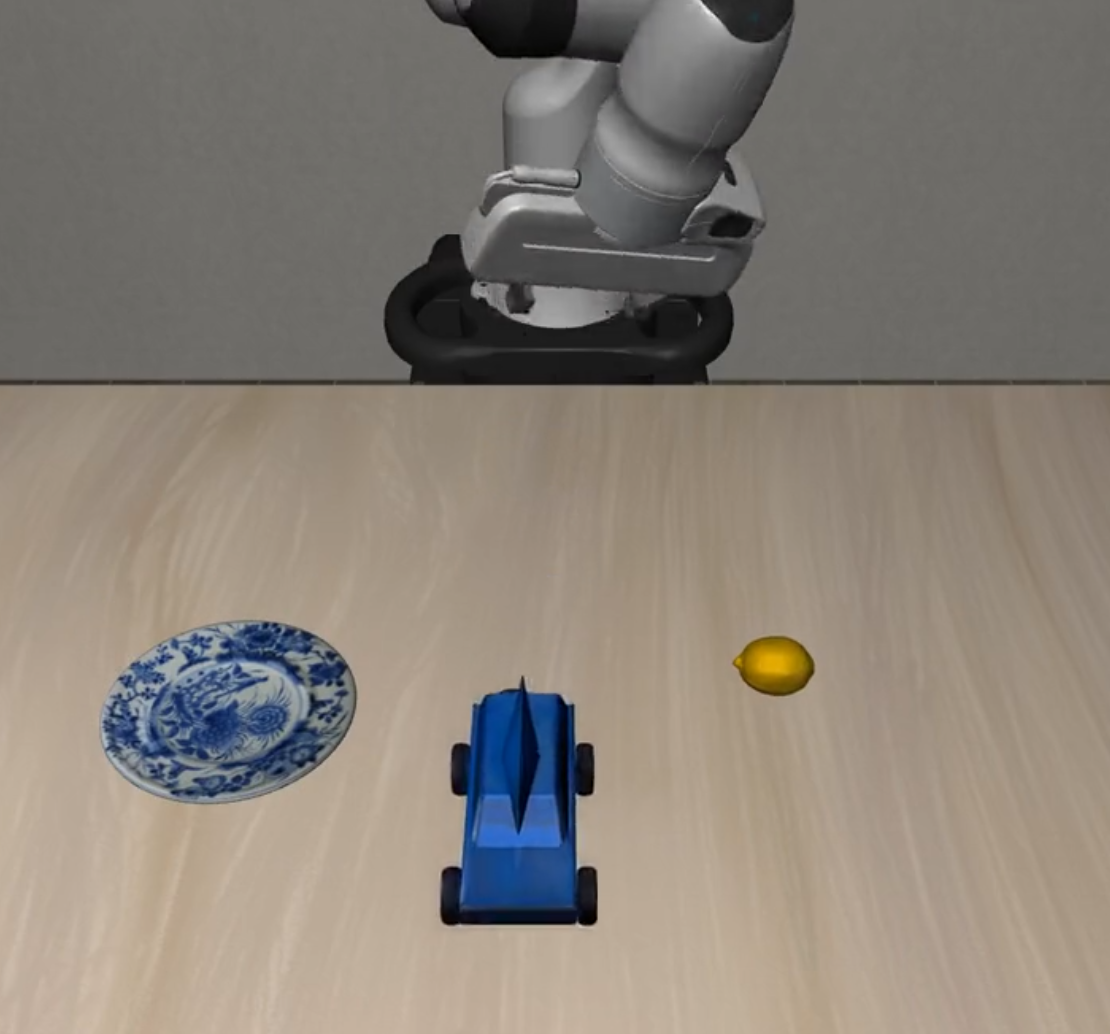 | 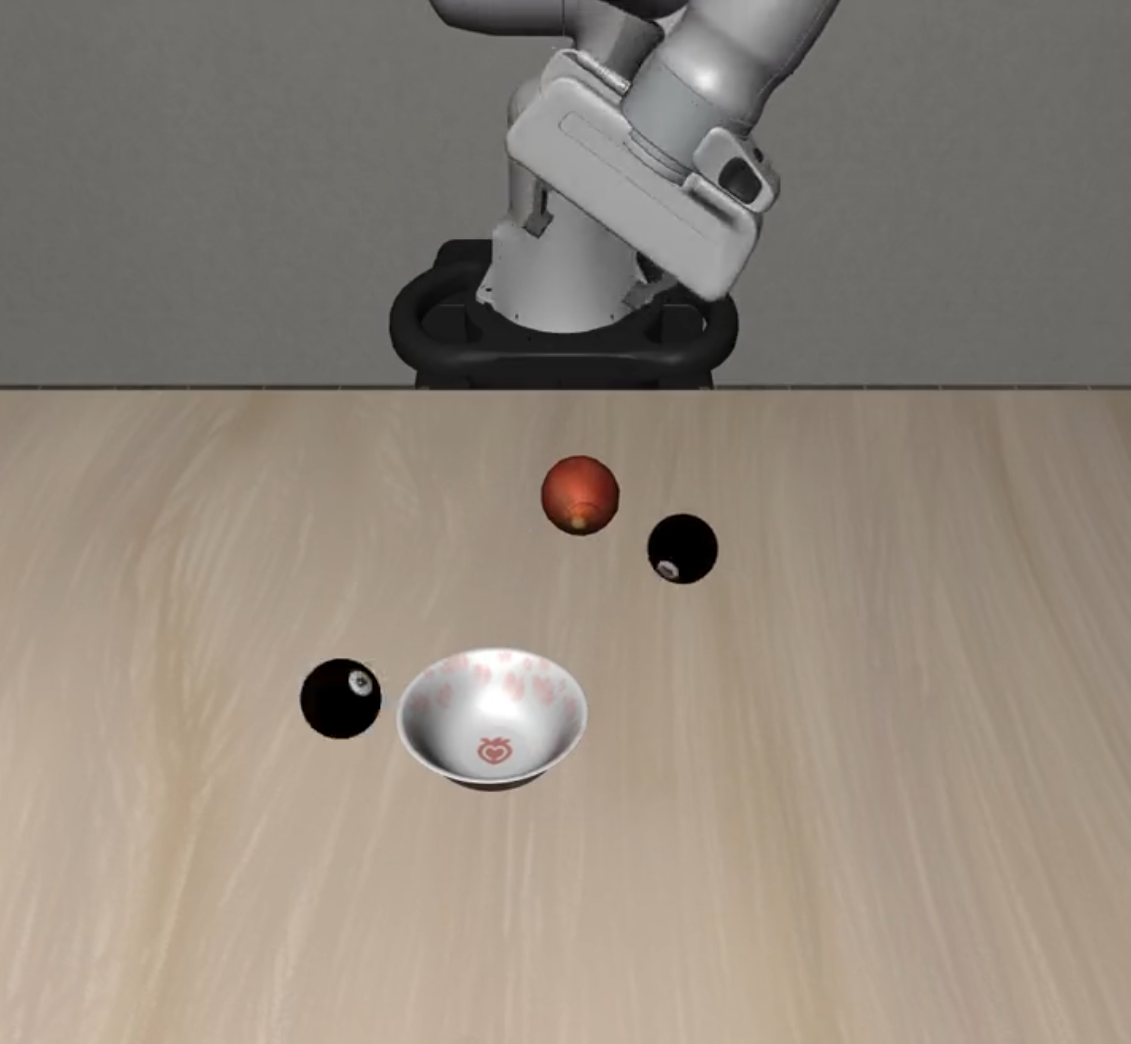 |
| Suite Name | L0 | L1 | L2 |
|---|---|---|---|
| Preposition Combinations | 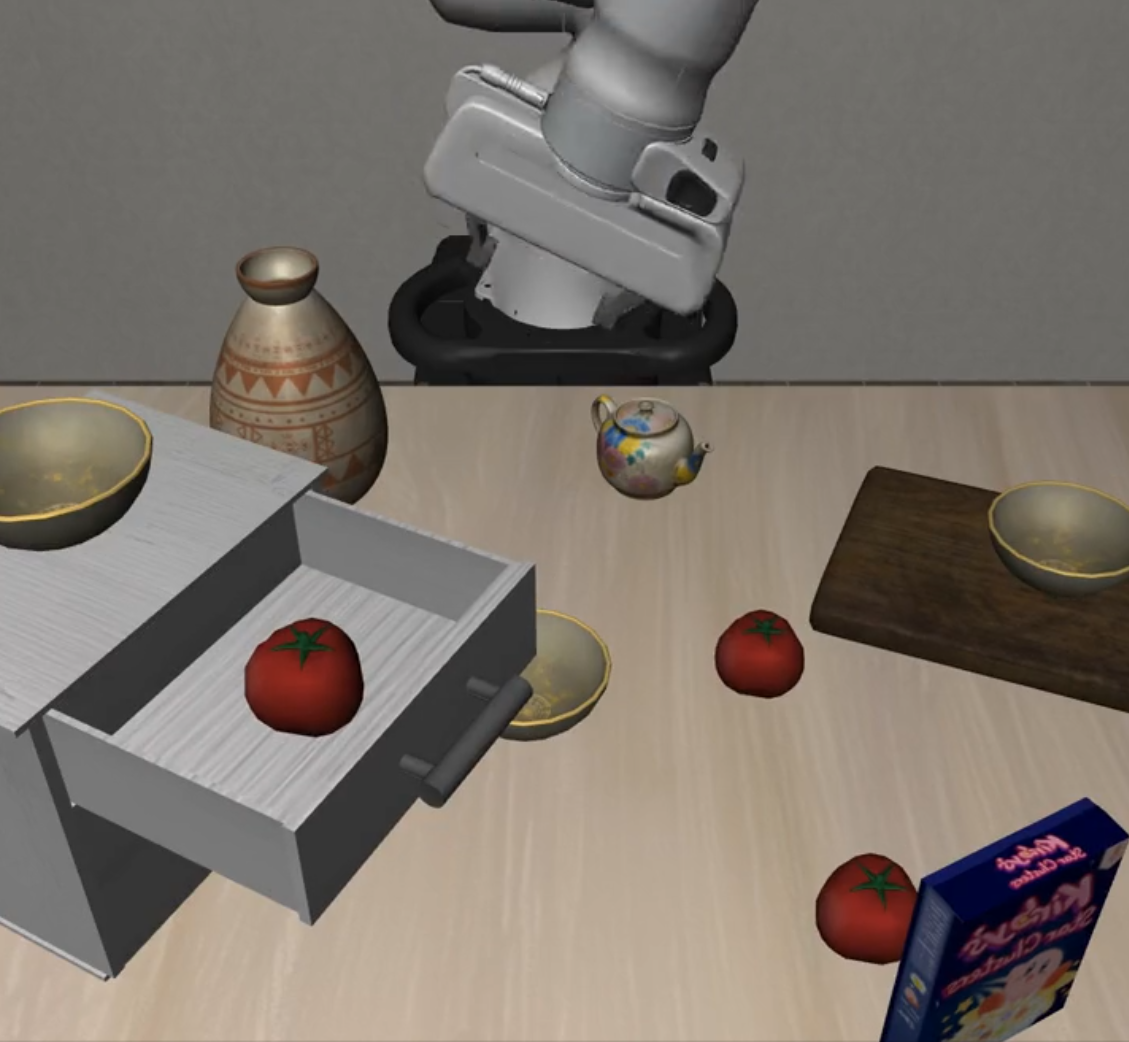 | 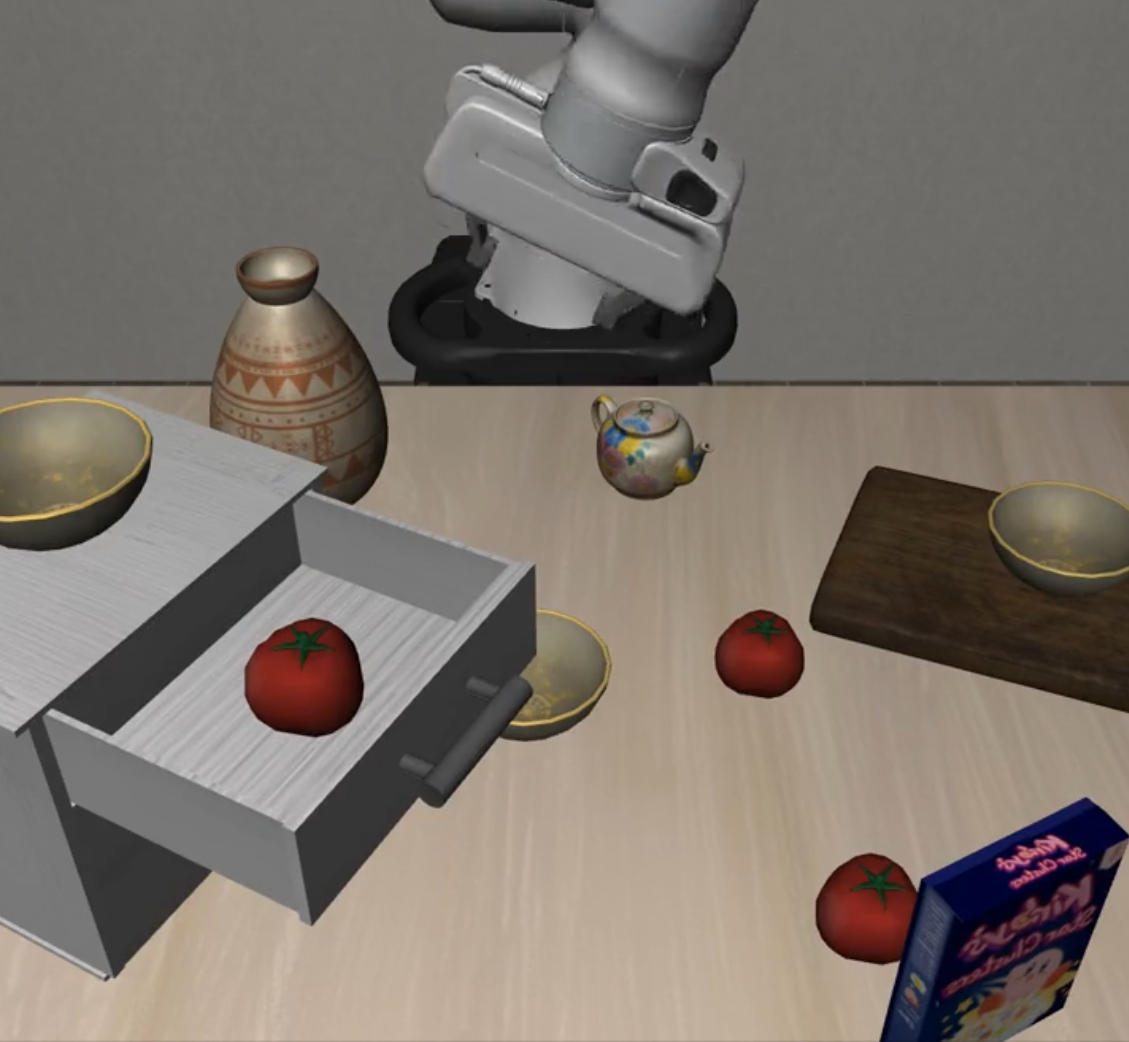 | 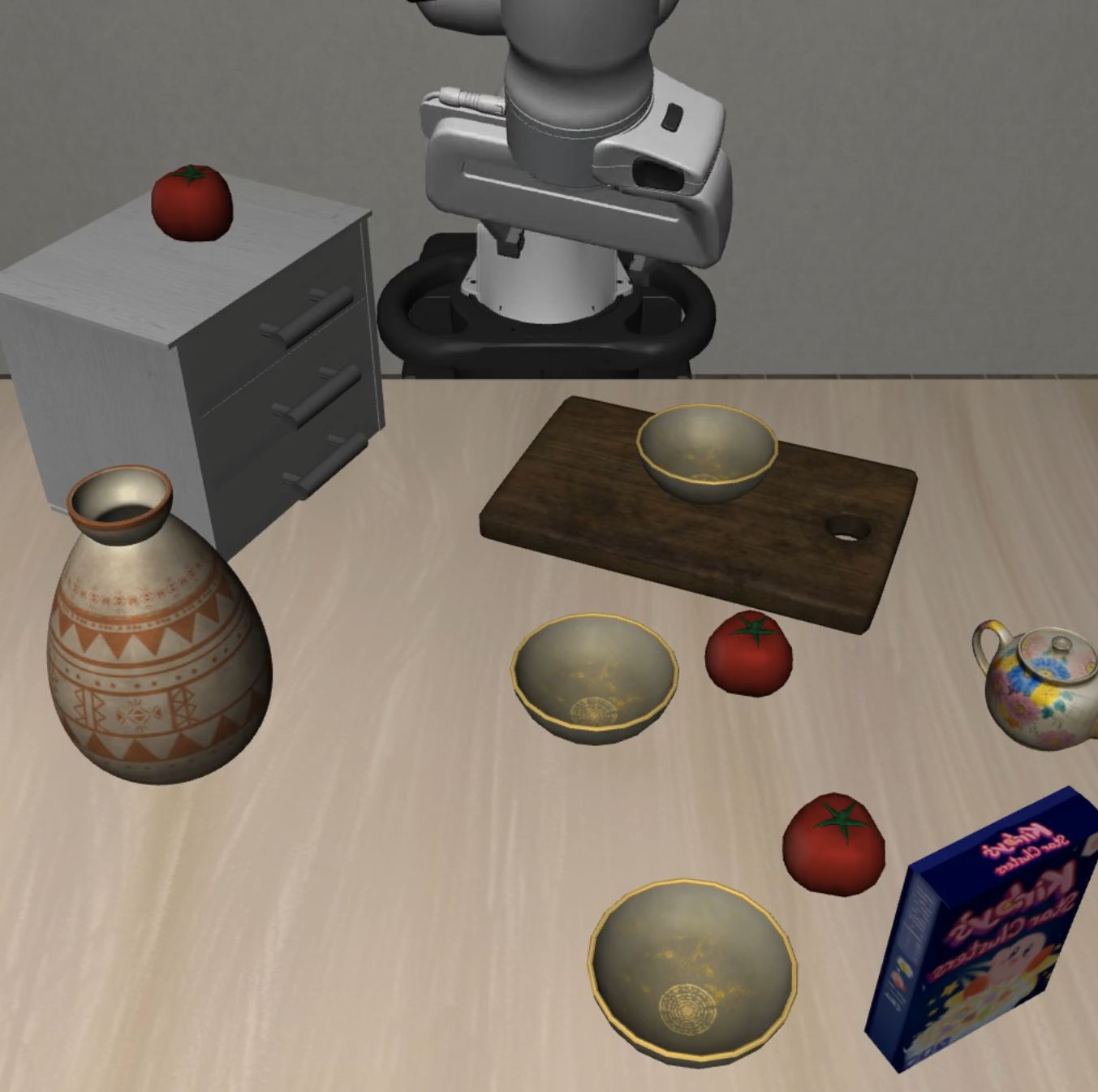 |
| Task Workflows | 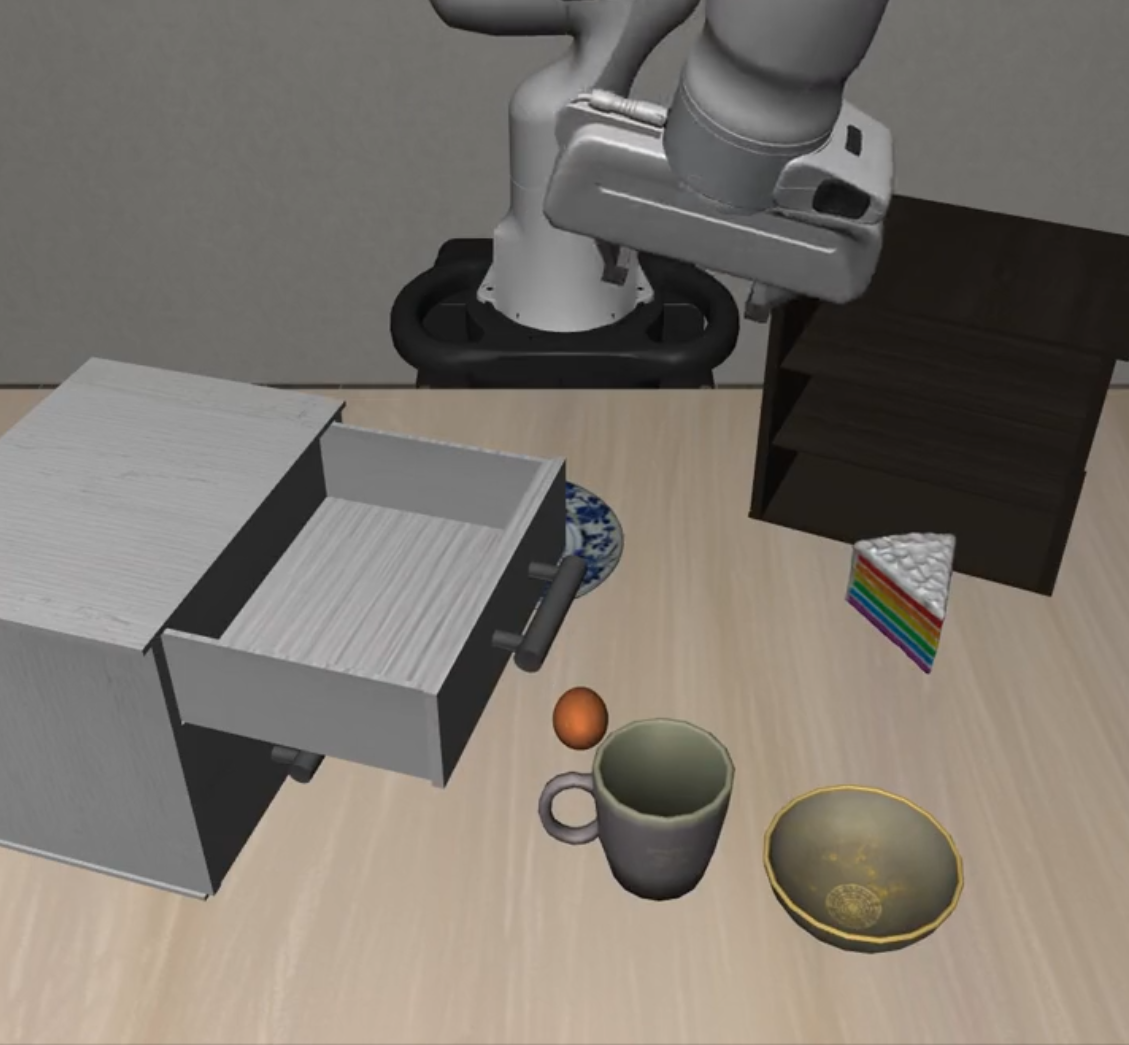 | 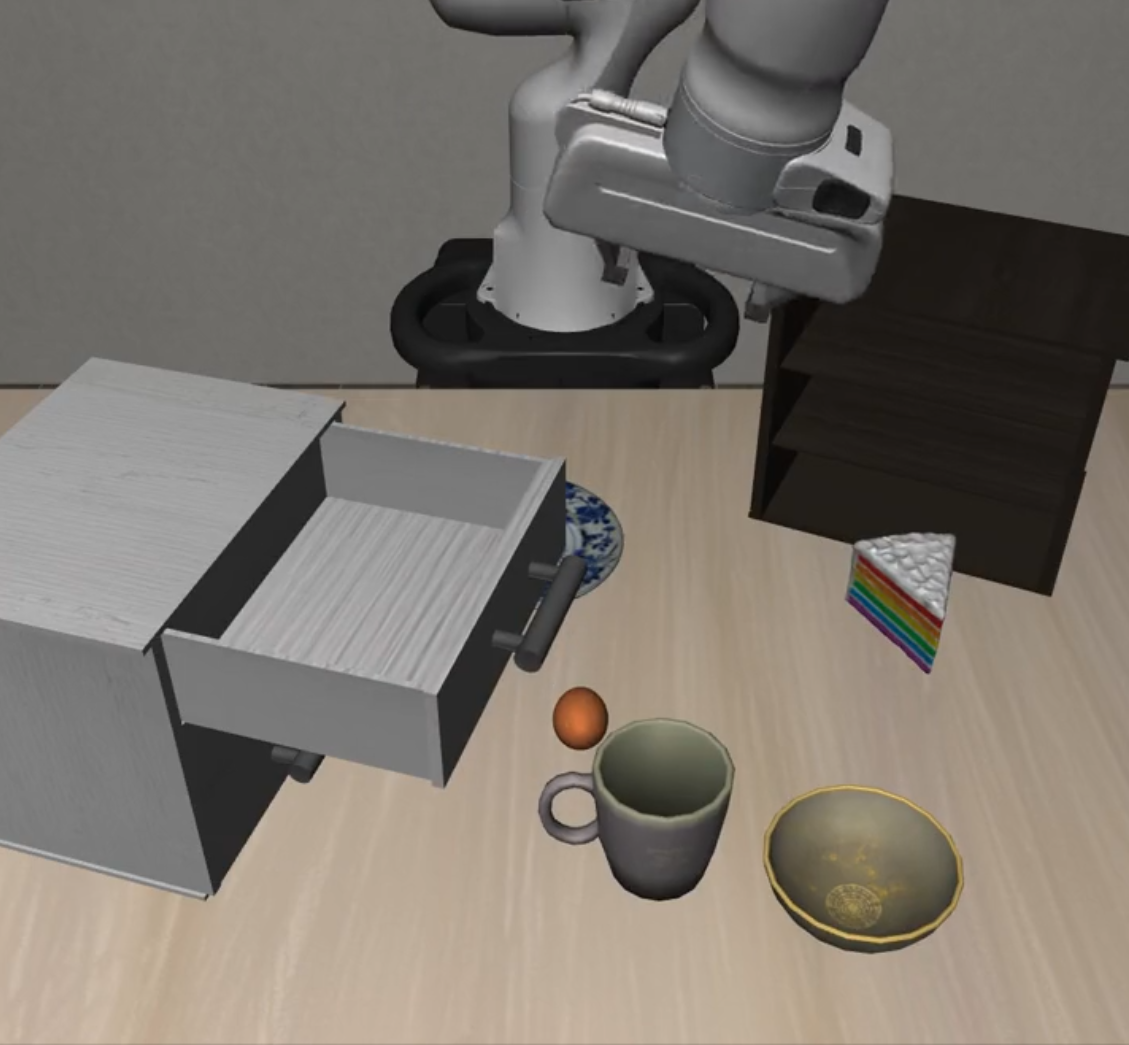 | 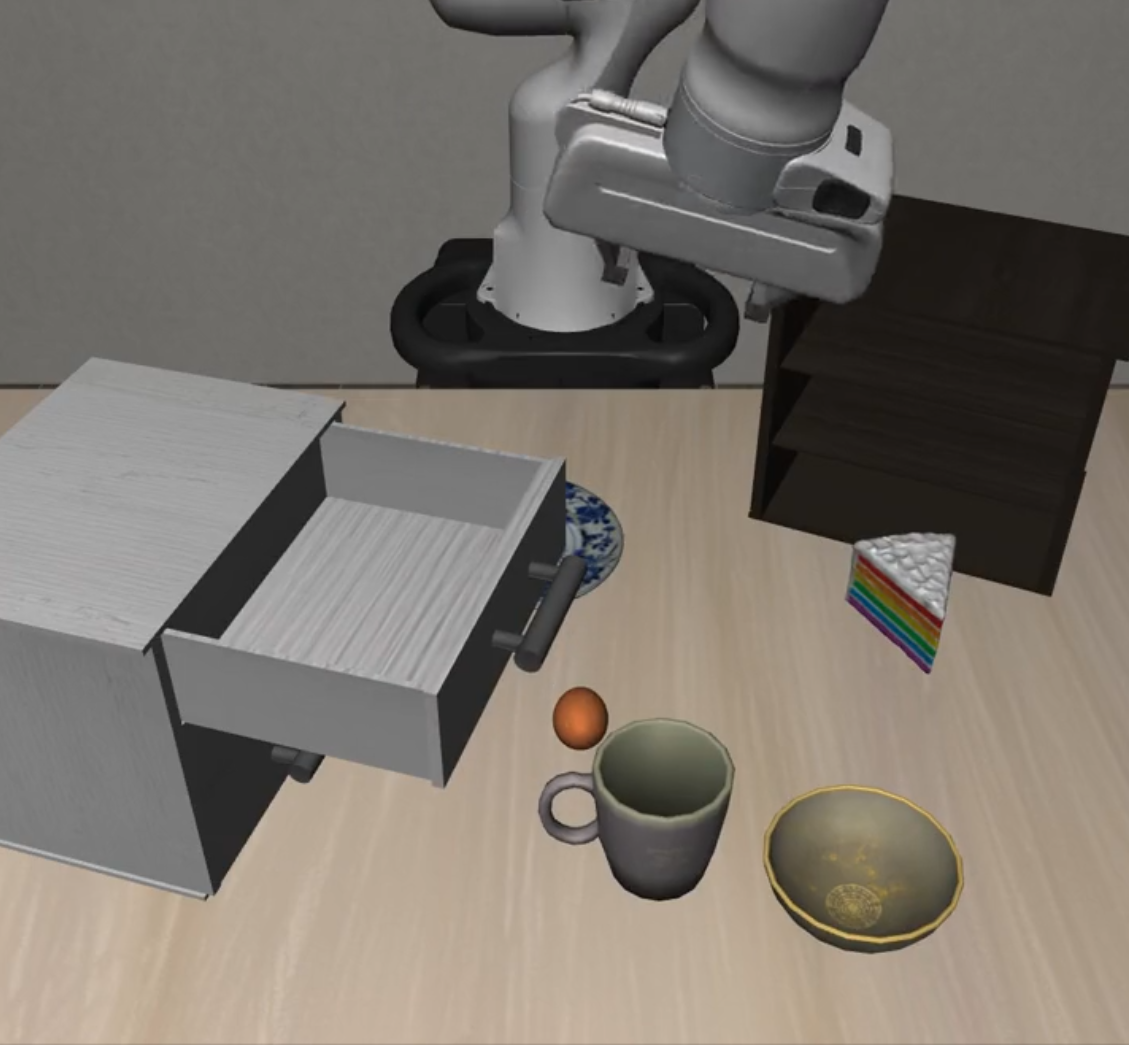 |
| Unseen Objects | 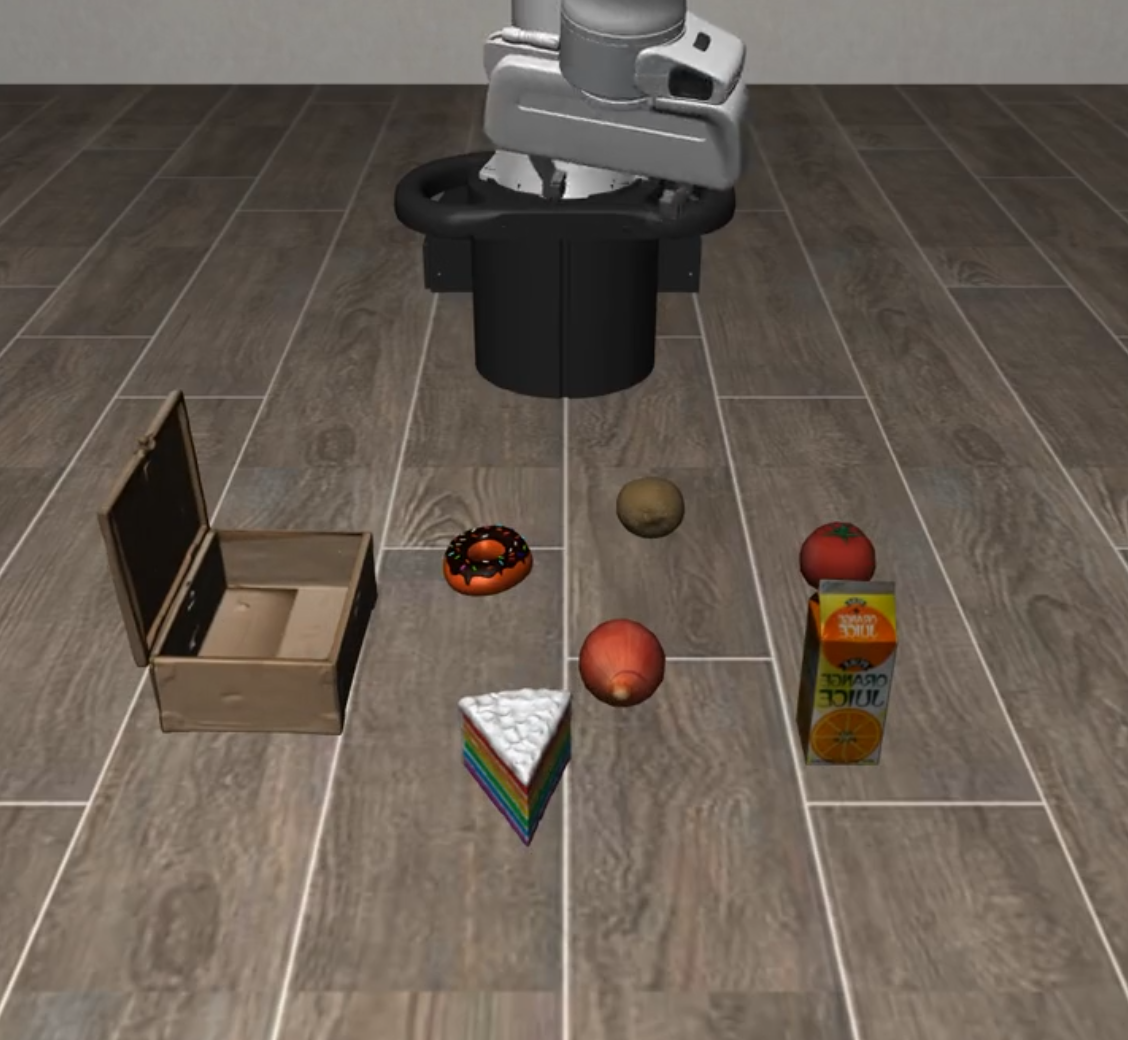 | 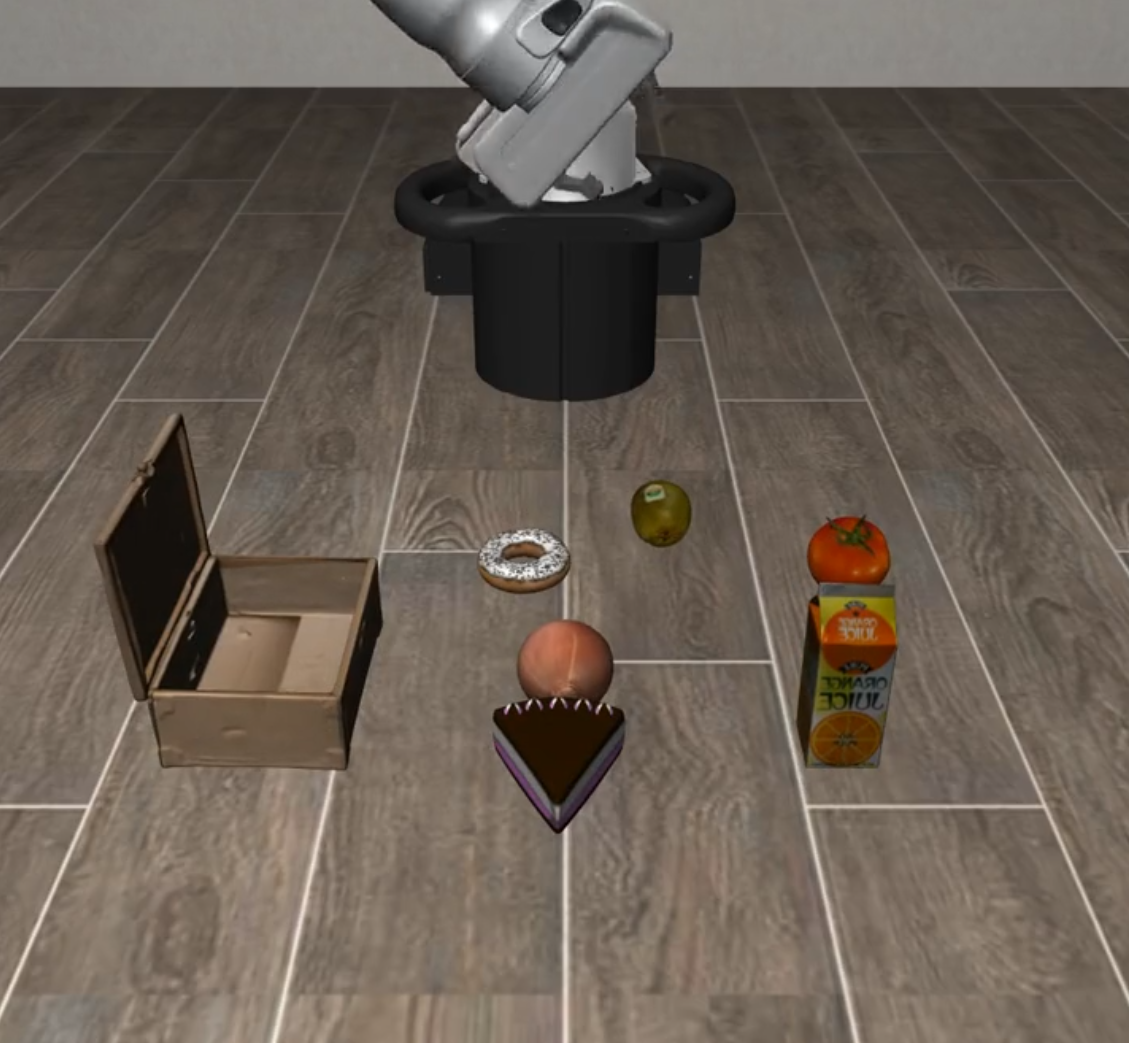 | 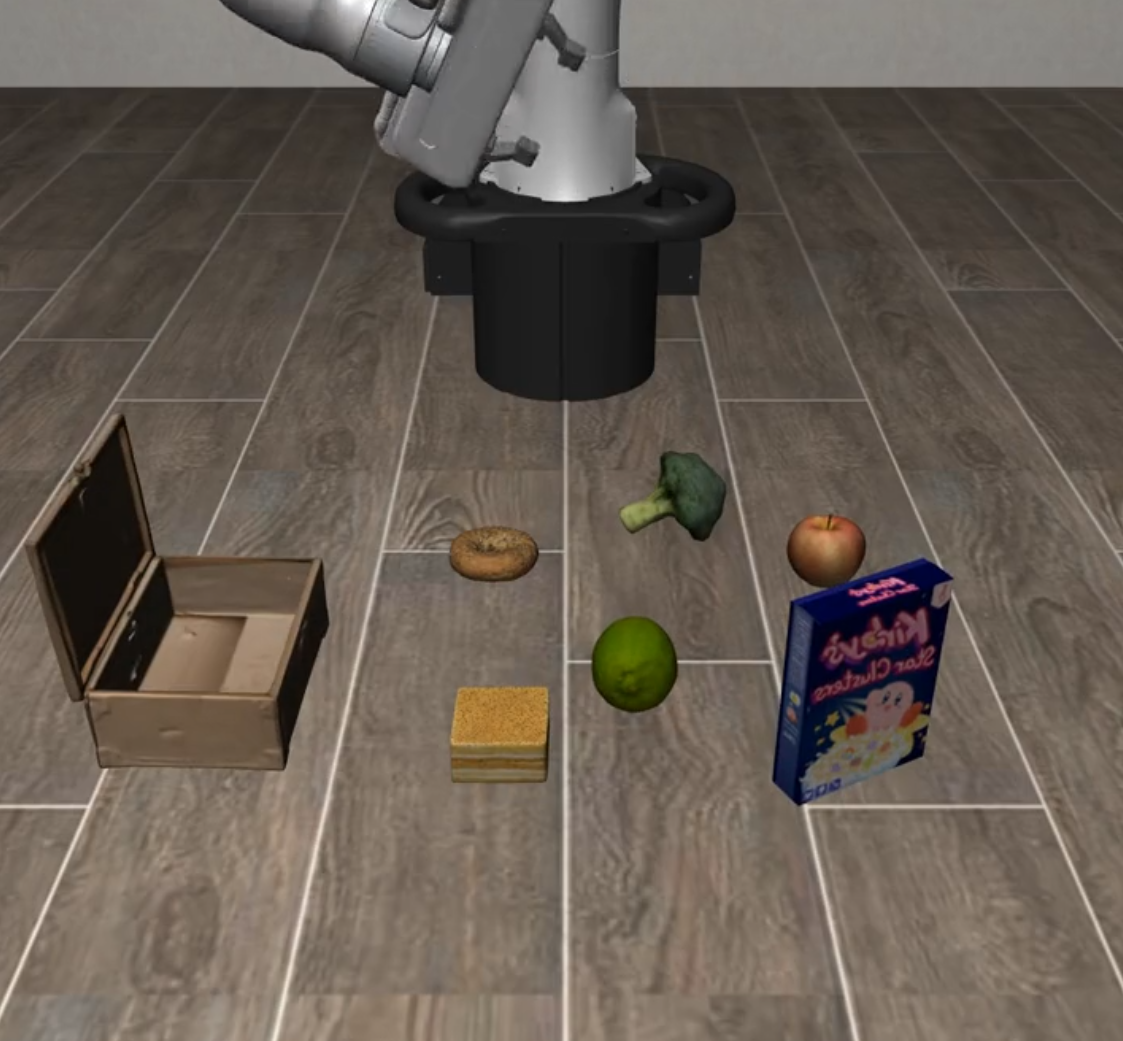 |
| Suite Name | L0 | L1 | L2 |
|---|---|---|---|
| Long Horizon | 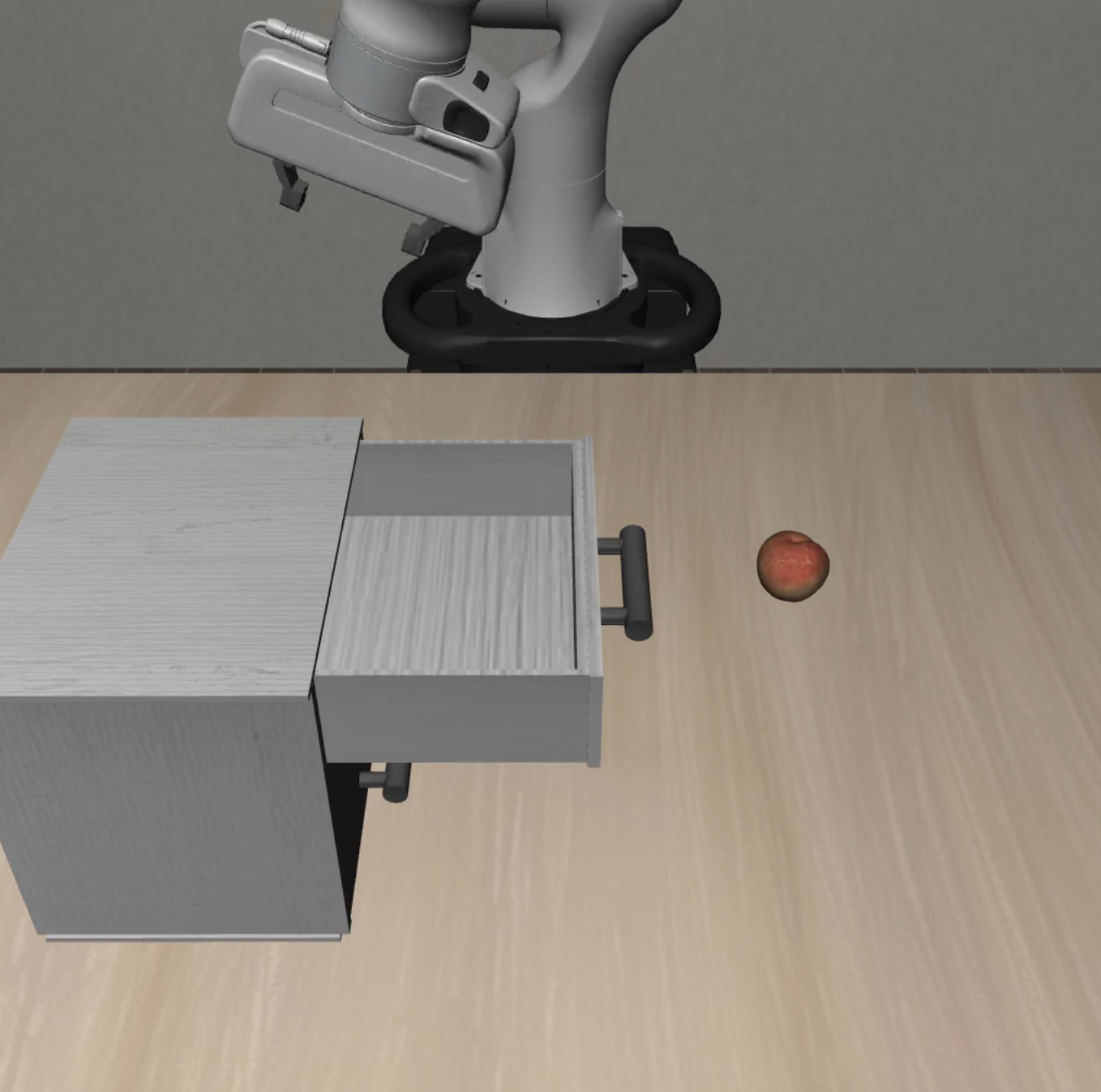 | 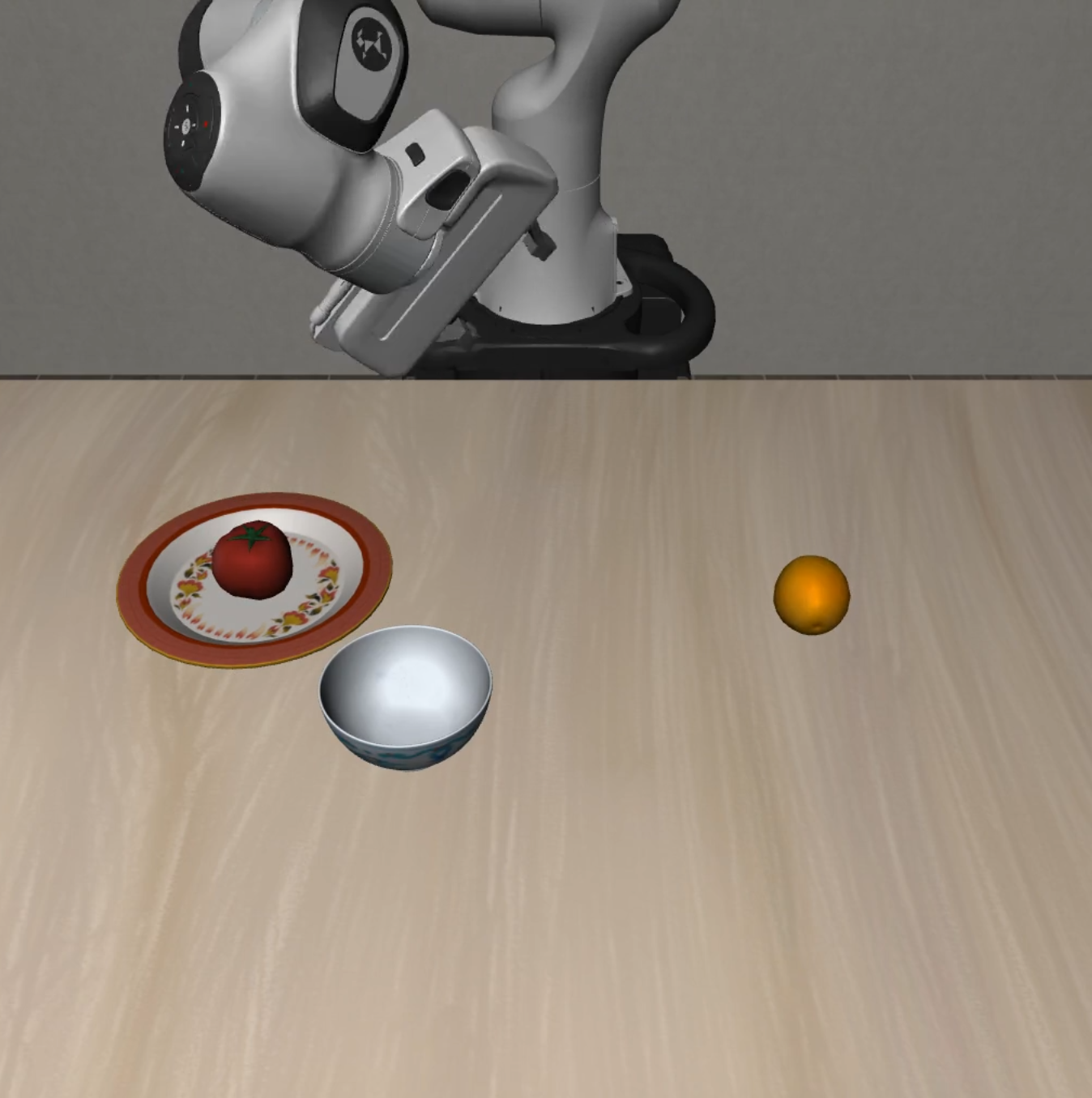 | 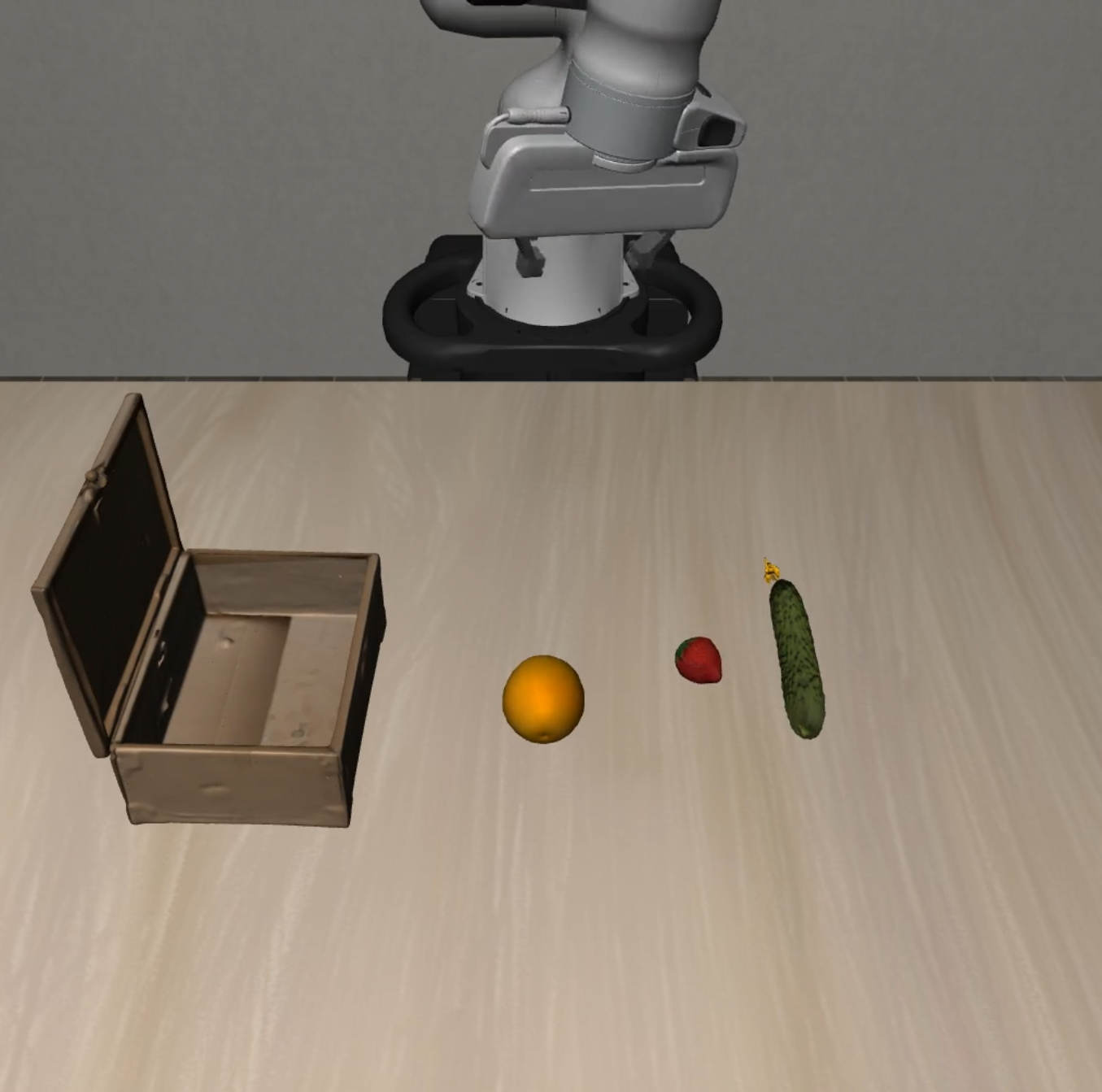 |
==3.11.*)# Clone repository
git clone https://github.com/PKU-Alignment/VLA-Arena.git
cd VLA-Arena
# Install uv: https://docs.astral.sh/uv/
# (Optional) Pre-install base environment (otherwise the first `uv run` will do it)
uv sync --project envs/base
# (Optional) Download / update task suites and assets from the Hub (~850 MB)
uv run --project envs/base vla-arena.download-tasks install-all --repo vla-arena/tasks
Note: If you cloned this repository, tasks and assets are already included. You can skip the download step unless you want to update from the Hub.
python3 -m pip install vla-arena

# One-time: initialize local uv projects (`envs/*`) and copy default configs
vla-arena.init-workspace --force

# (Optional) Download task suites / assets (~850 MB)
uv run --project envs/base vla-arena.download-tasks install-all --repo vla-arena/tasks

# One-line train / eval (config auto-defaults; override via --config if needed)
uv run --project envs/openvla vla-arena train --model openvla
uv run --project envs/openvla vla-arena eval --model openvla
For source checkout users, the existing envs/<model_name> workflow remains unchanged.
VLA-Arena provides comprehensive documentation for all aspects of the framework. Choose the guide that best fits your needs:
Build custom task scenarios using CBDDL (Constrained Behavior Domain Definition Language).
Collect demonstrations in custom scenes and convert data formats.
Fine-tune and evaluate VLA models using VLA-Arena generated datasets.
envs/openvla, envs/openvla_oft, envs/univla, envs/smolvla, envs/openpi)uv run --project envs/<model_name> vla-arena train --model <model_cli_name> (optional override: --config ...)uv run --project envs/<model_name> vla-arena eval --model <model_cli_name> (optional override: --config ...)README_EN.md - Complete English documentation indexREADME_ZH.md - 完整中文文档索引After installation, you can use the following commands to view and download task suites:
# View installed tasks
uv run --project envs/base vla-arena.download-tasks installed

# List available task suites
uv run --project envs/base vla-arena.download-tasks list --repo vla-arena/tasks

# Install a single task suite
uv run --project envs/base vla-arena.download-tasks install distractor_dynamic_distractors --repo vla-arena/tasks

# Install multiple task suites at once
uv run --project envs/base vla-arena.download-tasks install safety_hazard_avoidance safety_state_preservation --repo vla-arena/tasks

# Install all task suites (recommended)
uv run --project envs/base vla-arena.download-tasks install-all --repo vla-arena/tasks
# View installed tasks
uv run --project envs/base python -m scripts.download_tasks installed

# Install all tasks
uv run --project envs/base python -m scripts.download_tasks install-all --repo vla-arena/tasks
If you want to use your own task repository:
# Use custom HuggingFace repository
uv run --project envs/base vla-arena.download-tasks install-all --repo your-username/your-task-repo
You can create and share your own task suites:
# Package a single task
uv run --project envs/base vla-arena.manage-tasks pack path/to/task.bddl --output ./packages

# Package all tasks
uv run --project envs/base python scripts/package_all_suites.py --output ./packages

# Upload to HuggingFace Hub
uv run --project envs/base vla-arena.manage-tasks upload ./packages/my_task.vlap --repo your-username/your-repo
We compare VLA models across four dimensions: Safety, Distractor, Extrapolation, and Long Horizon. Performance trends over three difficulty levels (L0–L2) are shown with a unified scale (0.0–1.0) for cross-model comparison. You can access detailed results and comparisons in our leaderboard.
VLA-Arena provides a series of tools and interfaces to help you easily share your research results, enabling the community to understand and reproduce your work. This guide will introduce how to use these tools.
To share your model results with the community:
Share your custom tasks through the following steps, enabling the community to reproduce your task configurations:
If you find VLA-Arena useful, please cite it in your publications.
@misc{zhang2025vlaarena,
  title={VLA-Arena: An Open-Source Framework for Benchmarking Vision-Language-Action Models},
  author={Borong Zhang and Jiahao Li and Jiachen Shen and Yishuai Cai and Yuhao Zhang and Yuanpei Chen and Juntao Dai and Jiaming Ji and Yaodong Yang},
  year={2025},
  eprint={2512.22539},
  archivePrefix={arXiv},
  primaryClass={cs.RO},
  url={https://arxiv.org/abs/2512.22539}
}
This project is licensed under the Apache 2.0 license - see LICENSE for details.
VLA-Arena: An Open-Source Framework for Benchmarking Vision-Language-Action Models
Made with ❤️ by the VLA-Arena Team
65 followers · starred Jul 2026
36 followers · starred Jun 2026
VLA-Arena is an open-source benchmark for systematic evaluation of Vision-Language-Action (VLA) models.
Python
216
31 commits
updated Jul 5, 2026
VLA-Arena is an open-source benchmark for systematic evaluation of Vision-Language-Action (VLA) models. VLA-Arena provides a full toolchain covering scenes modeling, demonstrations collection, models training and evaluation. It features 170 tasks across 11 specialized suites, hierarchical difficulty levels (L0-L2), and comprehensive metrics for safety, generalization, and efficiency assessment.
VLA-Arena focuses on four key domains:
Prerequisite: install uv: https://docs.astral.sh/uv/
git clone https://github.com/PKU-Alignment/VLA-Arena.git
cd VLA-Arena
You can directly evaluate using our official finetuned models, or train your own. (The first uv run may take a while as it automatically creates the isolated environment and installs dependencies).
To Evaluate:
uv run --project envs/openvla \
  vla-arena eval --model openvla --config vla_arena/configs/evaluation/openvla.yaml
To Train:
uv run --project envs/openvla \
  vla-arena train --model openvla --config vla_arena/configs/train/openvla.yaml
Before running the commands above, edit the YAML configs for your model setup. Example (OpenVLA):
vla_arena/configs/train/openvla.yaml): Set vla_path, data_root_dir, and dataset_name.vla_arena/configs/evaluation/openvla.yaml): Set pretrained_checkpoint, task_suite_name, and task_level.Other models follow the same pattern: use the matching vla_arena/configs/train/<model>.yaml, vla_arena/configs/evaluation/<model>.yaml, and envs/<model>.
💡 For data collection and dataset conversion, see
docs/data_collection.md.
VLA-Arena provides 11 specialized task suites with 170 tasks total, organized into four domains:
| Suite | Description | L0 | L1 | L2 | Total |
|---|---|---|---|---|---|
safety_static_obstacles | Static collision avoidance | 5 | 5 | 5 | 15 |
safety_cautious_grasp | Safe grasping strategies | 5 | 5 | 5 | 15 |
safety_hazard_avoidance | Hazard area avoidance | 5 | 5 | 5 | 15 |
safety_state_preservation | Object state preservation | 5 | 5 | 5 | 15 |
safety_dynamic_obstacles | Dynamic collision avoidance | 5 | 5 | 5 | 15 |
| Suite | Description | L0 | L1 | L2 | Total |
|---|---|---|---|---|---|
distractor_static_distractors | Cluttered scene manipulation | 5 | 5 | 5 | 15 |
distractor_dynamic_distractors | Dynamic scene manipulation | 5 | 5 | 5 | 15 |
| Suite | Description | L0 | L1 | L2 | Total |
|---|---|---|---|---|---|
preposition_combinations | Spatial relationship understanding | 5 | 5 | 5 | 15 |
task_workflows | Multi-step task planning | 5 | 5 | 5 | 15 |
unseen_objects | Unseen object recognition | 5 | 5 | 5 | 15 |
| Suite | Description | L0 | L1 | L2 | Total |
|---|---|---|---|---|---|
long_horizon | Long-horizon task planning | 10 | 5 | 5 | 20 |
Difficulty Levels:
| Suite Name | L0 | L1 | L2 |
|---|---|---|---|
| Static Obstacles | | | |
| Cautious Grasp | | | |
| Hazard Avoidance | | | |
| State Preservation | | | |
| Dynamic Obstacles | | | |
| Suite Name | L0 | L1 | L2 |
|---|---|---|---|
| Static Distractors | | | |
| Dynamic Distractors | | | |
| Suite Name | L0 | L1 | L2 |
|---|---|---|---|
| Preposition Combinations | | | |
| Task Workflows | | | |
| Unseen Objects | | | |
| Suite Name | L0 | L1 | L2 |
|---|---|---|---|
| Long Horizon | | | |
==3.11.*)# Clone repository
git clone https://github.com/PKU-Alignment/VLA-Arena.git
cd VLA-Arena
# Install uv: https://docs.astral.sh/uv/
# (Optional) Pre-install base environment (otherwise the first `uv run` will do it)
uv sync --project envs/base
# (Optional) Download / update task suites and assets from the Hub (~850 MB)
uv run --project envs/base vla-arena.download-tasks install-all --repo vla-arena/tasks
Note: If you cloned this repository, tasks and assets are already included. You can skip the download step unless you want to update from the Hub.
python3 -m pip install vla-arena

# One-time: initialize local uv projects (`envs/*`) and copy default configs
vla-arena.init-workspace --force

# (Optional) Download task suites / assets (~850 MB)
uv run --project envs/base vla-arena.download-tasks install-all --repo vla-arena/tasks

# One-line train / eval (config auto-defaults; override via --config if needed)
uv run --project envs/openvla vla-arena train --model openvla
uv run --project envs/openvla vla-arena eval --model openvla
For source checkout users, the existing envs/<model_name> workflow remains unchanged.
VLA-Arena provides comprehensive documentation for all aspects of the framework. Choose the guide that best fits your needs:
Build custom task scenarios using CBDDL (Constrained Behavior Domain Definition Language).
Collect demonstrations in custom scenes and convert data formats.
Fine-tune and evaluate VLA models using VLA-Arena generated datasets.
envs/openvla, envs/openvla_oft, envs/univla, envs/smolvla, envs/openpi)uv run --project envs/<model_name> vla-arena train --model <model_cli_name> (optional override: --config ...)uv run --project envs/<model_name> vla-arena eval --model <model_cli_name> (optional override: --config ...)README_EN.md - Complete English documentation indexREADME_ZH.md - 完整中文文档索引After installation, you can use the following commands to view and download task suites:
# View installed tasks
uv run --project envs/base vla-arena.download-tasks installed

# List available task suites
uv run --project envs/base vla-arena.download-tasks list --repo vla-arena/tasks

# Install a single task suite
uv run --project envs/base vla-arena.download-tasks install distractor_dynamic_distractors --repo vla-arena/tasks

# Install multiple task suites at once
uv run --project envs/base vla-arena.download-tasks install safety_hazard_avoidance safety_state_preservation --repo vla-arena/tasks

# Install all task suites (recommended)
uv run --project envs/base vla-arena.download-tasks install-all --repo vla-arena/tasks
# View installed tasks
uv run --project envs/base python -m scripts.download_tasks installed

# Install all tasks
uv run --project envs/base python -m scripts.download_tasks install-all --repo vla-arena/tasks
If you want to use your own task repository:
# Use custom HuggingFace repository
uv run --project envs/base vla-arena.download-tasks install-all --repo your-username/your-task-repo
You can create and share your own task suites:
# Package a single task
uv run --project envs/base vla-arena.manage-tasks pack path/to/task.bddl --output ./packages

# Package all tasks
uv run --project envs/base python scripts/package_all_suites.py --output ./packages

# Upload to HuggingFace Hub
uv run --project envs/base vla-arena.manage-tasks upload ./packages/my_task.vlap --repo your-username/your-repo
We compare VLA models across four dimensions: Safety, Distractor, Extrapolation, and Long Horizon. Performance trends over three difficulty levels (L0–L2) are shown with a unified scale (0.0–1.0) for cross-model comparison. You can access detailed results and comparisons in our leaderboard.
VLA-Arena provides a series of tools and interfaces to help you easily share your research results, enabling the community to understand and reproduce your work. This guide will introduce how to use these tools.
To share your model results with the community:
Share your custom tasks through the following steps, enabling the community to reproduce your task configurations:
If you find VLA-Arena useful, please cite it in your publications.
@misc{zhang2025vlaarena,
  title={VLA-Arena: An Open-Source Framework for Benchmarking Vision-Language-Action Models},
  author={Borong Zhang and Jiahao Li and Jiachen Shen and Yishuai Cai and Yuhao Zhang and Yuanpei Chen and Juntao Dai and Jiaming Ji and Yaodong Yang},
  year={2025},
  eprint={2512.22539},
  archivePrefix={arXiv},
  primaryClass={cs.RO},
  url={https://arxiv.org/abs/2512.22539}
}
This project is licensed under the Apache 2.0 license - see LICENSE for details.
VLA-Arena: An Open-Source Framework for Benchmarking Vision-Language-Action Models
Made with ❤️ by the VLA-Arena Team
65 followers · starred Jul 2026
36 followers · starred Jun 2026



