An extremely compact offline media server for Movies, Shows, Books, and Music.
See the code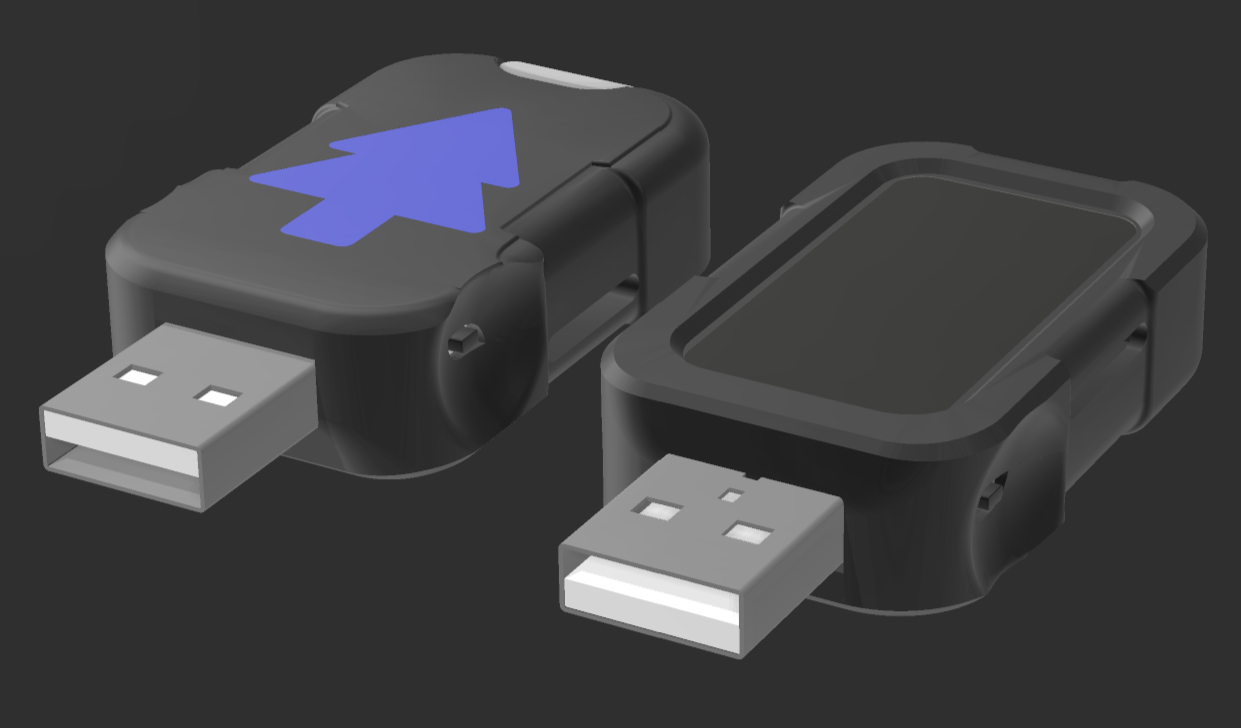
A portable, offline media server powered by the ESP32-S3 in a thumbdrive form factor.
Stream movies, music, books, and shows anywhere - no internet required.




Buy a Prebuilt Nomad | Support on Ko-fi
Firmware 4.6 - The biggest update since Mk4, and everything in it has come over from the experimental branch. exFAT card support, offline maps with turn by turn directions, game ROMs and a shelf of built-in games, local multiplayer, TV support over DLNA, a WiFi Mode that joins your home network, offline translation, and recipe + 3D model libraries. Everything from Mk4 is still here and still works, this adds on top of it.
Some of this is newer than the rest. The parts I'd call settled are exFAT, the reader and the media pages. Maps, WiFi Mode, DLNA and Translate work are all tested in full, but they have had less time in front of other people's hardware than the rest of the project. Known rough edges are listed near the bottom, everything works but some is getting more improvments so its user friendly. Maps in particular is tricky right now.
Firmware and the SD card template both change here, so you'll need to reflash and refresh your card files.
Also making a push to migrate fully to exfat, will be keeping fat32 legacy support so yall dont have to reformat your cards, but some of the advanced features will only work on exfat.
Jcorp Nomad is an open-source offline media server designed for travel, remote work, classrooms, camping, and more. It runs entirely on an ESP32-S3, creates a local Wi-Fi hotspot, and serves media through a browser interface. Multiple users can access separate media streams simultaneously, all without internet access.
This project is compact, easy to modify, and includes optional 3D-printable hardware. Both firmware and web interface are fully open-source.
I strongly recommend building your own Nomad. It's not a very difficult project, if you can follow instructions and plug in a USB cable, you can do it. The parts are cheap, widely available, and the whole build takes under an hour. See Hardware Requirements and Quick Start below. If nothing else please check out the DIY option before purchasing.
That said, I also won't say no to money. If you'd rather skip the DIY and get a ready-to-go unit, prebuilt Nomads are available at nomad.jcorptech.net.
Every Nomad, whether you build it or buy it, runs the same open-source firmware and web interface. When new features and updates are released, you can always flash the latest code yourself to stay up to date.
If you just want to support the project, donations are always appreciated:
ko-fi.com/jcorptech
This is the big one, and it's the thing people have been asking for the longest. FAT32 has been Nomad's biggest limitation since day one, cards over 32GB needed a reformat first, and no single file could go over 4GB, which is why large ZIMs had to be split into parts. exFAT fixes both of those.
The reason this took so long, the Arduino ESP32 core ships a prebuilt filesystem library with exFAT compiled out of it, and there is no way to turn it back on from a sketch. The fix was to stop using it entirely and swap in SdFat, which brings its own filesystem code. Everything else in the firmware talks to it the same way it always did.
You'll need the SdFat library installed from the Arduino Library Manager before this will compile.
/Maps and get browsed offline, with place search and real turn by turn directions (Drive and Walk)This one is the roughest of the bunch. It works, but it's slow, big regions take a while to draw. I'm still working on that, have a few ideas to improve the speed.
Instead of running its own hotspot, Nomad can now join a WiFi network you already have and serve everything to that network, the browser interface, DLNA, all of it. Your phone stays on your normal internet-connected WiFi and Nomad is just another device on it. This is also the fix for TV devices like Fire Sticks that refuse to do anything on a network with no internet.
Nomad now shows up as a media server on anything that speaks DLNA - smart TVs, VLC, Kodi, Roku Media Player.
A Translate page that works with zero internet. Two people can pass a phone back and forth and each type in their own language.
/Translate on the card and are installed with Nomad Tools, which always grabs both directions of a pairTwo new library pages, both optional, both disabled by default.
Cookbook: drop .md, .cook or .json recipe files into /Cookbook (photos work, same-name image convention). Recipes render with ingredient and step checklists you can tick off while cooking.
Workshop: drop .stl, .3mf or .obj files into /Workshop and preview them in 3D right in the browser. A README or notes file in a folder describes every model in it. The viewer is a few hundred lines of raw WebGL, not a bundled 3D engine, so it stays fast off the card.
I think these are kinda dumb... but I needed a clean number of pages so this is what we get..
/Games and play them in the browser through EmulatorJS.wad you drop in /Games runs through the same engine (this is here so I can say it runs doom, you must keep this on the card it is load bearing.. I swear lol)
Default Blue, Forest Night, Cherry Blossom, Mocha Latte, Ocean Depths, Autumn Leaves, Lavender Fields, Sunset Horizon, Coral Reef, Mountain Mist, Jade Garden, Desert Sand, Arctic Aurora, DeLorean, Midnight Code, 90s Retro, Mint Breeze, Rose Gold, Crimson Night, Emerald Dream, Royal Purple, Copper Sunset, Sapphire Sea, Peach Cream, Slate Storm, Lime Zest, Burgundy Wine, Teal Oasis
Nomad is built specifically for the Waveshare ESP32-S3 Dev Board (1.47" LCD version). Due to the number of low-level tricks used to squeeze this much functionality out of the hardware, it is difficult to get Nomad running on other boards.
There are a few community forks that target other ESP32 boards, but your mileage will vary. I'm also actively working on a Nomad Lite version with wider board compatibility, focused on basic streaming without all the advanced features.
Waveshare ESP32-S3 Dev Board (1.47" LCD version) - Amazon Link
or the ESP32-S3-LCD-1.47B - the USB-C board. Same chip, same everything, the LCD backlight just moves from GPIO 48 to GPIO 46. Building it yourself, set BOARD_USB_C to 1 in Display_ST7789.h; flashing from the browser, pick the USB-C build. Get it wrong and it boots functional, just no screen output. - Amazon Link
microSD card, exFAT or FAT32 (16-128GB recommended, up to 2TB) Amazon Link
SD-Card Extender (optional, 3DP case compatible) Amazon Link
USB power source
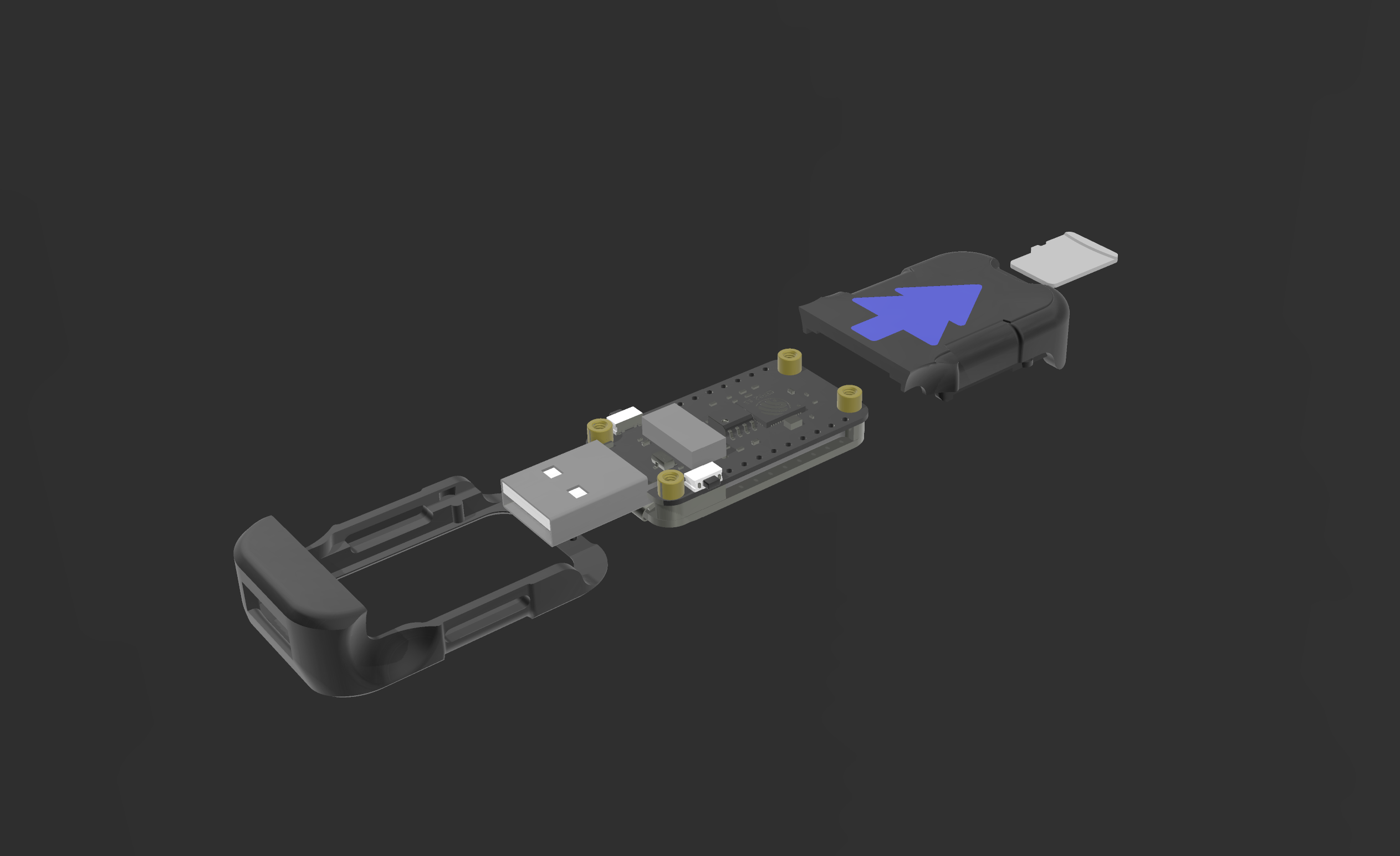
Optional: 3D-printed enclosure (STL files included)
If you would rather skip Arduino IDE entirely, nomadflash.jcorptech.net does the setup from a browser tab. The firmware is already compiled, so there is nothing to install and no SdFat version to line up. This system will lag a bit behind on the latest version, but makes setup much easier for most casual users.
It covers three things:
Both the main and experimental builds are there, and each is offered for both boards:
Pick the one matching the connector on your board. The two differ only in which pin drives the LCD backlight, so flashing the wrong one boots fine but leaves the screen dark.
Formatting is the one step it cannot do, because a web page has no access to drives or partitions. You usually do not need it, since exFAT, FAT32 and FAT16 cards all mount as they come. If a card does need formatting, the site prints the exact command for Windows, macOS or Linux.
Requires Chrome, Edge or Opera on a desktop. It uses Web Serial and the File System Access API, which Firefox and Safari do not implement, and neither one works on iOS or Android.
ArduinoJson by Benoit Blanchon 7.3.0Async TCP by ESP32Async 3.4.7ESP Async WebServer by ESP32Async 3.7.1LVGL by kisvegabor 8.4.0SdFat by Bill Greiman 2.3.0 - this one is required for exFAT, it is not optionalIf you would rather not line any of that up, use the browser flasher above.
/firmware/./SD_Card_Template/ files onto the card. Any exFAT or FAT32 card works as-is, you only need to format if the card is brand new or broken./Movies, /Shows, /Books, /Music, /Gallery, /Files, /Games, /Cookbook, /Workshop. (ZIMs, Maps and Translate packs get prepped with Nomad Tools, see below.)Jcorp_Nomad with password: password.Faster & More Reliable Indexing
Resume Functionality
Dark Mode
Admin Page
Stability Improvements
Improved Library Support
Folder Structure

/Movies
    Interstellar.mp4
    Interstellar.jpg

/Shows
    /The Office
        S01E01 - Pilot.mp4
        S01E02 - Diversity Day.mp4
    The Office.jpg

    /Gravity Falls
        /Season 1
            S1E1 - Tourist Trapped.mp4
            S1E2 - The Legend of the Gobblewonker.mp4
        /Season 2
            S2E1 - Scary-oke.mp4
            S2E2 - Into the Bunker.mp4
        Alex Hirsch Interview.mp4
    Gravity Falls.jpg

/Books
    The Martian.pdf
    The Martian.jpg
    /How to Train Your Dragon
        book1.pdf
        book2.mp3
        book1.jpg
        book2.jpg
    How to Train Your Dragon.jpg

/Music
    track01.mp3
    /Artist1
        track01.mp3
        /Album1
            track02.mp3
    /PersonName
        /Playlist1
            track01.mp3
        /Playlist2
            track02.mp3

/Gallery
    image01.jpg
    video01.mp4

/Files
    document.pdf
    example.txt

/Games
    Pokemon Red.gb
    Pokemon Red.png
    Doom.wad
    Chess.html
    Go.html

/Cookbook
    Grandma's Chili.md
    Grandma's Chili.jpg
    /Desserts
        Brownies.md

/Workshop
    /Brackets
        shelf bracket.stl
        README.txt

/Maps
    /pennsylvania
        manifest.json
        (map data, prepped with Nomad Tools)

/Translate
    manifest.json
    (language packs, installed with Nomad Tools)

/Archive
    wikipedia_en_all_maxi.zim
    /.nomad-zim
        (search index, built by Nomad Tools)

index.html
appleindex.html
menu.html
movies.html
shows.html
books.html
music.html
gallery.html
files.html
archive.html
games.html
maps.html
translate.html
cookbook.html
workshop.html
Logo.png
favicon.ico
.mp4, .webm, .m4v play everywhere. .mkv, .avi, .mov are listed and handed to the player too, but Nomad has no content type for them, so whether they play is down to your browser (Safari is usually fine with .mov, Chrome usually is not with .mkv). If a video lists but will not play, that is almost always this. Remux to .mp4 and it will..mp3, .flac, .wav, .ogg, .aac, .m4a, plus .opus with the same browser caveat as above..srt, .vtt, .ass, .ssa, .sub - drop them next to the video with the same name. Movie.srt or Movie.en.srt both attach, language suffixes become selectable tracks, and .srt is converted to WebVTT on the fly because browsers render nothing for raw SRT..pdf, .epub, .cbz, .cbr.jpg, .jpeg, .png, .webp, .gif, .bmp, .avif.zim (offline Wikipedia and other ZIM-format wikis), needs special processing, you cant just drop a .zim in sadly. Prep them with Nomad Tools first (still rough, but handles most common ZIMs).wad files for DOOM, plus .html files for built-in games/Maps.md, .cook, or .json files in /Cookbook.stl, .3mf, .obj in /Workshop/Translate with Nomad ToolsSome content needs a one-time prep step on your computer before Nomad can use it, ZIM archives need a search index built, maps need downloading, translation packs need fetching. Nomad Tools is a simple menu that does all of it. Windows and Linux (macOS untested).
Basic usage:
START-Windows.bat. Linux: run ./start-linux.sh.What the menu covers:
starter, traveler, europe, asia, world) or single languages. (I recomend just grabbing all as its less than 4GB)A good order for a fresh card: media and ZIMs first, optimize images, rebuild the index last. Maps and languages can be added any time.
Everything here works, but these are the parts I already know aren't great:
.mkv, .avi and .mov get served without a content type, so it comes down to what your browser will sniff and decode. Nothing is broken on the Nomad side.Nomad Lite - A stripped-down version of Nomad with wider board compatibility, focused on core streaming features. In active development now that Mk4 is out.
Gallion - A larger-scale sibling to Nomad, built on more capable hardware. Gallion is designed to handle everything that couldn't fit on Nomad's current platform > ROM emulation, 4k video, and expanded media compatibility across the board. The current version is here.
ESP32-P4 - I have said for a long time that I don't want to switch hardware, as doing so would leave yall with a useless board. The S3 is the Nomad and it stays supported. That said, I have started slowly co-developing a P4 version alongside it, because the P4 brings two things the S3 can't: a radio module that is already FCC certified, which matters a lot for anything I sell, and considerably faster WiFi.
Two boards, if it works out. The WIFI6 board is a stick, only a bit larger than the Nomad you have now. The NANO is noticeably bigger than either, but it adds an ethernet port with POE module support, and a USB port so storage can be expanded or replaced rather than living entirely on the SD card.
None of this is a replacement announcement. It will be its own branch, the S3 keeps getting the same updates, just better speed and a few more features on the p4 branch.
Inspired by my experience running a Jellyfin server, I wanted a portable, low-cost solution for offline media streaming. Challenges with SBCs (Raspberry Pi, etc.) included high power usage, heat, and instability.
Nomad focuses on delivering:
The ESP32-S3 provides enough performance to handle these requirements efficiently, in a pocket-sized form factor.
CC BY-NC-SA 4.0 - free to remix and share for non-commercial use with attribution.
Developed by Jackson Studner (Jcorp Tech). Inspired by open-source offline media projects. Contributions via PRs welcome.

282 followers · starred Jun 2026
391 followers · starred Jul 2025
259 followers · starred Nov 2025
69 followers · starred Aug 2025
An extremely compact offline media server for Movies, Shows, Books, and Music.
See the code
A portable, offline media server powered by the ESP32-S3 in a thumbdrive form factor.
Stream movies, music, books, and shows anywhere - no internet required.
Buy a Prebuilt Nomad | Support on Ko-fi
Firmware 4.6 - The biggest update since Mk4, and everything in it has come over from the experimental branch. exFAT card support, offline maps with turn by turn directions, game ROMs and a shelf of built-in games, local multiplayer, TV support over DLNA, a WiFi Mode that joins your home network, offline translation, and recipe + 3D model libraries. Everything from Mk4 is still here and still works, this adds on top of it.
Some of this is newer than the rest. The parts I'd call settled are exFAT, the reader and the media pages. Maps, WiFi Mode, DLNA and Translate work are all tested in full, but they have had less time in front of other people's hardware than the rest of the project. Known rough edges are listed near the bottom, everything works but some is getting more improvments so its user friendly. Maps in particular is tricky right now.
Firmware and the SD card template both change here, so you'll need to reflash and refresh your card files.
Also making a push to migrate fully to exfat, will be keeping fat32 legacy support so yall dont have to reformat your cards, but some of the advanced features will only work on exfat.
Jcorp Nomad is an open-source offline media server designed for travel, remote work, classrooms, camping, and more. It runs entirely on an ESP32-S3, creates a local Wi-Fi hotspot, and serves media through a browser interface. Multiple users can access separate media streams simultaneously, all without internet access.
This project is compact, easy to modify, and includes optional 3D-printable hardware. Both firmware and web interface are fully open-source.
I strongly recommend building your own Nomad. It's not a very difficult project, if you can follow instructions and plug in a USB cable, you can do it. The parts are cheap, widely available, and the whole build takes under an hour. See Hardware Requirements and Quick Start below. If nothing else please check out the DIY option before purchasing.
That said, I also won't say no to money. If you'd rather skip the DIY and get a ready-to-go unit, prebuilt Nomads are available at nomad.jcorptech.net.
Every Nomad, whether you build it or buy it, runs the same open-source firmware and web interface. When new features and updates are released, you can always flash the latest code yourself to stay up to date.
If you just want to support the project, donations are always appreciated:
ko-fi.com/jcorptech
This is the big one, and it's the thing people have been asking for the longest. FAT32 has been Nomad's biggest limitation since day one, cards over 32GB needed a reformat first, and no single file could go over 4GB, which is why large ZIMs had to be split into parts. exFAT fixes both of those.
The reason this took so long, the Arduino ESP32 core ships a prebuilt filesystem library with exFAT compiled out of it, and there is no way to turn it back on from a sketch. The fix was to stop using it entirely and swap in SdFat, which brings its own filesystem code. Everything else in the firmware talks to it the same way it always did.
You'll need the SdFat library installed from the Arduino Library Manager before this will compile.
/Maps and get browsed offline, with place search and real turn by turn directions (Drive and Walk)This one is the roughest of the bunch. It works, but it's slow, big regions take a while to draw. I'm still working on that, have a few ideas to improve the speed.
Instead of running its own hotspot, Nomad can now join a WiFi network you already have and serve everything to that network, the browser interface, DLNA, all of it. Your phone stays on your normal internet-connected WiFi and Nomad is just another device on it. This is also the fix for TV devices like Fire Sticks that refuse to do anything on a network with no internet.
Nomad now shows up as a media server on anything that speaks DLNA - smart TVs, VLC, Kodi, Roku Media Player.
A Translate page that works with zero internet. Two people can pass a phone back and forth and each type in their own language.
/Translate on the card and are installed with Nomad Tools, which always grabs both directions of a pairTwo new library pages, both optional, both disabled by default.
Cookbook: drop .md, .cook or .json recipe files into /Cookbook (photos work, same-name image convention). Recipes render with ingredient and step checklists you can tick off while cooking.
Workshop: drop .stl, .3mf or .obj files into /Workshop and preview them in 3D right in the browser. A README or notes file in a folder describes every model in it. The viewer is a few hundred lines of raw WebGL, not a bundled 3D engine, so it stays fast off the card.
I think these are kinda dumb... but I needed a clean number of pages so this is what we get..
/Games and play them in the browser through EmulatorJS.wad you drop in /Games runs through the same engine (this is here so I can say it runs doom, you must keep this on the card it is load bearing.. I swear lol)
Default Blue, Forest Night, Cherry Blossom, Mocha Latte, Ocean Depths, Autumn Leaves, Lavender Fields, Sunset Horizon, Coral Reef, Mountain Mist, Jade Garden, Desert Sand, Arctic Aurora, DeLorean, Midnight Code, 90s Retro, Mint Breeze, Rose Gold, Crimson Night, Emerald Dream, Royal Purple, Copper Sunset, Sapphire Sea, Peach Cream, Slate Storm, Lime Zest, Burgundy Wine, Teal Oasis
Nomad is built specifically for the Waveshare ESP32-S3 Dev Board (1.47" LCD version). Due to the number of low-level tricks used to squeeze this much functionality out of the hardware, it is difficult to get Nomad running on other boards.
There are a few community forks that target other ESP32 boards, but your mileage will vary. I'm also actively working on a Nomad Lite version with wider board compatibility, focused on basic streaming without all the advanced features.
Waveshare ESP32-S3 Dev Board (1.47" LCD version) - Amazon Link
or the ESP32-S3-LCD-1.47B - the USB-C board. Same chip, same everything, the LCD backlight just moves from GPIO 48 to GPIO 46. Building it yourself, set BOARD_USB_C to 1 in Display_ST7789.h; flashing from the browser, pick the USB-C build. Get it wrong and it boots functional, just no screen output. - Amazon Link
microSD card, exFAT or FAT32 (16-128GB recommended, up to 2TB) Amazon Link
SD-Card Extender (optional, 3DP case compatible) Amazon Link
USB power source
Optional: 3D-printed enclosure (STL files included)
If you would rather skip Arduino IDE entirely, nomadflash.jcorptech.net does the setup from a browser tab. The firmware is already compiled, so there is nothing to install and no SdFat version to line up. This system will lag a bit behind on the latest version, but makes setup much easier for most casual users.
It covers three things:
Both the main and experimental builds are there, and each is offered for both boards:
Pick the one matching the connector on your board. The two differ only in which pin drives the LCD backlight, so flashing the wrong one boots fine but leaves the screen dark.
Formatting is the one step it cannot do, because a web page has no access to drives or partitions. You usually do not need it, since exFAT, FAT32 and FAT16 cards all mount as they come. If a card does need formatting, the site prints the exact command for Windows, macOS or Linux.
Requires Chrome, Edge or Opera on a desktop. It uses Web Serial and the File System Access API, which Firefox and Safari do not implement, and neither one works on iOS or Android.
ArduinoJson by Benoit Blanchon 7.3.0Async TCP by ESP32Async 3.4.7ESP Async WebServer by ESP32Async 3.7.1LVGL by kisvegabor 8.4.0SdFat by Bill Greiman 2.3.0 - this one is required for exFAT, it is not optionalIf you would rather not line any of that up, use the browser flasher above.
/firmware/./SD_Card_Template/ files onto the card. Any exFAT or FAT32 card works as-is, you only need to format if the card is brand new or broken./Movies, /Shows, /Books, /Music, /Gallery, /Files, /Games, /Cookbook, /Workshop. (ZIMs, Maps and Translate packs get prepped with Nomad Tools, see below.)Jcorp_Nomad with password: password.Faster & More Reliable Indexing
Resume Functionality
Dark Mode
Admin Page
Stability Improvements
Improved Library Support
Folder Structure

/Movies
    Interstellar.mp4
    Interstellar.jpg

/Shows
    /The Office
        S01E01 - Pilot.mp4
        S01E02 - Diversity Day.mp4
    The Office.jpg

    /Gravity Falls
        /Season 1
            S1E1 - Tourist Trapped.mp4
            S1E2 - The Legend of the Gobblewonker.mp4
        /Season 2
            S2E1 - Scary-oke.mp4
            S2E2 - Into the Bunker.mp4
        Alex Hirsch Interview.mp4
    Gravity Falls.jpg

/Books
    The Martian.pdf
    The Martian.jpg
    /How to Train Your Dragon
        book1.pdf
        book2.mp3
        book1.jpg
        book2.jpg
    How to Train Your Dragon.jpg

/Music
    track01.mp3
    /Artist1
        track01.mp3
        /Album1
            track02.mp3
    /PersonName
        /Playlist1
            track01.mp3
        /Playlist2
            track02.mp3

/Gallery
    image01.jpg
    video01.mp4

/Files
    document.pdf
    example.txt

/Games
    Pokemon Red.gb
    Pokemon Red.png
    Doom.wad
    Chess.html
    Go.html

/Cookbook
    Grandma's Chili.md
    Grandma's Chili.jpg
    /Desserts
        Brownies.md

/Workshop
    /Brackets
        shelf bracket.stl
        README.txt

/Maps
    /pennsylvania
        manifest.json
        (map data, prepped with Nomad Tools)

/Translate
    manifest.json
    (language packs, installed with Nomad Tools)

/Archive
    wikipedia_en_all_maxi.zim
    /.nomad-zim
        (search index, built by Nomad Tools)

index.html
appleindex.html
menu.html
movies.html
shows.html
books.html
music.html
gallery.html
files.html
archive.html
games.html
maps.html
translate.html
cookbook.html
workshop.html
Logo.png
favicon.ico
.mp4, .webm, .m4v play everywhere. .mkv, .avi, .mov are listed and handed to the player too, but Nomad has no content type for them, so whether they play is down to your browser (Safari is usually fine with .mov, Chrome usually is not with .mkv). If a video lists but will not play, that is almost always this. Remux to .mp4 and it will..mp3, .flac, .wav, .ogg, .aac, .m4a, plus .opus with the same browser caveat as above..srt, .vtt, .ass, .ssa, .sub - drop them next to the video with the same name. Movie.srt or Movie.en.srt both attach, language suffixes become selectable tracks, and .srt is converted to WebVTT on the fly because browsers render nothing for raw SRT..pdf, .epub, .cbz, .cbr.jpg, .jpeg, .png, .webp, .gif, .bmp, .avif.zim (offline Wikipedia and other ZIM-format wikis), needs special processing, you cant just drop a .zim in sadly. Prep them with Nomad Tools first (still rough, but handles most common ZIMs).wad files for DOOM, plus .html files for built-in games/Maps.md, .cook, or .json files in /Cookbook.stl, .3mf, .obj in /Workshop/Translate with Nomad ToolsSome content needs a one-time prep step on your computer before Nomad can use it, ZIM archives need a search index built, maps need downloading, translation packs need fetching. Nomad Tools is a simple menu that does all of it. Windows and Linux (macOS untested).
Basic usage:
START-Windows.bat. Linux: run ./start-linux.sh.What the menu covers:
starter, traveler, europe, asia, world) or single languages. (I recomend just grabbing all as its less than 4GB)A good order for a fresh card: media and ZIMs first, optimize images, rebuild the index last. Maps and languages can be added any time.
Everything here works, but these are the parts I already know aren't great:
.mkv, .avi and .mov get served without a content type, so it comes down to what your browser will sniff and decode. Nothing is broken on the Nomad side.Nomad Lite - A stripped-down version of Nomad with wider board compatibility, focused on core streaming features. In active development now that Mk4 is out.
Gallion - A larger-scale sibling to Nomad, built on more capable hardware. Gallion is designed to handle everything that couldn't fit on Nomad's current platform > ROM emulation, 4k video, and expanded media compatibility across the board. The current version is here.
ESP32-P4 - I have said for a long time that I don't want to switch hardware, as doing so would leave yall with a useless board. The S3 is the Nomad and it stays supported. That said, I have started slowly co-developing a P4 version alongside it, because the P4 brings two things the S3 can't: a radio module that is already FCC certified, which matters a lot for anything I sell, and considerably faster WiFi.
Two boards, if it works out. The WIFI6 board is a stick, only a bit larger than the Nomad you have now. The NANO is noticeably bigger than either, but it adds an ethernet port with POE module support, and a USB port so storage can be expanded or replaced rather than living entirely on the SD card.
None of this is a replacement announcement. It will be its own branch, the S3 keeps getting the same updates, just better speed and a few more features on the p4 branch.
Inspired by my experience running a Jellyfin server, I wanted a portable, low-cost solution for offline media streaming. Challenges with SBCs (Raspberry Pi, etc.) included high power usage, heat, and instability.
Nomad focuses on delivering:
The ESP32-S3 provides enough performance to handle these requirements efficiently, in a pocket-sized form factor.
CC BY-NC-SA 4.0 - free to remix and share for non-commercial use with attribution.
Developed by Jackson Studner (Jcorp Tech). Inspired by open-source offline media projects. Contributions via PRs welcome.
282 followers · starred Jun 2026
391 followers · starred Jul 2025
259 followers · starred Nov 2025
69 followers · starred Aug 2025