Iris-3B: pixel-space generation & general vision learner. A 3B diffusion transformer that generates every pixel directly (no VAE); the same prior, fine-tuned, does monocular depth estimation and 4x image restoration. Paper, weights, training code and demo.
See the codePixel-space generation & general vision learner
Generative priors are a promising foundation for downstream vision tasks. In this project we explore pixel-space generative models as an alternative to vision foundation models such as DINOv2.
Iris-3B is a 3B-parameter diffusion transformer that generates directly in pixel space: no VAE, no latent space, every pixel is produced by the model, so nothing is lost to a lossy, texture-biased latent. It is not only an image generator: the same pixel-space prior, fine-tuned, estimates monocular depth and restores and upscales images — one backbone, three tasks. This repository contains the model, the training and fine-tuning code, and inference.






https://github.com/user-attachments/assets/2345a853-c673-4ddb-83b9-7e05c83198ed
Samples from the final checkpoint at native aspect ratios of about one megapixel (CFG 3, 100 steps, one fixed seed, no prompt rewriting).
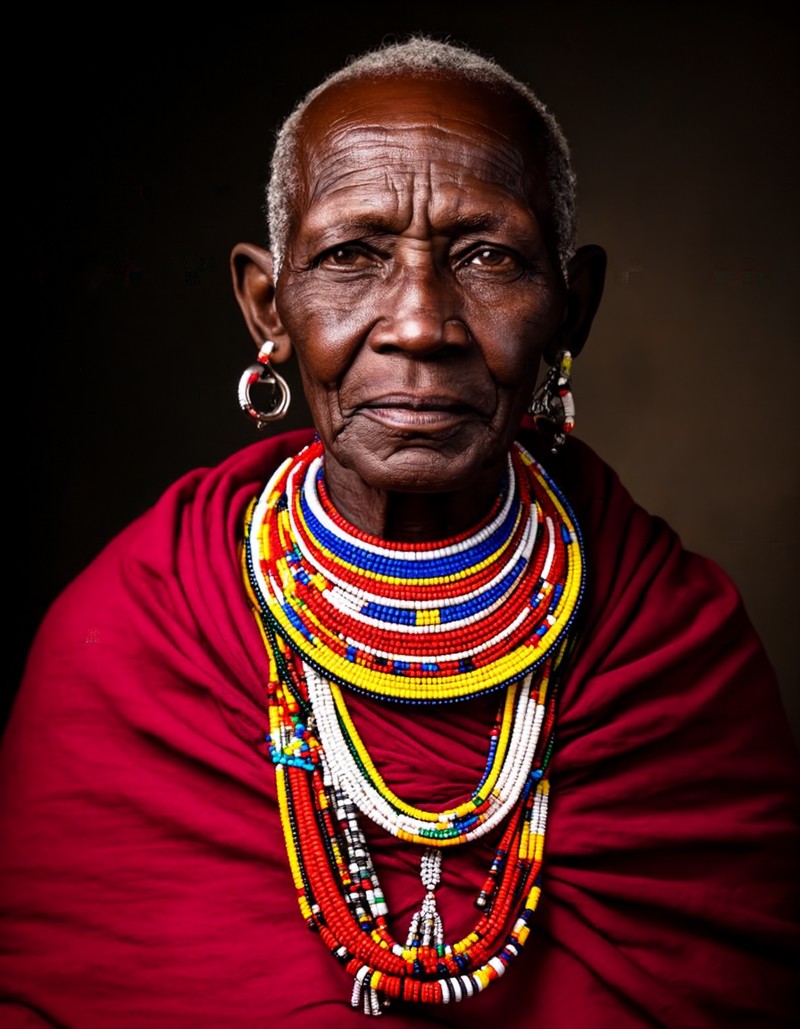 Studio portrait of a Maasai elder wearing vibrant beaded jewelry, deep red cloth, dark backdrop, Rembrandt lighting, ultra detailed skin texture | 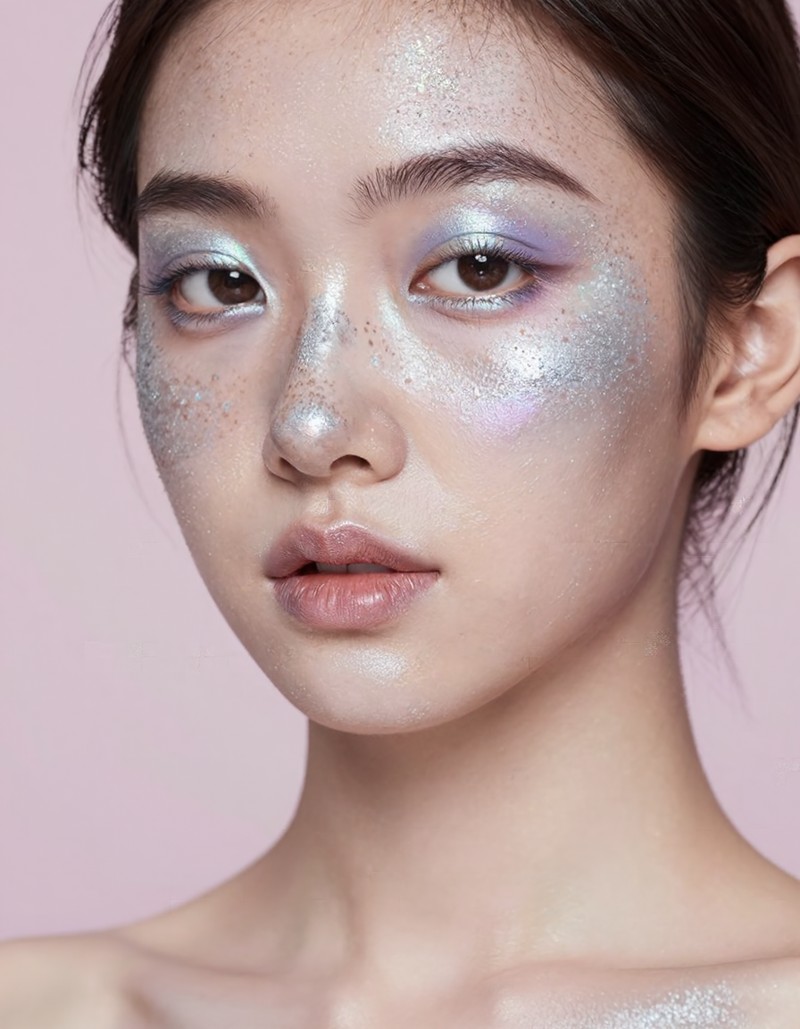 Close-up portrait of a young woman with silver glitter freckles and iridescent makeup, soft pastel background, high fashion beauty photography |  A glass sculpture of a heart filled with flowers, caustics and reflections, 3D render |
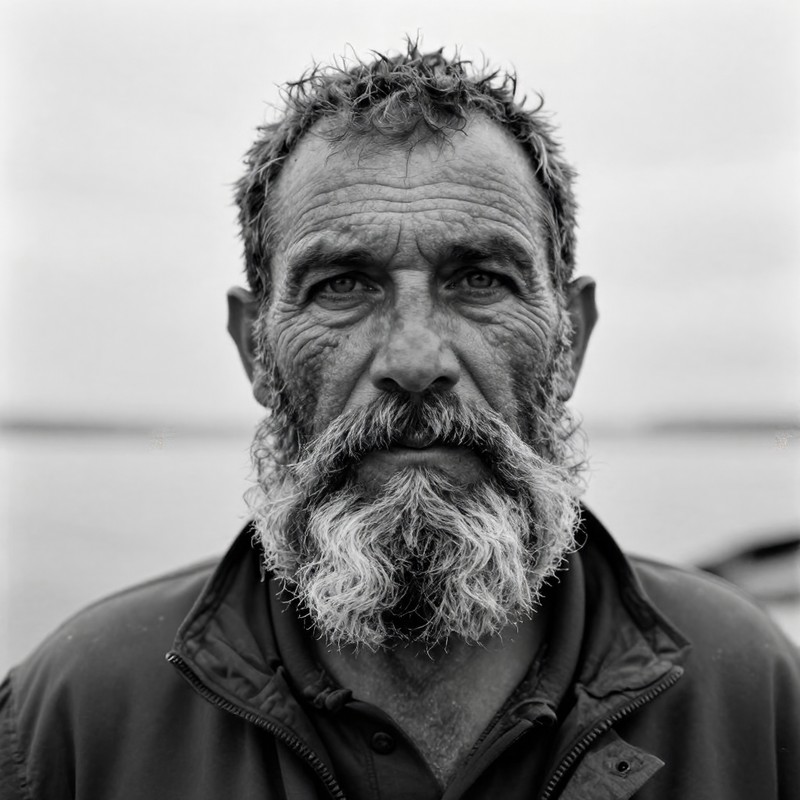 Black and white portrait of a fisherman with a thick grey beard and deep wrinkles, piercing eyes, overcast light, fine grain film photograph | 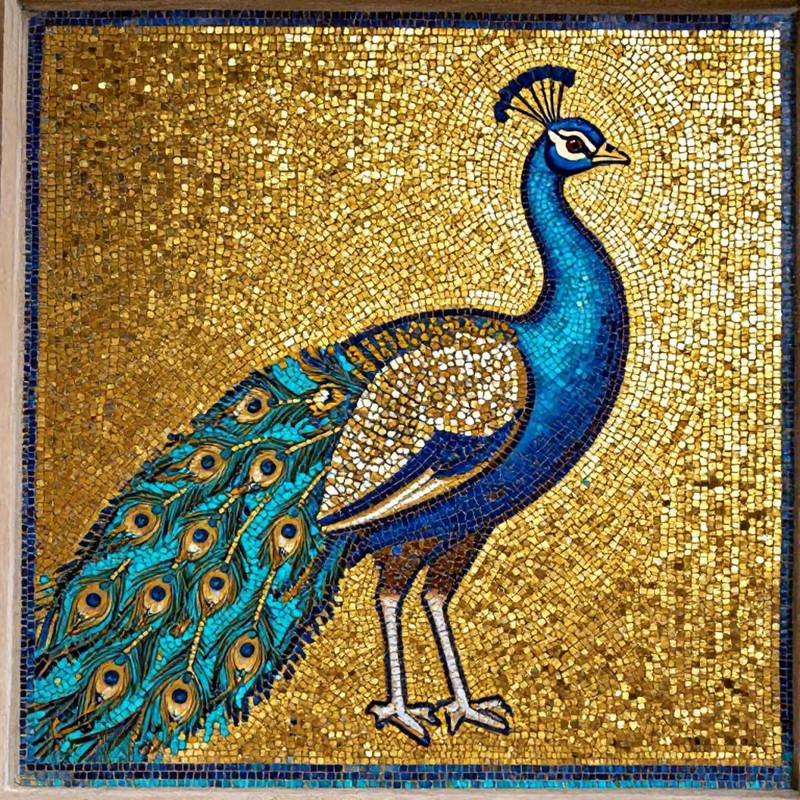 A Byzantine-style mosaic of a peacock made of tiny gold and turquoise tiles, shimmering texture | 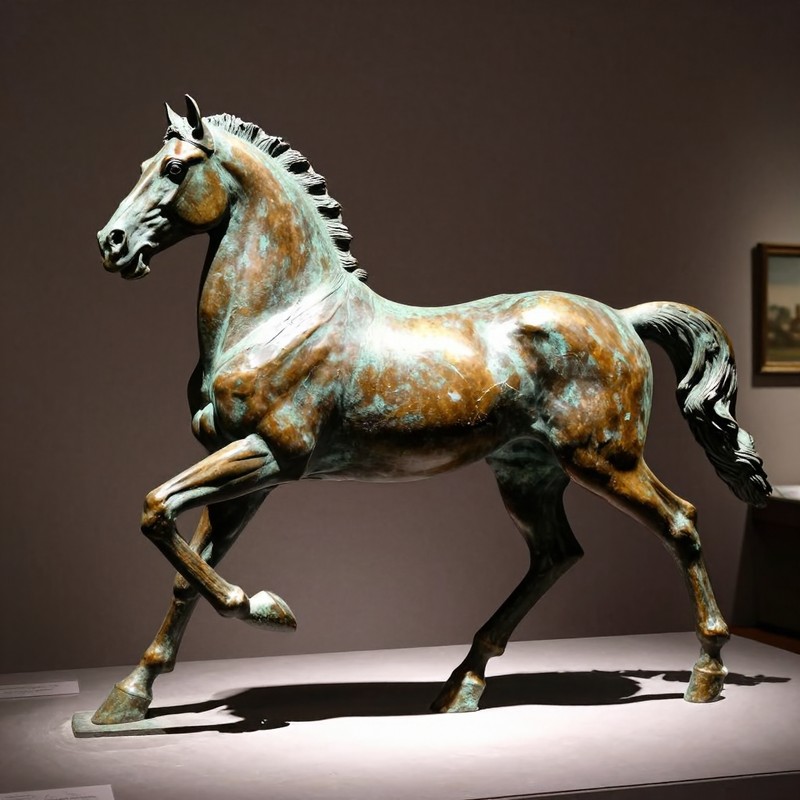 A bronze sculpture of a horse in motion, patina, dramatic museum spotlight |
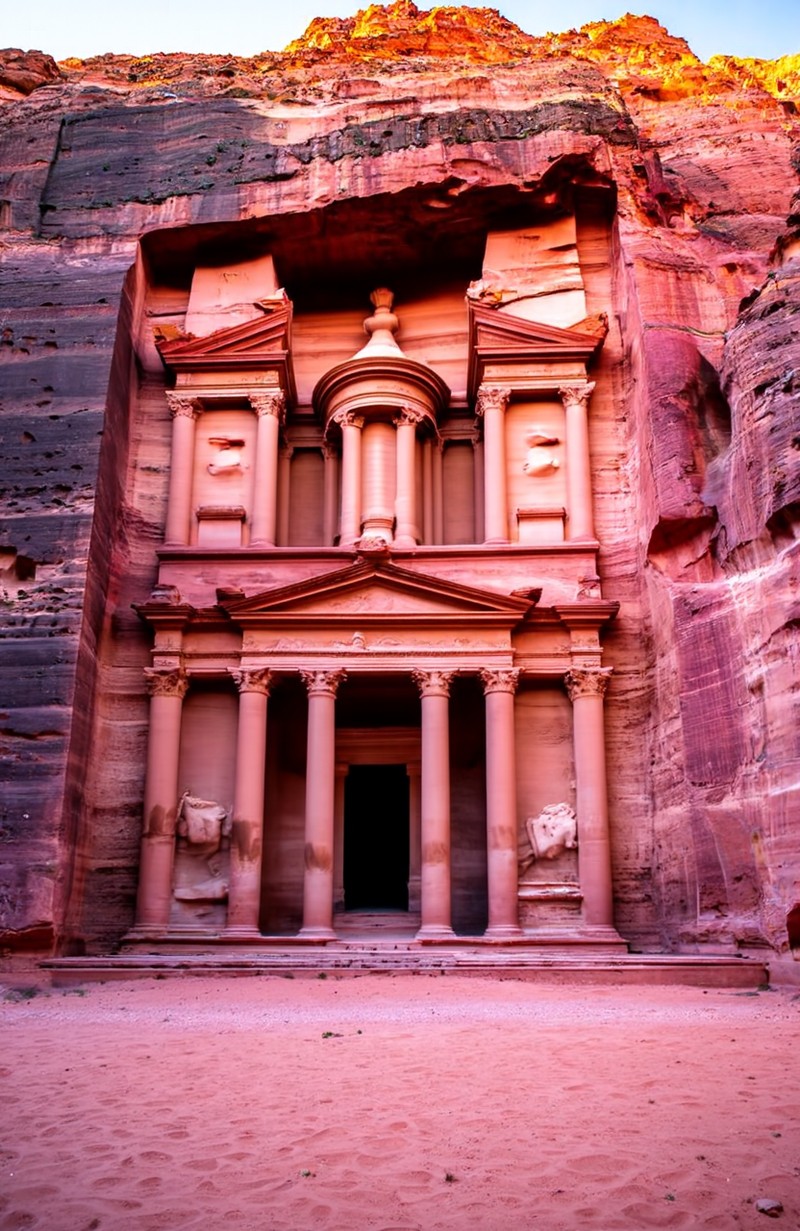 The ancient city of Petra with the Treasury carved into pink sandstone, morning light | 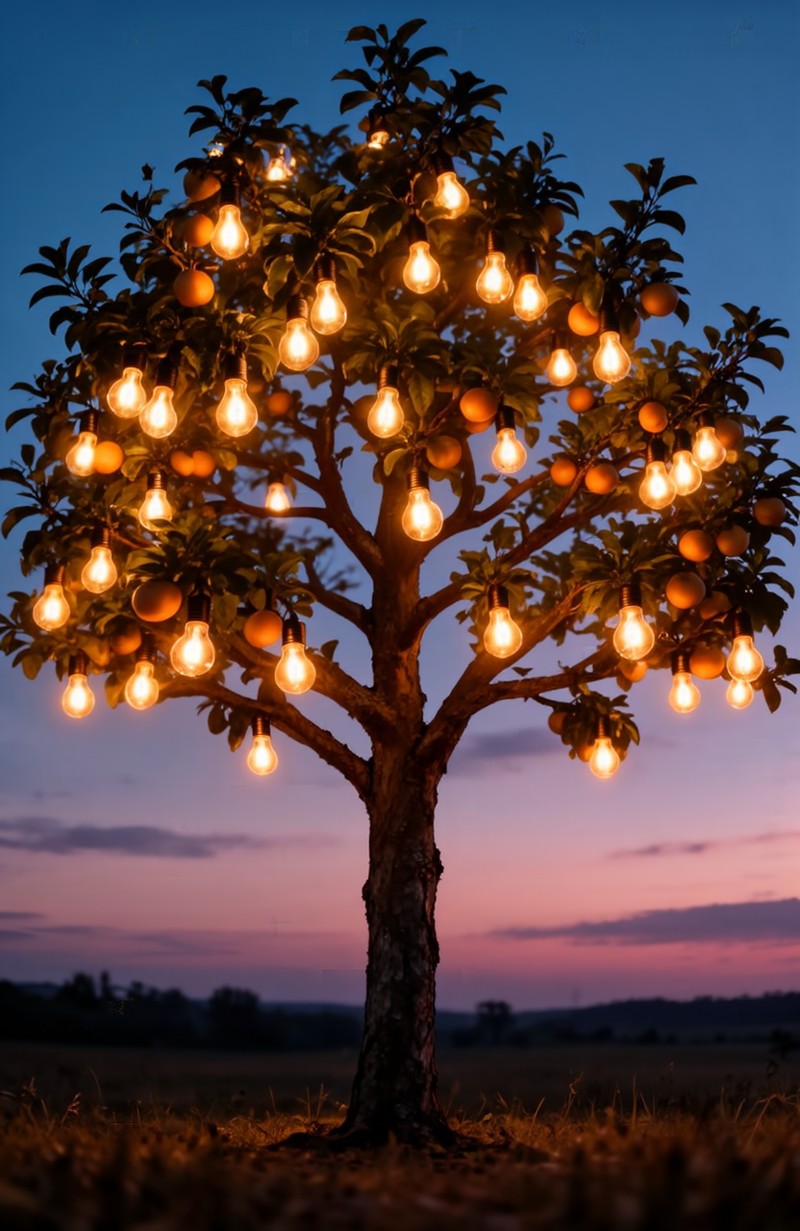 A tree with lightbulbs instead of fruits glowing at dusk, surreal concept art | 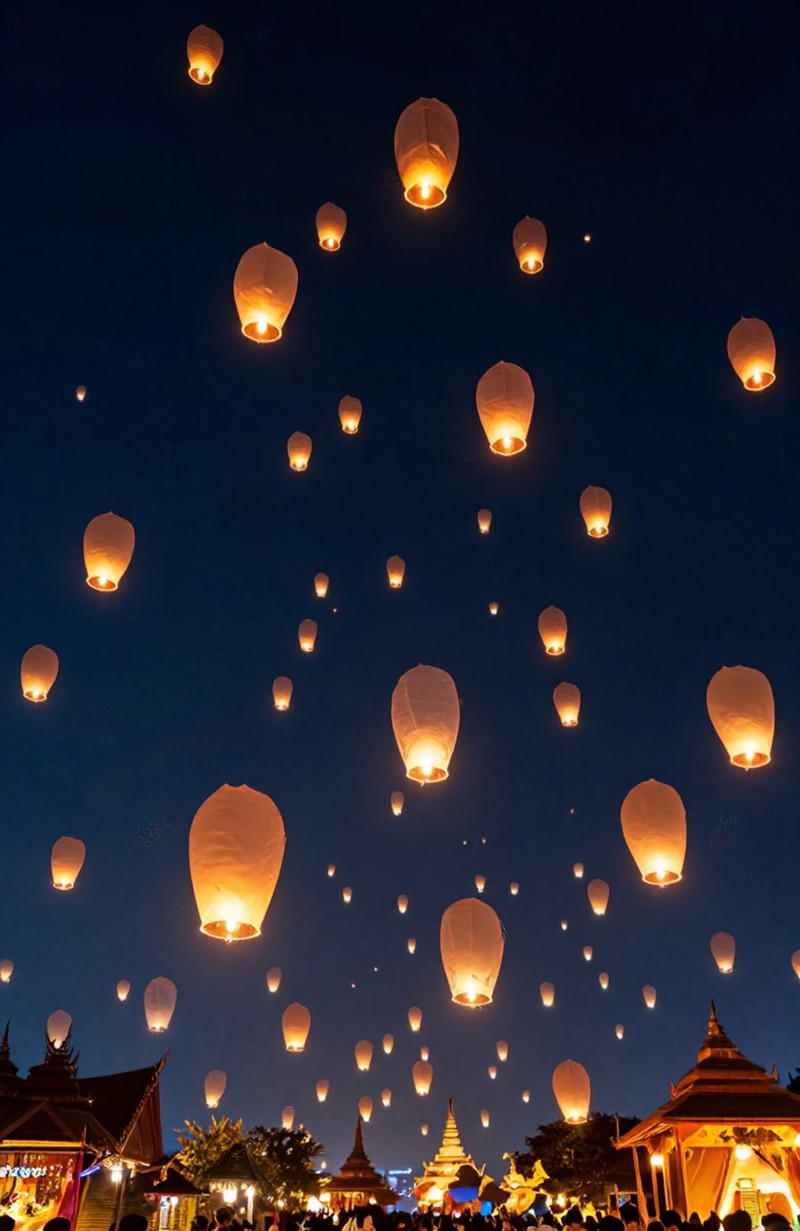 Thousands of sky lanterns rising into the night sky at Yi Peng festival in Chiang Mai |
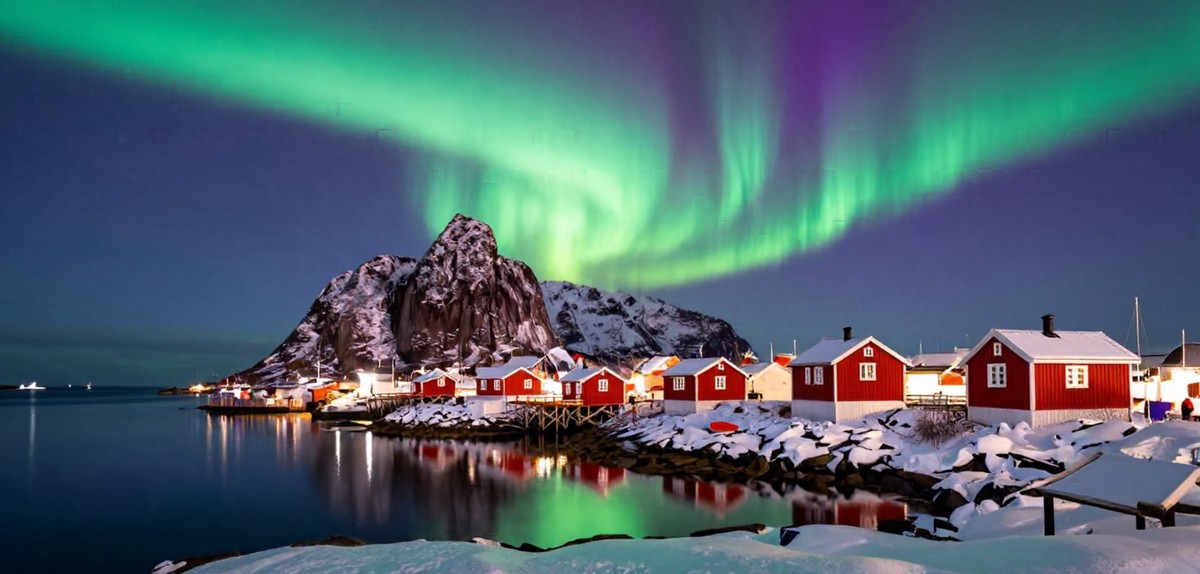 The aurora borealis swirling green and violet over a snowy Lofoten fishing village with red wooden cabins, reflections in a calm fjord, night photograph | 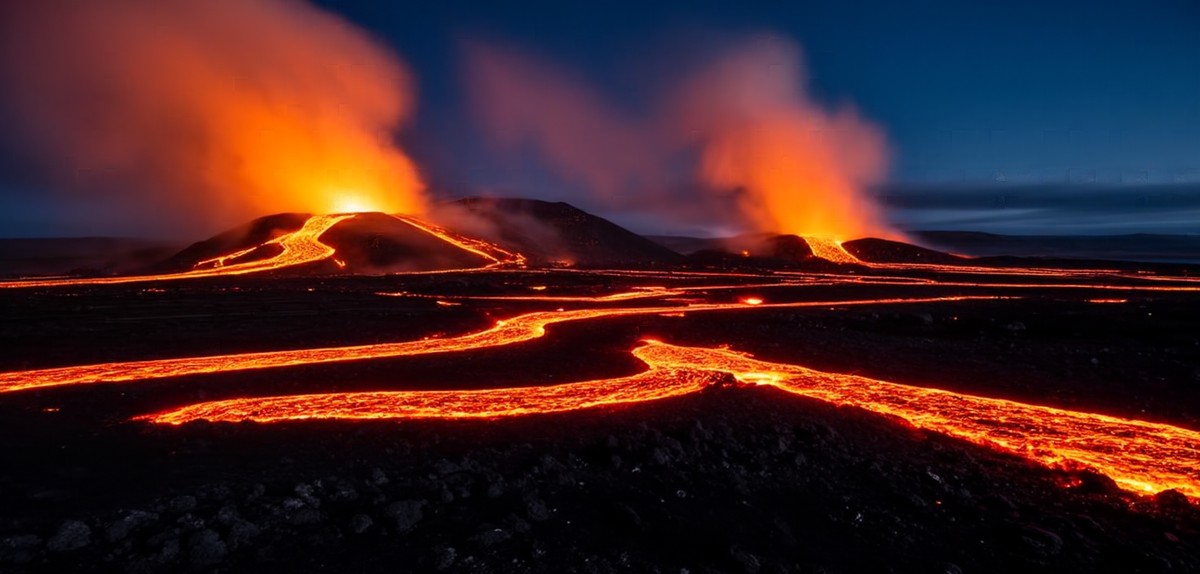 Volcanic eruption at night in Iceland, rivers of glowing lava flowing across black fields, plumes of steam lit orange, long exposure |
More samples: project page.
Iris-3B is a general vision learner, not only a text-to-image model: the same pixel-space backbone, fine-tuned with no architectural change, does dense vision tasks where detail matters. Both fine-tunes ship with the release (see Depth, image restoration and upscaling for usage).
Monocular depth — photo → relative depth, one forward pass:
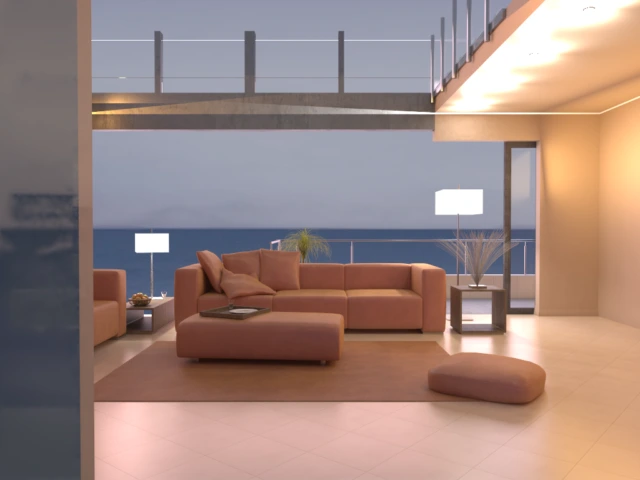 Photo | 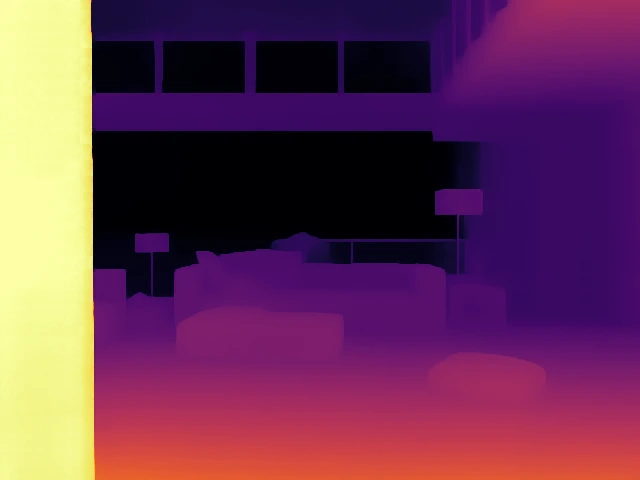 Iris-3B depth | 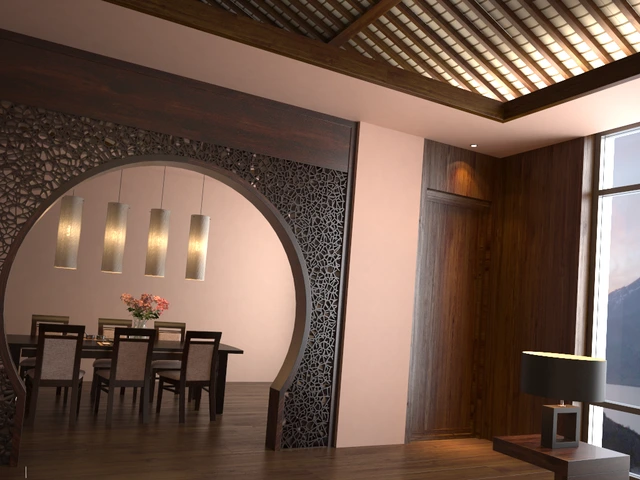 Photo | 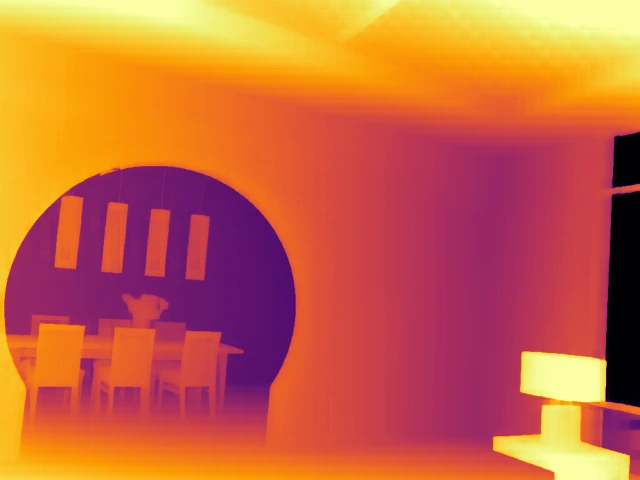 Iris-3B depth |
Image restoration and upscaling — degraded input → restored image:
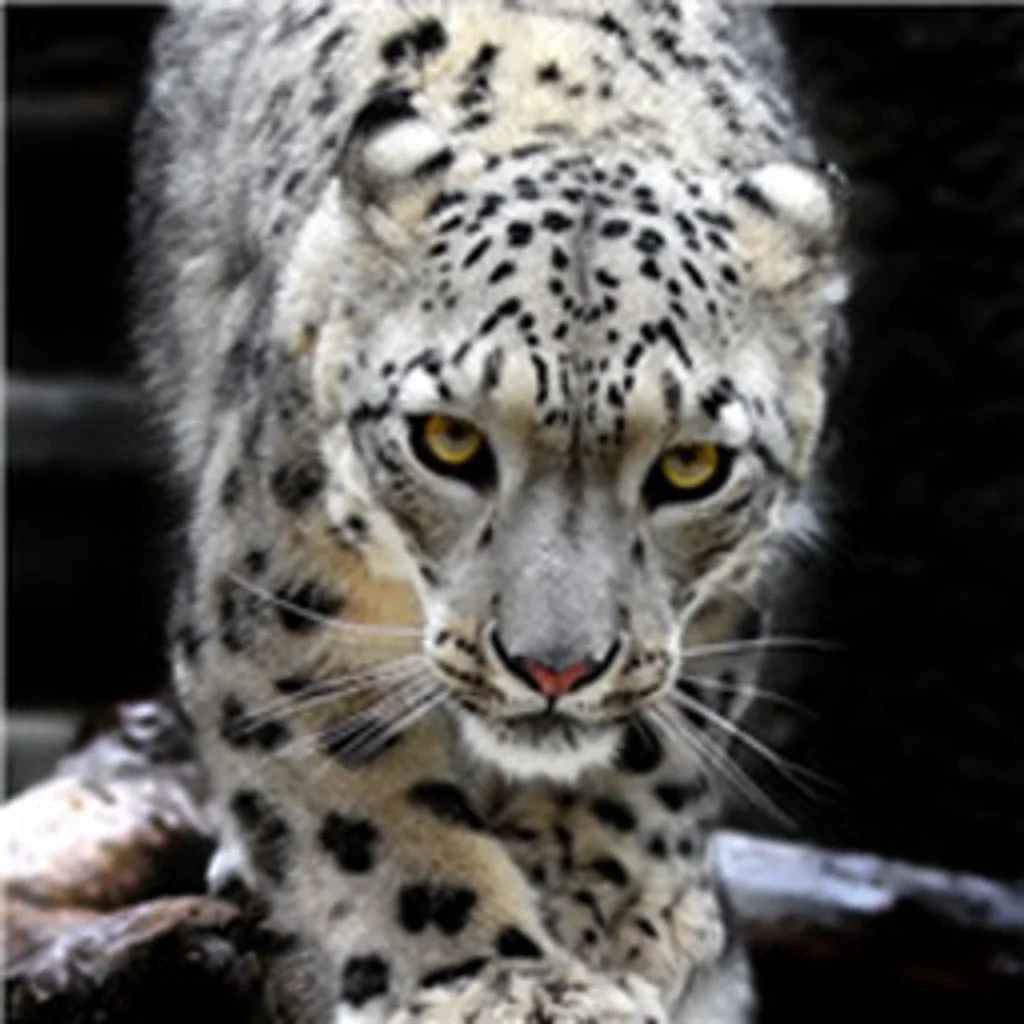 Input | 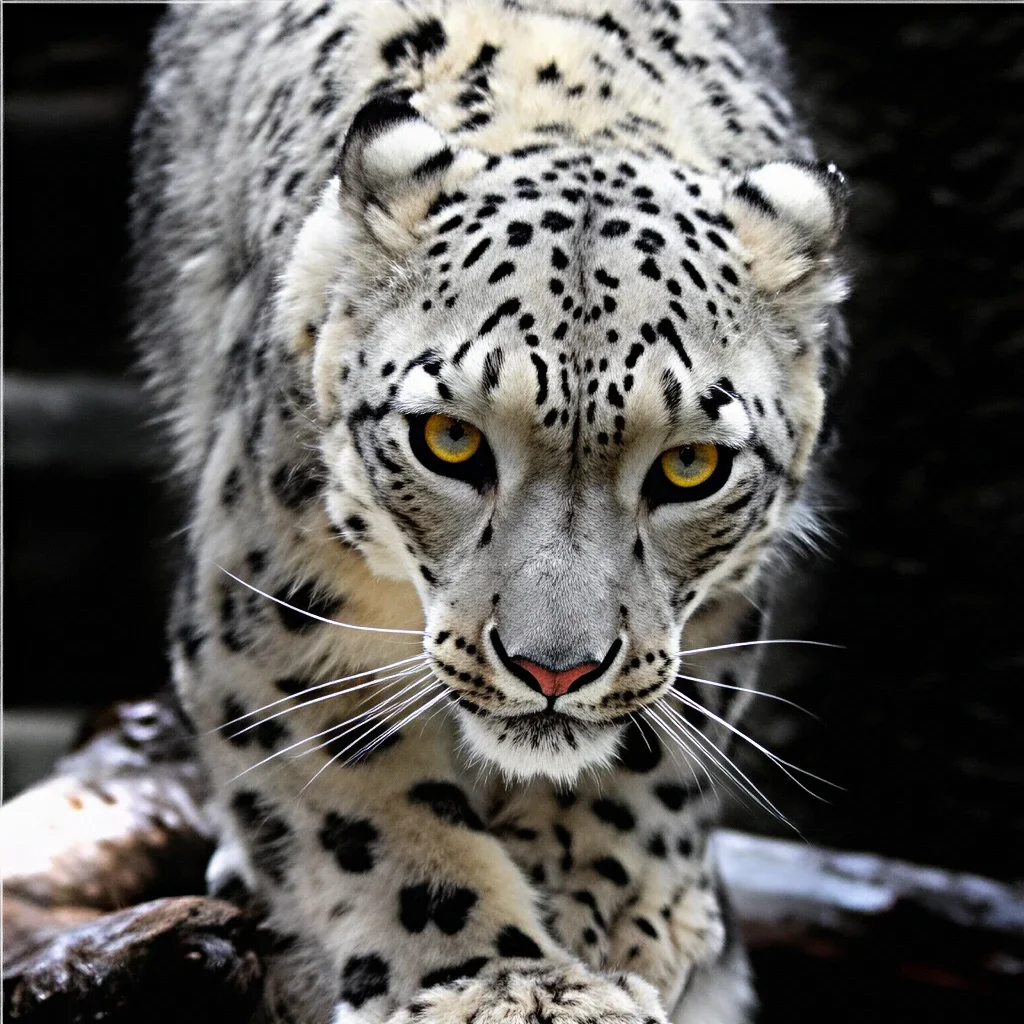 Iris-3B |  Input | 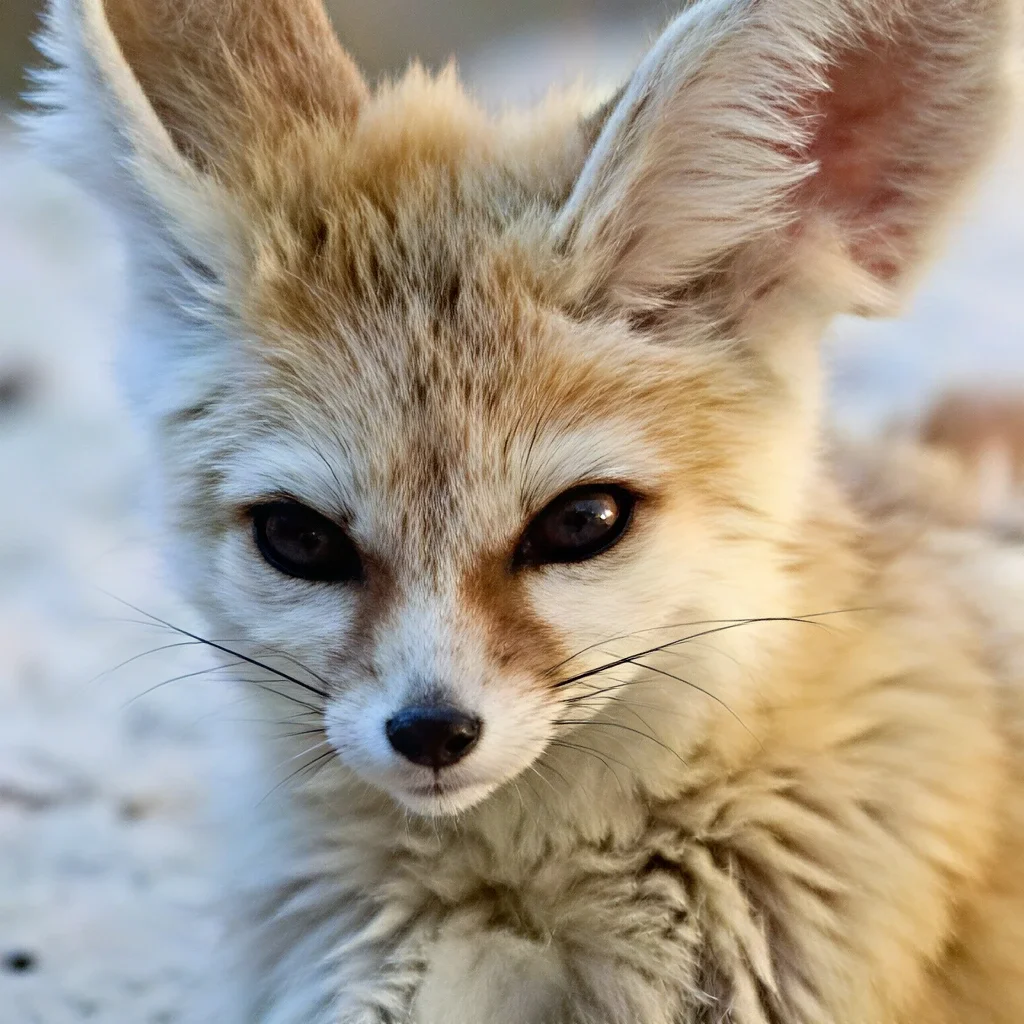 Iris-3B |
Interactive depth point clouds and before/after sliders: project page · demo.
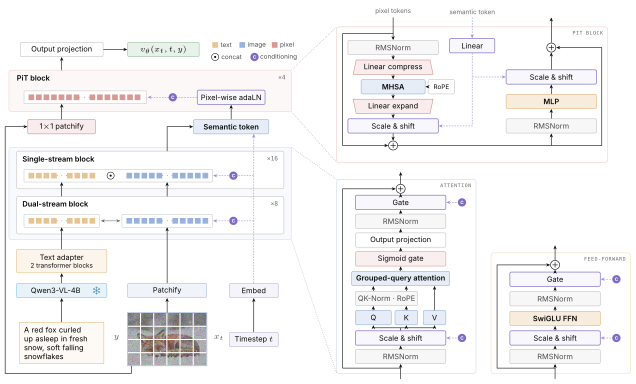
| Parameters | 3B (excluding the frozen text encoder) |
| Trunk | 24 blocks at width 2560: 8 dual-stream (separate image/text weights, joint attention) + 16 single-stream; GQA 20 query / 5 key-value heads, gated attention, sandwich RMSNorm, shared-bias adaLN |
| Patch size | 16 |
| Pixel head | 4 pixel-transformer (PiT) blocks: each patch is decoded back to pixels with per-pixel modulation, attending across patches |
| Text encoder | Qwen3-VL-4B-Instruct (frozen), 12 hidden layers aggregated by a learned layer-attention adapter |
| Objective | rectified flow, v-prediction, logit-normal timesteps |
pip install -e .            # Python >= 3.11, PyTorch >= 2.7.1
pip install -e ".[dev]"     # + pytest, ruff
hf download speridlabs/iris-3b --local-dir iris-3b    # ~12 GB
python scripts/sample.py --checkpoint iris-3b \
    --prompt "a red fox sleeping in fresh snow, golden hour"
--checkpoint is a directory holding model.safetensors + config.yaml, or a
training .pth (its EMA weights and embedded config are used). Defaults:
1024×1024, 100 DPM-Solver++ (order 2) steps, CFG 3. Use --txt-file for a
prompt list, --steps, --seed, --negative-prompt to adjust.
Turn a training checkpoint into a release directory (EMA weights only, FP32 by default, config reduced to model/text-encoder/flow settings):
python scripts/export_checkpoint.py output/run/checkpoints/latest.pth exported/iris-3b
The release also ships Iris-3B fine-tuned for monocular depth estimation and
for image restoration and upscaling — the general-vision-learner side of
the model — in the depth/ and upscaler/ folders of the same Hugging Face
repo (~12 GB each). Both run the full model in
a single forward pass with the empty prompt, so no text encoder is loaded.
python scripts/depth.py photo.jpg --out depth_out      # <name>.npy + colorized <name>.png
python scripts/upscale.py photo.jpg --out upscaled     # <name>_x4.png
--max-side 0 keeps native resolution).--no-budget keeps the input size.Python API: iris3b.downstream.depth.DepthPredictor and
iris3b.downstream.restoration.Restorer. Fine-tuning checkpoints are converted
with scripts/export_downstream.py.
The Gradio app behind the Hugging Face Space
(text-to-image, depth and upscaling tabs) is in demo/; it runs on ZeroGPU
there and on any local GPU. All three models together take ~45 GB of GPU memory;
with IRIS_OFFLOAD=1 they stay on the CPU and each request moves only the model it
needs to the GPU (~20 GB peak), which is what the Space does:
pip install -e ".[ui]"
python demo/app.py          # IRIS_MODEL_REPO=<dir or repo id> to use other weights
Training reads tar shards indexed by a wids-meta.json. Each sample is an
image plus a JSON with its caption, height and width. Build them from a
folder of images with .txt/.json caption sidecars, or from a Hugging Face
dataset:
python scripts/prepare_wids.py folder /path/to/images --out /data/my-set
python scripts/prepare_wids.py hf user/dataset --split train \
    --image-column image --caption-column text --out /data/my-set
Iris-3B was trained in three resolution stages followed by supervised
fine-tuning, each resuming from the previous one. The configs list only what
differs from the defaults in src/iris3b/config.py:
| Config | Resolution | Steps | Global batch | Shift | Notes |
|---|---|---|---|---|---|
configs/iris3b/stage1_256.yaml | 256² | 0 → 365K | 1024 | 2 | REPA (DINOv2-B/14, weight 0.5) |
configs/iris3b/stage2_512.yaml | 512, multi-aspect | 365K → 530K | 1024 | 3 | |
configs/iris3b/stage3_1024.yaml | 1024, multi-aspect | 530K → 625K | 512 | 4 | LR 5e-5 |
configs/iris3b/sft_1024.yaml | 1024, multi-aspect | 625K → 665K | 512 | 4 | constant LR 4e-5, no warmup |
Common to all stages: hybrid Muon — Muon (momentum 0.95, Nesterov, RMS-matched
LR) for hidden weight matrices, AdamW (β₁ 0.9, β₂ 0.95) for embeddings, norms and
biases — with weight decay 0, gradient clipping at 0.5 and a constant LR of 1e-4
after a 2K-step linear warmup unless noted. EMA decay 0.9999, 10% caption dropout
for classifier-free guidance, logit-normal (0, 1) timesteps with the
resolution-dependent shift above. From the 512 stage on, RoPE uses isotropic
coordinates for non-square images. bf16, FSDP2 hybrid sharding, torch.compile.
Single node:
torchrun --nproc_per_node=8 scripts/train.py --config configs/iris3b/stage1_256.yaml \
    data.data_dirs=[/data/my-set] train.expected_global_batch=128
Multi-node (run on every node with its own NODE_RANK):
NNODES=8 NODE_RANK=0 MASTER_ADDR=node0 \
    scripts/launch_multinode.sh configs/iris3b/stage1_256.yaml data.data_dirs=[/data/my-set]
Any config key can be overridden as key=value after the config path.
pytest -q
The dual-level design (a patch-level transformer followed by a pixel-level transformer head) follows the architecture described in PixelDiT. This is an independent implementation; it contains no code from that project. We also build on DiT, REPA, Muon through Dion, Qwen3-VL and DINOv2.
The code in this repository and the model weights on Hugging Face are licensed under the Apache License 2.0; see also NOTICE.
Third-party components are not redistributed here and remain under their own licenses:
| Component | Use | License |
|---|---|---|
| Qwen3-VL-4B-Instruct | frozen text encoder, downloaded at runtime | Apache 2.0 |
| DINOv2 | REPA teacher (training only), downloaded at runtime | Apache 2.0 |
| Dion | Muon optimizer, pip dependency | MIT |
@article{licai2026iris,
  title   = {Iris-3B: Going Beyond the Latent with Pixel-Space
             Diffusion Training, Conversion and Fine-Tuning},
  author  = {Li Cai, Hanqiu and Garabito, Chema},
  journal = {arXiv preprint arXiv:2610.09450},
  year    = {2026},
  url     = {https://arxiv.org/abs/2610.09450}
}
Made with ❤️ by speridlabs.com
5,309 followers · starred Oct 2026
57 followers · starred Oct 2026
206 followers · starred Oct 2026
103 followers · starred Oct 2026
Iris-3B: pixel-space generation & general vision learner. A 3B diffusion transformer that generates every pixel directly (no VAE); the same prior, fine-tuned, does monocular depth estimation and 4x image restoration. Paper, weights, training code and demo.
See the codePixel-space generation & general vision learner
Generative priors are a promising foundation for downstream vision tasks. In this project we explore pixel-space generative models as an alternative to vision foundation models such as DINOv2.
Iris-3B is a 3B-parameter diffusion transformer that generates directly in pixel space: no VAE, no latent space, every pixel is produced by the model, so nothing is lost to a lossy, texture-biased latent. It is not only an image generator: the same pixel-space prior, fine-tuned, estimates monocular depth and restores and upscales images — one backbone, three tasks. This repository contains the model, the training and fine-tuning code, and inference.
https://github.com/user-attachments/assets/2345a853-c673-4ddb-83b9-7e05c83198ed
Samples from the final checkpoint at native aspect ratios of about one megapixel (CFG 3, 100 steps, one fixed seed, no prompt rewriting).
Studio portrait of a Maasai elder wearing vibrant beaded jewelry, deep red cloth, dark backdrop, Rembrandt lighting, ultra detailed skin texture | Close-up portrait of a young woman with silver glitter freckles and iridescent makeup, soft pastel background, high fashion beauty photography | A glass sculpture of a heart filled with flowers, caustics and reflections, 3D render |
Black and white portrait of a fisherman with a thick grey beard and deep wrinkles, piercing eyes, overcast light, fine grain film photograph | A Byzantine-style mosaic of a peacock made of tiny gold and turquoise tiles, shimmering texture | A bronze sculpture of a horse in motion, patina, dramatic museum spotlight |
The ancient city of Petra with the Treasury carved into pink sandstone, morning light | A tree with lightbulbs instead of fruits glowing at dusk, surreal concept art | Thousands of sky lanterns rising into the night sky at Yi Peng festival in Chiang Mai |
The aurora borealis swirling green and violet over a snowy Lofoten fishing village with red wooden cabins, reflections in a calm fjord, night photograph | Volcanic eruption at night in Iceland, rivers of glowing lava flowing across black fields, plumes of steam lit orange, long exposure |
More samples: project page.
Iris-3B is a general vision learner, not only a text-to-image model: the same pixel-space backbone, fine-tuned with no architectural change, does dense vision tasks where detail matters. Both fine-tunes ship with the release (see Depth, image restoration and upscaling for usage).
Monocular depth — photo → relative depth, one forward pass:
Photo | Iris-3B depth | Photo | Iris-3B depth |
Image restoration and upscaling — degraded input → restored image:
Input | Iris-3B | Input | Iris-3B |
Interactive depth point clouds and before/after sliders: project page · demo.
| Parameters | 3B (excluding the frozen text encoder) |
| Trunk | 24 blocks at width 2560: 8 dual-stream (separate image/text weights, joint attention) + 16 single-stream; GQA 20 query / 5 key-value heads, gated attention, sandwich RMSNorm, shared-bias adaLN |
| Patch size | 16 |
| Pixel head | 4 pixel-transformer (PiT) blocks: each patch is decoded back to pixels with per-pixel modulation, attending across patches |
| Text encoder | Qwen3-VL-4B-Instruct (frozen), 12 hidden layers aggregated by a learned layer-attention adapter |
| Objective | rectified flow, v-prediction, logit-normal timesteps |
pip install -e .            # Python >= 3.11, PyTorch >= 2.7.1
pip install -e ".[dev]"     # + pytest, ruff
hf download speridlabs/iris-3b --local-dir iris-3b    # ~12 GB
python scripts/sample.py --checkpoint iris-3b \
    --prompt "a red fox sleeping in fresh snow, golden hour"
--checkpoint is a directory holding model.safetensors + config.yaml, or a
training .pth (its EMA weights and embedded config are used). Defaults:
1024×1024, 100 DPM-Solver++ (order 2) steps, CFG 3. Use --txt-file for a
prompt list, --steps, --seed, --negative-prompt to adjust.
Turn a training checkpoint into a release directory (EMA weights only, FP32 by default, config reduced to model/text-encoder/flow settings):
python scripts/export_checkpoint.py output/run/checkpoints/latest.pth exported/iris-3b
The release also ships Iris-3B fine-tuned for monocular depth estimation and
for image restoration and upscaling — the general-vision-learner side of
the model — in the depth/ and upscaler/ folders of the same Hugging Face
repo (~12 GB each). Both run the full model in
a single forward pass with the empty prompt, so no text encoder is loaded.
python scripts/depth.py photo.jpg --out depth_out      # <name>.npy + colorized <name>.png
python scripts/upscale.py photo.jpg --out upscaled     # <name>_x4.png
--max-side 0 keeps native resolution).--no-budget keeps the input size.Python API: iris3b.downstream.depth.DepthPredictor and
iris3b.downstream.restoration.Restorer. Fine-tuning checkpoints are converted
with scripts/export_downstream.py.
The Gradio app behind the Hugging Face Space
(text-to-image, depth and upscaling tabs) is in demo/; it runs on ZeroGPU
there and on any local GPU. All three models together take ~45 GB of GPU memory;
with IRIS_OFFLOAD=1 they stay on the CPU and each request moves only the model it
needs to the GPU (~20 GB peak), which is what the Space does:
pip install -e ".[ui]"
python demo/app.py          # IRIS_MODEL_REPO=<dir or repo id> to use other weights
Training reads tar shards indexed by a wids-meta.json. Each sample is an
image plus a JSON with its caption, height and width. Build them from a
folder of images with .txt/.json caption sidecars, or from a Hugging Face
dataset:
python scripts/prepare_wids.py folder /path/to/images --out /data/my-set
python scripts/prepare_wids.py hf user/dataset --split train \
    --image-column image --caption-column text --out /data/my-set
Iris-3B was trained in three resolution stages followed by supervised
fine-tuning, each resuming from the previous one. The configs list only what
differs from the defaults in src/iris3b/config.py:
| Config | Resolution | Steps | Global batch | Shift | Notes |
|---|---|---|---|---|---|
configs/iris3b/stage1_256.yaml | 256² | 0 → 365K | 1024 | 2 | REPA (DINOv2-B/14, weight 0.5) |
configs/iris3b/stage2_512.yaml | 512, multi-aspect | 365K → 530K | 1024 | 3 | |
configs/iris3b/stage3_1024.yaml | 1024, multi-aspect | 530K → 625K | 512 | 4 | LR 5e-5 |
configs/iris3b/sft_1024.yaml | 1024, multi-aspect | 625K → 665K | 512 | 4 | constant LR 4e-5, no warmup |
Common to all stages: hybrid Muon — Muon (momentum 0.95, Nesterov, RMS-matched
LR) for hidden weight matrices, AdamW (β₁ 0.9, β₂ 0.95) for embeddings, norms and
biases — with weight decay 0, gradient clipping at 0.5 and a constant LR of 1e-4
after a 2K-step linear warmup unless noted. EMA decay 0.9999, 10% caption dropout
for classifier-free guidance, logit-normal (0, 1) timesteps with the
resolution-dependent shift above. From the 512 stage on, RoPE uses isotropic
coordinates for non-square images. bf16, FSDP2 hybrid sharding, torch.compile.
Single node:
torchrun --nproc_per_node=8 scripts/train.py --config configs/iris3b/stage1_256.yaml \
    data.data_dirs=[/data/my-set] train.expected_global_batch=128
Multi-node (run on every node with its own NODE_RANK):
NNODES=8 NODE_RANK=0 MASTER_ADDR=node0 \
    scripts/launch_multinode.sh configs/iris3b/stage1_256.yaml data.data_dirs=[/data/my-set]
Any config key can be overridden as key=value after the config path.
pytest -q
The dual-level design (a patch-level transformer followed by a pixel-level transformer head) follows the architecture described in PixelDiT. This is an independent implementation; it contains no code from that project. We also build on DiT, REPA, Muon through Dion, Qwen3-VL and DINOv2.
The code in this repository and the model weights on Hugging Face are licensed under the Apache License 2.0; see also NOTICE.
Third-party components are not redistributed here and remain under their own licenses:
| Component | Use | License |
|---|---|---|
| Qwen3-VL-4B-Instruct | frozen text encoder, downloaded at runtime | Apache 2.0 |
| DINOv2 | REPA teacher (training only), downloaded at runtime | Apache 2.0 |
| Dion | Muon optimizer, pip dependency | MIT |
@article{licai2026iris,
  title   = {Iris-3B: Going Beyond the Latent with Pixel-Space
             Diffusion Training, Conversion and Fine-Tuning},
  author  = {Li Cai, Hanqiu and Garabito, Chema},
  journal = {arXiv preprint arXiv:2610.09450},
  year    = {2026},
  url     = {https://arxiv.org/abs/2610.09450}
}
Made with ❤️ by speridlabs.com
5,309 followers · starred Oct 2026
57 followers · starred Oct 2026
206 followers · starred Oct 2026
103 followers · starred Oct 2026






