Affordable, Multifunctional, Nano RISC-V IP-KVM
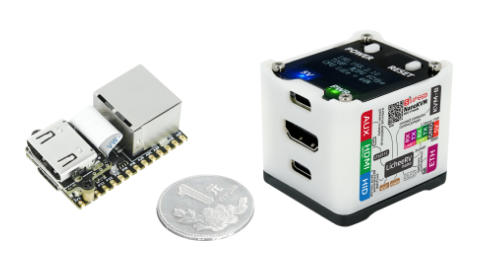
See the codeNanoKVM is a series of compact, open-source IP-KVM devices based on the LicheeRV Nano (RISC-V). It lets you remotely access and control computers as if you were sitting in front of them, making it useful for servers, embedded systems, and other headless machines.
Choose the NanoKVM model that best fits your deployment:
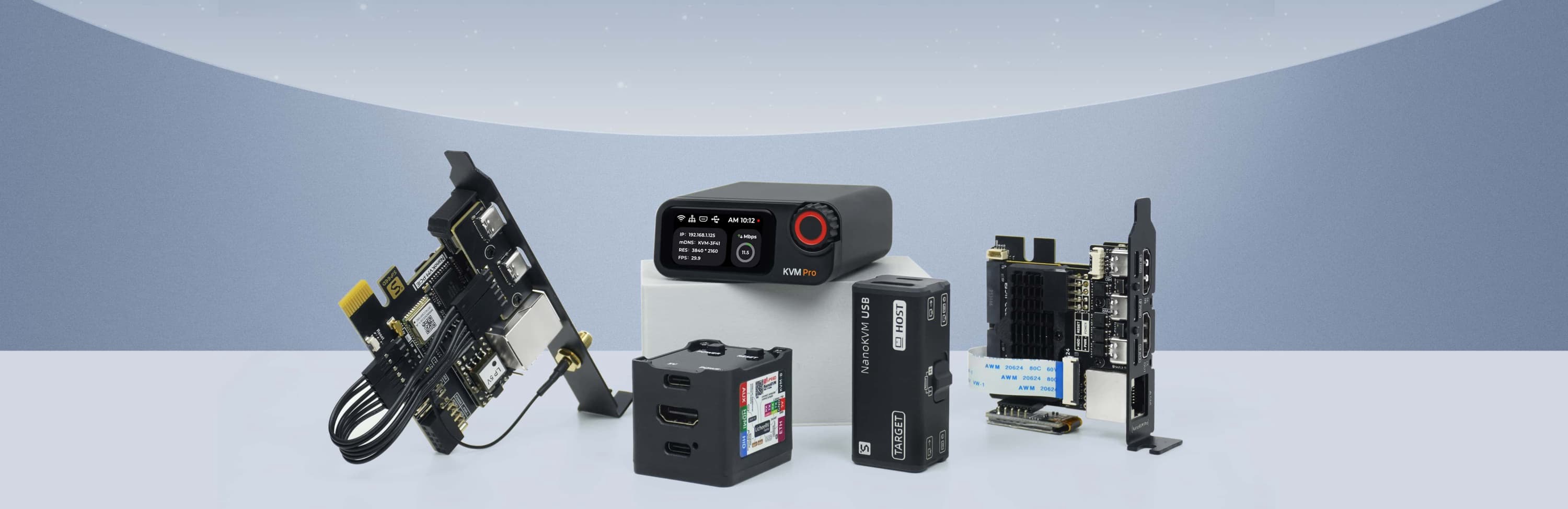
If you are looking for a USB-based KVM solution, check out NanoKVM-USB.
| Feature | NanoKVM-Pro | NanoKVM (Cube/PCIe) | GxxKVM | JxxKVM |
|---|---|---|---|---|
| Core | AX630C 2xA53 1.2G | SG2002 1xC906 1.0G | RV1126 4xA7 1.5G | RV1106 1xA7 1.2G |
| Memory & Storage | 1G LPDDR4X + 32G eMMC | 256M DDR3 + 32G microSD | 1G DDR3 + 8G eMMC | 256M DDR3 + 16G eMMC |
| System | NanoKVM / PiKVM | NanoKVM | GxxKVM | JxxKVM |
| Resolution | 4K@30fps / 2K@60fps | 1080P@60fps | 4K@30fps / 2K@60fps | 1080P@60fps |
| HDMI Loopout | 4K loopout | — | — | — |
| Video Encoding | MJPEG / H.264 / H.265 | MJPEG / H.264 | MJPEG / H.264 | MJPEG / H.264 |
| Audio Transmit | ✓ | — | ✓ | — |
| UEFI / BIOS | ✓ | ✓ | ✓ | ✓ |
| Emulated USB Keyboard & Mouse | ✓ | ✓ | ✓ | ✓ |
| Emulated USB ISO | ✓ | ✓ | ✓ | ✓ |
| IPMI | ✓ | ✓ | ✓ | — |
| Wake-on-LAN | ✓ | ✓ | ✓ | ✓ |
| Web Terminal | ✓ | ✓ | ✓ | ✓ |
| Serial Terminal | 2 channels | 2 channels | — | 1 channel |
| Custom Scripts | ✓ | ✓ | — | — |
| Storage | 32G eMMC 300MB/s | 32G MicroSD 12MB/s | 8G eMMC 120MB/s | 8G eMMC 60MB/s |
| Ethernet | 1000M | 100M | 1000M | 100M |
| PoE | Optional | Optional | — | — |
| Wi-Fi | Optional Wi-Fi 6 | Optional Wi-Fi 6 | — | — |
| ATX Power Control | ✓ | ✓ | Extra $15 | Extra $10 |
| Display | 1.47" 320x172 LCD / 0.96" 128x64 OLED | 0.96" 128x64 OLED | — | 1.68" 280x240 |
| More Features | Sync LED Strip / Smart Assistant | — | — | — |
| Power Consumption | 0.6A@5V | 0.2A@5V | 0.4A@5V | 0.2A@5V |
| Power Input | USB-C or PoE | USB-C | USB-C | USB-C |
| Dimensions | 65x65x26mm | 40x36x36mm | 80x60x17.5mm | 60x43x(24~31)mm |
├── kvmapp          # APP update package
│   ├── jpg_stream  # Legacy support for direct updates from older versions
│   ├── kvm_new_app # Triggers components for kvm_system updates
│   ├── kvm_system  # Core KVM application
│   ├── server      # Front-end and back-end integration
│   └── system      # Essential system components
├── web             # NanoKVM Front-end (UI)
├── server          # NanoKVM Back-end (Service)
├── support         # Auxiliary modules (Image subsystem, status, updates, OLED, HID, etc.)
├── ...
Start with the guide that matches the part of NanoKVM you want to work on:
nanokvm_<version>.tar.gz update package in scripts/README.md.Backend compilation and runtime validation require the target toolchain or a NanoKVM device. See the module-specific guides above for the latest development workflow.
The repository ships a Dev Container setup (.devcontainer/) that layers the frontend toolchain (Node 22, pnpm 11) on top of the release builder image (RISC-V cross toolchain, Go, MaixCDK), so one container covers Go, C support-layer and web development. It is a convenience for IDE users; the make targets in the repository root remain the canonical CLI workflow.
devcontainer up).support/sg2002/build update_lib (resyncs MaixCDK components with the checkout) and pnpm install for the frontend.server/build.sh for a release-equivalent binary (BoringCrypto + dl_lib RPATH). make app builds a plain development binary without those, so prefer server/build.sh whenever the result should match a release.cd support/sg2002 && ./build kvm_system (the MaixCDK virtualenv is part of the container environment).cd web && pnpm dev (VS Code forwards port 3001 automatically; other clients may need to map it themselves); see web/README.md for pointing it at a device.ghcr.io/sipeed/nanokvm-builder:latest is x86-64 only; on Apple Silicon it runs under emulation (works, but C builds are slow). You can also build the image locally first (make builder-image) and point the BASE_IMAGE build arg at it (e.g. via build.args in devcontainer.json). On Linux hosts the first container creation also takes a while: the container user is remapped to your uid, which re-chowns its home directory once.NanoKVM is based on Sipeed LicheeRV Nano. You can find specifications, schematics, and dimensional drawings in the download station.
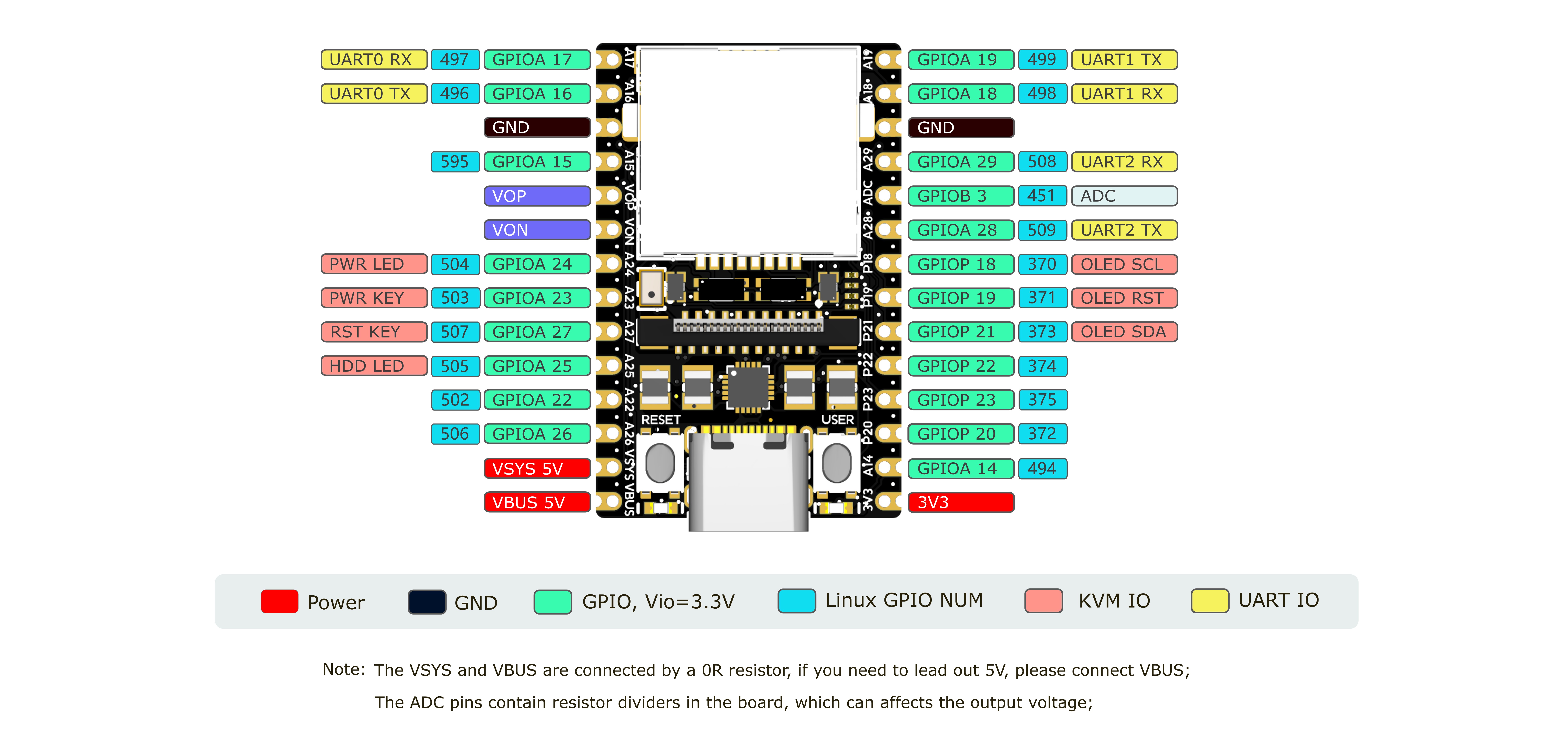
The NanoKVM Cube/PCIe hardware is built from these components:
The NanoKVM image is built with the LicheeRV Nano SDK and MaixCDK. It is intended for NanoKVM hardware and is not a general-purpose KVM software package for other LicheeRV Nano or SG2002 products. If you want to build an HDMI input application on LicheeRV Nano or MaixCam, please contact us for technical support.
Note: Of the 256MB memory on SG2002, 158MB is currently allocated to the multimedia subsystem for video capture and processing.
We welcome contributions. To get started:
Please keep your pull requests small and focused to facilitate easier review and merging.
🎁 Contributors who submit high-quality Pull Requests may receive a NanoKVM Cube, PCIe, or Pro as a token of our appreciation!
This project is licensed under the GPL-3.0 License. See LICENSE for details.
(top 24 of 109)
10,162 followers · starred Jan 2025
375 followers · starred Aug 2024
1,290 followers · starred Sep 2024
645 followers · starred Aug 2024
Affordable, Multifunctional, Nano RISC-V IP-KVM
See the codeNanoKVM is a series of compact, open-source IP-KVM devices based on the LicheeRV Nano (RISC-V). It lets you remotely access and control computers as if you were sitting in front of them, making it useful for servers, embedded systems, and other headless machines.
Choose the NanoKVM model that best fits your deployment:
If you are looking for a USB-based KVM solution, check out NanoKVM-USB.
| Feature | NanoKVM-Pro | NanoKVM (Cube/PCIe) | GxxKVM | JxxKVM |
|---|---|---|---|---|
| Core | AX630C 2xA53 1.2G | SG2002 1xC906 1.0G | RV1126 4xA7 1.5G | RV1106 1xA7 1.2G |
| Memory & Storage | 1G LPDDR4X + 32G eMMC | 256M DDR3 + 32G microSD | 1G DDR3 + 8G eMMC | 256M DDR3 + 16G eMMC |
| System | NanoKVM / PiKVM | NanoKVM | GxxKVM | JxxKVM |
| Resolution | 4K@30fps / 2K@60fps | 1080P@60fps | 4K@30fps / 2K@60fps | 1080P@60fps |
| HDMI Loopout | 4K loopout | — | — | — |
| Video Encoding | MJPEG / H.264 / H.265 | MJPEG / H.264 | MJPEG / H.264 | MJPEG / H.264 |
| Audio Transmit | ✓ | — | ✓ | — |
| UEFI / BIOS | ✓ | ✓ | ✓ | ✓ |
| Emulated USB Keyboard & Mouse | ✓ | ✓ | ✓ | ✓ |
| Emulated USB ISO | ✓ | ✓ | ✓ | ✓ |
| IPMI | ✓ | ✓ | ✓ | — |
| Wake-on-LAN | ✓ | ✓ | ✓ | ✓ |
| Web Terminal | ✓ | ✓ | ✓ | ✓ |
| Serial Terminal | 2 channels | 2 channels | — | 1 channel |
| Custom Scripts | ✓ | ✓ | — | — |
| Storage | 32G eMMC 300MB/s | 32G MicroSD 12MB/s | 8G eMMC 120MB/s | 8G eMMC 60MB/s |
| Ethernet | 1000M | 100M | 1000M | 100M |
| PoE | Optional | Optional | — | — |
| Wi-Fi | Optional Wi-Fi 6 | Optional Wi-Fi 6 | — | — |
| ATX Power Control | ✓ | ✓ | Extra $15 | Extra $10 |
| Display | 1.47" 320x172 LCD / 0.96" 128x64 OLED | 0.96" 128x64 OLED | — | 1.68" 280x240 |
| More Features | Sync LED Strip / Smart Assistant | — | — | — |
| Power Consumption | 0.6A@5V | 0.2A@5V | 0.4A@5V | 0.2A@5V |
| Power Input | USB-C or PoE | USB-C | USB-C | USB-C |
| Dimensions | 65x65x26mm | 40x36x36mm | 80x60x17.5mm | 60x43x(24~31)mm |
├── kvmapp          # APP update package
│   ├── jpg_stream  # Legacy support for direct updates from older versions
│   ├── kvm_new_app # Triggers components for kvm_system updates
│   ├── kvm_system  # Core KVM application
│   ├── server      # Front-end and back-end integration
│   └── system      # Essential system components
├── web             # NanoKVM Front-end (UI)
├── server          # NanoKVM Back-end (Service)
├── support         # Auxiliary modules (Image subsystem, status, updates, OLED, HID, etc.)
├── ...
Start with the guide that matches the part of NanoKVM you want to work on:
nanokvm_<version>.tar.gz update package in scripts/README.md.Backend compilation and runtime validation require the target toolchain or a NanoKVM device. See the module-specific guides above for the latest development workflow.
The repository ships a Dev Container setup (.devcontainer/) that layers the frontend toolchain (Node 22, pnpm 11) on top of the release builder image (RISC-V cross toolchain, Go, MaixCDK), so one container covers Go, C support-layer and web development. It is a convenience for IDE users; the make targets in the repository root remain the canonical CLI workflow.
devcontainer up).support/sg2002/build update_lib (resyncs MaixCDK components with the checkout) and pnpm install for the frontend.server/build.sh for a release-equivalent binary (BoringCrypto + dl_lib RPATH). make app builds a plain development binary without those, so prefer server/build.sh whenever the result should match a release.cd support/sg2002 && ./build kvm_system (the MaixCDK virtualenv is part of the container environment).cd web && pnpm dev (VS Code forwards port 3001 automatically; other clients may need to map it themselves); see web/README.md for pointing it at a device.ghcr.io/sipeed/nanokvm-builder:latest is x86-64 only; on Apple Silicon it runs under emulation (works, but C builds are slow). You can also build the image locally first (make builder-image) and point the BASE_IMAGE build arg at it (e.g. via build.args in devcontainer.json). On Linux hosts the first container creation also takes a while: the container user is remapped to your uid, which re-chowns its home directory once.NanoKVM is based on Sipeed LicheeRV Nano. You can find specifications, schematics, and dimensional drawings in the download station.
The NanoKVM Cube/PCIe hardware is built from these components:
The NanoKVM image is built with the LicheeRV Nano SDK and MaixCDK. It is intended for NanoKVM hardware and is not a general-purpose KVM software package for other LicheeRV Nano or SG2002 products. If you want to build an HDMI input application on LicheeRV Nano or MaixCam, please contact us for technical support.
Note: Of the 256MB memory on SG2002, 158MB is currently allocated to the multimedia subsystem for video capture and processing.
We welcome contributions. To get started:
Please keep your pull requests small and focused to facilitate easier review and merging.
🎁 Contributors who submit high-quality Pull Requests may receive a NanoKVM Cube, PCIe, or Pro as a token of our appreciation!
This project is licensed under the GPL-3.0 License. See LICENSE for details.
(top 24 of 109)
10,162 followers · starred Jan 2025
375 followers · starred Aug 2024
1,290 followers · starred Sep 2024
645 followers · starred Aug 2024