This is a custom-made documentation Chatbot based on the NERSC documentation.
This bot is not made to replace the documentation but rather to improve information discoverability. Our goals are to:
environment.yml file to install dependencies with condaThose scripts are meant to be run locally, mainly by developers of the project:
chatbot.py this is a basic local question answering loopchatbot_dev.py is a more feature rich version of local loop, making it easy to run test questions and switch models around.update_database.py update the vector database (for a given llm, sentence embeder, and vector database)1token_counter.py measure the size of questions and answers for a given tokenizerOn NERSC supercomputers, you might want to run module load python cudatoolkit cudnn pytorch before using those commands.
Those scripts are meant to be user with the superfacility API:
api_client.py this is a deonstration client, calling the chatbot via the superfacility API,api_consumer.py this is a worker, answering questions asked to the superfacility API on a loopIn no particular order:
move this code to the NERSC github,
refresh prompt (moving chunk information within the prompt)
update whoosh to whoosh reloaded
use url as further keywords for keyword search (see here%3A-,file_name,-%3D%20file_path.replace(%22.%22%2C%20%22%20%22).replace))
move away from Whoosh (keyword search) to remove he need for a search.initialize method?
look into orgroup when parsing query
filter out when / how / etc from query before keyword search
 Nestor Demeure leading the effort and writing the glue code |
 Ermal Rrapaj finetuning and testing home-made models |
 Gabor Torok writing the superfacility API integration and web front-end |
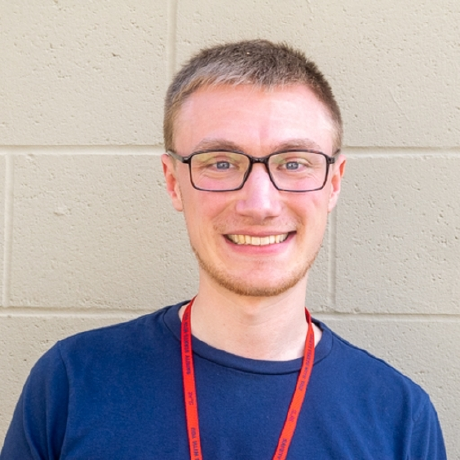 Andrew Naylor scaling the service to production throughputs |
This script is run once everyday (on a scron job). ↩
This is a custom-made documentation Chatbot based on the NERSC documentation.
This bot is not made to replace the documentation but rather to improve information discoverability. Our goals are to:
environment.yml file to install dependencies with condaThose scripts are meant to be run locally, mainly by developers of the project:
chatbot.py this is a basic local question answering loopchatbot_dev.py is a more feature rich version of local loop, making it easy to run test questions and switch models around.update_database.py update the vector database (for a given llm, sentence embeder, and vector database)1token_counter.py measure the size of questions and answers for a given tokenizerOn NERSC supercomputers, you might want to run module load python cudatoolkit cudnn pytorch before using those commands.
Those scripts are meant to be user with the superfacility API:
api_client.py this is a deonstration client, calling the chatbot via the superfacility API,api_consumer.py this is a worker, answering questions asked to the superfacility API on a loopIn no particular order:
move this code to the NERSC github,
refresh prompt (moving chunk information within the prompt)
update whoosh to whoosh reloaded
use url as further keywords for keyword search (see here%3A-,file_name,-%3D%20file_path.replace(%22.%22%2C%20%22%20%22).replace))
move away from Whoosh (keyword search) to remove he need for a search.initialize method?
look into orgroup when parsing query
filter out when / how / etc from query before keyword search
|
Nestor Demeure leading the effort and writing the glue code |
Ermal Rrapaj finetuning and testing home-made models |
Gabor Torok writing the superfacility API integration and web front-end |
Andrew Naylor scaling the service to production throughputs |
This script is run once everyday (on a scron job). ↩



