A small web engine for modded Minecraft GUIs with HTML, CSS and JS
Java
1
233 commits
updated Oct 12, 2026
CurseForge | Modrinth | Docs
Vellum is a small web engine inside Minecraft. Write your screens, inventories, HUDs, etc in HTML and Vellum handles the layout, scripting, and rendering with the normal GUI renderer. It runs on Minecraft 26.3, 26.2 and 1.21.1, on NeoForge and Fabric.
You probably don't need to install this on its own; Vellum is a library other mods depend on.
The inspiration for Vellum was three-fold:
Vellum helps in both these cases. Opus 5.5 was used heavily in the development of Vellum.
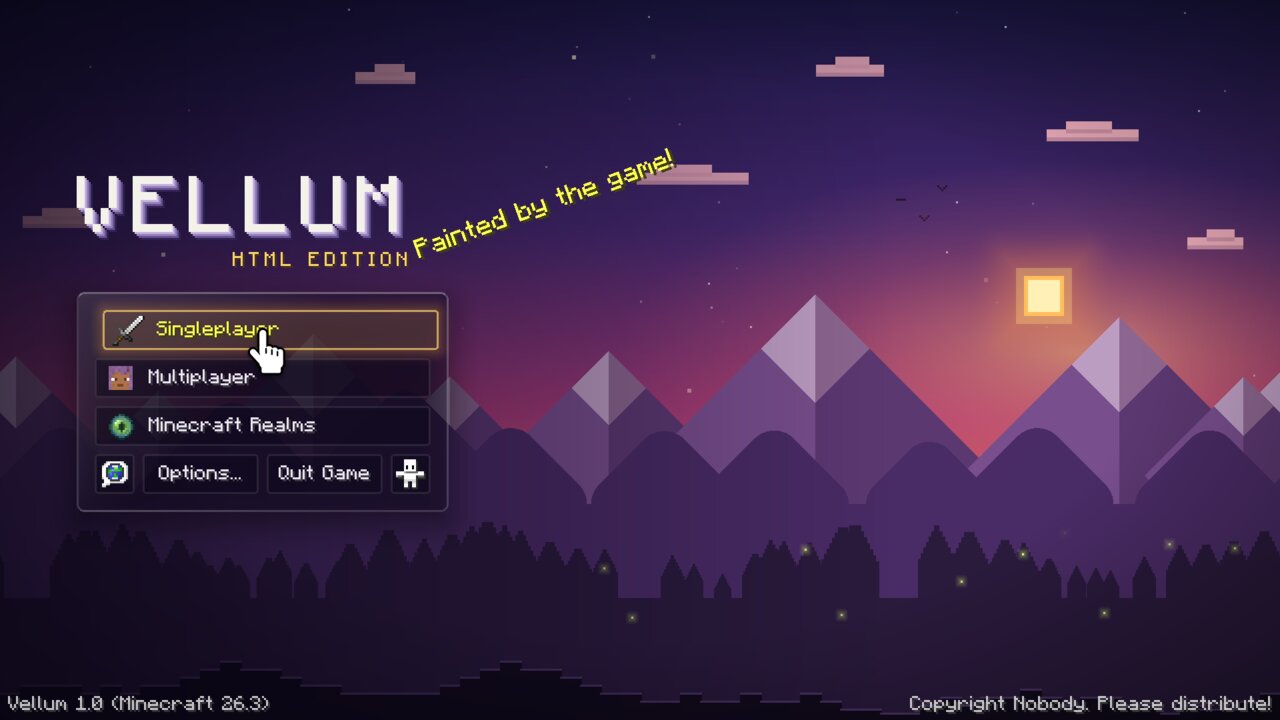 | 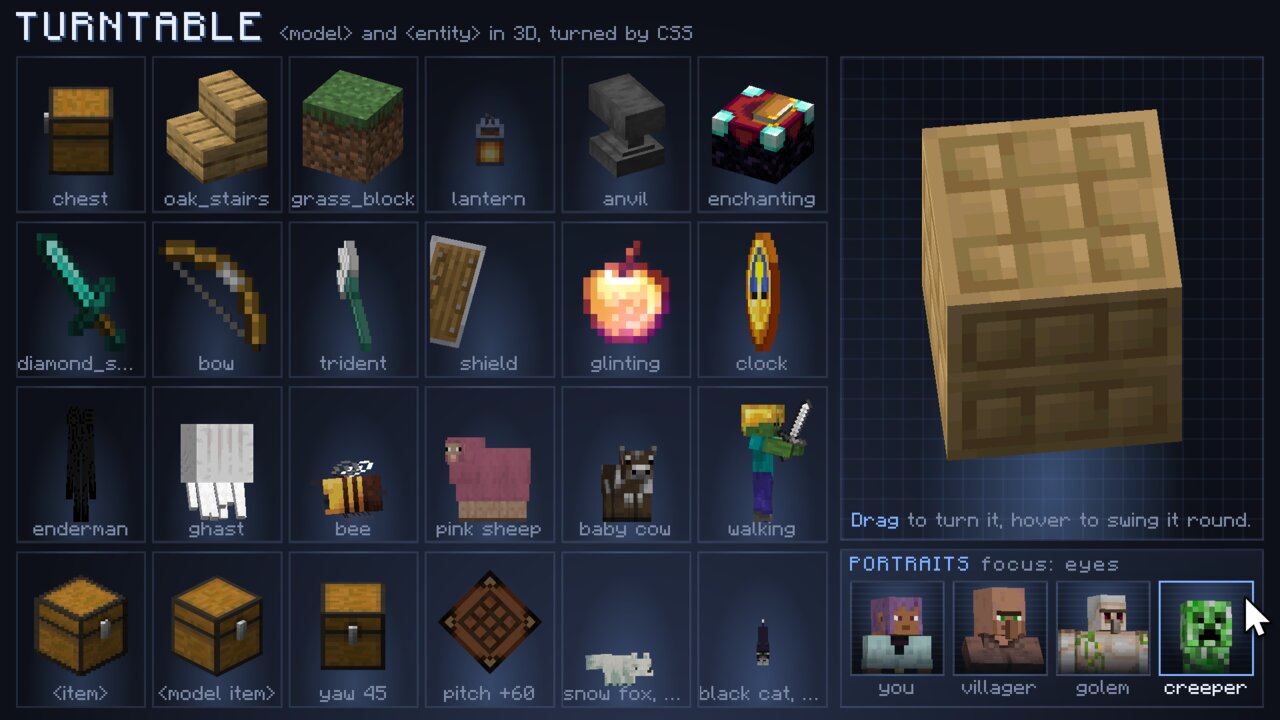 |
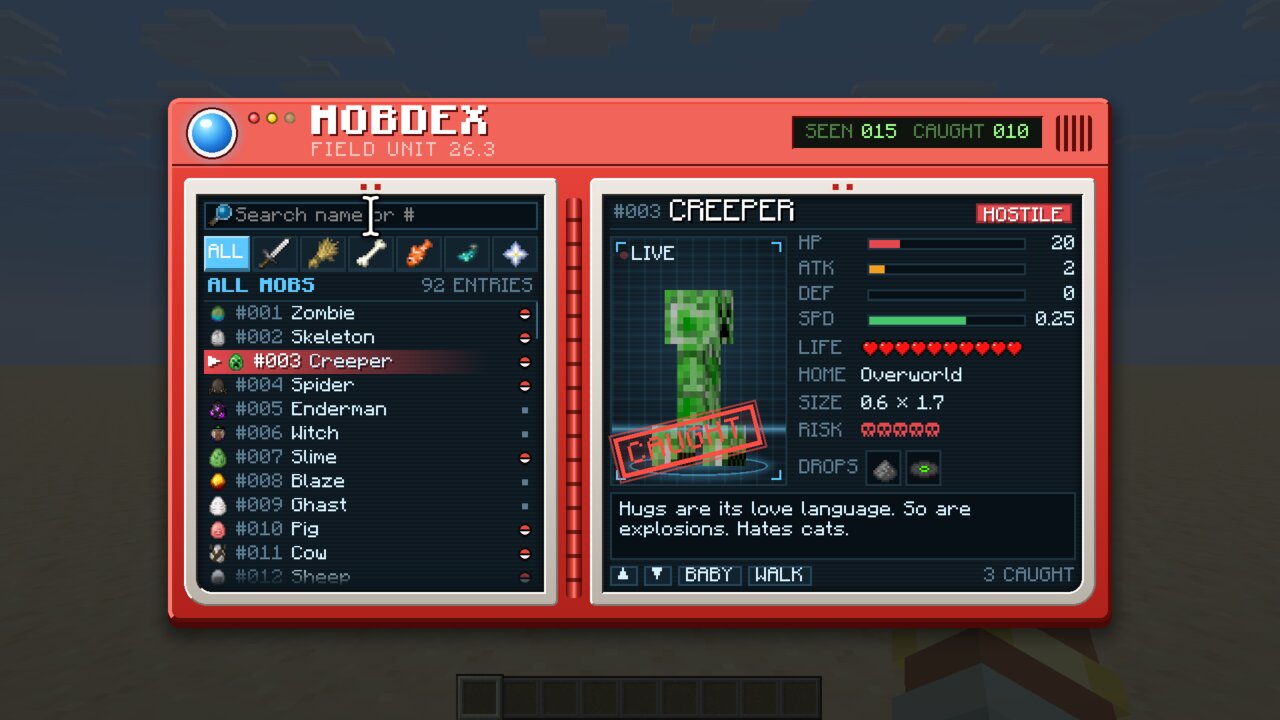 | 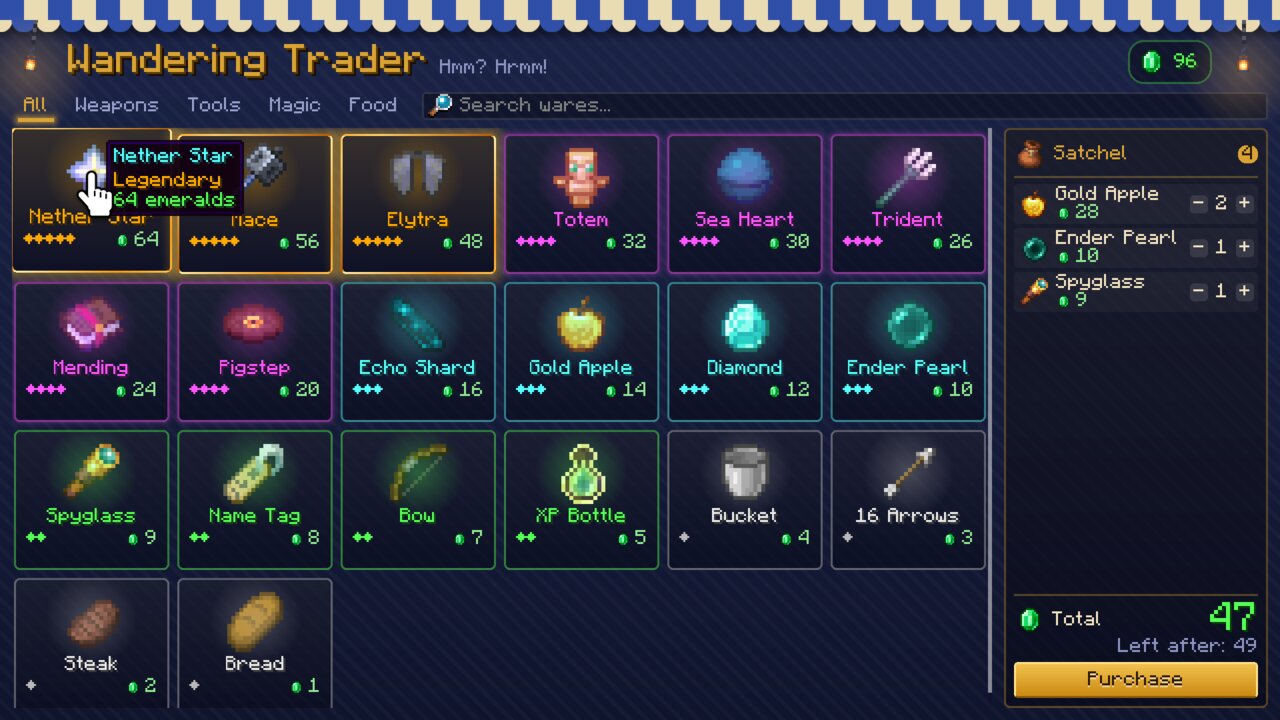 |
@keyframes. Its goal is to be a 90-10 solution compared to a complete browser.<slot index="0"> for inventory slots and vanilla mechanics will Just Work(tm): clicking, dragging, shift-clicking and tooltips.<item>, <slot>, 3D <entity> and <model>, sprites, translations and player heads.v-for, v-if, v-model, @click).<div class="mc-panel chest">
<h2 class="mc-label">{{ title }}</h2>
<div class="grid">
<slot v-for="i in 27" :index="i - 1"></slot>
</div>
<button @click="vellum.send('sort')">Sort</button>
</div>
<style>
.chest { width: 176px; margin: auto; }
.grid { display: grid; grid-template-columns: repeat(9, 18px); }
button { transition: transform .15s ease-out; }
button:hover { transform: scale(1.05); }
</style>
Vellum is in development. It's on maven.maxleiter.com:
repositories { maven { url = "https://maven.maxleiter.com"; content { includeGroup("dev.vellum") } } }
dependencies { implementation("dev.vellum:vellum-neoforge-26.3:0.5.1") }   // or vellum-fabric-26.3, and the 1.21.1 ones
Feel free to bundle Vellum with your mod, or add it as a dependency. template/ has small NeoForge and Fabric mods to start from. The docs cover the Java side, docs/SCRIPTING.md the JavaScript dialect and templates, and docs/MIGRATING.md porting an existing screen.
A server mod can open a page on a player's client, push data to it and get messages back. Since a server might be hostile, scripts run in a Rhino sandbox with no Java access, no network access, no file access, and sensible caps. Players can always close a page with Shift+Esc, and config/vellum.properties lets them block server pages entirely.
Full pages, opened in game with /vellum showcase <name>:
Smaller demos of one feature each, opened with /vellum demo <name>: settings, layout, animation, templates, map, HUD overlay, toast over chat and a vanilla chest built from <slot>s (server side).
/vellum open <resource id> opens any page and /vellum reload reloads them. In a dev client, saving a page under src/main/resources reloads it in the open screen.
You can also build pages without launching Minecraft. The previewer renders a page in a Swing window with the engine and the game's real font and sprites (read from your Minecraft jar), reloads when you save, and has an F12 inspector that outlines the hovered element's box model.
./gradlew :preview:run --args="path/to/page.html --scale 3 --size 427x240"
./gradlew :preview:run --args="page.html --snapshot out.png --frames 30"   # headless PNG
Flags, keys and how it finds the jar are in preview/README.md.
You need JDK 25 or newer and git; Gradle provisions the toolchains (25 for 26.3 and 26.2, 21 for 1.21.1).
Vellum uses a patched Rhino. The build downloads the upstream source pinned in gradle.properties (once, checked
against its SHA-256), applies the patches in rhino/patches and compiles it, so there is nothing to install first.
rhino/README.md says what the patches do and how to change them.
./gradlew :engine:test                 # engine tests
./gradlew build                        # everything, every Minecraft version, including Fabric's headless GameTests
./gradlew :neoforge:26.3:runClient     # dev client (or :fabric:26.3, :neoforge:1.21.1, :fabric:1.21.1)
./gradlew :neoforge:26.3:runGameTestServer   # NeoForge's GameTests
./gradlew :preview:installDist         # previewer, at preview/build/install/preview/bin/preview
Minecraft 26.3, 26.2 and 1.21.1, on NeoForge and Fabric (Fabric needs Fabric API). A few things differ on 26.2 and 1.21.1; docs/versions.md lists them and how the versions are built.
Vellum is MIT (LICENSE). The jars bundle Mozilla Rhino, which is MPL-2.0: it is built from the upstream commit
pinned in gradle.properties (Rhino 1.9.1) with the patches in rhino/patches, and its license,
notices and a note on where that source is ship in each jar under META-INF/licenses/rhino/.
LLMs were used heavily in the development of Vellum.
A small web engine for modded Minecraft GUIs with HTML, CSS and JS
Java
1
233 commits
updated Oct 12, 2026
CurseForge | Modrinth | Docs
Vellum is a small web engine inside Minecraft. Write your screens, inventories, HUDs, etc in HTML and Vellum handles the layout, scripting, and rendering with the normal GUI renderer. It runs on Minecraft 26.3, 26.2 and 1.21.1, on NeoForge and Fabric.
You probably don't need to install this on its own; Vellum is a library other mods depend on.
The inspiration for Vellum was three-fold:
Vellum helps in both these cases. Opus 5.5 was used heavily in the development of Vellum.
| |
| |
@keyframes. Its goal is to be a 90-10 solution compared to a complete browser.<slot index="0"> for inventory slots and vanilla mechanics will Just Work(tm): clicking, dragging, shift-clicking and tooltips.<item>, <slot>, 3D <entity> and <model>, sprites, translations and player heads.v-for, v-if, v-model, @click).<div class="mc-panel chest">
<h2 class="mc-label">{{ title }}</h2>
<div class="grid">
<slot v-for="i in 27" :index="i - 1"></slot>
</div>
<button @click="vellum.send('sort')">Sort</button>
</div>
<style>
.chest { width: 176px; margin: auto; }
.grid { display: grid; grid-template-columns: repeat(9, 18px); }
button { transition: transform .15s ease-out; }
button:hover { transform: scale(1.05); }
</style>
Vellum is in development. It's on maven.maxleiter.com:
repositories { maven { url = "https://maven.maxleiter.com"; content { includeGroup("dev.vellum") } } }
dependencies { implementation("dev.vellum:vellum-neoforge-26.3:0.5.1") }   // or vellum-fabric-26.3, and the 1.21.1 ones
Feel free to bundle Vellum with your mod, or add it as a dependency. template/ has small NeoForge and Fabric mods to start from. The docs cover the Java side, docs/SCRIPTING.md the JavaScript dialect and templates, and docs/MIGRATING.md porting an existing screen.
A server mod can open a page on a player's client, push data to it and get messages back. Since a server might be hostile, scripts run in a Rhino sandbox with no Java access, no network access, no file access, and sensible caps. Players can always close a page with Shift+Esc, and config/vellum.properties lets them block server pages entirely.
Full pages, opened in game with /vellum showcase <name>:
Smaller demos of one feature each, opened with /vellum demo <name>: settings, layout, animation, templates, map, HUD overlay, toast over chat and a vanilla chest built from <slot>s (server side).
/vellum open <resource id> opens any page and /vellum reload reloads them. In a dev client, saving a page under src/main/resources reloads it in the open screen.
You can also build pages without launching Minecraft. The previewer renders a page in a Swing window with the engine and the game's real font and sprites (read from your Minecraft jar), reloads when you save, and has an F12 inspector that outlines the hovered element's box model.
./gradlew :preview:run --args="path/to/page.html --scale 3 --size 427x240"
./gradlew :preview:run --args="page.html --snapshot out.png --frames 30"   # headless PNG
Flags, keys and how it finds the jar are in preview/README.md.
You need JDK 25 or newer and git; Gradle provisions the toolchains (25 for 26.3 and 26.2, 21 for 1.21.1).
Vellum uses a patched Rhino. The build downloads the upstream source pinned in gradle.properties (once, checked
against its SHA-256), applies the patches in rhino/patches and compiles it, so there is nothing to install first.
rhino/README.md says what the patches do and how to change them.
./gradlew :engine:test                 # engine tests
./gradlew build                        # everything, every Minecraft version, including Fabric's headless GameTests
./gradlew :neoforge:26.3:runClient     # dev client (or :fabric:26.3, :neoforge:1.21.1, :fabric:1.21.1)
./gradlew :neoforge:26.3:runGameTestServer   # NeoForge's GameTests
./gradlew :preview:installDist         # previewer, at preview/build/install/preview/bin/preview
Minecraft 26.3, 26.2 and 1.21.1, on NeoForge and Fabric (Fabric needs Fabric API). A few things differ on 26.2 and 1.21.1; docs/versions.md lists them and how the versions are built.
Vellum is MIT (LICENSE). The jars bundle Mozilla Rhino, which is MPL-2.0: it is built from the upstream commit
pinned in gradle.properties (Rhino 1.9.1) with the patches in rhino/patches, and its license,
notices and a note on where that source is ship in each jar under META-INF/licenses/rhino/.
LLMs were used heavily in the development of Vellum.



