
Self-hosted cloud coding agents: Claude Code and Codex in per-thread sandboxes, one docker compose
TypeScript
2
56 commits
updated Oct 3, 2026
See what people are saying
README
valet
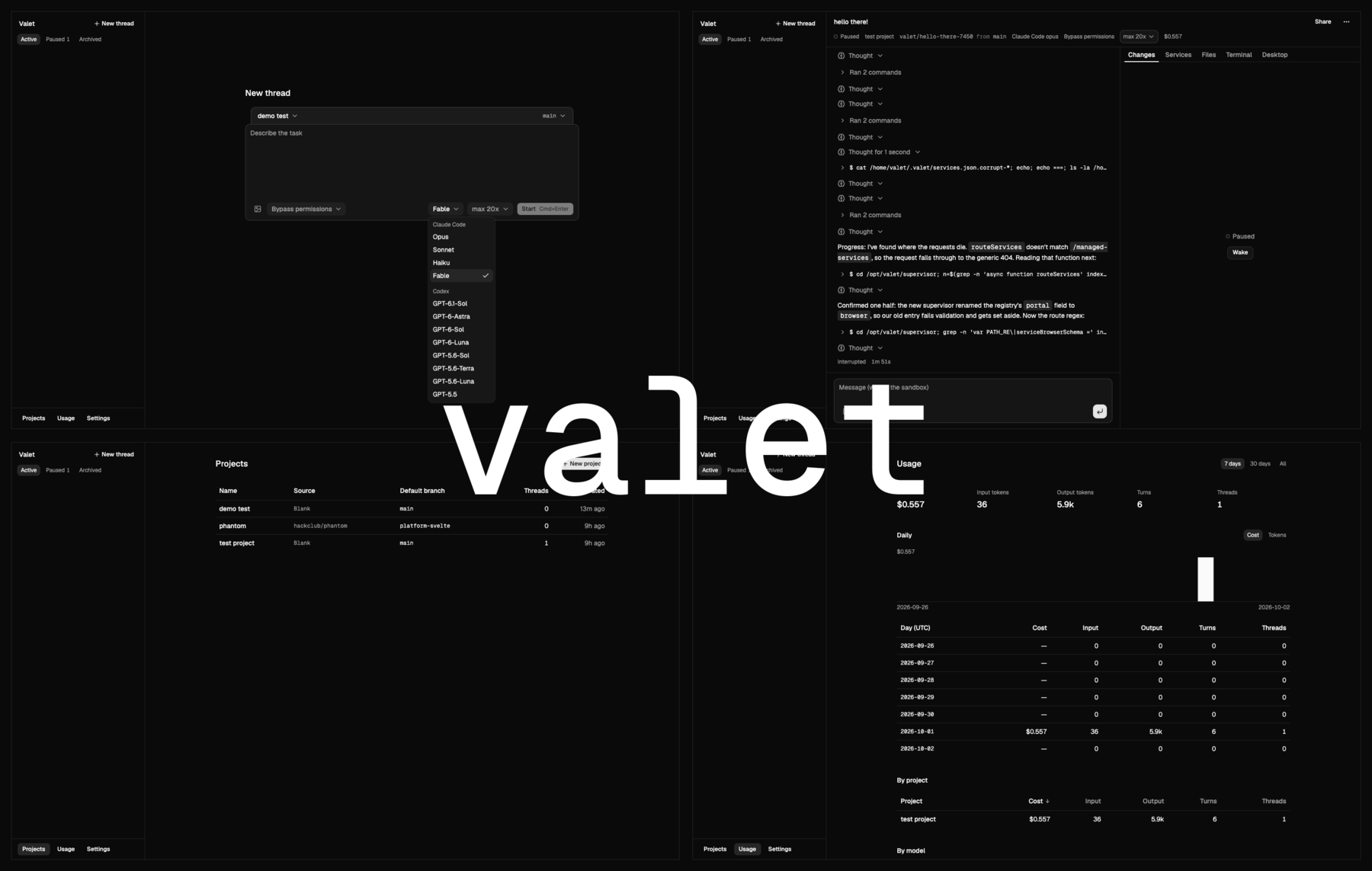
self-hosted cursor cloud agents / amp orbs / etc
requirements
- linux server or mac with docker engine 24+ and compose v2
- claude/codex sub or anthropic/openai api key
- github token for private repositories and pull requests (optional)
install
git clone https://github.com/dropalltables/valet
cd valet
cp .env.example .env   # set POSTGRES_PASSWORD, VALET_SECRET_KEY (openssl rand -base64 32), VALET_PASSWORD
docker compose --profile sandbox build
docker compose up -d --build
open http://localhost:3000 and add accounts under settings: a claude setup-token, a
codex sign-in or api key, a github token. every env var is documented in .env.example.
on a domain: reverse proxy port 3000 with websockets, set VALET_BASE_URL, and point
*.valet.example.com at the box with a wildcard cert. services live on those subdomains.
coolify
- docker compose resource from this repo. leave the domain field empty
- env:
VALET_BASE_URL,VALET_SERVICE_DOMAIN,VALET_PROXY_NETWORK(the app's uuid),VALET_CERT_RESOLVER(a dns-challenge resolver you add to the proxy config) - turn off "escape special characters in labels"
project configuration
.valet/setup: runs once after clone.valet/resume: runs on every wake.valet/services.yaml: processes to keep running
services:
  web:
    command: npm run dev -- --port $PORT
    browser: true     # shows in the services tab
    health: /
  api:
    command: uv run uvicorn app:app --port $PORT
    port: 8000        # default: assigned
inside the sandbox: valet service start|list|logs|restart|remove, valet url <port>.
development
bun install && docker compose up -d db
VALET_DOCKER_NETWORK=valet_valet VALET_REPOS_VOLUME=valet_repos bun run dev:core
bun run dev:web
security
core holds the docker socket; only web publishes a port. agents have sudo in their
container, so treat a sandbox as untrusted beyond its repo. on cloud hosts block metadata:
iptables -I DOCKER-USER -d 169.254.169.254/32 -j DROP.
license
mit. see LICENSE.
Similar repos


Languages
TypeScript
93.0%
JavaScript
5.5%
Self-hosted cloud coding agents: Claude Code and Codex in per-thread sandboxes, one docker compose
TypeScript
2
56 commits
updated Oct 3, 2026
See what people are saying
README
valet
self-hosted cursor cloud agents / amp orbs / etc
requirements
- linux server or mac with docker engine 24+ and compose v2
- claude/codex sub or anthropic/openai api key
- github token for private repositories and pull requests (optional)
install
git clone https://github.com/dropalltables/valet
cd valet
cp .env.example .env   # set POSTGRES_PASSWORD, VALET_SECRET_KEY (openssl rand -base64 32), VALET_PASSWORD
docker compose --profile sandbox build
docker compose up -d --build
open http://localhost:3000 and add accounts under settings: a claude setup-token, a
codex sign-in or api key, a github token. every env var is documented in .env.example.
on a domain: reverse proxy port 3000 with websockets, set VALET_BASE_URL, and point
*.valet.example.com at the box with a wildcard cert. services live on those subdomains.
coolify
- docker compose resource from this repo. leave the domain field empty
- env:
VALET_BASE_URL,VALET_SERVICE_DOMAIN,VALET_PROXY_NETWORK(the app's uuid),VALET_CERT_RESOLVER(a dns-challenge resolver you add to the proxy config) - turn off "escape special characters in labels"
project configuration
.valet/setup: runs once after clone.valet/resume: runs on every wake.valet/services.yaml: processes to keep running
services:
  web:
    command: npm run dev -- --port $PORT
    browser: true     # shows in the services tab
    health: /
  api:
    command: uv run uvicorn app:app --port $PORT
    port: 8000        # default: assigned
inside the sandbox: valet service start|list|logs|restart|remove, valet url <port>.
development
bun install && docker compose up -d db
VALET_DOCKER_NETWORK=valet_valet VALET_REPOS_VOLUME=valet_repos bun run dev:core
bun run dev:web
security
core holds the docker socket; only web publishes a port. agents have sudo in their
container, so treat a sandbox as untrusted beyond its repo. on cloud hosts block metadata:
iptables -I DOCKER-USER -d 169.254.169.254/32 -j DROP.
license
mit. see LICENSE.
Similar repos
Languages
TypeScript
93.0%
JavaScript
5.5%