
System-free & ROM-free classic Macintosh high-level emulator / runtime for 68k+PPC games and apps on modern systems written in Rust
See the codeREADME

systemless
A high-level runtime for classic Macintosh applications and games.
Run original Mac software without a ROM image, System installation, or hardware emulation.




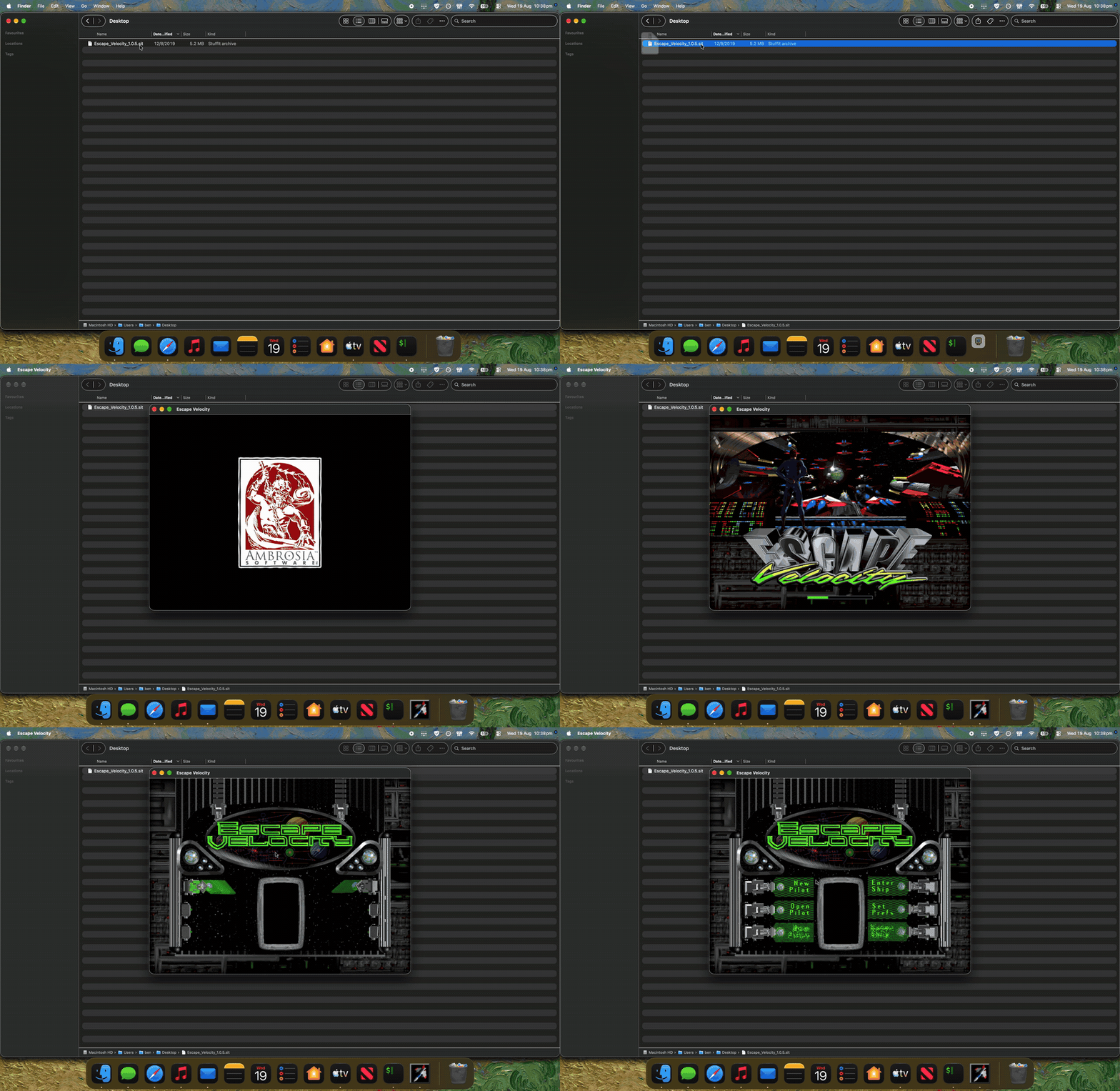
Systemless reimplements the classic Mac Toolbox and operating-system APIs in Rust, allowing original 68K and PowerPC Macintosh software to run without a ROM image, a System installation, or hardware emulation. On macOS, classic applications keep their own identity: guest menus appear in the native menu bar, while the guest application name and icon integrate with the Dock.
Try it in your browser
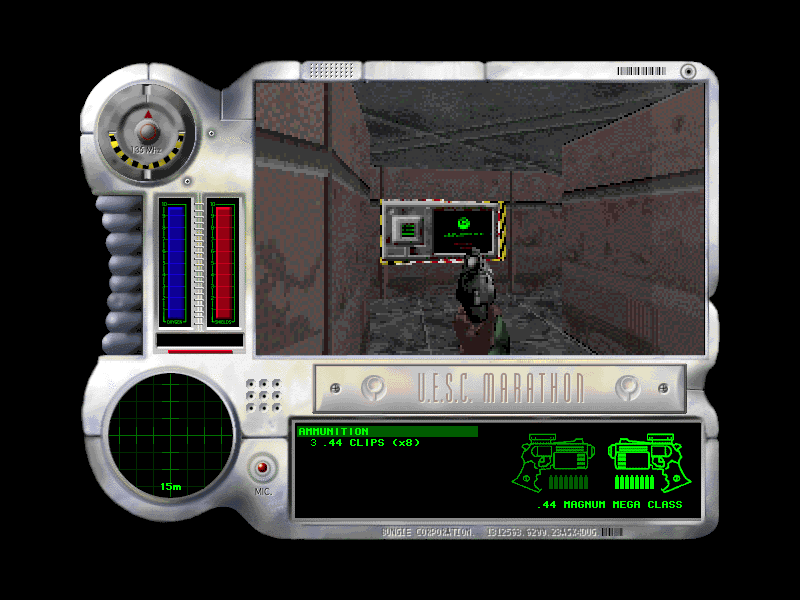
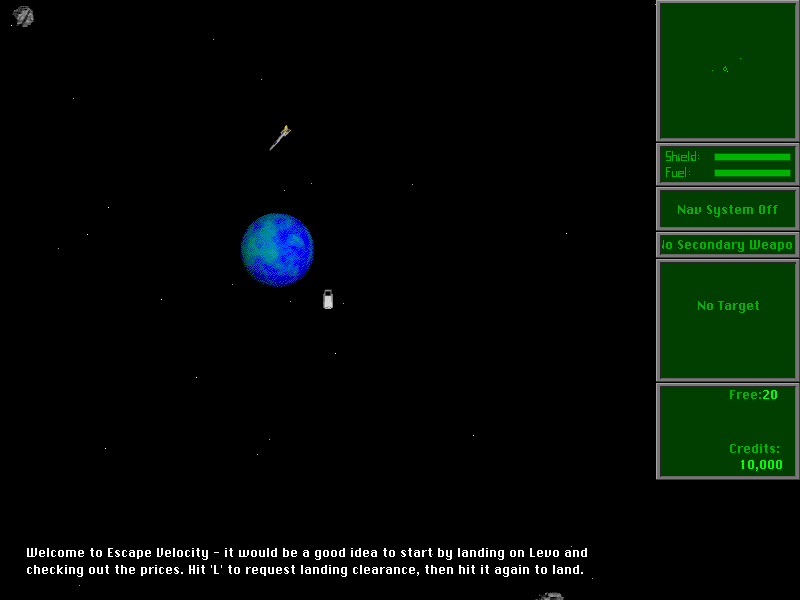
Play these and more classic Macintosh games in your browser at systemless.org.
The browser frontend and its community catalogue are developed in this
repository alongside the runtime. Website sources live in www/,
catalogue entries and optional plugin collections live in
www/catalogue/, and catalogue maintenance tools live in
www/tools/catalogue/. See
www/README.md for local browser and catalogue workflows.
Add to the catalogue
Add a Markdown entry under www/catalogue/; keep optional plugin collections
as separate YAML chunks under www/catalogue/plugins/. The
catalogue contribution guide
documents the entry layout, asset staging, validation, and local preview flow.
Quick Start
Install with Homebrew on macOS:
brew install benletchford/tap/systemless
systemless path/to/app-or-game.sit
Install a prebuilt release with cargo-binstall:
cargo binstall systemless
Release archives and SHA-256 checksums are available on
GitHub Releases for macOS,
Linux (GNU), and Windows (MSVC), each on x86-64 and ARM64. Linux binaries require
glibc 2.35 or newer and the ALSA runtime library (libasound2 on Ubuntu 22.04).
Or build and install from crates.io:
cargo install systemless
systemless path/to/app-or-game.sit
Systemless accepts StuffIt archives, MacBinary files, and raw/macOS resource forks. Archives may contain multiple files; Systemless populates the in-memory VFS and selects an executable resource fork from the archive.
Systemless does not ship applications, games, Mac ROMs, or Apple system software. Use legally obtained application archives.
For a local checkout, use cargo run --release -- path/to/app-or-game.sit.
Windows uses D3D11 presentation by default, with automatic software fallback if
GPU initialization or presentation fails. Set SYSTEMLESS_D3D11=0 before launching
to force software presentation.
For intermittent desktop stalls, set SYSTEMLESS_PROFILE_FRAMES=1 when launching.
The terminal reports CPU, compositing, outline rendering and Metal drawable-wait
phases that take at least 50 ms. During normal gameplay, drawable waits on the
presentation worker do not block the guest CPU or input handling.
Headless replays
systemless --headless --max-ticks 600 game.sit runs 600 simulated frontend
ticks (about ten seconds) without opening a window or sleeping in host time.
It uses the GUI runner's retained-wait/callback scheduling, advances audio,
uses the same architecture-specific instruction rate as the GUI, and
composites once per frontend tick. This is also the default headless
mode when neither legacy instruction option is supplied.
Use --tick-input-script inputs.txt with --max-ticks to replay inputs;
each line is <elapsed-tick> <action> [args], e.g. 120 mousedown 317 491
and 122 mouseup 317 491 (coordinates are vertical, horizontal). The
frontend clock continues while menu tracking freezes guest TickCount.
Reports include both clocks and actual instruction work. Startup Mac time
is fixed for repeatability; --headless-start-time SECONDS overrides it.
Inputs at or beyond the endpoint are rejected. The summary also reports
same-tick frames and frames that exhausted the instruction safety budget;
those counters help detect stalled or unmatched workloads. Use a fresh copy
of the same save files for each comparison (saves live beside the archive).
--max-instructions and --input-script retain the old instruction-clock
diagnostic mode. Retained modal waits can re-fire repeatedly in that mode,
so its CPU totals are not a proxy for GUI or gameplay CPU usage. Tick
scripts and instruction scripts cannot be combined. Time-based headless
results still exclude the host window, compositor, and physical audio device;
compare equal game progress and outputs, and verify windowed CPU separately.
How it works
Systemless executes classic 68K code with the
m68k crate and native 32-bit PowerPC code
with the ppc crate. Native builds enable
m68k's Cranelift JIT for eligible hot traces, while WebAssembly uses its
portable trace executor.
Native memory traces can read stable RAM directly while routing stores through
the memory bus to preserve high-resolution text coverage and write protection.
For diagnostic comparisons, setting SYSTEMLESS_DISABLE_TRACKED_JIT=1 before
launch disables this tracked-memory capability; ordinary raw-memory traces are
unaffected. Omit the variable for normal use.
68K and PowerPC are execution formats, not separate Macintosh platforms. Both participate in one coherent Macintosh world containing the guest memory map, system services, processes, tasks, and Toolbox state. Architecture-specific gateways preserve observable 68K trap and PowerPC CFM behavior before converging on canonical Macintosh service implementations in Rust.
The runtime is converging on one logical Macintosh process: both CPU adapters already use one address-routing authority, explicitly identified task-owned Mixed Mode continuations, and shared authorities for migrated services such as the process clock, ordinary handle allocation, and Trap Manager. Other Toolbox managers still contain explicitly tracked compatibility projections while their two ABI paths are moved onto one semantic operation at a time. The Trap Manager additionally requires registered system-memory provenance before either ABI may mutate a protected permanent patch chain; matching bytes in application memory never grant that capability. The fat-application Toolbox showcase enforces cross-architecture behavior by running the same interaction sequence through both slices and requiring identical semantic state and rendered checkpoints. Mixed Mode transitions must not copy or reconcile process-visible state, just as original software expects.
                         APPLICATION
                              │
                ┌─────────────┴─────────────┐
                │                           │
             68K CODE                  PowerPC PEF
                │                           │
                ▼                           ▼
          68K ABI gateway             PPC ABI gateway
                │                           │
                └─────────────┬─────────────┘
                              ▼
                       Execution kernel
                  UPP / ProcInfo / continuations
                              │
                              ▼
                    ┌───────────────────┐
                    │ Macintosh world   │
                    │ guest memory      │
                    │ system services   │
                    │ processes/tasks   │
                    │ Toolbox services  │
                    └─────────┬─────────┘
                              │
                              ▼
                       Host presentation
                    macOS / Web / other hosts
Architecture contract
The runtime is converging on these principles:
- Every guest-visible fact has one semantic authority. Guest structures such as menu records, windows, PixMaps, handles, low-memory globals, and trap-table entries remain authoritative in guest memory when original software can inspect or modify them directly.
- Machine-, process-, task-, CPU-engine-, and host-scoped state are modeled at their proper lifetimes rather than collected into one monolithic process object.
- Both CPU engines observe one authoritative guest memory map. Different memory interfaces and optimized views are allowed, but writes never require a cross-architecture synchronization pass.
- CPU gateways decode arguments, preserve guest-visible trap or import routing, and encode results. Architecture-independent Toolbox semantics live in one Macintosh service implementation.
- Host menus, framebuffers, audio devices, and persistence are derived presentation or policy layers. They do not become the source of guest truth.
State is deliberately scoped:
| Scope | Examples |
|---|---|
| Macintosh world / machine | Guest memory, system mappings, volumes, clock, devices, display, input, and audio environment. |
| Process | Application heap and resources, open sessions, UI objects, and process-specific trap state. |
| Task | Event delivery, Thread Manager state, callbacks, suspended calls, and continuation stacks. |
| CPU engine | Registers, ABI conventions, execution caches, CODE/PEF metadata, and PowerPC TOC state. |
| Host | Native menus and windows, textures, audio output, browser input, and save-storage policy. |
Mixed Mode and callbacks
Universal Procedure Pointers, RoutineDescriptors, and ProcInfo allow either architecture to call the other without the caller knowing which ISA implements the destination. Mixed Mode transitions are task continuations: the execution kernel suspends one engine, marshals the original Macintosh ABI, runs the target engine, and resumes the caller with its expected result layout.
Toolbox services may themselves invoke guest procedures. The target service contract models menu definition procedures, window and control definitions, event handlers, timers, sound callbacks, and asynchronous completions as resumable operations. A service releases its runtime state before guest code runs and continues when the task returns, allowing callbacks to alternate architectures without making either CPU the permanent host.
The fat-application Toolbox showcase runs the same interaction sequence through both executable slices and requires matching semantic state and rendered checkpoints. Focused Mixed Mode tests additionally exercise shared memory, nested cross-ISA calls, trap patches, and callbacks within one live Macintosh environment.
Status
Systemless is focused on real classic Macintosh applications that use the Mac Toolbox, whether they contain 68K CODE resources or native PowerPC PEF/CFM fragments. The HLE covers the major runtime surfaces needed by interactive software:
- Memory Manager handles, pointers, zones, low-memory globals, and common exception paths.
- Resource Manager, Segment Loader, File Manager calls, and an in-memory HFS-like VFS with data and resource forks.
- QuickDraw ports, regions, text, shapes, PICT, CopyBits, color tables, offscreen GWorlds, cursors, and 1bpp/4bpp/8bpp framebuffers.
- Event, Menu, Window, Control, Dialog, TextEdit, Cursor, Process, Sound, Standard File, SANE, and common Toolbox utility traps.
- Cooperative Thread Manager contexts, yielding, current-thread queries, critical sections, and thread-entry result delivery.
- Sound Manager playback, channel state, command queues, callbacks, file playback, and host audio mixing.
It is not a bit-perfect Mac hardware emulator. Hardware-specific services such as slot interrupts, device queues, removable-media behavior, and multi-process system integration are modeled only where guest-visible behavior matters.
Desktop Runner
The installed systemless command opens a window, renders the guest framebuffer,
maps keyboard and mouse input, and enables audio when a host backend is
available.
Common runner options:
systemless --headless --max-instructions 5000000 path/to/app.sit
systemless --arrows-as-numpad path/to/game.sit
systemless --display-scale 2 path/to/game.sit
systemless --ui-theme classic-system7 path/to/game.sit
systemless --fullscreen path/to/game.sit
On macOS, desktop windows open at the guest’s logical resolution: an 800×600
guest gets an 800×600-point content area (1600×1200 backing pixels on a 2× Retina
display). Oversized windows shrink to fit the monitor. Other platforms use an
automatic display-sized window. Games keep their aspect ratio, and windows
remain manually resizable. Use --display-scale with an
integer from 1 through 8 to override automatic sizing with an exact physical
guest-to-host pixel ratio (1 selects 1:1). --fullscreen starts the guest in a borderless fullscreen space.
On systems where macOS selects direct scan-out for the fullscreen surface this
measurably reduced pointer-to-screen latency in testing (see issue #1050); the
benefit depends on the machine and compositor state and is not guaranteed.
The default classic-system7 guest chrome uses classic Macintosh presentation,
control geometry, and metrics. The optional Systemless theme remains available
with --ui-theme systemless-default.
The desktop runner uses the canonical machine profile automatically. On macOS, guest menus are mirrored into the native menu bar and the guest's application name and icon are integrated with the Dock. Other platforms render the classic menu bar according to the guest application's own visibility state.
Desktop saves are stored next to the launched archive under
.systemless/saves/<archive-name>/. For example, launching
/Games/EV Override 1.0.1.sit restores and persists saves under
/Games/.systemless/saves/EV Override 1.0.1/. The store preserves Mac data and
resource forks and is kept separate from the original archive.
Library Use
Programmatic loading goes through FixtureRunner:
use systemless::runner::{FixtureRunner, FixtureRunnerConfig};

let bytes = std::fs::read("game.sit").expect("read game");
let mut runner = FixtureRunner::new(32 * 1024 * 1024, FixtureRunnerConfig::default());

systemless::game::load_game(&mut runner, &bytes).expect("load game");
let (_steps, _still_running) = runner.run_steps(100_000, None);
runner.composite_frame();
Use systemless::display to render the current framebuffer for custom frontends.
Save Persistence
Systemless keeps the guest filesystem in the runner's in-memory VFS. Persistence is a frontend responsibility: the engine exposes snapshots of VFS files, and a frontend decides where to store them.
Use the FixtureRunner VFS snapshot API for save files:
vfs_file_summaries()lists VFS files with fork sizes, hashes, and metadata.vfs_file_snapshot(path)exports one file's data fork, resource fork, and Finder metadata.import_vfs_file(snapshot)restores a previously exported file into the VFS.remove_vfs_file(path)removes a file from the VFS.
The expected frontend sequence is:
create runner
load archive into runner
record archive VFS summaries/fingerprints
load stored save snapshots
import_vfs_file(...) for each stored save
init_game(...)
periodically scan vfs_file_summaries()
persist changed user-save snapshots from vfs_file_snapshot(...)
flush one final scan on shutdown
Record the archive fingerprints before importing stored saves. That lets the frontend avoid copying packaged game files into the save store and persist only new or changed user-save files. Save-file filtering is frontend policy; common filters exclude System Folder preferences, temporary items, Trash, and desktop database files.
The built-in desktop runner uses this API and stores snapshots next to the
launched archive under .systemless/saves/<archive-name>/.
Crate Map
| Module | Role |
|---|---|
game | Shared app/archive loading, VFS population, and runner initialization. |
runner | Main execution API: CPU stepping, input events, timing, audio, and frame composition. |
trap | Toolbox and OS trap handlers grouped by manager. |
memory | Guest RAM, low-memory globals, heap zones, handles, and pointer operations. |
quickdraw | Public QuickDraw data helpers and font routing. |
display | Host framebuffer and cursor rendering helpers. |
sound | Sound Manager state and PCM mixing engine. |
loader | 68K CODE resource and PowerPC PEF/CFM loading, relocation, and launch setup. |
trace | Runtime trace hook (event/snapshot types + TraceSink) for cross-runtime parity comparison. |
Build And Test
cargo build --release
cargo test --lib
cargo test --lib --features test-support   # also covers scripted_traces
cargo check --no-default-features
cargo package
The off-by-default test-support feature exposes scripted_traces, the
deterministic trap-replay test scaffolding. It is kept out of the published
public API; enable it only when running tests.
The default gui feature enables the desktop runner dependencies: winit,
softbuffer, and cpal. Disable default features for headless library builds.
On Linux, the default GUI/audio build also needs ALSA development files for
cpal's ALSA backend. Install pkg-config plus your distribution's ALSA dev
package before running cargo build --release; for example:
sudo apt install pkg-config libasound2-dev      # Debian/Ubuntu
sudo dnf install pkgconf-pkg-config alsa-lib-devel  # Fedora/RHEL
sudo pacman -S pkgconf alsa-lib                # Arch
Font Data
Systemless uses bundled URW Core 35 TrueType fonts by default. Skrifa hints outlines at the requested point size and Zeno rasterizes them, without relying on fonts installed on the host. Noto Sans Symbols 2 supplies missing menu symbols. For unresolved Application and Geneva requests at 9 points, Coppet, an Inter-derived substitute tuned primarily for 9 pt text, supplies printable-ASCII artwork while a compatibility table supplies the classic advances. Larger sizes and extended characters retain URW; further optical-size refinements are future work. Guest FONT/NFNT/sfnt resources and explicit local bitmap overrides take precedence.
The old hand-drawn font catalogue has been removed. Classic family names remain compatibility identifiers; except for the documented Geneva 9 ASCII advances, the substitutes have their own metrics, so text widths and wrapping can differ from Apple's fonts. See the family mapping and URW provenance and Noto provenance.
QuickDraw retains binary glyph masks for guest framebuffer operations. The Toolbox Showcase gallery exercises a separate 2×–4× outline presentation surface, preserving guest pixels. The desktop uses 4× presentation for 68k 8-bit screens by default. Other screen depths and native PowerPC drawing use the logical font raster.
Font licences
The bundled fonts are distributed under the SIL Open Font License 1.1; their original licence and copyright notices are included beside each font. The emulator code remains GPL-3.0-or-later. Systemless is not affiliated with Apple Inc.; classic font names identify compatibility requests only.
Useful Environment Variables
| Variable | Effect |
|---|---|
SYSTEMLESS_LOAD_EXECUTABLE | Selects an executable from a multi-app archive by substring. |
SYSTEMLESS_ORIGINAL_FONTS_DIR | Loads optional runtime font override blobs. |
SYSTEMLESS_TRACE_LOAD | Logs archive, VFS, resource, and startup loading diagnostics. |
SYSTEMLESS_TRACE_LOADSEG | Logs Segment Loader jump-table patching. |
SYSTEMLESS_TRACE_TRAP_COUNTS | Prints trap dispatch frequency summaries. |
SYSTEMLESS_SOFTWARE_CURSOR | Restores the composited guest cursor overlay instead of the hardware pointer (macOS). |
References & Documentation Conventions
Systemless reimplements guest-visible Toolbox / OS behavior, favoring what an application observes over cycle- or hardware-level fidelity. That behavior is a contract, so non-obvious decisions are documented at the code that implements them and cite the source that justifies them — a reader should be able to check the reasoning without leaving the file.
When to cite. Add a citation whenever the "why" is not obvious from the
code: trap semantics and edge cases, magic constants and error codes, on-disk or
in-heap struct layouts, and any deliberate deviation from the books. Put it in
the /// doc comment of the trap/function, or an inline // comment on the
exact line it explains.
Inside Macintosh is the primary source. Cite the volume, year, and page,
using p. for a page and pp. for a range:
- Old series — roman-numeral volumes; the page carries the volume prefix:
Inside Macintosh Volume I (1985), p. I-115 - New series — named volumes; the page is chapter-page:
Inside Macintosh: Devices (1994), pp. 2-70
A short form without the year is fine for a repeated reference in the same area
(Inside Macintosh Volume I, I-189). Multiple sources can back one line:
Inside Macintosh: Files (1992), p. 2-236; Technical Note #108.
Other sources, cited the same way (inline, next to the code):
- BasiliskII / Executor — when the books are silent or ambiguous, cite
the observed behavior of an existing emulator that a matching guest relies on;
name the file/function where it helps (e.g.
BasiliskII's fpu_ieee.cpp). - Apple Technical Notes — by number, e.g.
Technical Note #108.
Cite only the source, never the test that checks it: comments should not name tests, fixtures, or tooling that live outside this crate.
Prefer the narrowest source that settles the question, and always note when Systemless intentionally diverges from it, and why.
License
The open-source Systemless emulator/runtime is licensed under GPL-3.0-or-later.
Some components have additional component-specific licensing, including bundled fonts and Geneva 9 compatibility advances under the SIL Open Font License 1.1.
See LICENSING.md, LICENSE, and the component OFL notice for details.
Contributors


Similar repos


Languages
Rust
98.6%
System-free & ROM-free classic Macintosh high-level emulator / runtime for 68k+PPC games and apps on modern systems written in Rust
See the codeREADME
systemless
A high-level runtime for classic Macintosh applications and games.
Run original Mac software without a ROM image, System installation, or hardware emulation.
Systemless reimplements the classic Mac Toolbox and operating-system APIs in Rust, allowing original 68K and PowerPC Macintosh software to run without a ROM image, a System installation, or hardware emulation. On macOS, classic applications keep their own identity: guest menus appear in the native menu bar, while the guest application name and icon integrate with the Dock.
Try it in your browser
Play these and more classic Macintosh games in your browser at systemless.org.
The browser frontend and its community catalogue are developed in this
repository alongside the runtime. Website sources live in www/,
catalogue entries and optional plugin collections live in
www/catalogue/, and catalogue maintenance tools live in
www/tools/catalogue/. See
www/README.md for local browser and catalogue workflows.
Add to the catalogue
Add a Markdown entry under www/catalogue/; keep optional plugin collections
as separate YAML chunks under www/catalogue/plugins/. The
catalogue contribution guide
documents the entry layout, asset staging, validation, and local preview flow.
Quick Start
Install with Homebrew on macOS:
brew install benletchford/tap/systemless
systemless path/to/app-or-game.sit
Install a prebuilt release with cargo-binstall:
cargo binstall systemless
Release archives and SHA-256 checksums are available on
GitHub Releases for macOS,
Linux (GNU), and Windows (MSVC), each on x86-64 and ARM64. Linux binaries require
glibc 2.35 or newer and the ALSA runtime library (libasound2 on Ubuntu 22.04).
Or build and install from crates.io:
cargo install systemless
systemless path/to/app-or-game.sit
Systemless accepts StuffIt archives, MacBinary files, and raw/macOS resource forks. Archives may contain multiple files; Systemless populates the in-memory VFS and selects an executable resource fork from the archive.
Systemless does not ship applications, games, Mac ROMs, or Apple system software. Use legally obtained application archives.
For a local checkout, use cargo run --release -- path/to/app-or-game.sit.
Windows uses D3D11 presentation by default, with automatic software fallback if
GPU initialization or presentation fails. Set SYSTEMLESS_D3D11=0 before launching
to force software presentation.
For intermittent desktop stalls, set SYSTEMLESS_PROFILE_FRAMES=1 when launching.
The terminal reports CPU, compositing, outline rendering and Metal drawable-wait
phases that take at least 50 ms. During normal gameplay, drawable waits on the
presentation worker do not block the guest CPU or input handling.
Headless replays
systemless --headless --max-ticks 600 game.sit runs 600 simulated frontend
ticks (about ten seconds) without opening a window or sleeping in host time.
It uses the GUI runner's retained-wait/callback scheduling, advances audio,
uses the same architecture-specific instruction rate as the GUI, and
composites once per frontend tick. This is also the default headless
mode when neither legacy instruction option is supplied.
Use --tick-input-script inputs.txt with --max-ticks to replay inputs;
each line is <elapsed-tick> <action> [args], e.g. 120 mousedown 317 491
and 122 mouseup 317 491 (coordinates are vertical, horizontal). The
frontend clock continues while menu tracking freezes guest TickCount.
Reports include both clocks and actual instruction work. Startup Mac time
is fixed for repeatability; --headless-start-time SECONDS overrides it.
Inputs at or beyond the endpoint are rejected. The summary also reports
same-tick frames and frames that exhausted the instruction safety budget;
those counters help detect stalled or unmatched workloads. Use a fresh copy
of the same save files for each comparison (saves live beside the archive).
--max-instructions and --input-script retain the old instruction-clock
diagnostic mode. Retained modal waits can re-fire repeatedly in that mode,
so its CPU totals are not a proxy for GUI or gameplay CPU usage. Tick
scripts and instruction scripts cannot be combined. Time-based headless
results still exclude the host window, compositor, and physical audio device;
compare equal game progress and outputs, and verify windowed CPU separately.
How it works
Systemless executes classic 68K code with the
m68k crate and native 32-bit PowerPC code
with the ppc crate. Native builds enable
m68k's Cranelift JIT for eligible hot traces, while WebAssembly uses its
portable trace executor.
Native memory traces can read stable RAM directly while routing stores through
the memory bus to preserve high-resolution text coverage and write protection.
For diagnostic comparisons, setting SYSTEMLESS_DISABLE_TRACKED_JIT=1 before
launch disables this tracked-memory capability; ordinary raw-memory traces are
unaffected. Omit the variable for normal use.
68K and PowerPC are execution formats, not separate Macintosh platforms. Both participate in one coherent Macintosh world containing the guest memory map, system services, processes, tasks, and Toolbox state. Architecture-specific gateways preserve observable 68K trap and PowerPC CFM behavior before converging on canonical Macintosh service implementations in Rust.
The runtime is converging on one logical Macintosh process: both CPU adapters already use one address-routing authority, explicitly identified task-owned Mixed Mode continuations, and shared authorities for migrated services such as the process clock, ordinary handle allocation, and Trap Manager. Other Toolbox managers still contain explicitly tracked compatibility projections while their two ABI paths are moved onto one semantic operation at a time. The Trap Manager additionally requires registered system-memory provenance before either ABI may mutate a protected permanent patch chain; matching bytes in application memory never grant that capability. The fat-application Toolbox showcase enforces cross-architecture behavior by running the same interaction sequence through both slices and requiring identical semantic state and rendered checkpoints. Mixed Mode transitions must not copy or reconcile process-visible state, just as original software expects.
                         APPLICATION
                              │
                ┌─────────────┴─────────────┐
                │                           │
             68K CODE                  PowerPC PEF
                │                           │
                ▼                           ▼
          68K ABI gateway             PPC ABI gateway
                │                           │
                └─────────────┬─────────────┘
                              ▼
                       Execution kernel
                  UPP / ProcInfo / continuations
                              │
                              ▼
                    ┌───────────────────┐
                    │ Macintosh world   │
                    │ guest memory      │
                    │ system services   │
                    │ processes/tasks   │
                    │ Toolbox services  │
                    └─────────┬─────────┘
                              │
                              ▼
                       Host presentation
                    macOS / Web / other hosts
Architecture contract
The runtime is converging on these principles:
- Every guest-visible fact has one semantic authority. Guest structures such as menu records, windows, PixMaps, handles, low-memory globals, and trap-table entries remain authoritative in guest memory when original software can inspect or modify them directly.
- Machine-, process-, task-, CPU-engine-, and host-scoped state are modeled at their proper lifetimes rather than collected into one monolithic process object.
- Both CPU engines observe one authoritative guest memory map. Different memory interfaces and optimized views are allowed, but writes never require a cross-architecture synchronization pass.
- CPU gateways decode arguments, preserve guest-visible trap or import routing, and encode results. Architecture-independent Toolbox semantics live in one Macintosh service implementation.
- Host menus, framebuffers, audio devices, and persistence are derived presentation or policy layers. They do not become the source of guest truth.
State is deliberately scoped:
| Scope | Examples |
|---|---|
| Macintosh world / machine | Guest memory, system mappings, volumes, clock, devices, display, input, and audio environment. |
| Process | Application heap and resources, open sessions, UI objects, and process-specific trap state. |
| Task | Event delivery, Thread Manager state, callbacks, suspended calls, and continuation stacks. |
| CPU engine | Registers, ABI conventions, execution caches, CODE/PEF metadata, and PowerPC TOC state. |
| Host | Native menus and windows, textures, audio output, browser input, and save-storage policy. |
Mixed Mode and callbacks
Universal Procedure Pointers, RoutineDescriptors, and ProcInfo allow either architecture to call the other without the caller knowing which ISA implements the destination. Mixed Mode transitions are task continuations: the execution kernel suspends one engine, marshals the original Macintosh ABI, runs the target engine, and resumes the caller with its expected result layout.
Toolbox services may themselves invoke guest procedures. The target service contract models menu definition procedures, window and control definitions, event handlers, timers, sound callbacks, and asynchronous completions as resumable operations. A service releases its runtime state before guest code runs and continues when the task returns, allowing callbacks to alternate architectures without making either CPU the permanent host.
The fat-application Toolbox showcase runs the same interaction sequence through both executable slices and requires matching semantic state and rendered checkpoints. Focused Mixed Mode tests additionally exercise shared memory, nested cross-ISA calls, trap patches, and callbacks within one live Macintosh environment.
Status
Systemless is focused on real classic Macintosh applications that use the Mac Toolbox, whether they contain 68K CODE resources or native PowerPC PEF/CFM fragments. The HLE covers the major runtime surfaces needed by interactive software:
- Memory Manager handles, pointers, zones, low-memory globals, and common exception paths.
- Resource Manager, Segment Loader, File Manager calls, and an in-memory HFS-like VFS with data and resource forks.
- QuickDraw ports, regions, text, shapes, PICT, CopyBits, color tables, offscreen GWorlds, cursors, and 1bpp/4bpp/8bpp framebuffers.
- Event, Menu, Window, Control, Dialog, TextEdit, Cursor, Process, Sound, Standard File, SANE, and common Toolbox utility traps.
- Cooperative Thread Manager contexts, yielding, current-thread queries, critical sections, and thread-entry result delivery.
- Sound Manager playback, channel state, command queues, callbacks, file playback, and host audio mixing.
It is not a bit-perfect Mac hardware emulator. Hardware-specific services such as slot interrupts, device queues, removable-media behavior, and multi-process system integration are modeled only where guest-visible behavior matters.
Desktop Runner
The installed systemless command opens a window, renders the guest framebuffer,
maps keyboard and mouse input, and enables audio when a host backend is
available.
Common runner options:
systemless --headless --max-instructions 5000000 path/to/app.sit
systemless --arrows-as-numpad path/to/game.sit
systemless --display-scale 2 path/to/game.sit
systemless --ui-theme classic-system7 path/to/game.sit
systemless --fullscreen path/to/game.sit
On macOS, desktop windows open at the guest’s logical resolution: an 800×600
guest gets an 800×600-point content area (1600×1200 backing pixels on a 2× Retina
display). Oversized windows shrink to fit the monitor. Other platforms use an
automatic display-sized window. Games keep their aspect ratio, and windows
remain manually resizable. Use --display-scale with an
integer from 1 through 8 to override automatic sizing with an exact physical
guest-to-host pixel ratio (1 selects 1:1). --fullscreen starts the guest in a borderless fullscreen space.
On systems where macOS selects direct scan-out for the fullscreen surface this
measurably reduced pointer-to-screen latency in testing (see issue #1050); the
benefit depends on the machine and compositor state and is not guaranteed.
The default classic-system7 guest chrome uses classic Macintosh presentation,
control geometry, and metrics. The optional Systemless theme remains available
with --ui-theme systemless-default.
The desktop runner uses the canonical machine profile automatically. On macOS, guest menus are mirrored into the native menu bar and the guest's application name and icon are integrated with the Dock. Other platforms render the classic menu bar according to the guest application's own visibility state.
Desktop saves are stored next to the launched archive under
.systemless/saves/<archive-name>/. For example, launching
/Games/EV Override 1.0.1.sit restores and persists saves under
/Games/.systemless/saves/EV Override 1.0.1/. The store preserves Mac data and
resource forks and is kept separate from the original archive.
Library Use
Programmatic loading goes through FixtureRunner:
use systemless::runner::{FixtureRunner, FixtureRunnerConfig};

let bytes = std::fs::read("game.sit").expect("read game");
let mut runner = FixtureRunner::new(32 * 1024 * 1024, FixtureRunnerConfig::default());

systemless::game::load_game(&mut runner, &bytes).expect("load game");
let (_steps, _still_running) = runner.run_steps(100_000, None);
runner.composite_frame();
Use systemless::display to render the current framebuffer for custom frontends.
Save Persistence
Systemless keeps the guest filesystem in the runner's in-memory VFS. Persistence is a frontend responsibility: the engine exposes snapshots of VFS files, and a frontend decides where to store them.
Use the FixtureRunner VFS snapshot API for save files:
vfs_file_summaries()lists VFS files with fork sizes, hashes, and metadata.vfs_file_snapshot(path)exports one file's data fork, resource fork, and Finder metadata.import_vfs_file(snapshot)restores a previously exported file into the VFS.remove_vfs_file(path)removes a file from the VFS.
The expected frontend sequence is:
create runner
load archive into runner
record archive VFS summaries/fingerprints
load stored save snapshots
import_vfs_file(...) for each stored save
init_game(...)
periodically scan vfs_file_summaries()
persist changed user-save snapshots from vfs_file_snapshot(...)
flush one final scan on shutdown
Record the archive fingerprints before importing stored saves. That lets the frontend avoid copying packaged game files into the save store and persist only new or changed user-save files. Save-file filtering is frontend policy; common filters exclude System Folder preferences, temporary items, Trash, and desktop database files.
The built-in desktop runner uses this API and stores snapshots next to the
launched archive under .systemless/saves/<archive-name>/.
Crate Map
| Module | Role |
|---|---|
game | Shared app/archive loading, VFS population, and runner initialization. |
runner | Main execution API: CPU stepping, input events, timing, audio, and frame composition. |
trap | Toolbox and OS trap handlers grouped by manager. |
memory | Guest RAM, low-memory globals, heap zones, handles, and pointer operations. |
quickdraw | Public QuickDraw data helpers and font routing. |
display | Host framebuffer and cursor rendering helpers. |
sound | Sound Manager state and PCM mixing engine. |
loader | 68K CODE resource and PowerPC PEF/CFM loading, relocation, and launch setup. |
trace | Runtime trace hook (event/snapshot types + TraceSink) for cross-runtime parity comparison. |
Build And Test
cargo build --release
cargo test --lib
cargo test --lib --features test-support   # also covers scripted_traces
cargo check --no-default-features
cargo package
The off-by-default test-support feature exposes scripted_traces, the
deterministic trap-replay test scaffolding. It is kept out of the published
public API; enable it only when running tests.
The default gui feature enables the desktop runner dependencies: winit,
softbuffer, and cpal. Disable default features for headless library builds.
On Linux, the default GUI/audio build also needs ALSA development files for
cpal's ALSA backend. Install pkg-config plus your distribution's ALSA dev
package before running cargo build --release; for example:
sudo apt install pkg-config libasound2-dev      # Debian/Ubuntu
sudo dnf install pkgconf-pkg-config alsa-lib-devel  # Fedora/RHEL
sudo pacman -S pkgconf alsa-lib                # Arch
Font Data
Systemless uses bundled URW Core 35 TrueType fonts by default. Skrifa hints outlines at the requested point size and Zeno rasterizes them, without relying on fonts installed on the host. Noto Sans Symbols 2 supplies missing menu symbols. For unresolved Application and Geneva requests at 9 points, Coppet, an Inter-derived substitute tuned primarily for 9 pt text, supplies printable-ASCII artwork while a compatibility table supplies the classic advances. Larger sizes and extended characters retain URW; further optical-size refinements are future work. Guest FONT/NFNT/sfnt resources and explicit local bitmap overrides take precedence.
The old hand-drawn font catalogue has been removed. Classic family names remain compatibility identifiers; except for the documented Geneva 9 ASCII advances, the substitutes have their own metrics, so text widths and wrapping can differ from Apple's fonts. See the family mapping and URW provenance and Noto provenance.
QuickDraw retains binary glyph masks for guest framebuffer operations. The Toolbox Showcase gallery exercises a separate 2×–4× outline presentation surface, preserving guest pixels. The desktop uses 4× presentation for 68k 8-bit screens by default. Other screen depths and native PowerPC drawing use the logical font raster.
Font licences
The bundled fonts are distributed under the SIL Open Font License 1.1; their original licence and copyright notices are included beside each font. The emulator code remains GPL-3.0-or-later. Systemless is not affiliated with Apple Inc.; classic font names identify compatibility requests only.
Useful Environment Variables
| Variable | Effect |
|---|---|
SYSTEMLESS_LOAD_EXECUTABLE | Selects an executable from a multi-app archive by substring. |
SYSTEMLESS_ORIGINAL_FONTS_DIR | Loads optional runtime font override blobs. |
SYSTEMLESS_TRACE_LOAD | Logs archive, VFS, resource, and startup loading diagnostics. |
SYSTEMLESS_TRACE_LOADSEG | Logs Segment Loader jump-table patching. |
SYSTEMLESS_TRACE_TRAP_COUNTS | Prints trap dispatch frequency summaries. |
SYSTEMLESS_SOFTWARE_CURSOR | Restores the composited guest cursor overlay instead of the hardware pointer (macOS). |
References & Documentation Conventions
Systemless reimplements guest-visible Toolbox / OS behavior, favoring what an application observes over cycle- or hardware-level fidelity. That behavior is a contract, so non-obvious decisions are documented at the code that implements them and cite the source that justifies them — a reader should be able to check the reasoning without leaving the file.
When to cite. Add a citation whenever the "why" is not obvious from the
code: trap semantics and edge cases, magic constants and error codes, on-disk or
in-heap struct layouts, and any deliberate deviation from the books. Put it in
the /// doc comment of the trap/function, or an inline // comment on the
exact line it explains.
Inside Macintosh is the primary source. Cite the volume, year, and page,
using p. for a page and pp. for a range:
- Old series — roman-numeral volumes; the page carries the volume prefix:
Inside Macintosh Volume I (1985), p. I-115 - New series — named volumes; the page is chapter-page:
Inside Macintosh: Devices (1994), pp. 2-70
A short form without the year is fine for a repeated reference in the same area
(Inside Macintosh Volume I, I-189). Multiple sources can back one line:
Inside Macintosh: Files (1992), p. 2-236; Technical Note #108.
Other sources, cited the same way (inline, next to the code):
- BasiliskII / Executor — when the books are silent or ambiguous, cite
the observed behavior of an existing emulator that a matching guest relies on;
name the file/function where it helps (e.g.
BasiliskII's fpu_ieee.cpp). - Apple Technical Notes — by number, e.g.
Technical Note #108.
Cite only the source, never the test that checks it: comments should not name tests, fixtures, or tooling that live outside this crate.
Prefer the narrowest source that settles the question, and always note when Systemless intentionally diverges from it, and why.
License
The open-source Systemless emulator/runtime is licensed under GPL-3.0-or-later.
Some components have additional component-specific licensing, including bundled fonts and Geneva 9 compatibility advances under the SIL Open Font License 1.1.
See LICENSING.md, LICENSE, and the component OFL notice for details.
Similar repos
Contributors
Languages
Rust
98.6%