
M-VAVE FM1 reverse-engineering research, SysEx protocol tools, and firmware update scripts
Python
57
12 commits
updated Oct 7, 2026
See what people are saying
README
M-VAVE FM1 & M-UPGRADE Analysis & MIDI SysEx Protocol Documentation
This document contains technical research, hardware details, and reverse-engineering results for the M-VAVE FM1 synthesizer (powered by the JieLi AC791N processor) and the M-UPGRADE-FM1.app (macOS) utility.
1. Custom & Alternative Firmwares
Community-developed custom firmwares, mods, and experimental firmware projects for the M-VAVE FM-1:
-
Felucca by hugelton (Web Installer | Web Editor):
- License: Open Source (GPL-3.0-only).
- Synthesizer Engines: 9 distinct sound engines including ANALOG (virtual analog, 2 osc, PWM, resonant LPF), DIGITAL (4-op FM, 8 algorithms, feedback), PHASE (phase distortion), LOFI (chiptune, 4-bit wave RAM), SAMPLE (multisampled instruments + user slots), VOICE (formant/vocal osc), TRIO (3 osc with ring mod/sync), WHEEL (tonewheel organ with drawbars & rotary speaker), and GRAIN (granular textures).
- Architecture & Features: 4 tracks (3 synth parts + 1 GM drum track, 8 shared voices), 64-step sequencer per track with chords/ties/slides and live loop recording, per-track SLICER (16-step tempo-synced gate/stutter), effects (distortion, chorus, delay, reverb sends, master limiter), scales & white-key quantization, and web editor.
- Installation: Direct web installer via WebMIDI in Chrome/Edge over standard USB-C cable (no extra hardware needed; stock updater restores official firmware).
-
baud girl Custom Firmware Mod:
- License: Closed Source.
- Features: Comprehensive overhaul and reimagining of the stock firmware ergonomics and controls. Adds Virtual Analog (VA) synthesizer engines and a 64-step sequencer.
- Installation: Web-based browser installer in a couple of clicks via WebMIDI.
-
- License: Open Source (MIT).
- Status: Research / bench stage.
- Features: Intergalactic Modulation Station — alternative firmware based on Mutable Instruments synthesizer engines, a Movy-style sequencer, and an in-browser virtual FM-1 emulator/simulator.
-
- License: Commercial / Proprietary ($29).
- Concept: Transforms the FM-1 into a standalone multitrack groovebox without needing any external equipment.
- Features: Up to 8 independent tracks (drums, bass, chords, leads) with independent loop lengths (1 to 8 bars) for evolving polyrhythmic structures, dual sound engine (native 6-op FM + Virtual Analog with ladder filter), up to 20 voices of polyphony (12 FM + 8 VA, max 6 for drums), 64-step sequencer with parameter locks (p-locks), live stage view, curated sound packs, and DX7 SysEx patch reception.
- Installation: Browser-based USB installer via WebMIDI in Chrome/Edge (~2 minutes).
-
SLOOP by isod89 (Web Installer | Web Editor):
- License: Open Source (GPL-3.0). Based on Felucca by Hügelton Instruments.
- Concept: Live performance groovebox firmware designed for any music style without mandatory presets or fixed patterns.
- Features: 4 tracks (3 synth tracks + 1 drum machine with 16 sounds across the white keys), 9 synthesis engines, 68 sounds, 37 drum kits, custom sample support, and live-playable song mode. Features USB stereo audio input (class-compliant recording directly into DAWs without drivers), 3.5 mm TRS MIDI IN keyboard input, MIDI clock in/sync, button and note LED illumination modes for dark environments, sample chopping/fitting, and a web editor with full backup/restore.
- Installation: Browser-based installer via WebMIDI in Chrome/Edge, with easy rollback to M-VAVE stock V15.
-
FoMni-1 by charlesvestal (Web Installer):
- License: Open Source (GPL-3.0).
- Concept: Suzuki Omnichord-inspired chord harp firmware for the FM-1.
- Features: Strum chords across the white keys like a harp strumplate, select chord roots and types on the black keys, integrated rhythmic accompaniment and arpeggiator modes.
- Installation: Browser WebMIDI installer via USB.
-
ChoralRoot FM-1 by Quixotic7 (Web Installer | Web Emulator):
- License: Open Source (GPL-3.0). Based on Felucca (engines/platform) and ChoralRoot (Monome grid chord engine).
- Concept: Telepathic Orchid / Monome-style chord performance instrument.
- Features: Two-handed chord shaping (one hand selects roots, the other shapes voicings), custom key modes, performance bass line, built-in looper, full color UI, and browser sound emulator.
- Installation: Browser WebMIDI installer via USB.
-
Melodee by keremimo (Web Installer | Web Editor):
- License: Open Source (GPL-3.0-only). Modified build based on Felucca.
- Features: Adds a native Casio CZ-1 phase-distortion engine with 64 original CZ-1 factory preset tones, 8 device CZ banks with
.syximport/export, 38 dedicated editing pages, full backup/restore before flashing, and WebMIDI management. - Installation: Browser WebMIDI installer with built-in backup before installation.
-
FM1 Quest by hericdk (Web Installer):
- License: Open Source (GPL-3.0-only). Built upon the SLOOP groovebox core.
- Concept: Fantasy RPG sidescroller interface for the groovebox: tracks are represented as party heroes, sequence steps are attacks, BPM drives party walk speed, scales dictate biomes, and recording loops triggers boss fights.
- Installation: Browser WebMIDI installer via USB.
[!TIP] Community Flashing Experience & Safe Upgrade Practice:
While not an absolute hard rule, there is a prominent community recommendation to avoid flashing one custom firmware directly over another. To minimize bricking risks, some users suggest rolling back to the official stock firmware (v15) via M-VAVE's official updater first, and only then flashing the next custom firmware build.
2. Hardware & Device Ecosystem Overview
2.1. Target Device & Processor
-
Target Device: M-VAVE FM1 (FM Synthesizer / MIDI Controller).
-
Processor SoC: JieLi AC791N (WL82 series, 32-bit RISC core).
-
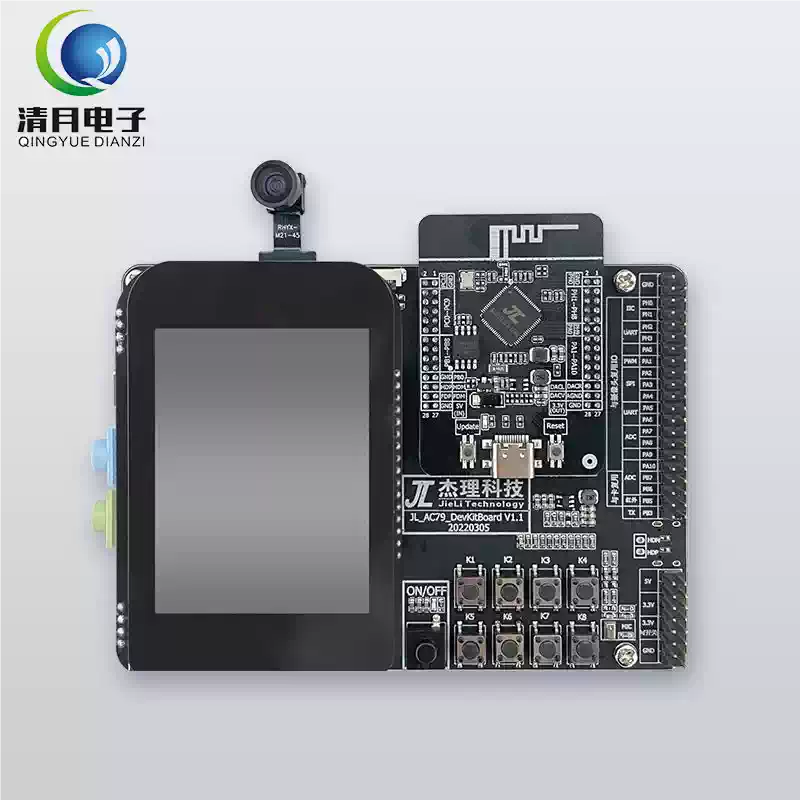
Official Development Board: JL_AC79_DevKit V1.0 (AC791N evaluation kit).
- JL_AC79_DevKit V1.0 Official Documentation
- Note: In retail/marketplace listings, this devboard has been found available for purchase primarily on Taobao.
-
Synthesizer Product Page: Cuvave / M-VAVE FM-1 Product Page
-
Latest Available Synthesizer Firmware: FM-1.fwsc (v15 2026-07-30)
-
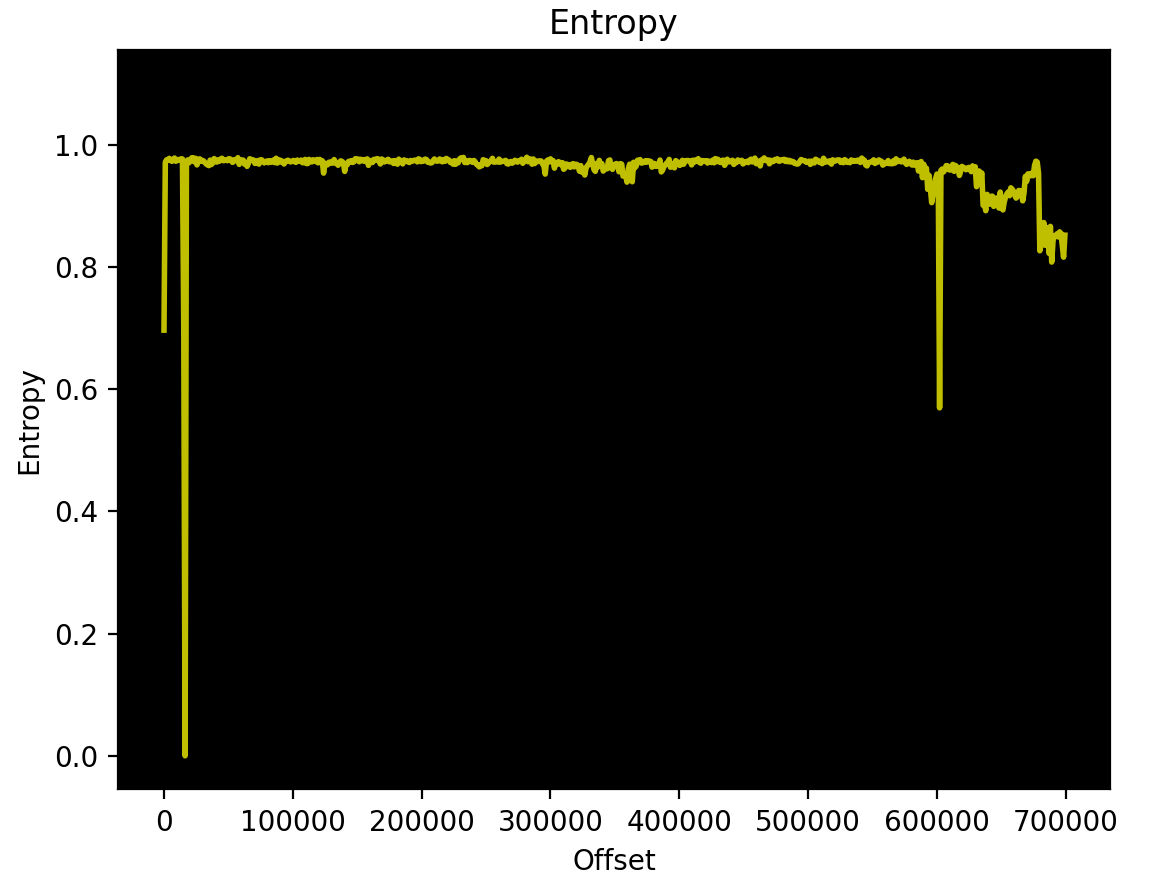
Firmware v15 Entropy Analysis: (Source Issue #1)
-
M-VAVE Ecosystem: Many other M-VAVE audio products (MIDI foot controllers, audio interfaces, and digital pedals) use the same JieLi AC791N / AC69xx processor platform and share similar OTA firmware architectures.
2.2. Hardware PCB Characteristics & Recovery Vector
- No Debug Ports / Jumpers: The M-VAVE FM1 PCB contains no exposed debug headers (JTAG, SWD, or UART debug pads).
- No Recovery Buttons: There are no hidden jumper pins or physical recovery buttons on the board for forcing bootloader / DFU mode.
- Firmware Update Vectors:
- Standard User-Mode Flashing: MIDI SysEx over USB is the official, application-level firmware update channel available on the device.
- Unbrick & Hardware Recovery (JieLi Mask-ROM / UBOOT mode): The JieLi AC791N SoC boot ROM can be forced into its mask-ROM USB download mode (
UBOOT1.00) through the external USB-C port using a dedicated RP2040-based hardware dongle (or vendor JieLi USB Updater). This dongle bit-bangs the hardware boot key (0x16EFat ~50 kHz) over USB D+/D- lines at power-up, allowing SPI flash recovery and unbricking without opening the enclosure (see ip2k/mvave-fm1-open-firmware).
2.3. Device Disassembly & Case Opening Instructions
To open the physical enclosure of the M-VAVE FM1:
- Remove Bottom Screws: Unscrew 6 self-tapping screws from the bottom casing.
- Hidden Screw: 5 screws are visible on the bottom surface; 1 screw is hidden in the center under the product sticker.
- Rubber Feet: The rubber feet do NOT need to be unglued or peeled off (no screws are hidden under the rubber pads).
- Separate Housing Latches: After removing all 6 screws, carefully unclip the internal plastic retaining latches/snaps running along the bottom enclosure seam to separate the case halves.
- Teardown & Internal PCB Photos:
- High-resolution disassembly photos of the PCB and internal components are available locally in the photos/ directory.
- Teardown photo discussion and community analysis can also be viewed on Reddit r/synthdiy.
3. Core Technical Findings
3.1. Does the firmware update occur over MIDI?
Yes, the firmware update occurs entirely over the MIDI SysEx protocol.
The application does not use dedicated USB DFU/CDC emulation or direct low-level raw flash access during standard operation. The entire process (from handshake to streaming every byte of firmware and preset data) is executed via USB MIDI SysEx messages using the RtMidi library on top of macOS CoreMIDI.
3.2. Where is the firmware file stored?
The firmware binary is embedded directly inside the native executable file.
There are no external .bin or .hex files in the resources directory. Inside the executable file M-UPGRADE-FM1, the firmware image is stored as an embedded Qt resource package:
- Qt Resource Length Prefix:
0x47EB4(0x000ABC14= 704,052 bytes). - Package Span:
0x47EB8–0xF3CEC(704,052 bytes). Contains stock V14 (FM-1_014). - Container Signatures:
@JMUA(offset0xF3BB8),JLUFW(offset0xF3CDC), and target CPU tagAC791Nat+0x424.
3.3. Is Signature Verification implemented?
Asymmetric cryptographic signature verification (RSA/ECDSA/AES) is NOT implemented.
Security checks include:
- Container Header & Signature Validation: Verification of
@JMUA/JLUFWsignatures, target device type, and version strings. - Size Boundaries Validation:
Embedded firmware too small: %1 bytes (min %2). - Checksums (CRC/Byte Checksums): Every block transmitted via SysEx is accompanied by a byte checksum.
4. M-UPGRADE-FM1 Application Architecture
- UI Framework: Qt6 (
MainView,SelectFile,LoadingWidget). - MIDI Stack: RtMidi (
RtMidiIn,RtMidiOut,MidiInCore,MidiOutCore). - OTA Update Worker Modules:
OtaUpgradeWorker: Background worker managing the two-step firmware flashing process.PresetUpdateWorker: Background worker handling preset bank uploads.OtaFormat: Utility class responsible for packing (pack), parsing (parse,tryParse), and building metadata frames (buildMetaSequence).
5. MIDI SysEx Commands & Verified OTA Protocol
5.1. Handshake & Device Detection Trace
- Purpose: Query connected devices for FM1 identity and status.
- Handshake Query (Host → Device):
F0 00 32 45 00 00 00 40 7F F7 - Incoming Response Frame (41 bytes wire, 34 bytes unpacked):
F0 00 32 45 58 01 00 00 23 4D 5A 44 XX XX XX ... 40 [chk] F7- Unpacks (7-bit LSB-first) on channel
00 59 11to a 34-byte ID block containing model identity (FM-1_015orFM-1_014).
- Unpacks (7-bit LSB-first) on channel
- Parameter Query Fuzzing Note: Exhaustive read scanning confirmed that the M-VAVE FM1 synthesizer responds exclusively to Parameter ID
0x40(64). Queries sent to all other Parameter IDs produce no response.
5.2. Verified Two-Step Session Flow (Device-Pull Protocol)
Analysis of the hardware verifier (AL-255/FM-1-RE, docs/io/11-ota-protocol.md, Issue #2) confirms that the firmware update is a device-pull architecture rather than host-push:
-
Step 1: Verification Mode
- Host sends enter-upgrade command:
F0 22 24 35 7F F7. - The device begins pulling file chunks via read requests. After entry reads pass verification, the device writes a JieLi
UPDATA_PARMboot record and soft-resets into the OTA loader. - Device re-enumerates as USB device
4D4A:4155(ota-FM-1).
- Host sends enter-upgrade command:
-
Step 2: OTA Flash Upgrade Mode
- Host sends handshake query and
F0 22 24 35 7F F7again to the OTA loader. - The device pulls the complete image with read requests (header reads, entry-list reads descending from the top, then bulk data ascending).
- Upon reaching completion, the device requests address
0xF0000000(length 8); host replies with"success\0"on channel00 32 41 01. The device then reboots into the new firmware.
- Host sends handshake query and
5.3. Wire Framing: Read-Request and Data-Response
All payload data between the host and device is framed as:
F0 00 32 41 41 [f1:4][addr:4][len:4] [pack7(data)...] F7
- Header:
00 32 41 41(7-bit wire packing of internal channel00 59 30). - Fields:
f1,addr, andlenare 32-bit little-endian integers encoded as 4×7-bit groups (b0 | b1<<7 | b2<<14 | b3<<21).lenencodes(length << 4) | flashtype.- In requests (Device → Host):
f1 = 0. - In responses (Host → Device):
f1 = length >> 4.
- Data Encoding: Continuous 8→7 LSB-first bitstream (7 wire bytes per 8 data bytes). The payload contains
lengthdata bytes plus 1 checksum byte:checksum = ~(flashtype + sum(data) + sum(addr_LE4) + sum(len_LE3)) & 0xFF
6. Memory Map, Bootloader & Custom Firmware Development
6.1. Bootloader Layout & Memory Offsets
In JieLi microcontrollers (AC791N / WL82 series):
- Mask ROM (ROM0): Hardwired ROM initiating chip reset.
- UBOOT (Bootloader): Located at SPI Flash physical address
0x00000000(size 16 KB – 64 KB). - Partition Table & Header (
app_dir_head/isd_config.ini): Partition table and pin definitions (Power Pin, UART, SD). - App Code Offset (
app.bin): User application code starts at Flash offset0x4000(16 KB) or0x10000(64 KB) as specified byisd_config.ini.
6.2. Custom Firmware Support & CRITICAL Bootloader Re-entry Requirement
Flashing custom firmware via this protocol is fully supported, BUT requires strict adherence to bootloader re-entry logic:
[!CAUTION] CRITICAL BOOTLOADER RE-ENTRY REQUIREMENT:
Because the M-VAVE FM1 PCB lacks physical recovery buttons or debug pads, any custom firmware MUST retain or implement a mechanism to enter the bootloader / OTA mode (e.g. by listening for the SysEx verification/upgrade commands0x01/0x02or handling a button combination during startup).
If custom firmware is flashed without a bootloader entry handler, the device will be permanently soft-locked against future MIDI updates or rollback to stock firmware.
Requirements for compiling custom firmware:
- Toolchain: Official JieLi GCC toolchain targeting Pi32v2 / q32s architecture.
- Linker Script: Code must be linked at the target partition offset (
origin Flash: 0x4000/0x10000). - Bootloader Handler: Include the SysEx parser / OTA transition handler in the custom application code.
- Container Packaging (
isd_tools): Package output binaries usingisd_download/fw_packinto a UFW container with@JMUA/JLUFWheaders. - Flashing: The resulting UFW file can be transmitted via
M-UPGRADE-FM1or the custom Python script (fm1_flasher.py).
7. Binary References & Offsets
Binary offsets extracted from analysis:
-
Native Application Binary:
- Binary Path: M-UPGRADE-FM1
- Offset
0xEEDDC: Resource path stringusb_hid_ota.bin. - Offset
0xF14AD: Bootloader configuration blockisd_config.ini,app_dir_head,uboot,POWER_PIN. - Offset
0xF3BB8: Container signature@JMUA. - Offset
0xF3CDC: JieLi firmware container magicJLUFW. - Offset
0x14C010: SysEx header data symbol_s_arrSysexHead.
-
Supported Hardware & UBOOT Documentation:
- JieLi Chip Series List (WL82 / AC791N): README.md:L84
- UBOOT Architecture: what-is-uboot.md
8. Firmware Size Boundaries
Firmware size is constrained by three factors:
8.1. SPI Flash Capacity
AC791N chips feature 4 MB (32 Mbit) or 8 MB (64 Mbit) internal/external SPI Flash.
- Layout:
- UBOOT (Bootloader): First
16 KB–64 KB(0x00000000–0x00010000). - VM / Flash DB (Settings): Final
16 KB–64 KBof Flash. - User App Partition: Remaining space between UBOOT and VM.
- UBOOT (Bootloader): First
- Maximum Image Size: For 4 MB Flash, the maximum compiled image size is approximately ~3.9 MB.
8.2. Application Boundary Validation
- Lower Limit:
Embedded firmware too small: %1 bytes (min %2)(requires valid@JMUAheader and >64 KB size). - Upper Limit: Protocol size field is 32-bit (up to 4 GB payload support).
8.3. Execution Model (XIP)
Code runs via XIP (Execute-In-Place) directly from SPI Flash via the MCU hardware cache. SRAM size limits dynamically allocated memory (.bss / .data), but does not restrict binary code size in Flash.
9. Python Firmware Utility (fm1_flasher.py)
A standalone CLI tool fm1_flasher.py provides firmware extraction and experimental protocol tooling. Project environment is managed via uv (configured in pyproject.toml).
[!WARNING] FLASHING STATUS & PROTOCOL DISCLAIMER (Issue #2):
Direct firmware flashing implemented in fm1_flasher.py is experimental and non-functional on physical hardware because it assumes a host-push packet structure, whereas the actual synthesizer hardware runs a device-pull protocol with 8→7 LSB-first bitstream encoding (documented in Section 5).
For verified, byte-exact firmware flashing on physical hardware, usetools/fm1_ota.pyfrom AL-255/FM-1-RE.
Features:
- Firmware Extraction (
--extract): Fully functional. Carves the exact 704,052-byte.fwscpackage (0x47EB8–0xF3CEC, stock V14) from the macOSM-UPGRADE-FM1binary by resolving the big-endian Qt resource length prefix and verifying theAC791Nmarker. - MIDI Port Discovery (
--list): Scans and enumerates available MIDI inputs and outputs. - Experimental Flash Tooling (
--file): Research skeleton for protocol analysis.
Example Commands:
# List available MIDI ports
uv run fm1-flasher --list

# Extract embedded .fwsc firmware from macOS updater app
uv run fm1-flasher --extract FM-1_014.fwsc --app M-UPGRADE-FM1.app/Contents/MacOS/M-UPGRADE-FM1

# Flashing on physical hardware (use AL-255's verified tool):
python3 tools/fm1_ota.py flash FM-1.fwsc
10. Firmware Disassembly & Reverse Engineering
Reverse-engineering JieLi microcontrollers (AC791N / WL82 / AC69x series) requires specialized tools due to JieLi's proprietary 32-bit RISC processor architectures (Pi32, Pi32v2, q32s).
10.1. Disassembly Tools & Ghidra Plugin
-
Ghidra Processor Module (ghidra-jieli): An open-source Ghidra processor module targeting JieLi CPU architectures:
pi32: Functional disassembly support for older JieLi chips.pi32v2: Processor definition for AC791N (WL82 series). Enables Ghidra to parse function boundaries, construct control flow graphs (CFG), and trace MMIO register addresses (JL_PORTA,JL_PORTB,JL_PORTC).q32s: Processor definition for BD19/BD29 series.
-
JieLi Official Toolchain (
pi32v2-elf-objdump): Provides 100% accurate instruction decoding from the vendor SDK, used in combination with Ghidra for verifying complex instruction groups.
11. External References & Resources
Useful open-source tools, documentation, and SDK repositories:
- AL-255/FM-1-RE Repository: Reverse-engineering repository for M-VAVE FM-1 firmware. It reveals that the stock FM-1 firmware itself utilizes a Dexed/msfa-derived 6-operator FM synthesis engine, and contains V13/V14 disassembly function maps, XIP flash offset analyses, as well as an experimental custom firmware build.
- ip2k/mvave-fm1-open-firmware Repository:
Research project towards an open-source firmware for the M-VAVE FM-1. Includes specification, reference implementation, and simulation testbench for an RP2040-based
USB_KEYhardware recovery dongle (dongle/directory) that forces the JieLi AC791N SoC into mask-ROM USB download mode (UBOOT1.00) via the external USB-C port, enabling low-level flash backup and unbricking. - ghidra-jieli Repository:
Ghidra processor extension for disassembling and decompiling JieLi
pi32,pi32v2, andq32sCPU binaries. - jl-uboot-tool Repository: Utility for interacting with JieLi UBOOT bootloaders over USB Mass Storage / SCSI pass-through.
- jl-misctools Repository: Utilities for inspecting and converting JieLi firmware containers, key files, and UI resources.
- JieLi USB Boot Key Activation (jielie docs): Documentation on triggering JieLi hardware USB boot loader mode via D+/D- signal patterns and ISP keys.
- JieLi SoC Forum Thread (esp8266.ru): Community research thread discussing JieLi SoCs, SDKs, toolchains, flash recovery, and hardware boot modes.
- JieLi AC79 Official Peripheral Documentation: Official documentation covering AC79xx series peripheral hardware modules (SD controller, GPIO, UART, SPI, I2S).
- JieLi AC79 AIoT SDK (Gitee Repository): Official C SDK codebase for AC79 series (WL82 / AC791N) microcontrollers, containing board support packages (BSP), linker scripts, and hardware register headers.
- M-VAVE SMK-37 PRO Reverse Engineering Gist (by probonopd):
Research notes on unpacking
.fwscfirmware files for the M-VAVE SMK-37 PRO (DX7 FM MIDI keyboard) and identifying the underlying JieLi AC791N platform structure usingjl-misctools. - FM-1 Online Editor: Web-based configuration and patch editor for the M-VAVE FM1 synthesizer.
- OpenPatch.es (Yamaha DX7 Patch Utility):
Web utility for DX7 FM patches allowing WAV upload to recover/match patches, live auditioning, sequencing, modifying, mutating, and exporting patch sets as
.syxfiles. - FM-1 Pulses by mene311 (Web App): Browser-based generative MIDI sequencer and pattern generator for the M-VAVE FM-1 (Web MIDI API / PWA, runs on desktop/mobile). Generates reproducible 64-step banks with parameter drift and can freeze them directly into the hardware pattern slots over SysEx (supported on Baud Girl / FM-1+VA firmware), or broadcast live MIDI notes in real time.
- SLOOP FM-1 Simulator by Chance Roth (Web Simulator): Self-contained in-browser interactive simulator of the SLOOP / Felucca firmware for the FM-1, allowing testing controls, sound engines, and workflow directly in the browser without physical hardware.
Significant stargazers

58 followers · starred Sep 2026
Similar repos


M-VAVE FM1 reverse-engineering research, SysEx protocol tools, and firmware update scripts
Python
57
12 commits
updated Oct 7, 2026
See what people are saying
README
M-VAVE FM1 & M-UPGRADE Analysis & MIDI SysEx Protocol Documentation
This document contains technical research, hardware details, and reverse-engineering results for the M-VAVE FM1 synthesizer (powered by the JieLi AC791N processor) and the M-UPGRADE-FM1.app (macOS) utility.
1. Custom & Alternative Firmwares
Community-developed custom firmwares, mods, and experimental firmware projects for the M-VAVE FM-1:
-
Felucca by hugelton (Web Installer | Web Editor):
- License: Open Source (GPL-3.0-only).
- Synthesizer Engines: 9 distinct sound engines including ANALOG (virtual analog, 2 osc, PWM, resonant LPF), DIGITAL (4-op FM, 8 algorithms, feedback), PHASE (phase distortion), LOFI (chiptune, 4-bit wave RAM), SAMPLE (multisampled instruments + user slots), VOICE (formant/vocal osc), TRIO (3 osc with ring mod/sync), WHEEL (tonewheel organ with drawbars & rotary speaker), and GRAIN (granular textures).
- Architecture & Features: 4 tracks (3 synth parts + 1 GM drum track, 8 shared voices), 64-step sequencer per track with chords/ties/slides and live loop recording, per-track SLICER (16-step tempo-synced gate/stutter), effects (distortion, chorus, delay, reverb sends, master limiter), scales & white-key quantization, and web editor.
- Installation: Direct web installer via WebMIDI in Chrome/Edge over standard USB-C cable (no extra hardware needed; stock updater restores official firmware).
-
baud girl Custom Firmware Mod:
- License: Closed Source.
- Features: Comprehensive overhaul and reimagining of the stock firmware ergonomics and controls. Adds Virtual Analog (VA) synthesizer engines and a 64-step sequencer.
- Installation: Web-based browser installer in a couple of clicks via WebMIDI.
-
- License: Open Source (MIT).
- Status: Research / bench stage.
- Features: Intergalactic Modulation Station — alternative firmware based on Mutable Instruments synthesizer engines, a Movy-style sequencer, and an in-browser virtual FM-1 emulator/simulator.
-
- License: Commercial / Proprietary ($29).
- Concept: Transforms the FM-1 into a standalone multitrack groovebox without needing any external equipment.
- Features: Up to 8 independent tracks (drums, bass, chords, leads) with independent loop lengths (1 to 8 bars) for evolving polyrhythmic structures, dual sound engine (native 6-op FM + Virtual Analog with ladder filter), up to 20 voices of polyphony (12 FM + 8 VA, max 6 for drums), 64-step sequencer with parameter locks (p-locks), live stage view, curated sound packs, and DX7 SysEx patch reception.
- Installation: Browser-based USB installer via WebMIDI in Chrome/Edge (~2 minutes).
-
SLOOP by isod89 (Web Installer | Web Editor):
- License: Open Source (GPL-3.0). Based on Felucca by Hügelton Instruments.
- Concept: Live performance groovebox firmware designed for any music style without mandatory presets or fixed patterns.
- Features: 4 tracks (3 synth tracks + 1 drum machine with 16 sounds across the white keys), 9 synthesis engines, 68 sounds, 37 drum kits, custom sample support, and live-playable song mode. Features USB stereo audio input (class-compliant recording directly into DAWs without drivers), 3.5 mm TRS MIDI IN keyboard input, MIDI clock in/sync, button and note LED illumination modes for dark environments, sample chopping/fitting, and a web editor with full backup/restore.
- Installation: Browser-based installer via WebMIDI in Chrome/Edge, with easy rollback to M-VAVE stock V15.
-
FoMni-1 by charlesvestal (Web Installer):
- License: Open Source (GPL-3.0).
- Concept: Suzuki Omnichord-inspired chord harp firmware for the FM-1.
- Features: Strum chords across the white keys like a harp strumplate, select chord roots and types on the black keys, integrated rhythmic accompaniment and arpeggiator modes.
- Installation: Browser WebMIDI installer via USB.
-
ChoralRoot FM-1 by Quixotic7 (Web Installer | Web Emulator):
- License: Open Source (GPL-3.0). Based on Felucca (engines/platform) and ChoralRoot (Monome grid chord engine).
- Concept: Telepathic Orchid / Monome-style chord performance instrument.
- Features: Two-handed chord shaping (one hand selects roots, the other shapes voicings), custom key modes, performance bass line, built-in looper, full color UI, and browser sound emulator.
- Installation: Browser WebMIDI installer via USB.
-
Melodee by keremimo (Web Installer | Web Editor):
- License: Open Source (GPL-3.0-only). Modified build based on Felucca.
- Features: Adds a native Casio CZ-1 phase-distortion engine with 64 original CZ-1 factory preset tones, 8 device CZ banks with
.syximport/export, 38 dedicated editing pages, full backup/restore before flashing, and WebMIDI management. - Installation: Browser WebMIDI installer with built-in backup before installation.
-
FM1 Quest by hericdk (Web Installer):
- License: Open Source (GPL-3.0-only). Built upon the SLOOP groovebox core.
- Concept: Fantasy RPG sidescroller interface for the groovebox: tracks are represented as party heroes, sequence steps are attacks, BPM drives party walk speed, scales dictate biomes, and recording loops triggers boss fights.
- Installation: Browser WebMIDI installer via USB.
[!TIP] Community Flashing Experience & Safe Upgrade Practice:
While not an absolute hard rule, there is a prominent community recommendation to avoid flashing one custom firmware directly over another. To minimize bricking risks, some users suggest rolling back to the official stock firmware (v15) via M-VAVE's official updater first, and only then flashing the next custom firmware build.
2. Hardware & Device Ecosystem Overview
2.1. Target Device & Processor
-
Target Device: M-VAVE FM1 (FM Synthesizer / MIDI Controller).
-
Processor SoC: JieLi AC791N (WL82 series, 32-bit RISC core).
-
Official Development Board: JL_AC79_DevKit V1.0 (AC791N evaluation kit).
- JL_AC79_DevKit V1.0 Official Documentation
- Note: In retail/marketplace listings, this devboard has been found available for purchase primarily on Taobao.
-
Synthesizer Product Page: Cuvave / M-VAVE FM-1 Product Page
-
Latest Available Synthesizer Firmware: FM-1.fwsc (v15 2026-07-30)
-
Firmware v15 Entropy Analysis: (Source Issue #1)
-
M-VAVE Ecosystem: Many other M-VAVE audio products (MIDI foot controllers, audio interfaces, and digital pedals) use the same JieLi AC791N / AC69xx processor platform and share similar OTA firmware architectures.
2.2. Hardware PCB Characteristics & Recovery Vector
- No Debug Ports / Jumpers: The M-VAVE FM1 PCB contains no exposed debug headers (JTAG, SWD, or UART debug pads).
- No Recovery Buttons: There are no hidden jumper pins or physical recovery buttons on the board for forcing bootloader / DFU mode.
- Firmware Update Vectors:
- Standard User-Mode Flashing: MIDI SysEx over USB is the official, application-level firmware update channel available on the device.
- Unbrick & Hardware Recovery (JieLi Mask-ROM / UBOOT mode): The JieLi AC791N SoC boot ROM can be forced into its mask-ROM USB download mode (
UBOOT1.00) through the external USB-C port using a dedicated RP2040-based hardware dongle (or vendor JieLi USB Updater). This dongle bit-bangs the hardware boot key (0x16EFat ~50 kHz) over USB D+/D- lines at power-up, allowing SPI flash recovery and unbricking without opening the enclosure (see ip2k/mvave-fm1-open-firmware).
2.3. Device Disassembly & Case Opening Instructions
To open the physical enclosure of the M-VAVE FM1:
- Remove Bottom Screws: Unscrew 6 self-tapping screws from the bottom casing.
- Hidden Screw: 5 screws are visible on the bottom surface; 1 screw is hidden in the center under the product sticker.
- Rubber Feet: The rubber feet do NOT need to be unglued or peeled off (no screws are hidden under the rubber pads).
- Separate Housing Latches: After removing all 6 screws, carefully unclip the internal plastic retaining latches/snaps running along the bottom enclosure seam to separate the case halves.
- Teardown & Internal PCB Photos:
- High-resolution disassembly photos of the PCB and internal components are available locally in the photos/ directory.
- Teardown photo discussion and community analysis can also be viewed on Reddit r/synthdiy.
3. Core Technical Findings
3.1. Does the firmware update occur over MIDI?
Yes, the firmware update occurs entirely over the MIDI SysEx protocol.
The application does not use dedicated USB DFU/CDC emulation or direct low-level raw flash access during standard operation. The entire process (from handshake to streaming every byte of firmware and preset data) is executed via USB MIDI SysEx messages using the RtMidi library on top of macOS CoreMIDI.
3.2. Where is the firmware file stored?
The firmware binary is embedded directly inside the native executable file.
There are no external .bin or .hex files in the resources directory. Inside the executable file M-UPGRADE-FM1, the firmware image is stored as an embedded Qt resource package:
- Qt Resource Length Prefix:
0x47EB4(0x000ABC14= 704,052 bytes). - Package Span:
0x47EB8–0xF3CEC(704,052 bytes). Contains stock V14 (FM-1_014). - Container Signatures:
@JMUA(offset0xF3BB8),JLUFW(offset0xF3CDC), and target CPU tagAC791Nat+0x424.
3.3. Is Signature Verification implemented?
Asymmetric cryptographic signature verification (RSA/ECDSA/AES) is NOT implemented.
Security checks include:
- Container Header & Signature Validation: Verification of
@JMUA/JLUFWsignatures, target device type, and version strings. - Size Boundaries Validation:
Embedded firmware too small: %1 bytes (min %2). - Checksums (CRC/Byte Checksums): Every block transmitted via SysEx is accompanied by a byte checksum.
4. M-UPGRADE-FM1 Application Architecture
- UI Framework: Qt6 (
MainView,SelectFile,LoadingWidget). - MIDI Stack: RtMidi (
RtMidiIn,RtMidiOut,MidiInCore,MidiOutCore). - OTA Update Worker Modules:
OtaUpgradeWorker: Background worker managing the two-step firmware flashing process.PresetUpdateWorker: Background worker handling preset bank uploads.OtaFormat: Utility class responsible for packing (pack), parsing (parse,tryParse), and building metadata frames (buildMetaSequence).
5. MIDI SysEx Commands & Verified OTA Protocol
5.1. Handshake & Device Detection Trace
- Purpose: Query connected devices for FM1 identity and status.
- Handshake Query (Host → Device):
F0 00 32 45 00 00 00 40 7F F7 - Incoming Response Frame (41 bytes wire, 34 bytes unpacked):
F0 00 32 45 58 01 00 00 23 4D 5A 44 XX XX XX ... 40 [chk] F7- Unpacks (7-bit LSB-first) on channel
00 59 11to a 34-byte ID block containing model identity (FM-1_015orFM-1_014).
- Unpacks (7-bit LSB-first) on channel
- Parameter Query Fuzzing Note: Exhaustive read scanning confirmed that the M-VAVE FM1 synthesizer responds exclusively to Parameter ID
0x40(64). Queries sent to all other Parameter IDs produce no response.
5.2. Verified Two-Step Session Flow (Device-Pull Protocol)
Analysis of the hardware verifier (AL-255/FM-1-RE, docs/io/11-ota-protocol.md, Issue #2) confirms that the firmware update is a device-pull architecture rather than host-push:
-
Step 1: Verification Mode
- Host sends enter-upgrade command:
F0 22 24 35 7F F7. - The device begins pulling file chunks via read requests. After entry reads pass verification, the device writes a JieLi
UPDATA_PARMboot record and soft-resets into the OTA loader. - Device re-enumerates as USB device
4D4A:4155(ota-FM-1).
- Host sends enter-upgrade command:
-
Step 2: OTA Flash Upgrade Mode
- Host sends handshake query and
F0 22 24 35 7F F7again to the OTA loader. - The device pulls the complete image with read requests (header reads, entry-list reads descending from the top, then bulk data ascending).
- Upon reaching completion, the device requests address
0xF0000000(length 8); host replies with"success\0"on channel00 32 41 01. The device then reboots into the new firmware.
- Host sends handshake query and
5.3. Wire Framing: Read-Request and Data-Response
All payload data between the host and device is framed as:
F0 00 32 41 41 [f1:4][addr:4][len:4] [pack7(data)...] F7
- Header:
00 32 41 41(7-bit wire packing of internal channel00 59 30). - Fields:
f1,addr, andlenare 32-bit little-endian integers encoded as 4×7-bit groups (b0 | b1<<7 | b2<<14 | b3<<21).lenencodes(length << 4) | flashtype.- In requests (Device → Host):
f1 = 0. - In responses (Host → Device):
f1 = length >> 4.
- Data Encoding: Continuous 8→7 LSB-first bitstream (7 wire bytes per 8 data bytes). The payload contains
lengthdata bytes plus 1 checksum byte:checksum = ~(flashtype + sum(data) + sum(addr_LE4) + sum(len_LE3)) & 0xFF
6. Memory Map, Bootloader & Custom Firmware Development
6.1. Bootloader Layout & Memory Offsets
In JieLi microcontrollers (AC791N / WL82 series):
- Mask ROM (ROM0): Hardwired ROM initiating chip reset.
- UBOOT (Bootloader): Located at SPI Flash physical address
0x00000000(size 16 KB – 64 KB). - Partition Table & Header (
app_dir_head/isd_config.ini): Partition table and pin definitions (Power Pin, UART, SD). - App Code Offset (
app.bin): User application code starts at Flash offset0x4000(16 KB) or0x10000(64 KB) as specified byisd_config.ini.
6.2. Custom Firmware Support & CRITICAL Bootloader Re-entry Requirement
Flashing custom firmware via this protocol is fully supported, BUT requires strict adherence to bootloader re-entry logic:
[!CAUTION] CRITICAL BOOTLOADER RE-ENTRY REQUIREMENT:
Because the M-VAVE FM1 PCB lacks physical recovery buttons or debug pads, any custom firmware MUST retain or implement a mechanism to enter the bootloader / OTA mode (e.g. by listening for the SysEx verification/upgrade commands0x01/0x02or handling a button combination during startup).
If custom firmware is flashed without a bootloader entry handler, the device will be permanently soft-locked against future MIDI updates or rollback to stock firmware.
Requirements for compiling custom firmware:
- Toolchain: Official JieLi GCC toolchain targeting Pi32v2 / q32s architecture.
- Linker Script: Code must be linked at the target partition offset (
origin Flash: 0x4000/0x10000). - Bootloader Handler: Include the SysEx parser / OTA transition handler in the custom application code.
- Container Packaging (
isd_tools): Package output binaries usingisd_download/fw_packinto a UFW container with@JMUA/JLUFWheaders. - Flashing: The resulting UFW file can be transmitted via
M-UPGRADE-FM1or the custom Python script (fm1_flasher.py).
7. Binary References & Offsets
Binary offsets extracted from analysis:
-
Native Application Binary:
- Binary Path: M-UPGRADE-FM1
- Offset
0xEEDDC: Resource path stringusb_hid_ota.bin. - Offset
0xF14AD: Bootloader configuration blockisd_config.ini,app_dir_head,uboot,POWER_PIN. - Offset
0xF3BB8: Container signature@JMUA. - Offset
0xF3CDC: JieLi firmware container magicJLUFW. - Offset
0x14C010: SysEx header data symbol_s_arrSysexHead.
-
Supported Hardware & UBOOT Documentation:
- JieLi Chip Series List (WL82 / AC791N): README.md:L84
- UBOOT Architecture: what-is-uboot.md
8. Firmware Size Boundaries
Firmware size is constrained by three factors:
8.1. SPI Flash Capacity
AC791N chips feature 4 MB (32 Mbit) or 8 MB (64 Mbit) internal/external SPI Flash.
- Layout:
- UBOOT (Bootloader): First
16 KB–64 KB(0x00000000–0x00010000). - VM / Flash DB (Settings): Final
16 KB–64 KBof Flash. - User App Partition: Remaining space between UBOOT and VM.
- UBOOT (Bootloader): First
- Maximum Image Size: For 4 MB Flash, the maximum compiled image size is approximately ~3.9 MB.
8.2. Application Boundary Validation
- Lower Limit:
Embedded firmware too small: %1 bytes (min %2)(requires valid@JMUAheader and >64 KB size). - Upper Limit: Protocol size field is 32-bit (up to 4 GB payload support).
8.3. Execution Model (XIP)
Code runs via XIP (Execute-In-Place) directly from SPI Flash via the MCU hardware cache. SRAM size limits dynamically allocated memory (.bss / .data), but does not restrict binary code size in Flash.
9. Python Firmware Utility (fm1_flasher.py)
A standalone CLI tool fm1_flasher.py provides firmware extraction and experimental protocol tooling. Project environment is managed via uv (configured in pyproject.toml).
[!WARNING] FLASHING STATUS & PROTOCOL DISCLAIMER (Issue #2):
Direct firmware flashing implemented in fm1_flasher.py is experimental and non-functional on physical hardware because it assumes a host-push packet structure, whereas the actual synthesizer hardware runs a device-pull protocol with 8→7 LSB-first bitstream encoding (documented in Section 5).
For verified, byte-exact firmware flashing on physical hardware, usetools/fm1_ota.pyfrom AL-255/FM-1-RE.
Features:
- Firmware Extraction (
--extract): Fully functional. Carves the exact 704,052-byte.fwscpackage (0x47EB8–0xF3CEC, stock V14) from the macOSM-UPGRADE-FM1binary by resolving the big-endian Qt resource length prefix and verifying theAC791Nmarker. - MIDI Port Discovery (
--list): Scans and enumerates available MIDI inputs and outputs. - Experimental Flash Tooling (
--file): Research skeleton for protocol analysis.
Example Commands:
# List available MIDI ports
uv run fm1-flasher --list

# Extract embedded .fwsc firmware from macOS updater app
uv run fm1-flasher --extract FM-1_014.fwsc --app M-UPGRADE-FM1.app/Contents/MacOS/M-UPGRADE-FM1

# Flashing on physical hardware (use AL-255's verified tool):
python3 tools/fm1_ota.py flash FM-1.fwsc
10. Firmware Disassembly & Reverse Engineering
Reverse-engineering JieLi microcontrollers (AC791N / WL82 / AC69x series) requires specialized tools due to JieLi's proprietary 32-bit RISC processor architectures (Pi32, Pi32v2, q32s).
10.1. Disassembly Tools & Ghidra Plugin
-
Ghidra Processor Module (ghidra-jieli): An open-source Ghidra processor module targeting JieLi CPU architectures:
pi32: Functional disassembly support for older JieLi chips.pi32v2: Processor definition for AC791N (WL82 series). Enables Ghidra to parse function boundaries, construct control flow graphs (CFG), and trace MMIO register addresses (JL_PORTA,JL_PORTB,JL_PORTC).q32s: Processor definition for BD19/BD29 series.
-
JieLi Official Toolchain (
pi32v2-elf-objdump): Provides 100% accurate instruction decoding from the vendor SDK, used in combination with Ghidra for verifying complex instruction groups.
11. External References & Resources
Useful open-source tools, documentation, and SDK repositories:
- AL-255/FM-1-RE Repository: Reverse-engineering repository for M-VAVE FM-1 firmware. It reveals that the stock FM-1 firmware itself utilizes a Dexed/msfa-derived 6-operator FM synthesis engine, and contains V13/V14 disassembly function maps, XIP flash offset analyses, as well as an experimental custom firmware build.
- ip2k/mvave-fm1-open-firmware Repository:
Research project towards an open-source firmware for the M-VAVE FM-1. Includes specification, reference implementation, and simulation testbench for an RP2040-based
USB_KEYhardware recovery dongle (dongle/directory) that forces the JieLi AC791N SoC into mask-ROM USB download mode (UBOOT1.00) via the external USB-C port, enabling low-level flash backup and unbricking. - ghidra-jieli Repository:
Ghidra processor extension for disassembling and decompiling JieLi
pi32,pi32v2, andq32sCPU binaries. - jl-uboot-tool Repository: Utility for interacting with JieLi UBOOT bootloaders over USB Mass Storage / SCSI pass-through.
- jl-misctools Repository: Utilities for inspecting and converting JieLi firmware containers, key files, and UI resources.
- JieLi USB Boot Key Activation (jielie docs): Documentation on triggering JieLi hardware USB boot loader mode via D+/D- signal patterns and ISP keys.
- JieLi SoC Forum Thread (esp8266.ru): Community research thread discussing JieLi SoCs, SDKs, toolchains, flash recovery, and hardware boot modes.
- JieLi AC79 Official Peripheral Documentation: Official documentation covering AC79xx series peripheral hardware modules (SD controller, GPIO, UART, SPI, I2S).
- JieLi AC79 AIoT SDK (Gitee Repository): Official C SDK codebase for AC79 series (WL82 / AC791N) microcontrollers, containing board support packages (BSP), linker scripts, and hardware register headers.
- M-VAVE SMK-37 PRO Reverse Engineering Gist (by probonopd):
Research notes on unpacking
.fwscfirmware files for the M-VAVE SMK-37 PRO (DX7 FM MIDI keyboard) and identifying the underlying JieLi AC791N platform structure usingjl-misctools. - FM-1 Online Editor: Web-based configuration and patch editor for the M-VAVE FM1 synthesizer.
- OpenPatch.es (Yamaha DX7 Patch Utility):
Web utility for DX7 FM patches allowing WAV upload to recover/match patches, live auditioning, sequencing, modifying, mutating, and exporting patch sets as
.syxfiles. - FM-1 Pulses by mene311 (Web App): Browser-based generative MIDI sequencer and pattern generator for the M-VAVE FM-1 (Web MIDI API / PWA, runs on desktop/mobile). Generates reproducible 64-step banks with parameter drift and can freeze them directly into the hardware pattern slots over SysEx (supported on Baud Girl / FM-1+VA firmware), or broadcast live MIDI notes in real time.
- SLOOP FM-1 Simulator by Chance Roth (Web Simulator): Self-contained in-browser interactive simulator of the SLOOP / Felucca firmware for the FM-1, allowing testing controls, sound engines, and workflow directly in the browser without physical hardware.
Significant stargazers
58 followers · starred Sep 2026