The zero-friction, one-command pipeline for WhatsApp Voice AI
Python
3
8 commits
updated Oct 17, 2026




The zero-friction, one-command pipeline for WhatsApp Voice AI.
Go from zero to an active AI voice agent answering live WhatsApp calls in under 90 seconds. No manual Meta dashboard clicking, no ngrok account setup, and no WebRTC configuration required.
Created by Amit Bhakt, WAVoice solves the hardest part of building WhatsApp voice agents: the entire telephony and networking plumbing.
Before running the setup wizard, have these 3 items ready from your Meta Developer Portal:
whatsapp_business_messaging and whatsapp_business_management.Setting up WhatsApp voice calling traditionally requires hours of manual work: navigating Meta Business Manager, registering phone number IDs, manually creating ngrok tunnels, pasting webhook verification tokens, handling WebRTC SDP offer/answers, and diagnosing why audio drops over NAT.
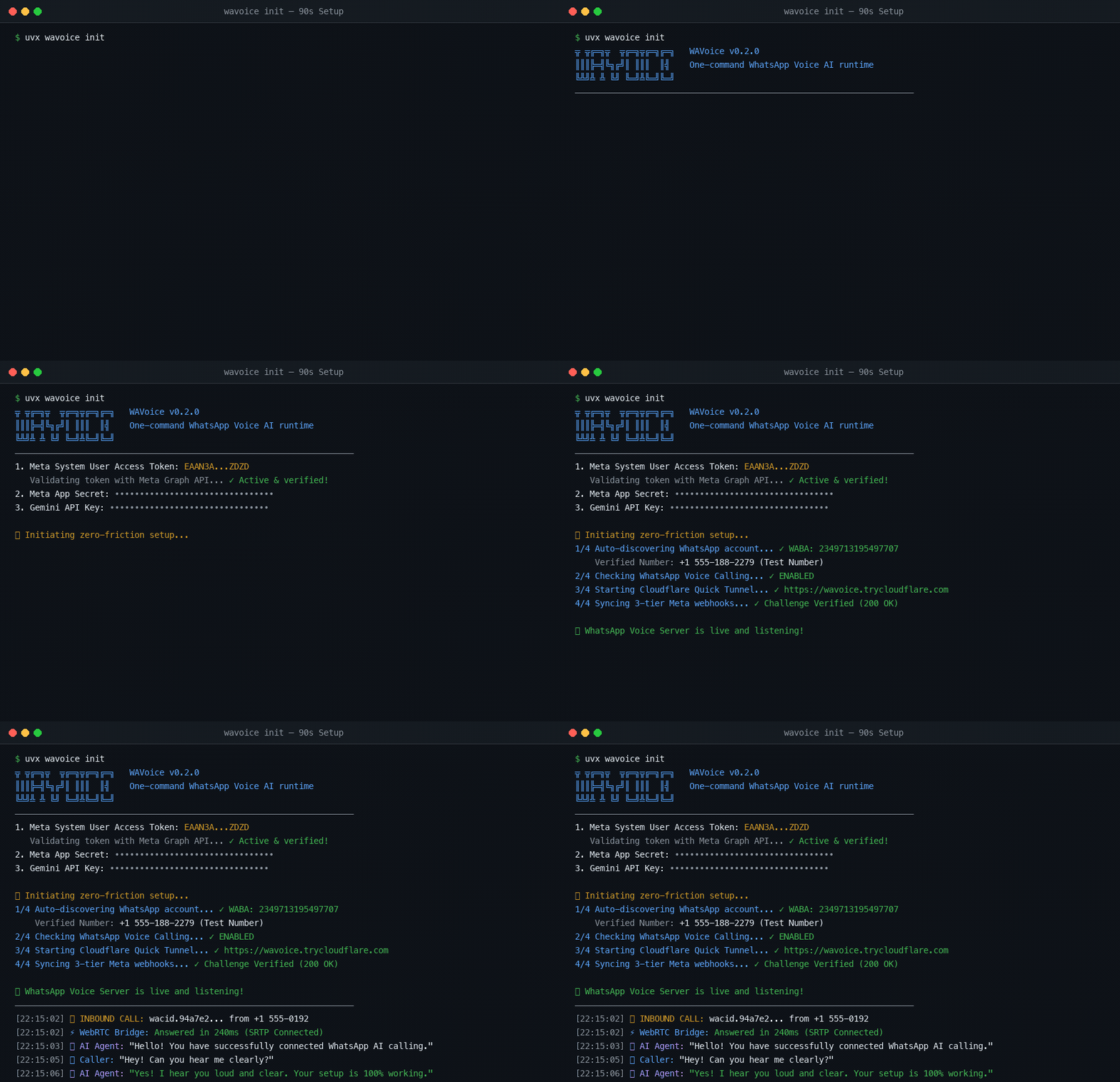
WAVoice collapses all of that into a single 90-second command (wavoice init):
Whether you want a complete out-of-the-box agent or a custom multi-model architecture, WAVoice separates the telephony infrastructure from your AI logic:
                       ┌────────────────────────────────────────┐
                       │  Telephony Infrastructure Layer        │
                       │  (Handled automatically by WAVoice)    │
                       │                                        │
                       │  - Cloudflare Quick Tunnel             │
                       │  - Meta Graph API Webhooks             │
                       │  - WebRTC SDP Offer / Answer           │
                       │  - SRTP Audio Stream Decoupling        │
                       └───────────────────┬────────────────────┘
                                           │
                       ┌───────────────────┴────────────────────┐
                       ▼                                        ▼
      ┌─────────────────────────────────┐      ┌─────────────────────────────────┐
      │  Mode A: Out-of-the-Box (90s)   │      │  Mode B: Custom Layers          │
      │                                 │      │  (Pluggable Pipecat Pipeline)   │
      │  Run: `wavoice start`           │      │                                 │
      │  Native Speech-to-Speech via    │      │  - STT: Deepgram, Whisper, Groq │
      │  Gemini 2.0 Flash Live          │      │  - LLM: OpenAI, Claude, Ollama  │
      │  (~300ms latency, zero code)    │      │  - TTS: Cartesia, ElevenLabs    │
      └─────────────────────────────────┘      └─────────────────────────────────┘
When you want to build a cascaded stack (STT $\rightarrow$ LLM $\rightarrow$ TTS), you still face the exact same frustrating hurdle: connecting WhatsApp's WebRTC audio stream to your server.
By running wavoice init, your WhatsApp number and webhook plumbing are 100% configured in 90 seconds. Then, instead of maintaining complex SIP/WebRTC servers, you simply write standard, modular Python:
from wavoice import WhatsAppVoiceApp

app = WhatsAppVoiceApp()

@app.on_call
async def handle_call(transport, call_info):
    # 'transport' already receives raw audio from WhatsApp WebRTC
    # Plug in any separate STT, LLM, or TTS processor:
    pipeline = Pipeline([
        transport.input(),
        DeepgramSTTService(...),
        OpenAILLMService(...),
        CartesiaTTSService(...),
        transport.output(),
    ])
    ...
Run instantly with zero installation (auto-provisions Python 3.12 in an isolated sandbox):
uvx wavoice init
Or install via pip (Python 3.12+):
pip install wavoice && wavoice init
The interactive wizard prompts for:
WHATSAPP_TOKEN: Meta System User access token.WHATSAPP_APP_SECRET: Meta App Secret.GEMINI_API_KEY: Google Gemini API key.WAVoice automatically discovers your WhatsApp Business Account (WABA), checks phone number status, auto-enables WhatsApp Voice Calling, starts an HTTPS ingress tunnel, and registers all 3 tiers of Meta webhooks.
Open WhatsApp on your phone and place a voice call to your business number. Your AI agent answers immediately with real-time speech!
To inspect your setup, token scopes, voice calling flags, and webhook routing tiers at any time:
uv run wavoice doctor
Output:
╦ ╦╔═╗╦  ╦╔═╗╦╔═╗╔═╗   WAVoice v0.1.0
║║║╠═╣╚╗╔╝║ ║║║  ║╣    One-command WhatsApp Voice AI runtime
╚╩╝╩ ╩ ╚╝ ╚═╝╩╚═╝╚═╝

╭────────────────────────────────╮
│ WAVoice Pre-Flight Diagnostics │
╰────────────────────────────────╯
┏━━━━━━━━━━━━━━━━━━━━━━━━━━━━━━━━┳━━━━━━━━━━━━━━┳━━━━━━━━━━━━━━━━━━━━━━━━━━━━━━┓
┃ Check                          ┃ Status       ┃ Details                      ┃
┡━━━━━━━━━━━━━━━━━━━━━━━━━━━━━━━━╇━━━━━━━━━━━━━━╇━━━━━━━━━━━━━━━━━━━━━━━━━━━━━━┩
│ Meta Credentials               │ PASS         │ Token & Phone ID configured  │
│ Phone Number Reachability      │ PASS         │ Verified number: +1 555-188  │
│ WhatsApp Voice Calling API     │ PASS         │ Voice calling is ENABLED     │
│ Tier 1: Phone Override         │ ACTIVE       │ Cloudflare Tunnel Verified   │
│ Tier 2: WABA Subscription      │ ACTIVE       │ Webhook Subscribed           │
│ Tier 3: App Subscriptions      │ ACTIVE       │ calls, messages Active       │
│ Default AI Agent               │ PASS         │ Gemini 2.0 Flash Live ready  │
└────────────────────────────────┴──────────────┴──────────────────────────────┘
For developers building with independent STT, LLM, and TTS providers, WAVoice exposes the complete Pipecat pipeline:
import os
from wavoice import WhatsAppVoiceApp
from pipecat.audio.vad.silero import SileroVADAnalyzer
from pipecat.pipeline.pipeline import Pipeline
from pipecat.pipeline.runner import PipelineRunner
from pipecat.pipeline.task import PipelineParams, PipelineTask
from pipecat.processors.aggregators.llm_context import LLMContext
from pipecat.processors.aggregators.llm_response_universal import (
    LLMContextAggregatorPair,
    LLMUserAggregatorParams,
)
from pipecat.services.deepgram import DeepgramSTTService
from pipecat.services.openai import OpenAILLMService
from pipecat.services.cartesia import CartesiaTTSService

app = WhatsAppVoiceApp()

@app.on_call
async def handle_incoming_call(transport, call_info):
    caller = getattr(call_info, "from_", "caller")
    print(f"Incoming call from {caller}")

    # 1. Custom Layer Services
    stt = DeepgramSTTService(api_key=os.environ["DEEPGRAM_API_KEY"])
    llm = OpenAILLMService(api_key=os.environ["OPENAI_API_KEY"], model="gpt-4o-mini")
    tts = CartesiaTTSService(api_key=os.environ["CARTESIA_API_KEY"], voice_id="...")

    # 2. Context Aggregation & Silero Turn Detection
    context = LLMContext([{"role": "system", "content": "You are a concise voice assistant."}])
    user_agg, assistant_agg = LLMContextAggregatorPair(
        context,
        user_params=LLMUserAggregatorParams(vad_analyzer=SileroVADAnalyzer()),
    )

    # 3. Assemble Pipeline
    pipeline = Pipeline([
        transport.input(),    # WebRTC Audio In from WhatsApp
        stt,                  # Speech-to-Text
        user_agg,             # Turn Aggregator
        llm,                  # Large Language Model
        tts,                  # Text-to-Speech
        transport.output(),   # WebRTC Audio Out to WhatsApp
        assistant_agg,
    ])

    task = PipelineTask(pipeline=pipeline, params=PipelineParams(allow_interruptions=True))
    runner = PipelineRunner()
    await runner.run(task)

if __name__ == "__main__":
    app.run()  # Launches tunnel, registers Meta webhooks, and serves pipeline
(See examples/custom_stt_llm_tts.py for the complete runnable file. For more details, see the Pipecat Integration Guide.)
| Command | Description |
|---|---|
wavoice init | Complete 90-second setup: prompts for 3 credentials, auto-discovers IDs, turns on voice calling, and launches. Pass --no-telemetry to opt out of usage metrics. |
wavoice doctor | Runs diagnostics across Meta credentials, calling status, and 3-tier webhooks. |
wavoice start | Starts the server, establishes the Cloudflare tunnel, and begins accepting calls. Pass --no-telemetry to run with telemetry disabled. |
wavoice dograh setup | One-command Dograh Cloud setup: connects Meta WhatsApp calling, auto-provisions telephony in Dograh Cloud, deploys a ready-to-test sample voice agent, and routes webhooks in <2 mins. |
wavoice livekit setup | One-command LiveKit Cloud setup: connects Meta WhatsApp calling, configures webhooks, auto-detects LiveKit credentials, and sets up a LiveKit voice agent. |
wavoice livekit dev | Starts the LiveKit webhook bridge and launches the bundled LiveKit voice agent. |
wavoice livekit doctor | Diagnostics check for LiveKit Cloud credentials, connectivity, and Meta WhatsApp voice calling. |
If you prefer building voice agents visually with Dograh rather than writing code, WAVoice completely automates your Meta and Dograh Cloud setup:
uvx wavoice dograh setup
# or: pip install wavoice && wavoice dograh setup
In under 30 seconds, this single command:
calling.status = "ENABLED").api.dograh.com).When it finishes, open WhatsApp on your phone, call your business number, and speak directly to your Dograh visual agent!
👉 For custom prompt engineering, tools, and voices, see the Dograh Cloud Integration Guide.
If you are using LiveKit to build low-latency voice agents, WAVoice bridges WhatsApp voice calls directly into LiveKit Cloud rooms with zero manual webhook or telephony setup:
# 1. Connect WhatsApp to LiveKit Cloud (interactive wizard)
uv run wavoice livekit setup

# 2. Launch the bridge & start talking
uv run wavoice livekit dev
wavoice-agent) so you can test live calls immediately.LIVEKIT_URL, LIVEKIT_API_KEY, and LIVEKIT_API_SECRET from ~/.livekit/config.yaml or parses the 1-click .env snippet from the LiveKit Cloud dashboard.--public-url for staging/production.wavoice-agent) so call telemetry and room sessions are tracked in your LiveKit Cloud dashboard.👉 For routing to existing cloud agents, production deployment, and webhook code snippets, see the LiveKit Cloud Integration Guide.
WAVoice spins up an automated Cloudflare Quick Tunnel (trycloudflare.com). This is designed strictly for local development, rapid prototyping, and hackathons—it requires zero account setup, but the tunnel URL is ephemeral and changes whenever the server restarts.--public-url:
wavoice start --public-url https://voice.yourdomain.com
# or
wavoice livekit dev --public-url https://voice.yourdomain.com
wavoice dograh setup, Meta's webhooks are routed directly to Dograh Cloud's managed production infrastructure, so you don't need any local tunnel or server running at all!WAVoice uses aiortc and Pipecat's SmallWebRTCTransport to negotiate codecs and stream PCM audio.WAVoice uses atomic in-memory claiming per call_id to guarantee calls are answered exactly once.WAVoice tears down the pipeline. If the bot hangs up or times out, WAVoice calls POST /v21.0/{phone_number_id}/calls with action: "terminate" to end the call on the user's phone.wavoice init --no-telemetry or wavoice start --no-telemetryWAVOICE_TELEMETRY=false in .envDO_NOT_TRACK=1 in your environmentCrafted by Amit Bhakt (@amitbhakt).
Contributions, issues, and feature suggestions are welcome on GitHub at https://github.com/amitbhakt/wavoice.
MIT License. Copyright (c) 2026 Amit Bhakt.
The zero-friction, one-command pipeline for WhatsApp Voice AI
Python
3
8 commits
updated Oct 17, 2026
The zero-friction, one-command pipeline for WhatsApp Voice AI.
Go from zero to an active AI voice agent answering live WhatsApp calls in under 90 seconds. No manual Meta dashboard clicking, no ngrok account setup, and no WebRTC configuration required.
Created by Amit Bhakt, WAVoice solves the hardest part of building WhatsApp voice agents: the entire telephony and networking plumbing.
Before running the setup wizard, have these 3 items ready from your Meta Developer Portal:
whatsapp_business_messaging and whatsapp_business_management.Setting up WhatsApp voice calling traditionally requires hours of manual work: navigating Meta Business Manager, registering phone number IDs, manually creating ngrok tunnels, pasting webhook verification tokens, handling WebRTC SDP offer/answers, and diagnosing why audio drops over NAT.
WAVoice collapses all of that into a single 90-second command (wavoice init):
Whether you want a complete out-of-the-box agent or a custom multi-model architecture, WAVoice separates the telephony infrastructure from your AI logic:
                       ┌────────────────────────────────────────┐
                       │  Telephony Infrastructure Layer        │
                       │  (Handled automatically by WAVoice)    │
                       │                                        │
                       │  - Cloudflare Quick Tunnel             │
                       │  - Meta Graph API Webhooks             │
                       │  - WebRTC SDP Offer / Answer           │
                       │  - SRTP Audio Stream Decoupling        │
                       └───────────────────┬────────────────────┘
                                           │
                       ┌───────────────────┴────────────────────┐
                       ▼                                        ▼
      ┌─────────────────────────────────┐      ┌─────────────────────────────────┐
      │  Mode A: Out-of-the-Box (90s)   │      │  Mode B: Custom Layers          │
      │                                 │      │  (Pluggable Pipecat Pipeline)   │
      │  Run: `wavoice start`           │      │                                 │
      │  Native Speech-to-Speech via    │      │  - STT: Deepgram, Whisper, Groq │
      │  Gemini 2.0 Flash Live          │      │  - LLM: OpenAI, Claude, Ollama  │
      │  (~300ms latency, zero code)    │      │  - TTS: Cartesia, ElevenLabs    │
      └─────────────────────────────────┘      └─────────────────────────────────┘
When you want to build a cascaded stack (STT $\rightarrow$ LLM $\rightarrow$ TTS), you still face the exact same frustrating hurdle: connecting WhatsApp's WebRTC audio stream to your server.
By running wavoice init, your WhatsApp number and webhook plumbing are 100% configured in 90 seconds. Then, instead of maintaining complex SIP/WebRTC servers, you simply write standard, modular Python:
from wavoice import WhatsAppVoiceApp

app = WhatsAppVoiceApp()

@app.on_call
async def handle_call(transport, call_info):
    # 'transport' already receives raw audio from WhatsApp WebRTC
    # Plug in any separate STT, LLM, or TTS processor:
    pipeline = Pipeline([
        transport.input(),
        DeepgramSTTService(...),
        OpenAILLMService(...),
        CartesiaTTSService(...),
        transport.output(),
    ])
    ...
Run instantly with zero installation (auto-provisions Python 3.12 in an isolated sandbox):
uvx wavoice init
Or install via pip (Python 3.12+):
pip install wavoice && wavoice init
The interactive wizard prompts for:
WHATSAPP_TOKEN: Meta System User access token.WHATSAPP_APP_SECRET: Meta App Secret.GEMINI_API_KEY: Google Gemini API key.WAVoice automatically discovers your WhatsApp Business Account (WABA), checks phone number status, auto-enables WhatsApp Voice Calling, starts an HTTPS ingress tunnel, and registers all 3 tiers of Meta webhooks.
Open WhatsApp on your phone and place a voice call to your business number. Your AI agent answers immediately with real-time speech!
To inspect your setup, token scopes, voice calling flags, and webhook routing tiers at any time:
uv run wavoice doctor
Output:
╦ ╦╔═╗╦  ╦╔═╗╦╔═╗╔═╗   WAVoice v0.1.0
║║║╠═╣╚╗╔╝║ ║║║  ║╣    One-command WhatsApp Voice AI runtime
╚╩╝╩ ╩ ╚╝ ╚═╝╩╚═╝╚═╝

╭────────────────────────────────╮
│ WAVoice Pre-Flight Diagnostics │
╰────────────────────────────────╯
┏━━━━━━━━━━━━━━━━━━━━━━━━━━━━━━━━┳━━━━━━━━━━━━━━┳━━━━━━━━━━━━━━━━━━━━━━━━━━━━━━┓
┃ Check                          ┃ Status       ┃ Details                      ┃
┡━━━━━━━━━━━━━━━━━━━━━━━━━━━━━━━━╇━━━━━━━━━━━━━━╇━━━━━━━━━━━━━━━━━━━━━━━━━━━━━━┩
│ Meta Credentials               │ PASS         │ Token & Phone ID configured  │
│ Phone Number Reachability      │ PASS         │ Verified number: +1 555-188  │
│ WhatsApp Voice Calling API     │ PASS         │ Voice calling is ENABLED     │
│ Tier 1: Phone Override         │ ACTIVE       │ Cloudflare Tunnel Verified   │
│ Tier 2: WABA Subscription      │ ACTIVE       │ Webhook Subscribed           │
│ Tier 3: App Subscriptions      │ ACTIVE       │ calls, messages Active       │
│ Default AI Agent               │ PASS         │ Gemini 2.0 Flash Live ready  │
└────────────────────────────────┴──────────────┴──────────────────────────────┘
For developers building with independent STT, LLM, and TTS providers, WAVoice exposes the complete Pipecat pipeline:
import os
from wavoice import WhatsAppVoiceApp
from pipecat.audio.vad.silero import SileroVADAnalyzer
from pipecat.pipeline.pipeline import Pipeline
from pipecat.pipeline.runner import PipelineRunner
from pipecat.pipeline.task import PipelineParams, PipelineTask
from pipecat.processors.aggregators.llm_context import LLMContext
from pipecat.processors.aggregators.llm_response_universal import (
    LLMContextAggregatorPair,
    LLMUserAggregatorParams,
)
from pipecat.services.deepgram import DeepgramSTTService
from pipecat.services.openai import OpenAILLMService
from pipecat.services.cartesia import CartesiaTTSService

app = WhatsAppVoiceApp()

@app.on_call
async def handle_incoming_call(transport, call_info):
    caller = getattr(call_info, "from_", "caller")
    print(f"Incoming call from {caller}")

    # 1. Custom Layer Services
    stt = DeepgramSTTService(api_key=os.environ["DEEPGRAM_API_KEY"])
    llm = OpenAILLMService(api_key=os.environ["OPENAI_API_KEY"], model="gpt-4o-mini")
    tts = CartesiaTTSService(api_key=os.environ["CARTESIA_API_KEY"], voice_id="...")

    # 2. Context Aggregation & Silero Turn Detection
    context = LLMContext([{"role": "system", "content": "You are a concise voice assistant."}])
    user_agg, assistant_agg = LLMContextAggregatorPair(
        context,
        user_params=LLMUserAggregatorParams(vad_analyzer=SileroVADAnalyzer()),
    )

    # 3. Assemble Pipeline
    pipeline = Pipeline([
        transport.input(),    # WebRTC Audio In from WhatsApp
        stt,                  # Speech-to-Text
        user_agg,             # Turn Aggregator
        llm,                  # Large Language Model
        tts,                  # Text-to-Speech
        transport.output(),   # WebRTC Audio Out to WhatsApp
        assistant_agg,
    ])

    task = PipelineTask(pipeline=pipeline, params=PipelineParams(allow_interruptions=True))
    runner = PipelineRunner()
    await runner.run(task)

if __name__ == "__main__":
    app.run()  # Launches tunnel, registers Meta webhooks, and serves pipeline
(See examples/custom_stt_llm_tts.py for the complete runnable file. For more details, see the Pipecat Integration Guide.)
| Command | Description |
|---|---|
wavoice init | Complete 90-second setup: prompts for 3 credentials, auto-discovers IDs, turns on voice calling, and launches. Pass --no-telemetry to opt out of usage metrics. |
wavoice doctor | Runs diagnostics across Meta credentials, calling status, and 3-tier webhooks. |
wavoice start | Starts the server, establishes the Cloudflare tunnel, and begins accepting calls. Pass --no-telemetry to run with telemetry disabled. |
wavoice dograh setup | One-command Dograh Cloud setup: connects Meta WhatsApp calling, auto-provisions telephony in Dograh Cloud, deploys a ready-to-test sample voice agent, and routes webhooks in <2 mins. |
wavoice livekit setup | One-command LiveKit Cloud setup: connects Meta WhatsApp calling, configures webhooks, auto-detects LiveKit credentials, and sets up a LiveKit voice agent. |
wavoice livekit dev | Starts the LiveKit webhook bridge and launches the bundled LiveKit voice agent. |
wavoice livekit doctor | Diagnostics check for LiveKit Cloud credentials, connectivity, and Meta WhatsApp voice calling. |
If you prefer building voice agents visually with Dograh rather than writing code, WAVoice completely automates your Meta and Dograh Cloud setup:
uvx wavoice dograh setup
# or: pip install wavoice && wavoice dograh setup
In under 30 seconds, this single command:
calling.status = "ENABLED").api.dograh.com).When it finishes, open WhatsApp on your phone, call your business number, and speak directly to your Dograh visual agent!
👉 For custom prompt engineering, tools, and voices, see the Dograh Cloud Integration Guide.
If you are using LiveKit to build low-latency voice agents, WAVoice bridges WhatsApp voice calls directly into LiveKit Cloud rooms with zero manual webhook or telephony setup:
# 1. Connect WhatsApp to LiveKit Cloud (interactive wizard)
uv run wavoice livekit setup

# 2. Launch the bridge & start talking
uv run wavoice livekit dev
wavoice-agent) so you can test live calls immediately.LIVEKIT_URL, LIVEKIT_API_KEY, and LIVEKIT_API_SECRET from ~/.livekit/config.yaml or parses the 1-click .env snippet from the LiveKit Cloud dashboard.--public-url for staging/production.wavoice-agent) so call telemetry and room sessions are tracked in your LiveKit Cloud dashboard.👉 For routing to existing cloud agents, production deployment, and webhook code snippets, see the LiveKit Cloud Integration Guide.
WAVoice spins up an automated Cloudflare Quick Tunnel (trycloudflare.com). This is designed strictly for local development, rapid prototyping, and hackathons—it requires zero account setup, but the tunnel URL is ephemeral and changes whenever the server restarts.--public-url:
wavoice start --public-url https://voice.yourdomain.com
# or
wavoice livekit dev --public-url https://voice.yourdomain.com
wavoice dograh setup, Meta's webhooks are routed directly to Dograh Cloud's managed production infrastructure, so you don't need any local tunnel or server running at all!WAVoice uses aiortc and Pipecat's SmallWebRTCTransport to negotiate codecs and stream PCM audio.WAVoice uses atomic in-memory claiming per call_id to guarantee calls are answered exactly once.WAVoice tears down the pipeline. If the bot hangs up or times out, WAVoice calls POST /v21.0/{phone_number_id}/calls with action: "terminate" to end the call on the user's phone.wavoice init --no-telemetry or wavoice start --no-telemetryWAVOICE_TELEMETRY=false in .envDO_NOT_TRACK=1 in your environmentCrafted by Amit Bhakt (@amitbhakt).
Contributions, issues, and feature suggestions are welcome on GitHub at https://github.com/amitbhakt/wavoice.
MIT License. Copyright (c) 2026 Amit Bhakt.