
Paper list for "From Storage to Experience: A Survey on the Evolution of LLM Agent Memory Mechanisms".
56
48 commits
updated Apr 13, 2026
README
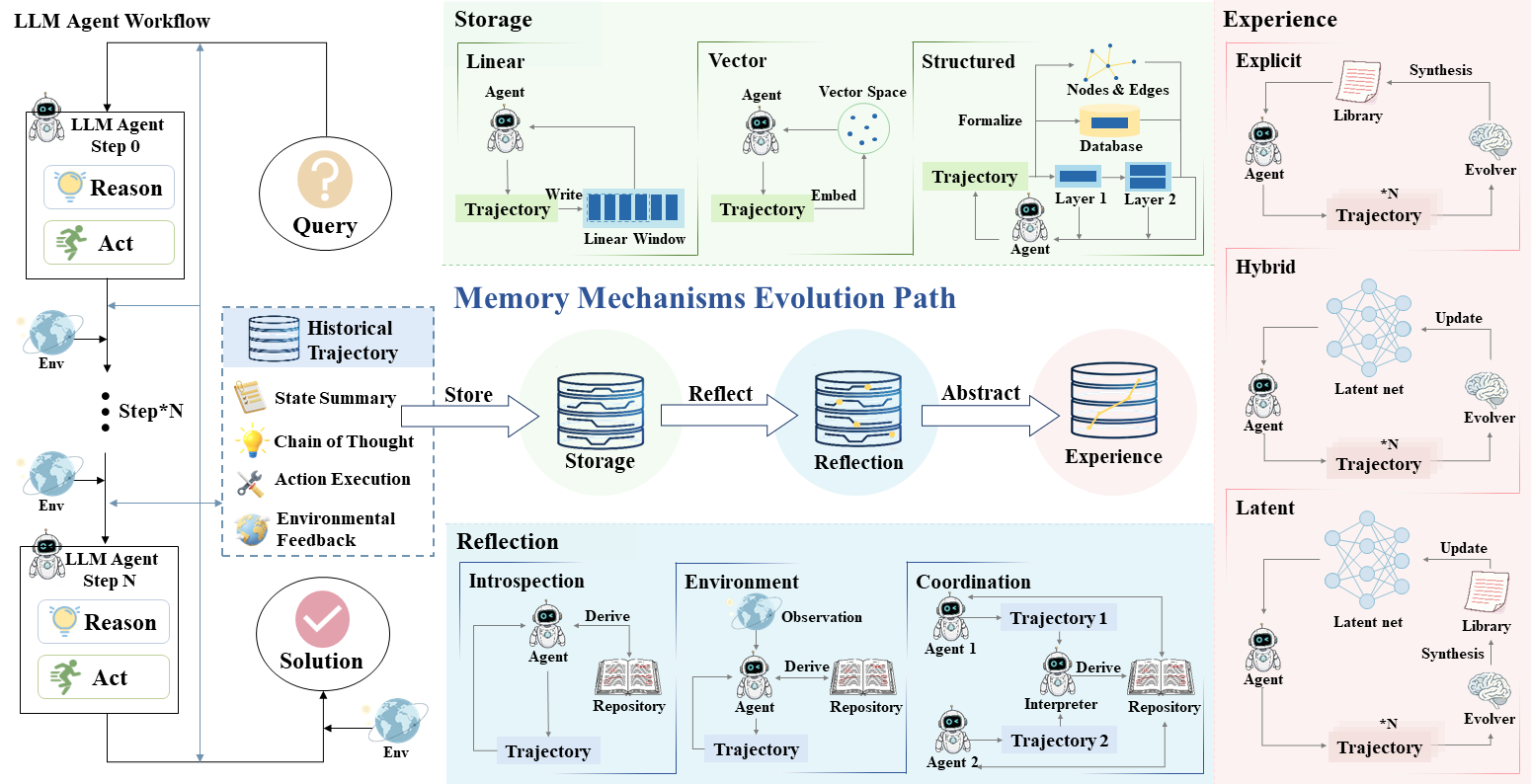
From Storage to Experience:
A Survey on the Evolution of LLM Agent Memory Mechanisms






ACL 2026 (Findings) | ICLR 2026 Workshop MemAgents | Actively maintained
A curated and continuously updated collection of 140+ papers and 40+ benchmarks
on the evolutionary framework of LLM agent memory mechanisms.
If you find this survey useful, please consider giving us a :star: to stay updated with the latest additions!
We welcome contributions! If you know of a relevant paper we missed, please open an issue or submit a pull request. See our Contributing Guidelines.
Table of Contents
Overview
While memory mechanisms have emerged as the architectural cornerstone of LLM agents, current research remains fragmented between operating system engineering and cognitive science. This theoretical divide prevents a unified view of technological synthesis.
We propose a novel Evolutionary Framework that formalizes the development of LLM agent memory into three progressive stages:
| Stage | Core Idea | Key Transformation |
|---|---|---|
| Storage | Trajectory Preservation | Faithfully recording raw interaction traces via linear, vector, or structured storage |
| Reflection | Trajectory Refinement | Actively evaluating and correcting stored memories through introspection, environment feedback, or coordination |
| Experience | Trajectory Abstraction | Compressing redundant trajectories into transferable heuristic wisdom via cross-trajectory abstraction |
Evolution Path
The agent's decision-making process forms a dynamic closed loop enabled by memory. During each task execution cycle, the agent leverages two core capabilities:
- Memory Read — Actively retrieves relevant knowledge from the memory bank to supplement the current context.
- Memory Write — Records generated interaction sequences as historical trajectories into the memory system.
Building upon this foundation, we conceptualize the memory mechanism as an evolutionary pathway structured into three stages:
Storage (Trajectory Preservation)
Storage serves as the cornerstone of memory evolution, emphasizing the faithful preservation of interaction history.
| Paradigm | Characteristics | Strengths | Limitations |
|---|---|---|---|
| Linear | Token stream ordered chronologically | Minimal information loss, maximal logical completeness | Early critical information irreversibly forgotten |
| Vector | Embeddings in high-dimensional space | Massive storage capacity | High retrieval difficulty, limited relevance |
| Structured | Relational structures (tables, graphs, tiers) | Precise operations, multi-hop retrieval | Requires schema maintenance, less flexible at scale |
Reflection (Trajectory Refinement)
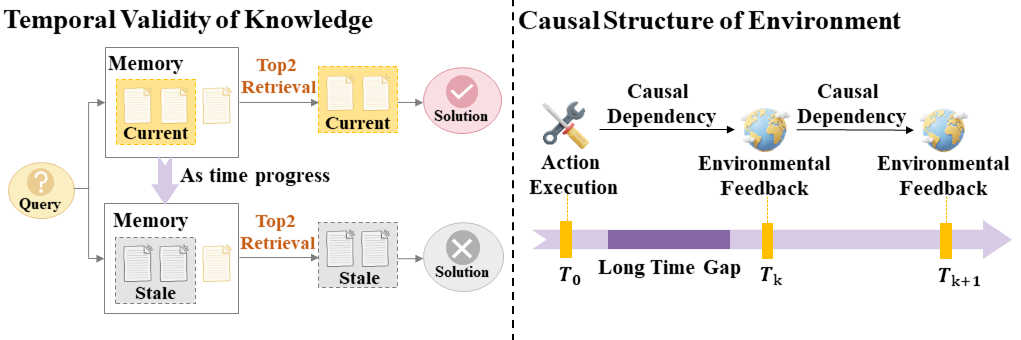
Figure 2: Temporal Validity & Causal Structure in Dynamic Environments.
| Paradigm | Characteristics | Strengths | Limitations |
|---|---|---|---|
| Introspection | Internal knowledge for self-evaluation | Error correction without external feedback | Risk of reinforcing biases |
| Environment | Execution outcomes as refinement signals | Greater adaptability to dynamic environments | Sparse rewards, ambiguous settings |
| Coordination | Multi-agent collective reflection | Reduced hallucination, enriched perspectives | Communication overhead, memory conflicts |
Experience (Trajectory Abstraction)
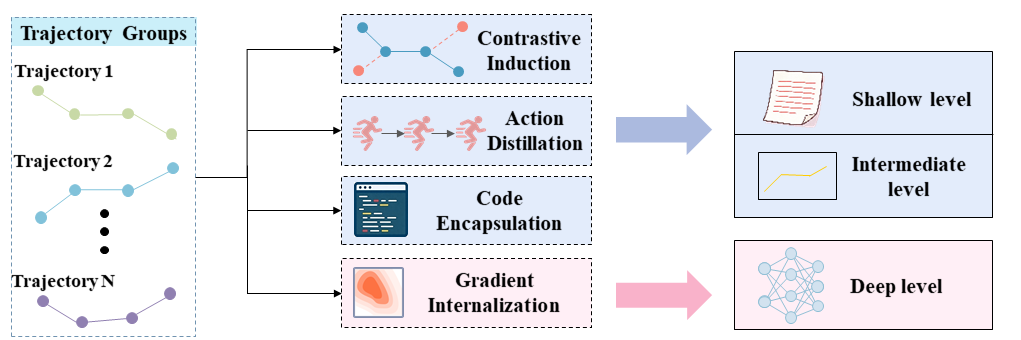
Figure 3: Overview of Cross-Trajectory Abstraction Techniques.
| Paradigm | Characteristics | Strengths | Limitations |
|---|---|---|---|
| Explicit | Human-readable patterns from trajectory clusters | Highly interpretable and editable | Lacks precision in complex boundaries |
| Implicit | Internalized into model parameters / latent variables | Near-zero retrieval overhead | Reduced interpretability, forgetting risk |
| Hybrid | Dynamic "accumulate–internalize" cycle | Balances interpretability with efficiency | Requires careful transfer coordination |
Paper List
Papers are organized following our three-stage evolutionary framework.
Storage
Linear Storage
Context Window Adaptation
Information Sparsification
Vector Storage
Semantic Retrieval
Weighted Retrieval
| Paper | Venue | Year |
|---|---|---|
| Generative Agents: Interactive Simulacra of Human Behavior | UIST | 2023 |
| MemoryBank: Enhancing Large Language Models with Long-Term Memory | arXiv | 2023 |
Structured Storage
Tabular Database
Tiered Architectures
Semantic Graphs
Reflection
Introspection
Error Rectification
Dynamic Maintenance
Knowledge Compression
Environment
Environment Modeling
Decision Optimization
Coordination
Multi-dimensional Calibration
Experience
Explicit Experience
Heuristic Guidelines
Procedural Primitives
Implicit Experience
Latent Modulation
Parameter Internalization
Hybrid Experience
Experience Transfer
Benchmarks & Datasets
Storage Stage
| Benchmark | Venue | Year | Focus |
|---|---|---|---|
| HotpotQA | EMNLP | 2018 | Multi-hop cross-document reasoning |
| LongBench | arXiv | 2023 | Bilingual, multitask long-context understanding |
| MemoryBank | arXiv | 2023 | Long-term dialog memory |
| Multimodal Needle in a Haystack | NAACL | 2024 | Long-context multimodal retrieval |
| LongBench v2 | arXiv | 2024 | Realistic long-context reasoning |
| RULER | arXiv | 2024 | Effective context window measurement |
| BABILong | arXiv | 2024 | Synthetic long-context reasoning-in-a-haystack |
| DialSim | arXiv | 2024 | Real-time long-term dialogue simulation |
| Evaluating Very Long-Term Conversational Memory of LLM Agents | arXiv | 2024 | Very long-term conversational memory |
| MADial-Bench | NAACL | 2024 | Memory-augmented dialogue |
| HELMET | arXiv | 2024 | Comprehensive long-context evaluation |
| Explicit vs. Implicit Memory | arXiv | 2025 | Multi-hop personalized reasoning |
| Evaluating the Long-Term Memory of Large Language Models | ACL | 2025 | Long-term memory evaluation protocol |
| Beyond a Million Tokens | arXiv | 2025 | Ultra-long memory (>1M tokens) |
| LoCoBench-Agent | arXiv | 2025 | Long-context software engineering agents |
| MemoryRewardBench | arXiv | 2026 | Reward models for long-term memory management |
| AgentLongBench | arXiv | 2026 | Dynamic long-context agent evaluation |
Reflection Stage
| Benchmark | Venue | Year | Focus |
|---|---|---|---|
| Personalized Large Language Model Assistant with Evolving Conditional Memory | COLING | 2023 | Evolving conditional memory |
| PerLTQA | arXiv | 2024 | Personal long-term memory QA |
| Evaluating Very Long-Term Conversational Memory of LLM Agents | arXiv | 2024 | Conversational memory consistency |
| On the Multi-Turn Instruction Following for Conversational Web Agents | ACL | 2024 | Web agent multi-turn memory |
| SHARE | arXiv | 2024 | Shared memory in dialogue |
| Minerva | arXiv | 2025 | Programmable memory read-write tests |
| Personalized Preference Following | arXiv | 2025 | User preference memory |
| Multi-Session Personalized Conversation | arXiv | 2025 | Multi-session implicit reasoning |
| PersonaMem-v2 | arXiv | 2025 | Implicit user persona memory |
| Mem-PAL | arXiv | 2025 | Personalized long-term dialogue |
| WebChoreArena | arXiv | 2025 | Web agent intermediate state memory |
| StoryBench | arXiv | 2025 | Long-term narrative tracking |
| Evaluating Memory in LLM Agents via Incremental Multi-Turn Interactions | arXiv | 2025 | Memory retention across turns |
| LLM Self-Awareness via Internal Circuits | arXiv | 2025 | Internal memory limit awareness |
| HaluMem | arXiv | 2025 | Hallucination in memory systems |
| ConvoMem Benchmark | arXiv | 2025 | Conversational memory (75K+ QA pairs) |
| KnowMe-Bench | arXiv | 2026 | Person understanding from narratives |
| RealMem | arXiv | 2026 | Real-world project-oriented memory |
| StructMemEval | arXiv | 2026 | Memory structure organization |
| Beyond the Context Window: Cost-Performance Analysis of Fact-Based Memory vs. Long-Context LLMs | arXiv | 2026 | Fact-based memory vs. long-context cost tradeoff |
| Diagnosing Retrieval vs. Utilization Bottlenecks in LLM Agent Memory | arXiv | 2026 | Write strategy x retrieval method diagnostics |
Experience Stage
| Benchmark | Venue | Year | Focus |
|---|---|---|---|
| StreamBench | arXiv | 2024 | Continuous improvement over task streams |
| LifelongAgentBench | arXiv | 2025 | Lifelong learning agents |
| MEMTRACK | NeurIPS Workshop | 2025 | Multi-platform state tracking |
| MemoryBench | arXiv | 2025 | Memory and continual learning metrics |
| Evo-Memory | arXiv | 2025 | Test-time self-evolving memory |
| MemoryArena | arXiv | 2026 | Interdependent multi-session agentic tasks |
| AMA-Bench | arXiv | 2026 | Long-horizon agentic memory |
Citation
If you find this survey useful in your research, please consider citing our paper:
@inproceedings{luo2026from,
  title   = {From Storage to Experience: A Survey on the Evolution of LLM Agent Memory Mechanisms},
  author  = {Luo, Jinghao and Tian, Yuchen and Cao, Chuxue and Luo, Ziyang and Lin, Hongzhan and Li, Kaixin and Kong, Chuyi and Yang, Ruichao and Ma, Jing},
  booktitle = {Findings of the Association for Computational Linguistics: ACL 2026},
  year    = {2026}
}
The BibTeX entry will be updated with the official ACL 2026 proceedings metadata once available.
Contributing
We welcome contributions from the community! Please see our Contributing Guidelines for how to:
- Suggest new papers
- Report broken links
- Propose new categories
This project is licensed under the MIT License.
Contributors

46 commits

2 commits


Paper list for "From Storage to Experience: A Survey on the Evolution of LLM Agent Memory Mechanisms".
56
48 commits
updated Apr 13, 2026
README
From Storage to Experience:
A Survey on the Evolution of LLM Agent Memory Mechanisms
ACL 2026 (Findings) | ICLR 2026 Workshop MemAgents | Actively maintained
A curated and continuously updated collection of 140+ papers and 40+ benchmarks
on the evolutionary framework of LLM agent memory mechanisms.
If you find this survey useful, please consider giving us a :star: to stay updated with the latest additions!
We welcome contributions! If you know of a relevant paper we missed, please open an issue or submit a pull request. See our Contributing Guidelines.
Table of Contents
Overview
While memory mechanisms have emerged as the architectural cornerstone of LLM agents, current research remains fragmented between operating system engineering and cognitive science. This theoretical divide prevents a unified view of technological synthesis.
We propose a novel Evolutionary Framework that formalizes the development of LLM agent memory into three progressive stages:
| Stage | Core Idea | Key Transformation |
|---|---|---|
| Storage | Trajectory Preservation | Faithfully recording raw interaction traces via linear, vector, or structured storage |
| Reflection | Trajectory Refinement | Actively evaluating and correcting stored memories through introspection, environment feedback, or coordination |
| Experience | Trajectory Abstraction | Compressing redundant trajectories into transferable heuristic wisdom via cross-trajectory abstraction |
Evolution Path
The agent's decision-making process forms a dynamic closed loop enabled by memory. During each task execution cycle, the agent leverages two core capabilities:
- Memory Read — Actively retrieves relevant knowledge from the memory bank to supplement the current context.
- Memory Write — Records generated interaction sequences as historical trajectories into the memory system.
Building upon this foundation, we conceptualize the memory mechanism as an evolutionary pathway structured into three stages:
Storage (Trajectory Preservation)
Storage serves as the cornerstone of memory evolution, emphasizing the faithful preservation of interaction history.
| Paradigm | Characteristics | Strengths | Limitations |
|---|---|---|---|
| Linear | Token stream ordered chronologically | Minimal information loss, maximal logical completeness | Early critical information irreversibly forgotten |
| Vector | Embeddings in high-dimensional space | Massive storage capacity | High retrieval difficulty, limited relevance |
| Structured | Relational structures (tables, graphs, tiers) | Precise operations, multi-hop retrieval | Requires schema maintenance, less flexible at scale |
Reflection (Trajectory Refinement)
Figure 2: Temporal Validity & Causal Structure in Dynamic Environments.
| Paradigm | Characteristics | Strengths | Limitations |
|---|---|---|---|
| Introspection | Internal knowledge for self-evaluation | Error correction without external feedback | Risk of reinforcing biases |
| Environment | Execution outcomes as refinement signals | Greater adaptability to dynamic environments | Sparse rewards, ambiguous settings |
| Coordination | Multi-agent collective reflection | Reduced hallucination, enriched perspectives | Communication overhead, memory conflicts |
Experience (Trajectory Abstraction)
Figure 3: Overview of Cross-Trajectory Abstraction Techniques.
| Paradigm | Characteristics | Strengths | Limitations |
|---|---|---|---|
| Explicit | Human-readable patterns from trajectory clusters | Highly interpretable and editable | Lacks precision in complex boundaries |
| Implicit | Internalized into model parameters / latent variables | Near-zero retrieval overhead | Reduced interpretability, forgetting risk |
| Hybrid | Dynamic "accumulate–internalize" cycle | Balances interpretability with efficiency | Requires careful transfer coordination |
Paper List
Papers are organized following our three-stage evolutionary framework.
Storage
Linear Storage
Context Window Adaptation
Information Sparsification
Vector Storage
Semantic Retrieval
Weighted Retrieval
| Paper | Venue | Year |
|---|---|---|
| Generative Agents: Interactive Simulacra of Human Behavior | UIST | 2023 |
| MemoryBank: Enhancing Large Language Models with Long-Term Memory | arXiv | 2023 |
Structured Storage
Tabular Database
Tiered Architectures
Semantic Graphs
Reflection
Introspection
Error Rectification
Dynamic Maintenance
Knowledge Compression
Environment
Environment Modeling
Decision Optimization
Coordination
Multi-dimensional Calibration
Experience
Explicit Experience
Heuristic Guidelines
Procedural Primitives
Implicit Experience
Latent Modulation
Parameter Internalization
Hybrid Experience
Experience Transfer
Benchmarks & Datasets
Storage Stage
| Benchmark | Venue | Year | Focus |
|---|---|---|---|
| HotpotQA | EMNLP | 2018 | Multi-hop cross-document reasoning |
| LongBench | arXiv | 2023 | Bilingual, multitask long-context understanding |
| MemoryBank | arXiv | 2023 | Long-term dialog memory |
| Multimodal Needle in a Haystack | NAACL | 2024 | Long-context multimodal retrieval |
| LongBench v2 | arXiv | 2024 | Realistic long-context reasoning |
| RULER | arXiv | 2024 | Effective context window measurement |
| BABILong | arXiv | 2024 | Synthetic long-context reasoning-in-a-haystack |
| DialSim | arXiv | 2024 | Real-time long-term dialogue simulation |
| Evaluating Very Long-Term Conversational Memory of LLM Agents | arXiv | 2024 | Very long-term conversational memory |
| MADial-Bench | NAACL | 2024 | Memory-augmented dialogue |
| HELMET | arXiv | 2024 | Comprehensive long-context evaluation |
| Explicit vs. Implicit Memory | arXiv | 2025 | Multi-hop personalized reasoning |
| Evaluating the Long-Term Memory of Large Language Models | ACL | 2025 | Long-term memory evaluation protocol |
| Beyond a Million Tokens | arXiv | 2025 | Ultra-long memory (>1M tokens) |
| LoCoBench-Agent | arXiv | 2025 | Long-context software engineering agents |
| MemoryRewardBench | arXiv | 2026 | Reward models for long-term memory management |
| AgentLongBench | arXiv | 2026 | Dynamic long-context agent evaluation |
Reflection Stage
| Benchmark | Venue | Year | Focus |
|---|---|---|---|
| Personalized Large Language Model Assistant with Evolving Conditional Memory | COLING | 2023 | Evolving conditional memory |
| PerLTQA | arXiv | 2024 | Personal long-term memory QA |
| Evaluating Very Long-Term Conversational Memory of LLM Agents | arXiv | 2024 | Conversational memory consistency |
| On the Multi-Turn Instruction Following for Conversational Web Agents | ACL | 2024 | Web agent multi-turn memory |
| SHARE | arXiv | 2024 | Shared memory in dialogue |
| Minerva | arXiv | 2025 | Programmable memory read-write tests |
| Personalized Preference Following | arXiv | 2025 | User preference memory |
| Multi-Session Personalized Conversation | arXiv | 2025 | Multi-session implicit reasoning |
| PersonaMem-v2 | arXiv | 2025 | Implicit user persona memory |
| Mem-PAL | arXiv | 2025 | Personalized long-term dialogue |
| WebChoreArena | arXiv | 2025 | Web agent intermediate state memory |
| StoryBench | arXiv | 2025 | Long-term narrative tracking |
| Evaluating Memory in LLM Agents via Incremental Multi-Turn Interactions | arXiv | 2025 | Memory retention across turns |
| LLM Self-Awareness via Internal Circuits | arXiv | 2025 | Internal memory limit awareness |
| HaluMem | arXiv | 2025 | Hallucination in memory systems |
| ConvoMem Benchmark | arXiv | 2025 | Conversational memory (75K+ QA pairs) |
| KnowMe-Bench | arXiv | 2026 | Person understanding from narratives |
| RealMem | arXiv | 2026 | Real-world project-oriented memory |
| StructMemEval | arXiv | 2026 | Memory structure organization |
| Beyond the Context Window: Cost-Performance Analysis of Fact-Based Memory vs. Long-Context LLMs | arXiv | 2026 | Fact-based memory vs. long-context cost tradeoff |
| Diagnosing Retrieval vs. Utilization Bottlenecks in LLM Agent Memory | arXiv | 2026 | Write strategy x retrieval method diagnostics |
Experience Stage
| Benchmark | Venue | Year | Focus |
|---|---|---|---|
| StreamBench | arXiv | 2024 | Continuous improvement over task streams |
| LifelongAgentBench | arXiv | 2025 | Lifelong learning agents |
| MEMTRACK | NeurIPS Workshop | 2025 | Multi-platform state tracking |
| MemoryBench | arXiv | 2025 | Memory and continual learning metrics |
| Evo-Memory | arXiv | 2025 | Test-time self-evolving memory |
| MemoryArena | arXiv | 2026 | Interdependent multi-session agentic tasks |
| AMA-Bench | arXiv | 2026 | Long-horizon agentic memory |
Citation
If you find this survey useful in your research, please consider citing our paper:
@inproceedings{luo2026from,
  title   = {From Storage to Experience: A Survey on the Evolution of LLM Agent Memory Mechanisms},
  author  = {Luo, Jinghao and Tian, Yuchen and Cao, Chuxue and Luo, Ziyang and Lin, Hongzhan and Li, Kaixin and Kong, Chuyi and Yang, Ruichao and Ma, Jing},
  booktitle = {Findings of the Association for Computational Linguistics: ACL 2026},
  year    = {2026}
}
The BibTeX entry will be updated with the official ACL 2026 proceedings metadata once available.
Contributing
We welcome contributions from the community! Please see our Contributing Guidelines for how to:
- Suggest new papers
- Report broken links
- Propose new categories
This project is licensed under the MIT License.
Similar repos
Contributors
46 commits
2 commits