📚 Two books on harness engineering — the design philosophies behind Claude Code & Codex: constraints, query loops, context governance, multi-agent verification. harness-books.agentway.dev
See the code
Two books on harness engineering. They pursue the same engineering question: once a code-writing model is placed inside terminals, repositories, permission systems, and team workflows, what keeps the overall system bounded, continuous, and accountable for consequences?
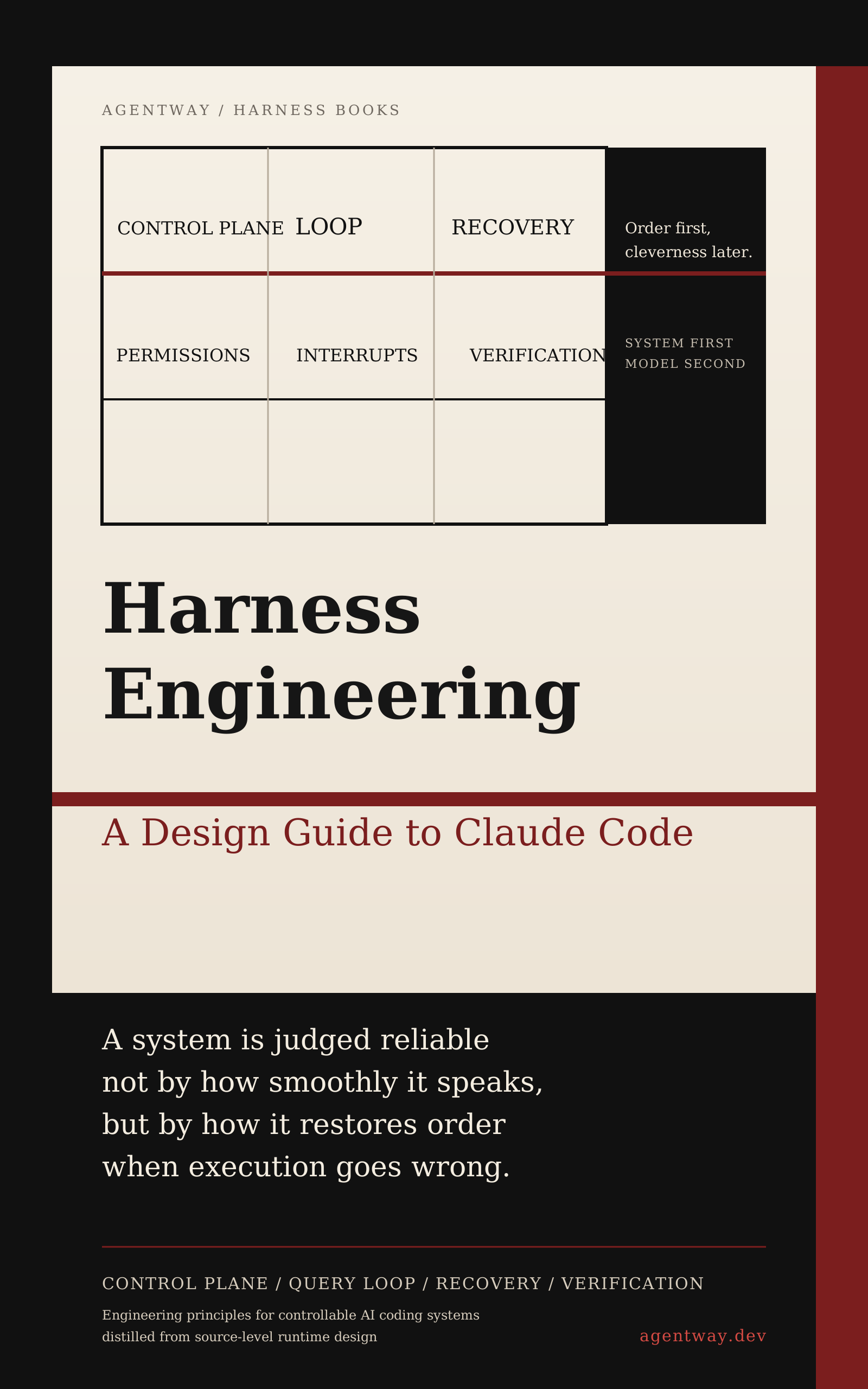
Harness Engineering: A Design Guide to Claude Code Read online · Download PDF |
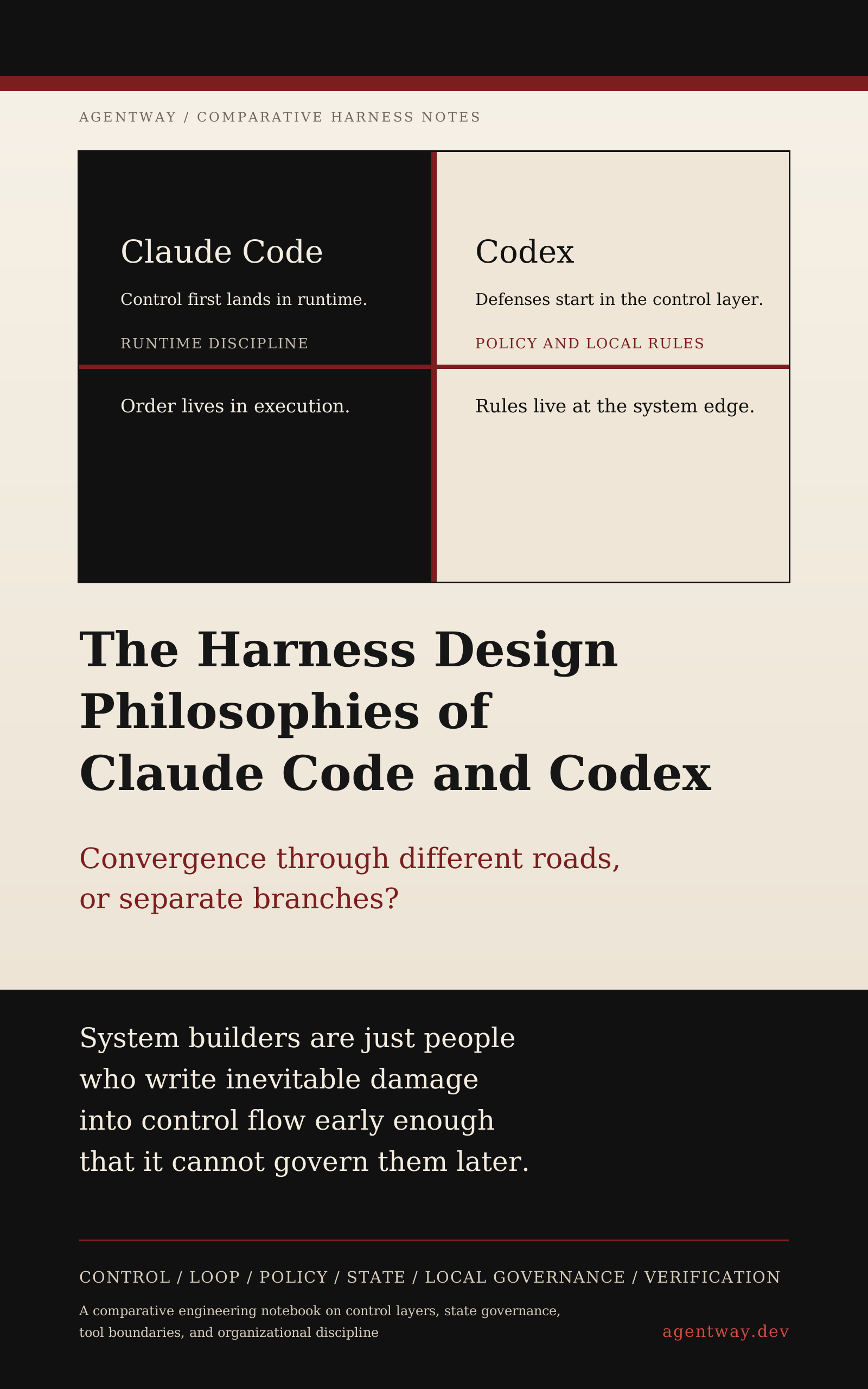
The Harness Design Philosophies of Claude Code and Codex Read online · Download PDF |
These books are not meant to walk line by line through the source code. They focus on how a harness organizes constraints and execution, and how an inherently unstable model can be folded into a sustainable engineering order. Prompt layering, query loops, permission decisions, context governance, failure recovery, multi-agent verification, local rules, and team institutions together form the organ system of a harness. The real danger is not that a model occasionally says something wrong, but that the system has no structure for handling consequences.
The first book uses Claude Code as the observation target and concentrates on runtime structure. Its concern is why a system eventually has to grow components such as a control plane, query loop, tool permissions, context governance, recovery paths, multi-agent verification, and team rules.
Start with Book 1 if these are the questions you care about:
The second book places Claude Code and Codex side by side and asks where each harness places order. One path starts from runtime discipline; the other starts from a more structured control layer. Both systems can work, but they distribute authority differently.
Start with Book 2 if you care more about system choice, architectural judgment, or what to learn when building your own harness:

| AgentWay is a related but separate practice platform. Harness Books explains control structures, engineering judgments, and architectural divergences. AgentWay is where these ideas continue into training paths, drills, project exercises, and agent PoCs. |
Build the two locale-aware Honkit sites and then assemble the unified Pages site:
python3 tools/book-kit/build_honkit.py book1-claude-code
python3 tools/book-kit/build_honkit.py book1-claude-code --locale en
python3 tools/book-kit/build_honkit.py book2-comparing
python3 tools/book-kit/build_honkit.py book2-comparing --locale en
python3 tools/book-kit/build_pages_site.py
Final output is written to dist/.
Keywords: Harness Engineering, Claude Code guide, Claude Code vs Codex, AI coding agent, control plane, query loop, agent recovery, agent verification, local governance, approval policy
102 followers · starred Apr 2026
28 followers · starred Apr 2026
106 followers · starred Jun 2026
40 followers · starred Apr 2026
📚 Two books on harness engineering — the design philosophies behind Claude Code & Codex: constraints, query loops, context governance, multi-agent verification. harness-books.agentway.dev
See the code
Two books on harness engineering. They pursue the same engineering question: once a code-writing model is placed inside terminals, repositories, permission systems, and team workflows, what keeps the overall system bounded, continuous, and accountable for consequences?
|
Harness Engineering: A Design Guide to Claude Code Read online · Download PDF |
The Harness Design Philosophies of Claude Code and Codex Read online · Download PDF |
These books are not meant to walk line by line through the source code. They focus on how a harness organizes constraints and execution, and how an inherently unstable model can be folded into a sustainable engineering order. Prompt layering, query loops, permission decisions, context governance, failure recovery, multi-agent verification, local rules, and team institutions together form the organ system of a harness. The real danger is not that a model occasionally says something wrong, but that the system has no structure for handling consequences.
The first book uses Claude Code as the observation target and concentrates on runtime structure. Its concern is why a system eventually has to grow components such as a control plane, query loop, tool permissions, context governance, recovery paths, multi-agent verification, and team rules.
Start with Book 1 if these are the questions you care about:
The second book places Claude Code and Codex side by side and asks where each harness places order. One path starts from runtime discipline; the other starts from a more structured control layer. Both systems can work, but they distribute authority differently.
Start with Book 2 if you care more about system choice, architectural judgment, or what to learn when building your own harness:
|
| AgentWay is a related but separate practice platform. Harness Books explains control structures, engineering judgments, and architectural divergences. AgentWay is where these ideas continue into training paths, drills, project exercises, and agent PoCs. |
Build the two locale-aware Honkit sites and then assemble the unified Pages site:
python3 tools/book-kit/build_honkit.py book1-claude-code
python3 tools/book-kit/build_honkit.py book1-claude-code --locale en
python3 tools/book-kit/build_honkit.py book2-comparing
python3 tools/book-kit/build_honkit.py book2-comparing --locale en
python3 tools/book-kit/build_pages_site.py
Final output is written to dist/.
Keywords: Harness Engineering, Claude Code guide, Claude Code vs Codex, AI coding agent, control plane, query loop, agent recovery, agent verification, local governance, approval policy
102 followers · starred Apr 2026
28 followers · starred Apr 2026
106 followers · starred Jun 2026
40 followers · starred Apr 2026





