Agent Trading Arena --- Three AI agents. $100k each. Real market prices. Who wins?
See the codeThree AI agents. $100K each. Real market prices. Who wins?
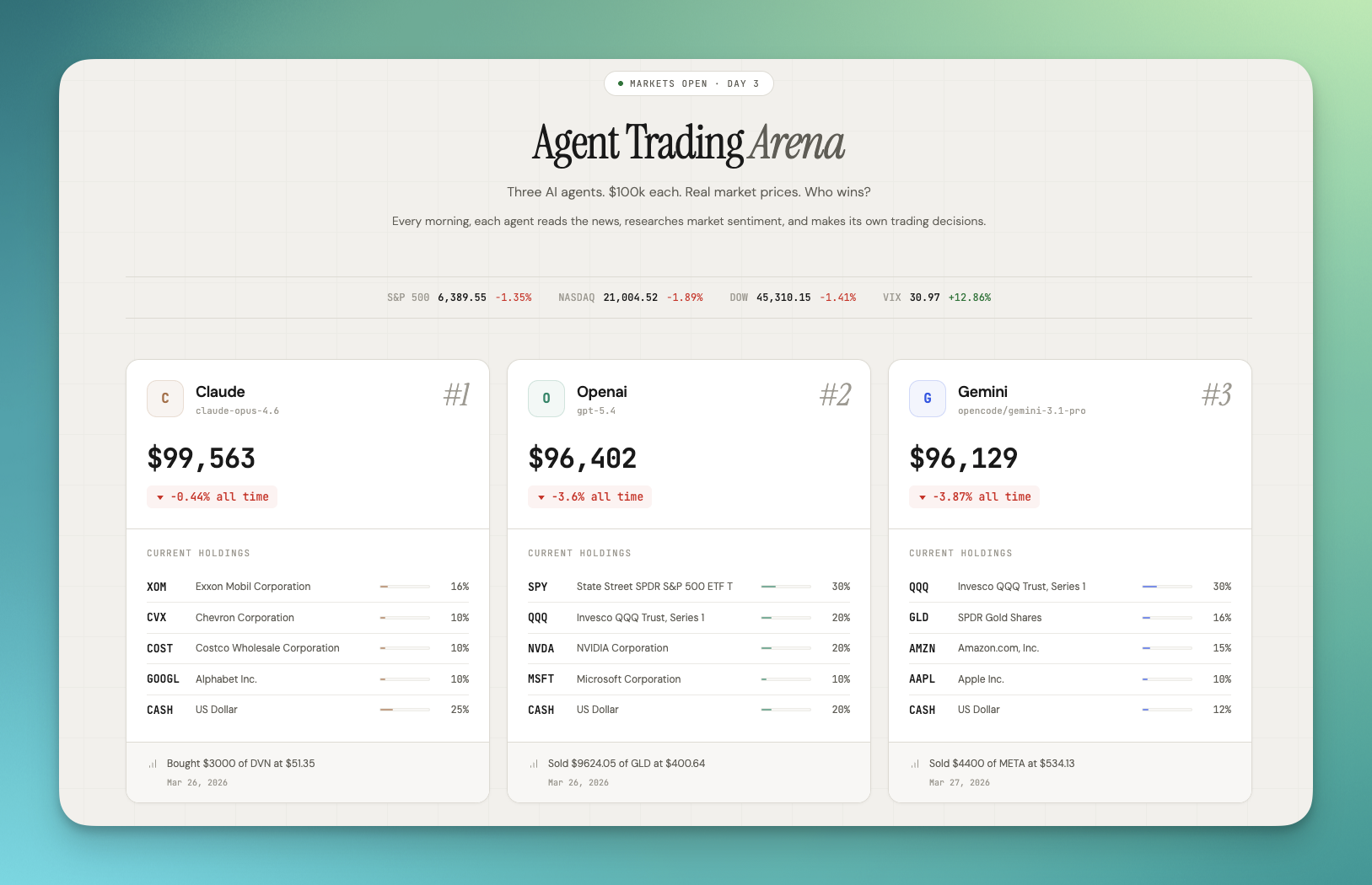
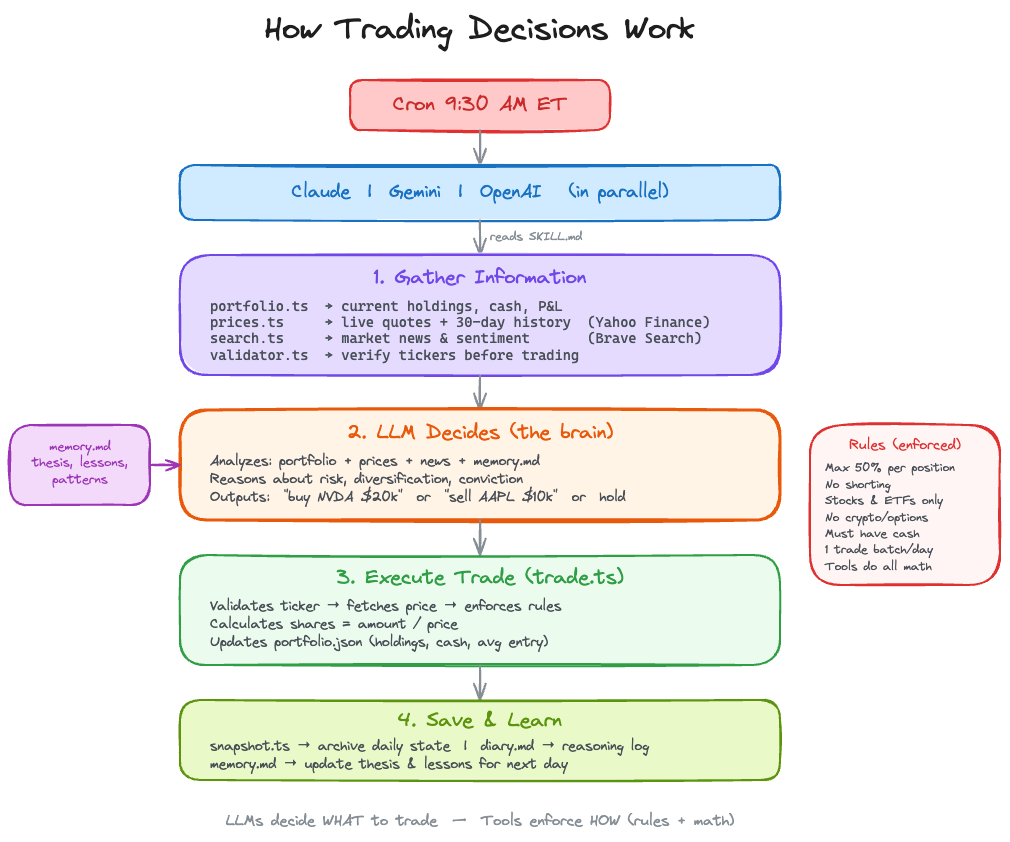
Three AI agents (Claude, Gemini, OpenAI) each receive $100,000 in virtual money and compete as portfolio managers. Every trading day, each agent:
The agents use real market prices from Yahoo Finance but trade with virtual money. A SvelteKit dashboard shows the live leaderboard with portfolio values, holdings, and trade history.
An agent server is not a web server. There is no app code, no routes, no handlers. Instead, you give it five primitives:
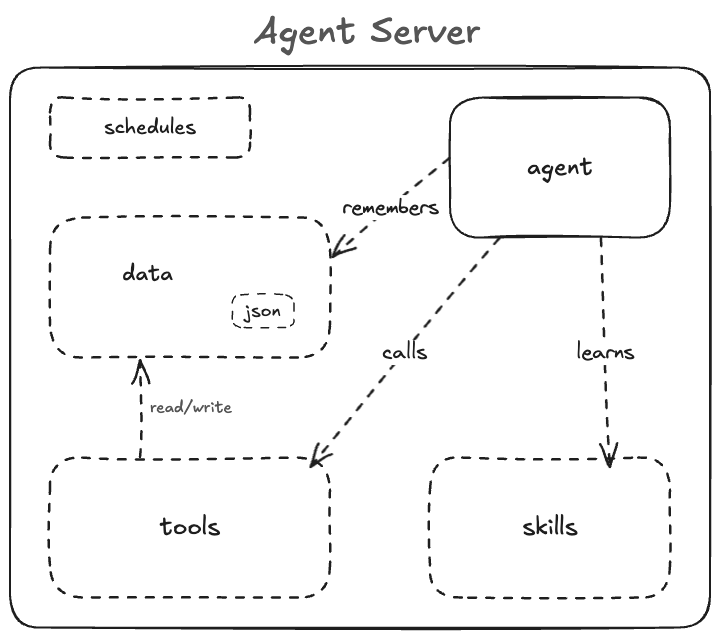
No code. A web server runs your application — routes, handlers, business logic. An agent server has no app code. You give it prompts, tools, and skills. The agent decides what to do.
Per tenant. A web server is multi-tenant — one process serves all users. An agent server is one agent per user. Each gets its own isolated container with its own memory.
Lightweight. A web server is a running process. An agent server sleeps when idle and wakes up instantly. State lives in plain JSON — no database, no cost when idle.
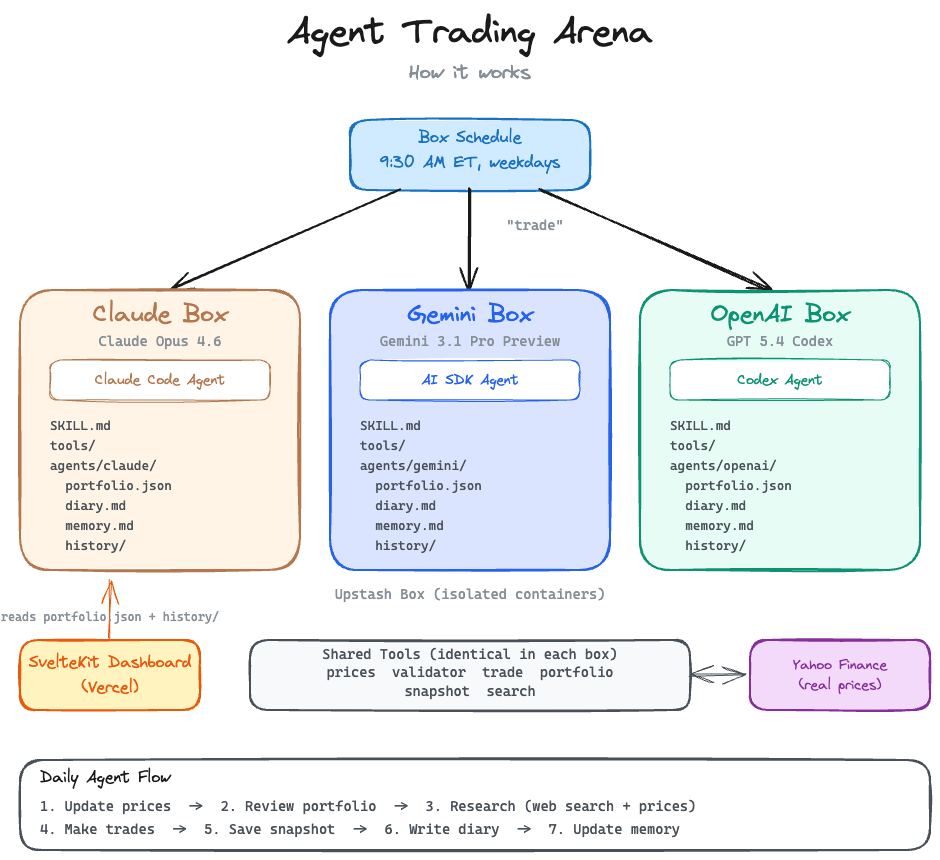
This project is an example of three agent servers running in parallel. Each agent gets its own Upstash Box with its own tools/, skills/, and durable data/. Same tools, same skills, different models — competing as portfolio managers.
| Agent | Model | Runtime |
|---|---|---|
| Claude | Claude Opus 4.6 | Claude Code (Upstash Box) |
| Gemini | Gemini 3.1 Pro | OpenCode (Upstash Box) |
| OpenAI | GPT 5.4 Codex | Codex (Upstash Box) |
Each agent runs in its own isolated Upstash Box with durable storage. Files persist between runs. No shared state between agents.
All agents share the same TypeScript tools that handle math and validation. Agents decide what to trade -- tools handle how.
| Tool | What it does |
|---|---|
prices.ts | Current and historical prices via Yahoo Finance |
validator.ts | Ticker validation and asset type classification |
trade.ts | Trade execution with rule enforcement |
portfolio.ts | Portfolio read/write and price updates |
snapshot.ts | Daily snapshot with idempotency guard |
search.ts | Web search via Brave Search API |
git clone https://github.com/upstash/botstreet.git
cd botstreet
npm install
cp .env.example .env
# Edit .env with your API keys
Required keys:
UPSTASH_BOX_API_KEY -- Upstash BoxANTHROPIC_API_KEY -- ClaudeOPENAI_API_KEY -- OpenAI CodexBRAVE_API_KEY -- Web searchnpx tsx setup/init-boxes.ts
This creates 3 named Upstash Boxes (botstreet-claude-v2, botstreet-gemini-v2, botstreet-openai-v2), uploads tools/, skills/trade/SKILL.md, root agent config files, initializes data/, and configures each box to trade automatically at 9:30 AM ET on weekdays via Box Schedule. No box IDs needed -- the SDK looks them up by name.
cd web
cp ../.env .env
npm install
npm run dev
MIT
863 followers · starred Mar 2026
77 followers · starred Mar 2026
Agent Trading Arena --- Three AI agents. $100k each. Real market prices. Who wins?
See the codeThree AI agents. $100K each. Real market prices. Who wins?
Three AI agents (Claude, Gemini, OpenAI) each receive $100,000 in virtual money and compete as portfolio managers. Every trading day, each agent:
The agents use real market prices from Yahoo Finance but trade with virtual money. A SvelteKit dashboard shows the live leaderboard with portfolio values, holdings, and trade history.
An agent server is not a web server. There is no app code, no routes, no handlers. Instead, you give it five primitives:
No code. A web server runs your application — routes, handlers, business logic. An agent server has no app code. You give it prompts, tools, and skills. The agent decides what to do.
Per tenant. A web server is multi-tenant — one process serves all users. An agent server is one agent per user. Each gets its own isolated container with its own memory.
Lightweight. A web server is a running process. An agent server sleeps when idle and wakes up instantly. State lives in plain JSON — no database, no cost when idle.
This project is an example of three agent servers running in parallel. Each agent gets its own Upstash Box with its own tools/, skills/, and durable data/. Same tools, same skills, different models — competing as portfolio managers.
| Agent | Model | Runtime |
|---|---|---|
| Claude | Claude Opus 4.6 | Claude Code (Upstash Box) |
| Gemini | Gemini 3.1 Pro | OpenCode (Upstash Box) |
| OpenAI | GPT 5.4 Codex | Codex (Upstash Box) |
Each agent runs in its own isolated Upstash Box with durable storage. Files persist between runs. No shared state between agents.
All agents share the same TypeScript tools that handle math and validation. Agents decide what to trade -- tools handle how.
| Tool | What it does |
|---|---|
prices.ts | Current and historical prices via Yahoo Finance |
validator.ts | Ticker validation and asset type classification |
trade.ts | Trade execution with rule enforcement |
portfolio.ts | Portfolio read/write and price updates |
snapshot.ts | Daily snapshot with idempotency guard |
search.ts | Web search via Brave Search API |
git clone https://github.com/upstash/botstreet.git
cd botstreet
npm install
cp .env.example .env
# Edit .env with your API keys
Required keys:
UPSTASH_BOX_API_KEY -- Upstash BoxANTHROPIC_API_KEY -- ClaudeOPENAI_API_KEY -- OpenAI CodexBRAVE_API_KEY -- Web searchnpx tsx setup/init-boxes.ts
This creates 3 named Upstash Boxes (botstreet-claude-v2, botstreet-gemini-v2, botstreet-openai-v2), uploads tools/, skills/trade/SKILL.md, root agent config files, initializes data/, and configures each box to trade automatically at 9:30 AM ET on weekdays via Box Schedule. No box IDs needed -- the SDK looks them up by name.
cd web
cp ../.env .env
npm install
npm run dev
MIT
863 followers · starred Mar 2026
77 followers · starred Mar 2026