
Build terminal applications using functional reactive programming (FRP) with Reflex FRP.
See the codeREADME
reflex-vty
Build terminal user interfaces with functional reactive programming.
reflex-vty provides a Reflex FRP host and a library of reactive widgets for Vty terminal applications: layout, text input and editing, boxes, scrolling, mouse support, focus management, and theming.





A minimal app
{-# LANGUAGE OverloadedStrings #-}
module Main where

import Reflex.Vty

main :: IO ()
main = mainWidget def $ do
  text "Hello, reflex-vty! Press Ctrl+C to quit."
  ctrlc
mainWidget takes a VtyAppConfig (def for the defaults) and runs a widget until the Event t () it returns fires. Here that is ctrlc, which fires when the user presses Ctrl+C. Docs are available on Hackage.
Features
- Layout: arrange widgets into rows and columns (
tile/grout) with fixed or proportional (stretch) size constraints. - Focus: tab-cycling focus management across the focusable widgets in a layout (
tabNavigation). - Text: word-wrapped text display, rich text with per-span attributes, and single- or multi-line text input backed by a zipper that handles wide characters, tabs, and wrapping.
- Inputs: clickable buttons, hyperlinks, and checkboxes.
- Boxes: single, thick, double, rounded, ASCII, inner-half, and outer-half border styles, with optional titles and horizontal rules.
- Scrolling: scrollable containers with programmatic scrolling, auto-scroll-to-bottom mode, and a visual scrollbar with four visibility modes (always, thumb-only, while-scrolling, hidden).
- Split panes: fixed horizontal and vertical splits, plus a mouse-draggable splitter you can resize at runtime (
splitVDrag). - Mouse: button clicks, drags (with from/to/button/modifier tracking), scroll-wheel events, and last-known mouse-position tracking.
- Keyboard: individual key and key-combo events, plus input filtering.
- Runtime: alternate-screen mode, terminal cursor control (shape, visibility, and position), bracketed paste, terminal focus tracking, resize, and POSIX signal handling.
- Theming: a
Themerecord with presets (default, dark, charm, dracula, nord, zenburn, gruvbox). Widgets inherit the ambient theme and can override locally. - Declarative styling: Lip Gloss-inspired
Styletype with foreground/background colors, text attributes (bold/italic/underline/etc.), padding, margin, borders with per-side colors, width/height constraints, alignment, text transforms, tab expansion, inline mode, whitespace coloring, and border presets. - Color:
RGBcolor type, operations (darken,lighten,complementary,mix,alpha), and gradients (Gradient1D,Gradient2D). - Compositing:
Reflex.Vty.Canvasmodule with per-cell transparency for overlays and layered rendering. - Image composition:
joinHorizontal/joinVertical/placeutilities for composing rendered images. - Color profiles: automatic terminal color-capability detection (
TrueColor/Ansi256/Ansi16/Ascii/NoTTY) with downsampling.
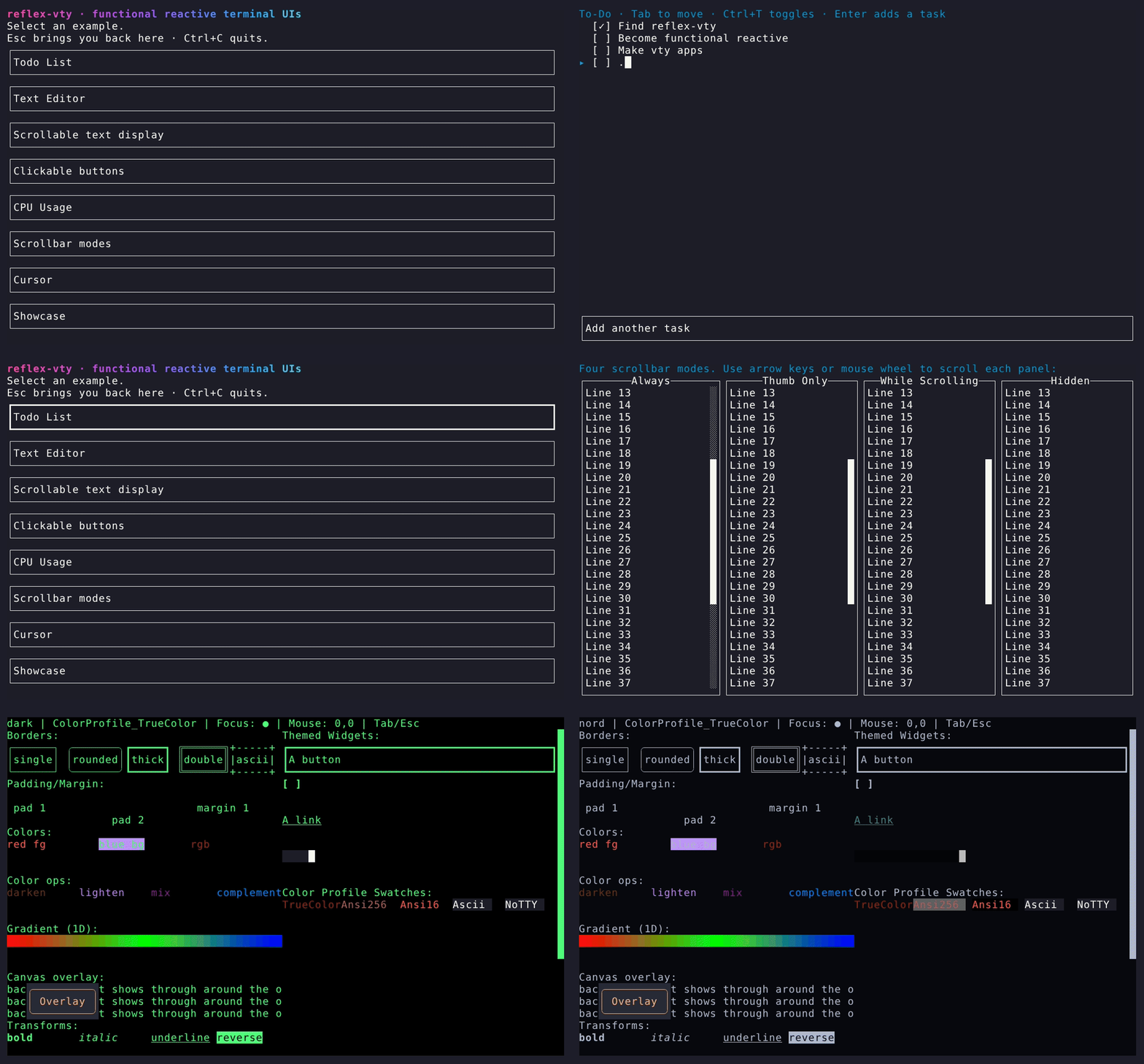
Run the bundled demo with cabal run example to see many of these in action: a text editor, a to-do list, scrollable text, clickable buttons, a live CPU-usage display with a true-color gradient bar, a scrollbar-modes demo, a terminal-cursor demo, and a little styling showcase featuring gradients, color operations, a canvas overlay, border presets, theming, and color-profile downsampling.
Example gallery
Each of these examples is a module in src-bin/Example/. You can run any of them with cabal run examples -- <name>.
spinner — an animated braille spinner |  |
progress — a gradient-filled progress bar |  |
stopwatch — a tick-driven count-up timer |  |
timer — a count-down timer |  |
textinput — a focused text-input field | 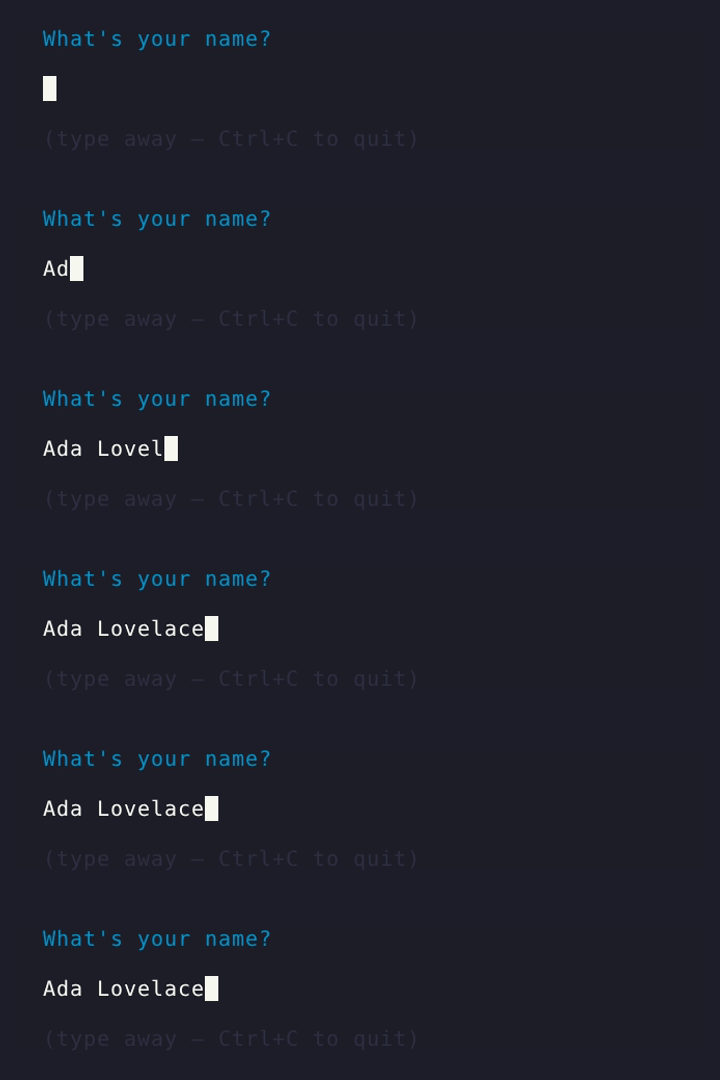 |
pager — a scrollable text viewport | 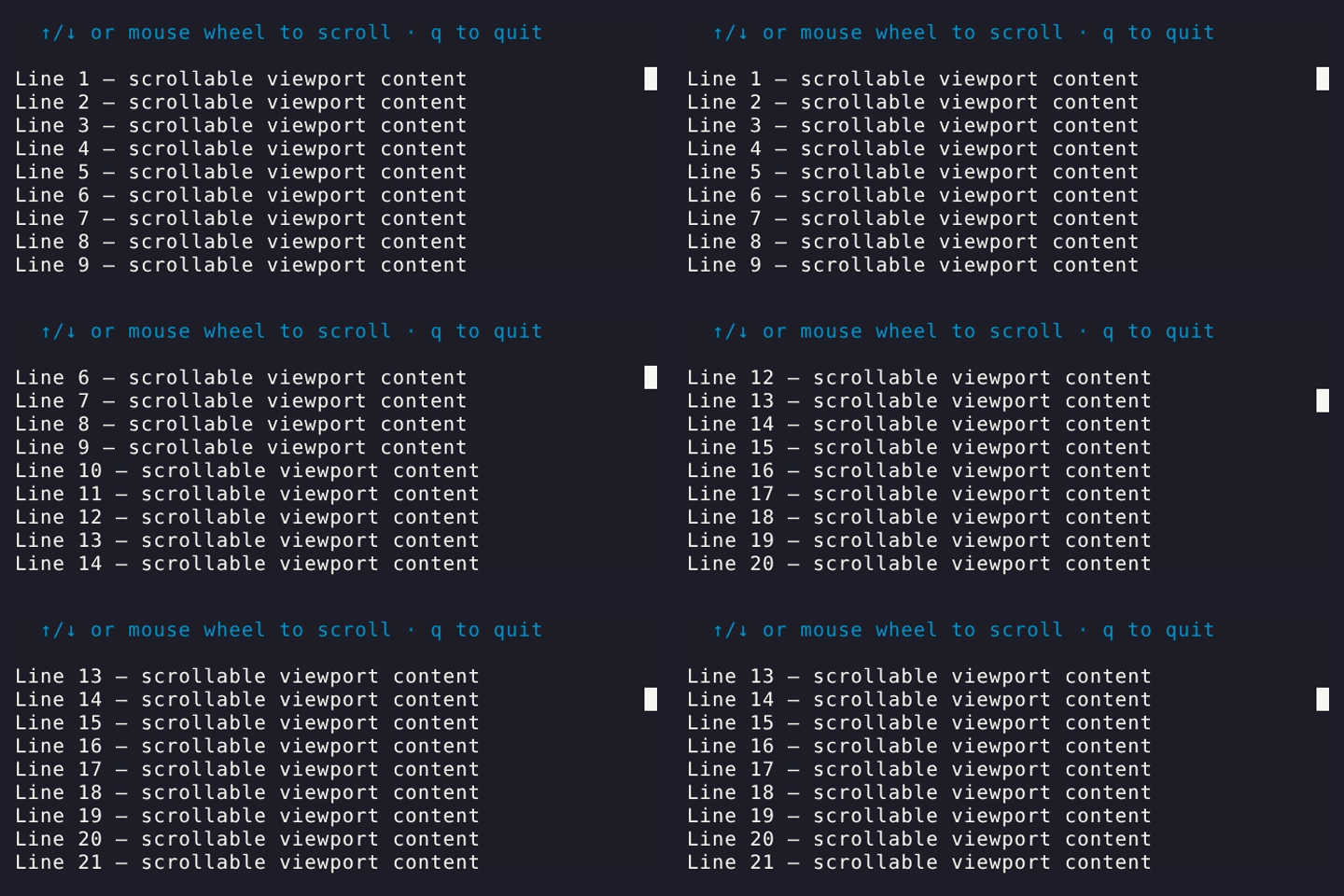 |
views — toggle between two views | 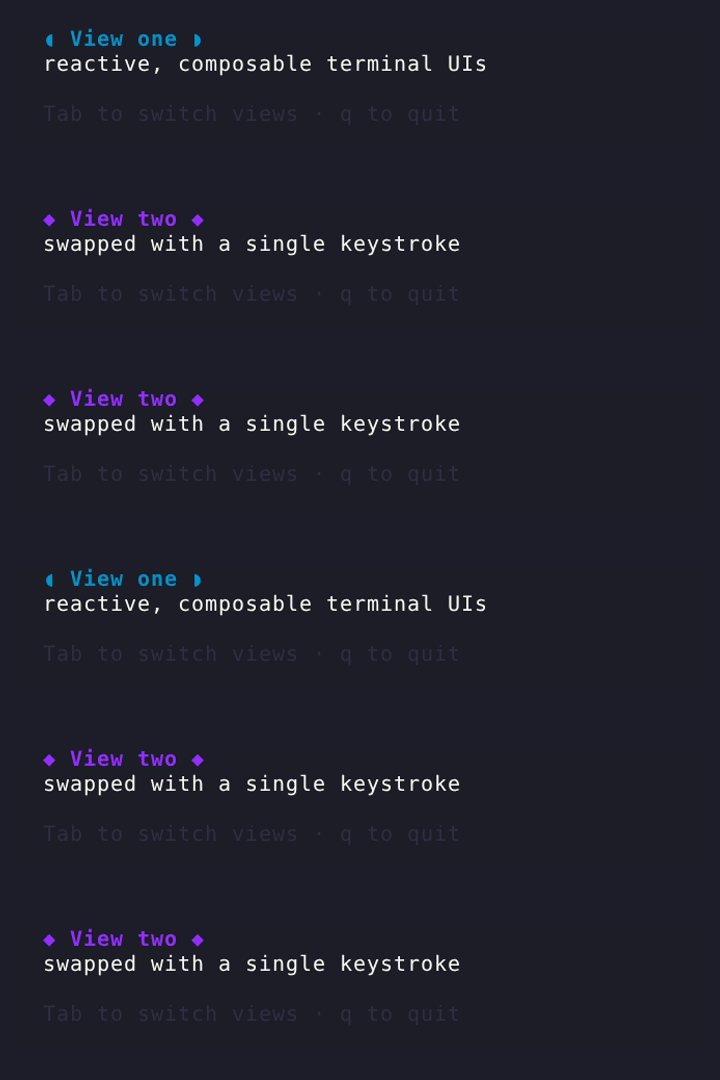 |
More demos: full-screen canvas animations (the classic Doom fire, a plasma field, a starfield, an animated splash) live on the examples page.
Feature requests, pull requests, and other feedback are welcome and appreciated (see the contribution guide).
How to Build
With reflex-platform
Prebuilt Nix dependencies are available from https://nixcache.reflex-frp.org. NixOS users can enable the cache by following the binary cache setup instructions.
Enter a nix-shell for the project:
git clone https://github.com/reflex-frp/reflex-vty.git
cd reflex-vty
nix-shell
From within the nix-shell you can:
- Run the example:
cabal run example - Load the library in the repl:
cabal repl reflex-vty - Build the example executable:
cabal build example - Build the docs:
cabal haddock - Run ghcid for immediate compiler feedback when you save a .hs file:
ghcid -c "cabal repl library:reflex-vty executable:example test:reflex-vty-test --ghc-options=-Wall" -o ghcid-output.txt - etc.
Selecting a compiler
nix-shell defaults to GHC 9.12. The compilers defined in release.nix are ghc98, ghc910, and ghc912. To enter a shell with one of them, pass it as the compiler argument:
nix-shell --argstr compiler ghc98
If you were previously building with a different compiler, you may need to run cabal clean first.
With cabal
Please see the tested-with field of the cabal file for known-compatible versions of GHC.
From the reflex-vty project directory:
# nix-shell -p cabal-install binutils icu # for nix users
cabal build          # to build the library, example, and test suite
cabal repl           # to enter a multi-repl covering all components
cabal repl example   # to enter a repl for the example executable only
About Obsidian Systems
reflex-vty is built and maintained by Obsidian Systems. We provide frontier engineering for high-assurance systems: we build production software in Haskell and Nix, and we're long-time stewards of open-source tooling like Obelisk, Reflex, and nix-thunk.
If you're working with Reflex, terminal or web UIs in Haskell, or Nix and want a partner to help design, build, or ship it, we'd love to hear from you.
- Website: https://obsidian.systems
- Blog: https://blog.obsidian.systems
- GitHub: https://github.com/obsidiansystems
License
reflex-vty is released under the BSD-3-Clause License, © 2018 Obsidian Systems LLC.
Contributors


Similar repos


Languages
Haskell
95.8%
Shell
2.2%
Nix
2.0%
Build terminal applications using functional reactive programming (FRP) with Reflex FRP.
See the codeREADME
reflex-vty
Build terminal user interfaces with functional reactive programming.
reflex-vty provides a Reflex FRP host and a library of reactive widgets for Vty terminal applications: layout, text input and editing, boxes, scrolling, mouse support, focus management, and theming.
A minimal app
{-# LANGUAGE OverloadedStrings #-}
module Main where

import Reflex.Vty

main :: IO ()
main = mainWidget def $ do
  text "Hello, reflex-vty! Press Ctrl+C to quit."
  ctrlc
mainWidget takes a VtyAppConfig (def for the defaults) and runs a widget until the Event t () it returns fires. Here that is ctrlc, which fires when the user presses Ctrl+C. Docs are available on Hackage.
Features
- Layout: arrange widgets into rows and columns (
tile/grout) with fixed or proportional (stretch) size constraints. - Focus: tab-cycling focus management across the focusable widgets in a layout (
tabNavigation). - Text: word-wrapped text display, rich text with per-span attributes, and single- or multi-line text input backed by a zipper that handles wide characters, tabs, and wrapping.
- Inputs: clickable buttons, hyperlinks, and checkboxes.
- Boxes: single, thick, double, rounded, ASCII, inner-half, and outer-half border styles, with optional titles and horizontal rules.
- Scrolling: scrollable containers with programmatic scrolling, auto-scroll-to-bottom mode, and a visual scrollbar with four visibility modes (always, thumb-only, while-scrolling, hidden).
- Split panes: fixed horizontal and vertical splits, plus a mouse-draggable splitter you can resize at runtime (
splitVDrag). - Mouse: button clicks, drags (with from/to/button/modifier tracking), scroll-wheel events, and last-known mouse-position tracking.
- Keyboard: individual key and key-combo events, plus input filtering.
- Runtime: alternate-screen mode, terminal cursor control (shape, visibility, and position), bracketed paste, terminal focus tracking, resize, and POSIX signal handling.
- Theming: a
Themerecord with presets (default, dark, charm, dracula, nord, zenburn, gruvbox). Widgets inherit the ambient theme and can override locally. - Declarative styling: Lip Gloss-inspired
Styletype with foreground/background colors, text attributes (bold/italic/underline/etc.), padding, margin, borders with per-side colors, width/height constraints, alignment, text transforms, tab expansion, inline mode, whitespace coloring, and border presets. - Color:
RGBcolor type, operations (darken,lighten,complementary,mix,alpha), and gradients (Gradient1D,Gradient2D). - Compositing:
Reflex.Vty.Canvasmodule with per-cell transparency for overlays and layered rendering. - Image composition:
joinHorizontal/joinVertical/placeutilities for composing rendered images. - Color profiles: automatic terminal color-capability detection (
TrueColor/Ansi256/Ansi16/Ascii/NoTTY) with downsampling.
Run the bundled demo with cabal run example to see many of these in action: a text editor, a to-do list, scrollable text, clickable buttons, a live CPU-usage display with a true-color gradient bar, a scrollbar-modes demo, a terminal-cursor demo, and a little styling showcase featuring gradients, color operations, a canvas overlay, border presets, theming, and color-profile downsampling.
Example gallery
Each of these examples is a module in src-bin/Example/. You can run any of them with cabal run examples -- <name>.
spinner — an animated braille spinner | |
progress — a gradient-filled progress bar | |
stopwatch — a tick-driven count-up timer | |
timer — a count-down timer | |
textinput — a focused text-input field | |
pager — a scrollable text viewport | |
views — toggle between two views | |
More demos: full-screen canvas animations (the classic Doom fire, a plasma field, a starfield, an animated splash) live on the examples page.
Feature requests, pull requests, and other feedback are welcome and appreciated (see the contribution guide).
How to Build
With reflex-platform
Prebuilt Nix dependencies are available from https://nixcache.reflex-frp.org. NixOS users can enable the cache by following the binary cache setup instructions.
Enter a nix-shell for the project:
git clone https://github.com/reflex-frp/reflex-vty.git
cd reflex-vty
nix-shell
From within the nix-shell you can:
- Run the example:
cabal run example - Load the library in the repl:
cabal repl reflex-vty - Build the example executable:
cabal build example - Build the docs:
cabal haddock - Run ghcid for immediate compiler feedback when you save a .hs file:
ghcid -c "cabal repl library:reflex-vty executable:example test:reflex-vty-test --ghc-options=-Wall" -o ghcid-output.txt - etc.
Selecting a compiler
nix-shell defaults to GHC 9.12. The compilers defined in release.nix are ghc98, ghc910, and ghc912. To enter a shell with one of them, pass it as the compiler argument:
nix-shell --argstr compiler ghc98
If you were previously building with a different compiler, you may need to run cabal clean first.
With cabal
Please see the tested-with field of the cabal file for known-compatible versions of GHC.
From the reflex-vty project directory:
# nix-shell -p cabal-install binutils icu # for nix users
cabal build          # to build the library, example, and test suite
cabal repl           # to enter a multi-repl covering all components
cabal repl example   # to enter a repl for the example executable only
About Obsidian Systems
reflex-vty is built and maintained by Obsidian Systems. We provide frontier engineering for high-assurance systems: we build production software in Haskell and Nix, and we're long-time stewards of open-source tooling like Obelisk, Reflex, and nix-thunk.
If you're working with Reflex, terminal or web UIs in Haskell, or Nix and want a partner to help design, build, or ship it, we'd love to hear from you.
- Website: https://obsidian.systems
- Blog: https://blog.obsidian.systems
- GitHub: https://github.com/obsidiansystems
License
reflex-vty is released under the BSD-3-Clause License, © 2018 Obsidian Systems LLC.
Similar repos
Contributors
Languages
Haskell
95.8%
Shell
2.2%
Nix
2.0%