
README
M2F: Automated Formalization of Mathematical Literature at Scale
M2F (Math-to-Formal) is a framework for translating textbook- and paper-level mathematics into Lean projects that pass machine verification at scale.
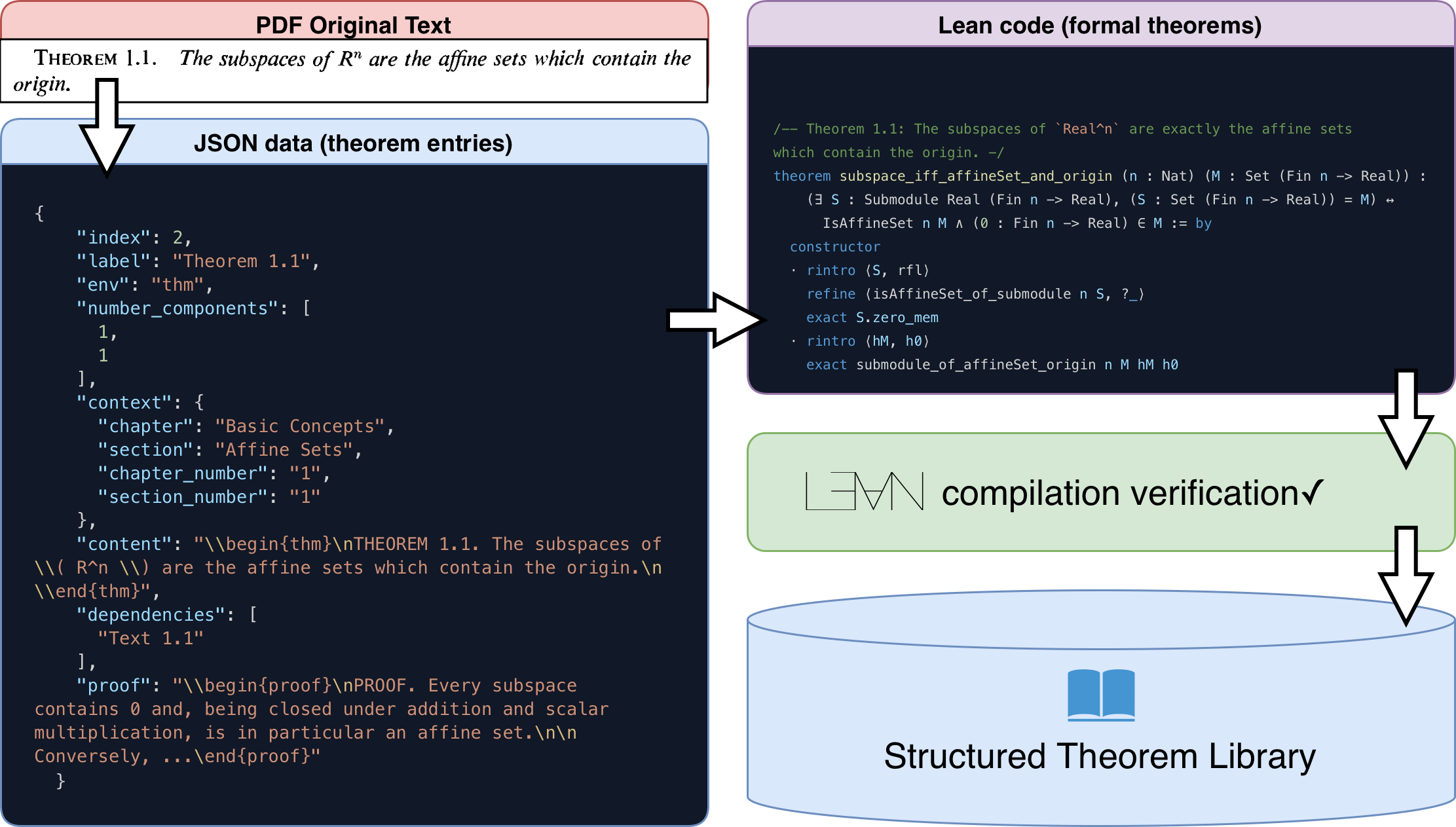 Figure 1. High-level overview of M2F and its staged formalization process.
Overview
M2F addresses a central bottleneck in machine-assisted mathematics: the transition from isolated theorem proving to document-level formalization. The framework decomposes this process into two stages. In Stage 1, informal mathematical statements are translated into Lean declaration skeletons, while structural inconsistencies are detected and repaired. In Stage 2, the statement signatures are fixed, allowing the system to focus on proof completion through iterative, verifier-guided repair. This staged design enhances robustness and interpretability while substantially improving end-to-end compilation and verification rates.
Try Quokka (https://quokka.reaslab.io/), our publicly available automated formalization system. Quokka can automatically transform long-form mathematical literature into compilable Lean 4 projects containing formally verified statements and proofs.
At a Glance
| Item | Value |
|---|---|
| Long-document corpus scale: real analysis, convex analysis | 479 pages |
| Generated Lean project size | 153,853 lines of Lean code |
| Benchmark | FATE-H (100 problems) |
| Fully automatic setting | 96% PSR |
| Light supervision (+31 declaration lemma map) | 97% PSR |
| Stage 2 on matched statements (long-document setting) | 100% PSR |
Method
Stage 1: Statement Compilation
- Converts informal mathematical statements into Lean declaration skeletons.
- Repairs namespace, type, and signature consistency to ensure project-level validity.
- Allows temporary proof holes to maximize structural coverage before proof repair.
Stage 2: Proof Repair
- Freezes statement signatures to prevent target drift.
- Iteratively closes proof holes with verifier feedback.
- Optimizes proof success under fixed declarations for reliable end-to-end checking.
End-to-End System Figure
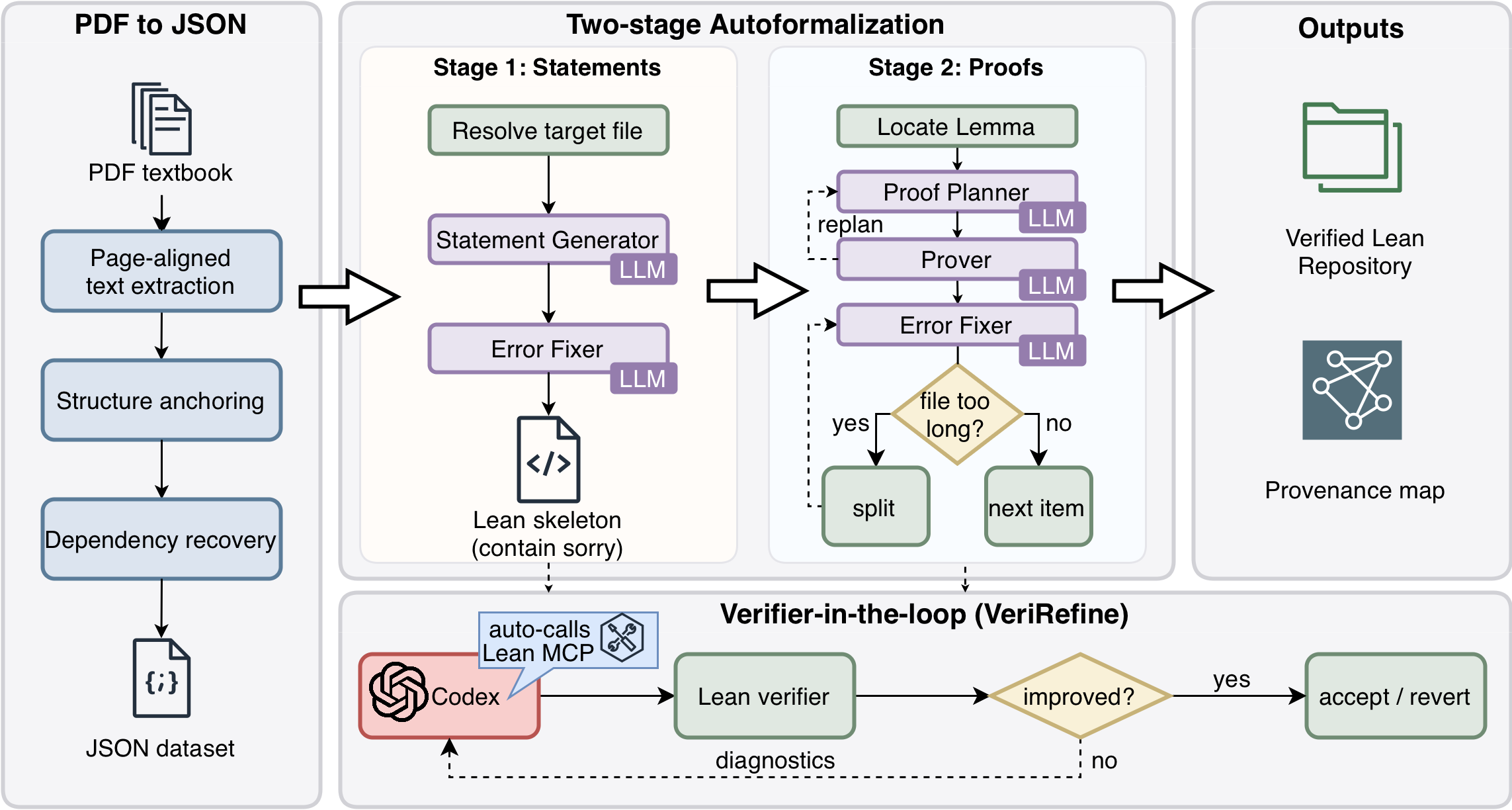 Figure 2. End-to-end architecture for document-level formalization with M2F.
Experimental Scope
- Cross-prover benchmark: FATE-H for direct and reproducible comparison of pass rates.
- Long-document setting: large mathematical sources translated into executable Lean projects.
- Core metrics: Pass Success Rate (PSR), verifier-call efficiency, and verifier-normalized cost.
Involvement of Human Experts:
- Checking whether the natural-language theorems extracted from the LaTeX source align with the original text.
- Verifying that the formalized statements correctly match their natural-language counterparts.
Formalized Sources: ReasBook
Books
- R. Tyrrell Rockafellar, Convex Analysis, Princeton University Press, Princeton, 1970, ISBN 0-691-08069-0.
- Jiri Lebl, Introduction to Real Analysis, Volume I, version 6.2, May 23, 2025.
- ...
Paper
- Yurii Nesterov, "Smooth minimization of non-smooth functions," Mathematical Programming, Series A 103, 127-152, 2005, DOI: 10.1007/s10107-004-0552-5.
- ...
Example Demonstration
An end-to-end sample is provided in example/ based on Section 1 (Affine Sets) of Rockafellar's convex analysis. The workflow in this example is:
PDF source -> structured JSON -> Lean formalization.
- Structured source input (extracted from PDF):
example/section01.json - Generated Lean files:
example/Rockafellar_convex_analysis_section01/section01_part1.lean,example/Rockafellar_convex_analysis_section01/section01_part2.lean,example/Rockafellar_convex_analysis_section01/section01_part3.lean,example/Rockafellar_convex_analysis_section01/section01_part4.lean - Merged entry file:
example/Rockafellar_convex_analysis_section01/section01.lean - Examples of projects generated by M2F:
optsuite/ReasBook
This example explicitly starts from PDF parsing output (section01.json) and then performs formalization from JSON to machine-checkable Lean code.
Result Highlights
Long-Document (Book) Extraction Summary
Table 1. Book-level extraction and formalization summary (long-document setting).
| Item | Value |
|---|---|
| Source domain | Textbook- and paper-level mathematical documents |
| Extraction/formalization pipeline | PDF source -> structured JSON -> Lean formalization |
| Long-document corpus scale | 479 pages |
| Generated Lean project size | 153,853 lines of Lean code |
| Stage 2 on matched statements | 100% PSR |
FATE-H Across Provers (PSR)
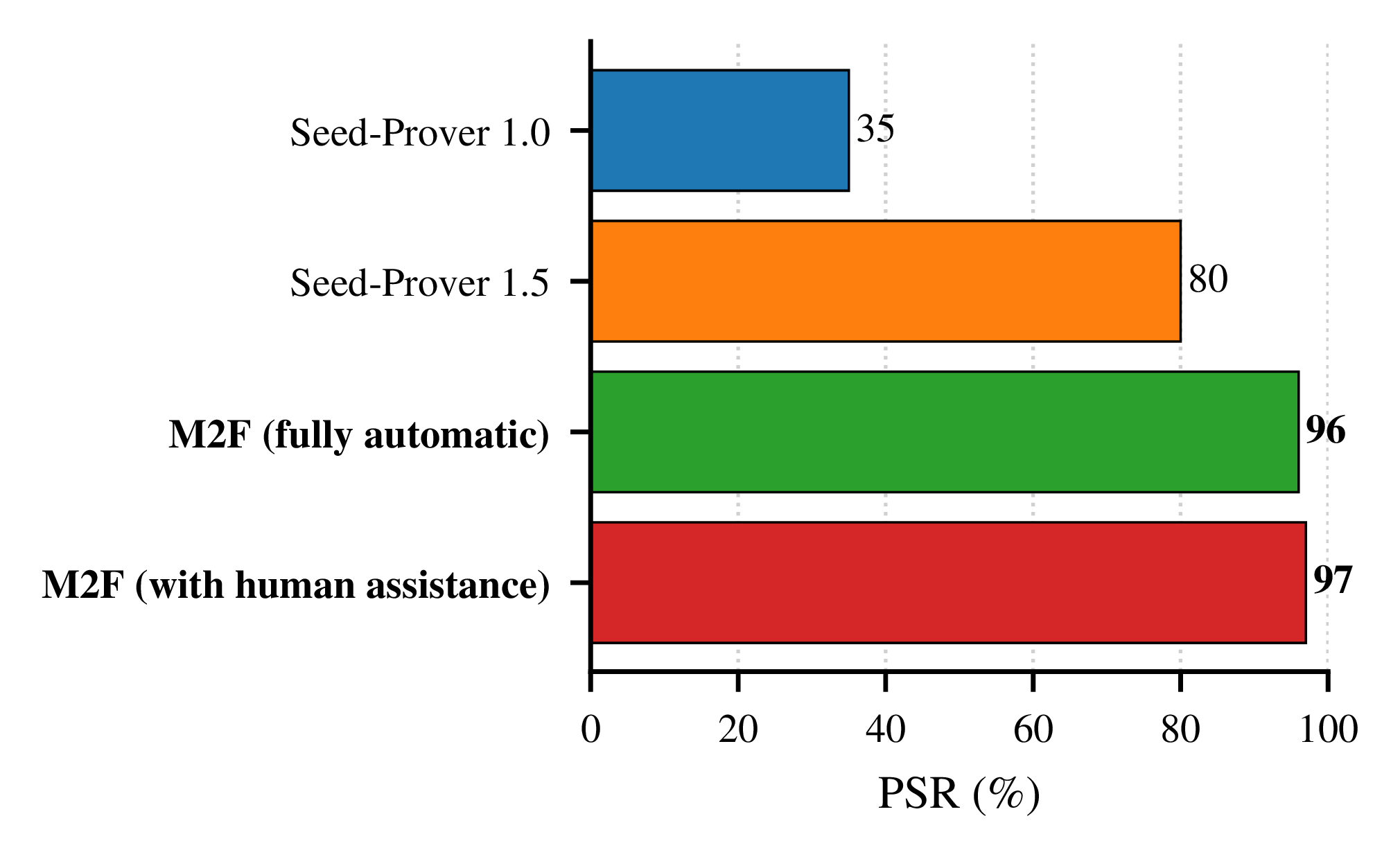 Figure 4. Pass Success Rate (PSR) comparison across provers on FATE-H.
PDF version
Figure 4. Pass Success Rate (PSR) comparison across provers on FATE-H.
PDF version
Table 2. M2F summary results on FATE-H and matched-statement settings.
| Condition | PSR |
|---|---|
| Fully automatic | 96% |
| +31 declaration lemma map | 97% |
| Stage 2 (matched statements) | 100% |
FATE-H Length and Outcomes
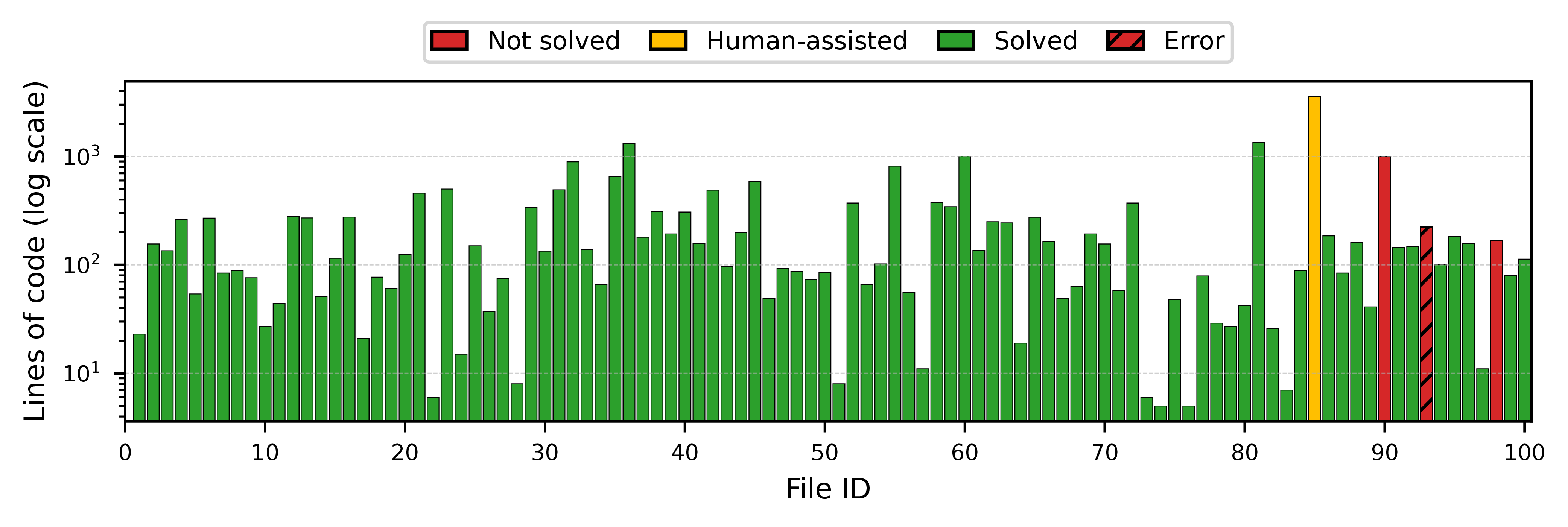 Figure 5. Per-problem proof length and verification outcomes on FATE-H.
PDF version
Figure 5. Per-problem proof length and verification outcomes on FATE-H.
PDF version
Alignment Analysis
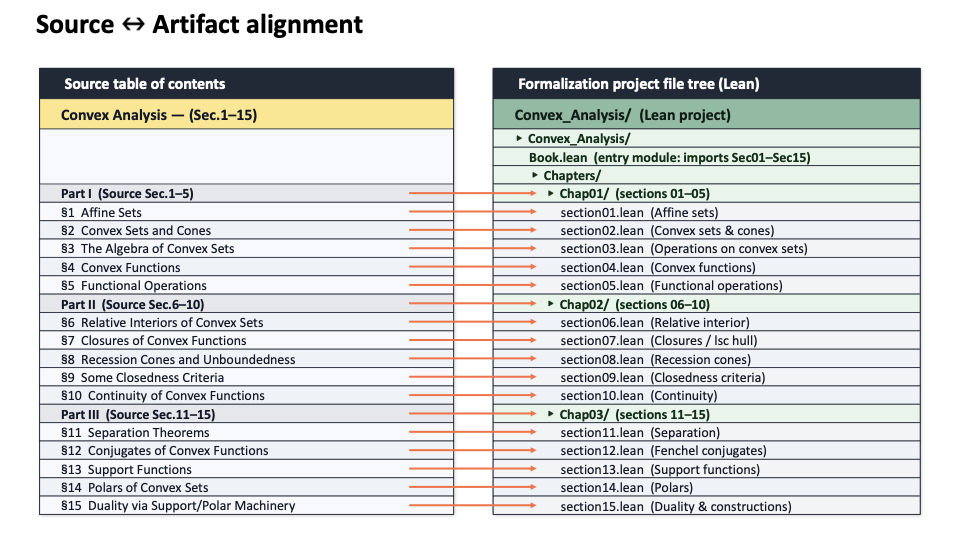 Figure 6. Alignment behavior analysis under the convex setting.
Key Takeaways
- A staged compilation-repair pipeline scales formalization beyond isolated theorem tasks.
- M2F achieves strong fully automatic performance and further improves with lightweight supervision.
- Document-level formalization can reach high verifier pass rates under controlled, reproducible workflows.
Contact
We hope that the package is useful for your application. If you have any bug reports or comments, please feel free to email one of the authors:
- Zichen Wang, zichenwang25 at stu.pku.edu.cn
- Wanli Ma, wlma at pku.edu.cn
- Kun Yuan, kunyuan at pku.edu.cn
- Zaiwen Wen, wenzw at pku.edu.cn
Reference
Citation
@article{wang2026m2f,
  title   = {M2F: Automated Formalization of Mathematical Literature at Scale},
  author  = {Zichen Wang and Wanli Ma and Zhenyu Ming and Gong Zhang and Kun Yuan and Zaiwen Wen},
  journal = {arXiv preprint arXiv:2602.17016},
  year    = {2026}
}
License
This repository is released under the CC BY-NC 4.0 license
(Creative Commons Attribution-NonCommercial 4.0 International).
See the full terms in LICENSE.


Similar repos





Languages
Lean
100.0%
README
M2F: Automated Formalization of Mathematical Literature at Scale
M2F (Math-to-Formal) is a framework for translating textbook- and paper-level mathematics into Lean projects that pass machine verification at scale.
Figure 1. High-level overview of M2F and its staged formalization process.
Overview
M2F addresses a central bottleneck in machine-assisted mathematics: the transition from isolated theorem proving to document-level formalization. The framework decomposes this process into two stages. In Stage 1, informal mathematical statements are translated into Lean declaration skeletons, while structural inconsistencies are detected and repaired. In Stage 2, the statement signatures are fixed, allowing the system to focus on proof completion through iterative, verifier-guided repair. This staged design enhances robustness and interpretability while substantially improving end-to-end compilation and verification rates.
Try Quokka (https://quokka.reaslab.io/), our publicly available automated formalization system. Quokka can automatically transform long-form mathematical literature into compilable Lean 4 projects containing formally verified statements and proofs.
At a Glance
| Item | Value |
|---|---|
| Long-document corpus scale: real analysis, convex analysis | 479 pages |
| Generated Lean project size | 153,853 lines of Lean code |
| Benchmark | FATE-H (100 problems) |
| Fully automatic setting | 96% PSR |
| Light supervision (+31 declaration lemma map) | 97% PSR |
| Stage 2 on matched statements (long-document setting) | 100% PSR |
Method
Stage 1: Statement Compilation
- Converts informal mathematical statements into Lean declaration skeletons.
- Repairs namespace, type, and signature consistency to ensure project-level validity.
- Allows temporary proof holes to maximize structural coverage before proof repair.
Stage 2: Proof Repair
- Freezes statement signatures to prevent target drift.
- Iteratively closes proof holes with verifier feedback.
- Optimizes proof success under fixed declarations for reliable end-to-end checking.
End-to-End System Figure
Figure 2. End-to-end architecture for document-level formalization with M2F.
Experimental Scope
- Cross-prover benchmark: FATE-H for direct and reproducible comparison of pass rates.
- Long-document setting: large mathematical sources translated into executable Lean projects.
- Core metrics: Pass Success Rate (PSR), verifier-call efficiency, and verifier-normalized cost.
Involvement of Human Experts:
- Checking whether the natural-language theorems extracted from the LaTeX source align with the original text.
- Verifying that the formalized statements correctly match their natural-language counterparts.
Formalized Sources: ReasBook
Books
- R. Tyrrell Rockafellar, Convex Analysis, Princeton University Press, Princeton, 1970, ISBN 0-691-08069-0.
- Jiri Lebl, Introduction to Real Analysis, Volume I, version 6.2, May 23, 2025.
- ...
Paper
- Yurii Nesterov, "Smooth minimization of non-smooth functions," Mathematical Programming, Series A 103, 127-152, 2005, DOI: 10.1007/s10107-004-0552-5.
- ...
Example Demonstration
An end-to-end sample is provided in example/ based on Section 1 (Affine Sets) of Rockafellar's convex analysis. The workflow in this example is:
PDF source -> structured JSON -> Lean formalization.
- Structured source input (extracted from PDF):
example/section01.json - Generated Lean files:
example/Rockafellar_convex_analysis_section01/section01_part1.lean,example/Rockafellar_convex_analysis_section01/section01_part2.lean,example/Rockafellar_convex_analysis_section01/section01_part3.lean,example/Rockafellar_convex_analysis_section01/section01_part4.lean - Merged entry file:
example/Rockafellar_convex_analysis_section01/section01.lean - Examples of projects generated by M2F:
optsuite/ReasBook
This example explicitly starts from PDF parsing output (section01.json) and then performs formalization from JSON to machine-checkable Lean code.
Result Highlights
Long-Document (Book) Extraction Summary
Table 1. Book-level extraction and formalization summary (long-document setting).
| Item | Value |
|---|---|
| Source domain | Textbook- and paper-level mathematical documents |
| Extraction/formalization pipeline | PDF source -> structured JSON -> Lean formalization |
| Long-document corpus scale | 479 pages |
| Generated Lean project size | 153,853 lines of Lean code |
| Stage 2 on matched statements | 100% PSR |
FATE-H Across Provers (PSR)
Figure 4. Pass Success Rate (PSR) comparison across provers on FATE-H.
PDF version
Table 2. M2F summary results on FATE-H and matched-statement settings.
| Condition | PSR |
|---|---|
| Fully automatic | 96% |
| +31 declaration lemma map | 97% |
| Stage 2 (matched statements) | 100% |
FATE-H Length and Outcomes
Figure 5. Per-problem proof length and verification outcomes on FATE-H.
PDF version
Alignment Analysis
Figure 6. Alignment behavior analysis under the convex setting.
Key Takeaways
- A staged compilation-repair pipeline scales formalization beyond isolated theorem tasks.
- M2F achieves strong fully automatic performance and further improves with lightweight supervision.
- Document-level formalization can reach high verifier pass rates under controlled, reproducible workflows.
Contact
We hope that the package is useful for your application. If you have any bug reports or comments, please feel free to email one of the authors:
- Zichen Wang, zichenwang25 at stu.pku.edu.cn
- Wanli Ma, wlma at pku.edu.cn
- Kun Yuan, kunyuan at pku.edu.cn
- Zaiwen Wen, wenzw at pku.edu.cn
Reference
Citation
@article{wang2026m2f,
  title   = {M2F: Automated Formalization of Mathematical Literature at Scale},
  author  = {Zichen Wang and Wanli Ma and Zhenyu Ming and Gong Zhang and Kun Yuan and Zaiwen Wen},
  journal = {arXiv preprint arXiv:2602.17016},
  year    = {2026}
}
License
This repository is released under the CC BY-NC 4.0 license
(Creative Commons Attribution-NonCommercial 4.0 International).
See the full terms in LICENSE.
Similar repos
Languages
Lean
100.0%