Entwicklung eines Webinterfaces für generative neuronale Netze im Bereich des Protein Designs
TypeScript
1
609 commits
updated Mar 9, 2026
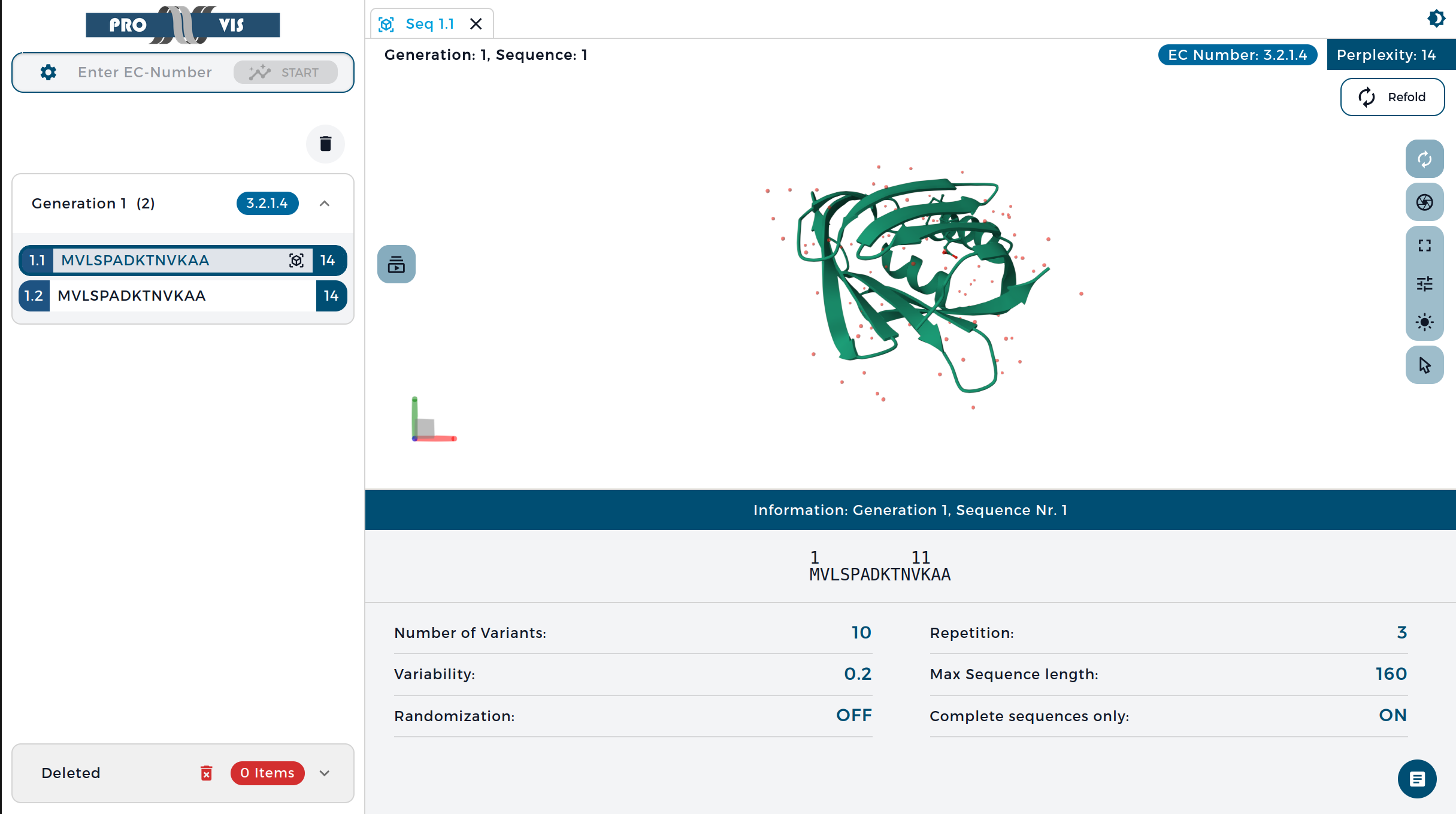
A modular, web-based platform for generating, analyzing, and visualizing synthetic protein sequences and structures using:
Developed in collaboration with the Self-Organizing Systems (SOS) Lab, TU Darmstadt.
This project provides an intuitive graphical user interface (GUI) for:
The software is designed for research usage, particularly in synthetic biology and protein engineering, and is intended to be published as open source for the scientific community.
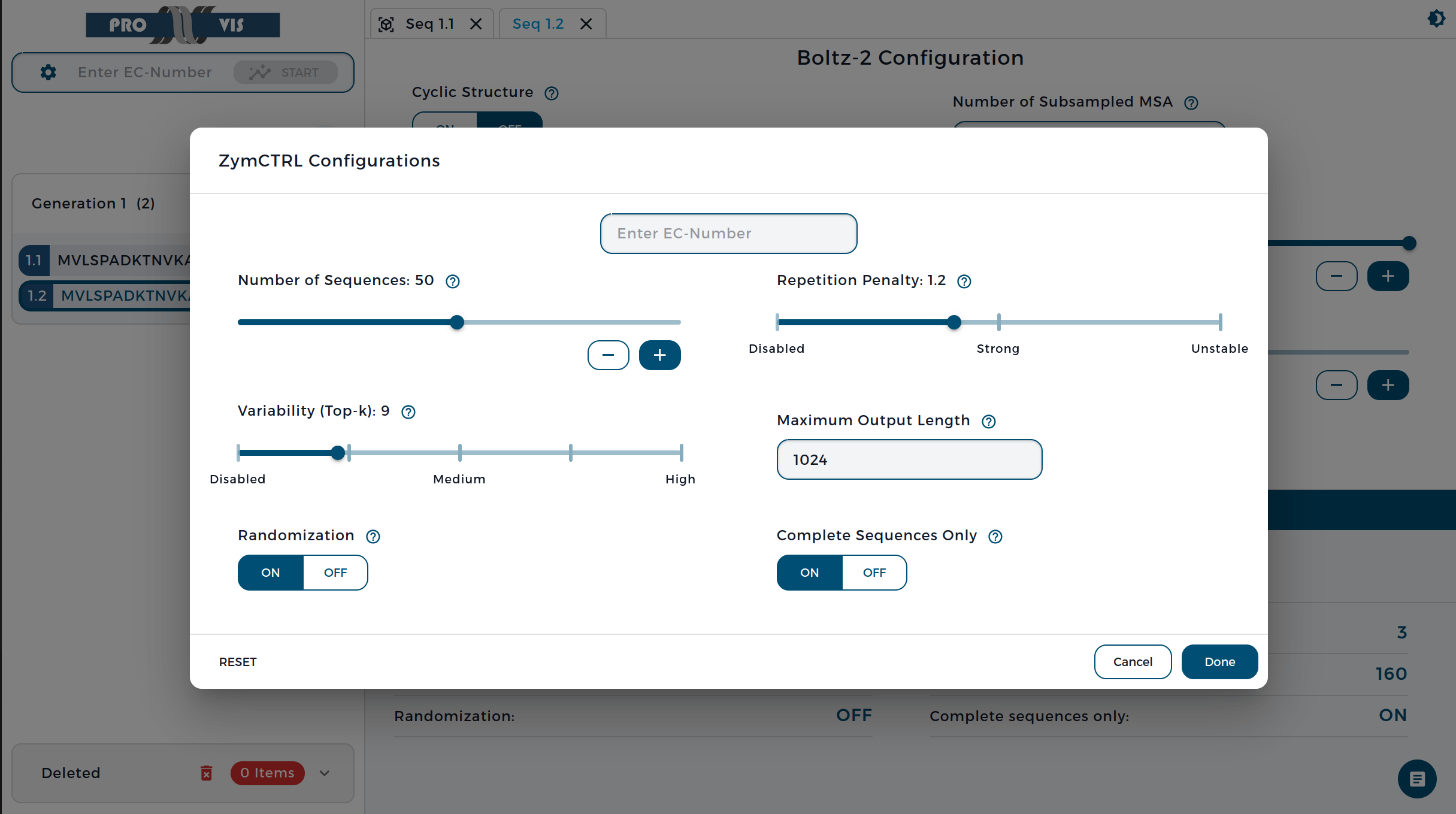
Interface for generating synthetic protein sequences using the ZymCTRL model.
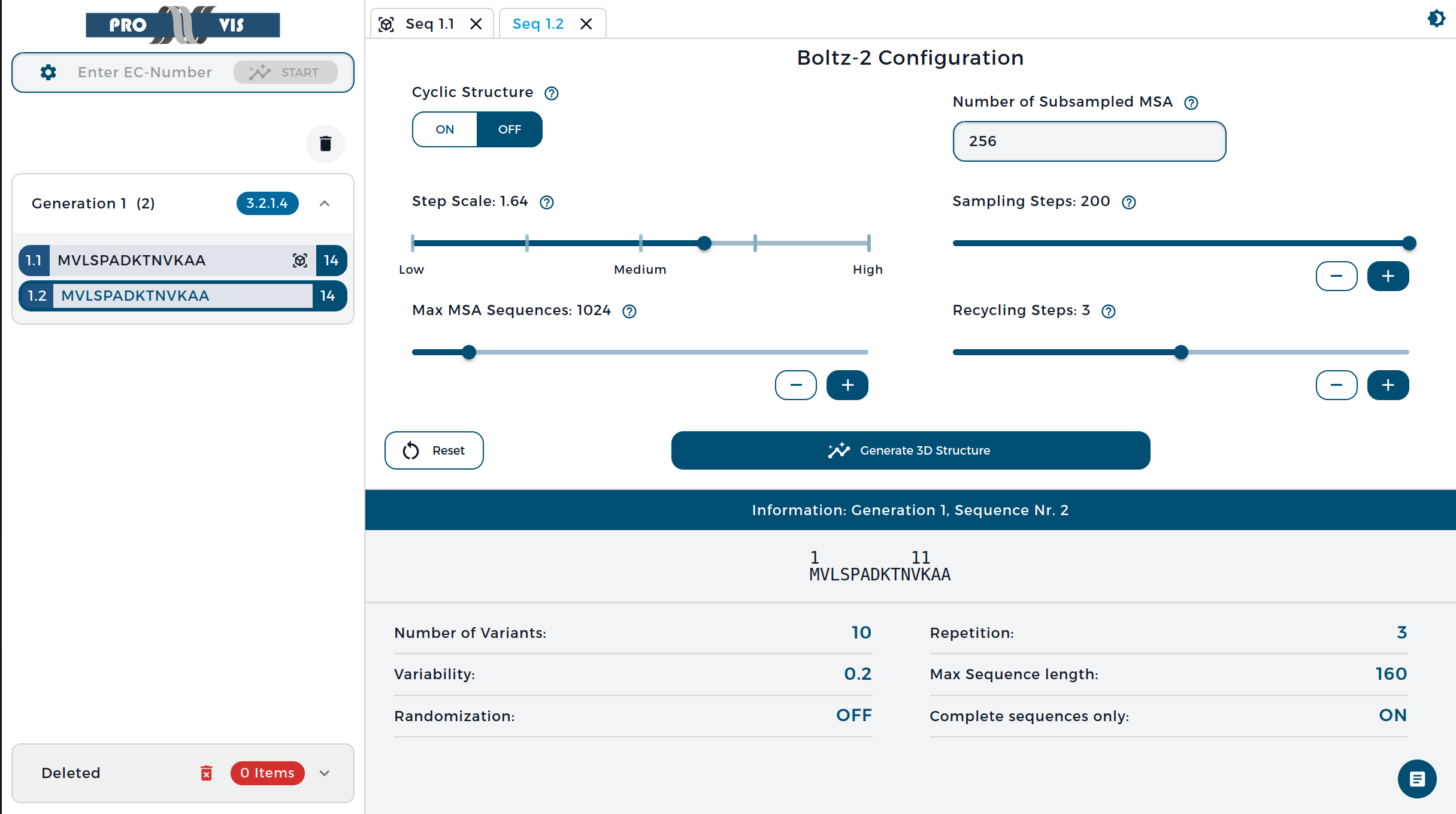
Predicted 3D structures from the Boltz-2 model displayed in an interactive viewer.
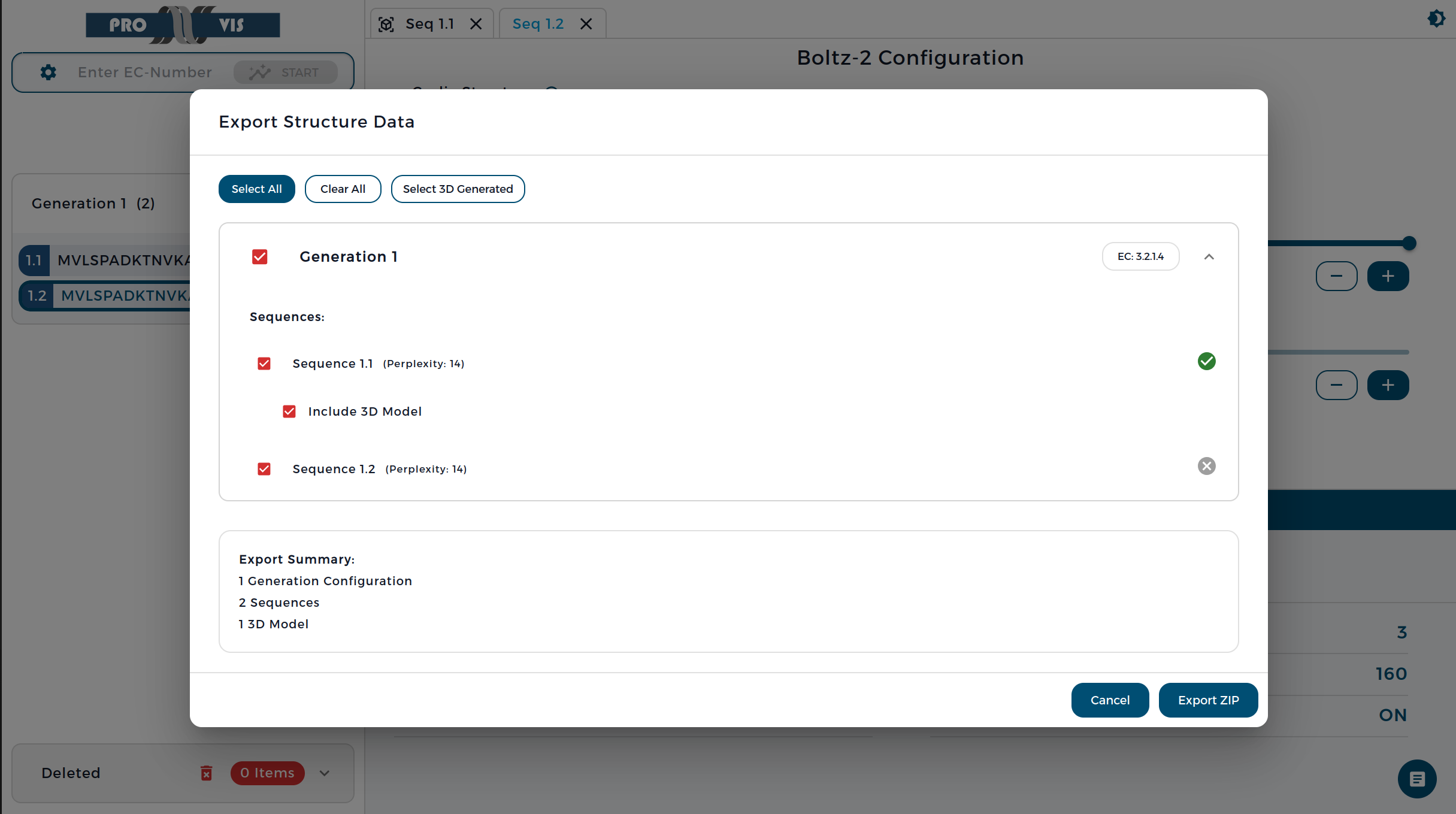
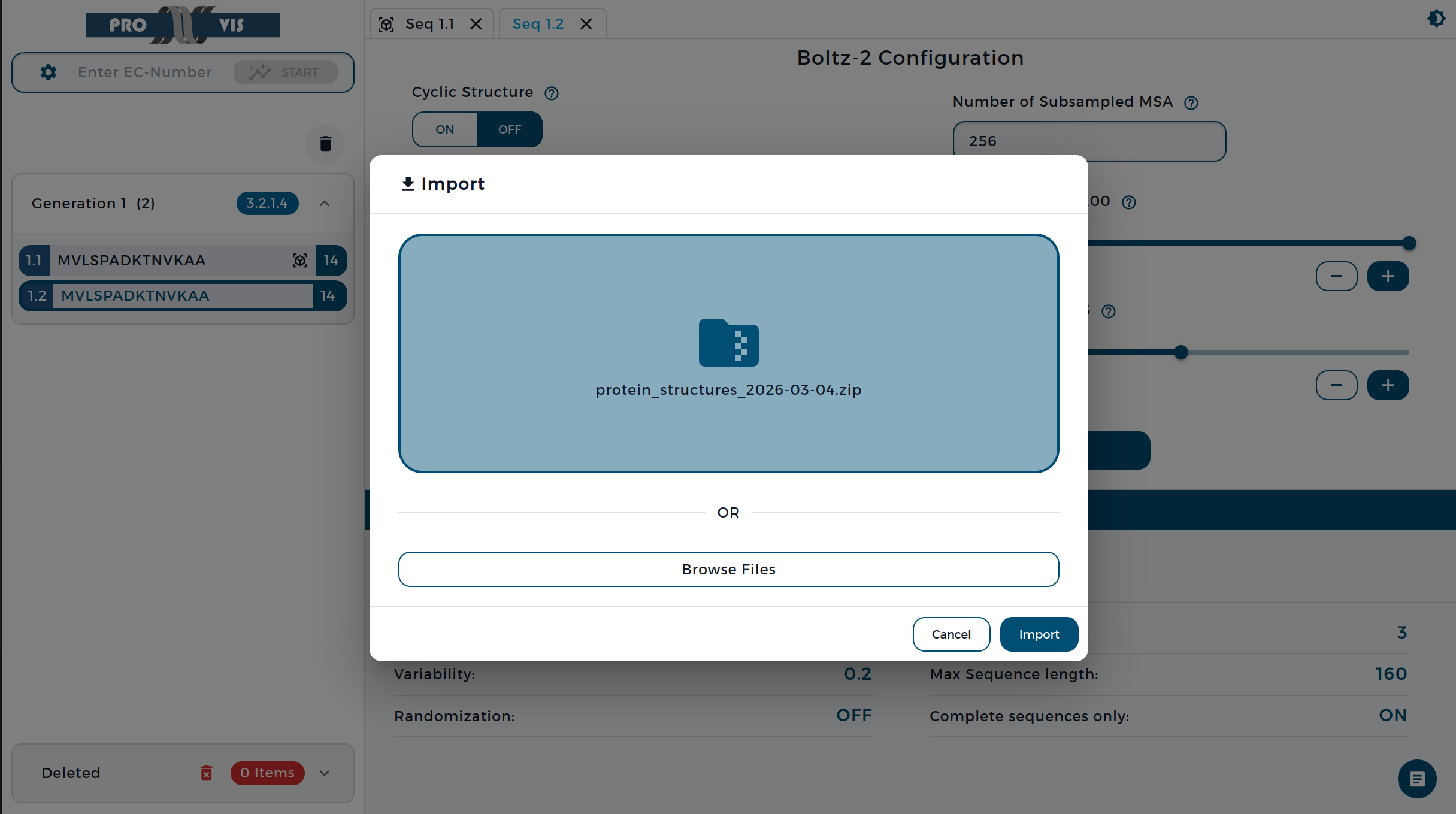
Export, Import and manage full protein design sessions directly from the UI.
.
├── backend/        # Django API, worker runtime, model invocation
├── frontend/       # Next.js UI
├── scripts/        # runtime config + node/yarn setup helpers
├── config.json     # ports/bind host configuration
├── start.sh        # full bootstrap + production startup (screen)
└── stop.sh         # stop screen + kill Gunicorn fallback
For running the project on a server with sufficient GPU ressources use:
git clone https://github.com/nxlrth/DELIVERY_Webinterfaces-fuer-generative-neuronale-Netze.git
cd DELIVERY_Webinterfaces-fuer-generative-neuronale-Netze
./start.sh
Stop everything:
./stop.sh
Attach to the running screen session:
screen -r webinterface
Detach from screen: Ctrl+A, then D.
Switch between screen windows: Ctrl+A, then Shift+2
start.sh doesstart.sh is not a lightweight launcher. It bootstraps and starts the full stack:
nvm + corepack) if needed~/miniconda3backendProVis (Python 3.10)python backend/worker/downloadModel.pyyarn build)screen session webinterfaceFirst run can take a long time (downloads + build + model setup).
Runtime defaults are read from config.json:
{
  "backend": { "bind_host": "0.0.0.0", "bind_port": 8000 },
  "frontend": { "host": "0.0.0.0", "port": 3000 }
}
backend/README.mdfrontend/README.mdfrontend/app/theme_README.mdfrontend/app/utils/ImportExportReadMe.mdAmin Al-Khatib
Oswin Bartels
Maxine Konz
Niklas Roth
David Schwab
This project is licensed under the MIT License. See the LICENSE file for details.
TU Darmstadt – Self-Organizing Systems Lab March 2026
Entwicklung eines Webinterfaces für generative neuronale Netze im Bereich des Protein Designs
TypeScript
1
609 commits
updated Mar 9, 2026
A modular, web-based platform for generating, analyzing, and visualizing synthetic protein sequences and structures using:
Developed in collaboration with the Self-Organizing Systems (SOS) Lab, TU Darmstadt.
This project provides an intuitive graphical user interface (GUI) for:
The software is designed for research usage, particularly in synthetic biology and protein engineering, and is intended to be published as open source for the scientific community.
Interface for generating synthetic protein sequences using the ZymCTRL model.
Predicted 3D structures from the Boltz-2 model displayed in an interactive viewer.
Export, Import and manage full protein design sessions directly from the UI.
.
├── backend/        # Django API, worker runtime, model invocation
├── frontend/       # Next.js UI
├── scripts/        # runtime config + node/yarn setup helpers
├── config.json     # ports/bind host configuration
├── start.sh        # full bootstrap + production startup (screen)
└── stop.sh         # stop screen + kill Gunicorn fallback
For running the project on a server with sufficient GPU ressources use:
git clone https://github.com/nxlrth/DELIVERY_Webinterfaces-fuer-generative-neuronale-Netze.git
cd DELIVERY_Webinterfaces-fuer-generative-neuronale-Netze
./start.sh
Stop everything:
./stop.sh
Attach to the running screen session:
screen -r webinterface
Detach from screen: Ctrl+A, then D.
Switch between screen windows: Ctrl+A, then Shift+2
start.sh doesstart.sh is not a lightweight launcher. It bootstraps and starts the full stack:
nvm + corepack) if needed~/miniconda3backendProVis (Python 3.10)python backend/worker/downloadModel.pyyarn build)screen session webinterfaceFirst run can take a long time (downloads + build + model setup).
Runtime defaults are read from config.json:
{
  "backend": { "bind_host": "0.0.0.0", "bind_port": 8000 },
  "frontend": { "host": "0.0.0.0", "port": 3000 }
}
backend/README.mdfrontend/README.mdfrontend/app/theme_README.mdfrontend/app/utils/ImportExportReadMe.mdAmin Al-Khatib
Oswin Bartels
Maxine Konz
Niklas Roth
David Schwab
This project is licensed under the MIT License. See the LICENSE file for details.
TU Darmstadt – Self-Organizing Systems Lab March 2026



