Training framework for retrieval models with LLM-generated labels
Python
0
39 commits
updated Aug 19, 2025
A modular training framework for retrieval models that trains on real-valued labels derived from downstream LLM performance rather than binary human annotations.
Most retrieval models are created by fine-tuning on standard retrieval datasets like MS MARCO, which contain question-answer pairs with context passages labeled by humans as relevant or irrelevant. This traditional approach relies on binary relevance labels that are often noisy and reflect human biases about what constitutes useful context. But what we actually care about is: does the retrieved context help a downstream LLM generate better answers?
This framework addresses this by:
The goal is to directly optimize for downstream performance rather than proxy metrics, testing whether this approach produces better retrieval models for LLM-assisted question answering.
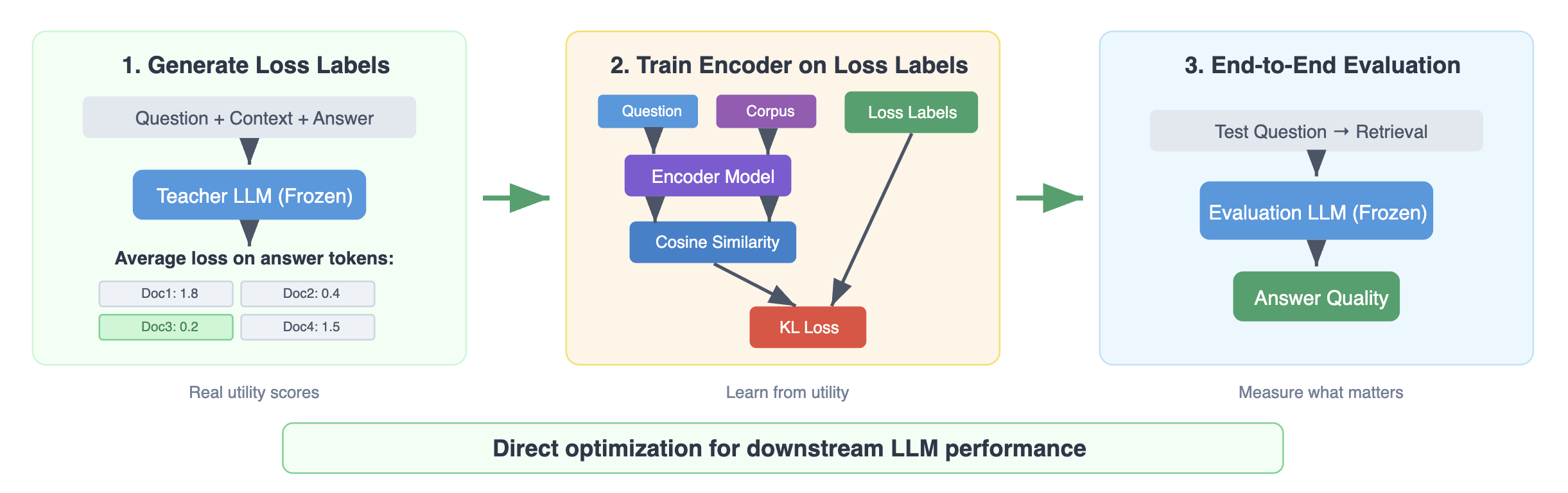 Figure 1: Overview of the bitter retrieval training methodology
| Model | Training Method | Answer Accuracy ↑ | Retrieval Accuracy |
|---|---|---|---|
| BERT Base | Standard InfoNCE | 45.8% | 30.4% |
| BERT Base | Soft Labels (Ours) | 47.0% ✅ | 29.6% |
| Nomic Embed | Standard InfoNCE | 47.6% | 40.0% |
| Nomic Embed | Soft Labels (Ours) | 47.8% ✅ | 33.6% |
(Nomic Embed trained with Qwen-generated labels → Llama 3.1-8B evaluation)
| Training Method | Answer Accuracy ↑ | Retrieval Accuracy |
|---|---|---|
| Standard InfoNCE | 33.8% | 38.2% |
| Soft Labels (Ours) | 37.6% ✅ | 33.6% |
(BERT trained with Llama-generated labels → Qwen 3 8B evaluation)
| Training Method | Answer Accuracy ↑ | Retrieval Accuracy |
|---|---|---|
| Standard InfoNCE | 46.4% | 31.8% |
| Soft Labels (Ours) | 47.8% ✅ | 28.2% |
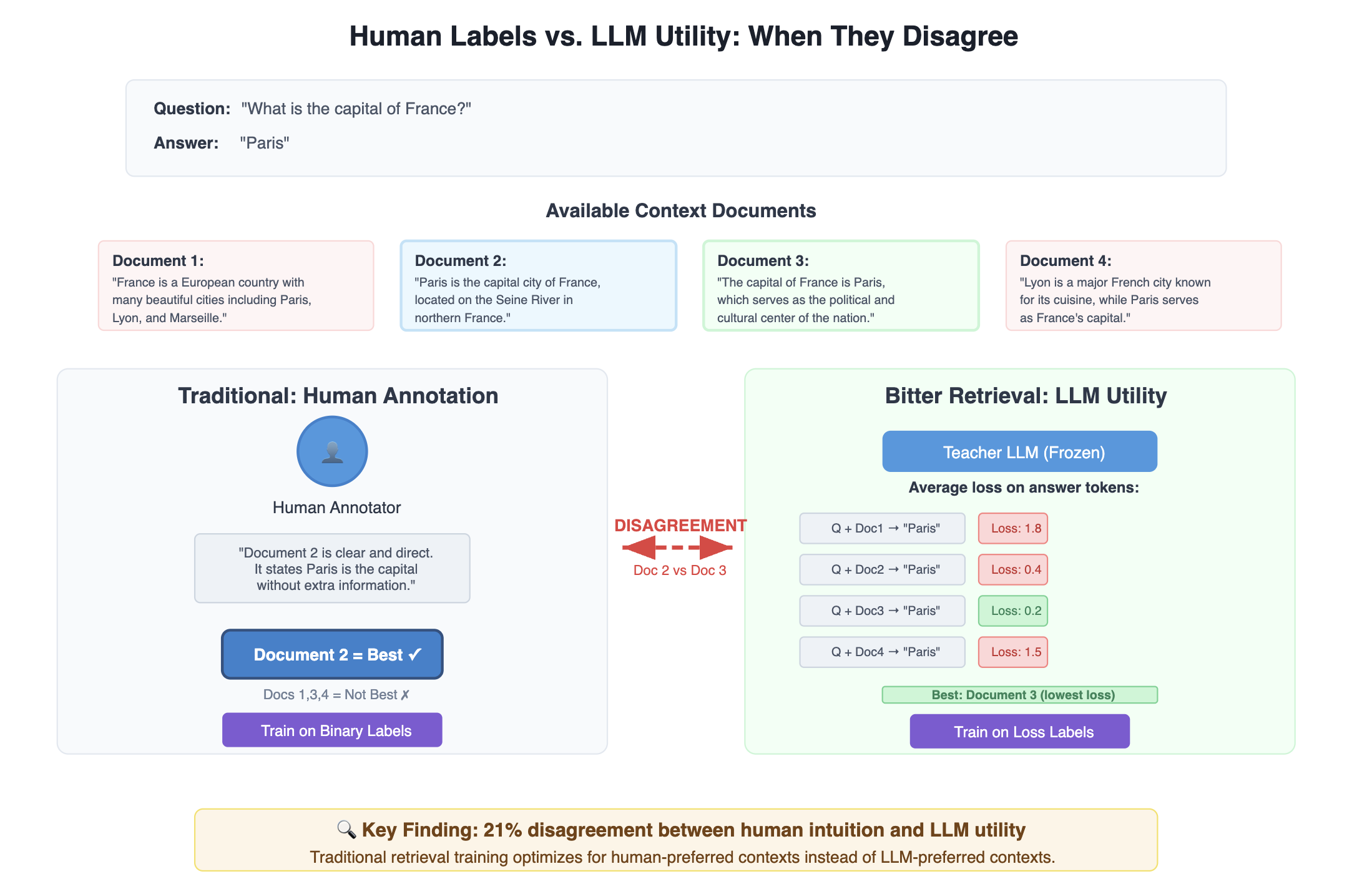 Figure 2: Comparison between human-labeled "best" passages vs. passages that actually minimize LLM loss
We've created and published soft-labeled versions of MS MARCO v1.1 with ~100k examples labeled using the approach described above:
Labeling Model: Qwen3-8B-Base (bf16)
Key Finding: 20.3% disagreement rate between human-labeled "best" passages and passages that actually produce lowest LLM loss
Labeling Model: Llama-3.1-8B (bf16)
Key Finding: 22.2% disagreement rate between human-labeled "best" passages and passages that actually produce lowest LLM loss
Note: This project is actively under development. Results are preliminary and based on initial experiments.
git clone https://github.com/nickcdryan/bitter-retrieval.git
cd bitter-retrieval
./setup.sh
# Restart shell with source ~/.bashrc or open new terminal
poetry run python setup_env.py
poetry run python tests/test_setup.py
Create a .env file with your API tokens:
cp .env.example .env
# Edit .env with your actual API keys
# Use pre-defined experiments
poetry run python scripts/train.py --experiment kl_margin
poetry run python scripts/train.py --config configs/experiments/full_modular.yaml

# Custom training with overrides
poetry run python scripts/train.py --config configs/experiments/kl_only.yaml --batch-size 32 --run-name "my-experiment"
bitter-retrieval/
├── bitter_retrieval/          # 🧠 Core library
│   ├── config.py             # Configuration management
│   ├── training/             # Training components (losses, trainer, schedulers)
│   ├── data/                 # Data loading and processing
│   ├── models/               # Model utilities (LLM, encoder)
│   ├── evaluation/           # Evaluation metrics and orchestration
│   └── utils/                # Utilities (device, encoding, logging, I/O)
├── scripts/                  # 🚀 Main entry points
│   ├── train.py             # Main training script
│   ├── label_data.py        # Data labeling with LLMs
│   ├── evaluate.py          # Model evaluation
│   ├── setup_env.py         # Environment setup
│   └── push_to_hf.py        # HuggingFace Hub operations
├── configs/                  # ⚙️ Configuration files
│   ├── default.yaml         # Base configuration
│   ├── experiments/         # Pre-defined experiments
│   └── models/              # Model-specific settings
├── tests/                    # 🧪 Test suite
└── [setup files, poetry config, etc.]
kl + margin, kl + mse + infonce, etc.)poetry run python scripts/train.py --config configs/experiments/kl_margin.yaml
poetry run python scripts/train.py --config configs/experiments/kl_only.yaml
poetry run python scripts/train.py --config configs/experiments/full_modular.yaml
# custom_experiment.yaml
base_config: "configs/default.yaml"
method:
  training_method: "modular"
  loss_components:
    kl: 0.4
    mse: 0.3
    margin: 0.3
Generate soft labels for your own datasets:
# Label MS MARCO data
poetry run python scripts/label_data.py --model Qwen/Qwen3-8B-Base --split train --num 1000

# Process all splits and upload to HF Hub
poetry run python scripts/label_data.py --model Qwen/Qwen3-8B-Base --all-splits --upload-hf "username/dataset-name"
# Evaluate trained model
poetry run python scripts/evaluate.py --model-path models/my-trained-model

# Evaluate base model
poetry run python scripts/evaluate.py --encoder nomic-ai/nomic-embed-text-v1 --dataset squad

# Save results
poetry run python scripts/evaluate.py --model-path models/my-model --output-file results.json
# Push trained model to HF Hub
poetry run python scripts/push_to_hf.py --model models/my-model --repo username/model-name

# Push dataset to HF Hub
poetry run python scripts/push_to_hf.py --dataset data/my-dataset.json --repo username/dataset-name --type dataset

# List local models
poetry run python scripts/push_to_hf.py --list-local
kl_margin.yaml - KL divergence + margin hinge losskl_only.yaml - Pure knowledge distillationmargin_only.yaml - Pure contrastive learninginfonce_only.yaml - Standard InfoNCE baselinefull_modular.yaml - Multi-component trainingnomic_embed.yaml - Optimized for Nomic Embed Text v1qwen_8b.yaml - Optimized for Qwen 3-8B Basebert_base.yaml - BERT Base alternativeSee configs/README.md for detailed configuration documentation.
poetry run python setup_env.py --install-flash-attention
poetry run python tests/test_setup.py # Test environment setup
If you use this framework in your research, please cite:
@software{bitter_retrieval_2024,
  title = {Bitter Retrieval: Modular Training Framework for Retrieval Models},
  author = {Nick Ryan},
  year = {2024},
  url = {https://github.com/nickcdryan/bitter-retrieval}
}
This project is licensed under the MIT License - see the LICENSE file for details.
Training framework for retrieval models with LLM-generated labels
Python
0
39 commits
updated Aug 19, 2025
A modular training framework for retrieval models that trains on real-valued labels derived from downstream LLM performance rather than binary human annotations.
Most retrieval models are created by fine-tuning on standard retrieval datasets like MS MARCO, which contain question-answer pairs with context passages labeled by humans as relevant or irrelevant. This traditional approach relies on binary relevance labels that are often noisy and reflect human biases about what constitutes useful context. But what we actually care about is: does the retrieved context help a downstream LLM generate better answers?
This framework addresses this by:
The goal is to directly optimize for downstream performance rather than proxy metrics, testing whether this approach produces better retrieval models for LLM-assisted question answering.
Figure 1: Overview of the bitter retrieval training methodology
| Model | Training Method | Answer Accuracy ↑ | Retrieval Accuracy |
|---|---|---|---|
| BERT Base | Standard InfoNCE | 45.8% | 30.4% |
| BERT Base | Soft Labels (Ours) | 47.0% ✅ | 29.6% |
| Nomic Embed | Standard InfoNCE | 47.6% | 40.0% |
| Nomic Embed | Soft Labels (Ours) | 47.8% ✅ | 33.6% |
(Nomic Embed trained with Qwen-generated labels → Llama 3.1-8B evaluation)
| Training Method | Answer Accuracy ↑ | Retrieval Accuracy |
|---|---|---|
| Standard InfoNCE | 33.8% | 38.2% |
| Soft Labels (Ours) | 37.6% ✅ | 33.6% |
(BERT trained with Llama-generated labels → Qwen 3 8B evaluation)
| Training Method | Answer Accuracy ↑ | Retrieval Accuracy |
|---|---|---|
| Standard InfoNCE | 46.4% | 31.8% |
| Soft Labels (Ours) | 47.8% ✅ | 28.2% |
Figure 2: Comparison between human-labeled "best" passages vs. passages that actually minimize LLM loss
We've created and published soft-labeled versions of MS MARCO v1.1 with ~100k examples labeled using the approach described above:
Labeling Model: Qwen3-8B-Base (bf16)
Key Finding: 20.3% disagreement rate between human-labeled "best" passages and passages that actually produce lowest LLM loss
Labeling Model: Llama-3.1-8B (bf16)
Key Finding: 22.2% disagreement rate between human-labeled "best" passages and passages that actually produce lowest LLM loss
Note: This project is actively under development. Results are preliminary and based on initial experiments.
git clone https://github.com/nickcdryan/bitter-retrieval.git
cd bitter-retrieval
./setup.sh
# Restart shell with source ~/.bashrc or open new terminal
poetry run python setup_env.py
poetry run python tests/test_setup.py
Create a .env file with your API tokens:
cp .env.example .env
# Edit .env with your actual API keys
# Use pre-defined experiments
poetry run python scripts/train.py --experiment kl_margin
poetry run python scripts/train.py --config configs/experiments/full_modular.yaml

# Custom training with overrides
poetry run python scripts/train.py --config configs/experiments/kl_only.yaml --batch-size 32 --run-name "my-experiment"
bitter-retrieval/
├── bitter_retrieval/          # 🧠 Core library
│   ├── config.py             # Configuration management
│   ├── training/             # Training components (losses, trainer, schedulers)
│   ├── data/                 # Data loading and processing
│   ├── models/               # Model utilities (LLM, encoder)
│   ├── evaluation/           # Evaluation metrics and orchestration
│   └── utils/                # Utilities (device, encoding, logging, I/O)
├── scripts/                  # 🚀 Main entry points
│   ├── train.py             # Main training script
│   ├── label_data.py        # Data labeling with LLMs
│   ├── evaluate.py          # Model evaluation
│   ├── setup_env.py         # Environment setup
│   └── push_to_hf.py        # HuggingFace Hub operations
├── configs/                  # ⚙️ Configuration files
│   ├── default.yaml         # Base configuration
│   ├── experiments/         # Pre-defined experiments
│   └── models/              # Model-specific settings
├── tests/                    # 🧪 Test suite
└── [setup files, poetry config, etc.]
kl + margin, kl + mse + infonce, etc.)poetry run python scripts/train.py --config configs/experiments/kl_margin.yaml
poetry run python scripts/train.py --config configs/experiments/kl_only.yaml
poetry run python scripts/train.py --config configs/experiments/full_modular.yaml
# custom_experiment.yaml
base_config: "configs/default.yaml"
method:
  training_method: "modular"
  loss_components:
    kl: 0.4
    mse: 0.3
    margin: 0.3
Generate soft labels for your own datasets:
# Label MS MARCO data
poetry run python scripts/label_data.py --model Qwen/Qwen3-8B-Base --split train --num 1000

# Process all splits and upload to HF Hub
poetry run python scripts/label_data.py --model Qwen/Qwen3-8B-Base --all-splits --upload-hf "username/dataset-name"
# Evaluate trained model
poetry run python scripts/evaluate.py --model-path models/my-trained-model

# Evaluate base model
poetry run python scripts/evaluate.py --encoder nomic-ai/nomic-embed-text-v1 --dataset squad

# Save results
poetry run python scripts/evaluate.py --model-path models/my-model --output-file results.json
# Push trained model to HF Hub
poetry run python scripts/push_to_hf.py --model models/my-model --repo username/model-name

# Push dataset to HF Hub
poetry run python scripts/push_to_hf.py --dataset data/my-dataset.json --repo username/dataset-name --type dataset

# List local models
poetry run python scripts/push_to_hf.py --list-local
kl_margin.yaml - KL divergence + margin hinge losskl_only.yaml - Pure knowledge distillationmargin_only.yaml - Pure contrastive learninginfonce_only.yaml - Standard InfoNCE baselinefull_modular.yaml - Multi-component trainingnomic_embed.yaml - Optimized for Nomic Embed Text v1qwen_8b.yaml - Optimized for Qwen 3-8B Basebert_base.yaml - BERT Base alternativeSee configs/README.md for detailed configuration documentation.
poetry run python setup_env.py --install-flash-attention
poetry run python tests/test_setup.py # Test environment setup
If you use this framework in your research, please cite:
@software{bitter_retrieval_2024,
  title = {Bitter Retrieval: Modular Training Framework for Retrieval Models},
  author = {Nick Ryan},
  year = {2024},
  url = {https://github.com/nickcdryan/bitter-retrieval}
}
This project is licensed under the MIT License - see the LICENSE file for details.



