
README
skynet-godot
A Godot 4 port of the two 1996 XnGine shooters by Bethesda Softworks — SkyNET and Future Shock. The engine is rewritten in Godot; the game itself is read from your own copy of the original data: the BSA archives, the WLD heightmaps, the TEXTURE files, the maps, the sounds and the HMI music, all decoded at run time.
Nothing from the original games is included here. You need the games.
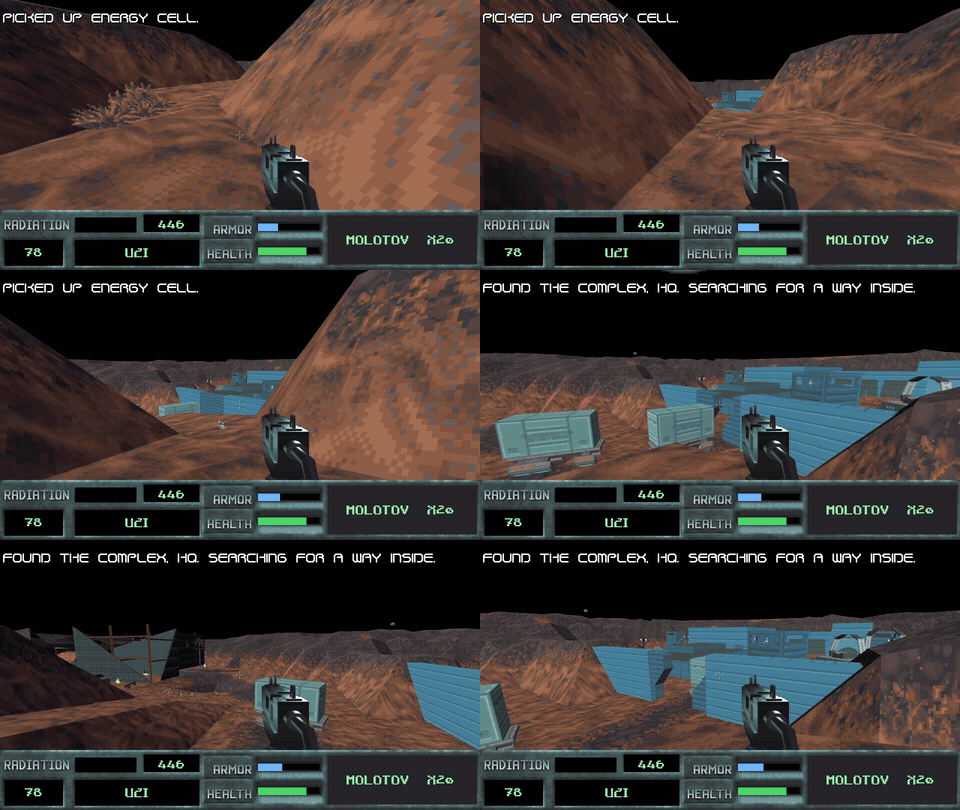
Mission one: out of the canyon, and the complex comes into view.
Screenshots
 |  |
 |  |
 |  |
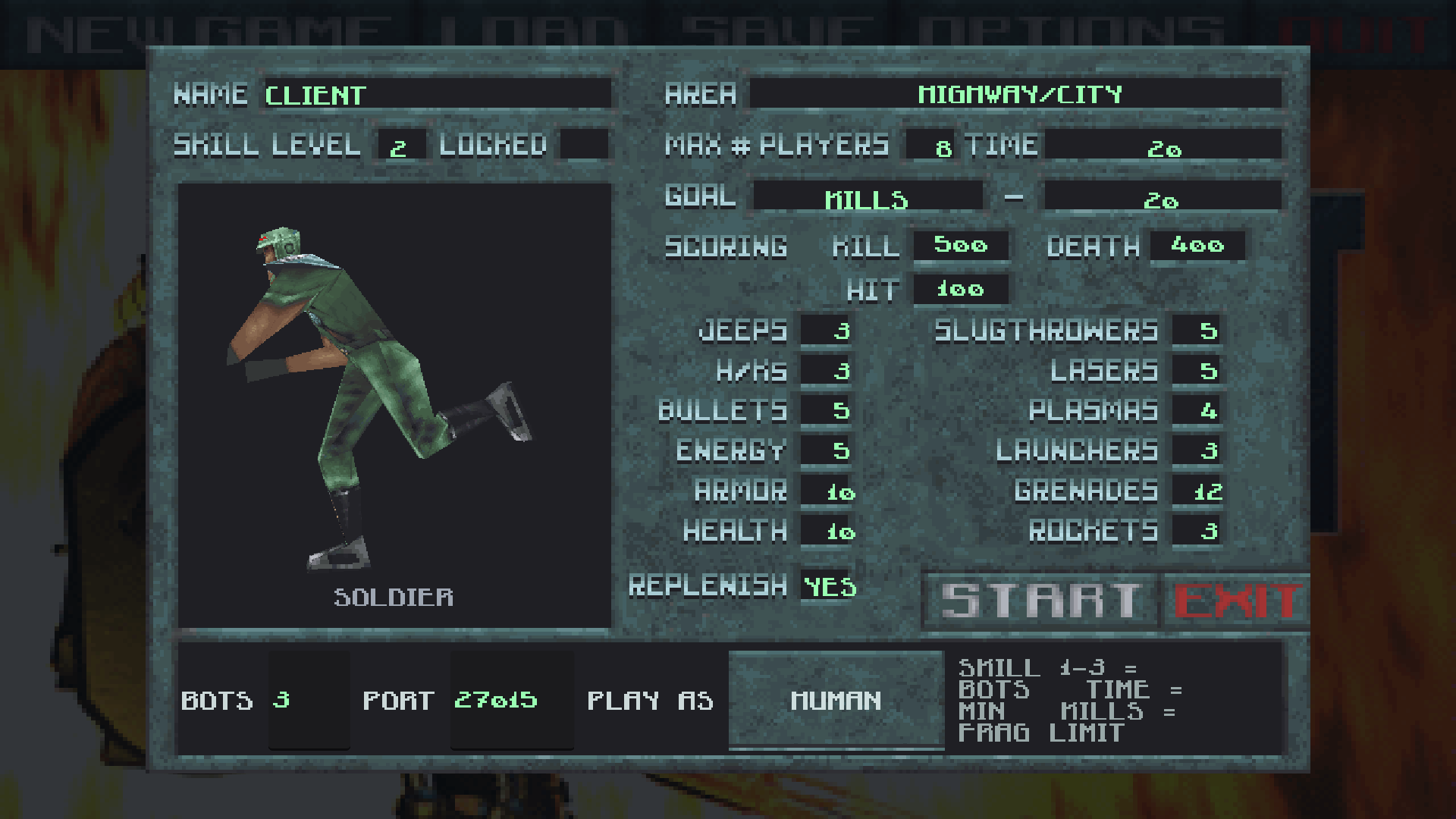 | 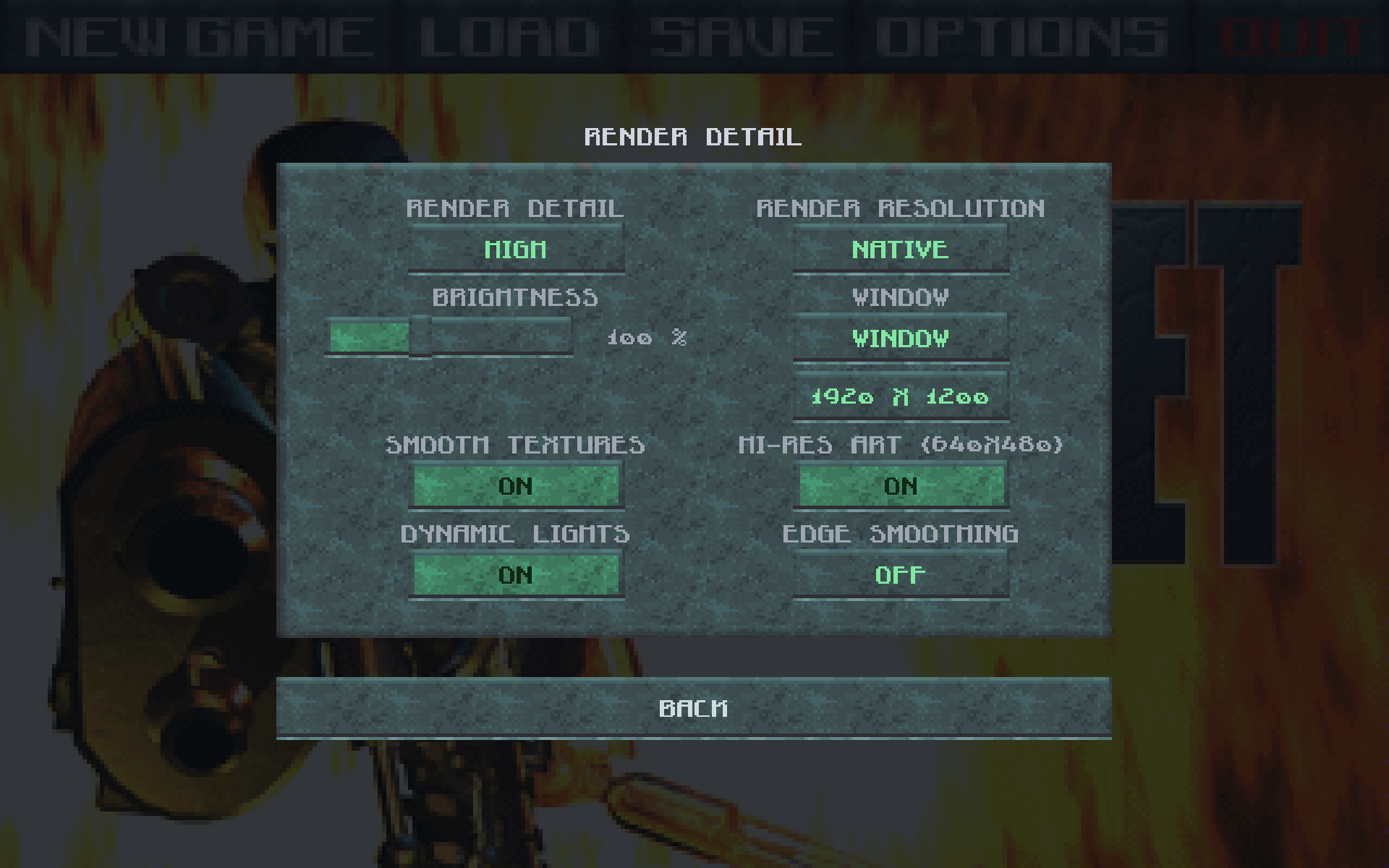 |
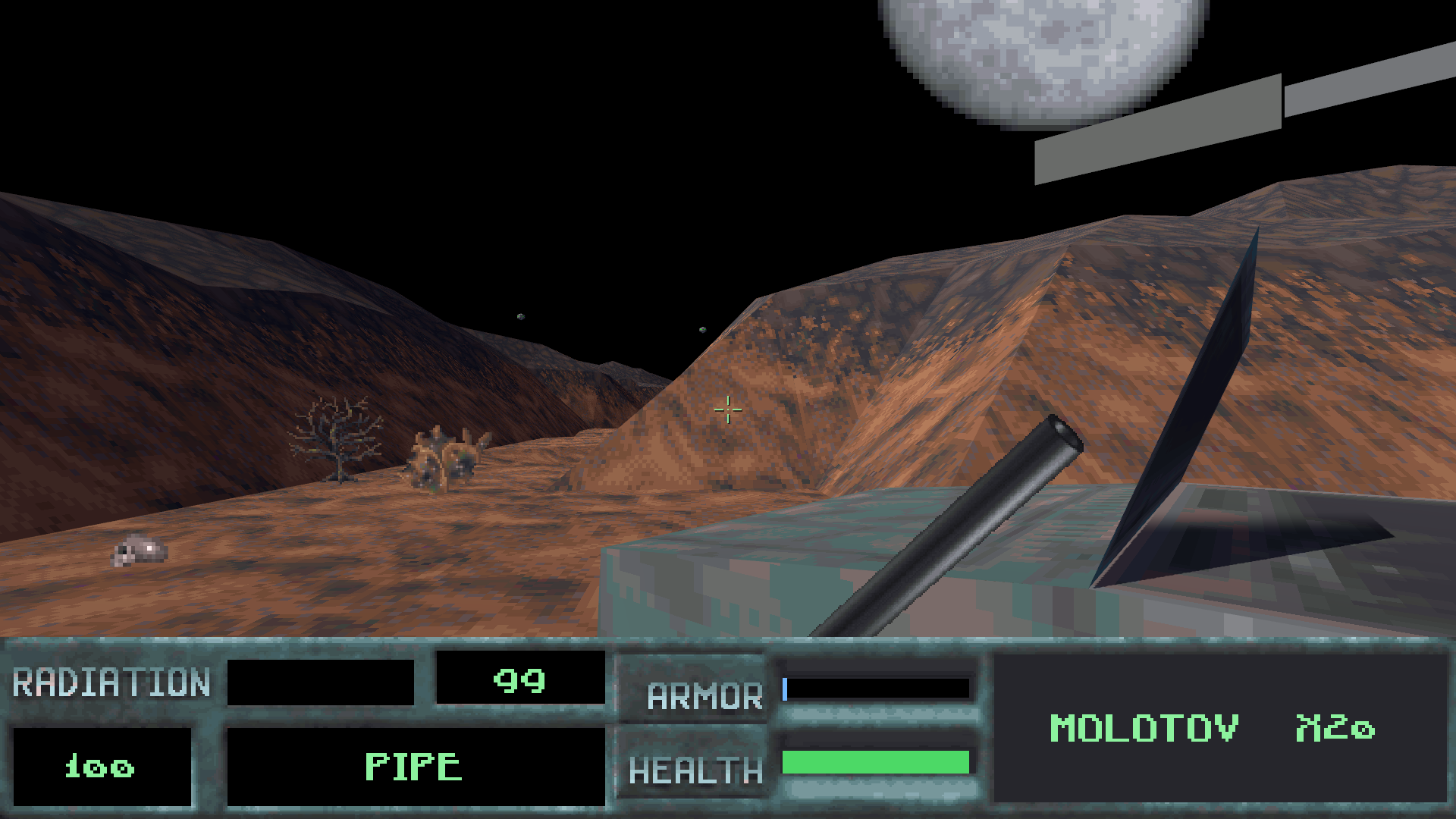
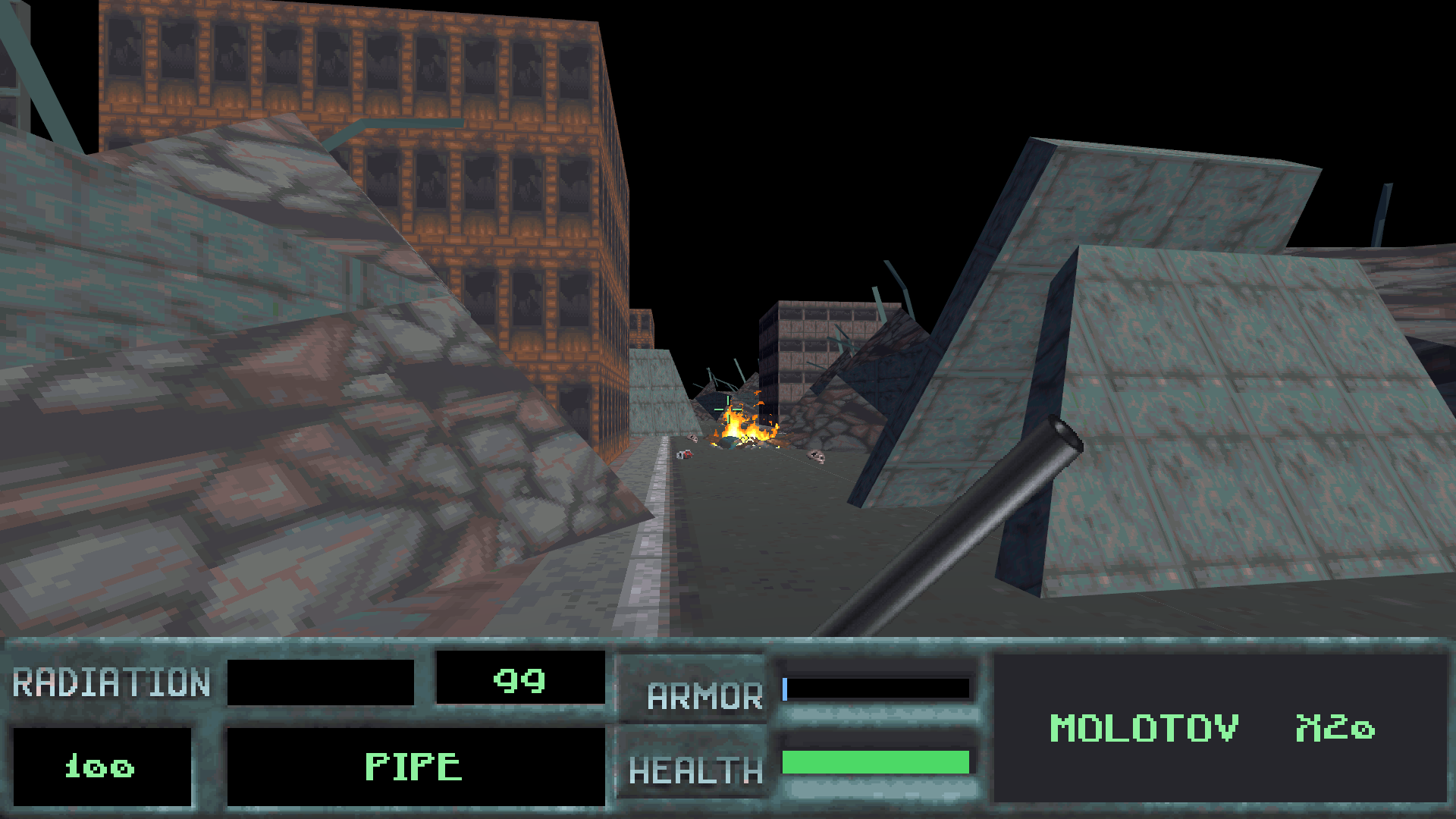
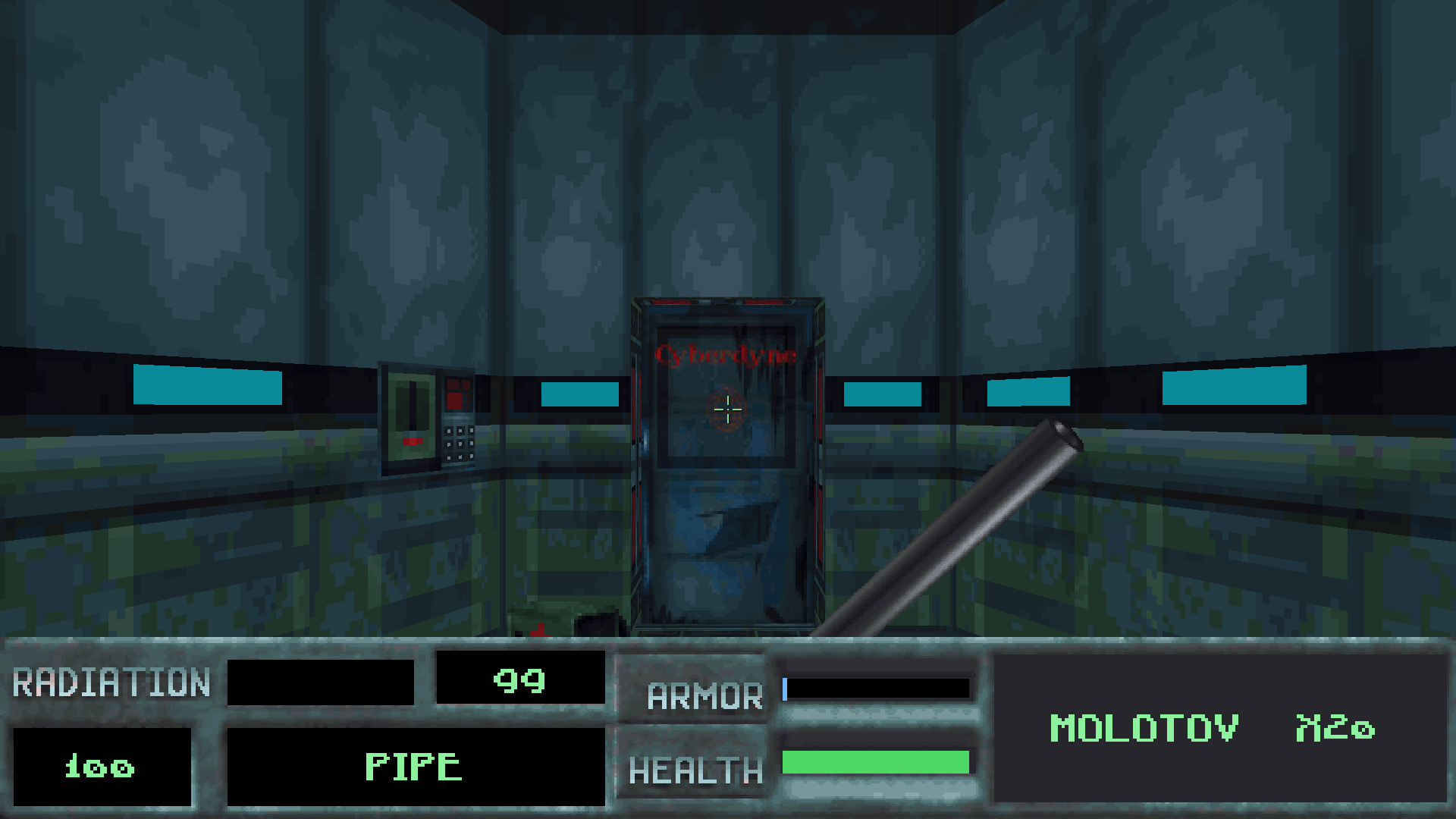
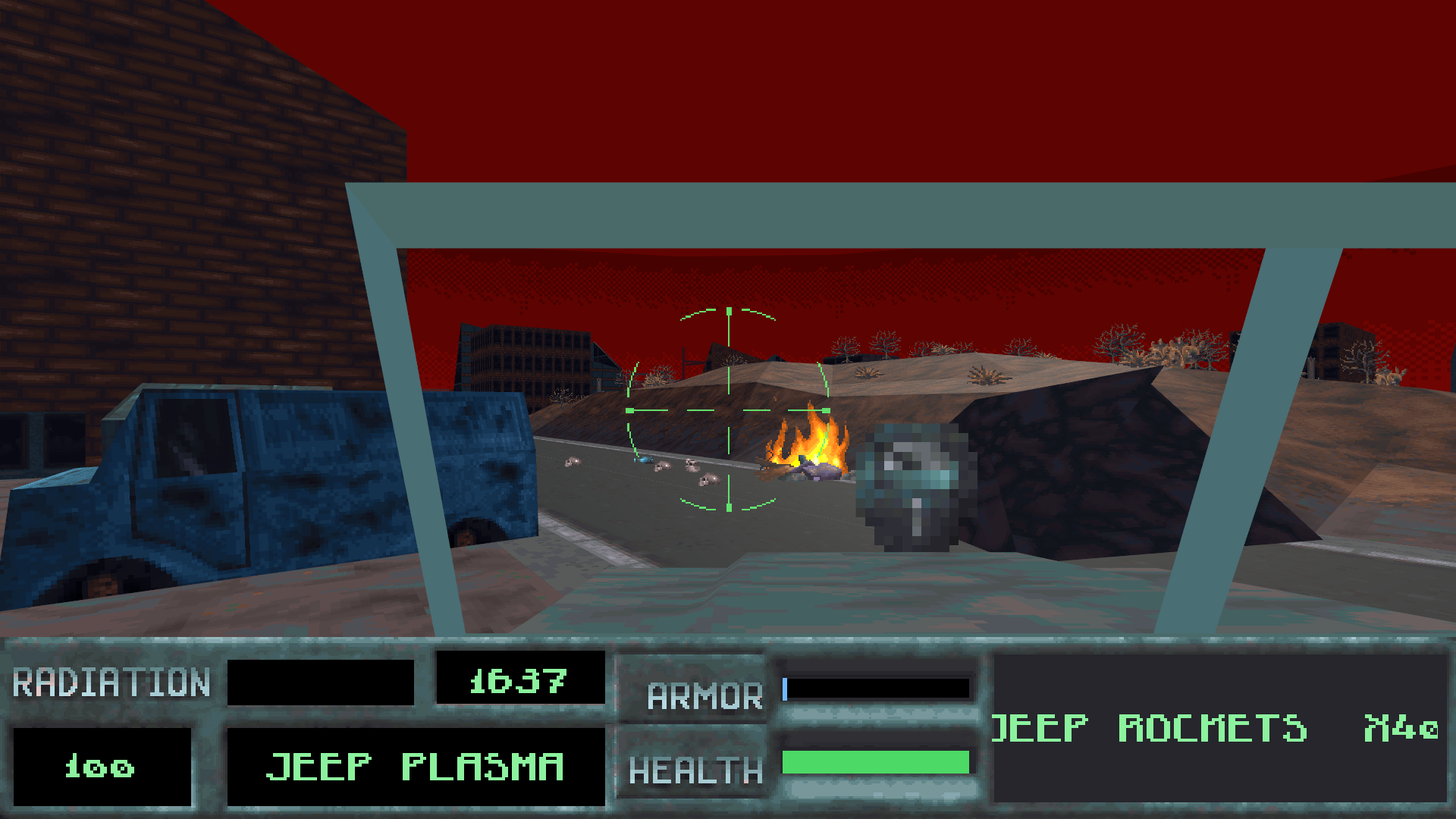
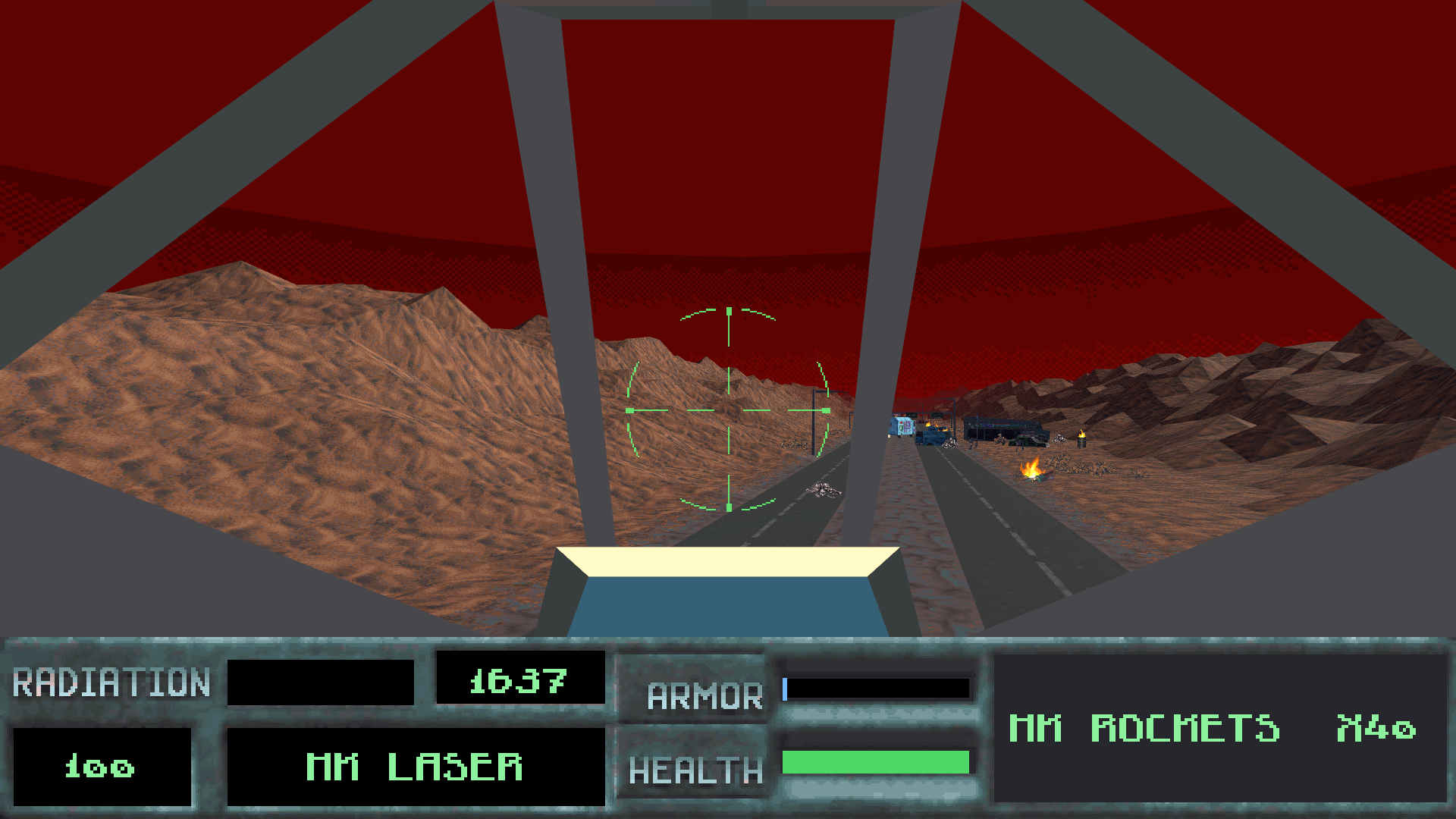
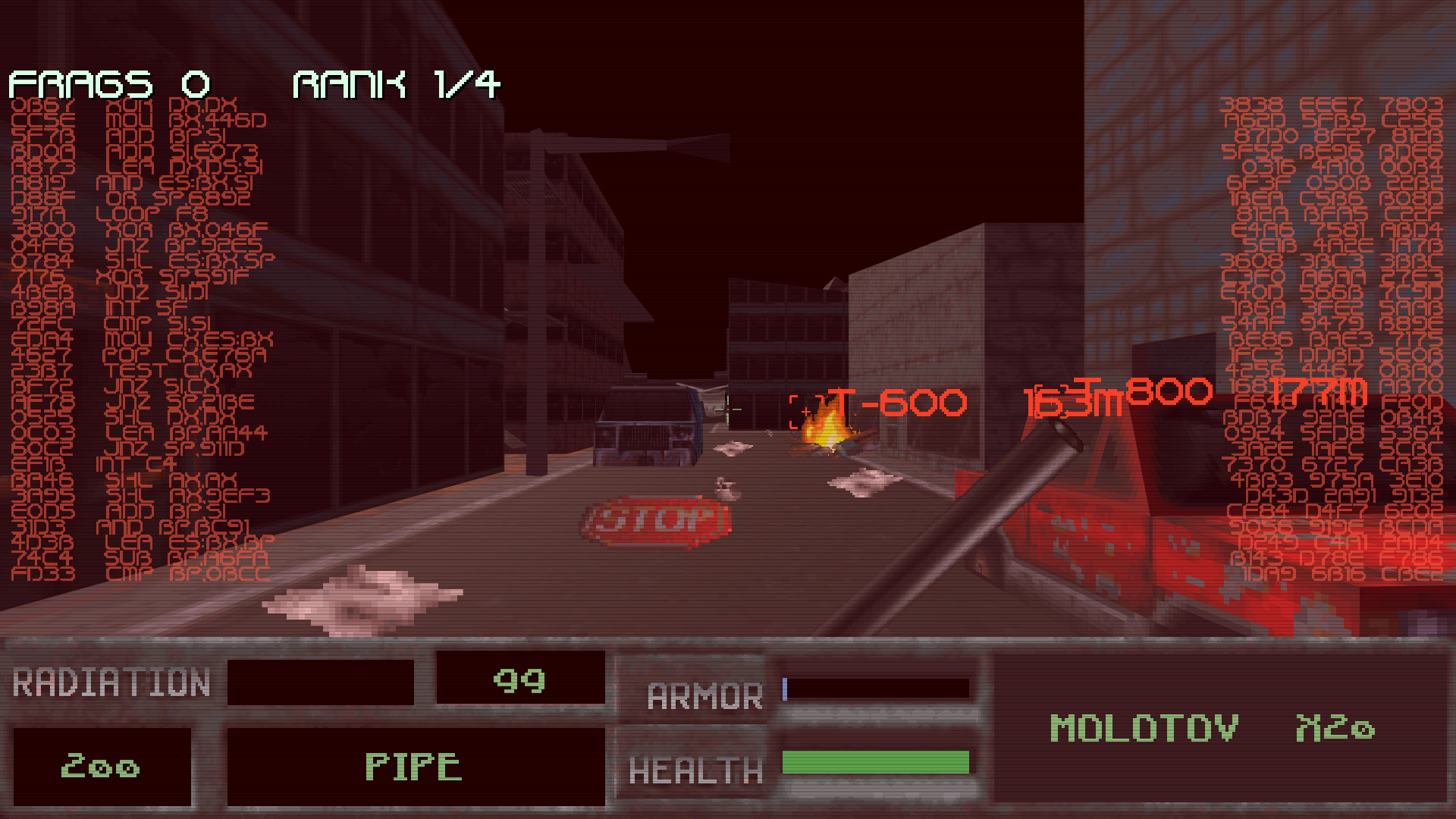
Left to right, top to bottom: mission 1's canyon under the moon; the ruined city; the Cyberdyne building; the jeep with its own HUD; the HK flying the highway with the convoy ahead; a deathmatch seen through the TERMINATOR class's machine vision; the network setup screen, whose left box turns the body you will play as; and the render settings, cut out of the original dialog art.
What works
- The campaign — all eight missions, the DOS mission scripts, the objective counter, briefings with the original art and voice lines.
- The world as the original drew it: DOS heightmap terrain, the entity meshes, billboard sprites, palette-accurate textures, the night sky with the moon, the dusk dome on missions 5–8.
- The rules read out of the DOS executable, not guessed: door and lift movers, proximity gates and chains, destructibles with their damage stages, teleports, water levels that rise and fall, spawn points, the jeep's and the HK's handling, enemy AI states and their animation scripts, weapon cadences and ammo pools, cheats.
- Vehicles — the jeep and the HK, with the DOS cockpits.
- Deathmatch over LAN with bots, HUMAN and TERMINATOR classes, machine vision and the motion detector, the original arenas.
- Looks the original could not manage, each off by default so the port still starts as DOS drew it: dynamic lights from the gunfire, the explosions and the rounds in flight (which also lights the street lamps the DOS renderer only drew as bright pixels — 93 of them on the highway map), edge smoothing, smooth texture filtering, the game's own 640x480 HUD and weapon art, a brightness dial, and a render scale that can go above the window.
- Save and load, the pause menu, the DOS options screens, the automap, statistics.
- Future Shock data works too: point the game at that install and it plays those maps and menus.
There is also an Android export preset. It builds and runs, but it gets far less testing than the desktop builds.
Running a release build
- Download the build for your platform from the Releases page.
- Start it. On the first run it asks where the original games are
installed:
- the SkyNET folder — required. Point it either at the install root
or at its
GAMEDATAdirectory; both work. It is recognised byMDMDMAP2.BSA. - the Future Shock folder — optional, recognised by
MDMDMAPS.BSA. Give it and the menu can start that game as well.
- the SkyNET folder — required. Point it either at the install root
or at its
- The first start converts the original data into a cache next to it. That takes a couple of minutes and only happens once.
Both paths are remembered, so you are asked once. Start the game with
--setup to point it somewhere else later.
Platform notes:
- Windows — a single
SkyNET.exe. - Linux —
chmod +x SkyNET.x86_64after downloading. - macOS — the
.appinside the zip is not signed (it is built on Windows), so Gatekeeper will refuse it: open it once with right-click → Open, or clear the quarantine flag withxattr -dr com.apple.quarantine "SkyNET Godot Port.app".
Command line
| Option | What it does |
|---|---|
--gamedata=DIR | use this data directory for this run |
--setup | ask for the game folders again |
--map=MAP.230 | start straight on a map, no menu |
--host=MAP.605 --bots=3 | host a deathmatch at once |
--join=ADDRESS[:PORT] | join one |
--import | build the asset cache and quit |
--solve[=SECONDS] | let the solver play the mission and report |
--screenshot=FILE | save a frame and quit (for automation) |
Building from source
Godot 4.7.2 (standard build, no C#). Open godot_project/ in the
editor, or export from the command line:
godot --headless --path godot_project --export-release "Windows Desktop" build/windows/SkyNET.exe
godot --headless --path godot_project --export-release "Linux"          build/linux/SkyNET.x86_64
godot --headless --path godot_project --export-release "macOS"          build/macos/SkyNET.zip
The project has three headless test suites that run the real game code:
godot --headless --path godot_project res://scenes/action_smoke_test.tscn
godot --headless --path godot_project res://scenes/game_smoke_test.tscn
godot --headless --path godot_project res://scenes/net_smoke_test.tscn
How this was made
Every rule that could be measured was taken from the original DOS build (SkyNET v1.01) rather than reinvented: the action handler table, the mover families, the AI state handlers, the weapon table, the mission tables, the water and border-box code. Where the port and the original disagreed, the disassembly decided. The test suites above exist so those findings stay fixed.
Licence
Copyright © 2026 Marek Draškaba.
This program is free software: you can redistribute it and/or modify it under the terms of the GNU General Public License, version 3 as published by the Free Software Foundation. It is distributed in the hope that it will be useful, but WITHOUT ANY WARRANTY — without even the implied warranty of MERCHANTABILITY or FITNESS FOR A PARTICULAR PURPOSE. See LICENSE for the full text.
The licence covers this port's own code. It says nothing about the original games' data, which belongs to its rights holders and is not distributed here.
Legal
A fan project, not affiliated with or endorsed by Bethesda Softworks or any rights holder of the original games. All trademarks belong to their owners. No original game content is distributed here — the port only reads data you already own.
See what people are saying
Similar repos


Languages
GDScript
99.0%
Python
1.0%
README
skynet-godot
A Godot 4 port of the two 1996 XnGine shooters by Bethesda Softworks — SkyNET and Future Shock. The engine is rewritten in Godot; the game itself is read from your own copy of the original data: the BSA archives, the WLD heightmaps, the TEXTURE files, the maps, the sounds and the HMI music, all decoded at run time.
Nothing from the original games is included here. You need the games.
Mission one: out of the canyon, and the complex comes into view.
Screenshots
| |
| |
| |
| |
Left to right, top to bottom: mission 1's canyon under the moon; the ruined city; the Cyberdyne building; the jeep with its own HUD; the HK flying the highway with the convoy ahead; a deathmatch seen through the TERMINATOR class's machine vision; the network setup screen, whose left box turns the body you will play as; and the render settings, cut out of the original dialog art.
What works
- The campaign — all eight missions, the DOS mission scripts, the objective counter, briefings with the original art and voice lines.
- The world as the original drew it: DOS heightmap terrain, the entity meshes, billboard sprites, palette-accurate textures, the night sky with the moon, the dusk dome on missions 5–8.
- The rules read out of the DOS executable, not guessed: door and lift movers, proximity gates and chains, destructibles with their damage stages, teleports, water levels that rise and fall, spawn points, the jeep's and the HK's handling, enemy AI states and their animation scripts, weapon cadences and ammo pools, cheats.
- Vehicles — the jeep and the HK, with the DOS cockpits.
- Deathmatch over LAN with bots, HUMAN and TERMINATOR classes, machine vision and the motion detector, the original arenas.
- Looks the original could not manage, each off by default so the port still starts as DOS drew it: dynamic lights from the gunfire, the explosions and the rounds in flight (which also lights the street lamps the DOS renderer only drew as bright pixels — 93 of them on the highway map), edge smoothing, smooth texture filtering, the game's own 640x480 HUD and weapon art, a brightness dial, and a render scale that can go above the window.
- Save and load, the pause menu, the DOS options screens, the automap, statistics.
- Future Shock data works too: point the game at that install and it plays those maps and menus.
There is also an Android export preset. It builds and runs, but it gets far less testing than the desktop builds.
Running a release build
- Download the build for your platform from the Releases page.
- Start it. On the first run it asks where the original games are
installed:
- the SkyNET folder — required. Point it either at the install root
or at its
GAMEDATAdirectory; both work. It is recognised byMDMDMAP2.BSA. - the Future Shock folder — optional, recognised by
MDMDMAPS.BSA. Give it and the menu can start that game as well.
- the SkyNET folder — required. Point it either at the install root
or at its
- The first start converts the original data into a cache next to it. That takes a couple of minutes and only happens once.
Both paths are remembered, so you are asked once. Start the game with
--setup to point it somewhere else later.
Platform notes:
- Windows — a single
SkyNET.exe. - Linux —
chmod +x SkyNET.x86_64after downloading. - macOS — the
.appinside the zip is not signed (it is built on Windows), so Gatekeeper will refuse it: open it once with right-click → Open, or clear the quarantine flag withxattr -dr com.apple.quarantine "SkyNET Godot Port.app".
Command line
| Option | What it does |
|---|---|
--gamedata=DIR | use this data directory for this run |
--setup | ask for the game folders again |
--map=MAP.230 | start straight on a map, no menu |
--host=MAP.605 --bots=3 | host a deathmatch at once |
--join=ADDRESS[:PORT] | join one |
--import | build the asset cache and quit |
--solve[=SECONDS] | let the solver play the mission and report |
--screenshot=FILE | save a frame and quit (for automation) |
Building from source
Godot 4.7.2 (standard build, no C#). Open godot_project/ in the
editor, or export from the command line:
godot --headless --path godot_project --export-release "Windows Desktop" build/windows/SkyNET.exe
godot --headless --path godot_project --export-release "Linux"          build/linux/SkyNET.x86_64
godot --headless --path godot_project --export-release "macOS"          build/macos/SkyNET.zip
The project has three headless test suites that run the real game code:
godot --headless --path godot_project res://scenes/action_smoke_test.tscn
godot --headless --path godot_project res://scenes/game_smoke_test.tscn
godot --headless --path godot_project res://scenes/net_smoke_test.tscn
How this was made
Every rule that could be measured was taken from the original DOS build (SkyNET v1.01) rather than reinvented: the action handler table, the mover families, the AI state handlers, the weapon table, the mission tables, the water and border-box code. Where the port and the original disagreed, the disassembly decided. The test suites above exist so those findings stay fixed.
Licence
Copyright © 2026 Marek Draškaba.
This program is free software: you can redistribute it and/or modify it under the terms of the GNU General Public License, version 3 as published by the Free Software Foundation. It is distributed in the hope that it will be useful, but WITHOUT ANY WARRANTY — without even the implied warranty of MERCHANTABILITY or FITNESS FOR A PARTICULAR PURPOSE. See LICENSE for the full text.
The licence covers this port's own code. It says nothing about the original games' data, which belongs to its rights holders and is not distributed here.
Legal
A fan project, not affiliated with or endorsed by Bethesda Softworks or any rights holder of the original games. All trademarks belong to their owners. No original game content is distributed here — the port only reads data you already own.
See what people are saying
Similar repos
Languages
GDScript
99.0%
Python
1.0%