
OpenLoomi is an open-source AI coworker. It connects your work tools, understands what you’re working on, and tells you what needs your attention, why it matters, and what to do next. It’s your open-source Attention Agent.
See the codeREADME






⭐ If you find OpenLoomi useful, please consider giving us a star on GitHub! It helps more people discover the project and motivates us to keep building. 🙏

What is OpenLoomi?
Your work is scattered across apps. OpenLoomi connects the tools you use and, with your permission, understands what’s on your screen. It brings together the context behind your people, projects, and decisions, then surfaces only what needs your decision or action.
Focus on what matters. This is your Attention Agent.
What is it for?
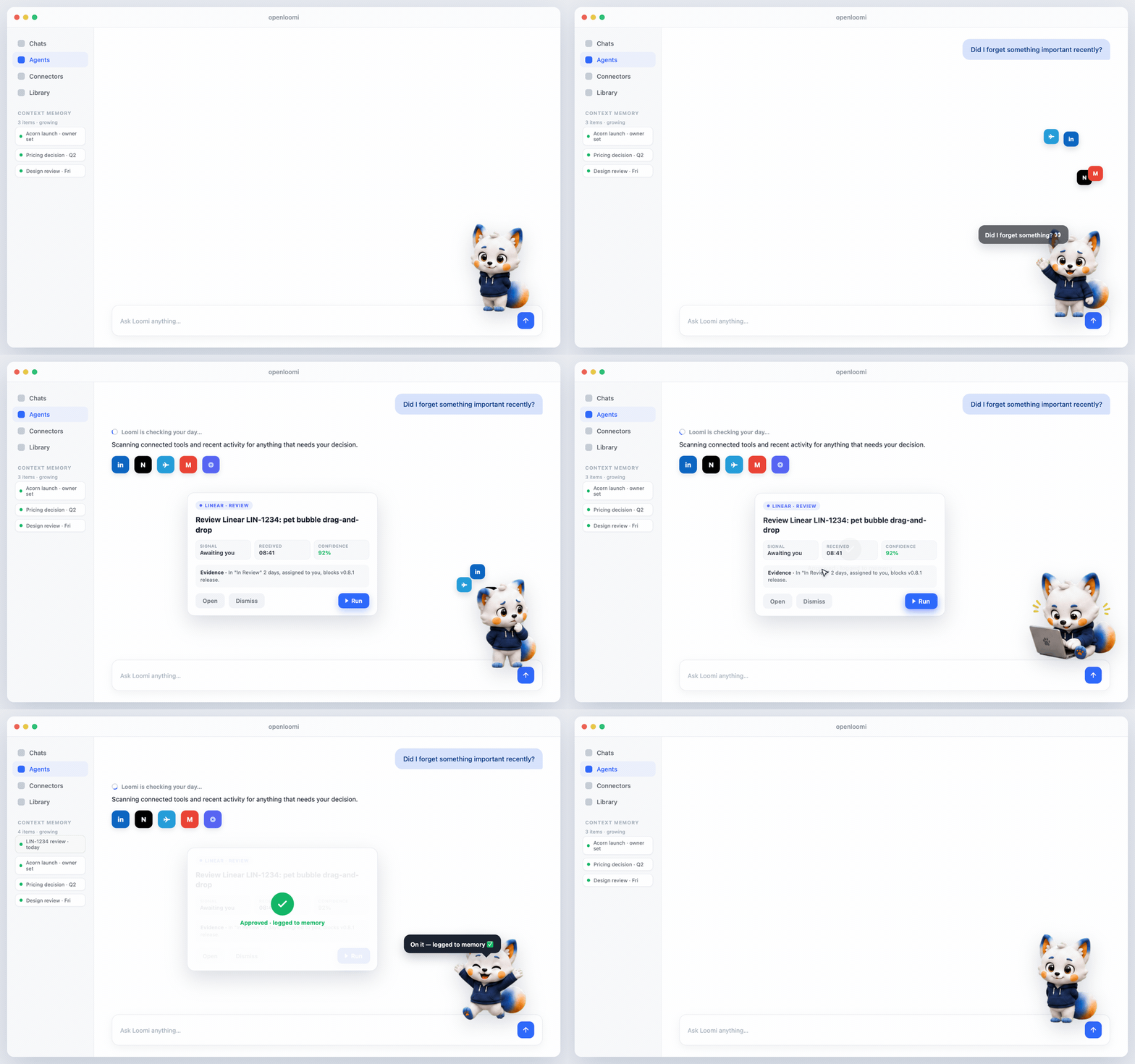
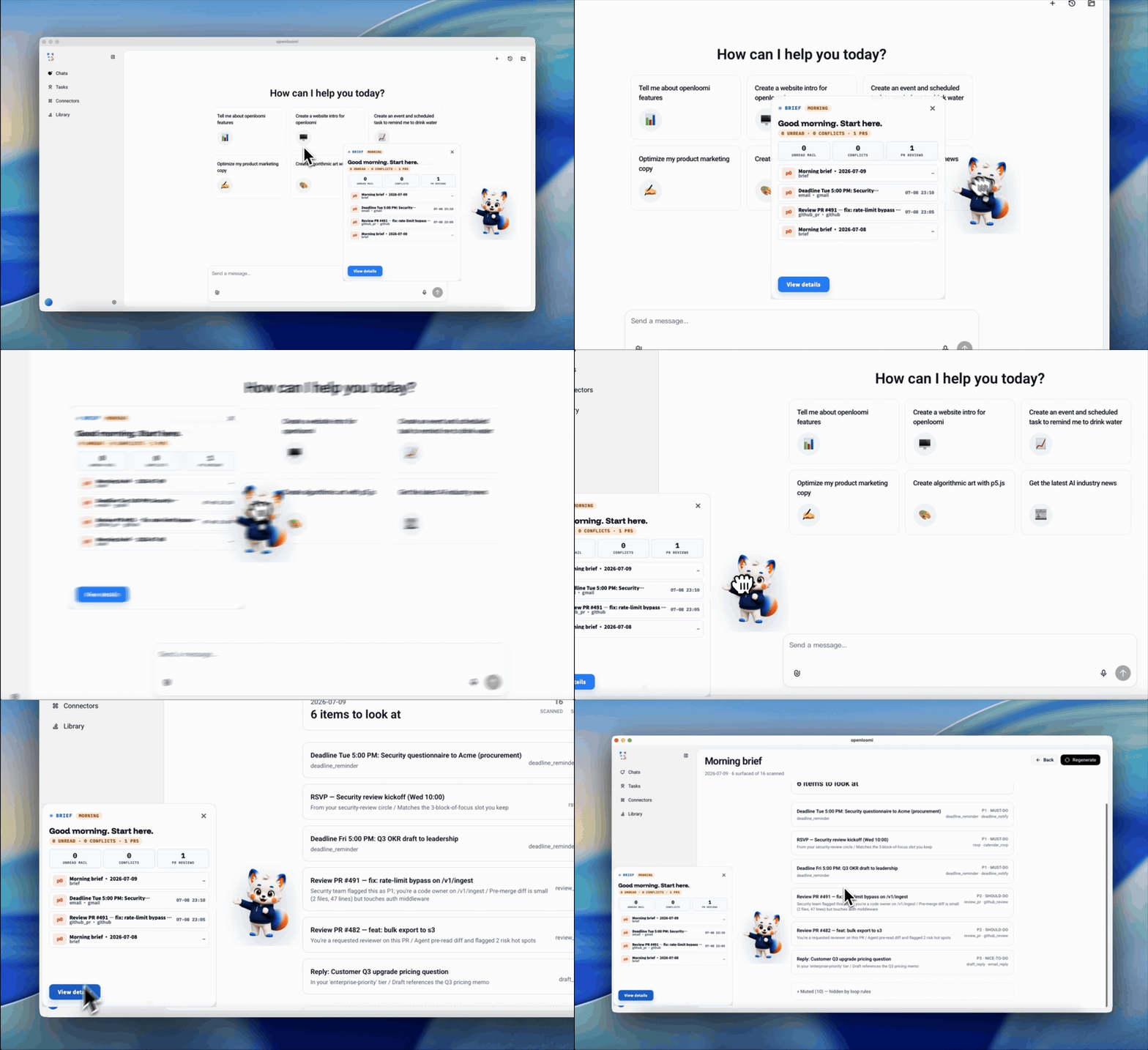
An always-on desktop attention agent — the friendly desk companion Loomi — watches the door so you don't have to, and turns the day's scattered signals into decision cards you can approve in one tap. Use it standalone, or plug any Agent framework into the same resident desktop: Claude Code, Codex, OpenCode, Hermes, and OpenClaw all work.
- Stop dropping commitments. Overdue replies, creeping deadlines, "I'll send that follow-up Friday" — Loomi nudges you with a small bubble at the right moment, and you can teach it the signals and decisions to watch for.
- Find anything from your work life in seconds. "What did I decide about pricing last quarter?", "Who owns design on Acorn?", "What was I working on before vacation?" — memory spans every tool and channel, no more digging through Slack, Gmail, or Notion.
- Morning brief at 9 AM, end-of-day recap at 6 PM. Today's to-do slides into view every morning, today's done ships every evening — the key info lives in one place instead of nine apps.
- Ask AI for work help right inside your chat. Draft a reply, summarize a long thread, schedule a follow-up — directly in Telegram, WhatsApp, iMessage, QQ, or Lark/Feishu.
→ Learn more about the always-on companion in the Attention Agent docs and Use cases.
Features
| Capability | What it does | |
|---|---|---|
| 🐾 | Attention Agent | An always-on desktop companion (Loomi) that surfaces pre-decided reminders — 9 AM to-do, 6 PM recap, overdue replies — as small bubbles, without fighting for your focus. |
| 🧠 | Holistic Context | Short → mid → long-term memory that grows on its own — visible, auditable, and always remembering your people, projects, and decisions across months |
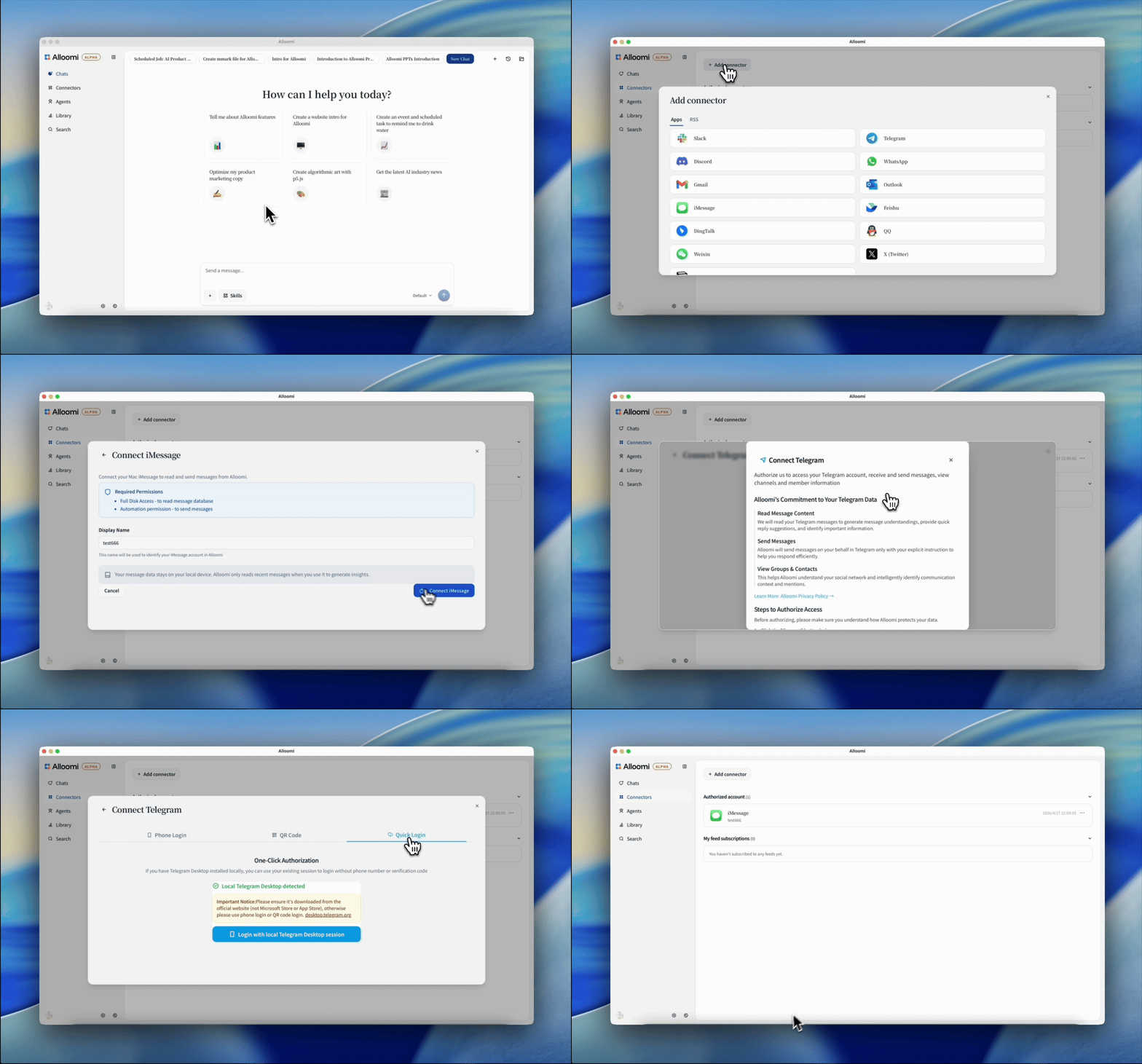
| 🔌 | Platform Connectors | Auto-fetch background sync loop pulls commits, issues, emails, and docs proactively into your context graph. Messaging apps — Telegram, WhatsApp, iMessage, QQ, Lark/Feishu — let you chat with AI directly inside your existing conversations. |
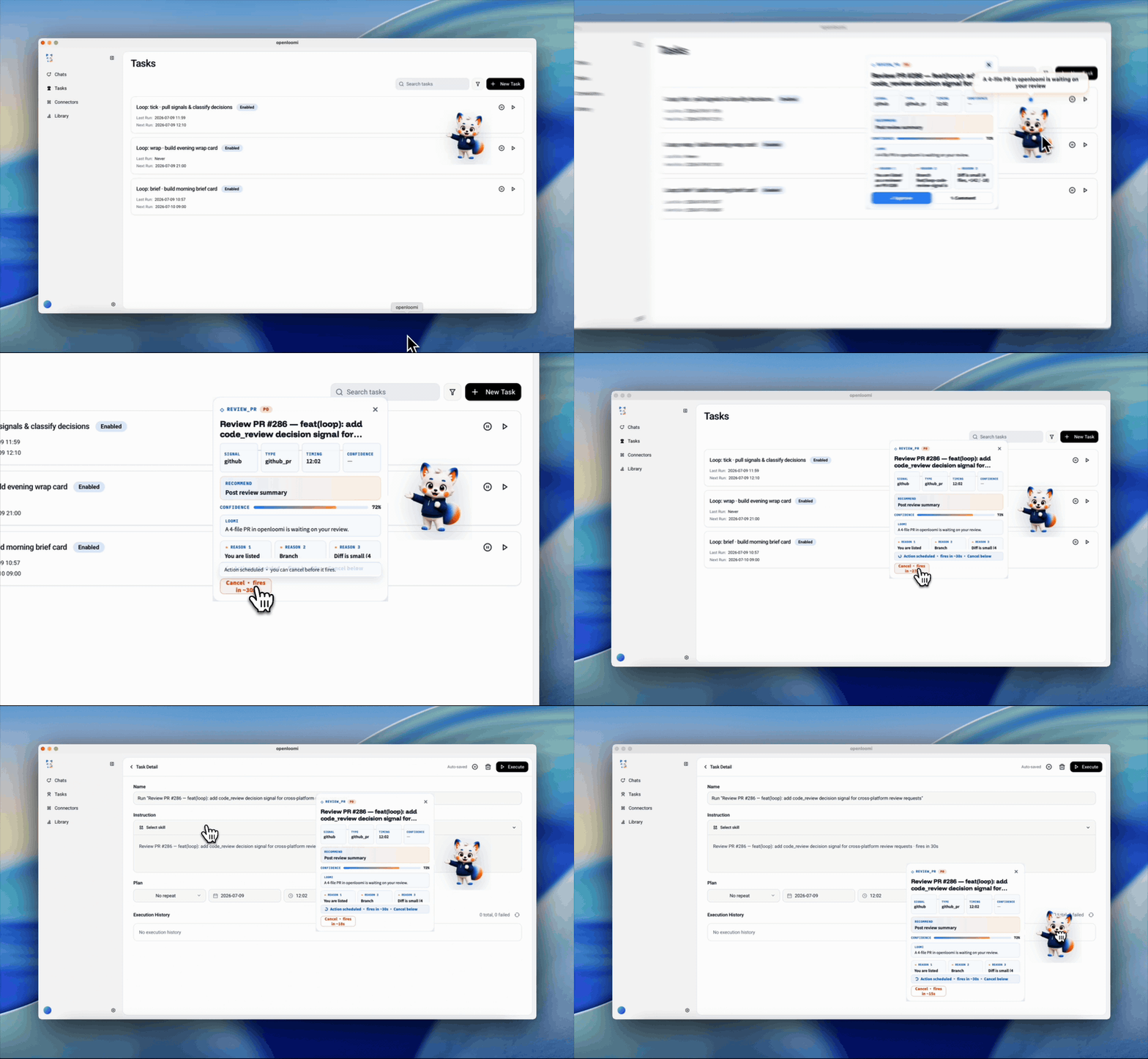
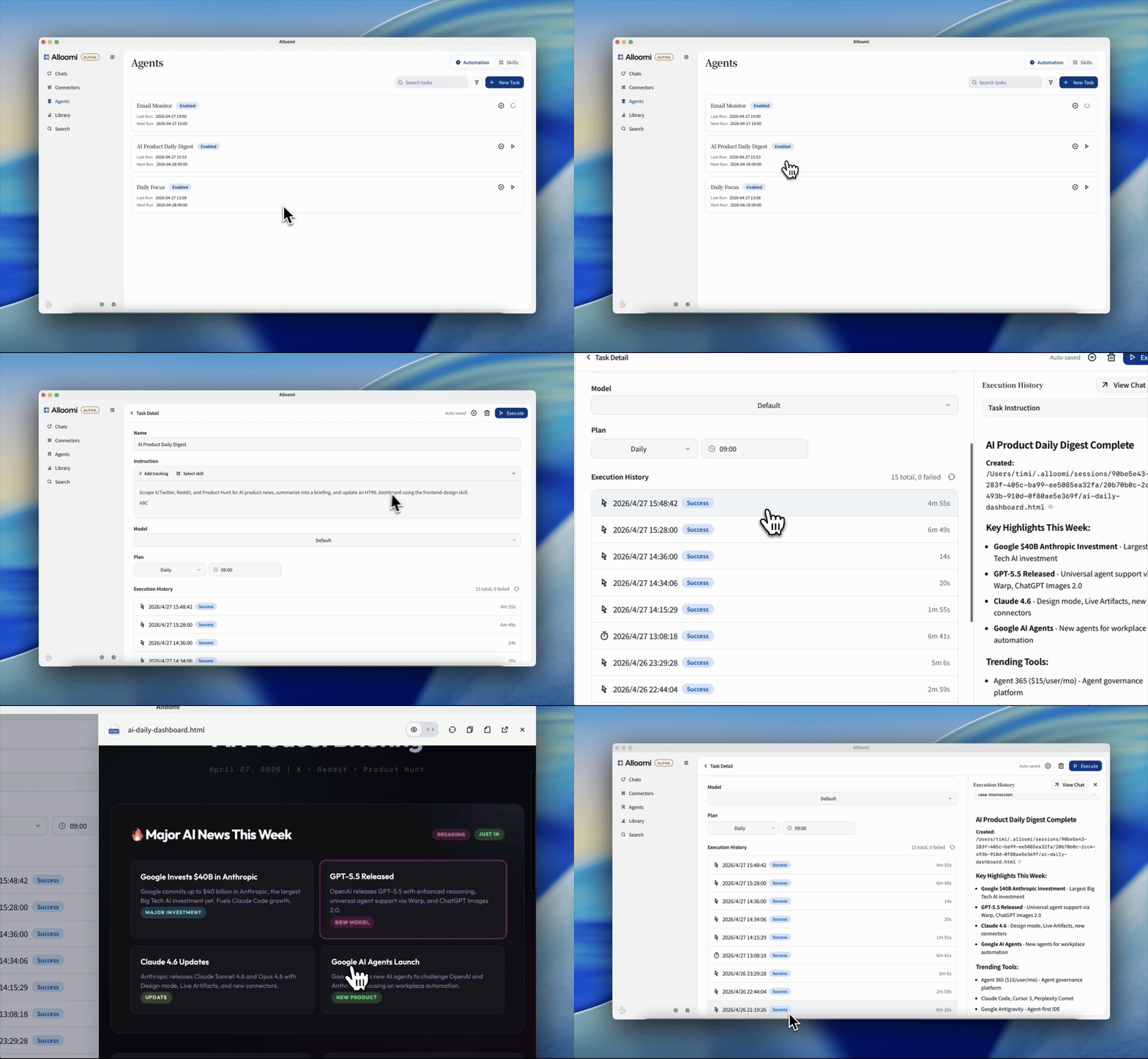
| ⏰ | Proactive Tasks | Schedule recurring work — daily digests, weekly reports, reminders — that run automatically on your desktop. |
| 🖥️ | Security & Ease of Use | Native app for Windows, macOS, Linux Desktop Apps — works out of the box, minutes to set up, no configuration wrestling; local-first storage, AES-256 encryption, no data leaves your machine, auditable access logs |
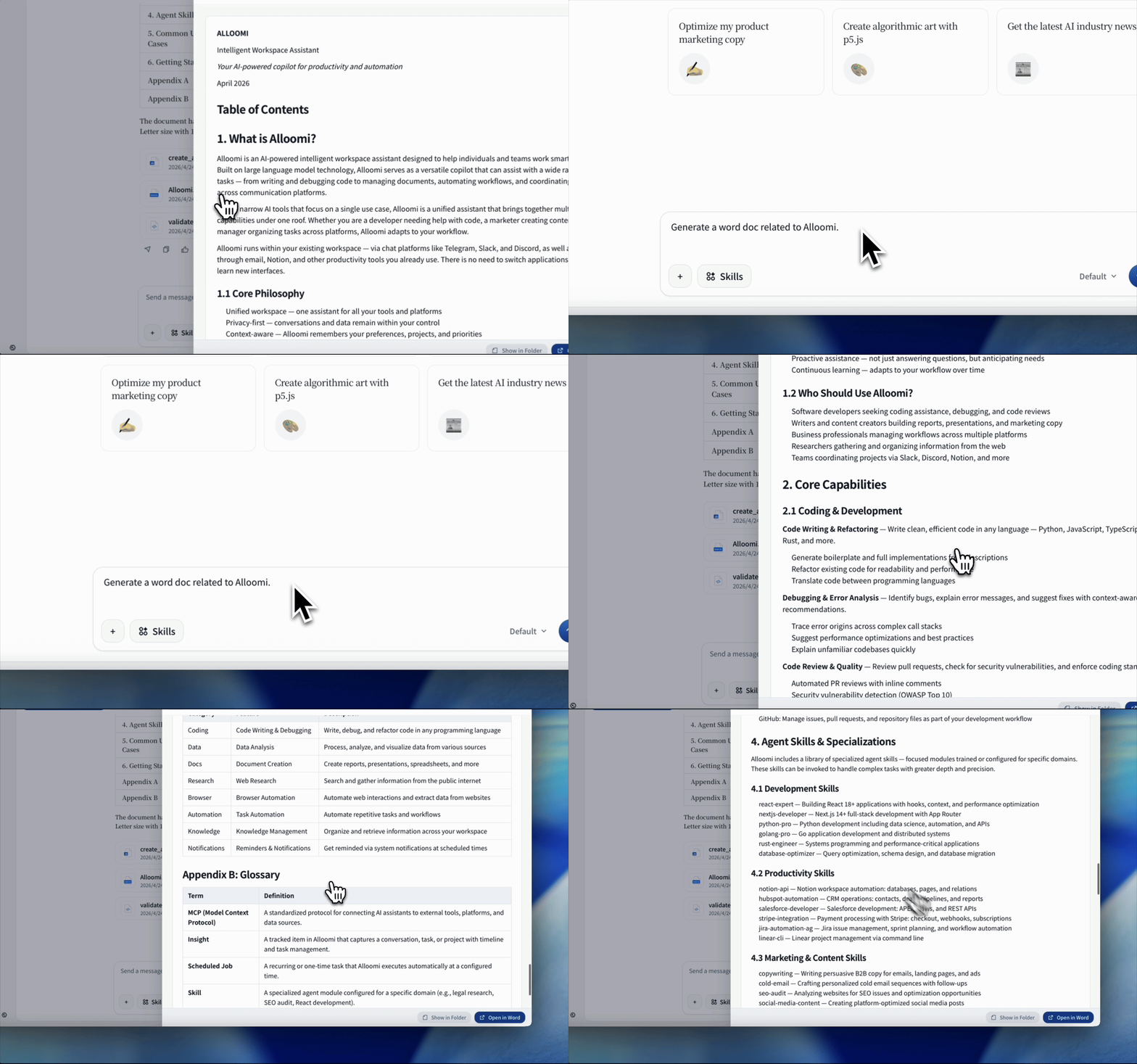
| 🧩 | Any Agent Integration | OpenLoomi's context, memory, connectors, attention agent, and Loop engine are all delivered as open-source Skills and Plugins. Use OpenLoomi Desktop directly, or plug into your existing Agent — Claude, Codex, OpenCode, Hermes, or OpenClaw. |
Quick Start
Download directly (for end users):



-FCC624?style=for-the-badge&logo=linux&logoColor=black)
-FCC624?style=for-the-badge&logo=linux&logoColor=black)
-FCC624?style=for-the-badge&logo=linux&logoColor=black)
-FCC624?style=for-the-badge&logo=linux&logoColor=black)
Full documentation: openloomi.ai/docs
Use as an Agent plugin (for Claude Code / Codex users):
OpenLoomi ships official marketplace plugins that turn your existing agent into a front-end for the local OpenLoomi runtime.
| Agent | Install | First-run setup |
|---|---|---|
| Claude Code | /plugin marketplace add melandlabs/plugins/plugin install openloomi | /openloomi:setup |
| Codex CLI | codex plugin marketplace add melandlabs/plugins && codex plugin add openloomi@openloomi | @OpenLoomi Run first-use setup. |
The slim public marketplace lives at melandlabs/plugins so adding it only fetches the plugin payloads. See the plugin docs for full reference: plugins/claude · plugins/codex.
Use in skill-only agent runtimes:
Install the OpenLoomi skill set directly from this repository:
npx skills add https://github.com/melandlabs/openloomi/tree/main/skills \
  --skill openloomi openloomi-setup openloomi-memory openloomi-connectors openloomi-loop openloomi-goals openloomi-api openloomi-feature-guide composio \
  -y
Start with the openloomi or openloomi-setup skill. The first setup pass
checks whether OpenLoomi Desktop is installed, whether the local API is
reachable, and whether a local session token is available. If OpenLoomi
Desktop is missing, the skill points the user to the official Getting Started
guide and release downloads before continuing.
Develop locally (for developers):
git clone https://github.com/melandlabs/openloomi.git
cd openloomi

pnpm install
pnpm tauri:dev
Requires Node.js 22+, pnpm 9+, Rust 1.75+, and on Windows: Visual Studio Build Tools with C++ workload. For more platform-specific setup requirements, see CONTRIBUTING.md.
Why It Is Different
OpenLoomi is open-source and neutral. Instead of locking you into a single vendor's agent, it integrates with any Agent Runtime — Claude Code, Codex, OpenCode, Hermes, OpenClaw — and brings a shared, cross-agent layer to all of them: a resident desktop attention agent, holistic context memory, platform connectors, and proactive tasks. Whichever agent you run, OpenLoomi watches the door, remembers what matters, and surfaces only the decisions worth your time — so you spend your attention on the work, not on chasing it.
| Compared with... | OpenLoomi adds |
|---|---|
| Claude Cowork-style agents | an open-source, local-first AI coworker and workspace with source evidence and approval |
| Codex / Claude Code | workspace context beyond the repo: people, product decisions, launch context, issues, and follow-ups |
| OpenClaw / Hermes | context before and after the action: why it matters, what source was used, what changed, what remains open |
| RAG / knowledge bases | work state, not just document retrieval: what changed, what is still true, and what should affect the next action |
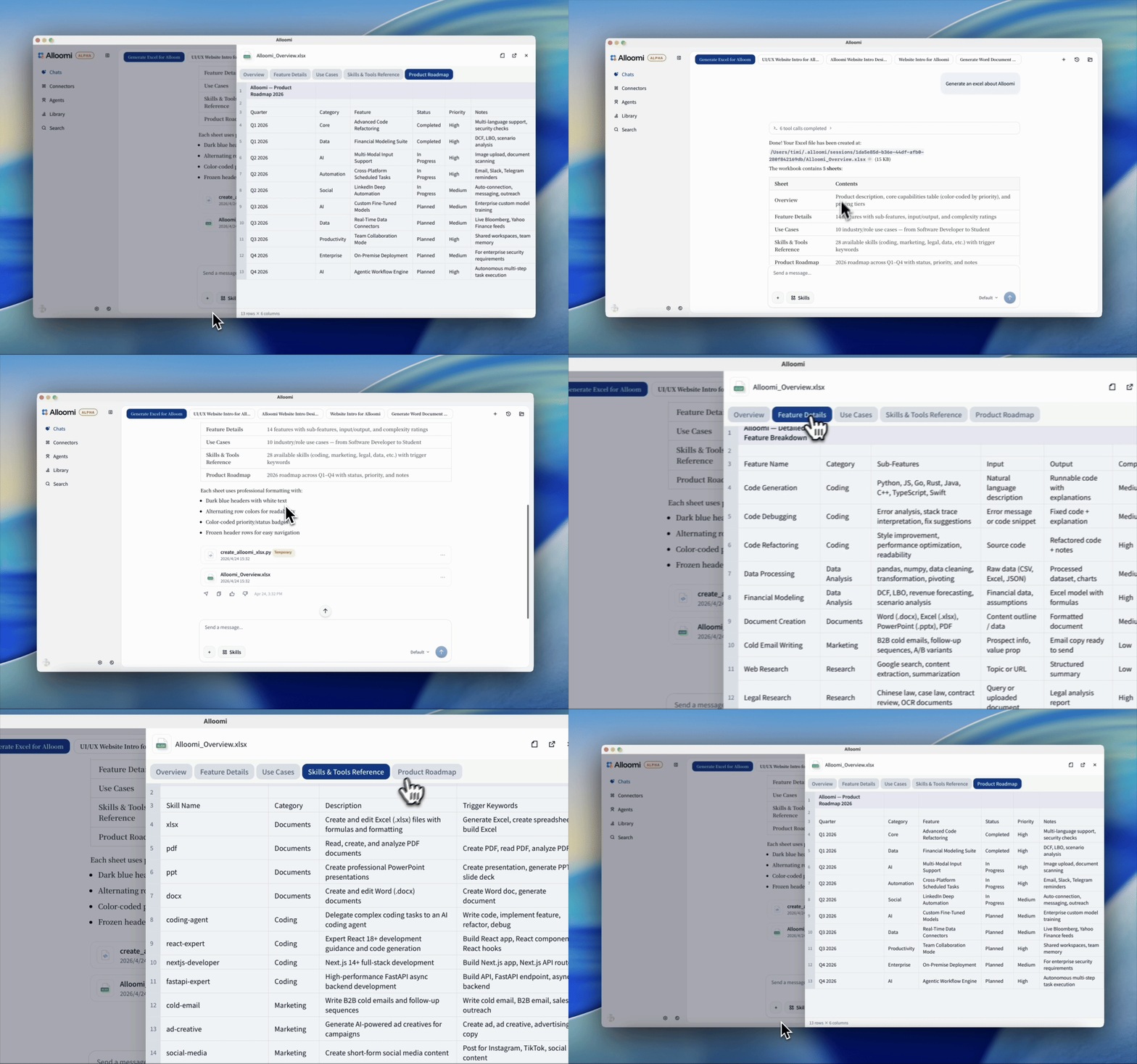
App Screenshots
 |  |
 |  |
 |  |
Feedback
This is early-stage software. We're looking for people who'll actually install it, connect their tools, and tell us what's broken.
- GitHub Issues — bugs, install problems, feature requests
- Discord — discussion, questions, help
- Email — anything else
Contributing
See CONTRIBUTING.md. Look for good first issue labels.
Related Projects
OpenLoomi is the desktop experience. Many of the lower-level building blocks it depends on — AI runtime, integrations, loop engine, audit, memory — are developed in the open at:
OpenContext — the context layer
Your agent forgets why it made decisions. OpenContext fixes that.
OpenContext is the agentic context runtime that sits underneath an agentic application — a temporal context graph, a memory API, retrieval primitives, a multi-platform integration mesh, a deterministic loop engine, and an agent runtime, all behind a single library-first dependency.
- Temporal Context Graph. A directed acyclic graph where every fact carries
valid_from/valid_until. Supersession, contradiction, and merge are first-class edges — corrections are append-only, not destructive, so "what did we believe last quarter?" is a real, citable query. - Library-First API. Drop it into any host process with
pnpm add @melandlabs/opencontext. It's not a UI, a chat surface, or a model provider — it's the glue between durable memory, retrieval, context correction, and multi-platform connectivity. - Platform Integration Mesh. One uniform
IntegrationRecordshape across Gmail, Slack, Telegram, Linear, Jira, iMessage, Feishu, Weixin, and friends — credential rotation, rate-limit handling, and reconnect logic live behind the adapter. - Deterministic Loop Engine. A scheduler that wakes up, decides whether there is real work, and only then calls into the agent runtime. LLM calls are not the foundation — they are the last step.
- Built for embedded agents. Designed to be embedded into any host process — CLI, MCP server, daemon, desktop app, or product backend. OpenLoomi Desktop is one such host.
→ Read docs/architecture.md
for the full data model, lifecycle of a fact, and transport surface map.
pnpm add @melandlabs/opencontext
License


Similar repos


Languages
TypeScript
57.0%
Python
18.9%
JavaScript
9.8%
Rust
3.5%
MDX
3.1%
HTML
3.0%
Jupyter Notebook
2.3%
Shell
1.2%
OpenLoomi is an open-source AI coworker. It connects your work tools, understands what you’re working on, and tells you what needs your attention, why it matters, and what to do next. It’s your open-source Attention Agent.
See the codeREADME
⭐ If you find OpenLoomi useful, please consider giving us a star on GitHub! It helps more people discover the project and motivates us to keep building. 🙏
What is OpenLoomi?
Your work is scattered across apps. OpenLoomi connects the tools you use and, with your permission, understands what’s on your screen. It brings together the context behind your people, projects, and decisions, then surfaces only what needs your decision or action.
Focus on what matters. This is your Attention Agent.
What is it for?
An always-on desktop attention agent — the friendly desk companion Loomi — watches the door so you don't have to, and turns the day's scattered signals into decision cards you can approve in one tap. Use it standalone, or plug any Agent framework into the same resident desktop: Claude Code, Codex, OpenCode, Hermes, and OpenClaw all work.
- Stop dropping commitments. Overdue replies, creeping deadlines, "I'll send that follow-up Friday" — Loomi nudges you with a small bubble at the right moment, and you can teach it the signals and decisions to watch for.
- Find anything from your work life in seconds. "What did I decide about pricing last quarter?", "Who owns design on Acorn?", "What was I working on before vacation?" — memory spans every tool and channel, no more digging through Slack, Gmail, or Notion.
- Morning brief at 9 AM, end-of-day recap at 6 PM. Today's to-do slides into view every morning, today's done ships every evening — the key info lives in one place instead of nine apps.
- Ask AI for work help right inside your chat. Draft a reply, summarize a long thread, schedule a follow-up — directly in Telegram, WhatsApp, iMessage, QQ, or Lark/Feishu.
→ Learn more about the always-on companion in the Attention Agent docs and Use cases.
Features
| Capability | What it does | |
|---|---|---|
| 🐾 | Attention Agent | An always-on desktop companion (Loomi) that surfaces pre-decided reminders — 9 AM to-do, 6 PM recap, overdue replies — as small bubbles, without fighting for your focus. |
| 🧠 | Holistic Context | Short → mid → long-term memory that grows on its own — visible, auditable, and always remembering your people, projects, and decisions across months |
| 🔌 | Platform Connectors | Auto-fetch background sync loop pulls commits, issues, emails, and docs proactively into your context graph. Messaging apps — Telegram, WhatsApp, iMessage, QQ, Lark/Feishu — let you chat with AI directly inside your existing conversations. |
| ⏰ | Proactive Tasks | Schedule recurring work — daily digests, weekly reports, reminders — that run automatically on your desktop. |
| 🖥️ | Security & Ease of Use | Native app for Windows, macOS, Linux Desktop Apps — works out of the box, minutes to set up, no configuration wrestling; local-first storage, AES-256 encryption, no data leaves your machine, auditable access logs |
| 🧩 | Any Agent Integration | OpenLoomi's context, memory, connectors, attention agent, and Loop engine are all delivered as open-source Skills and Plugins. Use OpenLoomi Desktop directly, or plug into your existing Agent — Claude, Codex, OpenCode, Hermes, or OpenClaw. |
Quick Start
Download directly (for end users):
Full documentation: openloomi.ai/docs
Use as an Agent plugin (for Claude Code / Codex users):
OpenLoomi ships official marketplace plugins that turn your existing agent into a front-end for the local OpenLoomi runtime.
| Agent | Install | First-run setup |
|---|---|---|
| Claude Code | /plugin marketplace add melandlabs/plugins/plugin install openloomi | /openloomi:setup |
| Codex CLI | codex plugin marketplace add melandlabs/plugins && codex plugin add openloomi@openloomi | @OpenLoomi Run first-use setup. |
The slim public marketplace lives at melandlabs/plugins so adding it only fetches the plugin payloads. See the plugin docs for full reference: plugins/claude · plugins/codex.
Use in skill-only agent runtimes:
Install the OpenLoomi skill set directly from this repository:
npx skills add https://github.com/melandlabs/openloomi/tree/main/skills \
  --skill openloomi openloomi-setup openloomi-memory openloomi-connectors openloomi-loop openloomi-goals openloomi-api openloomi-feature-guide composio \
  -y
Start with the openloomi or openloomi-setup skill. The first setup pass
checks whether OpenLoomi Desktop is installed, whether the local API is
reachable, and whether a local session token is available. If OpenLoomi
Desktop is missing, the skill points the user to the official Getting Started
guide and release downloads before continuing.
Develop locally (for developers):
git clone https://github.com/melandlabs/openloomi.git
cd openloomi

pnpm install
pnpm tauri:dev
Requires Node.js 22+, pnpm 9+, Rust 1.75+, and on Windows: Visual Studio Build Tools with C++ workload. For more platform-specific setup requirements, see CONTRIBUTING.md.
Why It Is Different
OpenLoomi is open-source and neutral. Instead of locking you into a single vendor's agent, it integrates with any Agent Runtime — Claude Code, Codex, OpenCode, Hermes, OpenClaw — and brings a shared, cross-agent layer to all of them: a resident desktop attention agent, holistic context memory, platform connectors, and proactive tasks. Whichever agent you run, OpenLoomi watches the door, remembers what matters, and surfaces only the decisions worth your time — so you spend your attention on the work, not on chasing it.
| Compared with... | OpenLoomi adds |
|---|---|
| Claude Cowork-style agents | an open-source, local-first AI coworker and workspace with source evidence and approval |
| Codex / Claude Code | workspace context beyond the repo: people, product decisions, launch context, issues, and follow-ups |
| OpenClaw / Hermes | context before and after the action: why it matters, what source was used, what changed, what remains open |
| RAG / knowledge bases | work state, not just document retrieval: what changed, what is still true, and what should affect the next action |
App Screenshots
| |
| |
| |
Feedback
This is early-stage software. We're looking for people who'll actually install it, connect their tools, and tell us what's broken.
- GitHub Issues — bugs, install problems, feature requests
- Discord — discussion, questions, help
- Email — anything else
Contributing
See CONTRIBUTING.md. Look for good first issue labels.
Related Projects
OpenLoomi is the desktop experience. Many of the lower-level building blocks it depends on — AI runtime, integrations, loop engine, audit, memory — are developed in the open at:
OpenContext — the context layer
Your agent forgets why it made decisions. OpenContext fixes that.
OpenContext is the agentic context runtime that sits underneath an agentic application — a temporal context graph, a memory API, retrieval primitives, a multi-platform integration mesh, a deterministic loop engine, and an agent runtime, all behind a single library-first dependency.
- Temporal Context Graph. A directed acyclic graph where every fact carries
valid_from/valid_until. Supersession, contradiction, and merge are first-class edges — corrections are append-only, not destructive, so "what did we believe last quarter?" is a real, citable query. - Library-First API. Drop it into any host process with
pnpm add @melandlabs/opencontext. It's not a UI, a chat surface, or a model provider — it's the glue between durable memory, retrieval, context correction, and multi-platform connectivity. - Platform Integration Mesh. One uniform
IntegrationRecordshape across Gmail, Slack, Telegram, Linear, Jira, iMessage, Feishu, Weixin, and friends — credential rotation, rate-limit handling, and reconnect logic live behind the adapter. - Deterministic Loop Engine. A scheduler that wakes up, decides whether there is real work, and only then calls into the agent runtime. LLM calls are not the foundation — they are the last step.
- Built for embedded agents. Designed to be embedded into any host process — CLI, MCP server, daemon, desktop app, or product backend. OpenLoomi Desktop is one such host.
→ Read docs/architecture.md
for the full data model, lifecycle of a fact, and transport surface map.
pnpm add @melandlabs/opencontext
License
Similar repos
Languages
TypeScript
57.0%
Python
18.9%
JavaScript
9.8%
Rust
3.5%
MDX
3.1%
HTML
3.0%
Jupyter Notebook
2.3%
Shell
1.2%