Google Research Football MARL Benchmark and Research Toolkit
See the code


This repo provides a simple, distributed and asynchronous multi-agent reinforcement learning framework for the Google Research Football environment, along with research tools and results for benchmarking. In particular, it includes:
Documentation: grf-marl.readthedocs.io/
Implementation for CDS_QMIX and CDS_QPLEX: MyCDS benchmark
Check out the paper at Boosting Studies of Multi-Agent Reinforcement Learning on Google Research Football Environment: the Past, Present, and Future
You can use any tool to manage your python environment. Here, we use conda as an example.
conda create -n light-malib python==3.9 to create a new conda env.conda activate light-malib when you want to use it or you can add this line to your .bashrc file to enable it everytime you login into the bash.git clone https://github.com/jidiai/GRF_MARL.git
cd GRF_MARL
pip install -r requirements.txt
After installation, run an example experiment by executing the following command from the home folder:
python3 light_malib/main_pbt.py --config PATH_TO_CONFIG
where PATH_TO_CONFIG is the relative path of the experiment configuration file.
To run experiments on a small cluster, please follow ray's official instructions to start a cluster. For example, use ray start --head on the master, then connect other machines to the master following the hints from command line output.
We support multiple algorithms on benchmark scenarios.
The experiment configurations are listed under this folder. Your can run an experiment, for example, by
python3 light_malib/main_pbt.py --config expr_configs/cooperative_MARL_benchmark/academy/pass_and_shoot_with_keeper/ippo.yaml
The experiment configurations are listed under this folder. Your can run an experiment, for example, by
python3 light_malib/main_pbt.py --config expr_configs/population_based_self_play/ippo_5v5_hard_psro.yaml
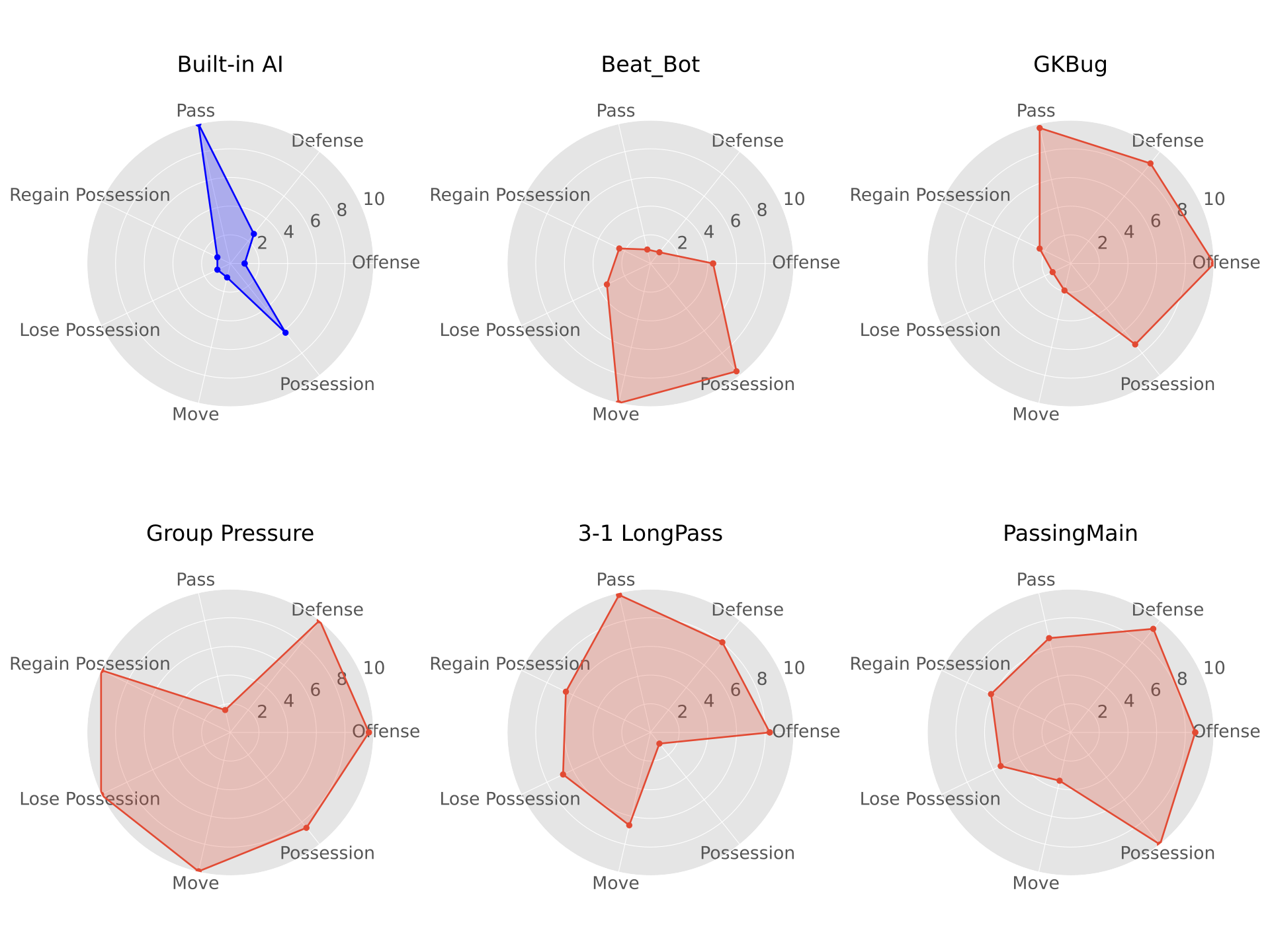
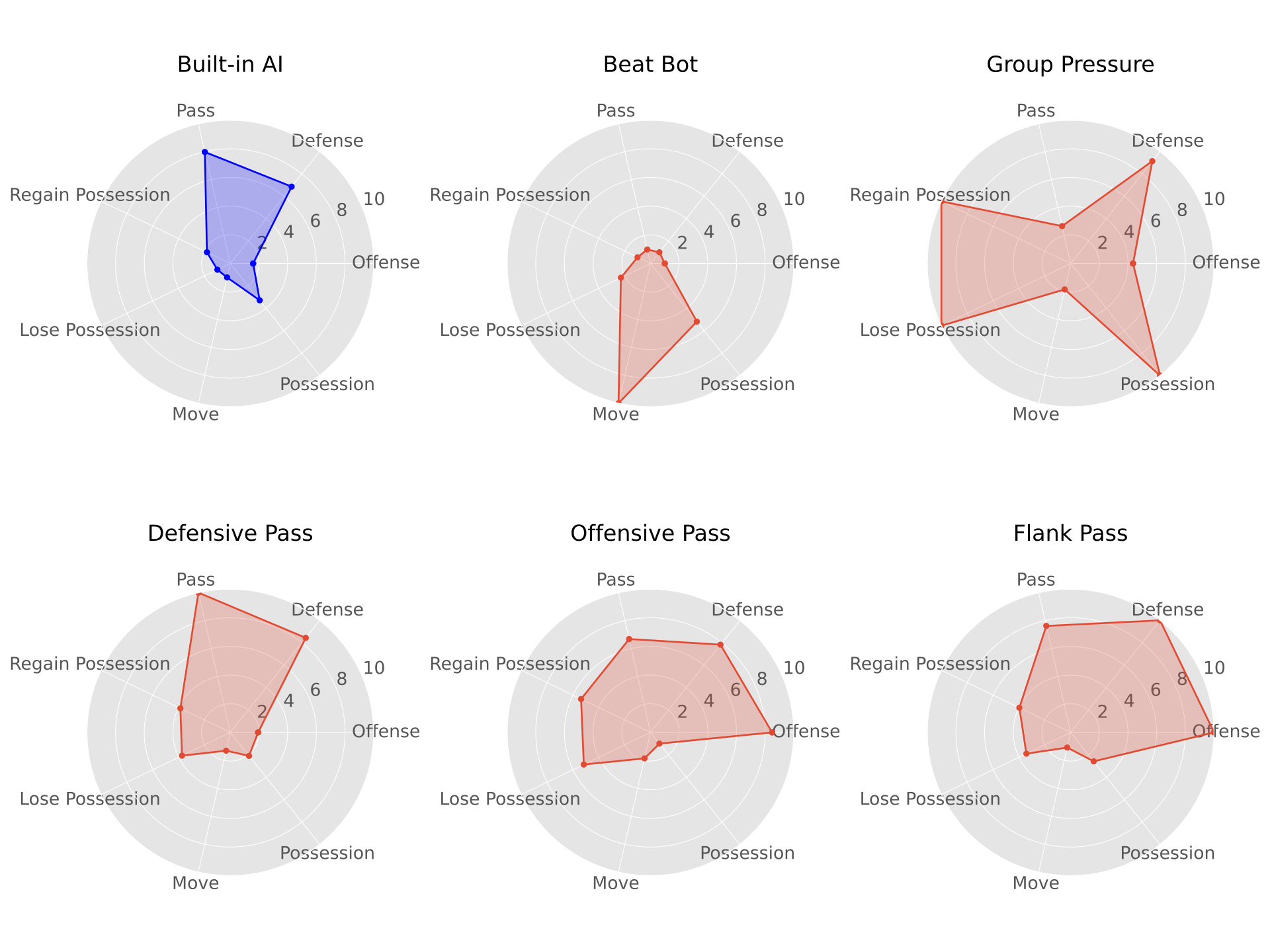
We offer some pre-trained policies for study in both 5-vs-5 and 11-vs-11 full-game scenarios. You probably want use them as opponents or for initalization. Please refer to this section.
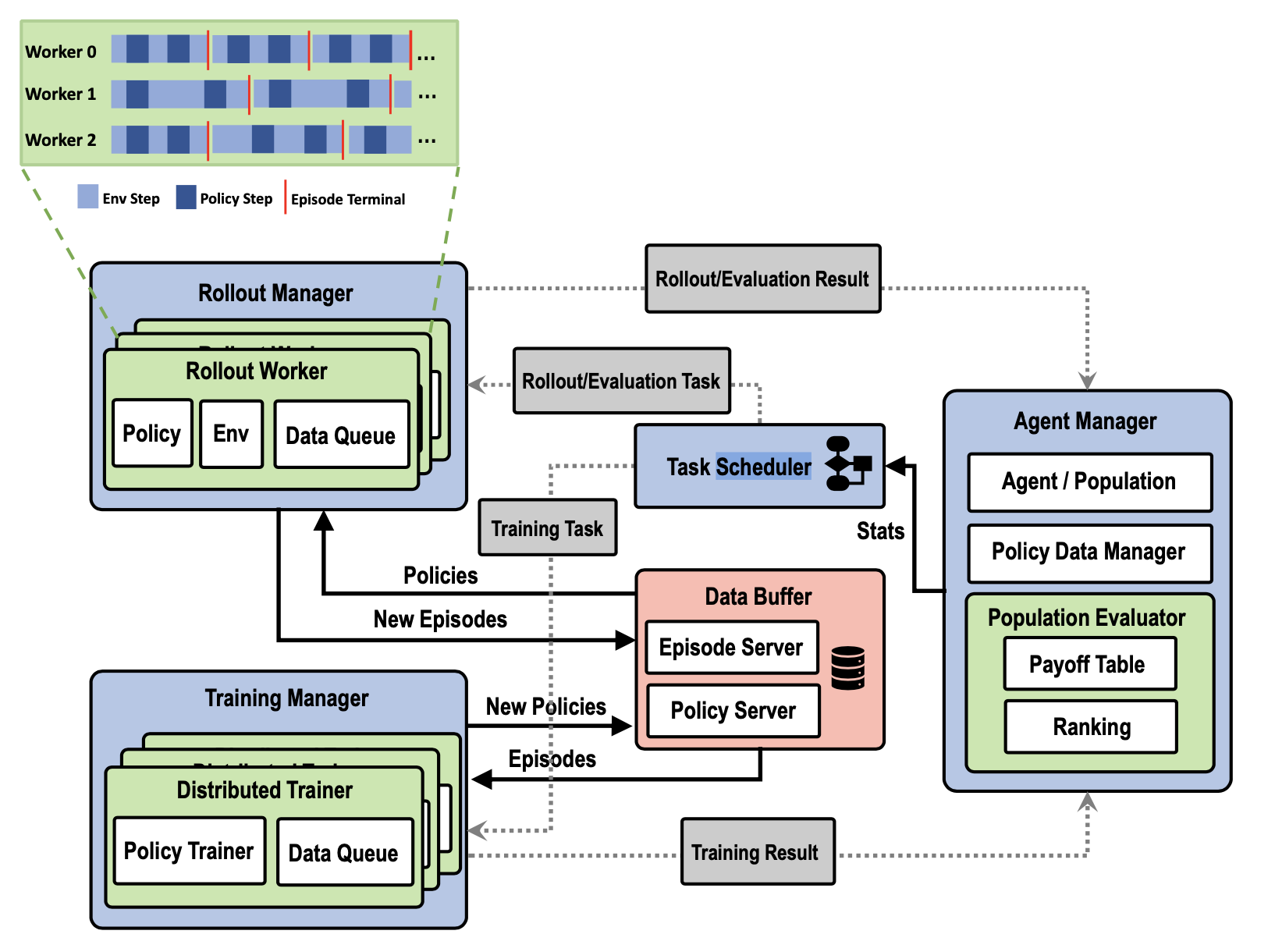
Our framework design draws great inspiration from MALib and RLlib. It has five major components, each serving a specific role:
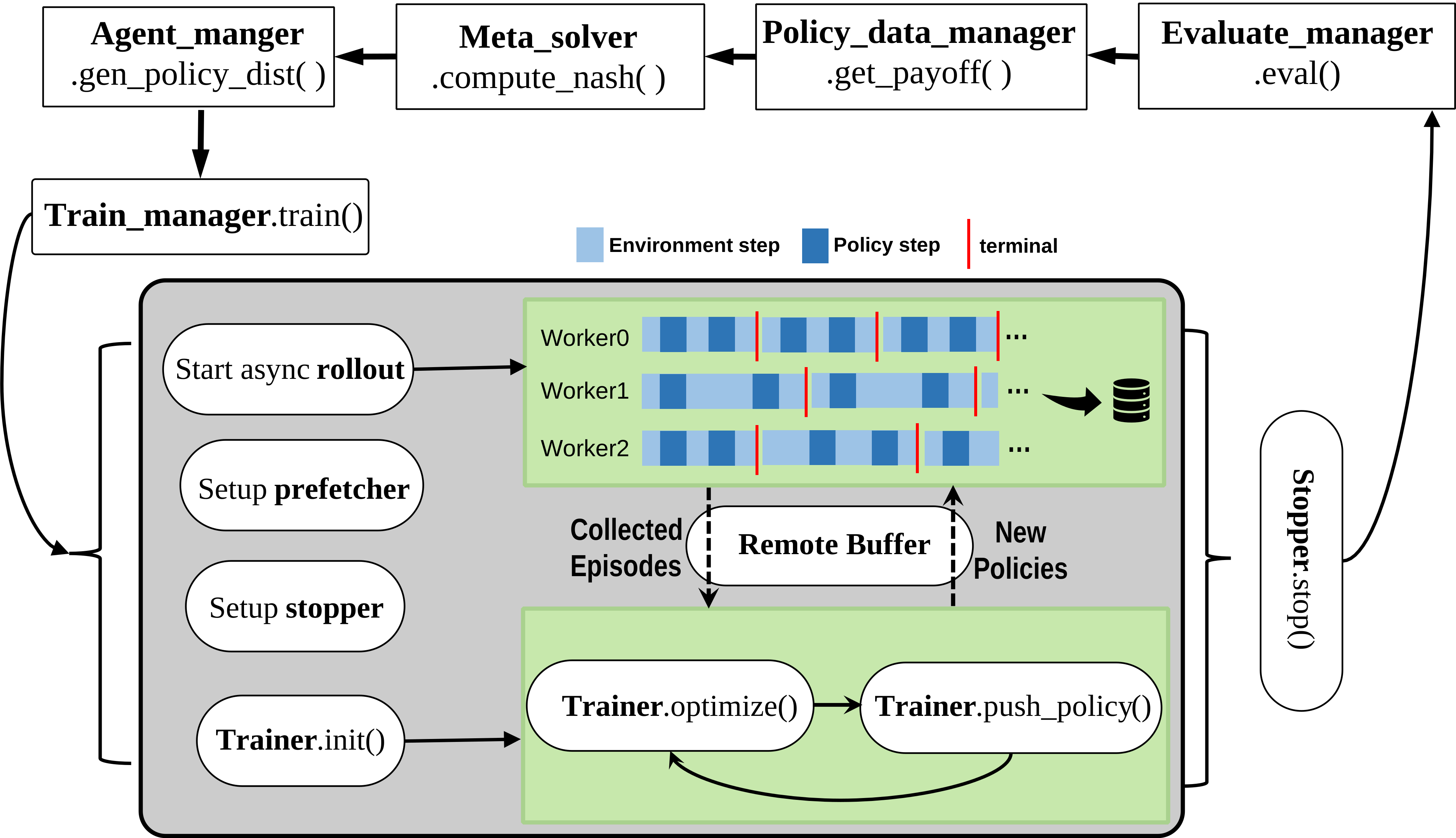
Beside training against a fixed opponent, Light-MALib also supports population-based training, such as Policy-Space Response Oracle (PSRO). An illustration of a PSRO trial is given as below:
Currently, we provide the following tools for better study in the field of Football AI.
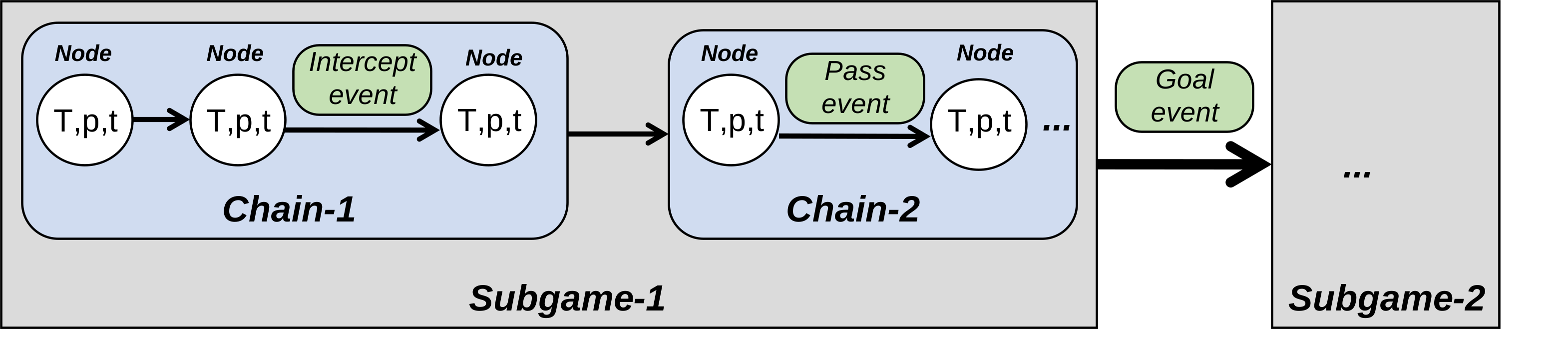
A data structure representing a game as a tree structure with branching indicating important events like goals or intercepts. See its usage in README.
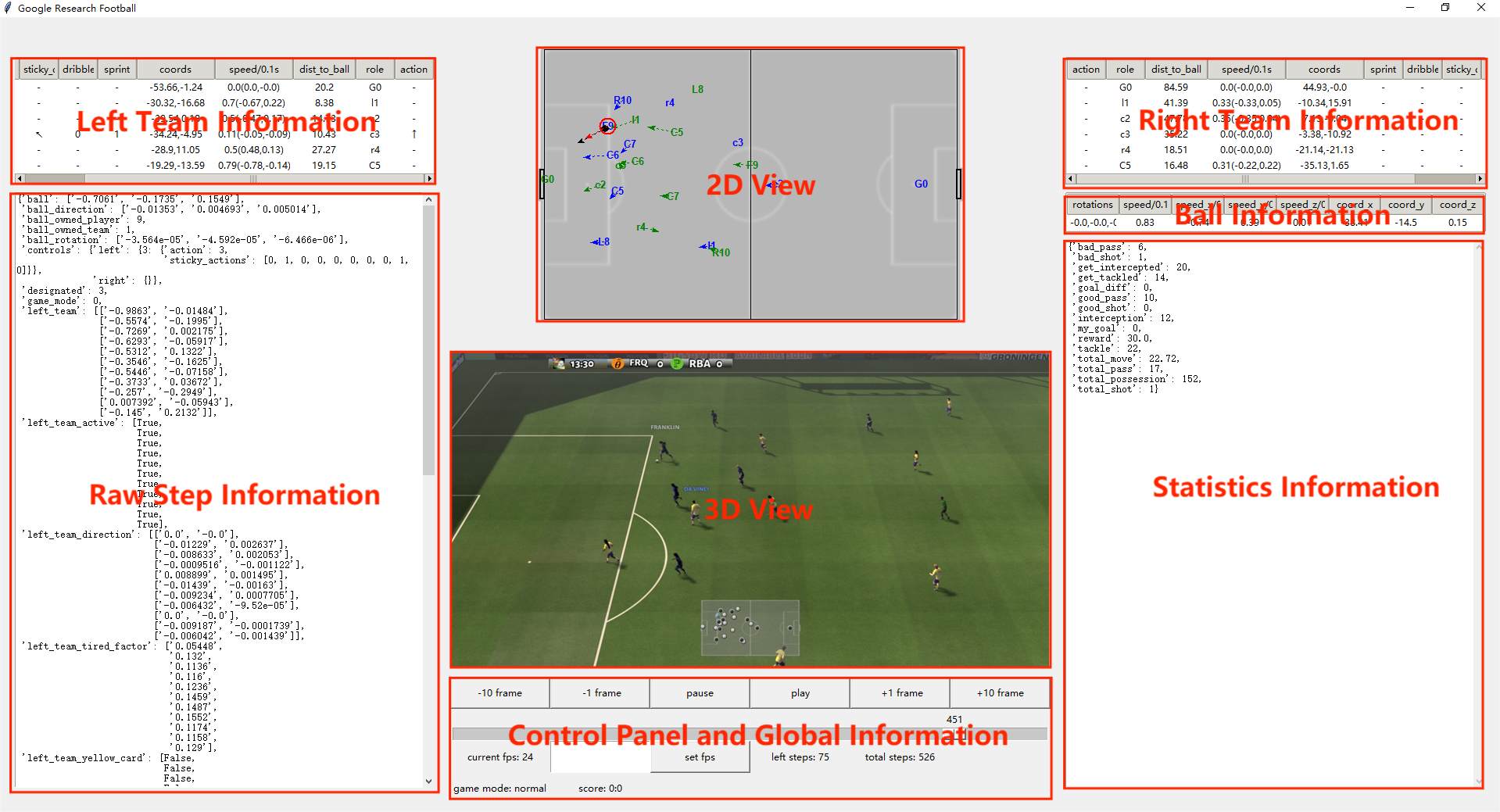
A single-step graphical debugger illustrating both 3D and 2D frames with detailed frame data, such as the movements of players and the ball. See its usage in README.
At this stage, we release some of our trained model for use as initializations or opponents.
See documentation.
Thanks for your interests! The project is open for contribution. You can either add new environment or algorithm to be tested under the framework.
For new environment, feel free to check out this example.
For new algorithm, it needs to be put in the directory \light_malib\algorithm\ and should include the following components:
loss.py: given samples, how to compute loss function and performs gradient update;policy.py: policy instance for action generation mainly;trainer.py: trainer class for data preprocessing;For each policy setting (actor/critic network, feature settings, etc), please check out this doc.
DataServer:
alive_usage_mean/std: mean/std usage of data samples in buffer;mean_wait_time: total reading waiting time divided reading counts;sample_per_minute_read: number of samples read per minute;sample_per_minute_write: number of samples written per minute;PSRO:
Elo: Elo-rate during PBT;Payoff Table: plot of payoff table;Rollout:
bad_pass,bad_shot,get_intercepted,get_tackled,good_pass,good_shot,interception,num_pass,num_shot,tackle, total_move,total_pass,total_possession,total_shot: detailed football statistics;goal_diff: goal difference of the training agent (positive indicates more goals);lose/win: expected lose/win rate during rollout;score: expected scores durig rollout, score for a single game has value 0 if lose, 1 if win and 0.5 if draw;RolloutTimer
batch: timer for getting a rollout batch;env_core_step: timer for simulator stepping time;env_step: total timer for an enviroment step;feature: timer for feature encoding;inference: timer for policy inference;policy_update: timer for pulling policies from remote;reward: timer for reward calculation;rollout: total timer for one rollout;sample: timer for policy sampling;stats: timer for collecting statistics;Training:
Old_V_max/min/mean/std: value estimate at rollout;V_max/min/mean/std: current value estimate;advantage_max/min/mean/std: Advantage value;approx_kl: KL divergence between old and new action distributions;clip_ratio: proportion of clipped entries;delta_max/min/mean/std: TD error;entropy: entropy value;imp_weights_max/min/mean/std: importance weights;kl_diff: variation of approx_kl;lower_clip_ratio: proportion of up-clipping entries;upper_clip_ratio: proportion of down-clipping entries;policy_loss: policy loss;training_epoch: number of training epoch at each iteration;value_loss: value lossTrainingTimer:
compute_return: timer for GAE compute;data_copy: timer for data copy when processing data;data_generator: timer for generating data;loss: total timer for loss computing;move_to_gpu: timer for sending data to GPU;optimize: total timer for an optimization step;push_policy: timer for pushing trained policies to the remote;train_step: total timer for a training step;trainer_data: timer for get data from local_queue;trainer_optimize: timer for a optimization step in the trainer;If you have any questions about this repo, feel free to leave an issue. You can also contact current maintainers, YanSong97 and DiligentPanda, by email.
Google Research Football MARL Benchmark and Research Toolkit
See the code
This repo provides a simple, distributed and asynchronous multi-agent reinforcement learning framework for the Google Research Football environment, along with research tools and results for benchmarking. In particular, it includes:
Documentation: grf-marl.readthedocs.io/
Implementation for CDS_QMIX and CDS_QPLEX: MyCDS benchmark
Check out the paper at Boosting Studies of Multi-Agent Reinforcement Learning on Google Research Football Environment: the Past, Present, and Future
You can use any tool to manage your python environment. Here, we use conda as an example.
conda create -n light-malib python==3.9 to create a new conda env.conda activate light-malib when you want to use it or you can add this line to your .bashrc file to enable it everytime you login into the bash.git clone https://github.com/jidiai/GRF_MARL.git
cd GRF_MARL
pip install -r requirements.txt
After installation, run an example experiment by executing the following command from the home folder:
python3 light_malib/main_pbt.py --config PATH_TO_CONFIG
where PATH_TO_CONFIG is the relative path of the experiment configuration file.
To run experiments on a small cluster, please follow ray's official instructions to start a cluster. For example, use ray start --head on the master, then connect other machines to the master following the hints from command line output.
We support multiple algorithms on benchmark scenarios.
The experiment configurations are listed under this folder. Your can run an experiment, for example, by
python3 light_malib/main_pbt.py --config expr_configs/cooperative_MARL_benchmark/academy/pass_and_shoot_with_keeper/ippo.yaml
The experiment configurations are listed under this folder. Your can run an experiment, for example, by
python3 light_malib/main_pbt.py --config expr_configs/population_based_self_play/ippo_5v5_hard_psro.yaml
We offer some pre-trained policies for study in both 5-vs-5 and 11-vs-11 full-game scenarios. You probably want use them as opponents or for initalization. Please refer to this section.
Our framework design draws great inspiration from MALib and RLlib. It has five major components, each serving a specific role:
Beside training against a fixed opponent, Light-MALib also supports population-based training, such as Policy-Space Response Oracle (PSRO). An illustration of a PSRO trial is given as below:
Currently, we provide the following tools for better study in the field of Football AI.
A data structure representing a game as a tree structure with branching indicating important events like goals or intercepts. See its usage in README.
A single-step graphical debugger illustrating both 3D and 2D frames with detailed frame data, such as the movements of players and the ball. See its usage in README.
At this stage, we release some of our trained model for use as initializations or opponents.
See documentation.
Thanks for your interests! The project is open for contribution. You can either add new environment or algorithm to be tested under the framework.
For new environment, feel free to check out this example.
For new algorithm, it needs to be put in the directory \light_malib\algorithm\ and should include the following components:
loss.py: given samples, how to compute loss function and performs gradient update;policy.py: policy instance for action generation mainly;trainer.py: trainer class for data preprocessing;For each policy setting (actor/critic network, feature settings, etc), please check out this doc.
DataServer:
alive_usage_mean/std: mean/std usage of data samples in buffer;mean_wait_time: total reading waiting time divided reading counts;sample_per_minute_read: number of samples read per minute;sample_per_minute_write: number of samples written per minute;PSRO:
Elo: Elo-rate during PBT;Payoff Table: plot of payoff table;Rollout:
bad_pass,bad_shot,get_intercepted,get_tackled,good_pass,good_shot,interception,num_pass,num_shot,tackle, total_move,total_pass,total_possession,total_shot: detailed football statistics;goal_diff: goal difference of the training agent (positive indicates more goals);lose/win: expected lose/win rate during rollout;score: expected scores durig rollout, score for a single game has value 0 if lose, 1 if win and 0.5 if draw;RolloutTimer
batch: timer for getting a rollout batch;env_core_step: timer for simulator stepping time;env_step: total timer for an enviroment step;feature: timer for feature encoding;inference: timer for policy inference;policy_update: timer for pulling policies from remote;reward: timer for reward calculation;rollout: total timer for one rollout;sample: timer for policy sampling;stats: timer for collecting statistics;Training:
Old_V_max/min/mean/std: value estimate at rollout;V_max/min/mean/std: current value estimate;advantage_max/min/mean/std: Advantage value;approx_kl: KL divergence between old and new action distributions;clip_ratio: proportion of clipped entries;delta_max/min/mean/std: TD error;entropy: entropy value;imp_weights_max/min/mean/std: importance weights;kl_diff: variation of approx_kl;lower_clip_ratio: proportion of up-clipping entries;upper_clip_ratio: proportion of down-clipping entries;policy_loss: policy loss;training_epoch: number of training epoch at each iteration;value_loss: value lossTrainingTimer:
compute_return: timer for GAE compute;data_copy: timer for data copy when processing data;data_generator: timer for generating data;loss: total timer for loss computing;move_to_gpu: timer for sending data to GPU;optimize: total timer for an optimization step;push_policy: timer for pushing trained policies to the remote;train_step: total timer for a training step;trainer_data: timer for get data from local_queue;trainer_optimize: timer for a optimization step in the trainer;If you have any questions about this repo, feel free to leave an issue. You can also contact current maintainers, YanSong97 and DiligentPanda, by email.



