Track personal Bluetooth devices via Apple's "Find My" network using OpenHaystack and Macless-Haystack with tools written in Go/TinyGo. No Apple hardware required! Build your own beacon using Xiao-BLE, ESP32-C3/S3, & many other boards.
Go
1,525
68 commits
updated Oct 12, 2026

Go Haystack lets you track personal Bluetooth devices via Apple's massive "Find My" network.
It uses OpenHaystack together with Macless-Haystack to help you setup a custom FindMy network with tools written in Go/TinyGo. No Apple hardware required!
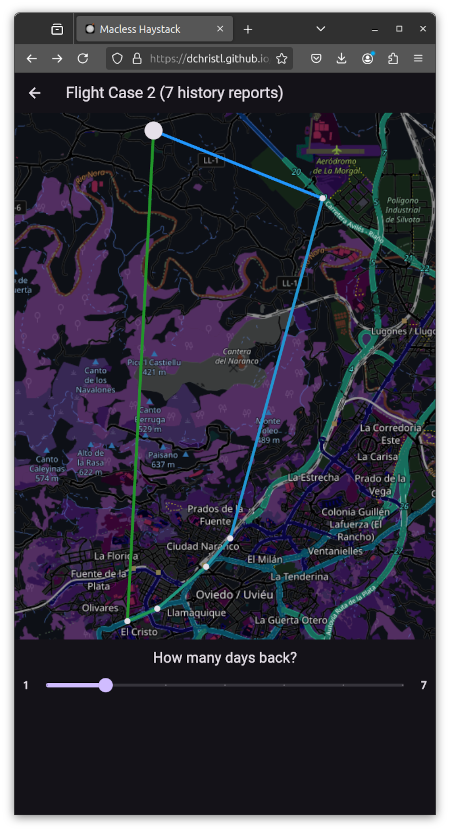
This package provides firmware written using TinyGo and the TinyGo Bluetooth package.
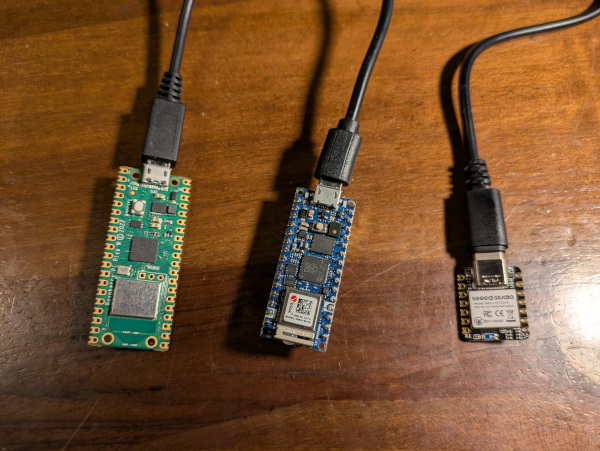
As a result, any of the following hardware devices should work:
xiao-esp32c3, xiao-esp32s3, esp32c3-supermini, esp32s3-supermini, esp32c3-generic, esp32s3-generic, qtpy-esp32c3 and m5stamp-c3. These boards need TinyGo 0.42 or later.The beacon code is located in this repository in the firmware directory.
You can also run the beacon code on any Linux that has Bluetooth hardware, such as a Raspberry Pi or other embedded system.
The beacon code is the same for embedded Linux as for microcontrollers, and is located in this repo in the firmware directory.
Give it the keys as one argument, separated by commas, and the time on each key as a second argument:
cd firmware
go run . KEY1,KEY2,KEY3 5m
Use the advertisement keys from the .keys file of the device. See Keys.
Go Haystack also includes TinyScan, a hardware scanner for local devices.
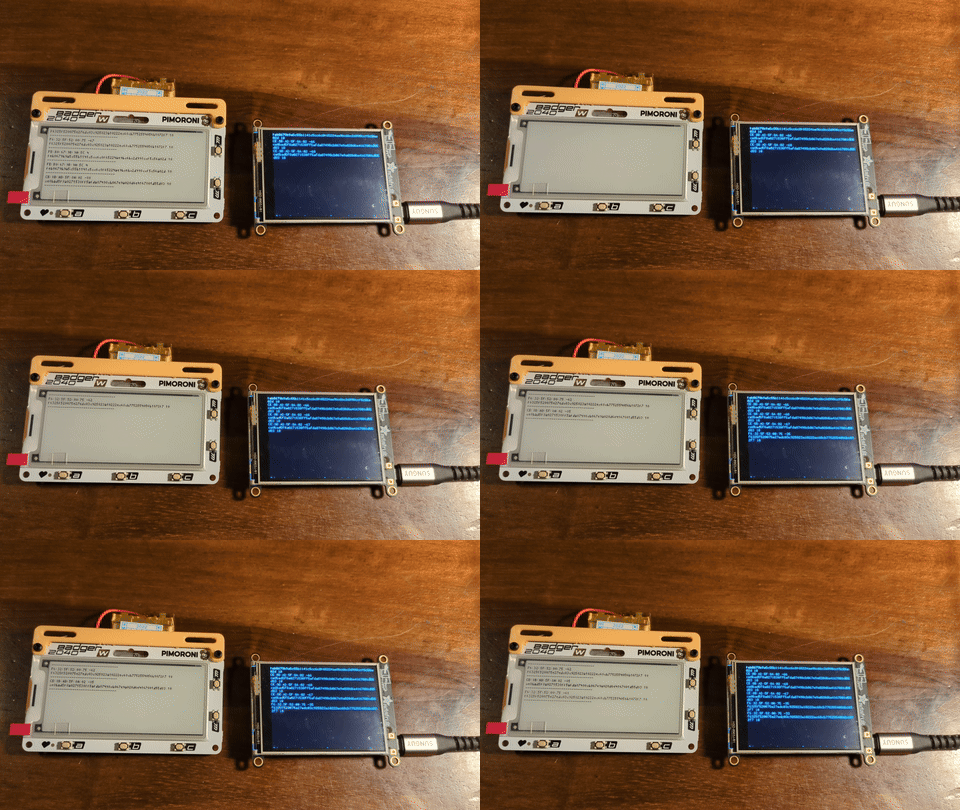
TinyScan runs on several different microcontrollers boards with Bluetooth and miniature displays, such as those made by Adafruit and Pimoroni
The TinyScan code is located in the tinyscan directory in this repository.
TinyScan can also show the names of your own devices. Flash it with the same device
names that you used with haystack keys, and it then shows the name of the device
with a * mark instead of the key:
haystack flashscan clue blackgopher redgopher
Add -onlymine to hide every beacon that is not one of your devices. See
TinyScan for more information.
You must have an Apple-ID with 2FA enabled. Only sms/text message as second factor is supported!
Start anisette-v3-server
docker network create mh-network
docker run -d --restart always --name anisette -p 6969:6969 --volume anisette-v3_data:/home/Alcoholic/.config/anisette-v3 --network mh-network dadoum/anisette-v3-server
docker run -it --restart unless-stopped --name macless-haystack -p 6176:6176 --volume mh_data:/app/endpoint/data --network mh-network christld/macless-haystack
serving at port 6176 over HTTP you have all set up correctlyHit ctrl-C to exit the process once it has been configured.
docker restart macless-haystack
See https://github.com/dchristl/macless-haystack/blob/main/README.md#server-setup for the original instructions.
Install the go-haystack command line tool
go install github.com/hybridgroup/go-haystack/cmd/haystack@latest
haystack version
Returns the version of the tool, with the revision of the build if it has one:
haystack 0.2.0-dev (7180716)
haystack scan
Should return any local devices within range:
$ haystack scan
CE:8B:AD:5F:8A:02 -53 ce8bad5f8a0271538ff5afda87498cb067e9a020d6e4167801d55d83 - battery full
FE:B0:67:9B:9A:5C -55 feb0679b9a5c55b1141c5cc6c8f65224ae9bc6bc2d998ccf5c56a02d - battery full
CE:8B:AD:5F:8A:02 -53 ce8bad5f8a0271538ff5afda87498cb067e9a020d6e4167801d55d83 - battery full
CE:8B:AD:5F:8A:02 -53 ce8bad5f8a0271538ff5afda87498cb067e9a020d6e4167801d55d83 - battery full
FE:B0:67:9B:9A:5C -56 feb0679b9a5c55b1141c5cc6c8f65224ae9bc6bc2d998ccf5c56a02d - battery full
CE:8B:AD:5F:8A:02 -53 ce8bad5f8a0271538ff5afda87498cb067e9a020d6e4167801d55d83 - battery full
FE:B0:67:9B:9A:5C -56 feb0679b9a5c55b1141c5cc6c8f65224ae9bc6bc2d998ccf5c56a02d - battery full
CE:8B:AD:5F:8A:02 -53 ce8bad5f8a0271538ff5afda87498cb067e9a020d6e4167801d55d83 - battery full
haystack keys DEVICENAME
The keys will be saved in a file named DEVICENAME.keys and the configuration file for Haystack will be saved in DEVICENAME.json. Replace "DEVICENAME" with whatever you want to name the actual device.
This makes a set of 12 keys, which the beacon uses in turn. Add -keys for a different
number. See Keys.
For example:
haystack flash DEVICENAME nano-rp2040
This will use TinyGo to compile the firmware using your keys, and then flash it to the device. See https://tinygo.org/getting-started/overview/ for more information about TinyGo.
For a device on a battery, add -battery, which turns the serial port off. Add
-txpower to lower the radio transmit power, which saves more current but shortens
the range. On an ESP32-C3 or ESP32-S3 board, add -batterypin and -batterydivider to
read the battery. Add -batterytype for a cell that is not a LiPo, such as a CR2032, or
-batterythresholds for the voltages of any other cell. Add -rotate for a different
time on each key. All flags go before the subcommand. See Battery Powered Beacons and
Keys.
haystack -battery -txpower=-8 flash DEVICENAME xiao-ble
macless-haystack using the web UI.Point your web browser to https://dchristl.github.io/macless-haystack/ which is a single-page web application that only reads/writes local data. Click on the link for "Accessories", then on the "+" button. Choose the DEVICENAME.json file for your device.
That's it, your device is now setup.
Eventually, if your device is in range of any iPhone, they will appear in your Macless-Haystack data in the web UI.
Note that it might take a while for the first data to show up.
Have fun, be good!
The unit tests run on the host, so they need no hardware:
go test ./...
See Testing for the microcontroller builds and for the tests on the hardware.
(top 24 of 39)
283 followers · starred Jan 2025
2,337 followers · starred Jan 2025
8,913 followers · starred Jan 2025
679 followers · starred Jan 2025
Track personal Bluetooth devices via Apple's "Find My" network using OpenHaystack and Macless-Haystack with tools written in Go/TinyGo. No Apple hardware required! Build your own beacon using Xiao-BLE, ESP32-C3/S3, & many other boards.
Go
1,525
68 commits
updated Oct 12, 2026
Go Haystack lets you track personal Bluetooth devices via Apple's massive "Find My" network.
It uses OpenHaystack together with Macless-Haystack to help you setup a custom FindMy network with tools written in Go/TinyGo. No Apple hardware required!
This package provides firmware written using TinyGo and the TinyGo Bluetooth package.
As a result, any of the following hardware devices should work:
xiao-esp32c3, xiao-esp32s3, esp32c3-supermini, esp32s3-supermini, esp32c3-generic, esp32s3-generic, qtpy-esp32c3 and m5stamp-c3. These boards need TinyGo 0.42 or later.The beacon code is located in this repository in the firmware directory.
You can also run the beacon code on any Linux that has Bluetooth hardware, such as a Raspberry Pi or other embedded system.
The beacon code is the same for embedded Linux as for microcontrollers, and is located in this repo in the firmware directory.
Give it the keys as one argument, separated by commas, and the time on each key as a second argument:
cd firmware
go run . KEY1,KEY2,KEY3 5m
Use the advertisement keys from the .keys file of the device. See Keys.
Go Haystack also includes TinyScan, a hardware scanner for local devices.
TinyScan runs on several different microcontrollers boards with Bluetooth and miniature displays, such as those made by Adafruit and Pimoroni
The TinyScan code is located in the tinyscan directory in this repository.
TinyScan can also show the names of your own devices. Flash it with the same device
names that you used with haystack keys, and it then shows the name of the device
with a * mark instead of the key:
haystack flashscan clue blackgopher redgopher
Add -onlymine to hide every beacon that is not one of your devices. See
TinyScan for more information.
You must have an Apple-ID with 2FA enabled. Only sms/text message as second factor is supported!
Start anisette-v3-server
docker network create mh-network
docker run -d --restart always --name anisette -p 6969:6969 --volume anisette-v3_data:/home/Alcoholic/.config/anisette-v3 --network mh-network dadoum/anisette-v3-server
docker run -it --restart unless-stopped --name macless-haystack -p 6176:6176 --volume mh_data:/app/endpoint/data --network mh-network christld/macless-haystack
serving at port 6176 over HTTP you have all set up correctlyHit ctrl-C to exit the process once it has been configured.
docker restart macless-haystack
See https://github.com/dchristl/macless-haystack/blob/main/README.md#server-setup for the original instructions.
Install the go-haystack command line tool
go install github.com/hybridgroup/go-haystack/cmd/haystack@latest
haystack version
Returns the version of the tool, with the revision of the build if it has one:
haystack 0.2.0-dev (7180716)
haystack scan
Should return any local devices within range:
$ haystack scan
CE:8B:AD:5F:8A:02 -53 ce8bad5f8a0271538ff5afda87498cb067e9a020d6e4167801d55d83 - battery full
FE:B0:67:9B:9A:5C -55 feb0679b9a5c55b1141c5cc6c8f65224ae9bc6bc2d998ccf5c56a02d - battery full
CE:8B:AD:5F:8A:02 -53 ce8bad5f8a0271538ff5afda87498cb067e9a020d6e4167801d55d83 - battery full
CE:8B:AD:5F:8A:02 -53 ce8bad5f8a0271538ff5afda87498cb067e9a020d6e4167801d55d83 - battery full
FE:B0:67:9B:9A:5C -56 feb0679b9a5c55b1141c5cc6c8f65224ae9bc6bc2d998ccf5c56a02d - battery full
CE:8B:AD:5F:8A:02 -53 ce8bad5f8a0271538ff5afda87498cb067e9a020d6e4167801d55d83 - battery full
FE:B0:67:9B:9A:5C -56 feb0679b9a5c55b1141c5cc6c8f65224ae9bc6bc2d998ccf5c56a02d - battery full
CE:8B:AD:5F:8A:02 -53 ce8bad5f8a0271538ff5afda87498cb067e9a020d6e4167801d55d83 - battery full
haystack keys DEVICENAME
The keys will be saved in a file named DEVICENAME.keys and the configuration file for Haystack will be saved in DEVICENAME.json. Replace "DEVICENAME" with whatever you want to name the actual device.
This makes a set of 12 keys, which the beacon uses in turn. Add -keys for a different
number. See Keys.
For example:
haystack flash DEVICENAME nano-rp2040
This will use TinyGo to compile the firmware using your keys, and then flash it to the device. See https://tinygo.org/getting-started/overview/ for more information about TinyGo.
For a device on a battery, add -battery, which turns the serial port off. Add
-txpower to lower the radio transmit power, which saves more current but shortens
the range. On an ESP32-C3 or ESP32-S3 board, add -batterypin and -batterydivider to
read the battery. Add -batterytype for a cell that is not a LiPo, such as a CR2032, or
-batterythresholds for the voltages of any other cell. Add -rotate for a different
time on each key. All flags go before the subcommand. See Battery Powered Beacons and
Keys.
haystack -battery -txpower=-8 flash DEVICENAME xiao-ble
macless-haystack using the web UI.Point your web browser to https://dchristl.github.io/macless-haystack/ which is a single-page web application that only reads/writes local data. Click on the link for "Accessories", then on the "+" button. Choose the DEVICENAME.json file for your device.
That's it, your device is now setup.
Eventually, if your device is in range of any iPhone, they will appear in your Macless-Haystack data in the web UI.
Note that it might take a while for the first data to show up.
Have fun, be good!
The unit tests run on the host, so they need no hardware:
go test ./...
See Testing for the microcontroller builds and for the tests on the hardware.
(top 24 of 39)
283 followers · starred Jan 2025
2,337 followers · starred Jan 2025
8,913 followers · starred Jan 2025
679 followers · starred Jan 2025