OpenAccess AI Collective's Minotaur 15B GPTQ
8
18 commits
7 linked in READMEs
updated Aug 21, 2023

TheBloke's LLM work is generously supported by a grant from andreessen horowitz (a16z)
These files are GPTQ 4bit model files for OpenAccess AI Collective's Minotaur 15B.
It is the result of quantising to 4bit using GPTQ-for-LLaMa.
It is currently untested as to whether the 8K context is compatible with available GPTQ clients such as text-generation-webui.
If you have feedback on this, please let me know.
USER: <prompt>
ASSISTANT:
Please make sure you're using the latest version of text-generation-webui
TheBloke/minotaur-15B-GPTQ.minotaur-15B-GPTQquantize_config.json.First make sure you have AutoGPTQ installed:
pip install auto-gptq
Then try the following example code:
from transformers import AutoTokenizer, pipeline, logging
from auto_gptq import AutoGPTQForCausalLM, BaseQuantizeConfig

model_name_or_path = "TheBloke/minotaur-15B-GPTQ"
model_basename = "model"

use_triton = False

tokenizer = AutoTokenizer.from_pretrained(model_name_or_path, use_fast=True)

model = AutoGPTQForCausalLM.from_quantized(model_name_or_path,
        model_basename=model_basename,
        use_safetensors=True,
        trust_remote_code=False,
        device="cuda:0",
        use_triton=use_triton,
        quantize_config=None)

# Note: check the prompt template is correct for this model.
prompt = "Tell me about AI"
prompt_template=f'''USER: {prompt}
ASSISTANT:'''

print("\n\n*** Generate:")

input_ids = tokenizer(prompt_template, return_tensors='pt').input_ids.cuda()
output = model.generate(inputs=input_ids, temperature=0.7, max_new_tokens=512)
print(tokenizer.decode(output[0]))

# Inference can also be done using transformers' pipeline

# Prevent printing spurious transformers error when using pipeline with AutoGPTQ
logging.set_verbosity(logging.CRITICAL)

print("*** Pipeline:")
pipe = pipeline(
    "text-generation",
    model=model,
    tokenizer=tokenizer,
    max_new_tokens=512,
    temperature=0.7,
    top_p=0.95,
    repetition_penalty=1.15
)

print(pipe(prompt_template)[0]['generated_text'])
gptq_model-4bit-128g.safetensors
This will work with AutoGPTQ and CUDA versions of GPTQ-for-LLaMa. There are reports of issues with Triton mode of recent GPTQ-for-LLaMa. If you have issues, please use AutoGPTQ instead.
It was created with group_size 128 to increase inference accuracy, but without --act-order (desc_act) to increase compatibility and improve inference speed.
gptq_model-4bit-128g.safetensors
For further support, and discussions on these models and AI in general, join us at:
Thanks to the chirper.ai team!
I've had a lot of people ask if they can contribute. I enjoy providing models and helping people, and would love to be able to spend even more time doing it, as well as expanding into new projects like fine tuning/training.
If you're able and willing to contribute it will be most gratefully received and will help me to keep providing more models, and to start work on new AI projects.
Donaters will get priority support on any and all AI/LLM/model questions and requests, access to a private Discord room, plus other benefits.
Special thanks to: Aemon Algiz.
Patreon special mentions: Sam, theTransient, Jonathan Leane, Steven Wood, webtim, Johann-Peter Hartmann, Geoffrey Montalvo, Gabriel Tamborski, Willem Michiel, John Villwock, Derek Yates, Mesiah Bishop, Eugene Pentland, Pieter, Chadd, Stephen Murray, Daniel P. Andersen, terasurfer, Brandon Frisco, Thomas Belote, Sid, Nathan LeClaire, Magnesian, Alps Aficionado, Stanislav Ovsiannikov, Alex, Joseph William Delisle, Nikolai Manek, Michael Davis, Junyu Yang, K, J, Spencer Kim, Stefan Sabev, Olusegun Samson, transmissions 11, Michael Levine, Cory Kujawski, Rainer Wilmers, zynix, Kalila, Luke @flexchar, Ajan Kanaga, Mandus, vamX, Ai Maven, Mano Prime, Matthew Berman, subjectnull, Vitor Caleffi, Clay Pascal, biorpg, alfie_i, 阿明, Jeffrey Morgan, ya boyyy, Raymond Fosdick, knownsqashed, Olakabola, Leonard Tan, ReadyPlayerEmma, Enrico Ros, Dave, Talal Aujan, Illia Dulskyi, Sean Connelly, senxiiz, Artur Olbinski, Elle, Raven Klaugh, Fen Risland, Deep Realms, Imad Khwaja, Fred von Graf, Will Dee, usrbinkat, SuperWojo, Alexandros Triantafyllidis, Swaroop Kallakuri, Dan Guido, John Detwiler, Pedro Madruga, Iucharbius, Viktor Bowallius, Asp the Wyvern, Edmond Seymore, Trenton Dambrowitz, Space Cruiser, Spiking Neurons AB, Pyrater, LangChain4j, Tony Hughes, Kacper Wikieł, Rishabh Srivastava, David Ziegler, Luke Pendergrass, Andrey, Gabriel Puliatti, Lone Striker, Sebastain Graf, Pierre Kircher, Randy H, NimbleBox.ai, Vadim, danny, Deo Leter
Thank you to all my generous patrons and donaters!
And thank you again to a16z for their generous grant.
 💵 Donate to OpenAccess AI Collective to help us keep building great tools and models!
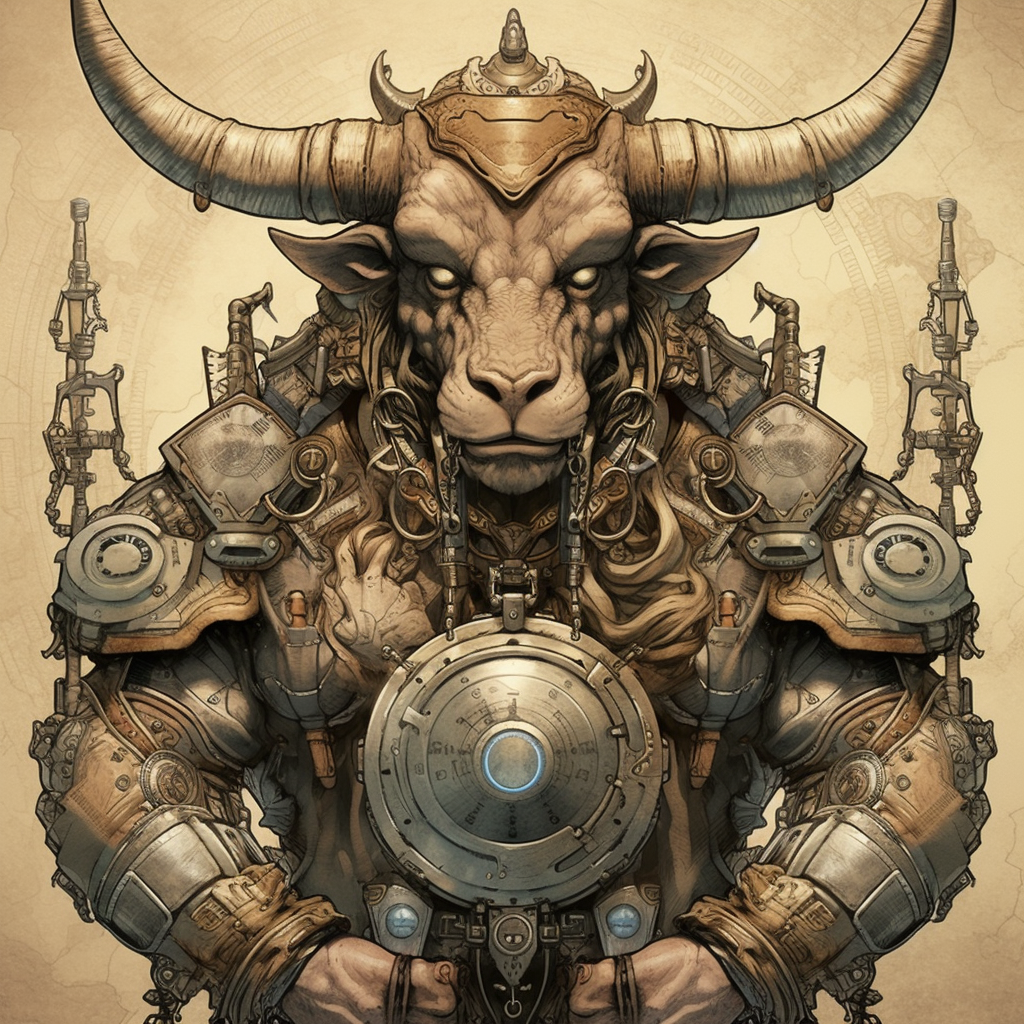
Minotaur 15B is an instruct fine-tuned model on top of Starcoder Plus. Minotaur 15B is fine-tuned on only completely open datasets making this model reproducible by anyone. Minotaur 15B has a context length of 8K tokens, allowing for strong recall at long contexts.
Questions, comments, feedback, looking to donate, or want to help? Reach out on our Discord or email [email protected]
Chat only style prompts using USER:,ASSISTANT:.
Minotaur 15B model is fine-tuned on the following openly available datasets:
train splittrain splittrain splittrain splitSpecial thanks to Nanobit for helping with Axolotl and TheBloke for quantizing these models are more accessible to all.
HF Demo in Spaces available in the Community ChatBot Arena under the OAAIC Chatbots tab.
Minotaur was built with Axolotl on 4XA100 80GB
Minotaur has not been aligned to human preferences with techniques like RLHF or deployed with in-the-loop filtering of responses like ChatGPT, so the model can produce problematic outputs (especially when prompted to do so). Minotaur was fine-tuned from the base model StarCoder, please refer to its model card's Limitations Section for relevant information. (included below)
TBD
TBD
Play with the instruction-tuned StarCoderPlus at StarChat-Beta.
StarCoderPlus is a fine-tuned version of StarCoderBase on 600B tokens from the English web dataset RedefinedWeb combined with StarCoderData from The Stack (v1.2) and a Wikipedia dataset. It's a 15.5B parameter Language Model trained on English and 80+ programming languages. The model uses Multi Query Attention, a context window of 8192 tokens, and was trained using the Fill-in-the-Middle objective on 1.6 trillion tokens.
The model was trained on English and GitHub code. As such it is not an instruction model and commands like "Write a function that computes the square root." do not work well. However, the instruction-tuned version in StarChat makes a capable assistant.
Feel free to share your generations in the Community tab!
# pip install -q transformers
from transformers import AutoModelForCausalLM, AutoTokenizer

checkpoint = "bigcode/starcoderplus"
device = "cuda" # for GPU usage or "cpu" for CPU usage

tokenizer = AutoTokenizer.from_pretrained(checkpoint)
model = AutoModelForCausalLM.from_pretrained(checkpoint).to(device)

inputs = tokenizer.encode("def print_hello_world():", return_tensors="pt").to(device)
outputs = model.generate(inputs)
print(tokenizer.decode(outputs[0]))
Fill-in-the-middle uses special tokens to identify the prefix/middle/suffix part of the input and output:
input_text = "<fim_prefix>def print_hello_world():\n    <fim_suffix>\n    print('Hello world!')<fim_middle>"
inputs = tokenizer.encode(input_text, return_tensors="pt").to(device)
outputs = model.generate(inputs)
print(tokenizer.decode(outputs[0]))
The training code dataset of the model was filtered for permissive licenses only. Nevertheless, the model can generate source code verbatim from the dataset. The code's license might require attribution and/or other specific requirements that must be respected. We provide a search index that let's you search through the pretraining data to identify where generated code came from and apply the proper attribution to your code.
The model has been trained on a mixture of English text from the web and GitHub code. Therefore it might encounter limitations when working with non-English text, and can carry the stereotypes and biases commonly encountered online. Additionally, the generated code should be used with caution as it may contain errors, inefficiencies, or potential vulnerabilities. For a more comprehensive understanding of the base model's code limitations, please refer to See StarCoder paper.
StarCoderPlus is a fine-tuned version on 600B English and code tokens of StarCoderBase, which was pre-trained on 1T code tokens. Below are the fine-tuning details:
The model is licensed under the BigCode OpenRAIL-M v1 license agreement. You can find the full agreement here.
OpenAccess AI Collective's Minotaur 15B GPTQ
8
18 commits
7 linked in READMEs
updated Aug 21, 2023
TheBloke's LLM work is generously supported by a grant from andreessen horowitz (a16z)
These files are GPTQ 4bit model files for OpenAccess AI Collective's Minotaur 15B.
It is the result of quantising to 4bit using GPTQ-for-LLaMa.
It is currently untested as to whether the 8K context is compatible with available GPTQ clients such as text-generation-webui.
If you have feedback on this, please let me know.
USER: <prompt>
ASSISTANT:
Please make sure you're using the latest version of text-generation-webui
TheBloke/minotaur-15B-GPTQ.minotaur-15B-GPTQquantize_config.json.First make sure you have AutoGPTQ installed:
pip install auto-gptq
Then try the following example code:
from transformers import AutoTokenizer, pipeline, logging
from auto_gptq import AutoGPTQForCausalLM, BaseQuantizeConfig

model_name_or_path = "TheBloke/minotaur-15B-GPTQ"
model_basename = "model"

use_triton = False

tokenizer = AutoTokenizer.from_pretrained(model_name_or_path, use_fast=True)

model = AutoGPTQForCausalLM.from_quantized(model_name_or_path,
        model_basename=model_basename,
        use_safetensors=True,
        trust_remote_code=False,
        device="cuda:0",
        use_triton=use_triton,
        quantize_config=None)

# Note: check the prompt template is correct for this model.
prompt = "Tell me about AI"
prompt_template=f'''USER: {prompt}
ASSISTANT:'''

print("\n\n*** Generate:")

input_ids = tokenizer(prompt_template, return_tensors='pt').input_ids.cuda()
output = model.generate(inputs=input_ids, temperature=0.7, max_new_tokens=512)
print(tokenizer.decode(output[0]))

# Inference can also be done using transformers' pipeline

# Prevent printing spurious transformers error when using pipeline with AutoGPTQ
logging.set_verbosity(logging.CRITICAL)

print("*** Pipeline:")
pipe = pipeline(
    "text-generation",
    model=model,
    tokenizer=tokenizer,
    max_new_tokens=512,
    temperature=0.7,
    top_p=0.95,
    repetition_penalty=1.15
)

print(pipe(prompt_template)[0]['generated_text'])
gptq_model-4bit-128g.safetensors
This will work with AutoGPTQ and CUDA versions of GPTQ-for-LLaMa. There are reports of issues with Triton mode of recent GPTQ-for-LLaMa. If you have issues, please use AutoGPTQ instead.
It was created with group_size 128 to increase inference accuracy, but without --act-order (desc_act) to increase compatibility and improve inference speed.
gptq_model-4bit-128g.safetensors
For further support, and discussions on these models and AI in general, join us at:
Thanks to the chirper.ai team!
I've had a lot of people ask if they can contribute. I enjoy providing models and helping people, and would love to be able to spend even more time doing it, as well as expanding into new projects like fine tuning/training.
If you're able and willing to contribute it will be most gratefully received and will help me to keep providing more models, and to start work on new AI projects.
Donaters will get priority support on any and all AI/LLM/model questions and requests, access to a private Discord room, plus other benefits.
Special thanks to: Aemon Algiz.
Patreon special mentions: Sam, theTransient, Jonathan Leane, Steven Wood, webtim, Johann-Peter Hartmann, Geoffrey Montalvo, Gabriel Tamborski, Willem Michiel, John Villwock, Derek Yates, Mesiah Bishop, Eugene Pentland, Pieter, Chadd, Stephen Murray, Daniel P. Andersen, terasurfer, Brandon Frisco, Thomas Belote, Sid, Nathan LeClaire, Magnesian, Alps Aficionado, Stanislav Ovsiannikov, Alex, Joseph William Delisle, Nikolai Manek, Michael Davis, Junyu Yang, K, J, Spencer Kim, Stefan Sabev, Olusegun Samson, transmissions 11, Michael Levine, Cory Kujawski, Rainer Wilmers, zynix, Kalila, Luke @flexchar, Ajan Kanaga, Mandus, vamX, Ai Maven, Mano Prime, Matthew Berman, subjectnull, Vitor Caleffi, Clay Pascal, biorpg, alfie_i, 阿明, Jeffrey Morgan, ya boyyy, Raymond Fosdick, knownsqashed, Olakabola, Leonard Tan, ReadyPlayerEmma, Enrico Ros, Dave, Talal Aujan, Illia Dulskyi, Sean Connelly, senxiiz, Artur Olbinski, Elle, Raven Klaugh, Fen Risland, Deep Realms, Imad Khwaja, Fred von Graf, Will Dee, usrbinkat, SuperWojo, Alexandros Triantafyllidis, Swaroop Kallakuri, Dan Guido, John Detwiler, Pedro Madruga, Iucharbius, Viktor Bowallius, Asp the Wyvern, Edmond Seymore, Trenton Dambrowitz, Space Cruiser, Spiking Neurons AB, Pyrater, LangChain4j, Tony Hughes, Kacper Wikieł, Rishabh Srivastava, David Ziegler, Luke Pendergrass, Andrey, Gabriel Puliatti, Lone Striker, Sebastain Graf, Pierre Kircher, Randy H, NimbleBox.ai, Vadim, danny, Deo Leter
Thank you to all my generous patrons and donaters!
And thank you again to a16z for their generous grant.
💵 Donate to OpenAccess AI Collective to help us keep building great tools and models!
Minotaur 15B is an instruct fine-tuned model on top of Starcoder Plus. Minotaur 15B is fine-tuned on only completely open datasets making this model reproducible by anyone. Minotaur 15B has a context length of 8K tokens, allowing for strong recall at long contexts.
Questions, comments, feedback, looking to donate, or want to help? Reach out on our Discord or email [email protected]
Chat only style prompts using USER:,ASSISTANT:.
Minotaur 15B model is fine-tuned on the following openly available datasets:
train splittrain splittrain splittrain splitSpecial thanks to Nanobit for helping with Axolotl and TheBloke for quantizing these models are more accessible to all.
HF Demo in Spaces available in the Community ChatBot Arena under the OAAIC Chatbots tab.
Minotaur was built with Axolotl on 4XA100 80GB
Minotaur has not been aligned to human preferences with techniques like RLHF or deployed with in-the-loop filtering of responses like ChatGPT, so the model can produce problematic outputs (especially when prompted to do so). Minotaur was fine-tuned from the base model StarCoder, please refer to its model card's Limitations Section for relevant information. (included below)
TBD
TBD
Play with the instruction-tuned StarCoderPlus at StarChat-Beta.
StarCoderPlus is a fine-tuned version of StarCoderBase on 600B tokens from the English web dataset RedefinedWeb combined with StarCoderData from The Stack (v1.2) and a Wikipedia dataset. It's a 15.5B parameter Language Model trained on English and 80+ programming languages. The model uses Multi Query Attention, a context window of 8192 tokens, and was trained using the Fill-in-the-Middle objective on 1.6 trillion tokens.
The model was trained on English and GitHub code. As such it is not an instruction model and commands like "Write a function that computes the square root." do not work well. However, the instruction-tuned version in StarChat makes a capable assistant.
Feel free to share your generations in the Community tab!
# pip install -q transformers
from transformers import AutoModelForCausalLM, AutoTokenizer

checkpoint = "bigcode/starcoderplus"
device = "cuda" # for GPU usage or "cpu" for CPU usage

tokenizer = AutoTokenizer.from_pretrained(checkpoint)
model = AutoModelForCausalLM.from_pretrained(checkpoint).to(device)

inputs = tokenizer.encode("def print_hello_world():", return_tensors="pt").to(device)
outputs = model.generate(inputs)
print(tokenizer.decode(outputs[0]))
Fill-in-the-middle uses special tokens to identify the prefix/middle/suffix part of the input and output:
input_text = "<fim_prefix>def print_hello_world():\n    <fim_suffix>\n    print('Hello world!')<fim_middle>"
inputs = tokenizer.encode(input_text, return_tensors="pt").to(device)
outputs = model.generate(inputs)
print(tokenizer.decode(outputs[0]))
The training code dataset of the model was filtered for permissive licenses only. Nevertheless, the model can generate source code verbatim from the dataset. The code's license might require attribution and/or other specific requirements that must be respected. We provide a search index that let's you search through the pretraining data to identify where generated code came from and apply the proper attribution to your code.
The model has been trained on a mixture of English text from the web and GitHub code. Therefore it might encounter limitations when working with non-English text, and can carry the stereotypes and biases commonly encountered online. Additionally, the generated code should be used with caution as it may contain errors, inefficiencies, or potential vulnerabilities. For a more comprehensive understanding of the base model's code limitations, please refer to See StarCoder paper.
StarCoderPlus is a fine-tuned version on 600B English and code tokens of StarCoderBase, which was pre-trained on 1T code tokens. Below are the fine-tuning details:
The model is licensed under the BigCode OpenRAIL-M v1 license agreement. You can find the full agreement here.