A Python-based lightweight robot simulator designed for navigation, control, and learning
See the code
A lightweight, YAML-driven robot simulator for navigation, control, and learning









IR-SIM is an open-source, Python-based, lightweight robot simulator designed for navigation, control, and learning. It provides a simple, user-friendly framework with built-in collision detection for modeling robots, sensors, and environments. Ideal for academic and educational use, IR-SIM enables rapid prototyping of robotics and learning algorithms in custom scenarios with minimal coding and hardware requirements.
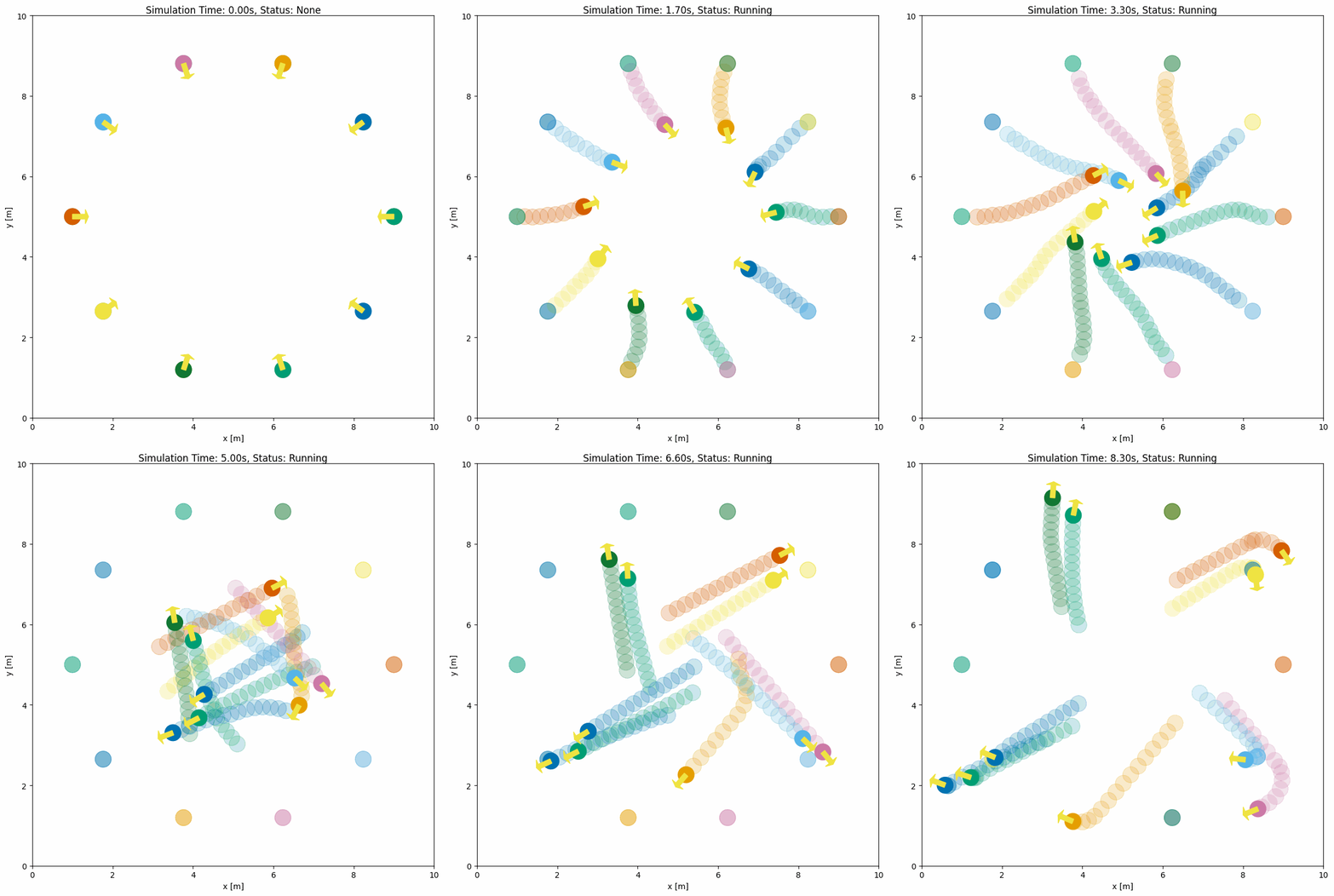 Multi-Robot RVO Collision Avoidance Source |
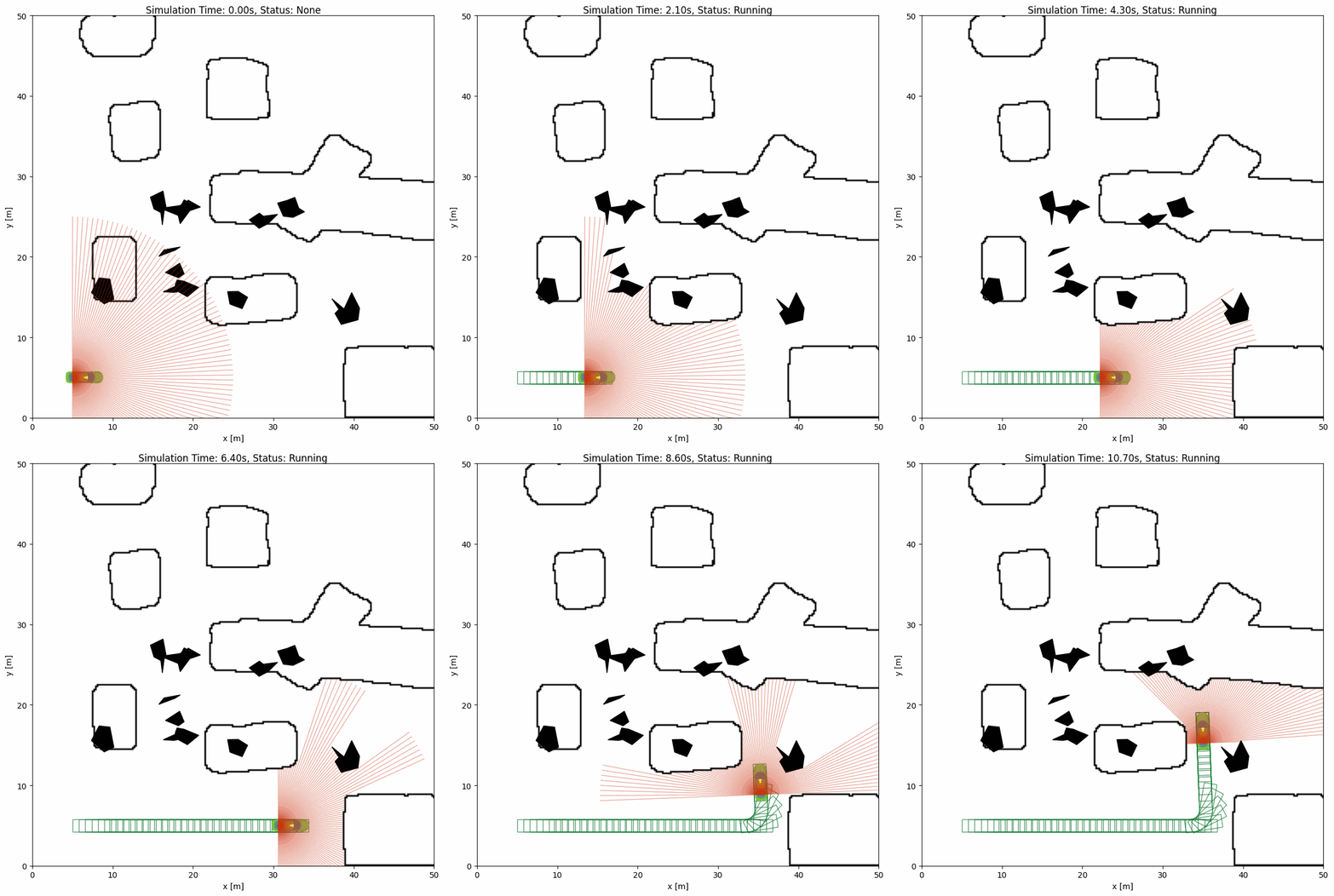 Ackermann Robot with 2D LiDAR Source |
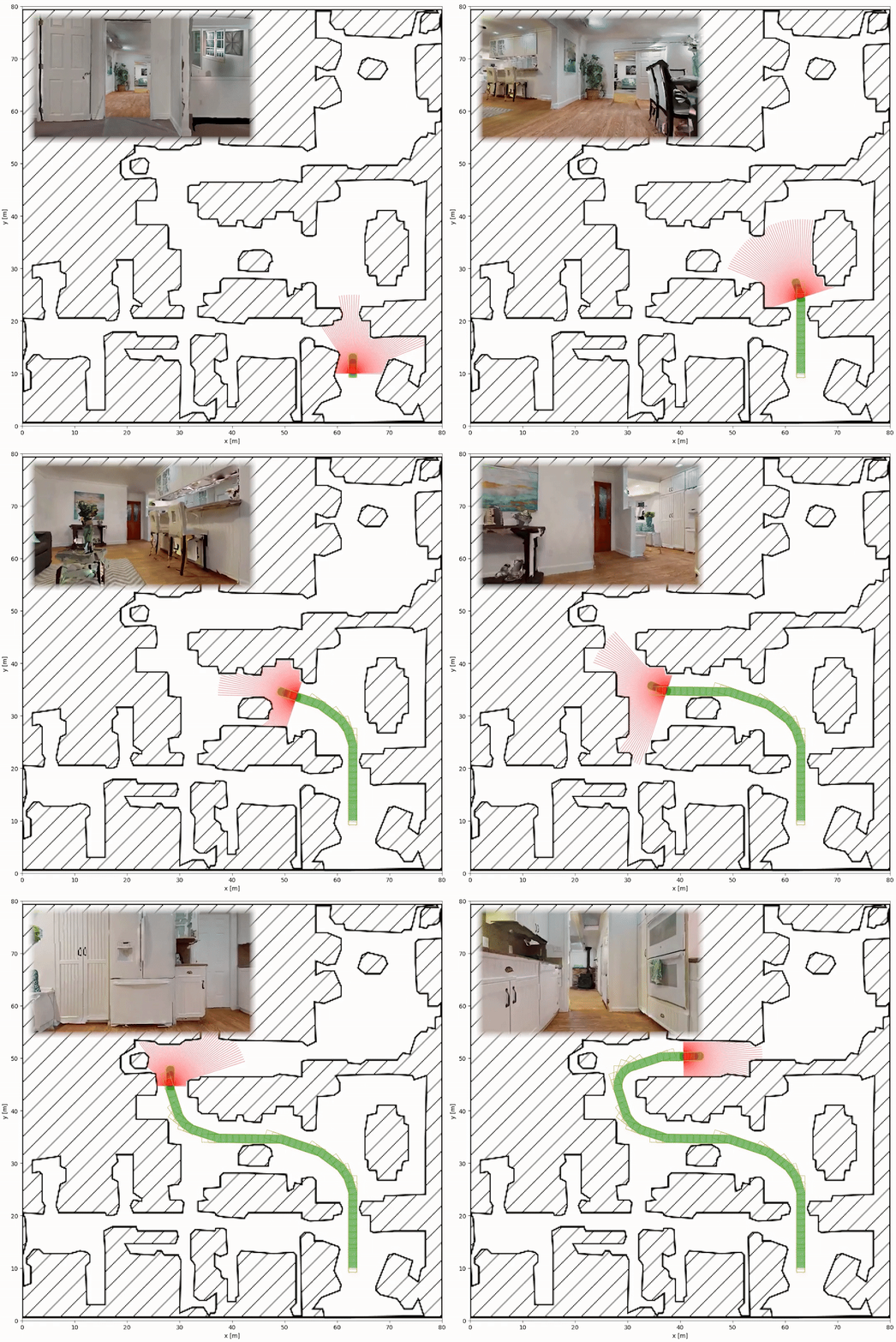 HM3D / MatterPort3D Grid Map Source |
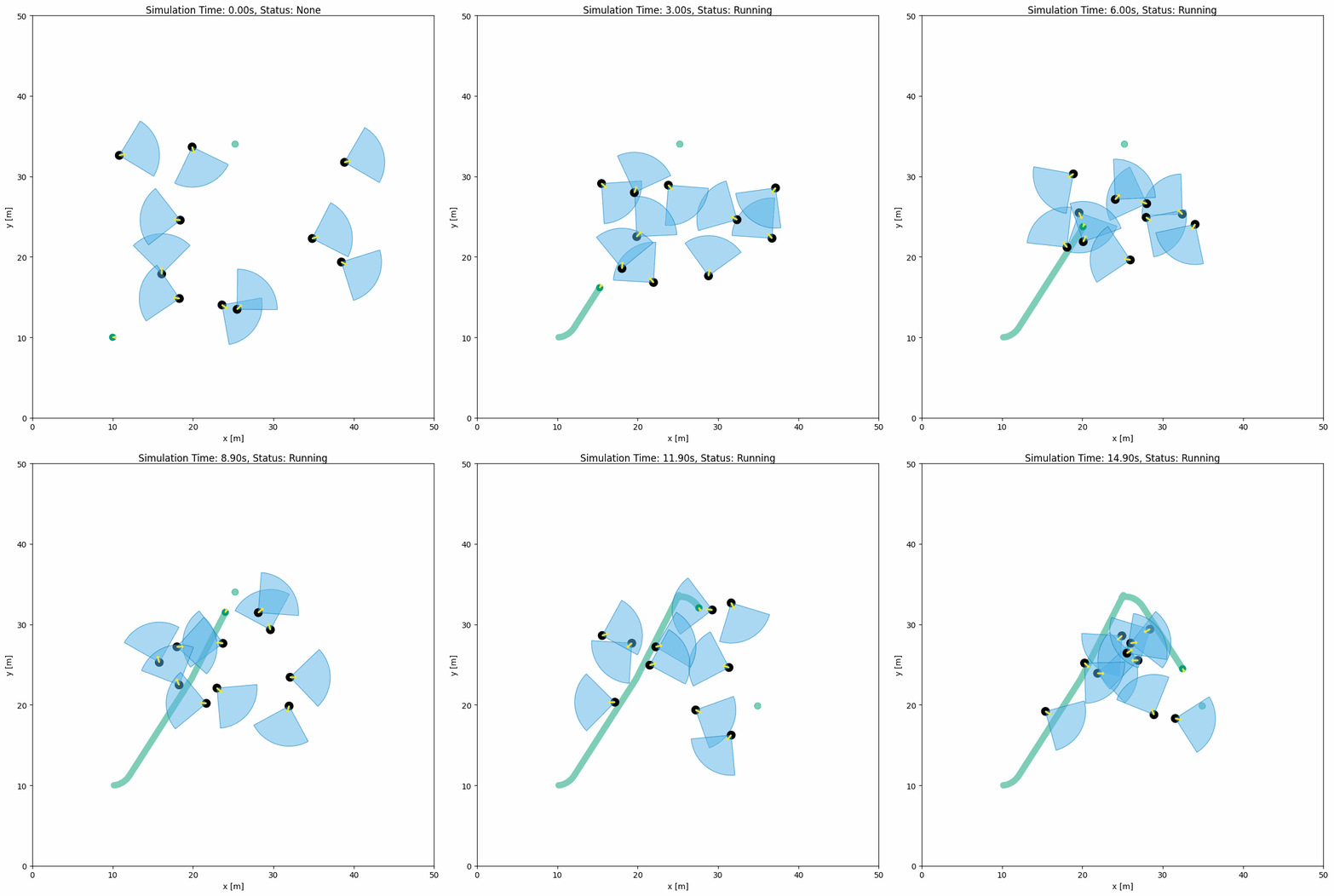 Field-of-View Detection Source |
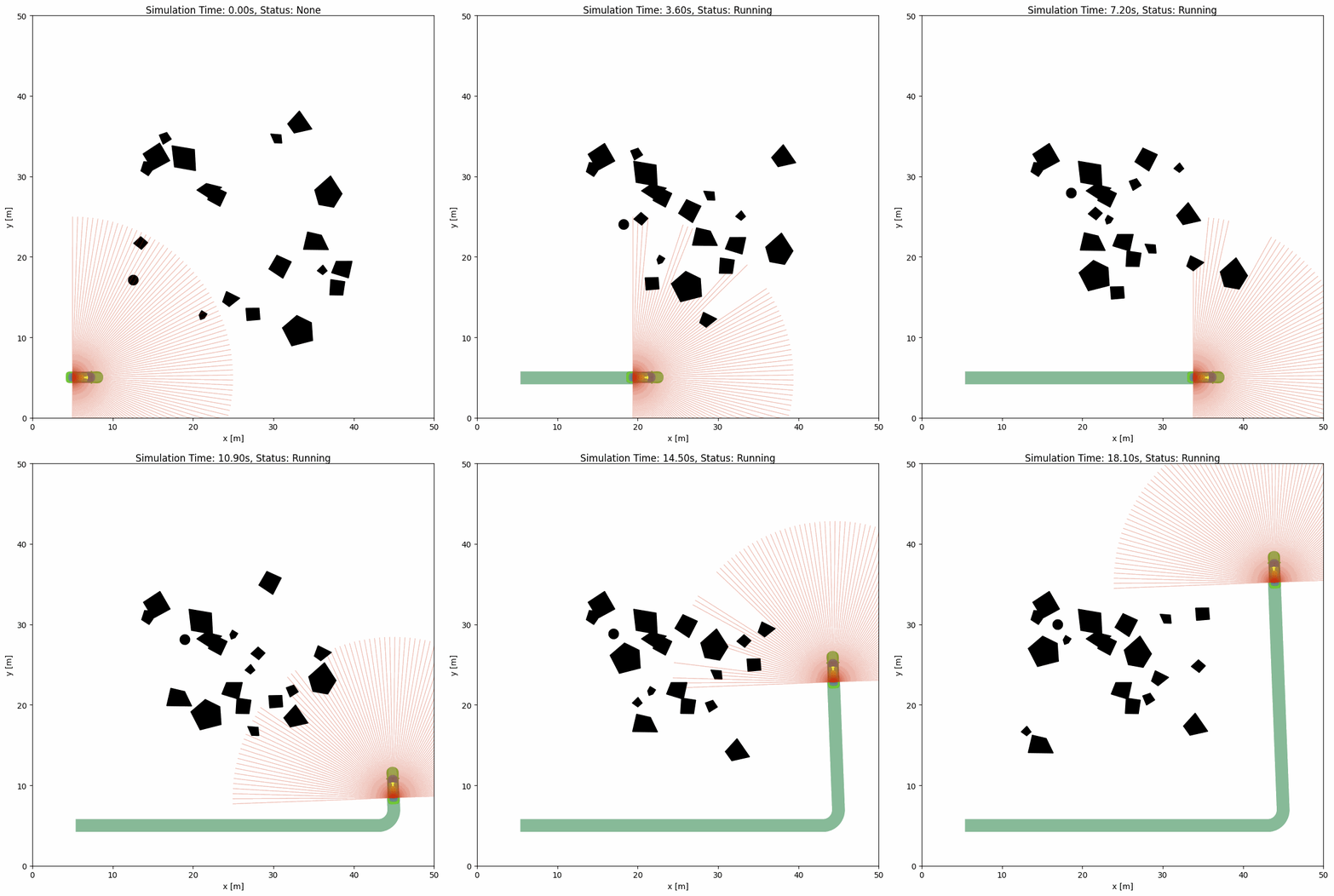 Dynamic Random Obstacles Source |
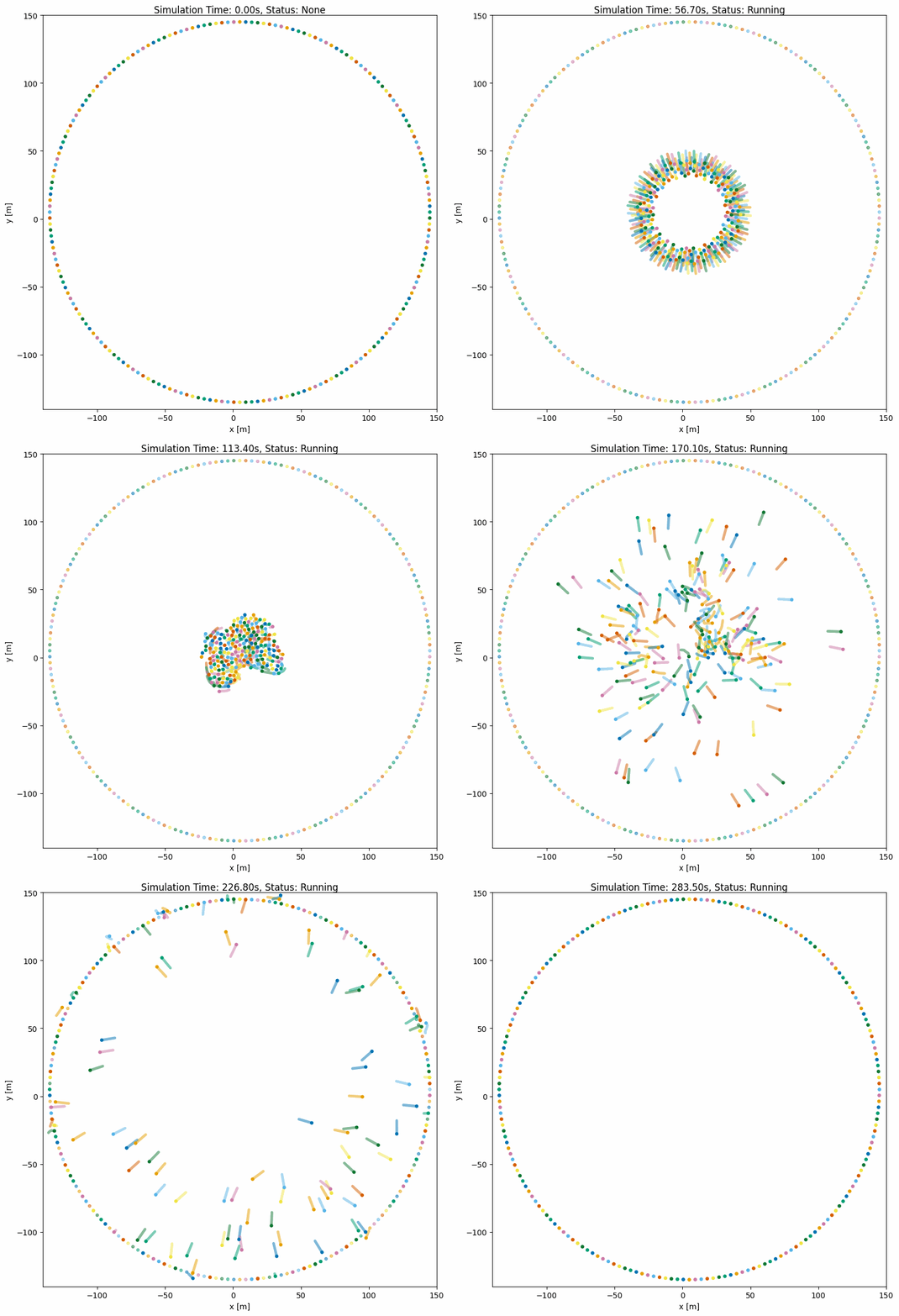 200-Agent ORCA via pyrvo Source |
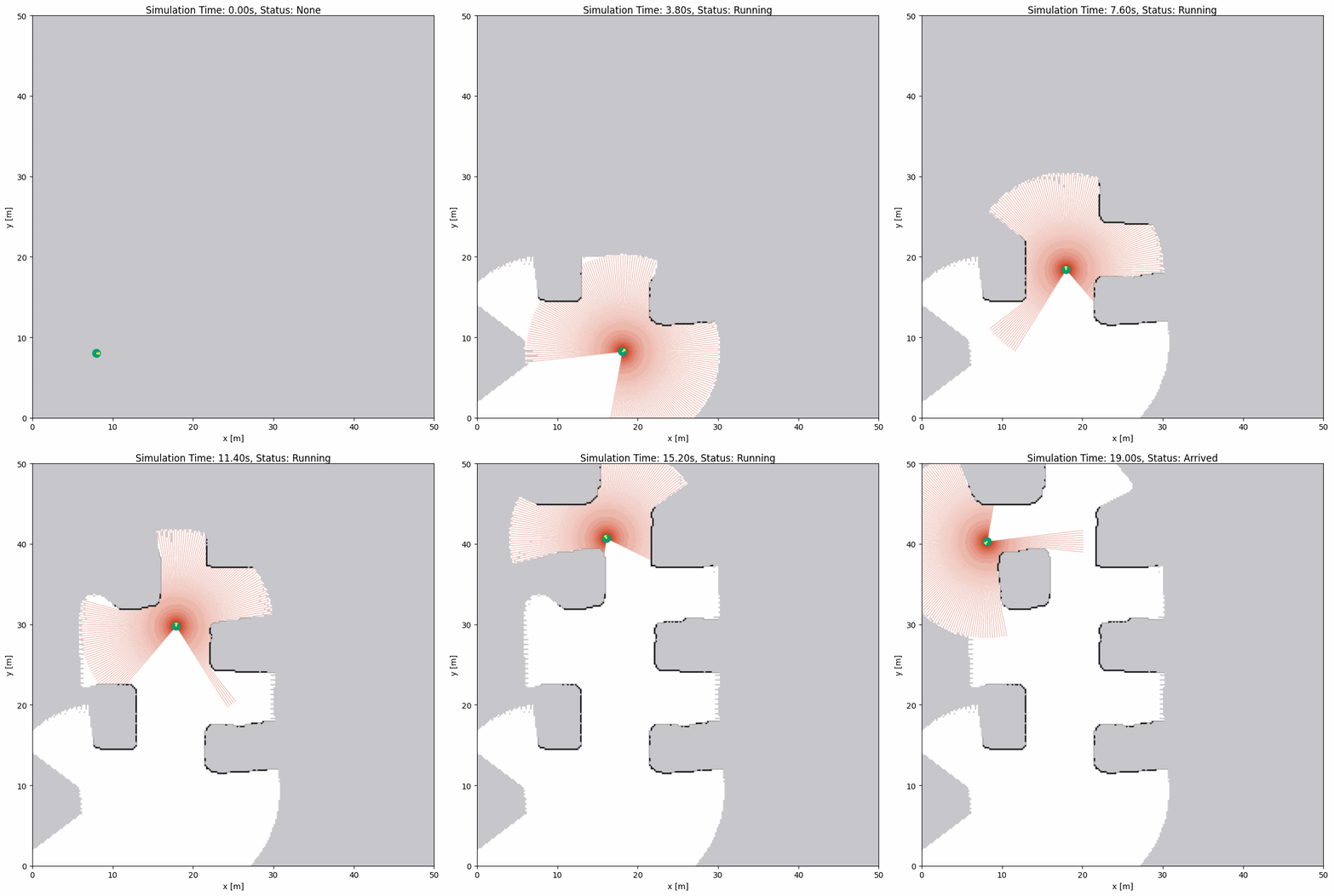 Fog-of-Map Exploration Source |
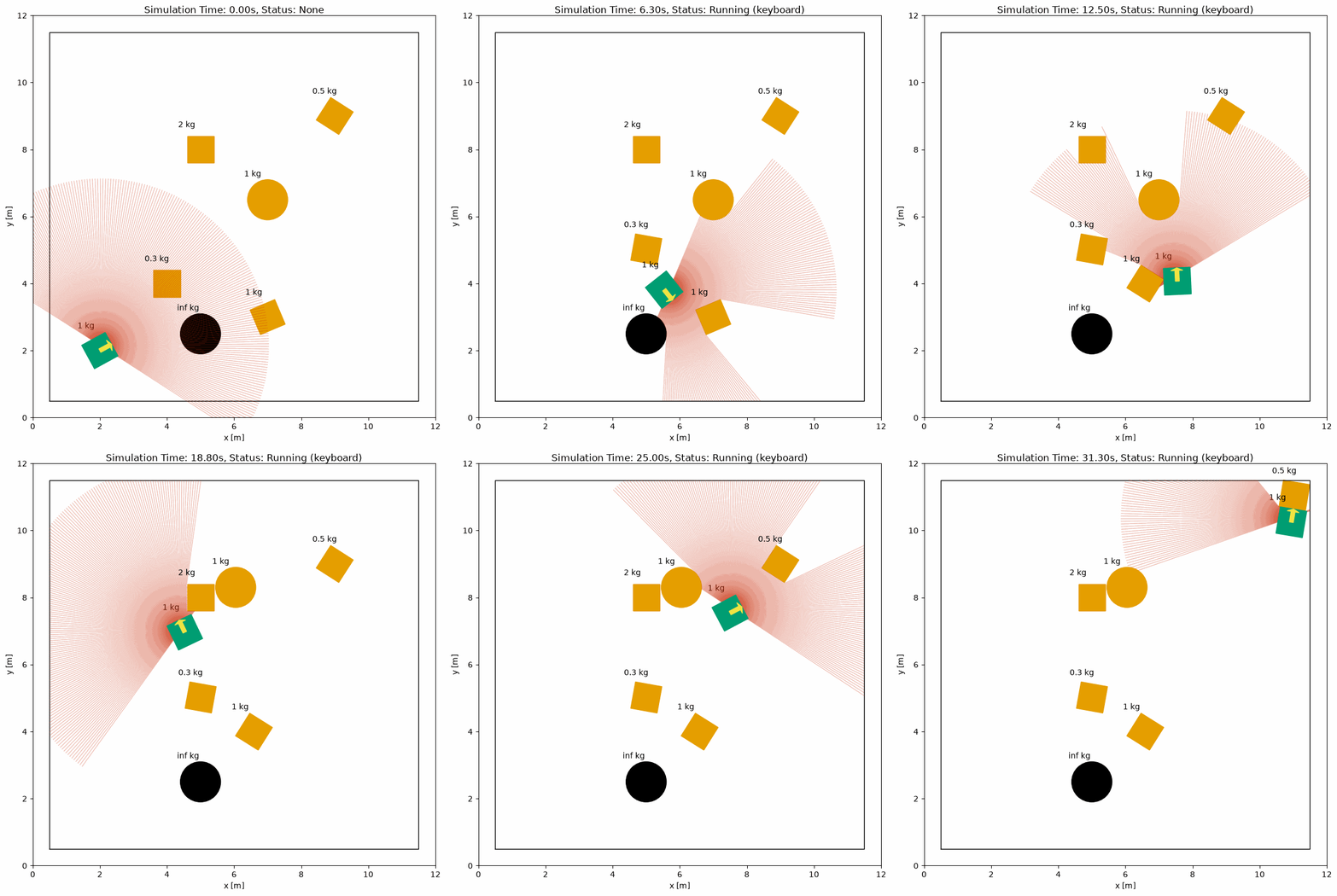 Rigid-Body Contact: Pushing Boxes Source |
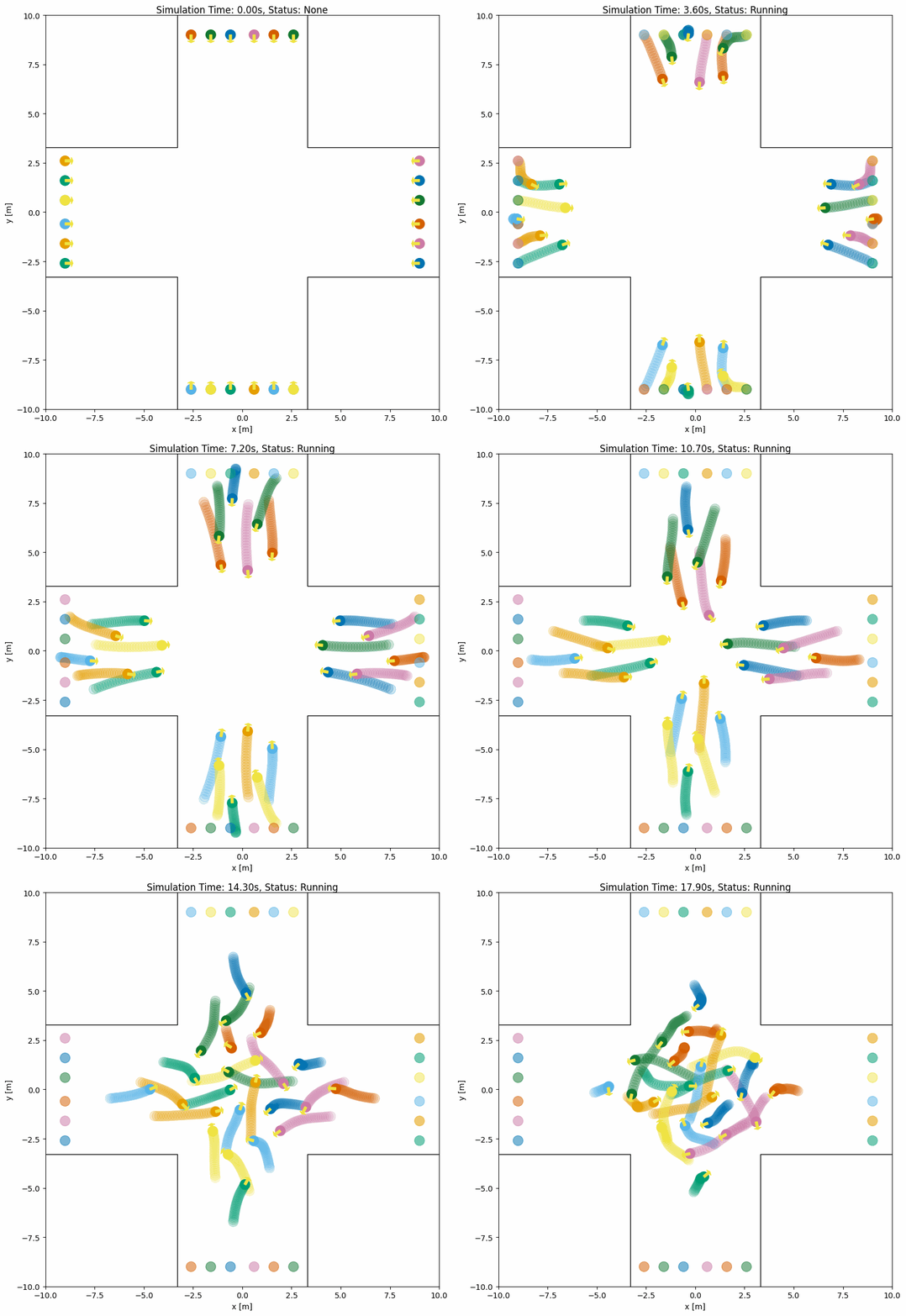 Social Force Model Pedestrians Source |
Requires Python >= 3.10
pip install ir-sim

# Optional: keyboard control and all extras
pip install ir-sim[all]
git clone https://github.com/hanruihua/ir-sim.git
cd ir-sim
pip install -e .
git clone https://github.com/hanruihua/ir-sim.git
cd ir-sim
uv sync
A minimal example: a differential-drive robot navigates toward a goal using the built-in dash behavior.
import irsim

env = irsim.make(
    "robot_world.yaml"
)  # initialize the environment with the configuration file

for i in range(300):  # run the simulation for 300 steps
    env.step()  # update the environment
    env.render()  # render the environment

    if env.done():
        break  # check if the simulation is done

env.end()  # close the environment
YAML Configuration: robot_world.yaml
world:
  height: 10  # the height of the world
  width: 10   # the width of the world
  step_time: 0.1  # 10Hz calculate each step
  sample_time: 0.1  # 10 Hz for render and data extraction
  offset: [0, 0] # the offset of the world on x and y

robot:
  kinematics: {name: 'diff'}  # omni, omni_angular, diff, acker
  shape: {name: 'circle', radius: 0.2}  # radius
  state: [1, 1, 0]  # x, y, theta
  goal: [9, 9, 0]  # x, y, theta
  behavior: {name: 'dash'} # move toward to the goal directly
  color: 'g' # green
For more examples, see the usage directory and the documentation.
| Category | Features |
|---|---|
| Kinematics | Differential Drive mobile Robot · Omnidirectional mobile Robot · Omnidirectional with Angular control · Ackermann Steering mobile Robot |
| Sensors | 2D LiDAR · 2D FMCW LiDAR · Contact Sensor · FOV Detector |
| Geometries | Circle · Rectangle · Polygon · LineString · Binary Grid Map · Fog of Map |
| Behaviors | dash (move directly toward goal) · RVO (Reciprocal Velocity Obstacle) · ORCA (Optimal Reciprocal Collision Avoidance) · SFM (Social Force Model, per-object and group with social groups) |
| Collision | stop · unobstructed · unobstructed_obstacles · contact (rigid-body pushing with mass, friction and inertia: robots push what they can overcome, stall against heavier boxes, off-center pushes turn boxes, released boxes slide to a stop, walls block) |
If your publication, project, or course uses IR-SIM, we welcome proposals for inclusion via an issue or pull request.
If you find IR-SIM useful, please consider starring ⭐ this project and citing our paper:
@article{han2026ir,
  title={IR-SIM: A Lightweight Declarative Simulator for Navigation Learning and Benchmarking},
  author={Han, Ruihua and Wang, Shuai and Li, Chengyang and Gao, Rui and Wang, Xinyi and Liu, Zhe and Li, Guoliang and Lu, Yupu and Hao, Qi and Pan, Jia and Zhao, Hengshuang},
  journal={arXiv preprint arXiv:2606.08729},
  year={2026},
  doi={10.48550/arXiv.2606.08729},
  url={https://arxiv.org/abs/2606.08729},
  eprint={2606.08729},
  archivePrefix={arXiv},
  primaryClass={cs.RO}
}
Contributions are welcome! Please see CONTRIBUTING.md for guidelines.
IR-SIM is released under the MIT License.
4,066 followers · starred Dec 2025
3,001 followers · starred Apr 2025
69 followers · starred Dec 2025
53 followers · starred Jan 2026
A Python-based lightweight robot simulator designed for navigation, control, and learning
See the code
A lightweight, YAML-driven robot simulator for navigation, control, and learning
IR-SIM is an open-source, Python-based, lightweight robot simulator designed for navigation, control, and learning. It provides a simple, user-friendly framework with built-in collision detection for modeling robots, sensors, and environments. Ideal for academic and educational use, IR-SIM enables rapid prototyping of robotics and learning algorithms in custom scenarios with minimal coding and hardware requirements.
|
Multi-Robot RVO Collision Avoidance Source |
Ackermann Robot with 2D LiDAR Source |
HM3D / MatterPort3D Grid Map Source |
|
Field-of-View Detection Source |
Dynamic Random Obstacles Source |
200-Agent ORCA via pyrvo Source |
|
Fog-of-Map Exploration Source |
Rigid-Body Contact: Pushing Boxes Source |
Social Force Model Pedestrians Source |
Requires Python >= 3.10
pip install ir-sim

# Optional: keyboard control and all extras
pip install ir-sim[all]
git clone https://github.com/hanruihua/ir-sim.git
cd ir-sim
pip install -e .
git clone https://github.com/hanruihua/ir-sim.git
cd ir-sim
uv sync
A minimal example: a differential-drive robot navigates toward a goal using the built-in dash behavior.
import irsim

env = irsim.make(
    "robot_world.yaml"
)  # initialize the environment with the configuration file

for i in range(300):  # run the simulation for 300 steps
    env.step()  # update the environment
    env.render()  # render the environment

    if env.done():
        break  # check if the simulation is done

env.end()  # close the environment
YAML Configuration: robot_world.yaml
world:
  height: 10  # the height of the world
  width: 10   # the width of the world
  step_time: 0.1  # 10Hz calculate each step
  sample_time: 0.1  # 10 Hz for render and data extraction
  offset: [0, 0] # the offset of the world on x and y

robot:
  kinematics: {name: 'diff'}  # omni, omni_angular, diff, acker
  shape: {name: 'circle', radius: 0.2}  # radius
  state: [1, 1, 0]  # x, y, theta
  goal: [9, 9, 0]  # x, y, theta
  behavior: {name: 'dash'} # move toward to the goal directly
  color: 'g' # green
For more examples, see the usage directory and the documentation.
| Category | Features |
|---|---|
| Kinematics | Differential Drive mobile Robot · Omnidirectional mobile Robot · Omnidirectional with Angular control · Ackermann Steering mobile Robot |
| Sensors | 2D LiDAR · 2D FMCW LiDAR · Contact Sensor · FOV Detector |
| Geometries | Circle · Rectangle · Polygon · LineString · Binary Grid Map · Fog of Map |
| Behaviors | dash (move directly toward goal) · RVO (Reciprocal Velocity Obstacle) · ORCA (Optimal Reciprocal Collision Avoidance) · SFM (Social Force Model, per-object and group with social groups) |
| Collision | stop · unobstructed · unobstructed_obstacles · contact (rigid-body pushing with mass, friction and inertia: robots push what they can overcome, stall against heavier boxes, off-center pushes turn boxes, released boxes slide to a stop, walls block) |
If your publication, project, or course uses IR-SIM, we welcome proposals for inclusion via an issue or pull request.
If you find IR-SIM useful, please consider starring ⭐ this project and citing our paper:
@article{han2026ir,
  title={IR-SIM: A Lightweight Declarative Simulator for Navigation Learning and Benchmarking},
  author={Han, Ruihua and Wang, Shuai and Li, Chengyang and Gao, Rui and Wang, Xinyi and Liu, Zhe and Li, Guoliang and Lu, Yupu and Hao, Qi and Pan, Jia and Zhao, Hengshuang},
  journal={arXiv preprint arXiv:2606.08729},
  year={2026},
  doi={10.48550/arXiv.2606.08729},
  url={https://arxiv.org/abs/2606.08729},
  eprint={2606.08729},
  archivePrefix={arXiv},
  primaryClass={cs.RO}
}
Contributions are welcome! Please see CONTRIBUTING.md for guidelines.
IR-SIM is released under the MIT License.
4,066 followers · starred Dec 2025
3,001 followers · starred Apr 2025
69 followers · starred Dec 2025
53 followers · starred Jan 2026





