Hosted Solution (Linux/MCU) with ESP32 (Wi-Fi + BT + BLE)
Python
1,061
840 commits
updated Sep 9, 2026
ESP-Hosted, an open-source connectivity solution, leverages Espressif SoCs as dedicated wireless co-processors for Linux systems and microcontrollers.
It offloads protocol management to the co-processor, providing the host with full Wi-Fi, Bluetooth/BLE, and Thread capabilities via standard peripheral buses (SDIO, SPI, or UART).
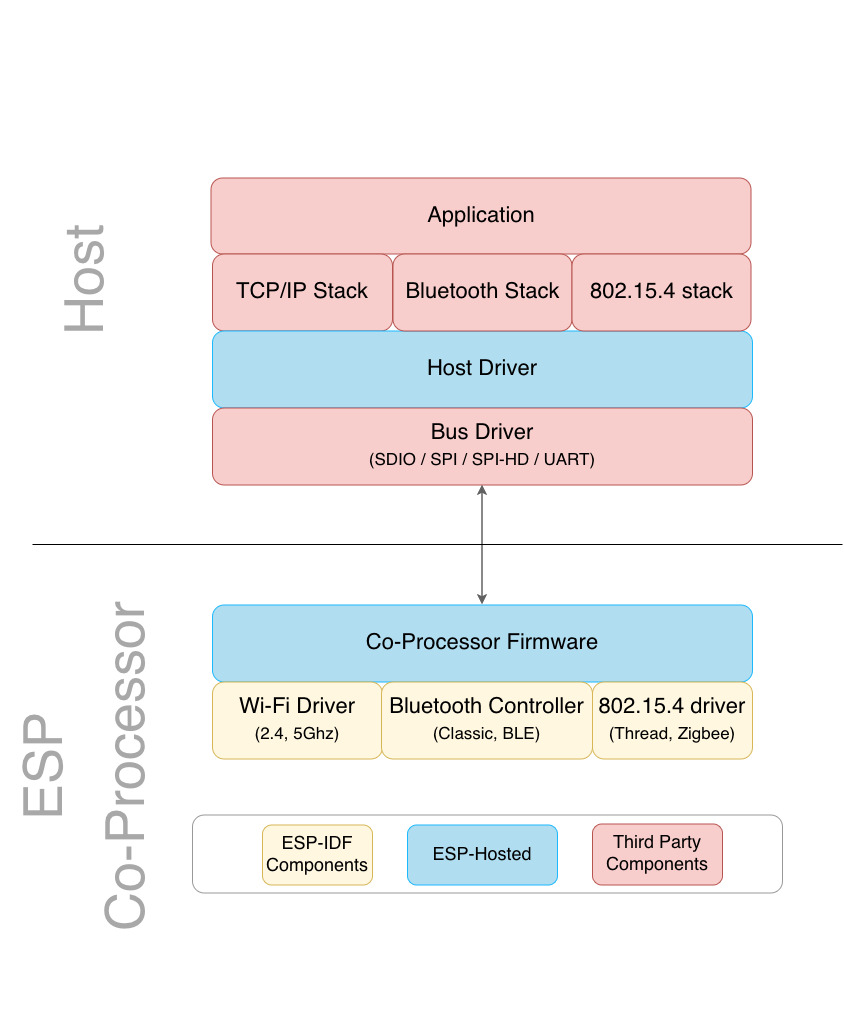
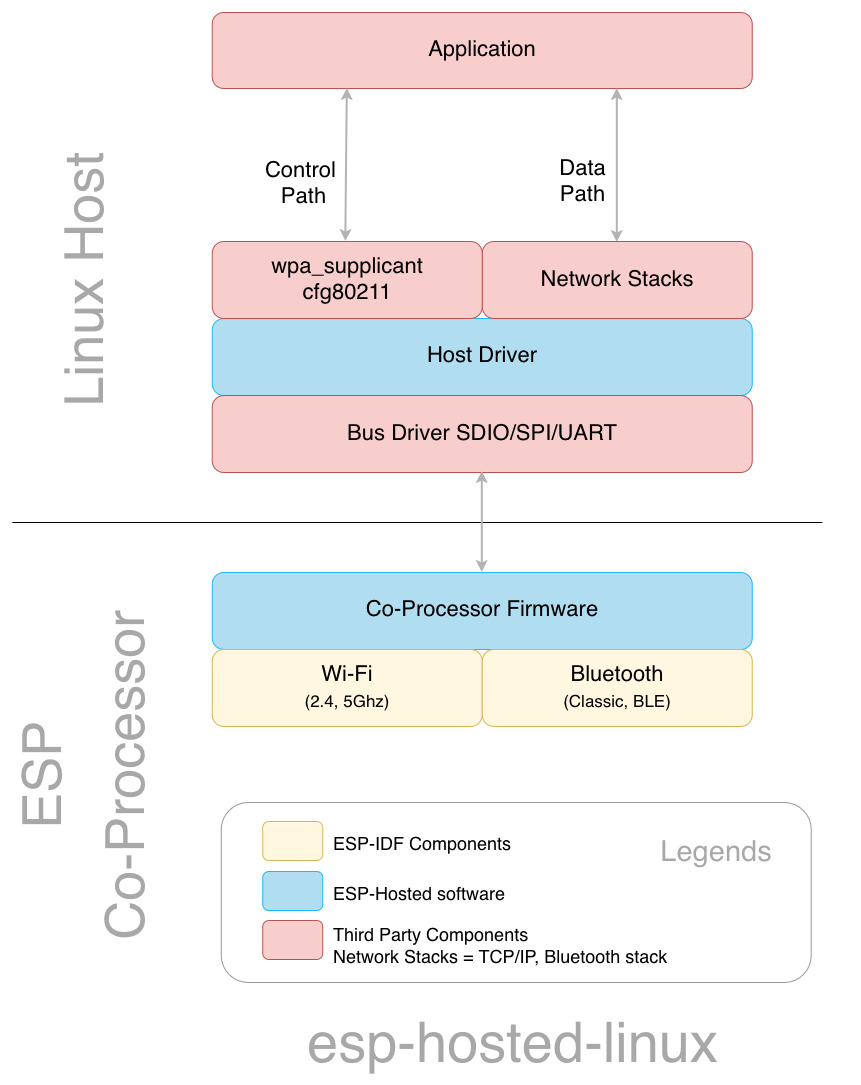
FullMAC solution for Linux hosts:
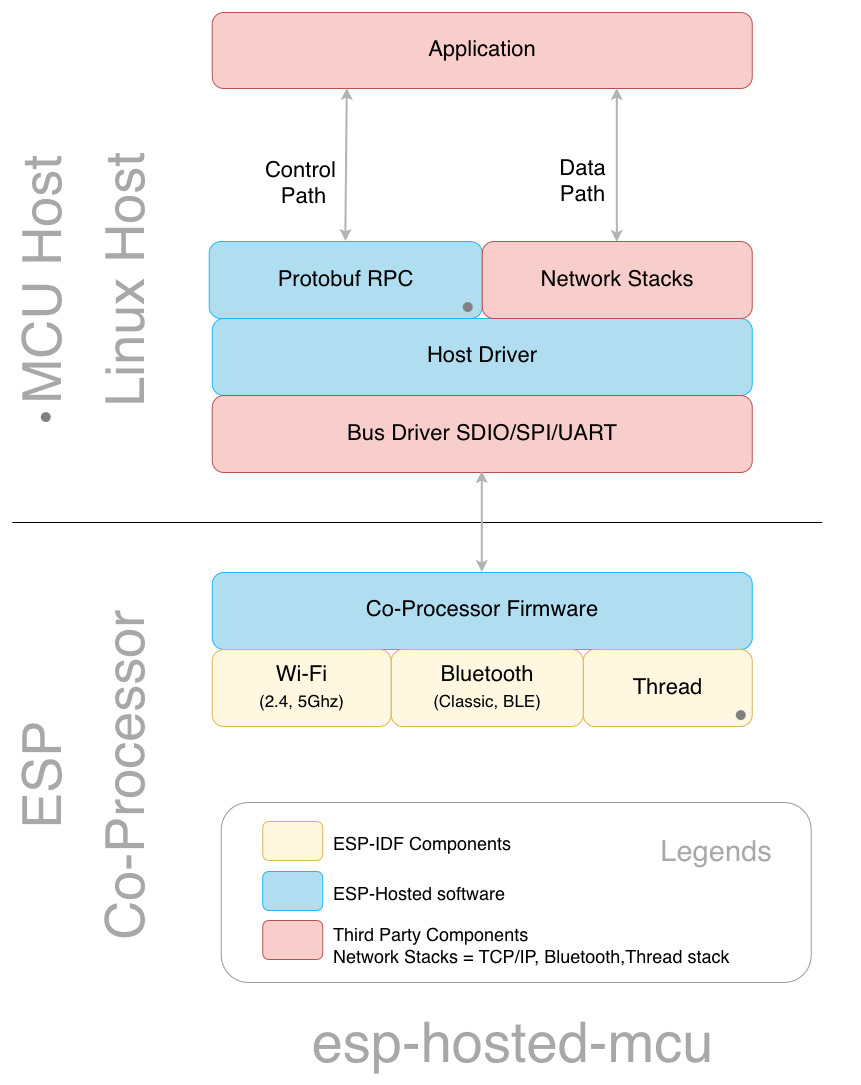
wlan0)cfg80211 integrationwpa_supplicant and NetworkManager supportRPC-based solution for MCU and Linux hosts:
esp_event for co-processor events transparentlyThe first question is how the host wants to reach Wi-Fi.
| Host | Host Wi-Fi interface | Solution |
|---|---|---|
| Linux | Linux networking stack: wlan0, cfg80211, wpa_supplicant, NetworkManager | esp-hosted-linux |
| Linux or MCU | ESP-IDF esp_wifi_*() APIs | esp-hosted-mcu |
By use case:
| Use case | Recommended |
|---|---|
Standard Linux Wi-Fi config (NetworkManager, wpa_supplicant) | esp-hosted-linux |
| A native wireless interface, so existing tooling and scripts keep working | esp-hosted-linux |
| Linux with custom or proprietary control over Wi-Fi | esp-hosted-mcu |
| Embedded Linux boards (Raspberry Pi, BeagleBone) | either |
| ESP-IDF application code that should run unchanged on the host | esp-hosted-mcu |
| Wi-Fi in AP + station mode on Linux | esp-hosted-mcu |
| Wi-Fi and Bluetooth/BLE together | either |
| Classic Bluetooth | either |
| Connectivity kept up while the host sleeps | either |
| ESP-Hosted-Linux — FullMAC | ESP-Hosted-MCU — custom solution |
|---|---|
 |  |
|
|
See the detailed comparison to understand how the two solutions differ.
Active development is currently taking place in these repositories:
| Repository | Purpose | Support |
|---|---|---|
| esp-hosted-linux | Standard Linux Solution | Linux Issues |
| esp-hosted-mcu | Custom solution for MCU and Linux hosts | MCU Issues |
Contributions are welcome — bug reports, fixes, new features and documentation. ESP-Hosted is developed in the open, and every change goes through review. For anything substantial, please open an issue first so the approach can be agreed before you write the code.
| Legacy implementation | Migrated to | Status | Code |
|---|---|---|---|
| ESP-Hosted-NG | esp-hosted-linux | Legacy | legacy/fg-ng |
| ESP-Hosted-FG | esp-hosted-mcu | Legacy | legacy/fg-ng |
2,199 followers · starred Jun 2025
489 followers · starred Jun 2024
178 followers · starred Jul 2026
79 followers · starred Jan 2026
Hosted Solution (Linux/MCU) with ESP32 (Wi-Fi + BT + BLE)
Python
1,061
840 commits
updated Sep 9, 2026
ESP-Hosted, an open-source connectivity solution, leverages Espressif SoCs as dedicated wireless co-processors for Linux systems and microcontrollers.
It offloads protocol management to the co-processor, providing the host with full Wi-Fi, Bluetooth/BLE, and Thread capabilities via standard peripheral buses (SDIO, SPI, or UART).
FullMAC solution for Linux hosts:
wlan0)cfg80211 integrationwpa_supplicant and NetworkManager supportRPC-based solution for MCU and Linux hosts:
esp_event for co-processor events transparentlyThe first question is how the host wants to reach Wi-Fi.
| Host | Host Wi-Fi interface | Solution |
|---|---|---|
| Linux | Linux networking stack: wlan0, cfg80211, wpa_supplicant, NetworkManager | esp-hosted-linux |
| Linux or MCU | ESP-IDF esp_wifi_*() APIs | esp-hosted-mcu |
By use case:
| Use case | Recommended |
|---|---|
Standard Linux Wi-Fi config (NetworkManager, wpa_supplicant) | esp-hosted-linux |
| A native wireless interface, so existing tooling and scripts keep working | esp-hosted-linux |
| Linux with custom or proprietary control over Wi-Fi | esp-hosted-mcu |
| Embedded Linux boards (Raspberry Pi, BeagleBone) | either |
| ESP-IDF application code that should run unchanged on the host | esp-hosted-mcu |
| Wi-Fi in AP + station mode on Linux | esp-hosted-mcu |
| Wi-Fi and Bluetooth/BLE together | either |
| Classic Bluetooth | either |
| Connectivity kept up while the host sleeps | either |
| ESP-Hosted-Linux — FullMAC | ESP-Hosted-MCU — custom solution |
|---|---|
| |
|
|
See the detailed comparison to understand how the two solutions differ.
Active development is currently taking place in these repositories:
| Repository | Purpose | Support |
|---|---|---|
| esp-hosted-linux | Standard Linux Solution | Linux Issues |
| esp-hosted-mcu | Custom solution for MCU and Linux hosts | MCU Issues |
Contributions are welcome — bug reports, fixes, new features and documentation. ESP-Hosted is developed in the open, and every change goes through review. For anything substantial, please open an issue first so the approach can be agreed before you write the code.
| Legacy implementation | Migrated to | Status | Code |
|---|---|---|---|
| ESP-Hosted-NG | esp-hosted-linux | Legacy | legacy/fg-ng |
| ESP-Hosted-FG | esp-hosted-mcu | Legacy | legacy/fg-ng |
2,199 followers · starred Jun 2025
489 followers · starred Jun 2024
178 followers · starred Jul 2026
79 followers · starred Jan 2026