
See what people are saying
README
sealg



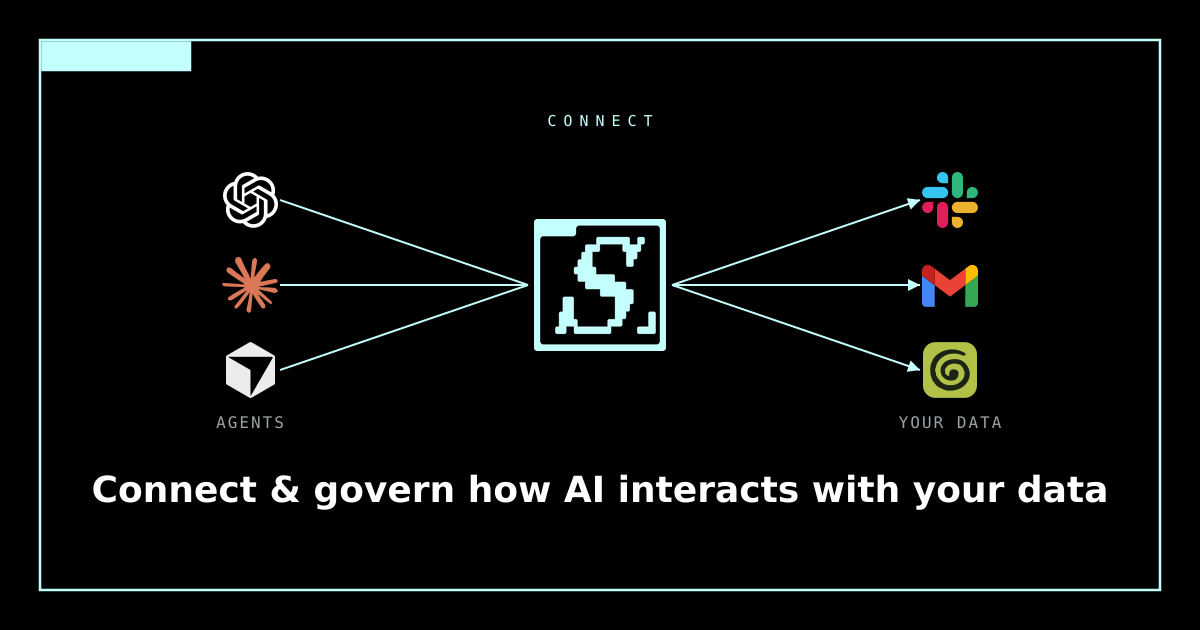
 The command-line
interface for SealGate, the agentic data firewall.
The command-line
interface for SealGate, the agentic data firewall. sealg
is a thin MCP (Model Context Protocol) client to the SealGate gateway: list
and call forward tools/list / tools/call to your per-user gateway endpoint,
where all policy and enforcement live. The binary is stateless and resolves
every coordinate from the environment (no config files), so it drops into any
sandbox and carries no policy of its own.
The sealg surface
sealg is one small binary with three subcommands. list and call talk to the
live gateway over MCP; doctor stays local and reports environment facts.
export SEALGATE_URL=https://dashboard.sealgate.ai
sealg list                                   # the tools your gateway exposes
sealg call slack_send --args '{"channel": "#eng", "text": "shipped"}'
sealg doctor --json                          # local env facts, no network
| Command | What it does |
|---|---|
sealg list | Run the MCP initialize handshake, then tools/list, and print the tools your gateway exposes. --json emits an array of {name, description}. |
sealg call <tool> --args '{...}' | Forward one tools/call to the gateway with a JSON arguments object, print the result, and exit 0 on success, 6 on a tool error, 1 on a transport failure. |
sealg doctor | Collect local environment facts and emit a summary. Runs offline and never touches the gateway. --json / --out <path> write machine-readable output. |
Both list and call accept --gateway-url <url> to override SEALGATE_URL
for a single invocation. Everything else, including the API key and CA bundle, is
read from the environment (see Configuration).
 Architecture
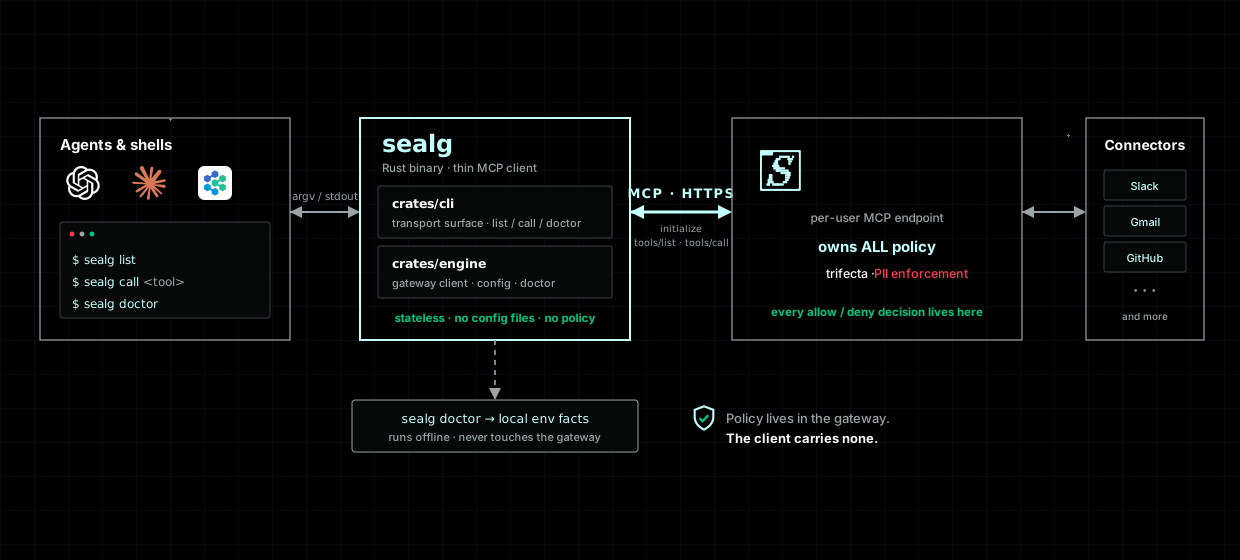
sealgis a thin client. It runs the MCP handshake and forwards requests. It holds no allow/deny logic, so the trust boundary is the gateway, not the binary you drop into a sandbox.- The gateway owns everything that matters. Policy, trifecta classification, and PII enforcement run per-user on the gateway before any connector is reached. Swapping the client never changes what is allowed.
doctoris local. It reads OS, session, and environment facts and prints them without opening a connection, so it is safe to run anywhere.
 Request lifecycle
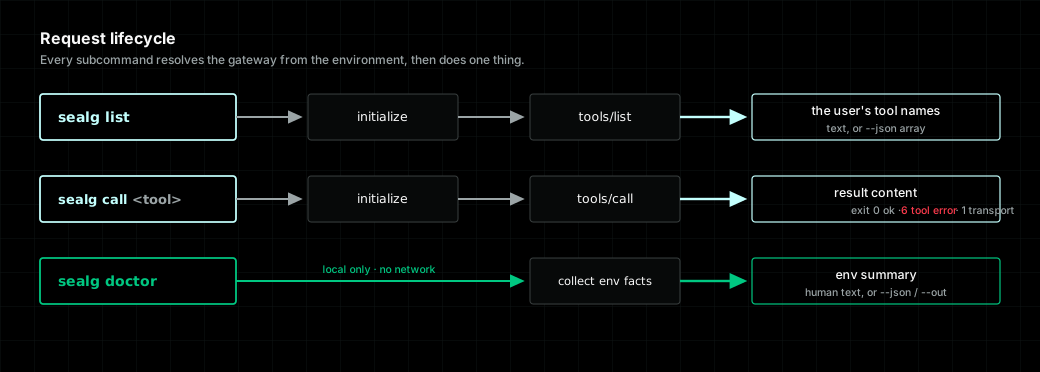
The workspace splits along the same boundary as the diagram:
crates/engine/the service core:GatewayConfig(env-resolved coordinates),GatewayClient(a hand-rolled MCP-over-HTTP client), thedoctorenv facts, and the shared result contract. No transport dependency.crates/cli/thesealgbinary. Theclisurface (doctor) is a cargo feature, so the gateway commands build without the diagnostics code.
 Requirements
- Rust 1.75+ and Cargo
- A reachable SealGate gateway (or
SEALGATE_URL=http://localhost:3000for local development) - Bun and prek for the formatting and pre-commit hooks
 Quick Start
# 1. Build and test the workspace
cargo build --workspace
cargo test --workspace

# 2. Point at a gateway and drive it (coordinates come from the environment)
export SEALGATE_URL=http://localhost:3000
cargo run -p sealg -- list
cargo run -p sealg -- call some_tool --args '{"query": "hello"}'

# ...or override the gateway per-invocation
cargo run -p sealg -- list --gateway-url https://dashboard.sealgate.ai
Before your first contribution, enable the hooks so cargo fmt, Clippy, and Biome
run on every commit:
bun add -g prek && prek install
 Python client
A uvx-installable Python client exposing the same sealg surface lives in
python/ and is published to PyPI:
uvx sealg doctor
It mirrors the Rust binary's commands and exit codes; the two are kept in sync by
scripts/check_wire_contract.py. See python/README.md.
 Configuration
sealg reads its gateway coordinates once at startup with
GatewayConfig::from_env (crates/engine/src/gateway/config.rs).
Nothing is stored on disk.
| Variable | Purpose |
|---|---|
SEALGATE_URL | Gateway origin. Defaults to http://localhost:3000. The --gateway-url flag overrides it per invocation. |
SEALGATE_API_KEY | Optional. Present, it is embedded in the /mcp/{key}/ path; absent, the path is /mcp/ and auth is injected by an upstream proxy. |
SEALGATE_SECRET_KEY | Zero-knowledge secret, sent as the sealgate_secret_key header. |
SEALGATE_CONVERSATION_ID | Stable conversation id, sent as x-sealgate-conversation-id. Falls back to Centaur's CENTAUR_THREAD_KEY. |
SSL_CERT_FILE / REQUESTS_CA_BUNDLE / NODE_EXTRA_CA_CERTS | Extra CA bundle to trust, for MITM inspection. The first one set wins. |
 Agent Skills
Claude Code and Codex skills live in .claude/skills/. Invoke them with
/skill-name: run /onboarding, /update-backend, /code-quality,
/cleanup, and more. Making backend changes? Start with the update-backend
skill for architecture details, command patterns, and sealg testing workflows.
Credits
This software uses the following tools:
About the Core Contributors
Made with contrib.rocks.
 License
See LICENSE.
Similar repos


Languages
Rust
34.3%
Python
29.8%
TypeScript
24.5%
Makefile
5.8%
Shell
5.6%
See what people are saying
README
sealg
The command-line
interface for SealGate, the agentic data firewall. sealg
is a thin MCP (Model Context Protocol) client to the SealGate gateway: list
and call forward tools/list / tools/call to your per-user gateway endpoint,
where all policy and enforcement live. The binary is stateless and resolves
every coordinate from the environment (no config files), so it drops into any
sandbox and carries no policy of its own.
The sealg surface
sealg is one small binary with three subcommands. list and call talk to the
live gateway over MCP; doctor stays local and reports environment facts.
export SEALGATE_URL=https://dashboard.sealgate.ai
sealg list                                   # the tools your gateway exposes
sealg call slack_send --args '{"channel": "#eng", "text": "shipped"}'
sealg doctor --json                          # local env facts, no network
| Command | What it does |
|---|---|
sealg list | Run the MCP initialize handshake, then tools/list, and print the tools your gateway exposes. --json emits an array of {name, description}. |
sealg call <tool> --args '{...}' | Forward one tools/call to the gateway with a JSON arguments object, print the result, and exit 0 on success, 6 on a tool error, 1 on a transport failure. |
sealg doctor | Collect local environment facts and emit a summary. Runs offline and never touches the gateway. --json / --out <path> write machine-readable output. |
Both list and call accept --gateway-url <url> to override SEALGATE_URL
for a single invocation. Everything else, including the API key and CA bundle, is
read from the environment (see Configuration).
Architecture
sealgis a thin client. It runs the MCP handshake and forwards requests. It holds no allow/deny logic, so the trust boundary is the gateway, not the binary you drop into a sandbox.- The gateway owns everything that matters. Policy, trifecta classification, and PII enforcement run per-user on the gateway before any connector is reached. Swapping the client never changes what is allowed.
doctoris local. It reads OS, session, and environment facts and prints them without opening a connection, so it is safe to run anywhere.
Request lifecycle
The workspace splits along the same boundary as the diagram:
crates/engine/the service core:GatewayConfig(env-resolved coordinates),GatewayClient(a hand-rolled MCP-over-HTTP client), thedoctorenv facts, and the shared result contract. No transport dependency.crates/cli/thesealgbinary. Theclisurface (doctor) is a cargo feature, so the gateway commands build without the diagnostics code.
Requirements
- Rust 1.75+ and Cargo
- A reachable SealGate gateway (or
SEALGATE_URL=http://localhost:3000for local development) - Bun and prek for the formatting and pre-commit hooks
Quick Start
# 1. Build and test the workspace
cargo build --workspace
cargo test --workspace

# 2. Point at a gateway and drive it (coordinates come from the environment)
export SEALGATE_URL=http://localhost:3000
cargo run -p sealg -- list
cargo run -p sealg -- call some_tool --args '{"query": "hello"}'

# ...or override the gateway per-invocation
cargo run -p sealg -- list --gateway-url https://dashboard.sealgate.ai
Before your first contribution, enable the hooks so cargo fmt, Clippy, and Biome
run on every commit:
bun add -g prek && prek install
Python client
A uvx-installable Python client exposing the same sealg surface lives in
python/ and is published to PyPI:
uvx sealg doctor
It mirrors the Rust binary's commands and exit codes; the two are kept in sync by
scripts/check_wire_contract.py. See python/README.md.
Configuration
sealg reads its gateway coordinates once at startup with
GatewayConfig::from_env (crates/engine/src/gateway/config.rs).
Nothing is stored on disk.
| Variable | Purpose |
|---|---|
SEALGATE_URL | Gateway origin. Defaults to http://localhost:3000. The --gateway-url flag overrides it per invocation. |
SEALGATE_API_KEY | Optional. Present, it is embedded in the /mcp/{key}/ path; absent, the path is /mcp/ and auth is injected by an upstream proxy. |
SEALGATE_SECRET_KEY | Zero-knowledge secret, sent as the sealgate_secret_key header. |
SEALGATE_CONVERSATION_ID | Stable conversation id, sent as x-sealgate-conversation-id. Falls back to Centaur's CENTAUR_THREAD_KEY. |
SSL_CERT_FILE / REQUESTS_CA_BUNDLE / NODE_EXTRA_CA_CERTS | Extra CA bundle to trust, for MITM inspection. The first one set wins. |
Agent Skills
Claude Code and Codex skills live in .claude/skills/. Invoke them with
/skill-name: run /onboarding, /update-backend, /code-quality,
/cleanup, and more. Making backend changes? Start with the update-backend
skill for architecture details, command patterns, and sealg testing workflows.
Credits
This software uses the following tools:
About the Core Contributors
Made with contrib.rocks.
License
See LICENSE.
Similar repos
Languages
Rust
34.3%
Python
29.8%
TypeScript
24.5%
Makefile
5.8%
Shell
5.6%