Agent skills for Claude Code and Codex: general-purpose tools and the dstack engineering workflow.
HTML
1
25 commits
updated Oct 10, 2026
Agent skills for Claude Code and Codex, shipped as two plugins. Both work in either harness from the same canonical source.
toolsGeneral-purpose utilities.
| Skill | What it does |
|---|---|
conversation-history | Search past Claude Code, Claude Desktop, Codex, and ChatGPT conversations from local logs and exports |
web-scraper | Build resilient scrapers via a discovery-then-script workflow |
field-notes | Build field notes: one sheet, a notebook of them, or a shelf of notebooks. Markdown sources, HTML templates for a swipeable deck on aged paper, the indexes that open it, and image prompts for printed posters |
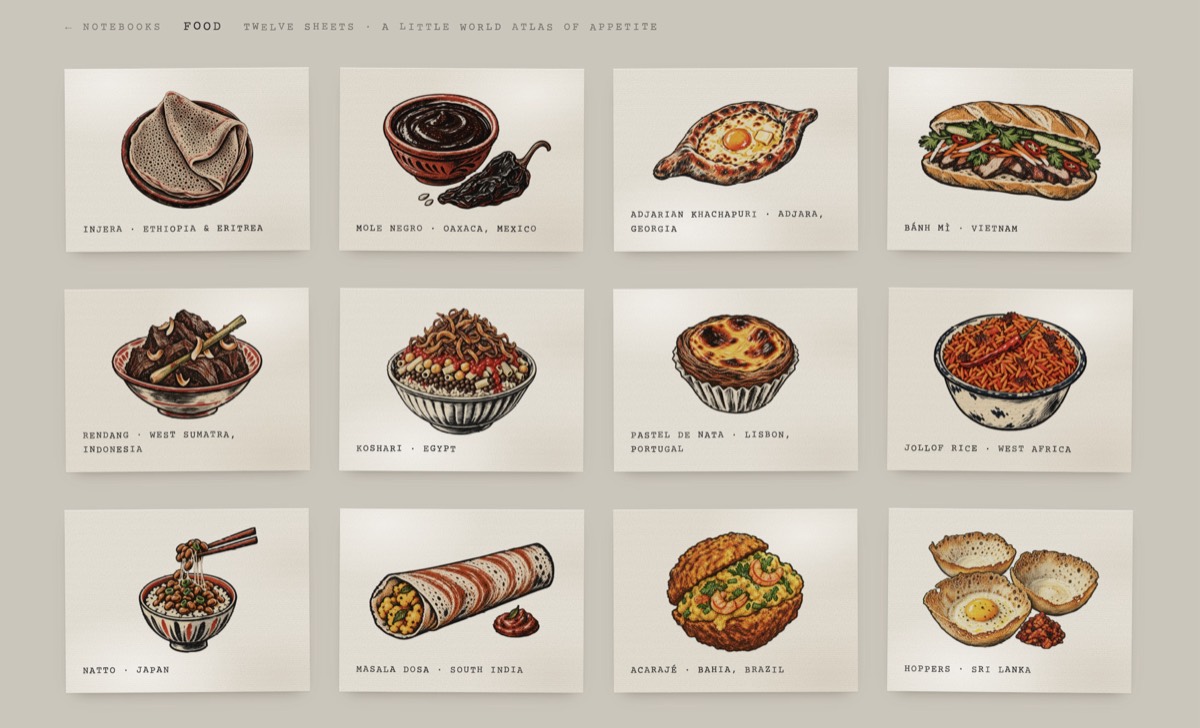
What field-notes builds, at the middle size: one notebook of twelve sheets,
generated from markdown. The whole shelf is live on
dumky.net.
dstackA working style for non-trivial engineering and writing work. Forked from
pstack by Lauren Tan (MIT).
docs/dstack/UPSTREAM.md covers what changed in the
port and why; docs/dstack/LICENSE carries the upstream MIT notice.
Start with /dstack-mode at the top of a task. It matches the task to a
playbook, copies that playbook's steps into a todo list, and routes to the other
skills as the steps need them. The rest are situational.
| Skill | Use it when |
|---|---|
dstack-mode | Default entry point for any non-trivial task |
principles | The twenty-two rules the mode works from, one file each |
how | You want a walkthrough of how a subsystem works |
why | You want to know why something was built this way |
teach | You want to actually understand a change, not just have it summarized |
recall | You are resuming work and want your recent context rebuilt |
architect | Code is about to cross a function boundary and the shape is not settled |
arena | You want N parallel attempts, then the best parts of each |
swarm | You want N parallel workers across slices, then one report |
interrogate | You have a diff and want several reviewers to try to break it |
blast-radius | A small-looking change might break something outside the diff |
figure-it-out | No bundled playbook fits, so design a rigorous one |
tdd | A bug has a cheap local test path, so write the failing test first |
create-verification-skill | The project has no scripted way to prove app behavior |
show-me-your-work | You want a reviewable decision trail for unattended work |
reflect | A long task landed and the lesson should become a skill edit |
authoring-skills | You are writing or fixing a SKILL.md |
no-comments | Strip comments before review |
unslop | You are cleaning up writing, removes AI tells |
dehistorize | An artifact narrates its own edit history, strip the leaks |
bro | Restate the last message in plain human language |
technical-writing | Docs, RFCs, readmes, PR descriptions, commit messages |
typescript-best-practices | You are reading or editing TypeScript |
setup-dstack | Change which model runs which dstack role |
Claude Code also gets two subagents from this plugin, dstack-agent and
comment-sicko. The Codex plugin format has no agents key, so those are
Claude Code only.
The review panels (interrogate, arena, architect, the how critics) want
a second vendor at the table. /setup-dstack writes ~/.claude/dstack-models.md
to say which model runs which role. Without that file each skill falls back to
its inline default, which is Claude-only.
/plugin marketplace add dumkydewilde/agent-skills
/plugin install tools@agent-skills
/plugin install dstack@agent-skills
Or wire it into ~/.claude/settings.json so it stays available and updates
itself:
{
  "extraKnownMarketplaces": {
    "agent-skills": {
      "source": { "source": "github", "repo": "dumkydewilde/agent-skills" }
    }
  }
}
codex plugin marketplace add dumkydewilde/agent-skills
codex plugin add tools@agent-skills
codex plugin add dstack@agent-skills
codex plugin list --marketplace agent-skills
For local development before pushing, add a clone as a local marketplace from the repo root:
codex plugin marketplace add .
codex plugin add dstack@agent-skills
agent-skills/
├─ .claude-plugin/marketplace.json       # Claude marketplace manifest
├─ .agents/plugins/marketplace.json      # Codex marketplace manifest
├─ skills/                               # canonical, agent-agnostic source of truth
│  ├─ tools/{conversation-history,field-notes,web-scraper}/
│  └─ dstack/
│     ├─ dstack-mode/                    # router, playbooks, references, scripts
│     ├─ principles/references/          # twenty-two principle files
│     └─ <twenty-two more skills>/
└─ plugins/
   ├─ claude/{tools,dstack}/   (.claude-plugin/plugin.json + skills -> ../../../skills/<name>)
   └─ codex/{tools,dstack}/    (.codex-plugin/plugin.json + real, release-ready skill copy)
The canonical skill files live under skills/<plugin>/<skill-name>/. The Claude
plugin symlinks to that source. The Codex/ChatGPT plugin carries a real copy,
because their importer ignores symbolic links immediately inside skills/.
Edit the canonical copy under skills/, never the one under
plugins/codex/. Then refresh the release copies and check them:
scripts/sync-plugin-skills.sh
python3 -m unittest discover -s tests -v
The tests check three things. The Codex copy matches the canonical source byte for byte, the Claude symlink points where it should, and every skill has valid frontmatter with resolvable links and no leftover Cursor-only keys. CI runs the same two test modules on every push and pull request.
Adding a whole plugin also means adding its name to the PLUGINS array in
scripts/sync-plugin-skills.sh and to PLUGINS in
tests/test_codex_plugin_package.py, plus an entry in both marketplace
manifests.
${CLAUDE_PLUGIN_ROOT}; that only expands in slash
commands and hooks. A skill that ships a script references it through the
skill's announced base directory instead, see
skills/tools/conversation-history/SKILL.md.conversation-history reads local files only: ~/.claude/projects,
~/.codex/sessions, and ChatGPT export drops. Nothing leaves the machine.MIT, see LICENSE. The dstack plugin is derived from pstack by
Lauren Tan under the same license; its notice is at docs/dstack/LICENSE.
Agent skills for Claude Code and Codex: general-purpose tools and the dstack engineering workflow.
HTML
1
25 commits
updated Oct 10, 2026
Agent skills for Claude Code and Codex, shipped as two plugins. Both work in either harness from the same canonical source.
toolsGeneral-purpose utilities.
| Skill | What it does |
|---|---|
conversation-history | Search past Claude Code, Claude Desktop, Codex, and ChatGPT conversations from local logs and exports |
web-scraper | Build resilient scrapers via a discovery-then-script workflow |
field-notes | Build field notes: one sheet, a notebook of them, or a shelf of notebooks. Markdown sources, HTML templates for a swipeable deck on aged paper, the indexes that open it, and image prompts for printed posters |
What field-notes builds, at the middle size: one notebook of twelve sheets,
generated from markdown. The whole shelf is live on
dumky.net.
dstackA working style for non-trivial engineering and writing work. Forked from
pstack by Lauren Tan (MIT).
docs/dstack/UPSTREAM.md covers what changed in the
port and why; docs/dstack/LICENSE carries the upstream MIT notice.
Start with /dstack-mode at the top of a task. It matches the task to a
playbook, copies that playbook's steps into a todo list, and routes to the other
skills as the steps need them. The rest are situational.
| Skill | Use it when |
|---|---|
dstack-mode | Default entry point for any non-trivial task |
principles | The twenty-two rules the mode works from, one file each |
how | You want a walkthrough of how a subsystem works |
why | You want to know why something was built this way |
teach | You want to actually understand a change, not just have it summarized |
recall | You are resuming work and want your recent context rebuilt |
architect | Code is about to cross a function boundary and the shape is not settled |
arena | You want N parallel attempts, then the best parts of each |
swarm | You want N parallel workers across slices, then one report |
interrogate | You have a diff and want several reviewers to try to break it |
blast-radius | A small-looking change might break something outside the diff |
figure-it-out | No bundled playbook fits, so design a rigorous one |
tdd | A bug has a cheap local test path, so write the failing test first |
create-verification-skill | The project has no scripted way to prove app behavior |
show-me-your-work | You want a reviewable decision trail for unattended work |
reflect | A long task landed and the lesson should become a skill edit |
authoring-skills | You are writing or fixing a SKILL.md |
no-comments | Strip comments before review |
unslop | You are cleaning up writing, removes AI tells |
dehistorize | An artifact narrates its own edit history, strip the leaks |
bro | Restate the last message in plain human language |
technical-writing | Docs, RFCs, readmes, PR descriptions, commit messages |
typescript-best-practices | You are reading or editing TypeScript |
setup-dstack | Change which model runs which dstack role |
Claude Code also gets two subagents from this plugin, dstack-agent and
comment-sicko. The Codex plugin format has no agents key, so those are
Claude Code only.
The review panels (interrogate, arena, architect, the how critics) want
a second vendor at the table. /setup-dstack writes ~/.claude/dstack-models.md
to say which model runs which role. Without that file each skill falls back to
its inline default, which is Claude-only.
/plugin marketplace add dumkydewilde/agent-skills
/plugin install tools@agent-skills
/plugin install dstack@agent-skills
Or wire it into ~/.claude/settings.json so it stays available and updates
itself:
{
  "extraKnownMarketplaces": {
    "agent-skills": {
      "source": { "source": "github", "repo": "dumkydewilde/agent-skills" }
    }
  }
}
codex plugin marketplace add dumkydewilde/agent-skills
codex plugin add tools@agent-skills
codex plugin add dstack@agent-skills
codex plugin list --marketplace agent-skills
For local development before pushing, add a clone as a local marketplace from the repo root:
codex plugin marketplace add .
codex plugin add dstack@agent-skills
agent-skills/
├─ .claude-plugin/marketplace.json       # Claude marketplace manifest
├─ .agents/plugins/marketplace.json      # Codex marketplace manifest
├─ skills/                               # canonical, agent-agnostic source of truth
│  ├─ tools/{conversation-history,field-notes,web-scraper}/
│  └─ dstack/
│     ├─ dstack-mode/                    # router, playbooks, references, scripts
│     ├─ principles/references/          # twenty-two principle files
│     └─ <twenty-two more skills>/
└─ plugins/
   ├─ claude/{tools,dstack}/   (.claude-plugin/plugin.json + skills -> ../../../skills/<name>)
   └─ codex/{tools,dstack}/    (.codex-plugin/plugin.json + real, release-ready skill copy)
The canonical skill files live under skills/<plugin>/<skill-name>/. The Claude
plugin symlinks to that source. The Codex/ChatGPT plugin carries a real copy,
because their importer ignores symbolic links immediately inside skills/.
Edit the canonical copy under skills/, never the one under
plugins/codex/. Then refresh the release copies and check them:
scripts/sync-plugin-skills.sh
python3 -m unittest discover -s tests -v
The tests check three things. The Codex copy matches the canonical source byte for byte, the Claude symlink points where it should, and every skill has valid frontmatter with resolvable links and no leftover Cursor-only keys. CI runs the same two test modules on every push and pull request.
Adding a whole plugin also means adding its name to the PLUGINS array in
scripts/sync-plugin-skills.sh and to PLUGINS in
tests/test_codex_plugin_package.py, plus an entry in both marketplace
manifests.
${CLAUDE_PLUGIN_ROOT}; that only expands in slash
commands and hooks. A skill that ships a script references it through the
skill's announced base directory instead, see
skills/tools/conversation-history/SKILL.md.conversation-history reads local files only: ~/.claude/projects,
~/.codex/sessions, and ChatGPT export drops. Nothing leaves the machine.MIT, see LICENSE. The dstack plugin is derived from pstack by
Lauren Tan under the same license; its notice is at docs/dstack/LICENSE.



