This is a semantic search implementation using RoBERTa + T5 + FAISS
Jupyter Notebook
1
12 commits
updated May 22, 2023
This is a semantic search implementation combining Roberta + T5 + FAISS
  graph TD;
      dataset-->T5_query_generation;
      T5_query_generation-->fine-tuning_ROBERTA_model;
      fine-tuning_ROBERTA_model-->FAISS_search;
      FAISS_search-->FAISS_(indexing + clustering + search);
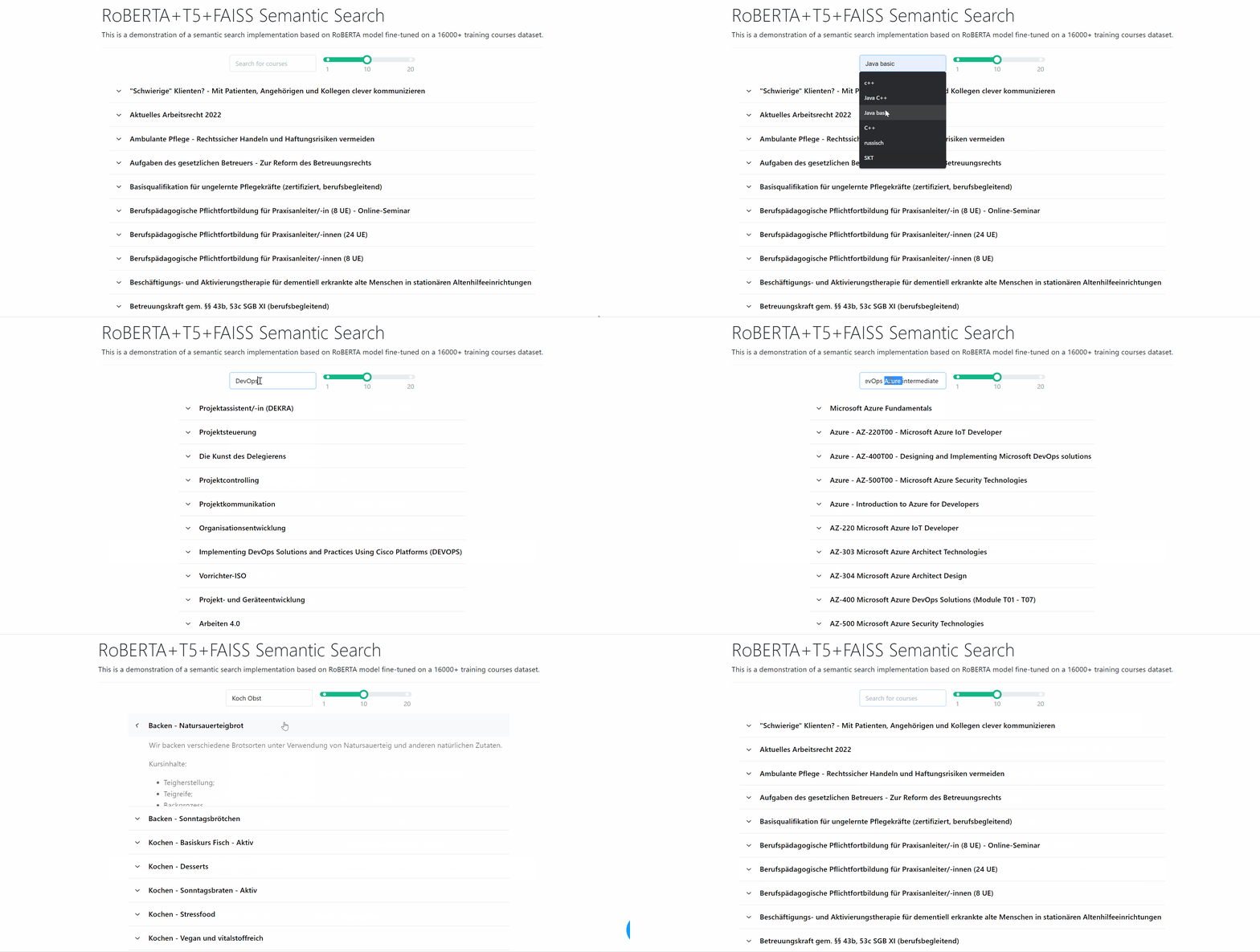
First, clone the git repo, then create a virtual environment for installing dependencies. Feel free to use conda or any other environment manager of your choice.
git clone https://github.com/amrohendawi/roberta-t5-faiss-semantic-search.git
cd roberta-t5-faiss-semantic-search
python -m venv venv
Activate the environment and install the requirements with pip
source venv/bin/activate
pip install -r requirements.txt
Download a ready model from this link
Run the app
python app.py
Before you push to heroku make sure to update the dependencies in the requirements.txt file in case of new additions.
Heroku will automatically deploy the latest version of the app after every commit to the master branch.
pip freeze > requirements.txt
To train and test a new model on your own dataset:
python train.py --model_name weiterbildung --local_model --device cuda --dataset weiterbildung --title_col CS_NAME --desc_col CS_DESC_LONG
Make sure to put the dataset in datasets/<dataset name>/dataset.json.
Make sure to check out app.py for a working example on calling SemanticSearch and using it.
You can push the project to production by simply creating a new app on heroku and connecting it to your github repo within 60 seconds. Make sure to pull a compressed model and unzip it before executing the app.
This is a semantic search implementation using RoBERTa + T5 + FAISS
Jupyter Notebook
1
12 commits
updated May 22, 2023
This is a semantic search implementation combining Roberta + T5 + FAISS
  graph TD;
      dataset-->T5_query_generation;
      T5_query_generation-->fine-tuning_ROBERTA_model;
      fine-tuning_ROBERTA_model-->FAISS_search;
      FAISS_search-->FAISS_(indexing + clustering + search);
First, clone the git repo, then create a virtual environment for installing dependencies. Feel free to use conda or any other environment manager of your choice.
git clone https://github.com/amrohendawi/roberta-t5-faiss-semantic-search.git
cd roberta-t5-faiss-semantic-search
python -m venv venv
Activate the environment and install the requirements with pip
source venv/bin/activate
pip install -r requirements.txt
Download a ready model from this link
Run the app
python app.py
Before you push to heroku make sure to update the dependencies in the requirements.txt file in case of new additions.
Heroku will automatically deploy the latest version of the app after every commit to the master branch.
pip freeze > requirements.txt
To train and test a new model on your own dataset:
python train.py --model_name weiterbildung --local_model --device cuda --dataset weiterbildung --title_col CS_NAME --desc_col CS_DESC_LONG
Make sure to put the dataset in datasets/<dataset name>/dataset.json.
Make sure to check out app.py for a working example on calling SemanticSearch and using it.
You can push the project to production by simply creating a new app on heroku and connecting it to your github repo within 60 seconds. Make sure to pull a compressed model and unzip it before executing the app.



