
[CVPR 2026] Test-Time 3D Occupancy Prediction
Jupyter Notebook
23
8 commits
updated Jun 1, 2026
README
TT-Occ: Test-Time Compute for Self-Supervised Occupancy
Under Construction
 Why train a dedicated occupancy network in the era of foundation VLMs?
We show that a test-time occupancy framework that integreted with a conmbination of VLMs could achieve SOTA performance without any network training or fine-tuning.
Why train a dedicated occupancy network in the era of foundation VLMs?
We show that a test-time occupancy framework that integreted with a conmbination of VLMs could achieve SOTA performance without any network training or fine-tuning.
TT-Occ easily integrates advanced VLMs through a simple adapter interface. Contributions are warmly welcomed!
📥 Data Preparation
- Download the nuScenes dataset from nuScenes.org.
- Extract nuScenes data into a readable format:
python extract_nuscenes.py # Ensure you set your dataset path inside this script. - Download ground-truth occupancy labels:
- Occ3D-nuScenes GT: Google Drive
- nuCraft GT: nuCraft GitHub
- Update
data_rootof all scripts in ``.
🌱 Environment Setup
For the external repositories used in this project, we provide minimal versions of their codebases under the submodules directory (with their original licenses retained; please respect and comply with their terms). These have been packaged under a unified conda environment, so you do not need to clone each dependency separately.
To reproduce our environment reliably, use:
conda env create -f environment.yaml
conda activate ttocc
bash submodules/install_and_download.sh
install_and_download.sh (run from the repo root, with ttocc activated) includes all install and checkpoint download steps required by TT-Occ (OpenSeeD / Rex-Omni / VGGT / MapAnything / RAFT / 3DGS CUDA extensions).
✅ Currently Supported Online Models
TT-Occ currently supports the following online test-time providers:
- Semantic models:
openseed,rexomni - Depth models:
vggt,mapanything - Dynamic mask model:
raft
Selection is controlled by environment variables in run_main.sh:
SEMANTIC_PREFIX(openseedby default)DEPTH_PREFIX(vggtby default)DYNAMIC_MASK_PREFIX(raftby default)
🚀 Running TT-Occ
Evaluate on the complete 150-scene test split:
conda activate ttocc
bash run_main.sh
By default run_main.sh enables mIoU (EVAL_OCC=1) and writes per-scene result.json under out-main-Occ3D/<variant>/<scene>/.
Manual flags for train.py:
--use_fusion— enable E-style semantic/radiometric fusion (default off, D-equivalent)--eval_occ --occ3d_path ... --nucraft_path ...— mIoU vs savedOcc/*.pth
Offline aggregation (same logic as train): python summarymiou.py, python summary.py.
🎨 Visualization
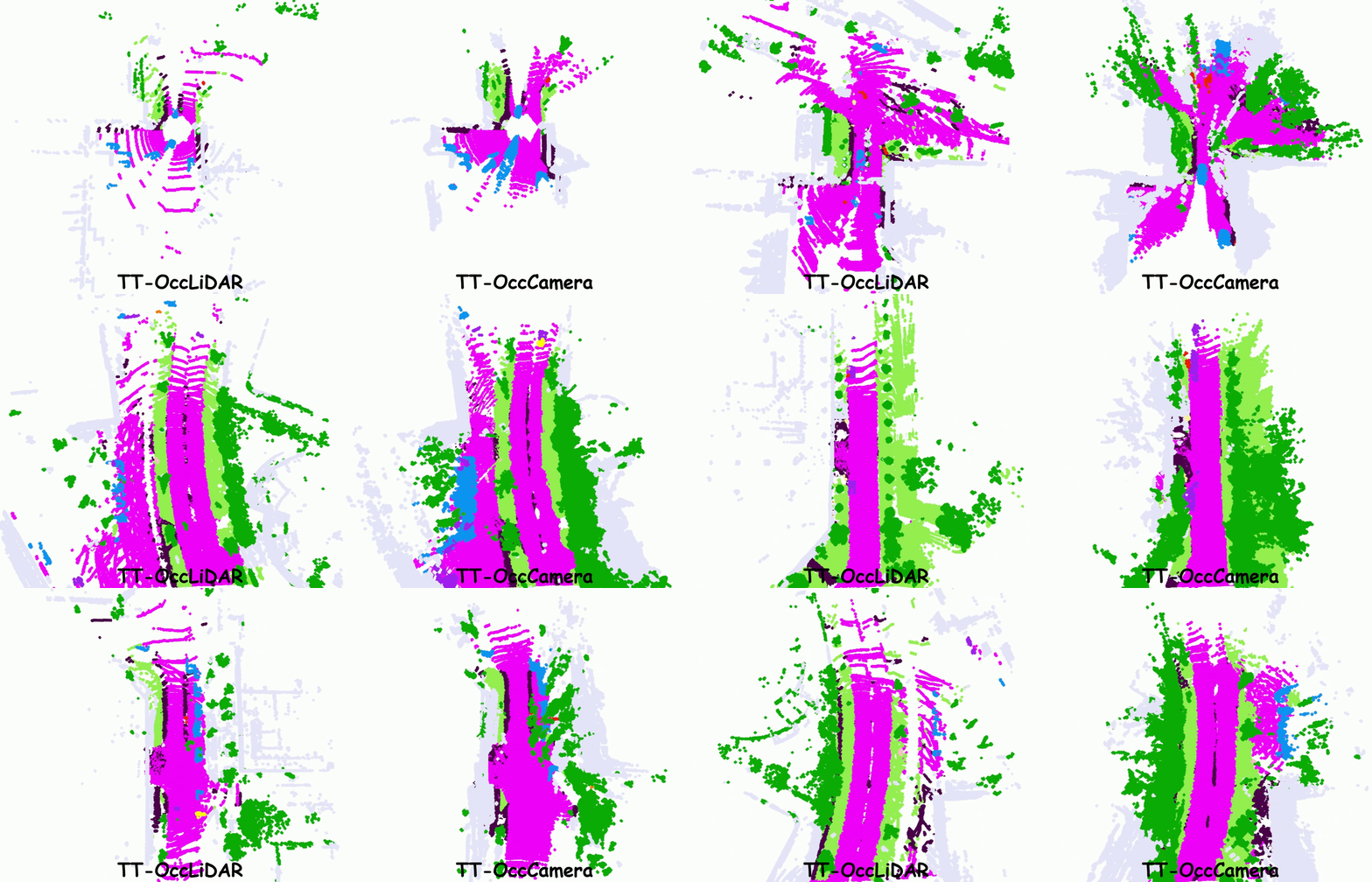
We provide a simple occupancy visualizer based on Open3D. To visualize occupancy predictions, run:
python vis.py # Make sure the dataset path is correctly set.
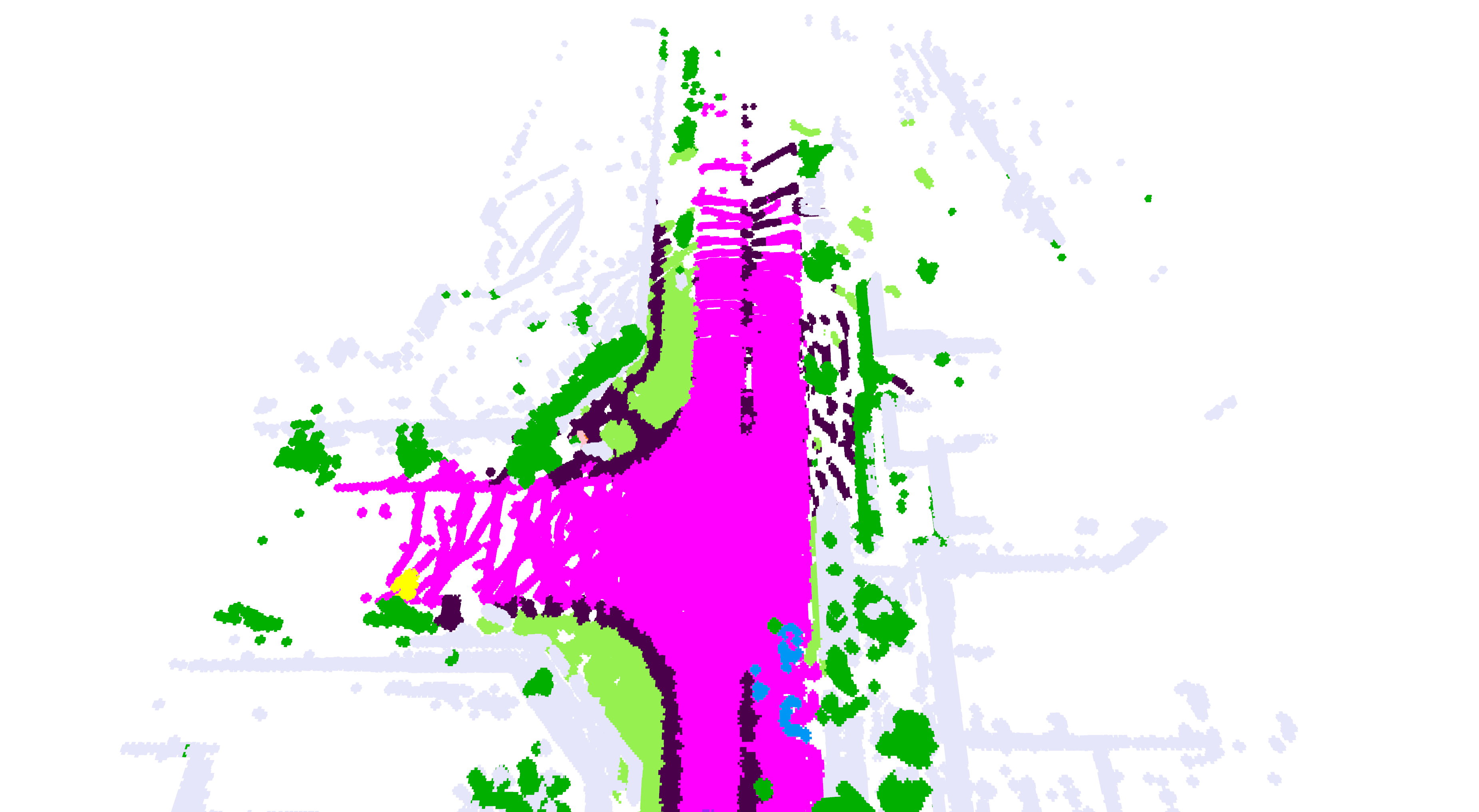
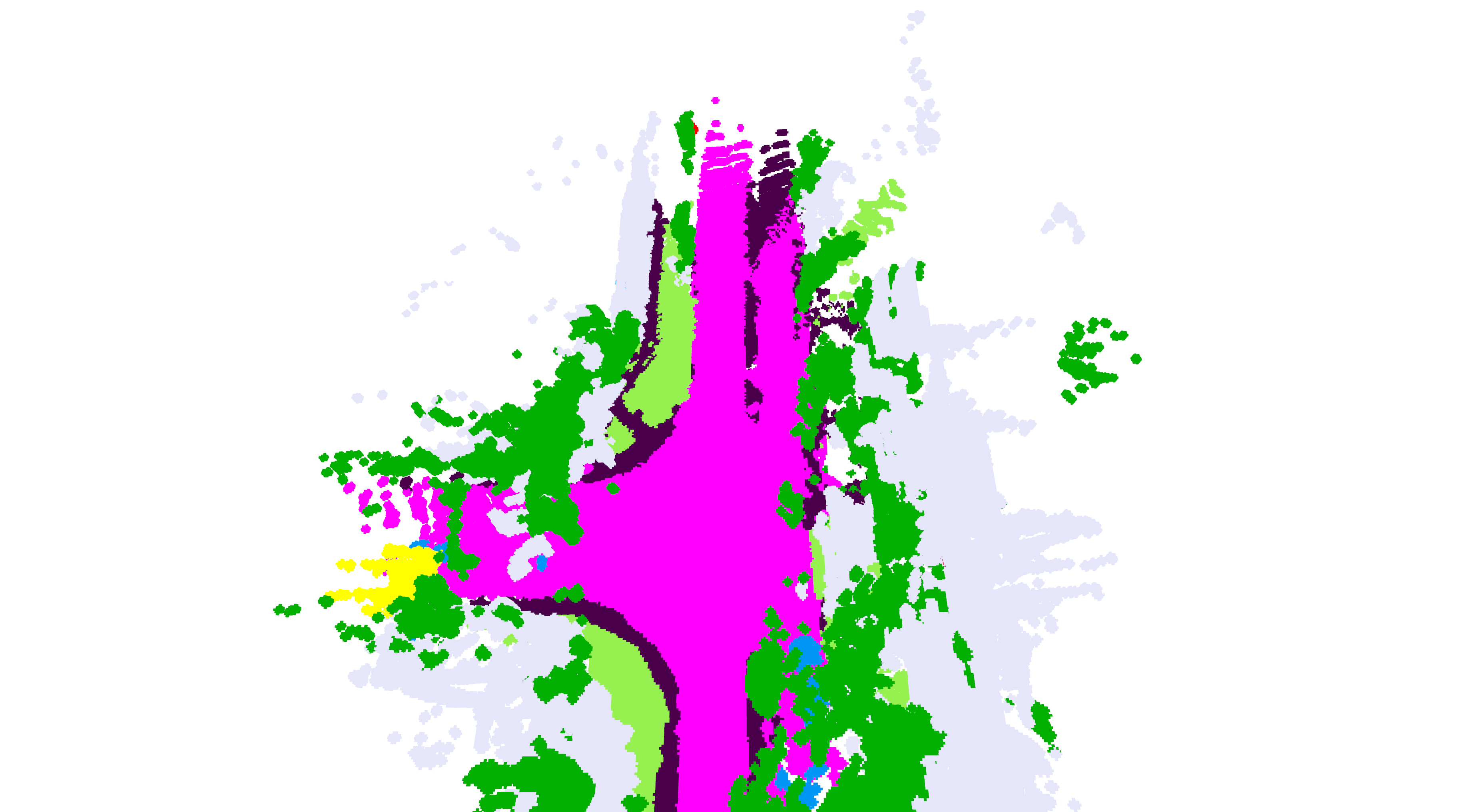
Example visualization outputs:
-
TT-OccLiDAR:
-
TT-OccCamera:
For advanced visualization commands, refer to custom_utils/VoxelGridVisualizer.
📌 Acknowledgements
This project builds upon the excellent codebase of 3DGS and powerful VLMs including OpenSeeD, Rex-Omni, VGGT, MapAnything, RAFT, and TT-Occ. We deeply appreciate their creators' efforts and your interest in TT-Occ!
📖 Citation
If you find this work helpful, please star our repo and cite the paper:
@InProceedings{ttocc,
    author    = {Zhang, Fengyi and Sun, Xiangyu and Yang, Huitong and Zhang, Zheng and Huang, Zi and Luo, Yadan},
    title     = {Test-Time 3D Occupancy Prediction},
    booktitle = {Proceedings of the IEEE/CVF Conference on Computer Vision and Pattern Recognition (CVPR)},
    month     = {June},
    year      = {2026},
    pages     = {35691-35701}
}
Contributors

8 commits
Similar repos





Languages
Jupyter Notebook
73.2%
Python
22.1%
Cuda
2.1%
Shell
1.1%
[CVPR 2026] Test-Time 3D Occupancy Prediction
Jupyter Notebook
23
8 commits
updated Jun 1, 2026
README
TT-Occ: Test-Time Compute for Self-Supervised Occupancy
Under Construction
Why train a dedicated occupancy network in the era of foundation VLMs?
We show that a test-time occupancy framework that integreted with a conmbination of VLMs could achieve SOTA performance without any network training or fine-tuning.
TT-Occ easily integrates advanced VLMs through a simple adapter interface. Contributions are warmly welcomed!
📥 Data Preparation
- Download the nuScenes dataset from nuScenes.org.
- Extract nuScenes data into a readable format:
python extract_nuscenes.py # Ensure you set your dataset path inside this script. - Download ground-truth occupancy labels:
- Occ3D-nuScenes GT: Google Drive
- nuCraft GT: nuCraft GitHub
- Update
data_rootof all scripts in ``.
🌱 Environment Setup
For the external repositories used in this project, we provide minimal versions of their codebases under the submodules directory (with their original licenses retained; please respect and comply with their terms). These have been packaged under a unified conda environment, so you do not need to clone each dependency separately.
To reproduce our environment reliably, use:
conda env create -f environment.yaml
conda activate ttocc
bash submodules/install_and_download.sh
install_and_download.sh (run from the repo root, with ttocc activated) includes all install and checkpoint download steps required by TT-Occ (OpenSeeD / Rex-Omni / VGGT / MapAnything / RAFT / 3DGS CUDA extensions).
✅ Currently Supported Online Models
TT-Occ currently supports the following online test-time providers:
- Semantic models:
openseed,rexomni - Depth models:
vggt,mapanything - Dynamic mask model:
raft
Selection is controlled by environment variables in run_main.sh:
SEMANTIC_PREFIX(openseedby default)DEPTH_PREFIX(vggtby default)DYNAMIC_MASK_PREFIX(raftby default)
🚀 Running TT-Occ
Evaluate on the complete 150-scene test split:
conda activate ttocc
bash run_main.sh
By default run_main.sh enables mIoU (EVAL_OCC=1) and writes per-scene result.json under out-main-Occ3D/<variant>/<scene>/.
Manual flags for train.py:
--use_fusion— enable E-style semantic/radiometric fusion (default off, D-equivalent)--eval_occ --occ3d_path ... --nucraft_path ...— mIoU vs savedOcc/*.pth
Offline aggregation (same logic as train): python summarymiou.py, python summary.py.
🎨 Visualization
We provide a simple occupancy visualizer based on Open3D. To visualize occupancy predictions, run:
python vis.py # Make sure the dataset path is correctly set.
Example visualization outputs:
-
TT-OccLiDAR:
-
TT-OccCamera:
For advanced visualization commands, refer to custom_utils/VoxelGridVisualizer.
📌 Acknowledgements
This project builds upon the excellent codebase of 3DGS and powerful VLMs including OpenSeeD, Rex-Omni, VGGT, MapAnything, RAFT, and TT-Occ. We deeply appreciate their creators' efforts and your interest in TT-Occ!
📖 Citation
If you find this work helpful, please star our repo and cite the paper:
@InProceedings{ttocc,
    author    = {Zhang, Fengyi and Sun, Xiangyu and Yang, Huitong and Zhang, Zheng and Huang, Zi and Luo, Yadan},
    title     = {Test-Time 3D Occupancy Prediction},
    booktitle = {Proceedings of the IEEE/CVF Conference on Computer Vision and Pattern Recognition (CVPR)},
    month     = {June},
    year      = {2026},
    pages     = {35691-35701}
}
Similar repos
Contributors
8 commits
Languages
Jupyter Notebook
73.2%
Python
22.1%
Cuda
2.1%
Shell
1.1%