PC port of Digimon World 2 (PS1) built from the matching decomp. Needs your own disc image.
C++
10
2,085 commits
updated Oct 12, 2026

Community for the PC port and DW2 Online.
Digimon World 2 (PlayStation, 2000) running natively on Windows and Linux,
built from the game's own decompiled C code.





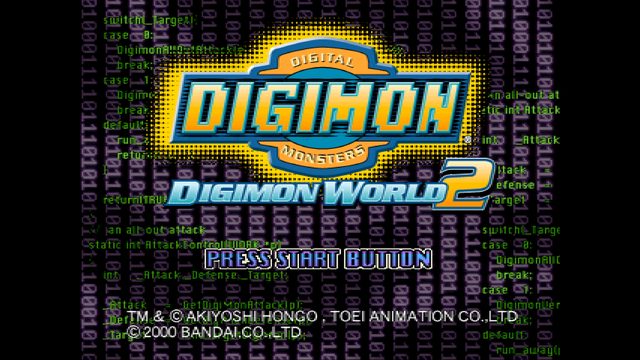
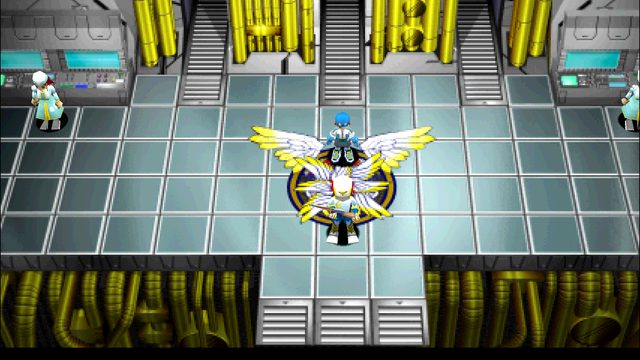
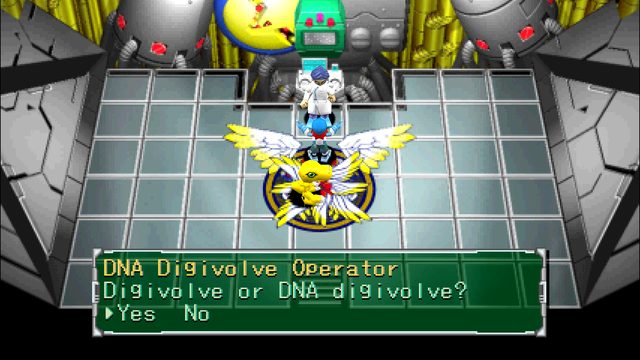
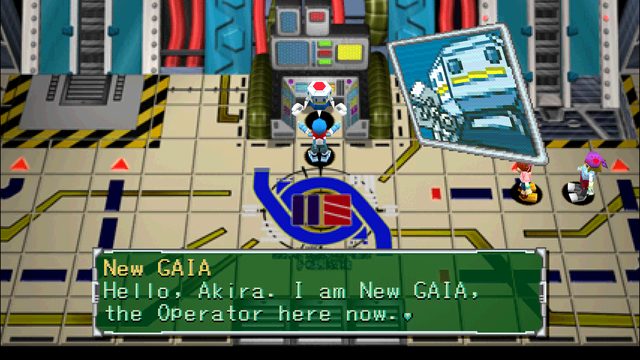
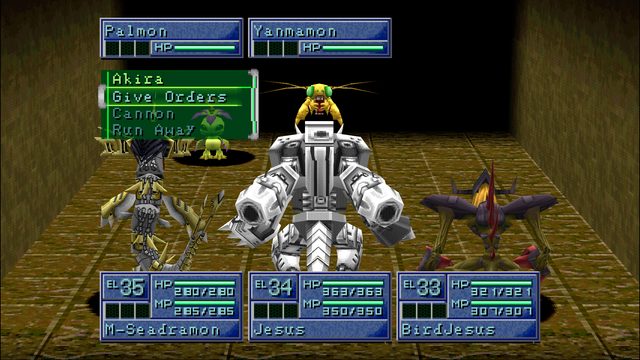
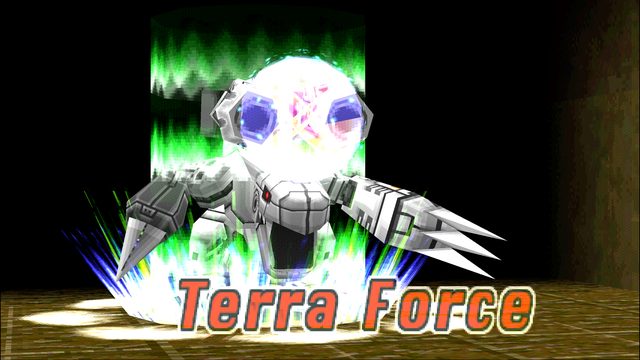
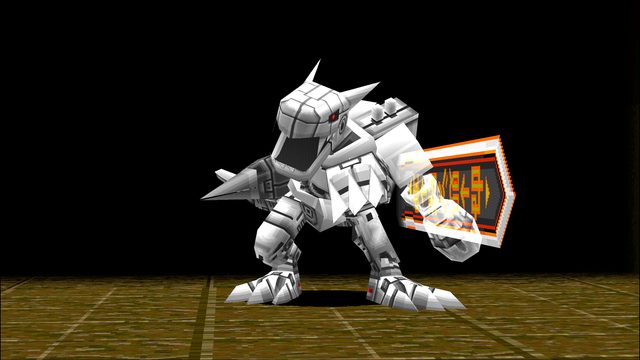
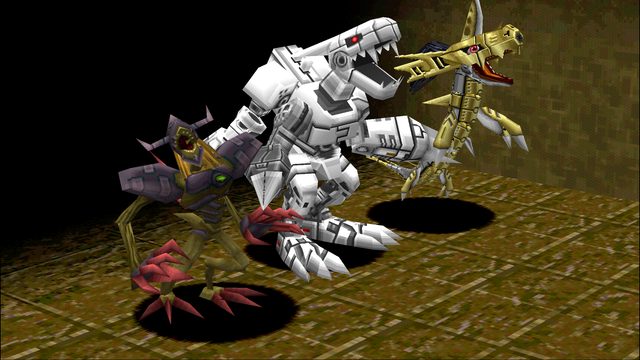
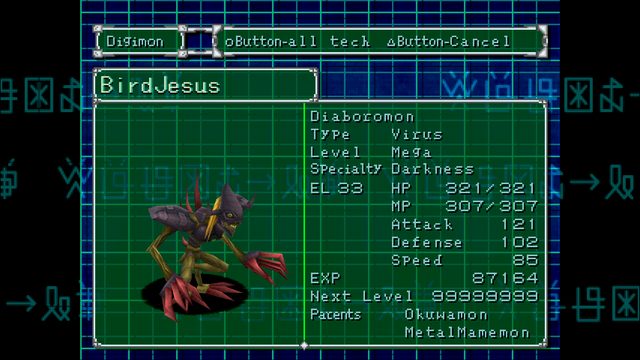
Screenshots from the PC port in 16:9 at 1920x1080. F12 saves your own.
Features · Getting started · Controls · Version history · Roadmap · Help wanted · Building · How it works
This is not an emulator and not a remake. The Digimon World 2 decompilation turned all 1088 functions of the game into C that rebuilds the retail disc byte for byte. This port compiles that same C for the PC and replaces the PlayStation's libraries and hardware with a PC layer on SDL3.
The game logic is the original code: battles, damage, digivolution, DNA, the domains, the text and the music behave as on the PS1. What changes is how it looks and how you play it: sharper 3D at higher resolutions, a widescreen view, polygons that no longer wobble, gamepads, and saves that are plain files.
[!IMPORTANT] You need your own copy of the game. This repository and its downloads contain no disc image and no game data (graphics, models, sound, text or code from the disc). The port reads its data from a pack file that is built on your PC from your own disc image (USA,
SLUS-01193) and checked file by file against a list of hashes. A disc that does not match is rejected.
| Render scale 1x to 8x | 3D is drawn at up to 8 times the PS1 resolution (2560x1920 at 8x). Textures and 2D art keep their original pixels, so the look stays the same, only cleaner. |
| No wobble | The PS1 snaps every vertex to whole pixels and maps textures without perspective, which makes polygons shake and textures warp. The port keeps precise vertex positions and draws textures with correct perspective. |
| Widescreen 16:9 | A wider view of the 3D world, made by widening the camera, not by stretching the picture. Menus, text boxes and the HUD keep their 4:3 layout. |
| Sharpening | Optional contrast adaptive sharpening of the scaled picture (strength 0 to 100, off by default), on the graphics card or on the CPU with the software renderer. Edges get crisper without halos. F8 turns it on and off. |
| Smooth frames | The game runs at its original 30 frames per second, but the picture is drawn at your monitor's refresh rate (60, 144, 240 Hz): the city, the domains and the battles are blended between two game frames, so walking, turning and battle camera moves look fluid. Game logic, timing and random numbers stay exactly the same; the picture is one game frame behind. Camera cuts stay cuts, menus and text stay as they are. Paused while the speed-up runs. On by default with the GPU renderer, F9 turns it off. |
| GPU renderer | Drawing runs on the graphics card through SDL_GPU (Vulkan). A software renderer stays as a fallback. |
| Exact frame timing | The game runs at the PS1's 59.94 Hz, paced to the real clock, on its own thread, so dragging or resizing the window does not stall it. |
| Speed-up | F3 unlocks the speed: battles, walking in the domains and menus run 2x to 8x faster, or with no limit (pick it in F1, Game tab; 3x by default). F3 again locks it to normal speed. Music and battle voices play faster with it; movies always play at normal speed. |
| Window modes | Windowed, borderless fullscreen at the desktop resolution, or exclusive fullscreen at a resolution and refresh rate you pick. F11 switches between windowed and fullscreen; a short notice in the top left names the mode. The window's size and place are remembered. |
| Movies | The intro, the story scenes and the ending play from your disc's movie files, decoded like the PS1's movie decoder chip at the original 15 frames per second. Start skips them, as on the PS1. Their sound plays with them (streamed CD audio). |
| Streamed CD audio | The sound the PS1 streams from the disc (XA): the skill voice lines in battle and VS, the DigiLab DNA scene and the movie sound. Decoded like the PS1's CD controller (same ADPCM decode and the same resampling to 44.1 kHz) and mixed into the emulated sound chip at the game's CD volume. |
| Classic picture | At 1x with the extras off, the picture is the PS1 picture: automated runs compare it with reference screenshots frame by frame. |
| Settings window | F1 opens the settings: render scale, 16:9, no wobble, sharpening, smooth frames, renderer, window mode, key and gamepad remap, left stick as D-pad, volume. Changes apply at once and are saved to settings.ini. The title screen shows "Press F1 for settings" in the corner (can be switched off). |
| Gamepads | Any controller SDL3 knows (Xbox, PlayStation, Switch Pro and others), mapped by button position, and it can be plugged in while the game runs. The left stick moves like the D-pad. |
| Keyboard | Full keyboard play out of the box, every key can be changed in F1. |
| Two players | VS mode with two gamepads, or on one keyboard by switching the port with Tab (--pad2-keys). |
| Saves as files | Memory cards are files (card1.mcd, card2.mcd) in your user folder. Raw card images from DuckStation, PCSX-Redux or ePSXe load as they are, so a save from an emulator carries over. |
| Screenshots | F12 saves the current picture as PNG in a screenshots folder next to the program. |
| Safe quit | Esc asks before quitting, so a stray key press does not lose progress. |
| Updates | Checks for a new version at start and can update itself. Off in F1. |
| 64-bit and Linux | Native Windows x64 and Linux x64 builds (32-bit Windows too). |
Game rules, battle formulas, random numbers, enemy behaviour, text, music and sound effects (the game's own sound driver on an emulated PS1 sound chip). Nothing is rebalanced or rewritten.
dw2.exe. It must be a raw dump with 2352-byte
sectors: .bin + .cue, a CloneCD .img, or a raw .iso. A 2048-byte .iso does not
work (it has lost the audio and movie sectors); the game tells you if you have one.dw2.exe (Windows) or ./dw2 (Linux). On the first start the game checks your image
file by file, writes its data pack dw2.pak next to the exe (a few seconds) and starts. If
it finds no image, it asks for one. After that the image is not needed any more.You can also drop the image onto dw2.exe, or pass it with --disc PATH. The image may also
sit in the user data folder (%APPDATA%\DW2-Online\ on Windows, ~/.local/share/DW2-Online/
on Linux); the pack goes there too when the exe's folder is not writable.
The Linux build needs SDL3 3.4 or newer from your distribution and glibc 2.43 or newer (it is
built on Ubuntu 26.04). A libSDL3.so.0 next to dw2 is used before the system one. On older
systems, build it yourself.
Saves are in %APPDATA%\DW2-Online\saves\ on Windows and ~/.local/share/DW2-Online/saves/
on Linux. To bring a save from an emulator, copy its memory card file there as card1.mcd.
Default bindings (change them in the F1 settings window):
| PS1 | Keyboard | Gamepad |
|---|---|---|
| D-pad | Arrow keys | D-pad, left stick |
| Cross | Z | South button (A on Xbox) |
| Circle | X | East button |
| Square | A | West button |
| Triangle | S | North button |
| L1 / R1 | Q / W | Shoulder buttons |
| L2 / R2 | E / R | Triggers |
| Start | Enter | Start |
| Select | Backspace, Right Shift | Back / Select |
| Key | Does |
|---|---|
| F1 | Settings window (Esc closes it) |
| F3 | Speed-up on / off ("Speed unlocked" / "Speed locked") |
| F5 | Render scale 1x .. 8x |
| F6 | No wobble on / off |
| F7 | 16:9 on / off |
| F8 | Sharpening on / off |
| F9 | Smooth frames on / off |
| F11 | Windowed / fullscreen |
| F12 | Screenshot |
| Esc | Quit (asks first) |
Command line options (dw2 --help lists all of them):
| Option | Does |
|---|---|
--scale N | start at render scale N (1 to 8) |
--wide | start in 16:9 |
--speed-up | start with the speed-up on |
--pgxp | start with no wobble on |
--sharpen N | sharpening strength 0 to 100 (needs scale 2 or more) |
--smooth | start with smooth frames on (also the default) |
--renderer gpu|soft | GPU (default) or software drawing |
--disc PATH | build the pack from this disc image |
--pak PATH | use a pack from another place |
--save-dir DIR | keep the memory cards in DIR |
--pad2-keys | two players on one keyboard (Tab switches the port) |
--settings PATH | use another settings file |
--fullscreen / --windowed | start in borderless fullscreen / in a window |
--window-mode M | start windowed, borderless or exclusive |
F1 opens the settings window over the running game (mouse, keyboard or gamepad). The game does not see your input while it is open.
Settings are saved in settings.ini in the user data folder (%APPDATA%\DW2-Online\ on
Windows, ~/.local/share/DW2-Online/ on Linux) when you change something. It is a plain text
file (key = value lines) you can edit by hand; lines the game does not know are kept, and a
bad value falls back to its default. Without the file the game starts with the defaults.
Command line options such as --scale 4 or --fullscreen win over the file for that run and
are not saved. The window's size, place and maximized state are saved when you change them.
At start the game checks GitHub for a new version. If there is one, you can update now, open the
download page, or skip it. Saves and settings stay. Turn it off in F1 > Game or with
--no-update-check.
In the first release (v0.1.0):
.cue / .bin / .iso / .img)
or pick it once; the game checks it, builds its pack and starts.Done so far: the whole game code compiles and runs (title, city, domains, battles, menus, saves, VS mode), movies, streamed CD audio, render scale, no wobble, 16:9, sharpening, smooth frames, GPU renderer, F1 settings, window modes, 64-bit and Linux builds, speed-up, update check.
The scenes are tested one by one, but nobody has played the whole game from the start to the ending on this port yet. If you do, please tell us how it went, even if everything worked: open an issue with how far you got and anything that looked, sounded or played different from the PlayStation version.
Problems of any size are welcome as issues: crashes, graphics or sound glitches, wrong text, controls. The port is updated as reports come in. Helpful to include:
screenshots folder next to the program) and your save file (card1.mcd, see Getting started)Windows (any shell):
DW2_MINGW to its rootDW2_SDL3 to its rootpip install -r requirements.txt (brings Ninja)python tools/build_native.py --arch x64 --release # -> build/native64_rel/dw2.exe
Linux: gcc, CMake, Ninja and libsdl3-dev, then:
python3 tools/build_native.py --release # -> build/linux64_rel/dw2
A few data tables are taken from your disc while building (configs/USA/include_bin.txt), so
the build also needs the disc's files extracted to dumps/disc/ with dumpsxiso -pt. Builds
without --release add developer tools (an overlay on F2 with timing, tasks, memory, save data
and a game data browser).
The matching PS1 build is still in this tree: python3 tools/build_dw2.py rebuilds the retail
executable and all 7 stage overlays byte-identical. The decomp repository explains that side.
src/       the game's C from the decomp (original logic; 64-bit fixes marked DW2_NATIVE)
psyq/      PC versions of the PlayStation libraries the game calls (graphics, sound, CD, pad, card)
backend/   emulated PS1 GPU, sound chip, CD audio decoder and movie decoder, the HD renderer (scale, no wobble, 16:9, SDL_GPU)
host/      SDL3 window, input, audio output, memory card files, the data pack
tools/     build scripts, dw2pack.py (pack builder), decomp tools
doc/       game state map, pack format, notes on the PlayStation library calls
doc/PACK_FORMAT.md) holds the disc's files as the game reads them. The game
builds it from your image on the first start (host/pakbuild.c; tools/dw2pack.py writes
the same file), and every file is checked against configs/USA/pack_manifest.txt, which
holds hashes only, no game data.host/imgui/LICENSE.txt), miniz (MIT
license, host/miniz/LICENSE), Monocypher (CC0,
host/monocypher/LICENCE.md).The project code is CC0 1.0. Digimon World 2, its data, its characters and its logo
belong to their owners. No game data is in this repository or its downloads; the banner
(misc/banner.png) is fan art and uses the game's logo only to name the game.

Powered by NYEN
PC port of Digimon World 2 (PS1) built from the matching decomp. Needs your own disc image.
C++
10
2,085 commits
updated Oct 12, 2026
Community for the PC port and DW2 Online.
Digimon World 2 (PlayStation, 2000) running natively on Windows and Linux,
built from the game's own decompiled C code.
Screenshots from the PC port in 16:9 at 1920x1080. F12 saves your own.
Features · Getting started · Controls · Version history · Roadmap · Help wanted · Building · How it works
This is not an emulator and not a remake. The Digimon World 2 decompilation turned all 1088 functions of the game into C that rebuilds the retail disc byte for byte. This port compiles that same C for the PC and replaces the PlayStation's libraries and hardware with a PC layer on SDL3.
The game logic is the original code: battles, damage, digivolution, DNA, the domains, the text and the music behave as on the PS1. What changes is how it looks and how you play it: sharper 3D at higher resolutions, a widescreen view, polygons that no longer wobble, gamepads, and saves that are plain files.
[!IMPORTANT] You need your own copy of the game. This repository and its downloads contain no disc image and no game data (graphics, models, sound, text or code from the disc). The port reads its data from a pack file that is built on your PC from your own disc image (USA,
SLUS-01193) and checked file by file against a list of hashes. A disc that does not match is rejected.
| Render scale 1x to 8x | 3D is drawn at up to 8 times the PS1 resolution (2560x1920 at 8x). Textures and 2D art keep their original pixels, so the look stays the same, only cleaner. |
| No wobble | The PS1 snaps every vertex to whole pixels and maps textures without perspective, which makes polygons shake and textures warp. The port keeps precise vertex positions and draws textures with correct perspective. |
| Widescreen 16:9 | A wider view of the 3D world, made by widening the camera, not by stretching the picture. Menus, text boxes and the HUD keep their 4:3 layout. |
| Sharpening | Optional contrast adaptive sharpening of the scaled picture (strength 0 to 100, off by default), on the graphics card or on the CPU with the software renderer. Edges get crisper without halos. F8 turns it on and off. |
| Smooth frames | The game runs at its original 30 frames per second, but the picture is drawn at your monitor's refresh rate (60, 144, 240 Hz): the city, the domains and the battles are blended between two game frames, so walking, turning and battle camera moves look fluid. Game logic, timing and random numbers stay exactly the same; the picture is one game frame behind. Camera cuts stay cuts, menus and text stay as they are. Paused while the speed-up runs. On by default with the GPU renderer, F9 turns it off. |
| GPU renderer | Drawing runs on the graphics card through SDL_GPU (Vulkan). A software renderer stays as a fallback. |
| Exact frame timing | The game runs at the PS1's 59.94 Hz, paced to the real clock, on its own thread, so dragging or resizing the window does not stall it. |
| Speed-up | F3 unlocks the speed: battles, walking in the domains and menus run 2x to 8x faster, or with no limit (pick it in F1, Game tab; 3x by default). F3 again locks it to normal speed. Music and battle voices play faster with it; movies always play at normal speed. |
| Window modes | Windowed, borderless fullscreen at the desktop resolution, or exclusive fullscreen at a resolution and refresh rate you pick. F11 switches between windowed and fullscreen; a short notice in the top left names the mode. The window's size and place are remembered. |
| Movies | The intro, the story scenes and the ending play from your disc's movie files, decoded like the PS1's movie decoder chip at the original 15 frames per second. Start skips them, as on the PS1. Their sound plays with them (streamed CD audio). |
| Streamed CD audio | The sound the PS1 streams from the disc (XA): the skill voice lines in battle and VS, the DigiLab DNA scene and the movie sound. Decoded like the PS1's CD controller (same ADPCM decode and the same resampling to 44.1 kHz) and mixed into the emulated sound chip at the game's CD volume. |
| Classic picture | At 1x with the extras off, the picture is the PS1 picture: automated runs compare it with reference screenshots frame by frame. |
| Settings window | F1 opens the settings: render scale, 16:9, no wobble, sharpening, smooth frames, renderer, window mode, key and gamepad remap, left stick as D-pad, volume. Changes apply at once and are saved to settings.ini. The title screen shows "Press F1 for settings" in the corner (can be switched off). |
| Gamepads | Any controller SDL3 knows (Xbox, PlayStation, Switch Pro and others), mapped by button position, and it can be plugged in while the game runs. The left stick moves like the D-pad. |
| Keyboard | Full keyboard play out of the box, every key can be changed in F1. |
| Two players | VS mode with two gamepads, or on one keyboard by switching the port with Tab (--pad2-keys). |
| Saves as files | Memory cards are files (card1.mcd, card2.mcd) in your user folder. Raw card images from DuckStation, PCSX-Redux or ePSXe load as they are, so a save from an emulator carries over. |
| Screenshots | F12 saves the current picture as PNG in a screenshots folder next to the program. |
| Safe quit | Esc asks before quitting, so a stray key press does not lose progress. |
| Updates | Checks for a new version at start and can update itself. Off in F1. |
| 64-bit and Linux | Native Windows x64 and Linux x64 builds (32-bit Windows too). |
Game rules, battle formulas, random numbers, enemy behaviour, text, music and sound effects (the game's own sound driver on an emulated PS1 sound chip). Nothing is rebalanced or rewritten.
dw2.exe. It must be a raw dump with 2352-byte
sectors: .bin + .cue, a CloneCD .img, or a raw .iso. A 2048-byte .iso does not
work (it has lost the audio and movie sectors); the game tells you if you have one.dw2.exe (Windows) or ./dw2 (Linux). On the first start the game checks your image
file by file, writes its data pack dw2.pak next to the exe (a few seconds) and starts. If
it finds no image, it asks for one. After that the image is not needed any more.You can also drop the image onto dw2.exe, or pass it with --disc PATH. The image may also
sit in the user data folder (%APPDATA%\DW2-Online\ on Windows, ~/.local/share/DW2-Online/
on Linux); the pack goes there too when the exe's folder is not writable.
The Linux build needs SDL3 3.4 or newer from your distribution and glibc 2.43 or newer (it is
built on Ubuntu 26.04). A libSDL3.so.0 next to dw2 is used before the system one. On older
systems, build it yourself.
Saves are in %APPDATA%\DW2-Online\saves\ on Windows and ~/.local/share/DW2-Online/saves/
on Linux. To bring a save from an emulator, copy its memory card file there as card1.mcd.
Default bindings (change them in the F1 settings window):
| PS1 | Keyboard | Gamepad |
|---|---|---|
| D-pad | Arrow keys | D-pad, left stick |
| Cross | Z | South button (A on Xbox) |
| Circle | X | East button |
| Square | A | West button |
| Triangle | S | North button |
| L1 / R1 | Q / W | Shoulder buttons |
| L2 / R2 | E / R | Triggers |
| Start | Enter | Start |
| Select | Backspace, Right Shift | Back / Select |
| Key | Does |
|---|---|
| F1 | Settings window (Esc closes it) |
| F3 | Speed-up on / off ("Speed unlocked" / "Speed locked") |
| F5 | Render scale 1x .. 8x |
| F6 | No wobble on / off |
| F7 | 16:9 on / off |
| F8 | Sharpening on / off |
| F9 | Smooth frames on / off |
| F11 | Windowed / fullscreen |
| F12 | Screenshot |
| Esc | Quit (asks first) |
Command line options (dw2 --help lists all of them):
| Option | Does |
|---|---|
--scale N | start at render scale N (1 to 8) |
--wide | start in 16:9 |
--speed-up | start with the speed-up on |
--pgxp | start with no wobble on |
--sharpen N | sharpening strength 0 to 100 (needs scale 2 or more) |
--smooth | start with smooth frames on (also the default) |
--renderer gpu|soft | GPU (default) or software drawing |
--disc PATH | build the pack from this disc image |
--pak PATH | use a pack from another place |
--save-dir DIR | keep the memory cards in DIR |
--pad2-keys | two players on one keyboard (Tab switches the port) |
--settings PATH | use another settings file |
--fullscreen / --windowed | start in borderless fullscreen / in a window |
--window-mode M | start windowed, borderless or exclusive |
F1 opens the settings window over the running game (mouse, keyboard or gamepad). The game does not see your input while it is open.
Settings are saved in settings.ini in the user data folder (%APPDATA%\DW2-Online\ on
Windows, ~/.local/share/DW2-Online/ on Linux) when you change something. It is a plain text
file (key = value lines) you can edit by hand; lines the game does not know are kept, and a
bad value falls back to its default. Without the file the game starts with the defaults.
Command line options such as --scale 4 or --fullscreen win over the file for that run and
are not saved. The window's size, place and maximized state are saved when you change them.
At start the game checks GitHub for a new version. If there is one, you can update now, open the
download page, or skip it. Saves and settings stay. Turn it off in F1 > Game or with
--no-update-check.
In the first release (v0.1.0):
.cue / .bin / .iso / .img)
or pick it once; the game checks it, builds its pack and starts.Done so far: the whole game code compiles and runs (title, city, domains, battles, menus, saves, VS mode), movies, streamed CD audio, render scale, no wobble, 16:9, sharpening, smooth frames, GPU renderer, F1 settings, window modes, 64-bit and Linux builds, speed-up, update check.
The scenes are tested one by one, but nobody has played the whole game from the start to the ending on this port yet. If you do, please tell us how it went, even if everything worked: open an issue with how far you got and anything that looked, sounded or played different from the PlayStation version.
Problems of any size are welcome as issues: crashes, graphics or sound glitches, wrong text, controls. The port is updated as reports come in. Helpful to include:
screenshots folder next to the program) and your save file (card1.mcd, see Getting started)Windows (any shell):
DW2_MINGW to its rootDW2_SDL3 to its rootpip install -r requirements.txt (brings Ninja)python tools/build_native.py --arch x64 --release # -> build/native64_rel/dw2.exe
Linux: gcc, CMake, Ninja and libsdl3-dev, then:
python3 tools/build_native.py --release # -> build/linux64_rel/dw2
A few data tables are taken from your disc while building (configs/USA/include_bin.txt), so
the build also needs the disc's files extracted to dumps/disc/ with dumpsxiso -pt. Builds
without --release add developer tools (an overlay on F2 with timing, tasks, memory, save data
and a game data browser).
The matching PS1 build is still in this tree: python3 tools/build_dw2.py rebuilds the retail
executable and all 7 stage overlays byte-identical. The decomp repository explains that side.
src/       the game's C from the decomp (original logic; 64-bit fixes marked DW2_NATIVE)
psyq/      PC versions of the PlayStation libraries the game calls (graphics, sound, CD, pad, card)
backend/   emulated PS1 GPU, sound chip, CD audio decoder and movie decoder, the HD renderer (scale, no wobble, 16:9, SDL_GPU)
host/      SDL3 window, input, audio output, memory card files, the data pack
tools/     build scripts, dw2pack.py (pack builder), decomp tools
doc/       game state map, pack format, notes on the PlayStation library calls
doc/PACK_FORMAT.md) holds the disc's files as the game reads them. The game
builds it from your image on the first start (host/pakbuild.c; tools/dw2pack.py writes
the same file), and every file is checked against configs/USA/pack_manifest.txt, which
holds hashes only, no game data.host/imgui/LICENSE.txt), miniz (MIT
license, host/miniz/LICENSE), Monocypher (CC0,
host/monocypher/LICENCE.md).The project code is CC0 1.0. Digimon World 2, its data, its characters and its logo
belong to their owners. No game data is in this repository or its downloads; the banner
(misc/banner.png) is fan art and uses the game's logo only to name the game.
Powered by NYEN



