Tendis is a high-performance distributed storage system fully compatible with the Redis protocol.
See the code


Tendis is a high-performance distributed storage system which is fully compatible with the Redis protocol. 中文文档
Tendis is a high-performance distributed storage system which is fully compatible with the Redis protocol. It uses RocksDB as the storage engine, and all data is stored to disks through RocksDB. Users can access Tendis using a Redis client, and the application hardly needs to be changed. In addition, Tendis supports storage capacity far exceeding memory, which can greatly reduce user storage costs.
Similar to Redis clusters, Tendis uses a decentralized distributed solution. The gossip protocol is used for communication between nodes, and all nodes in a cluster can be routed to the correct node when a user accesses. Cluster nodes support automatic discovery of other nodes, detect faulty nodes, and ensure the application is almost not affected when the master node failed.
Redis compatibility
Redis protocol and commands supported in Tendis are compatible with Redis.
Persistent storage
Using RocksDB as storage engine. All data is stored in RocksDB in a specific format, supporting PB-level storage capacity.
Decentralized distributed cluster
Distributed implementation like Redis clusters, using a gossip protocol to intercommunicate between nodes.
Horizontal scalability
Data migration online between nodes. High performance and linear scalability up to 1,000 nodes.
Failover
Auto-detect non-working nodes, and promote replica nodes to master when a failure occurs.
Key component for Tendis Hybrid Storage Edition
Thanks to the design and internal optimization, Redis and Tendis can work together to be Hybrid Storage Edition. It is suitable for KV storage scenarios, as it balances performance and cost, and greatly reduces your business operating costs by 80% in the scenarios where cold data takes up a lot of storage space.
$ git clone https://github.com/Tencent/tendis.git --recursive
$ git submodule update --init --recursive
$ mkdir build
$ cd build & cmake ..
$ make -j12
$ ./build/bin/tendisplus tendisplus.conf
Connect to the server via redis-cli
$ redis-cli -p 51002
You can make some change to the code and make sure the following test script pass.
$ sh ./testall.sh
CPU:2.50 GHz,48 core
DISK:NVMe SSD
MEM:192GB
tendisplus: workers = 56
./memtier_benchmark -t 20 -c 50 -s 127.0.0.1 -p 51002 --distinct-client-seed --command="set __key__ __data__" --key-prefix="kv_" --key-minimum=1 --key-maximum=500000000 --random-data --data-size=128 --test-time=1800
./memtier_benchmark -t 20 -c 50 -s 127.0.0.1 -p 51002 --distinct-client-seed --command="get __key__" --key-prefix="kv_" --key-minimum=1 --key-maximum=500000000 --test-time=1800
./memtier_benchmark -t 20 -c 50 -s 127.0.0.1 -p 51002 --distinct-client-seed --command="incr __key__" --key-prefix="int_" --key-minimum=1 --key-maximum=1000000 --test-time=1800
./memtier_benchmark -t 20 -c 50 -s 127.0.0.1 -p 51002 --distinct-client-seed --command="lpush __key__ __data__" --key-prefix="list_" --key-minimum=1 --key-maximum=1000000 --random-data --data-size=128 --test-time=1800
./memtier_benchmark -t 20 -c 50 -s 127.0.0.1 -p 51002 --distinct-client-seed --command="sadd __key__ __data__" --key-prefix="set_" --key-minimum=1 --key-maximum=1000000 --random-data --data-size=128 --test-time=1800
./memtier_benchmark -t 20 -c 50 -s 127.0.0.1 -p 51002 --distinct-client-seed --command="zadd __key__ __key__ __data__" --key-prefix="" --key-minimum=1 --key-maximum=1000000 --random-data --data-size=128 --test-time=1800
./memtier_benchmark -t 20 -c 50 -s 127.0.0.1 -p 51002 --distinct-client-seed --command="hset __key__ __data__ __data__" --key-prefix="hash_" --key-minimum=1 --key-maximum=1000000 --random-data --data-size=128 --test-time=1800
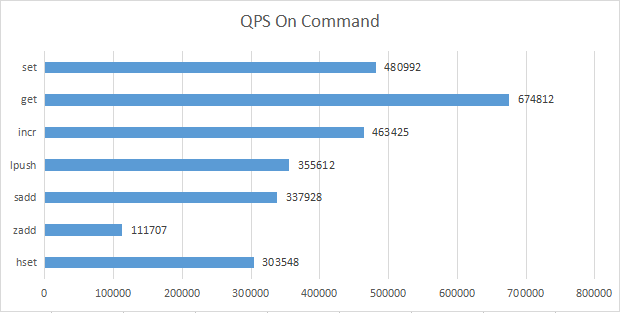
latency:
SET    1.6ms    99%
SET    2.2ms    99.9%
SET    6.9ms    99.99%
SET    9.4ms    100.00%
tendisplus: workers = 56
./memtier_benchmark -t 20 -c 50 -s 127.0.0.1 -p 51002 --distinct-client-seed --command="set __key__ __data__" --key-prefix="kv_" --command-key-pattern=R --random-data --data-size=128 --test-time=1800
./memtier_benchmark -t 20 -c 50 -s 127.0.0.1 -p 51002 --distinct-client-seed --command="get __key__" --key-prefix="kv_" --command-key-pattern=R --test-time=1800
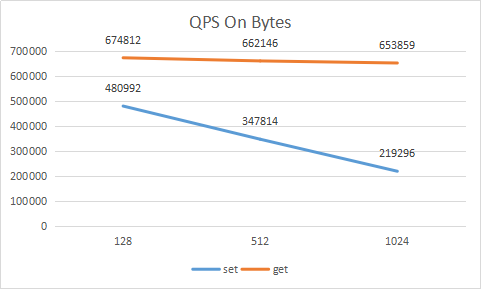
we test set for half an hour, and then test get key half an hour. because the data is not big enough, most of the data is in memory, so the get qps for different payload is nearly the same.
For more information regarding contributing issues or pull requests, checkout CONTRIBUTING
Checkout support for FAQs or join our discussion groups.
Tendis is licensed under the GNU General Public License Version 3.0. Copyright and license information can be found in the file LICENSE.txt.
The copyright notice pertaining to the Tencent code in this repo was previously in the name of “THL A29 Limited.” That entity has now been de-registered. You should treat all previously distributed copies of the code as if the copyright notice was in the name of “Tencent.”
(top 24 of 28)
249 followers · starred Jul 2021
660 followers · starred Nov 2023
171 followers · starred Jun 2023
345 followers · starred Jan 2021
Tendis is a high-performance distributed storage system fully compatible with the Redis protocol.
See the code
Tendis is a high-performance distributed storage system which is fully compatible with the Redis protocol. 中文文档
Tendis is a high-performance distributed storage system which is fully compatible with the Redis protocol. It uses RocksDB as the storage engine, and all data is stored to disks through RocksDB. Users can access Tendis using a Redis client, and the application hardly needs to be changed. In addition, Tendis supports storage capacity far exceeding memory, which can greatly reduce user storage costs.
Similar to Redis clusters, Tendis uses a decentralized distributed solution. The gossip protocol is used for communication between nodes, and all nodes in a cluster can be routed to the correct node when a user accesses. Cluster nodes support automatic discovery of other nodes, detect faulty nodes, and ensure the application is almost not affected when the master node failed.
Redis compatibility
Redis protocol and commands supported in Tendis are compatible with Redis.
Persistent storage
Using RocksDB as storage engine. All data is stored in RocksDB in a specific format, supporting PB-level storage capacity.
Decentralized distributed cluster
Distributed implementation like Redis clusters, using a gossip protocol to intercommunicate between nodes.
Horizontal scalability
Data migration online between nodes. High performance and linear scalability up to 1,000 nodes.
Failover
Auto-detect non-working nodes, and promote replica nodes to master when a failure occurs.
Key component for Tendis Hybrid Storage Edition
Thanks to the design and internal optimization, Redis and Tendis can work together to be Hybrid Storage Edition. It is suitable for KV storage scenarios, as it balances performance and cost, and greatly reduces your business operating costs by 80% in the scenarios where cold data takes up a lot of storage space.
$ git clone https://github.com/Tencent/tendis.git --recursive
$ git submodule update --init --recursive
$ mkdir build
$ cd build & cmake ..
$ make -j12
$ ./build/bin/tendisplus tendisplus.conf
Connect to the server via redis-cli
$ redis-cli -p 51002
You can make some change to the code and make sure the following test script pass.
$ sh ./testall.sh
CPU:2.50 GHz,48 core
DISK:NVMe SSD
MEM:192GB
tendisplus: workers = 56
./memtier_benchmark -t 20 -c 50 -s 127.0.0.1 -p 51002 --distinct-client-seed --command="set __key__ __data__" --key-prefix="kv_" --key-minimum=1 --key-maximum=500000000 --random-data --data-size=128 --test-time=1800
./memtier_benchmark -t 20 -c 50 -s 127.0.0.1 -p 51002 --distinct-client-seed --command="get __key__" --key-prefix="kv_" --key-minimum=1 --key-maximum=500000000 --test-time=1800
./memtier_benchmark -t 20 -c 50 -s 127.0.0.1 -p 51002 --distinct-client-seed --command="incr __key__" --key-prefix="int_" --key-minimum=1 --key-maximum=1000000 --test-time=1800
./memtier_benchmark -t 20 -c 50 -s 127.0.0.1 -p 51002 --distinct-client-seed --command="lpush __key__ __data__" --key-prefix="list_" --key-minimum=1 --key-maximum=1000000 --random-data --data-size=128 --test-time=1800
./memtier_benchmark -t 20 -c 50 -s 127.0.0.1 -p 51002 --distinct-client-seed --command="sadd __key__ __data__" --key-prefix="set_" --key-minimum=1 --key-maximum=1000000 --random-data --data-size=128 --test-time=1800
./memtier_benchmark -t 20 -c 50 -s 127.0.0.1 -p 51002 --distinct-client-seed --command="zadd __key__ __key__ __data__" --key-prefix="" --key-minimum=1 --key-maximum=1000000 --random-data --data-size=128 --test-time=1800
./memtier_benchmark -t 20 -c 50 -s 127.0.0.1 -p 51002 --distinct-client-seed --command="hset __key__ __data__ __data__" --key-prefix="hash_" --key-minimum=1 --key-maximum=1000000 --random-data --data-size=128 --test-time=1800
latency:
SET    1.6ms    99%
SET    2.2ms    99.9%
SET    6.9ms    99.99%
SET    9.4ms    100.00%
tendisplus: workers = 56
./memtier_benchmark -t 20 -c 50 -s 127.0.0.1 -p 51002 --distinct-client-seed --command="set __key__ __data__" --key-prefix="kv_" --command-key-pattern=R --random-data --data-size=128 --test-time=1800
./memtier_benchmark -t 20 -c 50 -s 127.0.0.1 -p 51002 --distinct-client-seed --command="get __key__" --key-prefix="kv_" --command-key-pattern=R --test-time=1800
we test set for half an hour, and then test get key half an hour. because the data is not big enough, most of the data is in memory, so the get qps for different payload is nearly the same.
For more information regarding contributing issues or pull requests, checkout CONTRIBUTING
Checkout support for FAQs or join our discussion groups.
Tendis is licensed under the GNU General Public License Version 3.0. Copyright and license information can be found in the file LICENSE.txt.
The copyright notice pertaining to the Tencent code in this repo was previously in the name of “THL A29 Limited.” That entity has now been de-registered. You should treat all previously distributed copies of the code as if the copyright notice was in the name of “Tencent.”
(top 24 of 28)
249 followers · starred Jul 2021
660 followers · starred Nov 2023
171 followers · starred Jun 2023
345 followers · starred Jan 2021



