We live in an era of food waste and with rising costs of goods, many people are interested in ways they can save on grocery spending.
We propose an AI solution that can take as input a list of groceries and then generate a recipe.
The intended use would be for someone to input a list of leftover groceries and then be provided with a recipe that is cookable.
We used the Recipe Box dataset which consists of approximately 125,000 recipes scraped from food websites.
Each recipe is multi-structured, each providing additional information about the recipe.
Our dataset and model can be downloaded via the following link: https://duke.box.com/s/4qocidbzfxhuzl9nyaw5mhxm0p4vzko9
Our preprocessing had four steps: filtering out incomplete samples, filtering out large recipes, converting recipe objects to strings, and creating the vocabulary.
In our modeling pipeline we used two different approaches to generate recipes. One was using an LSTM algorithm and the other approach was using GPT-2. The pieplines for the algorithms are shown below:
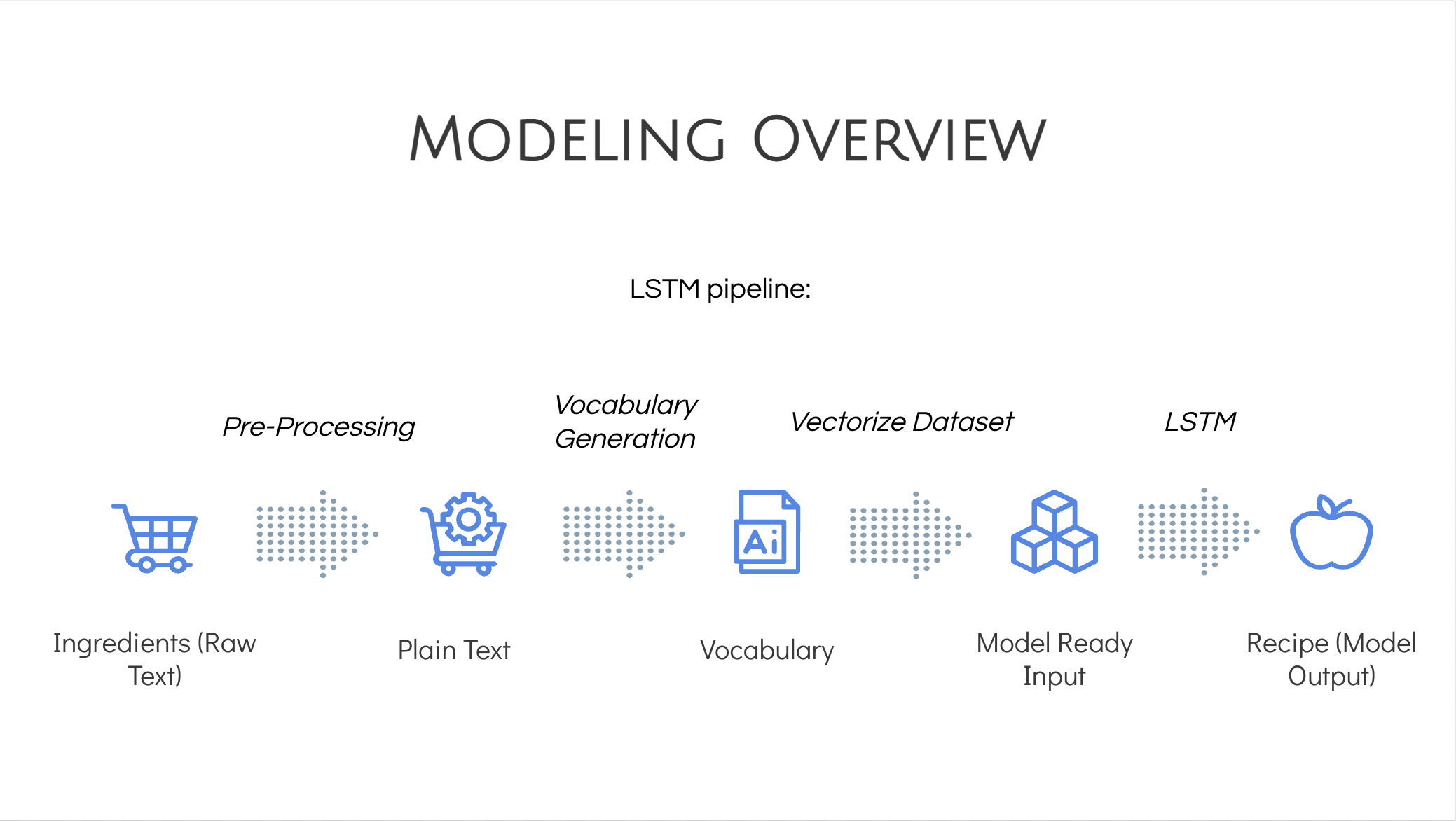 LSTM Pipeline
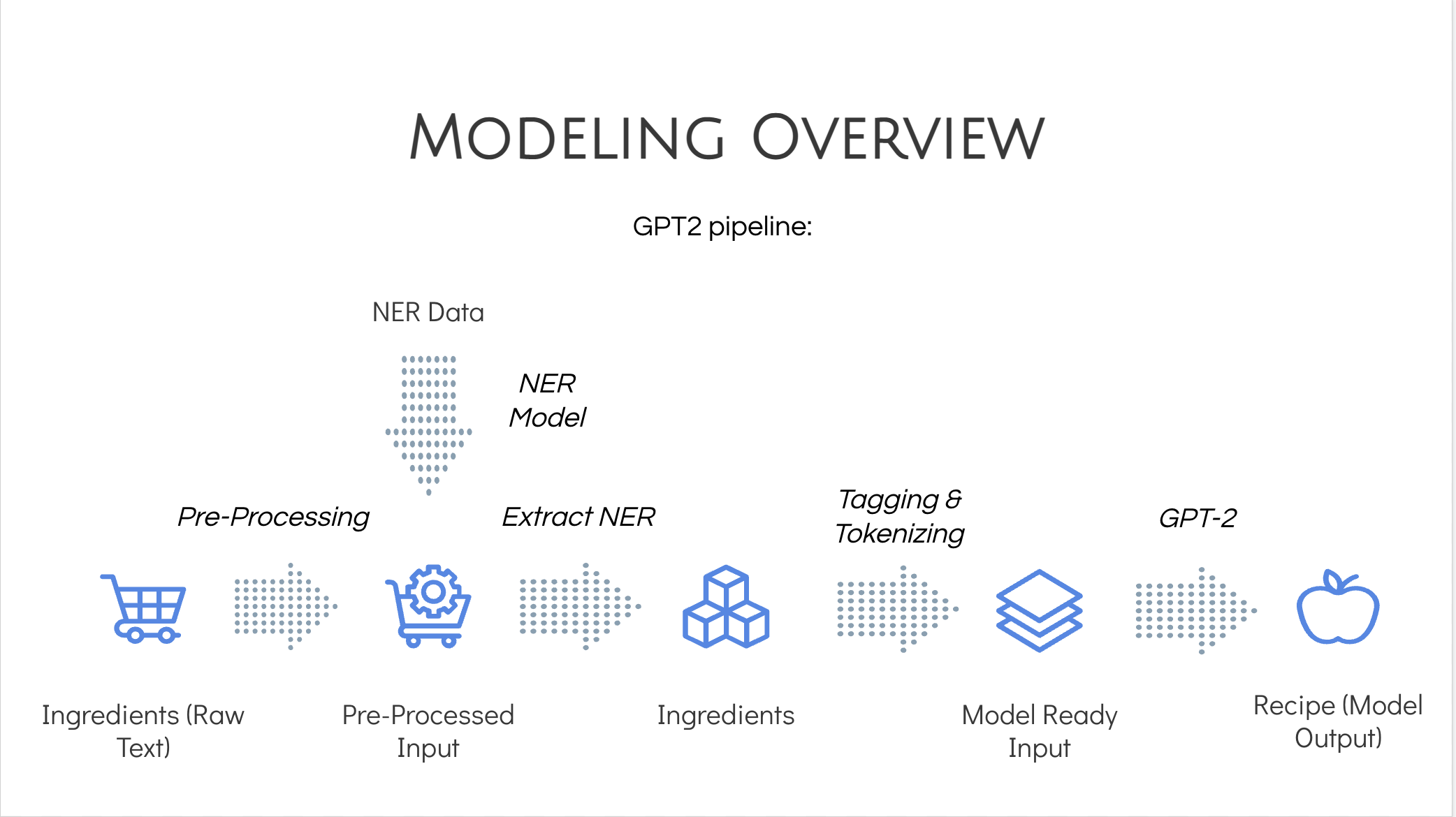 GPT2 Pipeline
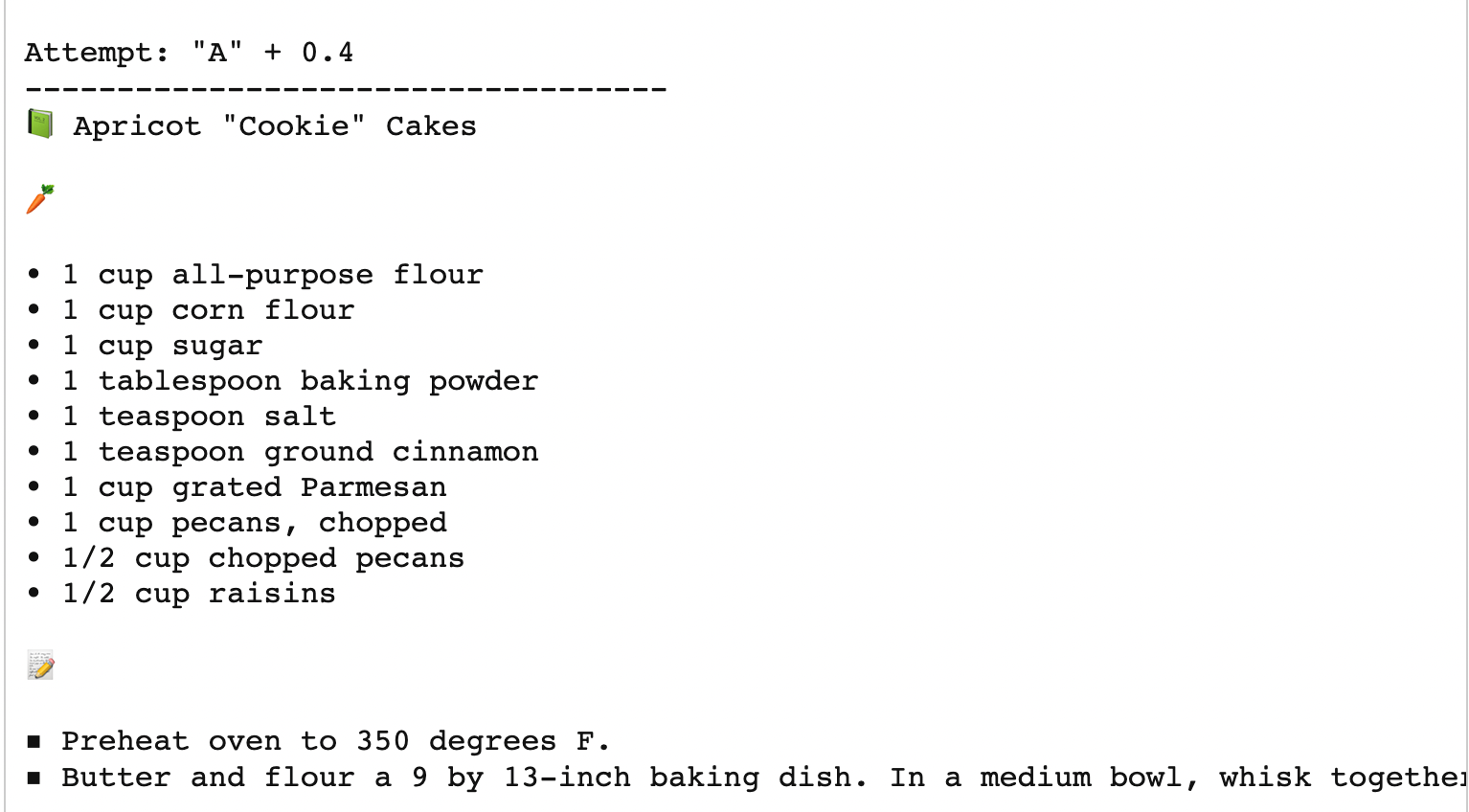 LSTM Recipe Generation Results
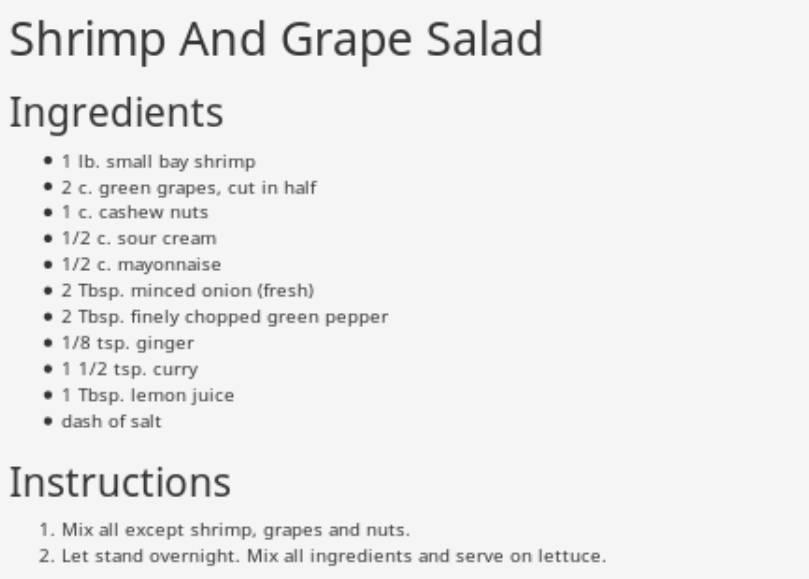 GPT2 Recipe Generation Results
We did not deem there to be a sufficient non-deep learning alternative for this text generation task
This is due to the relational complexity and demands of text-generation tasks due to the semantic and structural information present in text
Given the limited scope of the technology we do not anticipate any ethical concerns
However, text generation capabilities need to be monitored due to their high potential for abuse: impersonation, generation of fake news, generation of harmful content
Use the command line to run the main.py file in the scripts folder to train the model with specified parameters.
python main.py --epochs --INITIAL_EPOCH --STEPS_PER_EPOCH
We live in an era of food waste and with rising costs of goods, many people are interested in ways they can save on grocery spending.
We propose an AI solution that can take as input a list of groceries and then generate a recipe.
The intended use would be for someone to input a list of leftover groceries and then be provided with a recipe that is cookable.
We used the Recipe Box dataset which consists of approximately 125,000 recipes scraped from food websites.
Each recipe is multi-structured, each providing additional information about the recipe.
Our dataset and model can be downloaded via the following link: https://duke.box.com/s/4qocidbzfxhuzl9nyaw5mhxm0p4vzko9
Our preprocessing had four steps: filtering out incomplete samples, filtering out large recipes, converting recipe objects to strings, and creating the vocabulary.
In our modeling pipeline we used two different approaches to generate recipes. One was using an LSTM algorithm and the other approach was using GPT-2. The pieplines for the algorithms are shown below:
LSTM Pipeline
GPT2 Pipeline
LSTM Recipe Generation Results
GPT2 Recipe Generation Results
We did not deem there to be a sufficient non-deep learning alternative for this text generation task
This is due to the relational complexity and demands of text-generation tasks due to the semantic and structural information present in text
Given the limited scope of the technology we do not anticipate any ethical concerns
However, text generation capabilities need to be monitored due to their high potential for abuse: impersonation, generation of fake news, generation of harmful content
Use the command line to run the main.py file in the scripts folder to train the model with specified parameters.
python main.py --epochs --INITIAL_EPOCH --STEPS_PER_EPOCH



