
TypeScript-native frontend framework for building content, components, styles, and interactive apps in one coherent stack.
See the codeSee what people are saying
README
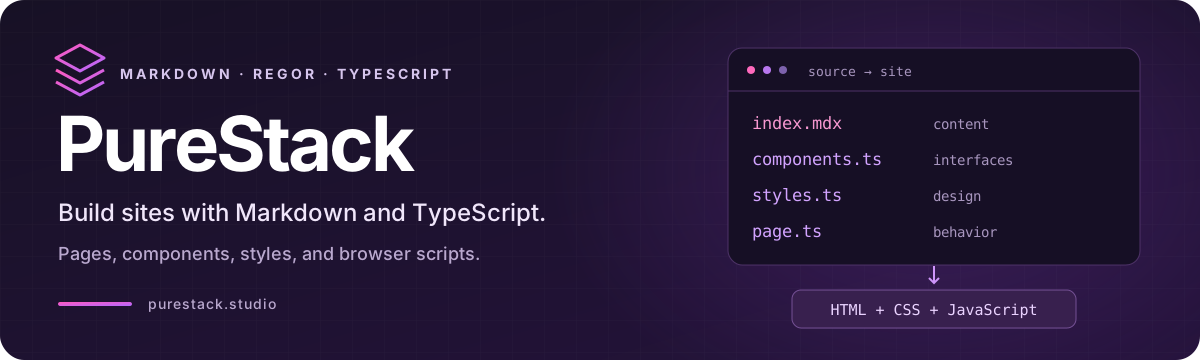
PureStack
Build content sites and interactive pages from one coherent source model.
Markdown for your content. TypeScript for your components, styles, and behavior.




Explore the docs · Browse components · See an example site · Contribute
Your content. Your components. One pipeline.
PureStack turns a content directory into a static website. Write pages in Markdown or Regor MDX, use built-in components where they help, and add browser-side TypeScript only where a page needs behavior. The CLI handles routes, styles, assets, development preview, and release builds.
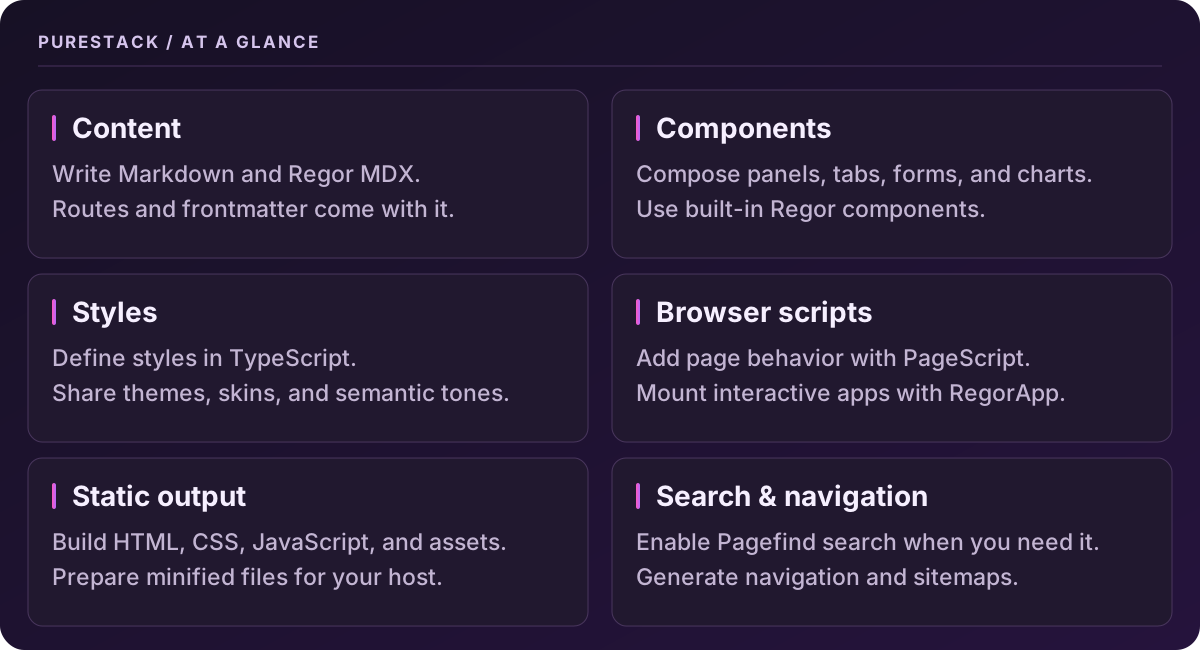
PureStack in practice: purestack.studio is built from the frontend source in this repository.
Why coherent source matters
Generating a first page is only the beginning. A product keeps changing: new content, new components, new behavior, and new people working on it.
PureStack's architectural bet is that explicit, typed source makes that ongoing work easier for humans and AI tools to inspect and reason about. Content stays in Markdown; components, style builders, and scripts live in TypeScript. The aim is a source model that remains understandable as the product grows.
.mdx and .rmdx pages use Regor components and expressions. Plain .md
files work for prose pages. See the Regor guide
for the markup and browser app model.
Get your first page running
1. Create a project
mkdir my-site
cd my-site
npm init -y
npm install purestack
mkdir content
2. Add your config and a page
Your starting point is just two files:
my-site/
└── content/
    ├── siteConfig.json
    └── index.mdx
content/siteConfig.json
{
  "siteTitle": "My Site",
  "logo": { "brand": "My Site", "href": "/" },
  "outDir": "../dist/site",
  "publishDir": "../dist/publish"
}
content/index.mdx
---
title: Welcome
description: My first PureStack site.
template: doc
---

# Make something worth reading.

Start with Markdown. Add components when your page needs more.

<Panel tone="info" variant="surface">
  <p>Your first PureStack page, ready to make your own.</p>
</Panel>
3. Preview it
npx purestack serve --content ./content
Open http://127.0.0.1:4173/. Add content/about.mdx to create /about/.
The server watches your files and reloads the browser as you edit.
4. Build for your host
npx purestack build --content ./content
npx purestack publish --content ./content
build writes to dist/site. publish creates a clean, minified artifact in
dist/publish; it prepares files for deployment but does not upload them.
Both paths come from siteConfig.json and are resolved relative to content.
For browser behavior, add a TypeScript file beside a page and load it with
<PageScript src="./example.ts" />. The purestack package README
has a complete example.
Pick your next step
| I want to… | Start here |
|---|---|
| Configure a site | Site configuration |
| Build a richer page | Component catalog |
| Add browser behavior | PageScript and RegorApp examples |
| Understand the CLI | CLI guide |
| Explore a complete project | Sample content · Website source |
| Work on PureStack itself | Contribution guide |
How PureStack fits together
| Source | What PureStack does |
|---|---|
siteConfig.json | Defines output paths, site identity, themes, navigation, and optional features. |
.md, .mdx, .rmdx | Turn content files into routes and HTML pages. |
| Regor components | Render UI into pages at build time. |
PageScript and RegorApp | Bundle TypeScript and add browser behavior where requested. |
| Static assets | Copies files from the content directory into the site output. |
The CLI guide covers the commands and options. Site configuration covers navigation, themes, search, sitemap, localization, and output paths.
Repository map
The workspace contains the CLI, site generator, UI components, typed HTML/CSS builders, browser scripts, icon providers, and a private VS Code extension.
Explore the packages and source directories
| Path | Purpose |
|---|---|
packages/purestack | Public purestack package, CLI, and TypeScript API. |
packages/ts-ssg | Content discovery, rendering, routing, builds, and development server. |
packages/ts-components | Built-in UI components and component metadata. |
packages/ts-style | Themes, skins, typography, and style generation. |
packages/ts-css and packages/ts-html | Typed CSS and HTML builders. |
packages/ts-page-scripts | Browser-side behavior used by site components. |
packages/ts-svg-icons | SVG icon providers and lookup. |
packages/ts-ssg-vscode | Private VS Code extension for PureStack content and components. |
frontend | Source for purestack.studio, built with PureStack. |
packages/ts-ssg/sample-content | A larger example site with content, components, and browser scripts. |
The remaining workspace packages provide shared types, utilities, rendering, and DOM support.
Develop this repository
See Contributing for the branch, pull request, CI, and publishing workflow.
Use Node.js 24 and the Yarn version pinned in package.json.
Run commands from the repository root:
corepack enable
yarn install --immutable
yarn build
yarn dev
yarn dev serves the included sample site. To work on the PureStack website,
run yarn frontend; its development server opens at
http://127.0.0.1:4700/. See the frontend README for
the site-specific workflow.
| Command | Purpose |
|---|---|
yarn lint:ci | Check source without modifying files. |
yarn test:ci | Run the test suite once. |
yarn bundle | Build distributable packages. |
yarn package | Pack non-private workspaces into local tarballs. |
Build something with PureStack. Help shape what comes next.
Documentation · Report a bug · Contribute
Released under the MIT license.
Similar repos





Languages
TypeScript
87.7%
MDX
12.3%
TypeScript-native frontend framework for building content, components, styles, and interactive apps in one coherent stack.
See the codeSee what people are saying
README
PureStack
Build content sites and interactive pages from one coherent source model.
Markdown for your content. TypeScript for your components, styles, and behavior.
Explore the docs · Browse components · See an example site · Contribute
Your content. Your components. One pipeline.
PureStack turns a content directory into a static website. Write pages in Markdown or Regor MDX, use built-in components where they help, and add browser-side TypeScript only where a page needs behavior. The CLI handles routes, styles, assets, development preview, and release builds.
PureStack in practice: purestack.studio is built from the frontend source in this repository.
Why coherent source matters
Generating a first page is only the beginning. A product keeps changing: new content, new components, new behavior, and new people working on it.
PureStack's architectural bet is that explicit, typed source makes that ongoing work easier for humans and AI tools to inspect and reason about. Content stays in Markdown; components, style builders, and scripts live in TypeScript. The aim is a source model that remains understandable as the product grows.
.mdx and .rmdx pages use Regor components and expressions. Plain .md
files work for prose pages. See the Regor guide
for the markup and browser app model.
Get your first page running
1. Create a project
mkdir my-site
cd my-site
npm init -y
npm install purestack
mkdir content
2. Add your config and a page
Your starting point is just two files:
my-site/
└── content/
    ├── siteConfig.json
    └── index.mdx
content/siteConfig.json
{
  "siteTitle": "My Site",
  "logo": { "brand": "My Site", "href": "/" },
  "outDir": "../dist/site",
  "publishDir": "../dist/publish"
}
content/index.mdx
---
title: Welcome
description: My first PureStack site.
template: doc
---

# Make something worth reading.

Start with Markdown. Add components when your page needs more.

<Panel tone="info" variant="surface">
  <p>Your first PureStack page, ready to make your own.</p>
</Panel>
3. Preview it
npx purestack serve --content ./content
Open http://127.0.0.1:4173/. Add content/about.mdx to create /about/.
The server watches your files and reloads the browser as you edit.
4. Build for your host
npx purestack build --content ./content
npx purestack publish --content ./content
build writes to dist/site. publish creates a clean, minified artifact in
dist/publish; it prepares files for deployment but does not upload them.
Both paths come from siteConfig.json and are resolved relative to content.
For browser behavior, add a TypeScript file beside a page and load it with
<PageScript src="./example.ts" />. The purestack package README
has a complete example.
Pick your next step
| I want to… | Start here |
|---|---|
| Configure a site | Site configuration |
| Build a richer page | Component catalog |
| Add browser behavior | PageScript and RegorApp examples |
| Understand the CLI | CLI guide |
| Explore a complete project | Sample content · Website source |
| Work on PureStack itself | Contribution guide |
How PureStack fits together
| Source | What PureStack does |
|---|---|
siteConfig.json | Defines output paths, site identity, themes, navigation, and optional features. |
.md, .mdx, .rmdx | Turn content files into routes and HTML pages. |
| Regor components | Render UI into pages at build time. |
PageScript and RegorApp | Bundle TypeScript and add browser behavior where requested. |
| Static assets | Copies files from the content directory into the site output. |
The CLI guide covers the commands and options. Site configuration covers navigation, themes, search, sitemap, localization, and output paths.
Repository map
The workspace contains the CLI, site generator, UI components, typed HTML/CSS builders, browser scripts, icon providers, and a private VS Code extension.
Explore the packages and source directories
| Path | Purpose |
|---|---|
packages/purestack | Public purestack package, CLI, and TypeScript API. |
packages/ts-ssg | Content discovery, rendering, routing, builds, and development server. |
packages/ts-components | Built-in UI components and component metadata. |
packages/ts-style | Themes, skins, typography, and style generation. |
packages/ts-css and packages/ts-html | Typed CSS and HTML builders. |
packages/ts-page-scripts | Browser-side behavior used by site components. |
packages/ts-svg-icons | SVG icon providers and lookup. |
packages/ts-ssg-vscode | Private VS Code extension for PureStack content and components. |
frontend | Source for purestack.studio, built with PureStack. |
packages/ts-ssg/sample-content | A larger example site with content, components, and browser scripts. |
The remaining workspace packages provide shared types, utilities, rendering, and DOM support.
Develop this repository
See Contributing for the branch, pull request, CI, and publishing workflow.
Use Node.js 24 and the Yarn version pinned in package.json.
Run commands from the repository root:
corepack enable
yarn install --immutable
yarn build
yarn dev
yarn dev serves the included sample site. To work on the PureStack website,
run yarn frontend; its development server opens at
http://127.0.0.1:4700/. See the frontend README for
the site-specific workflow.
| Command | Purpose |
|---|---|
yarn lint:ci | Check source without modifying files. |
yarn test:ci | Run the test suite once. |
yarn bundle | Build distributable packages. |
yarn package | Pack non-private workspaces into local tarballs. |
Build something with PureStack. Help shape what comes next.
Documentation · Report a bug · Contribute
Released under the MIT license.
Similar repos
Languages
TypeScript
87.7%
MDX
12.3%