
See what people are saying
README
SilkOps
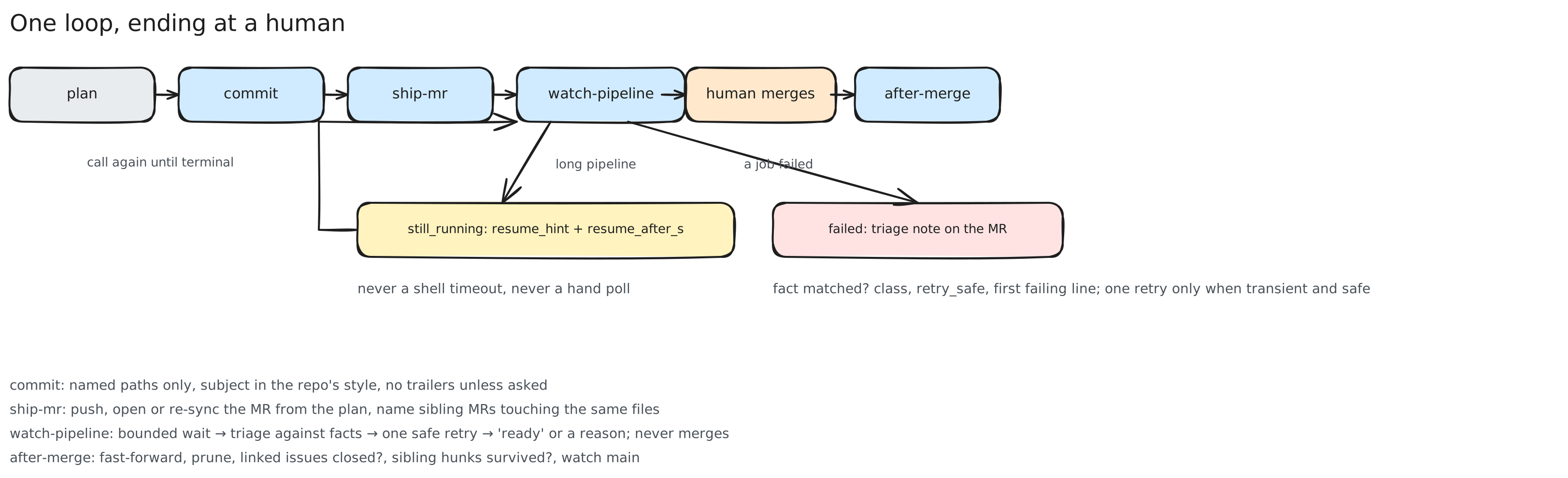
A dev-loop harness for coding agents on GitLab, GitHub and Gitea. Skills compose small operations scripts over the host's CLI, so a session commits, ships a branch, watches its pipeline, triages a failure against recorded facts, and files issues from a plan, with no hand-written API glue. It never merges. A human does.
Install
Claude Code
/plugin marketplace add OpenZephyr/SilkOps
/plugin install silkops@silkops
then once, in a terminal, so the skills find the silkops command:
bash ~/.claude/plugins/cache/silkops/silkops/*/bin/silkops install-agent claude-code
Codex, Cursor, OpenCode, Gemini CLI (any agent that reads SKILL.md)
git clone https://github.com/OpenZephyr/SilkOps.git ~/.silkops
~/.silkops/bin/silkops install-agent all      # or one: codex | cursor | opencode | gemini-cli | claude-code
That links the nine skills where the agent looks, puts silkops in ~/.local/bin, and writes the
conventions import the agent reads. Then silkops doctor shows what the machine has. Per-agent
notes: adapters/<name>/README.md. Requirements: jq, curl, Python 3.9, and the host CLI
(glab for GitLab, gh for GitHub, a GITEA_TOKEN for Gitea). Tokens come from the environment
only, never argv or a URL.
One command, one JSON result
silkops watch --project group/project --mr 42 --wait 300
{"ok":true,"provider":"gitlab","status":"success","ready":true,"detailed_merge_status":"mergeable", …}
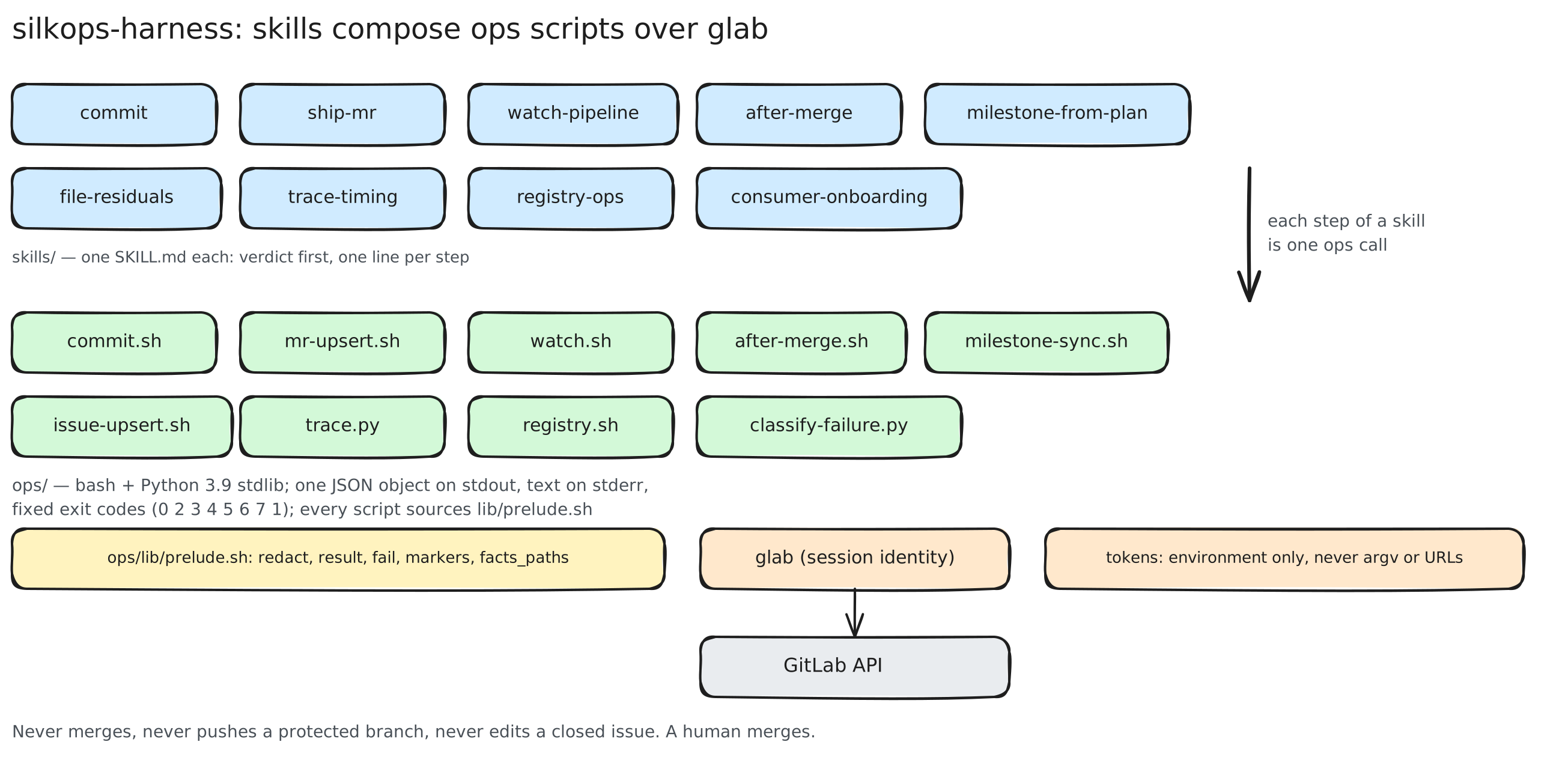
Every verb is one script under ops/: one JSON object on stdout, human text on stderr, fixed
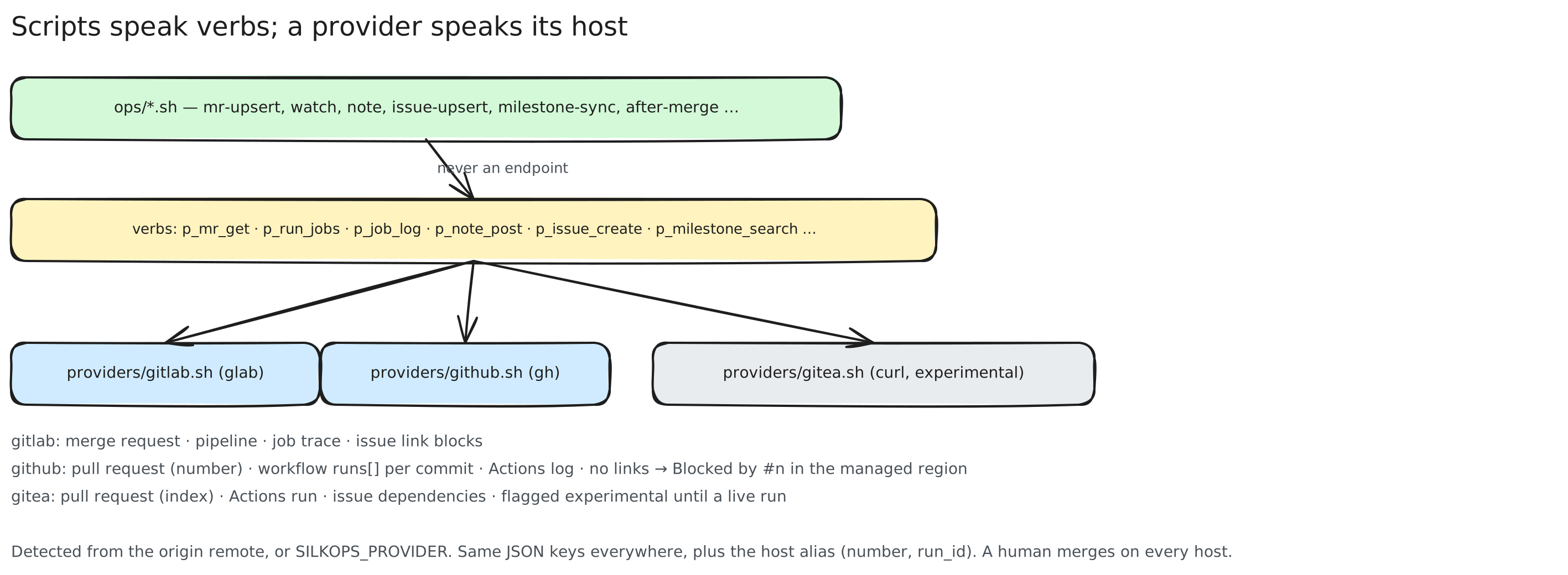
exit codes (AGENTS.md). The provider is read off the origin remote or SILKOPS_PROVIDER.
SILKOPS_MARKER=off makes every write anonymous for repos that must not name the tool.
Skills
| skill | does |
|---|---|
commit | commit named paths in the repo's own message style, no trailers unless asked |
ship-mr | push the branch, open or re-sync its MR from the plan, hand off to the watch |
watch-pipeline | bounded watch, fact-based triage, one safe retry, a ready verdict, never merges |
after-merge | sync and prune after a human merged, confirm linked issues, watch main |
milestone-from-plan | one call turns a plan's units into a milestone with linked issues |
file-residuals | review findings as issues, deduplicated by finding |
trace-timing | where the time goes in a job, ranked with numbers |
registry-ops | zero-copy retag, digest compare, tag listing |
consumer-onboarding | connect a project to an image factory, one confirmation per settings write |
Hosts
| GitLab | GitHub | Gitea | |
|---|---|---|---|
| change | merge request | pull request | pull request |
| CI unit | pipeline | workflow runs, runs[] per commit | Actions run |
| status | verified live | fixture-verified, live check open | fixture-verified, flagged experimental |
What every concept means on every host, and each fallback by name: docs/providers.md.
Facts
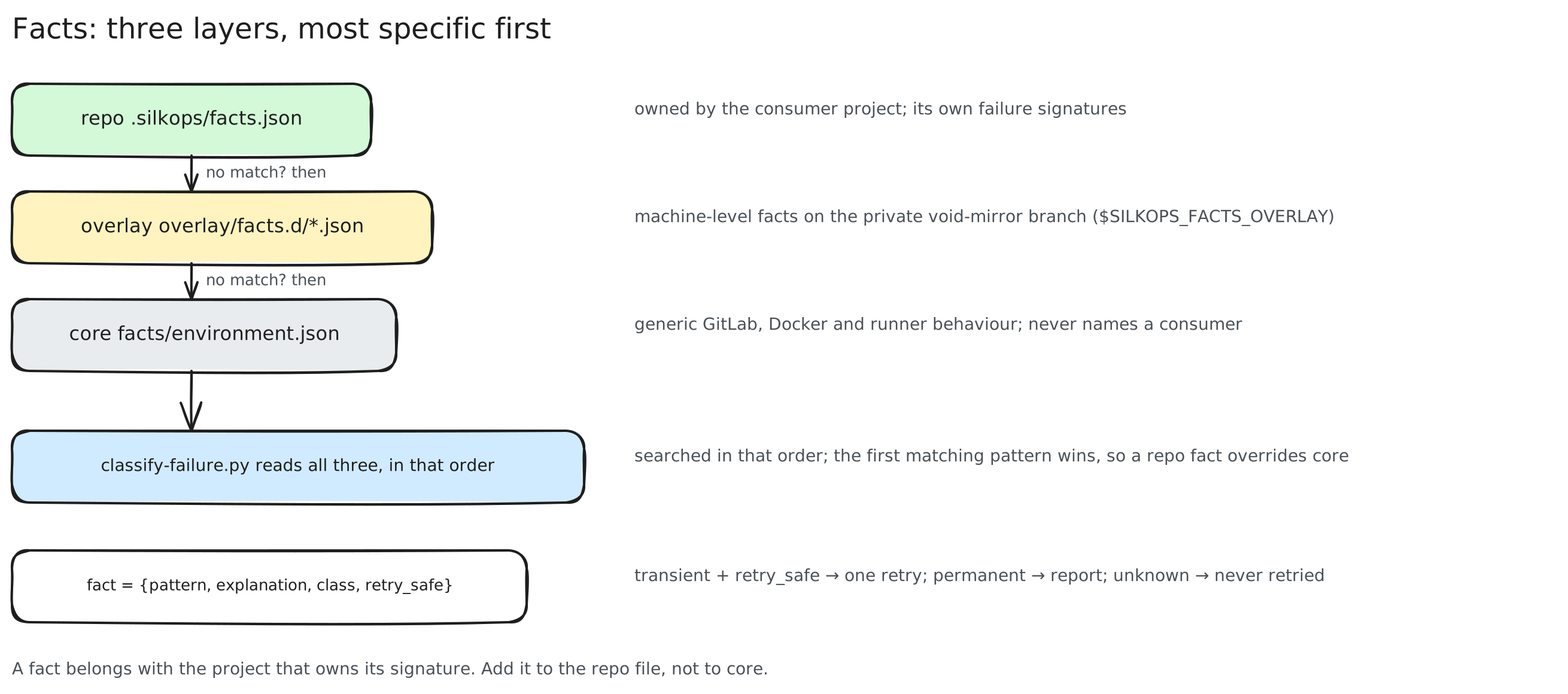
A failure signature is a fact: a regex, an explanation, a retry verdict. Three layers, most
specific first: the repo's .silkops/facts.json, the plugin overlay, then facts/environment.json.
Core ships generic GitLab, Docker and runner facts only; a project's own signatures travel with it.
Diagrams
Excalidraw scenes under docs/diagrams/. The .excalidraw file is the source and the
.excalidraw.svg beside it embeds the scene, so both are editable: open either in the Excalidraw
PWA, docker run -p 5000:80 excalidraw/excalidraw, or the VS Code extension, and export as SVG
with "Embed scene".
Develop
bash tests/run.sh: tier 1, offline and fixture-driven, gates every change.AGENTS.mdholds the conventions;CLAUDE.mdandGEMINI.mdonly import it.- Source of truth is GitLab; GitHub (
OpenZephyr/SilkOps) is a main-only mirror, andsilkops inbox --repo OpenZephyr/SilkOpslists what people file there. - Release: tag
silkops-harness--vX.Y.Zon main (CI publishes the asset to GitLab), thenscripts/github-release.sh --repo OpenZephyr/SilkOps --tag <tag>creates the GitHub Release.
MIT. Issues and pull requests are welcome on GitHub.
Similar repos


Languages
Shell
79.0%
Python
15.5%
TypeScript
5.0%
See what people are saying
README
SilkOps
A dev-loop harness for coding agents on GitLab, GitHub and Gitea. Skills compose small operations scripts over the host's CLI, so a session commits, ships a branch, watches its pipeline, triages a failure against recorded facts, and files issues from a plan, with no hand-written API glue. It never merges. A human does.
Install
Claude Code
/plugin marketplace add OpenZephyr/SilkOps
/plugin install silkops@silkops
then once, in a terminal, so the skills find the silkops command:
bash ~/.claude/plugins/cache/silkops/silkops/*/bin/silkops install-agent claude-code
Codex, Cursor, OpenCode, Gemini CLI (any agent that reads SKILL.md)
git clone https://github.com/OpenZephyr/SilkOps.git ~/.silkops
~/.silkops/bin/silkops install-agent all      # or one: codex | cursor | opencode | gemini-cli | claude-code
That links the nine skills where the agent looks, puts silkops in ~/.local/bin, and writes the
conventions import the agent reads. Then silkops doctor shows what the machine has. Per-agent
notes: adapters/<name>/README.md. Requirements: jq, curl, Python 3.9, and the host CLI
(glab for GitLab, gh for GitHub, a GITEA_TOKEN for Gitea). Tokens come from the environment
only, never argv or a URL.
One command, one JSON result
silkops watch --project group/project --mr 42 --wait 300
{"ok":true,"provider":"gitlab","status":"success","ready":true,"detailed_merge_status":"mergeable", …}
Every verb is one script under ops/: one JSON object on stdout, human text on stderr, fixed
exit codes (AGENTS.md). The provider is read off the origin remote or SILKOPS_PROVIDER.
SILKOPS_MARKER=off makes every write anonymous for repos that must not name the tool.
Skills
| skill | does |
|---|---|
commit | commit named paths in the repo's own message style, no trailers unless asked |
ship-mr | push the branch, open or re-sync its MR from the plan, hand off to the watch |
watch-pipeline | bounded watch, fact-based triage, one safe retry, a ready verdict, never merges |
after-merge | sync and prune after a human merged, confirm linked issues, watch main |
milestone-from-plan | one call turns a plan's units into a milestone with linked issues |
file-residuals | review findings as issues, deduplicated by finding |
trace-timing | where the time goes in a job, ranked with numbers |
registry-ops | zero-copy retag, digest compare, tag listing |
consumer-onboarding | connect a project to an image factory, one confirmation per settings write |
Hosts
| GitLab | GitHub | Gitea | |
|---|---|---|---|
| change | merge request | pull request | pull request |
| CI unit | pipeline | workflow runs, runs[] per commit | Actions run |
| status | verified live | fixture-verified, live check open | fixture-verified, flagged experimental |
What every concept means on every host, and each fallback by name: docs/providers.md.
Facts
A failure signature is a fact: a regex, an explanation, a retry verdict. Three layers, most
specific first: the repo's .silkops/facts.json, the plugin overlay, then facts/environment.json.
Core ships generic GitLab, Docker and runner facts only; a project's own signatures travel with it.
Diagrams
Excalidraw scenes under docs/diagrams/. The .excalidraw file is the source and the
.excalidraw.svg beside it embeds the scene, so both are editable: open either in the Excalidraw
PWA, docker run -p 5000:80 excalidraw/excalidraw, or the VS Code extension, and export as SVG
with "Embed scene".
Develop
bash tests/run.sh: tier 1, offline and fixture-driven, gates every change.AGENTS.mdholds the conventions;CLAUDE.mdandGEMINI.mdonly import it.- Source of truth is GitLab; GitHub (
OpenZephyr/SilkOps) is a main-only mirror, andsilkops inbox --repo OpenZephyr/SilkOpslists what people file there. - Release: tag
silkops-harness--vX.Y.Zon main (CI publishes the asset to GitLab), thenscripts/github-release.sh --repo OpenZephyr/SilkOps --tag <tag>creates the GitHub Release.
MIT. Issues and pull requests are welcome on GitHub.
Similar repos
Languages
Shell
79.0%
Python
15.5%
TypeScript
5.0%