Rust GTK3 iPhone hotspot helper for Linux: USB, Wi-Fi and Bluetooth PAN with integrated CSR8510/UB500 transport.
Rust
0
5 commits
updated Oct 14, 2026
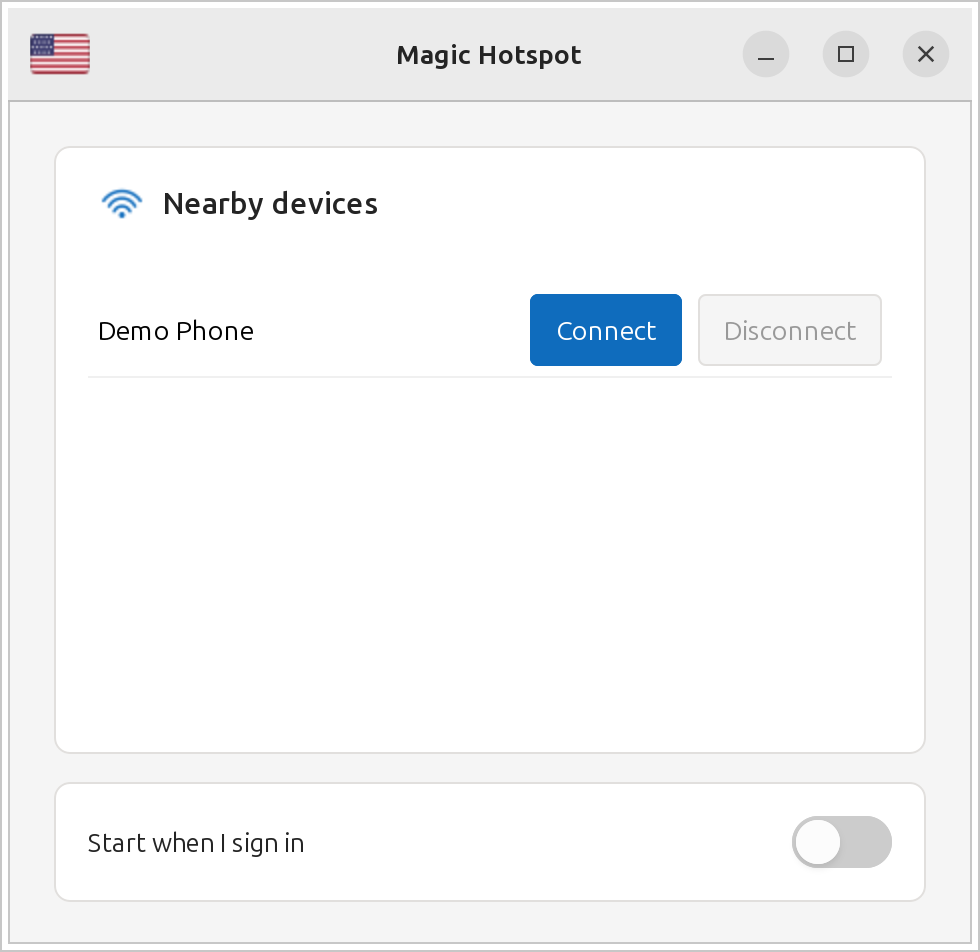
A compact Rust/GTK3 app for connecting Linux to an iPhone hotspot over USB, saved Wi-Fi or Bluetooth PAN. Current release: 0.2.24.
magic-usb/ transport for CSR8510 and TP-Link UB500, with graceful
adapter swaps and conditional btusb restoration.NetworkManager owns connections and credentials; BlueZ owns Bluetooth pairing and profiles. The iPhone must have Cellular Data and Personal Hotspot enabled.
Download the .deb from Releases.
Packages target Ubuntu 24.04/26.04, Debian 13, and Mint 22.x amd64.
See PACKAGING.md for supported distributions and package details.
sudo apt install ./magic-hotspot_0.2.24-1ubuntu26.04_amd64.deb
magic-hotspot --show
The single package includes the app, iPhone USB helper, magic-usb 0.1.3 and
shared CSR client 1.1.2. Driver service startup remains an explicit choice.
Install Rust/Cargo and the GTK3, libusb, libplist and packaging build tools:
sudo apt install build-essential pkg-config libgtk-3-dev libayatana-appindicator3-dev libdbusmenu-gtk3-dev libusb-1.0-0-dev libplist-dev libzstd-dev dpkg-dev python3
cargo fetch --locked
./build.sh
Use a current Rust toolchain with edition 2024 support. Outputs are written to
bin/ and outputs/. The vendored USB backend and shared driver source are
included, so no Git submodule setup is needed.
The complete driver snapshot stays in magic-usb/ for integrated builds.
Adapter-focused repositories are CSR8510
and TP-Link UB500.
For detailed implementation notes, see ARCHITECTURE.md and the development guide.
Magic Hotspot's own application code is MIT licensed; see LICENSE. Third-party components and the existing driver retain their licenses:
magic-usb/: MIT, including the shared CSR client.vendor/usbmuxd-1.1.2/: upstream GPL-2.0-or-3.0 terms; see its COPYING files.assets/fluent/: Microsoft Fluent System Icons, MIT.The GPL USB engine is built as a separate executable. All bundled corresponding source and notices are included.
Distribution builds and standalone driver package details: PACKAGING.md.
Rust GTK3 iPhone hotspot helper for Linux: USB, Wi-Fi and Bluetooth PAN with integrated CSR8510/UB500 transport.
Rust
0
5 commits
updated Oct 14, 2026
A compact Rust/GTK3 app for connecting Linux to an iPhone hotspot over USB, saved Wi-Fi or Bluetooth PAN. Current release: 0.2.24.
magic-usb/ transport for CSR8510 and TP-Link UB500, with graceful
adapter swaps and conditional btusb restoration.NetworkManager owns connections and credentials; BlueZ owns Bluetooth pairing and profiles. The iPhone must have Cellular Data and Personal Hotspot enabled.
Download the .deb from Releases.
Packages target Ubuntu 24.04/26.04, Debian 13, and Mint 22.x amd64.
See PACKAGING.md for supported distributions and package details.
sudo apt install ./magic-hotspot_0.2.24-1ubuntu26.04_amd64.deb
magic-hotspot --show
The single package includes the app, iPhone USB helper, magic-usb 0.1.3 and
shared CSR client 1.1.2. Driver service startup remains an explicit choice.
Install Rust/Cargo and the GTK3, libusb, libplist and packaging build tools:
sudo apt install build-essential pkg-config libgtk-3-dev libayatana-appindicator3-dev libdbusmenu-gtk3-dev libusb-1.0-0-dev libplist-dev libzstd-dev dpkg-dev python3
cargo fetch --locked
./build.sh
Use a current Rust toolchain with edition 2024 support. Outputs are written to
bin/ and outputs/. The vendored USB backend and shared driver source are
included, so no Git submodule setup is needed.
The complete driver snapshot stays in magic-usb/ for integrated builds.
Adapter-focused repositories are CSR8510
and TP-Link UB500.
For detailed implementation notes, see ARCHITECTURE.md and the development guide.
Magic Hotspot's own application code is MIT licensed; see LICENSE. Third-party components and the existing driver retain their licenses:
magic-usb/: MIT, including the shared CSR client.vendor/usbmuxd-1.1.2/: upstream GPL-2.0-or-3.0 terms; see its COPYING files.assets/fluent/: Microsoft Fluent System Icons, MIT.The GPL USB engine is built as a separate executable. All bundled corresponding source and notices are included.
Distribution builds and standalone driver package details: PACKAGING.md.



