
A World of Tanks-style, Vite-powered, engine-free pure Three.js armored combat simulator resolving plate-level armor, ballistics, modules, spotting, and physics, with 121 tanks and 20 destructible battlefields. Playable entirely in the browser on desktop and mobile devices. Built end-to-end by a multi-agent Claude/Codex pipeline.
403
stars
3,759
commits
TypeScript
primary language
Sep 12, 2026
updated
README
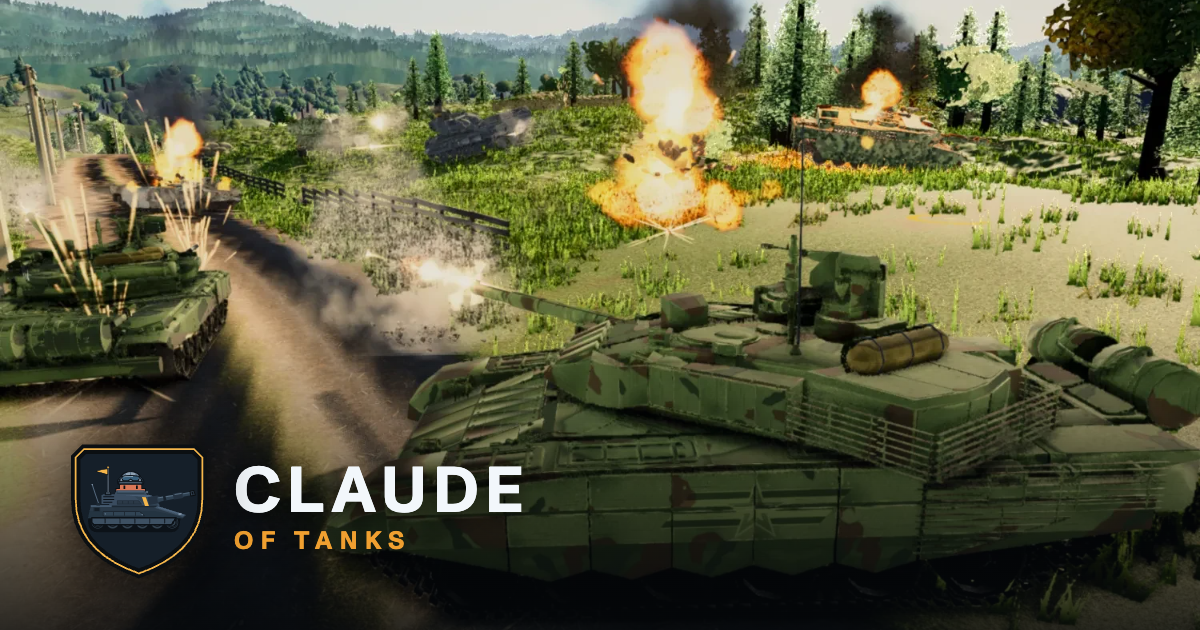
CLAUDE OF TANKS
Free browser-native armored combat built with Three.js. Take 171 production-visible first-party procedural vehicles across 30 battlefields with physical gunnery, plate-level armor, internal damage, guided missiles, magazine autoloaders, terrain-following suspension, X-ray killcams, multiplayer rooms, and Scene Studio.


 |  |
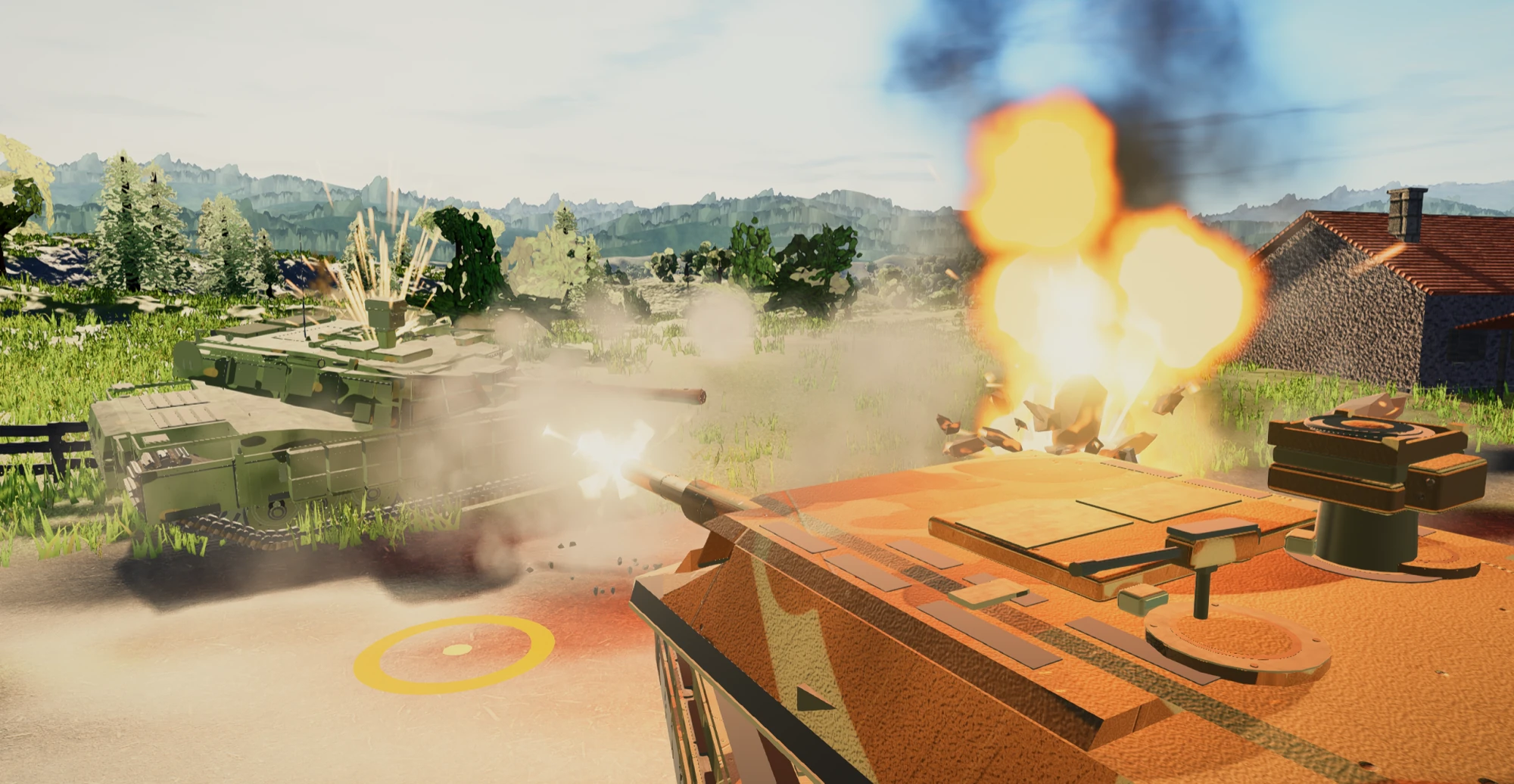 | 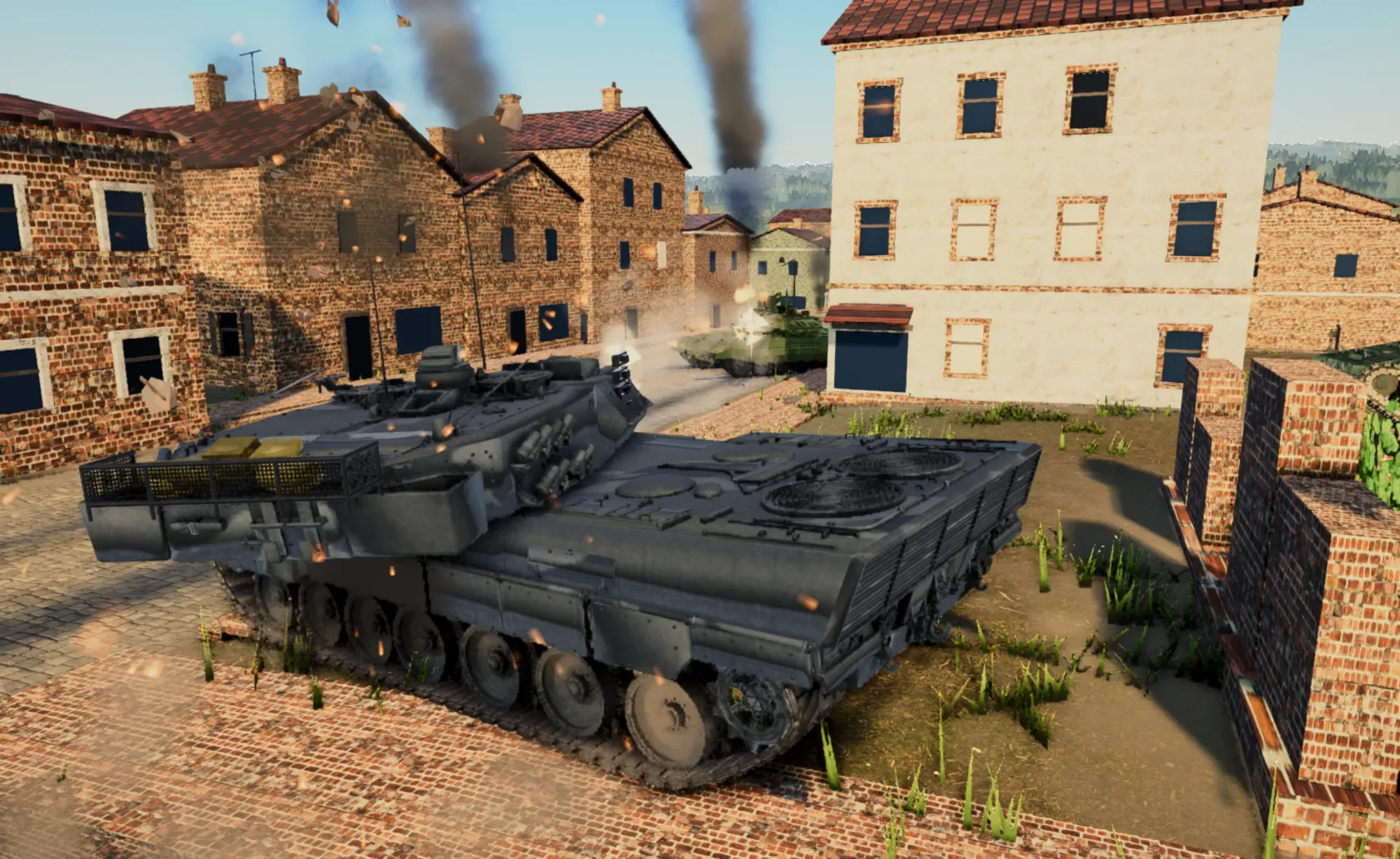 |
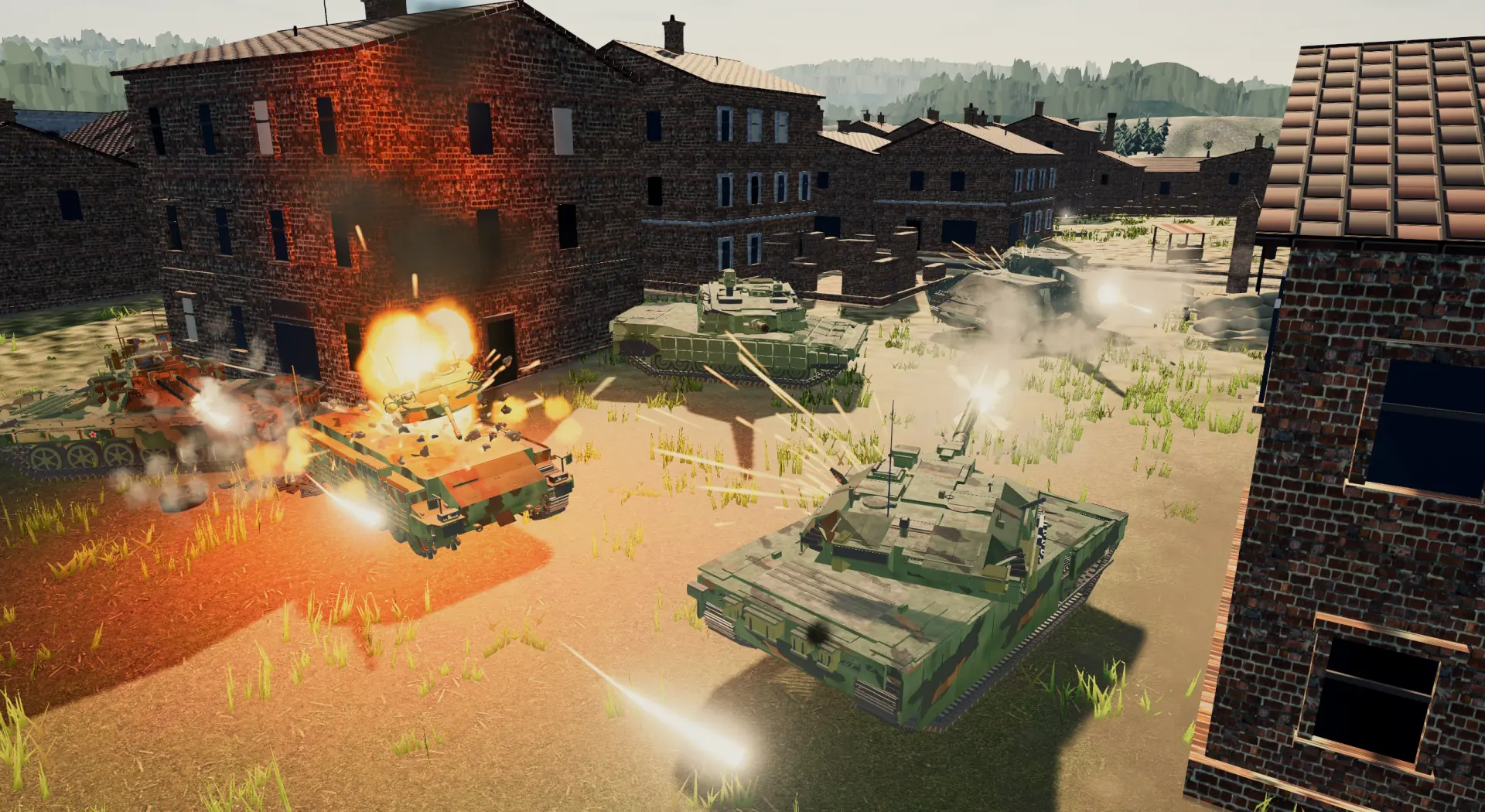
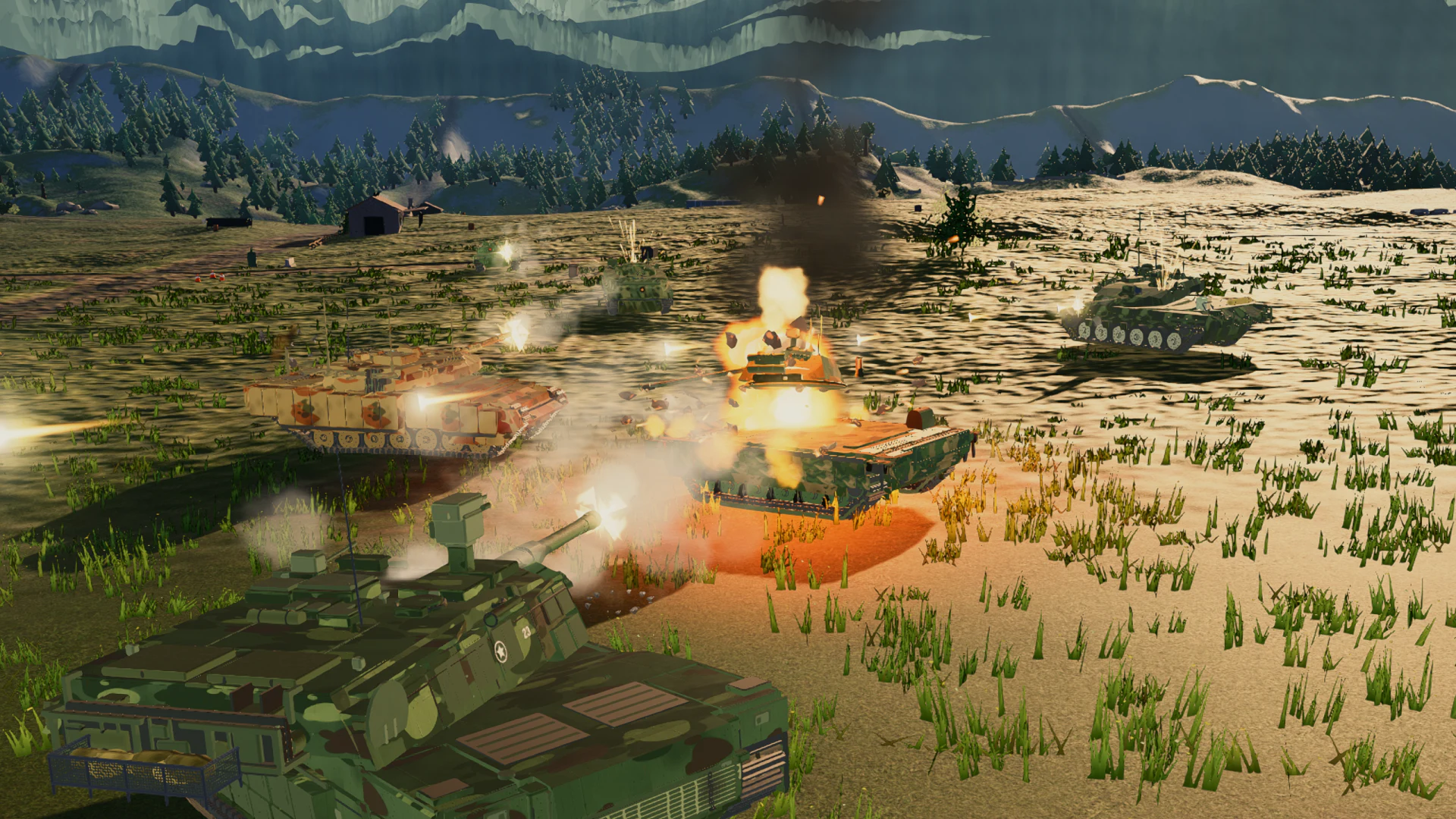
These are handmade, deterministic scenes captured with the current game renderer—not concept art. The 88-frame showcase archive contains 13 owner-selected scenes, 30 action frames, 30 close foreground compositions, five directed Studio frames, and ten interface states. The landing selection records the six hero frames, feature reel, five camera-rail films, 24-shot mosaic, and directed Strv 122 versus Leclerc sequence now published on the site.
Fight, inspect, and direct


- Fight: enter Standard Battle, Capture the Flag, Zone Control, armed super-speed Turbo Ball, or cooperative Endless Horde in solo or multiplayer, with physical shell travel, armor geometry, component damage, spotting, terrain, collision, destructible structures, persistent wrecks, mode-specific respawns, and authority-owned results.
- Inspect: open any vehicle in Tank Gallery, articulate the live rig, isolate armor or internal anatomy, and export an exact-surface review packet from the same specification used in combat.
- Direct: stage any roster vehicle on any battlefield in Scene Studio, animate actors and cameras, schedule game FX, and capture stills or video from reproducible scene data.
Current release
| Current runtime | |
|---|---|
| Fleet | 171 production-visible and 208 keyed local-development procedural vehicles across 210 saved roster records; 0 GLB-sourced playables |
| Worlds | 30 authored battlefields with shared structures, wrecks, utility networks, loose props, placement, collision, and destruction |
| Authority | Fixed 60 Hz movement, ballistics, armor, damage, spotting, bots, destructibles, and result |
| Presentation | Direct Three.js/WebGL renderer with a measured 120 FPS test path, adaptive quality, stable shadows, SMAA/FSR, and GPU recovery |
| Play | Five battle rules, solo bots, browser-hosted private rooms, LAN rooms, room chat, spectators, respawns, and rematches |
| Platforms | Mouse/keyboard and complete touch controls with safe-area layout and device-adaptive rendering |
| Languages | English and Simplified Chinese across the game, Garage, Studio, Gallery, and public docs; local reviewed catalogs managed with General Translation |
| Tools | Scene Studio, Tank Gallery, exact-surface review, deterministic capture, vehicle anatomy, and release gates |
Language selection lives under Settings → Graphics → Language. See the localization guide for coverage, intentional exclusions, the General Translation workflow, and release gates.
The provenance gate currently reports 181 first-party procedural battle playables, 0 GLB-sourced playables, and 7 tracked external comparison models with exact source records. Comparison inputs are never a playable loading path and are stripped from public builds.
Field footage


Each frame below opens a looping WebM recorded from the game. The camera rails use live vehicles, maps, ballistics, recoil, impacts, sparks, smoke, debris, and destruction effects.
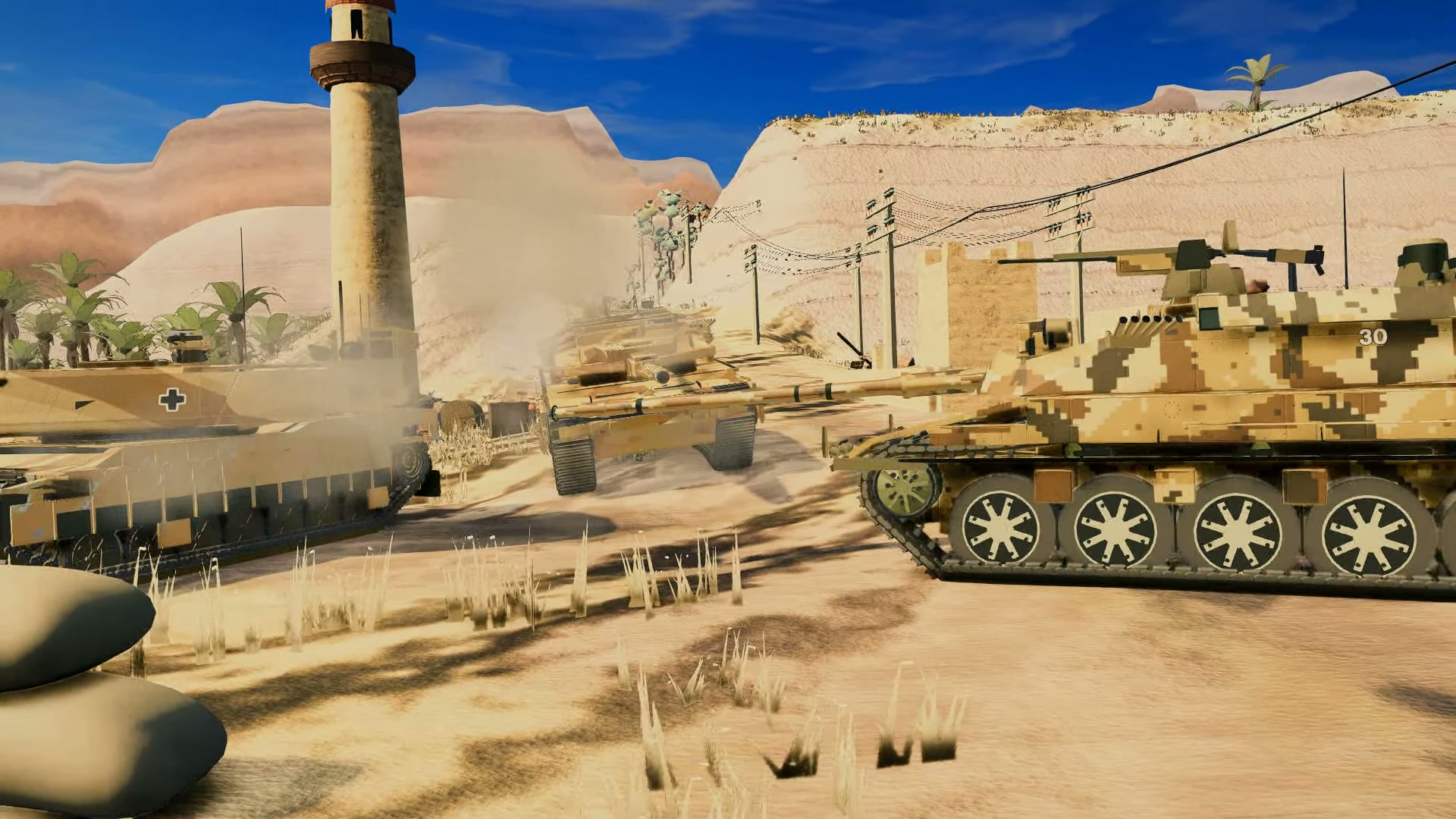 Desert Ground Rush: a low camera threads moving armor and incoming fire. | 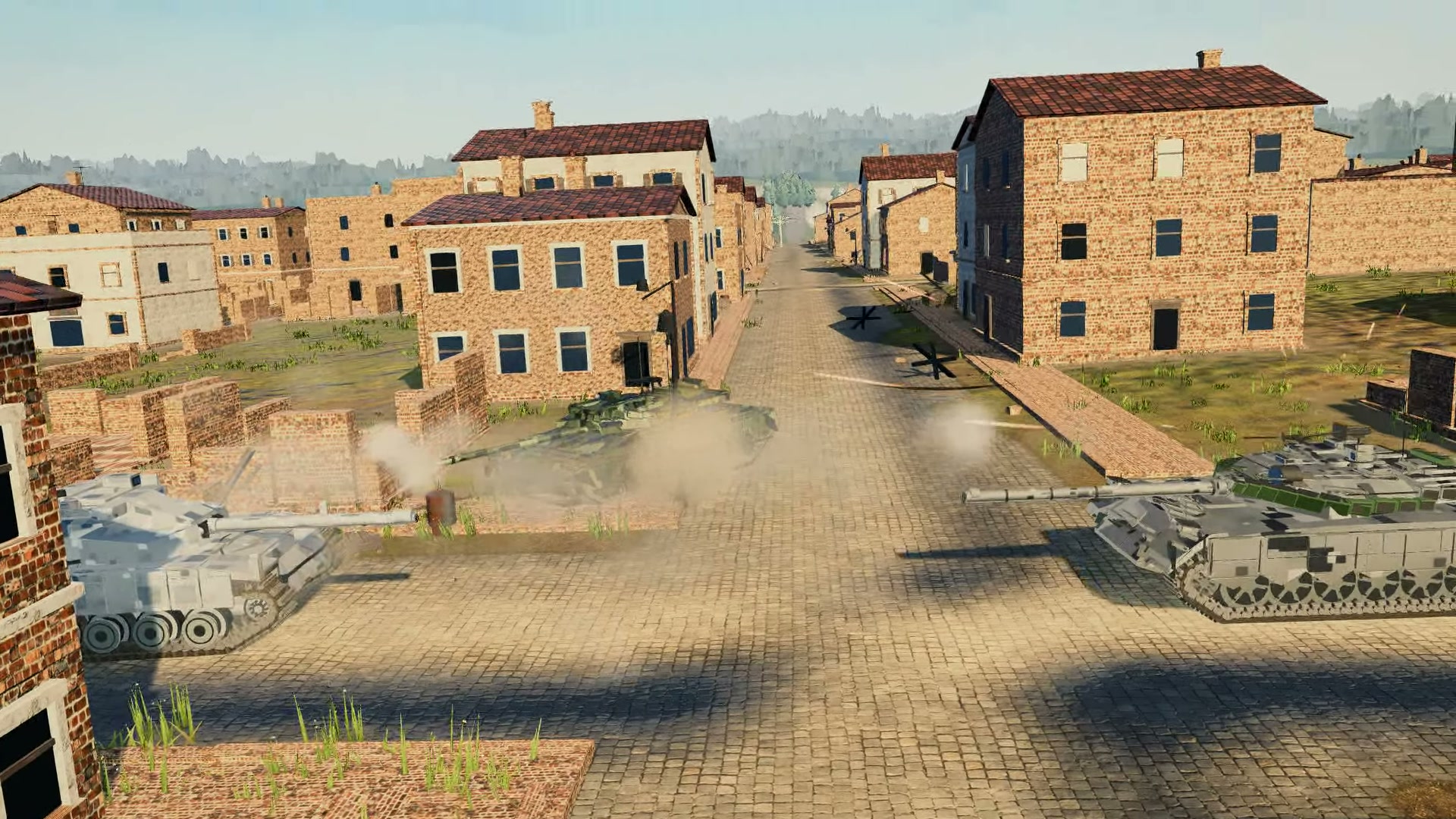 Urban Overhead Dive: a rail camera drops into a close street engagement. |
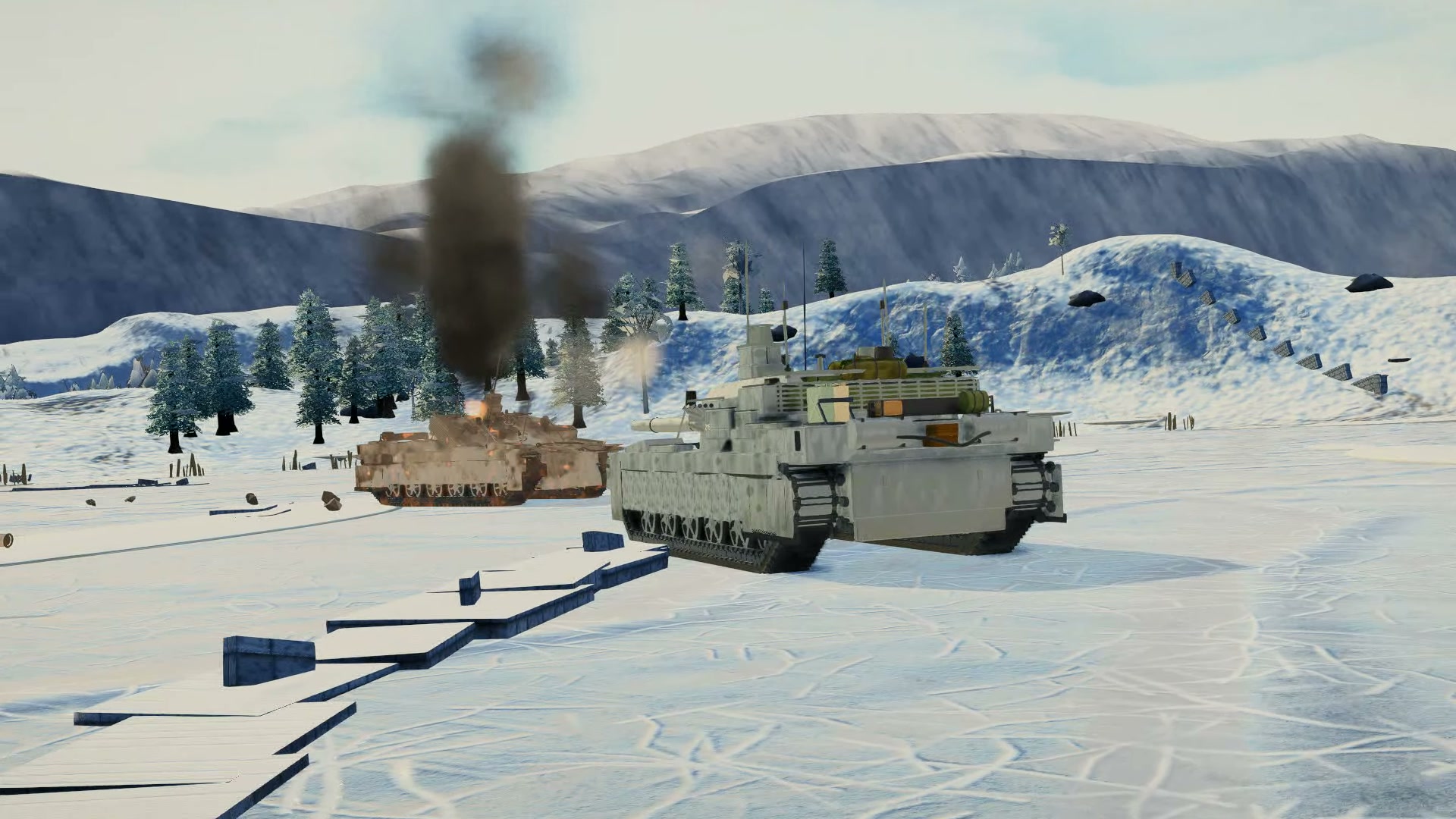 Winter Ice Orbit: tanks exchange fire while the camera circles the frozen contact line. | 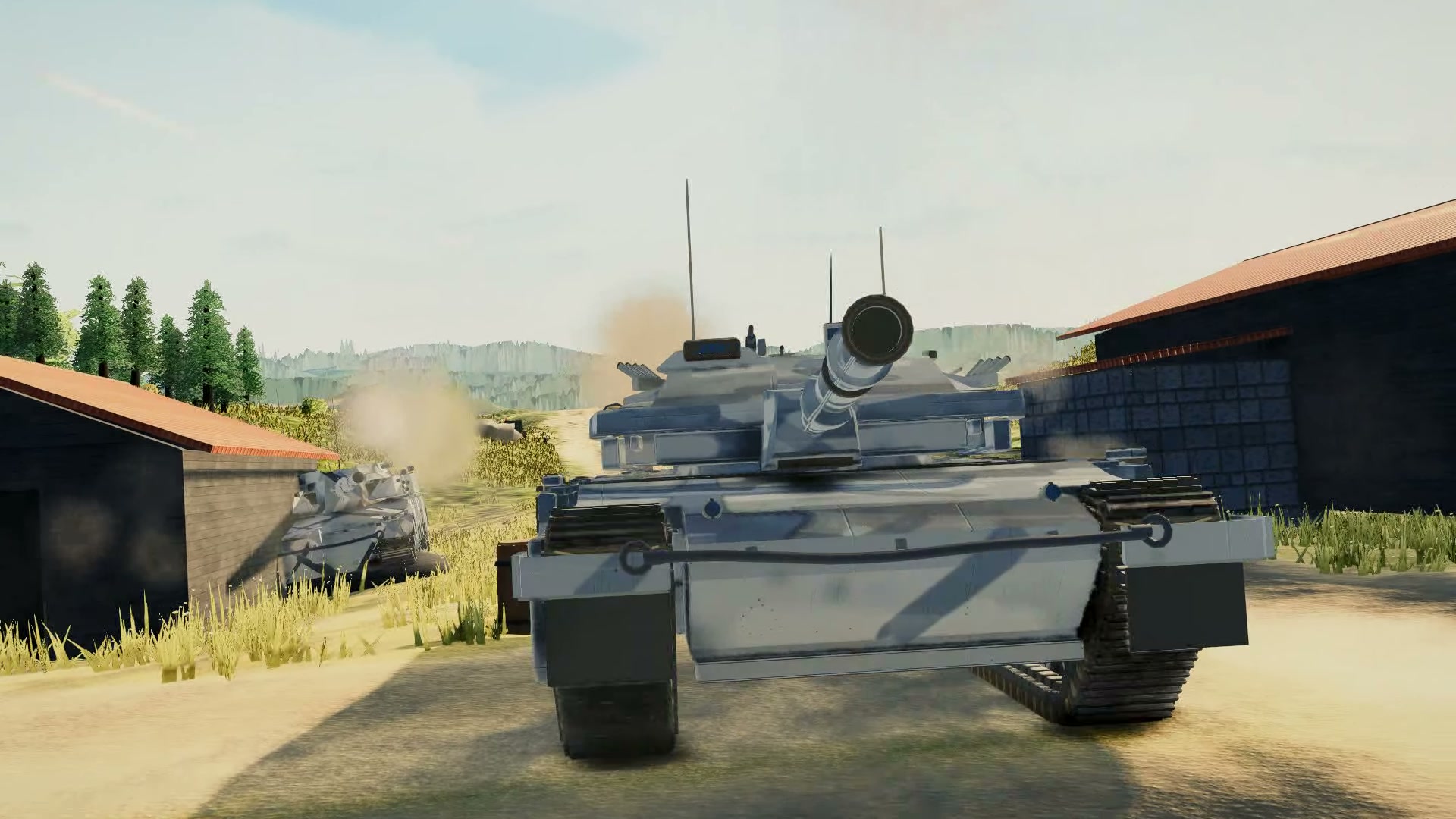 Coastal Shell Skim: a fast lateral pass follows the shell path through a beach assault. |
OPEN THE FULL LANDING SHOWCASE
Vehicle-specific mechanics


The fleet does not reduce every vehicle to the same gun and movement model. Specifications can add their own loading, guidance, suspension, ammunition, anatomy, and control behavior while remaining inside the fixed-step authority.
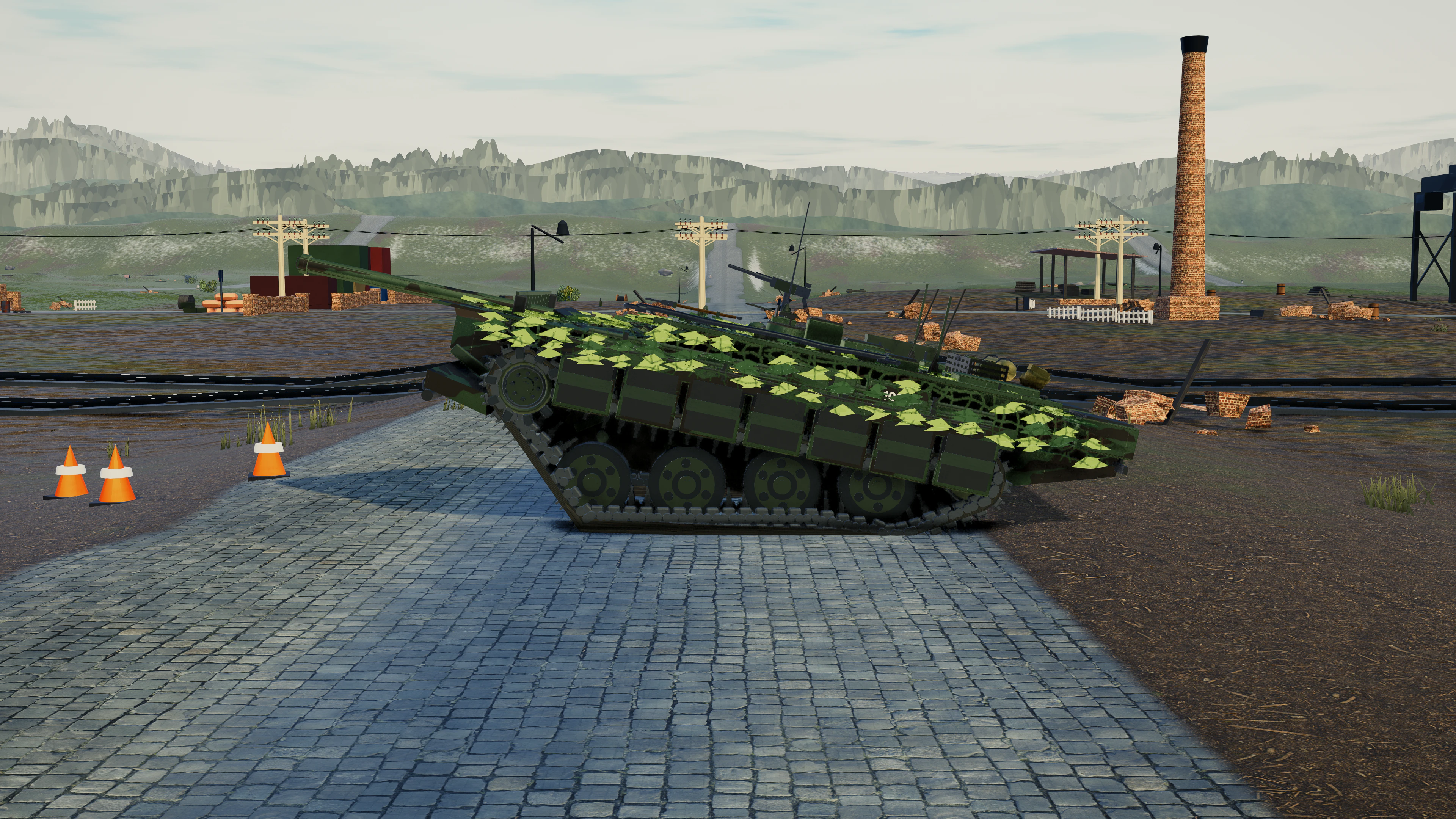 Swedish siege suspension: the Strv 103A, Strv 103B, and UDES 03 aim their fixed guns by pitching the physical hull. Wheels and both loaded track runs reshape around the solved pose. | 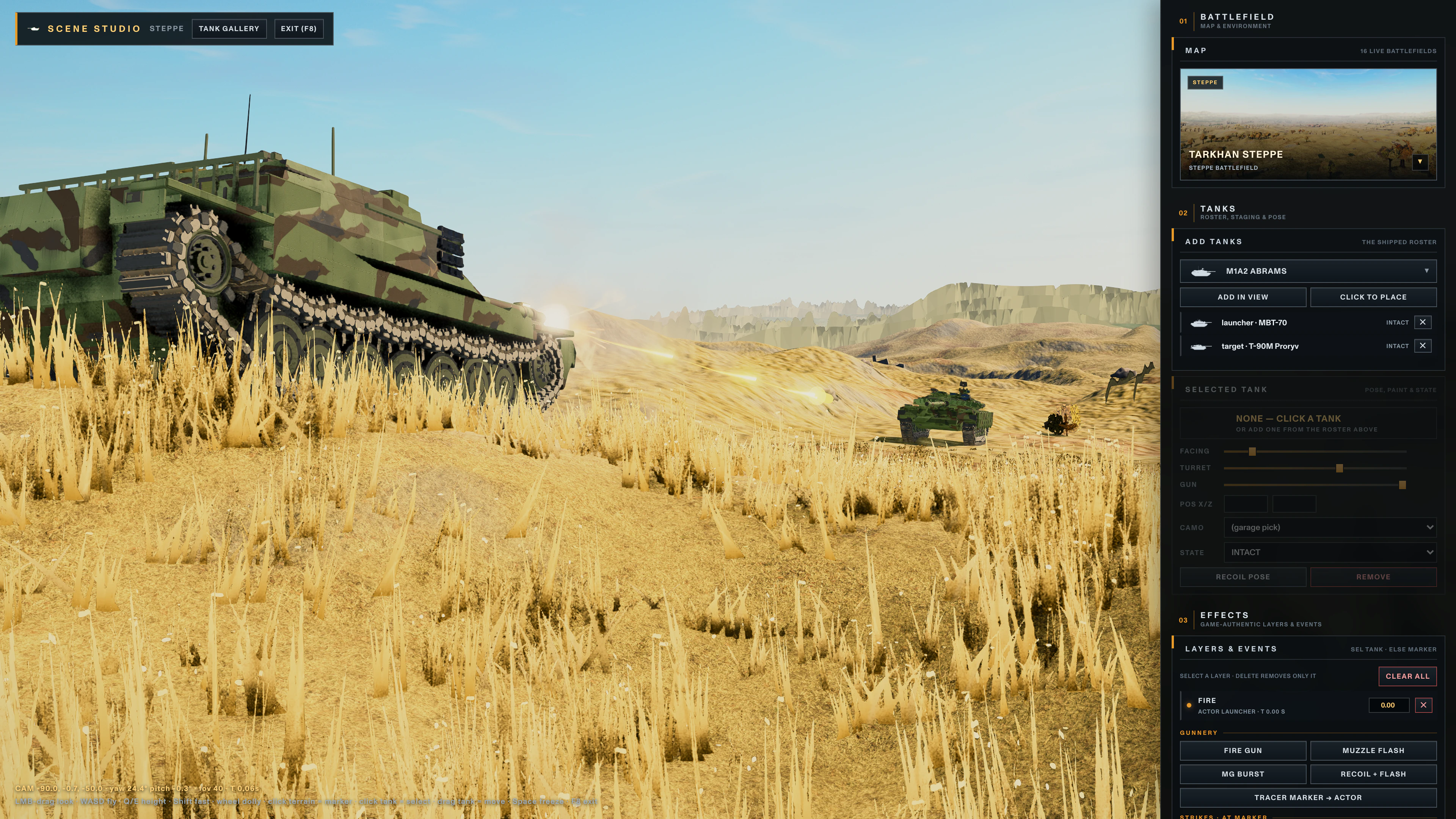 Guided weapons: the MBT-70 fires the Shillelagh as its primary round. IFVs carry vehicle-specific TOW, MILAN, Spike, Konkurs, Arkan, and Jyu-MAT launchers. |
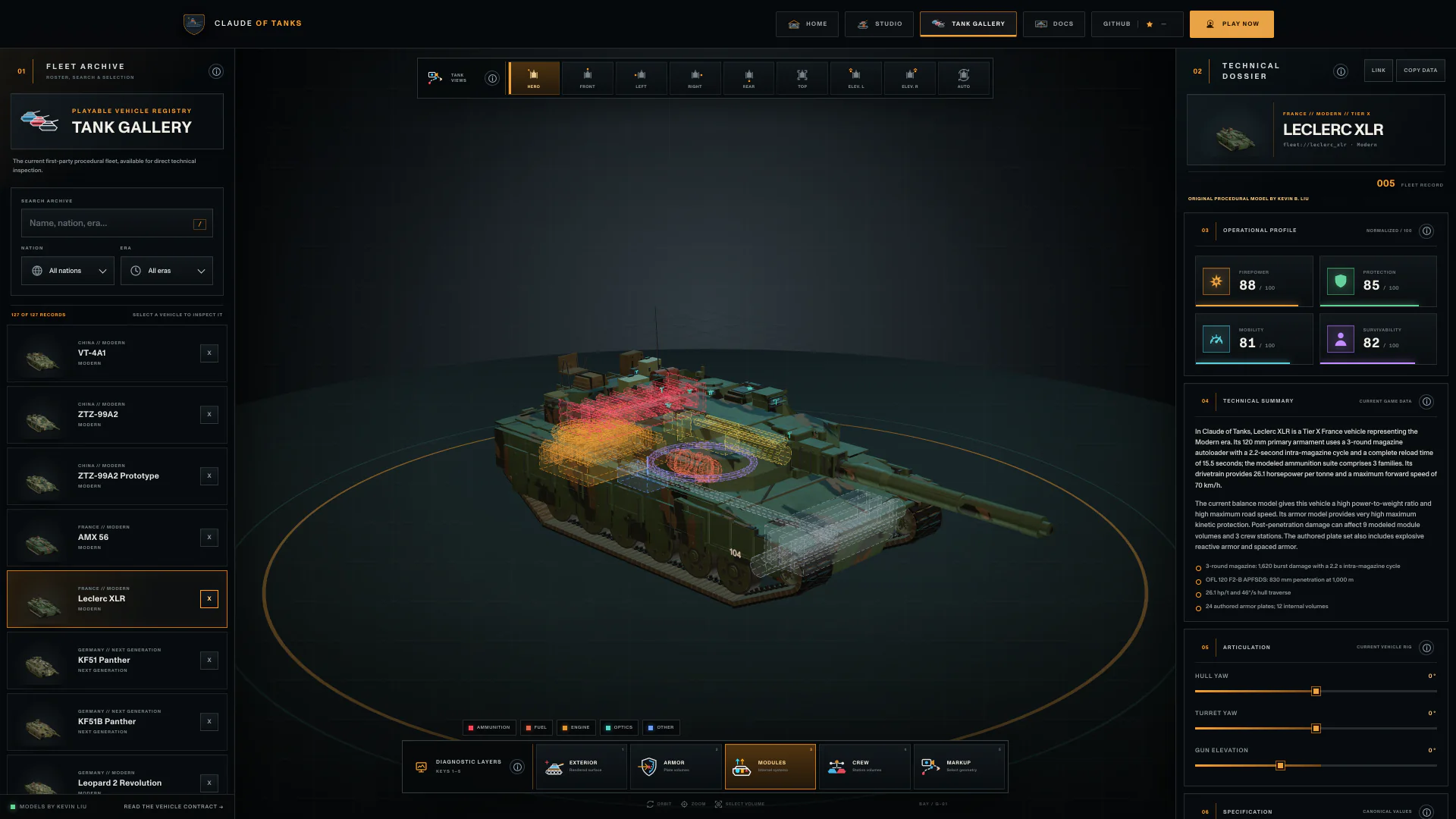 Internal anatomy: the Gallery shows crew, gun, turret ring, engine, fuel, ammunition, tracks, optics, radio, and vehicle-specific feed or missile systems. | 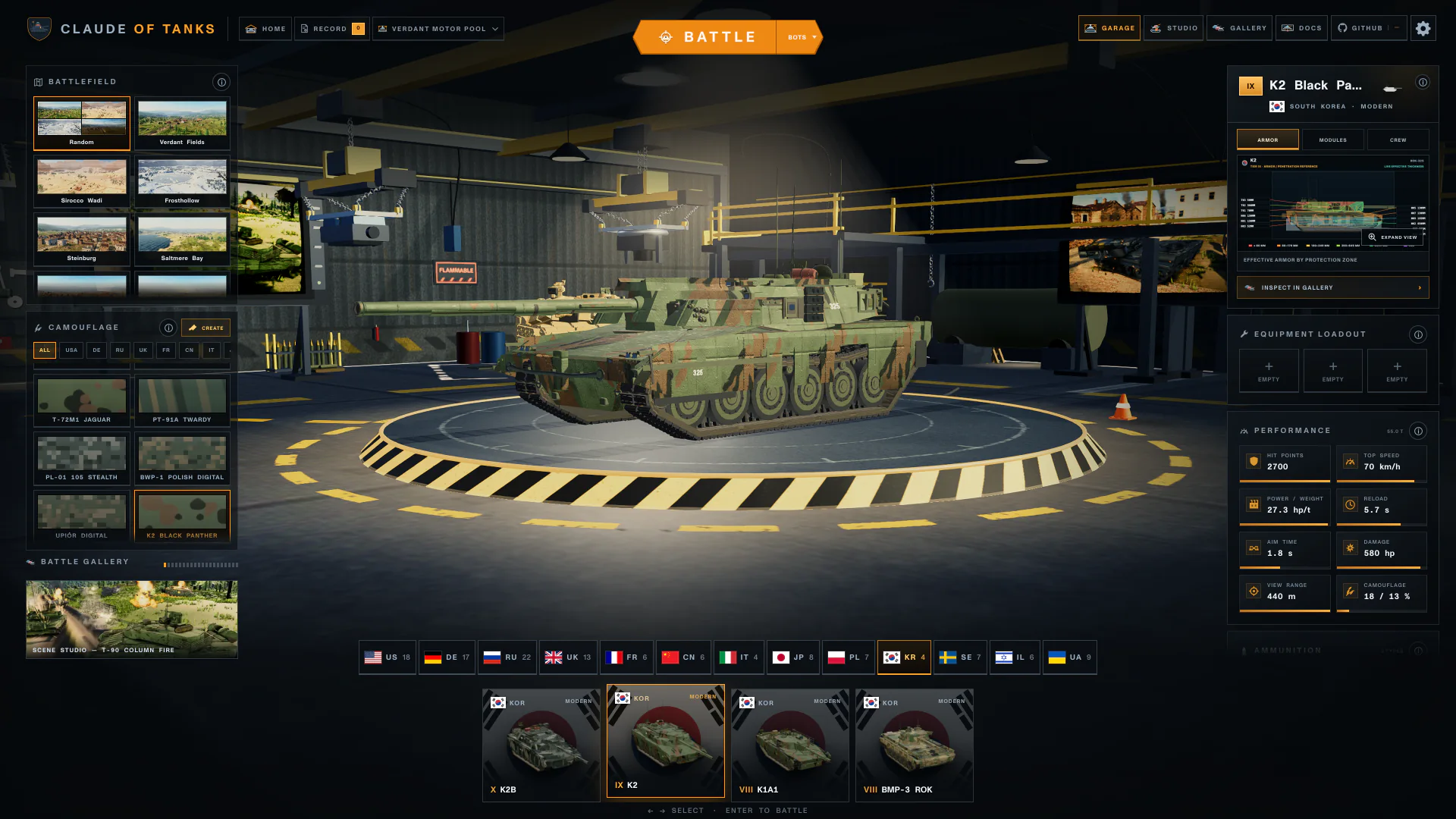 One shared fleet: battle, garage, Gallery, Studio, bots, icons, diagrams, and technical dossiers read the same vehicle specifications—171 in production or 208 in keyed local development. |
- Magazine autoloaders track ready rounds, intra-magazine cycle time, full replenishment, manual magazine reloads, shell changes, and damage to the loading mechanism. The Leclerc, Type 90, PL-01, and four-round PL-01 105 each carry their own magazine timings.
- Guided missiles travel at visible weapon-specific speeds and steer toward the authority-owned aim point. Launcher damage, rack damage, ammunition count, reload state, guidance, impact, and presentation all remain synchronized.
- Hydropneumatic aim uses the same canonical pose for armor, muzzle, collision, wheels, tracks, remote snapshots, and the camera; there is no separate visual-only tank tilt.
- Free look keeps the sight and turret on target while the camera moves. Hold
Shifton keyboard,RBon a standard controller, or assign another binding in settings.
Combat systems
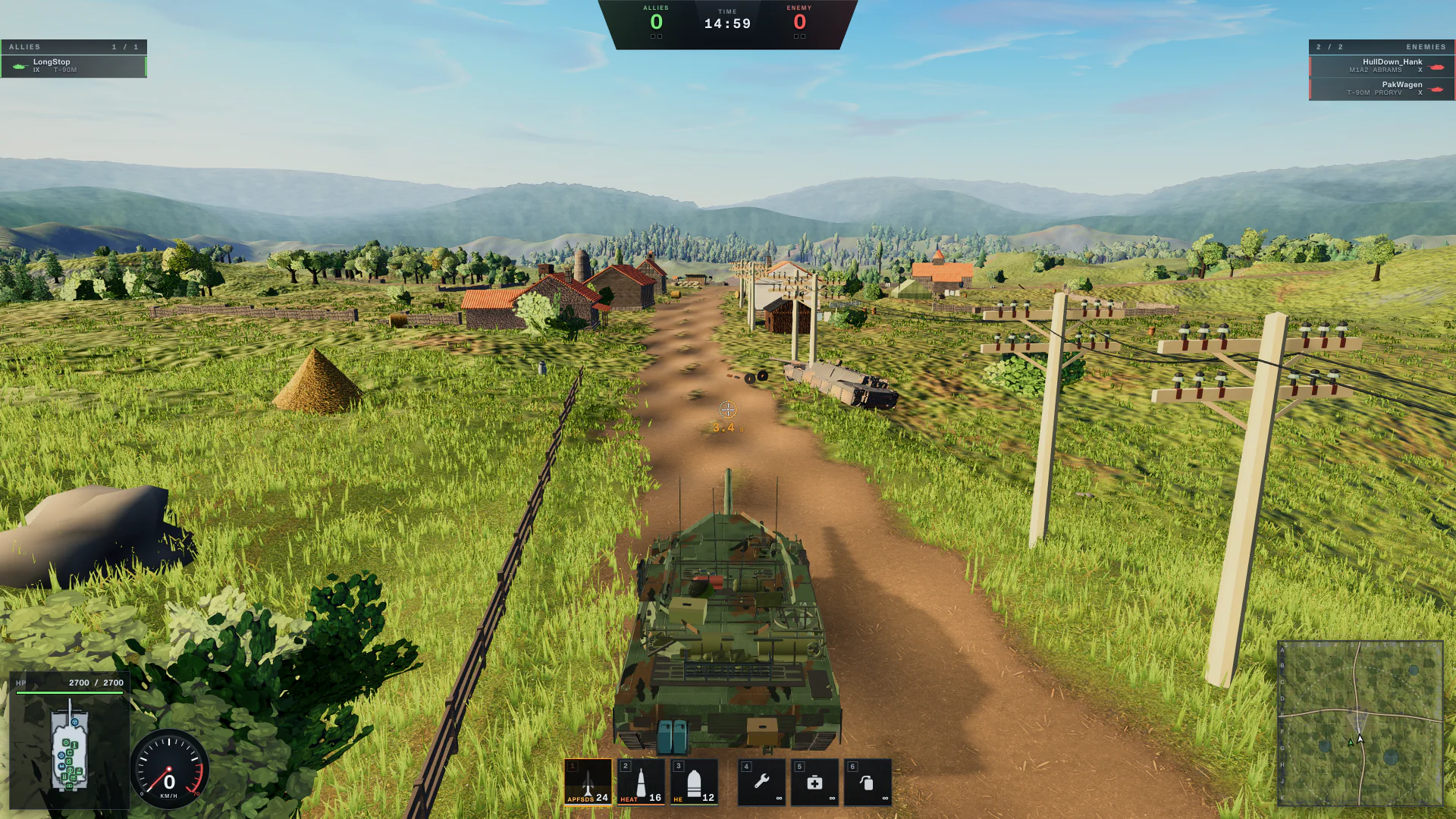 Battle HUD: dual reticle, ammunition, modules, teams, minimap, chat, performance, and authority-owned combat feedback. | 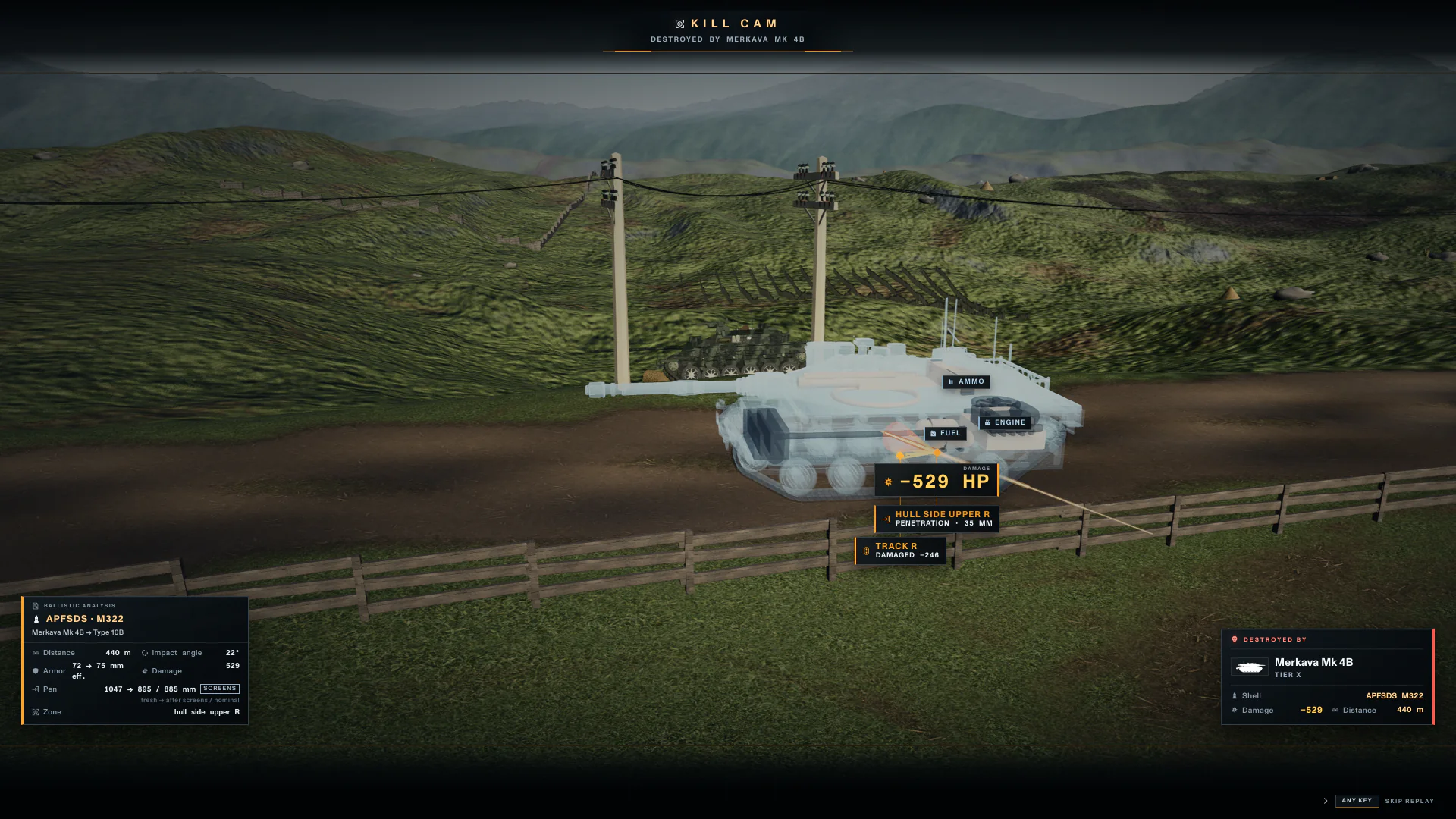 X-ray killcam: the resolved shell path, struck plate, effective protection, penetration result, damaged modules, and crew. |
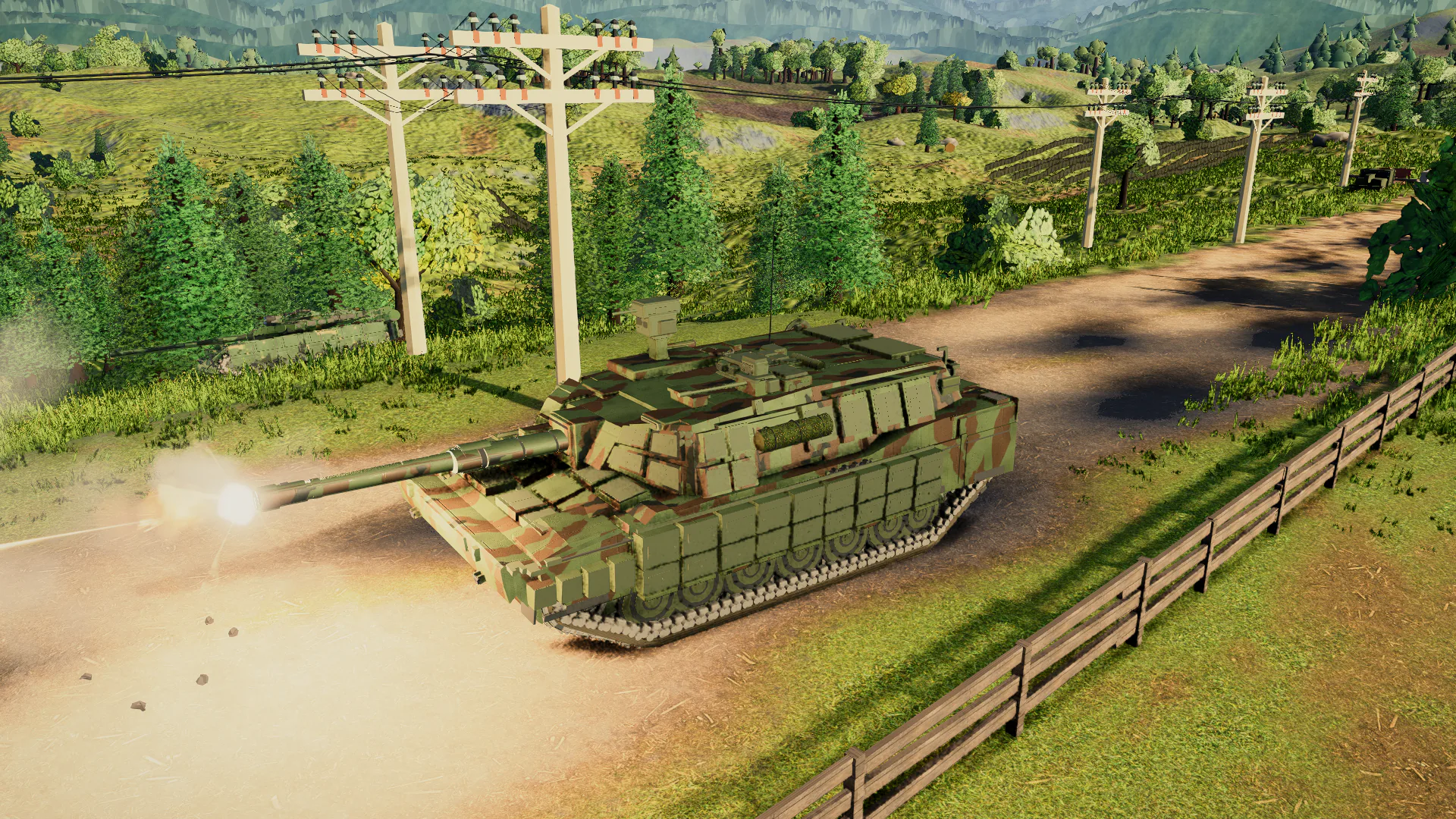 Physical gunnery: finite world aim, bore convergence, resolved muzzle transform, visible recoil, dispersion, travel time, and gravity. | 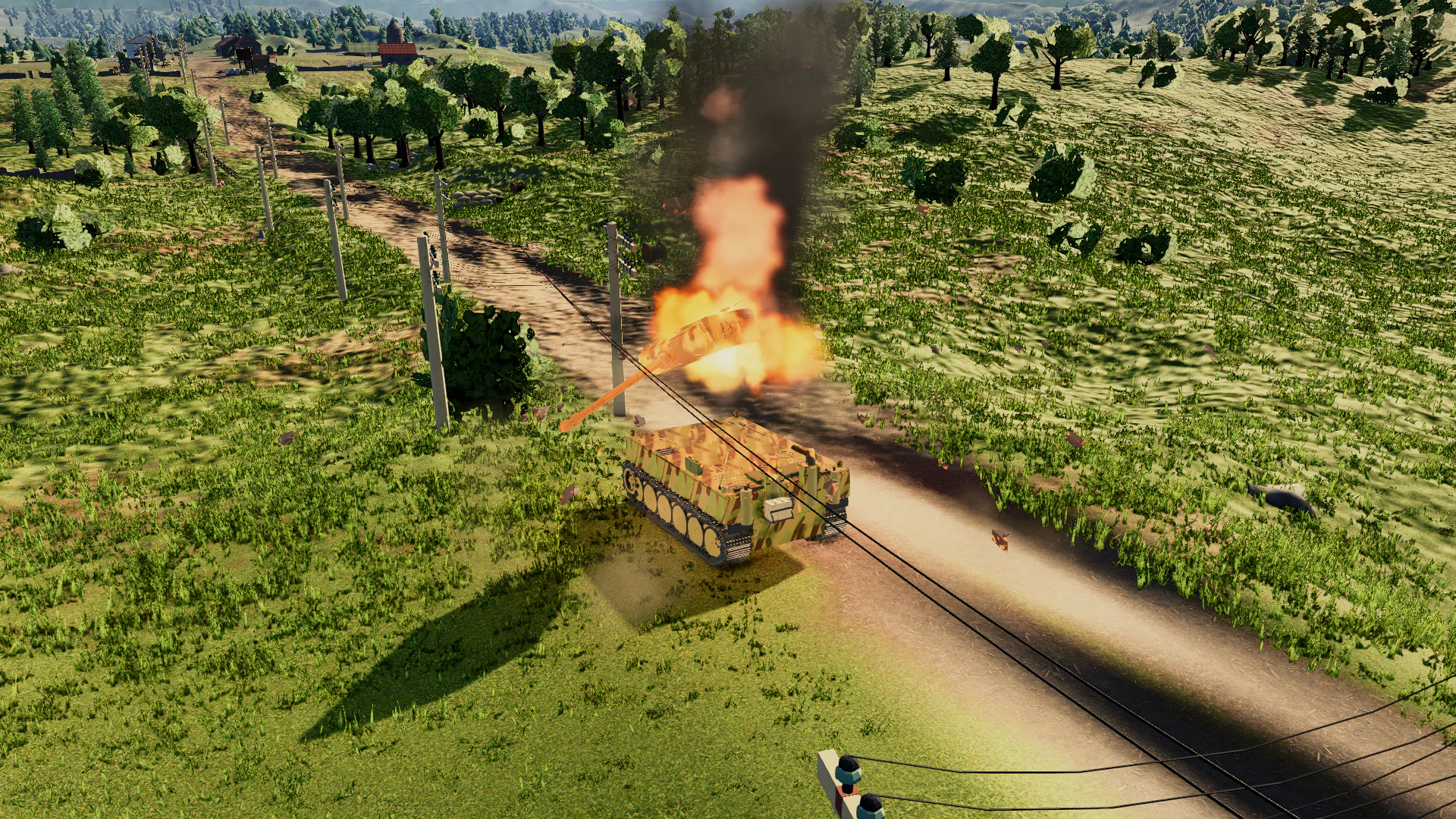 Destruction: fire, sparks, smoke, detached remnants, persistent wreck state, and pooled effects driven by the completed hit. |
- Plate-level armor resolves the actual plate, slope, impact angle, normalization, ricochet, overmatch, spaced armor, composites, ERA, and separate kinetic/chemical protection.
- Five ammunition families model muzzle velocity, gravity, penetration loss, ricochet, and damage differently.
- Internal anatomy tracks crew, ammunition racks, engine, fuel, gun, turret ring, optics, radio, and tracks.
- Tank-specific mobility combines drivetrain, terrain resistance, per-wheel support, suspension-damped hull attitude, flexible terrain-following tracks, collision, ramming, and crushable cover.
- Real battlefield knowledge combines view range, concealment, movement/firing bloom, foliage, radio sharing, and the 15 m bush rule. Multiplayer authority filters hidden enemies before serializing a snapshot.
Worlds and vehicle design


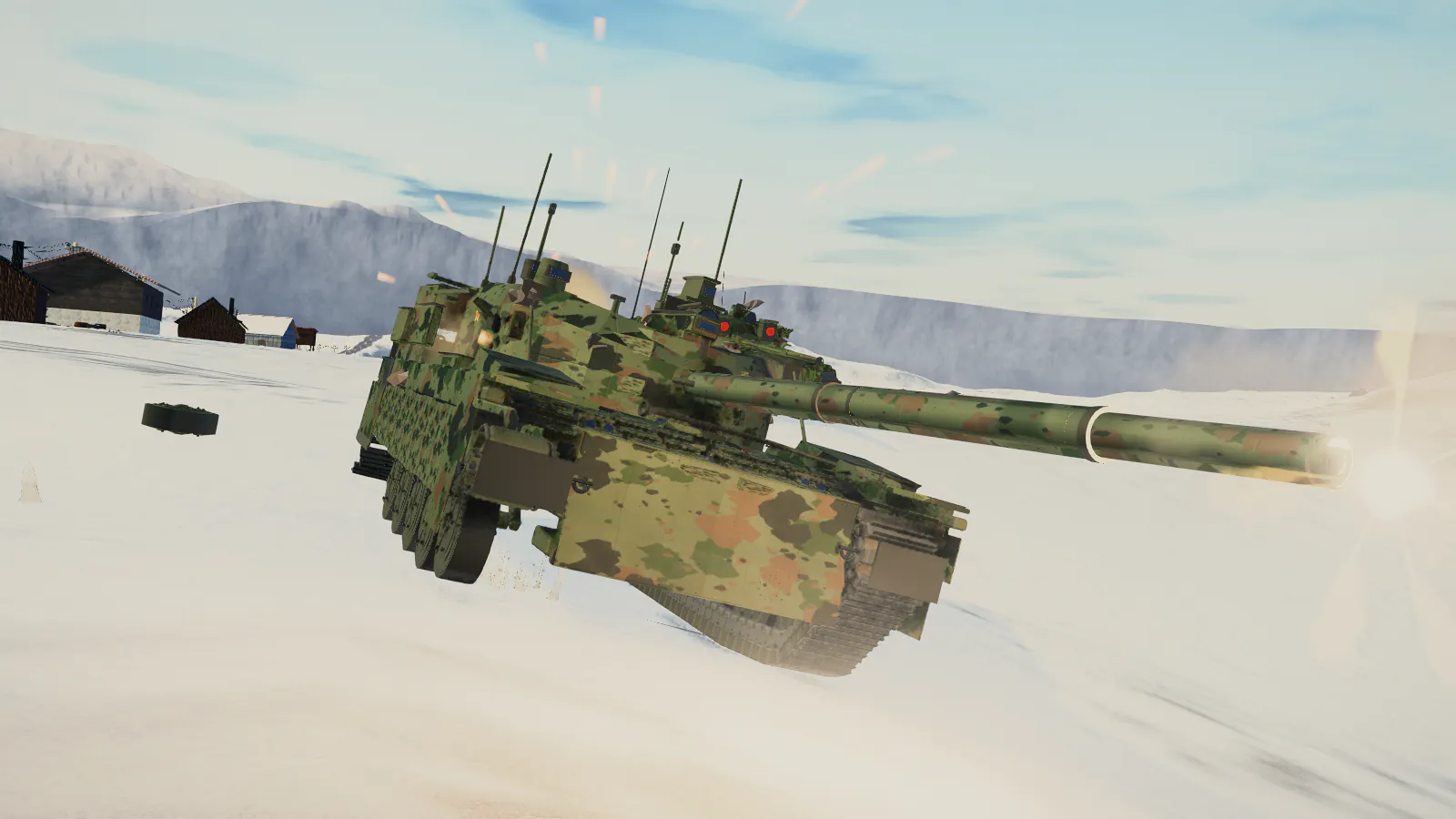 Thirty worlds: terrain, roads, structures, foliage, fog, sky, lighting, cover, collision, minimap, and dedicated-server descriptors. | 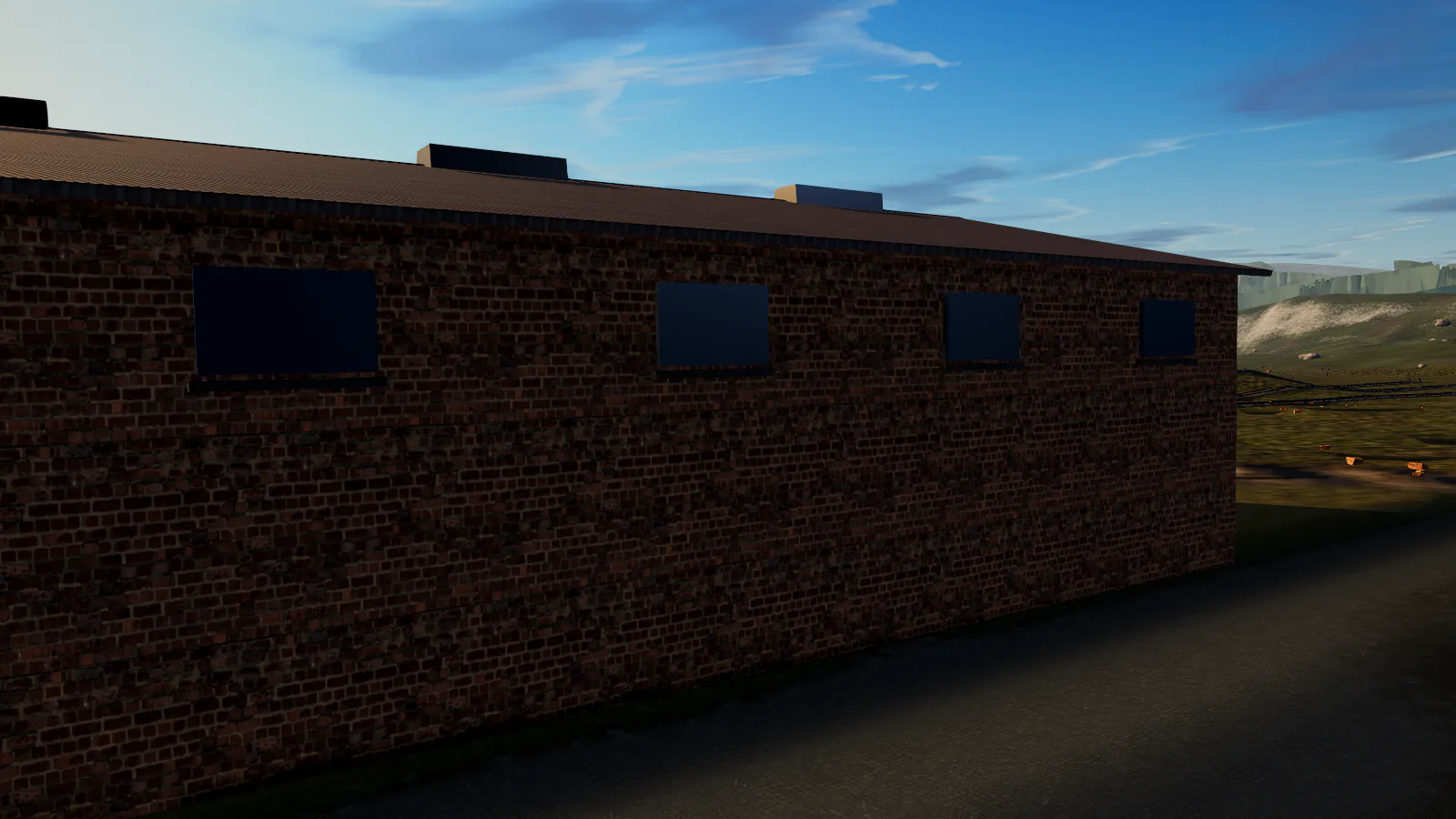 Shared world kit: destructible buildings, camps, wreck families, debris, utility lines, loose physical props, and narrow hitboxes. |
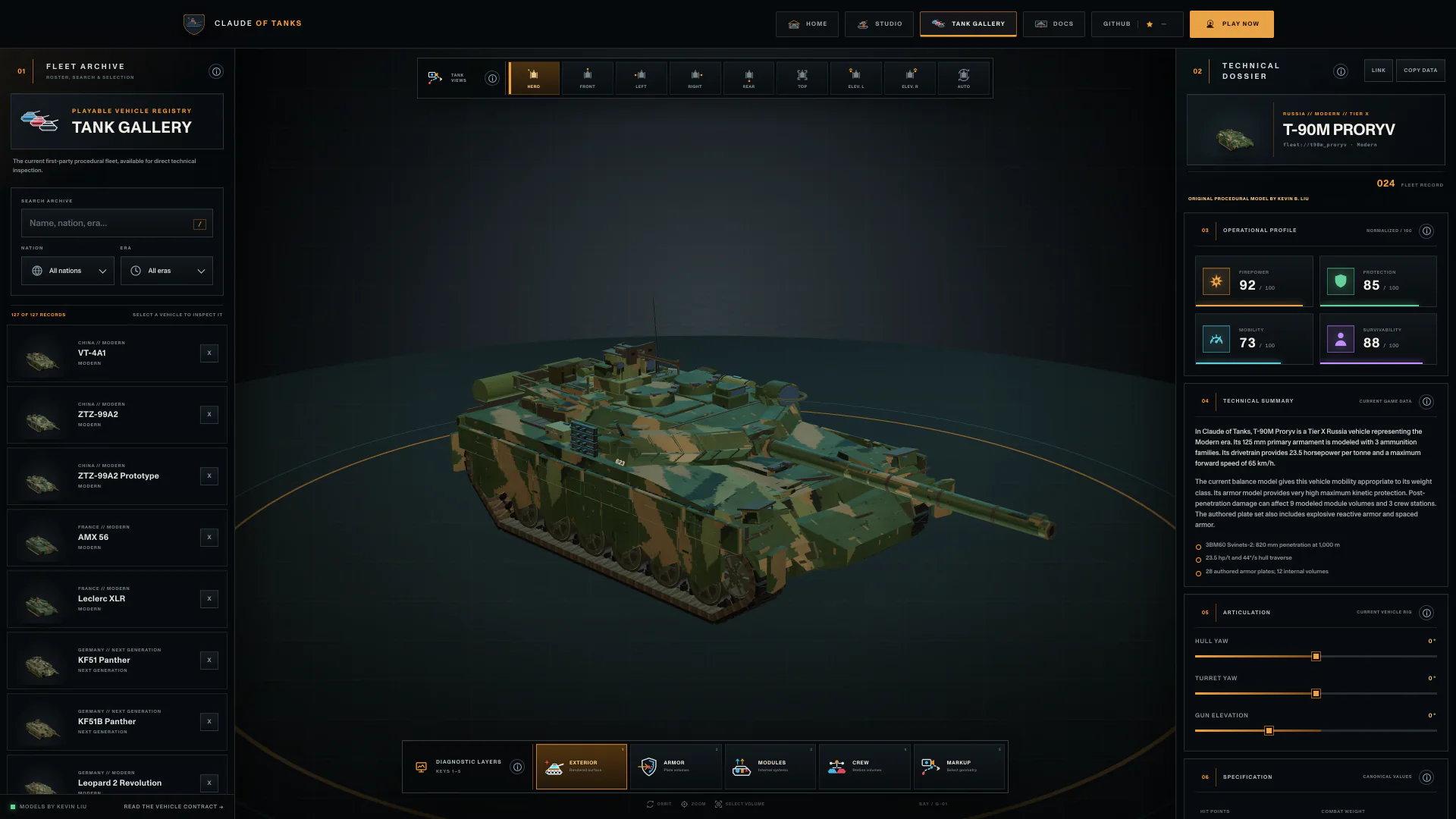 Tank Gallery: search 171 production vehicles or 208 with the local development fleet enabled, orbit and articulate the current vehicle rig, inspect armor, modules, and crew, and export exact-surface review packets. | 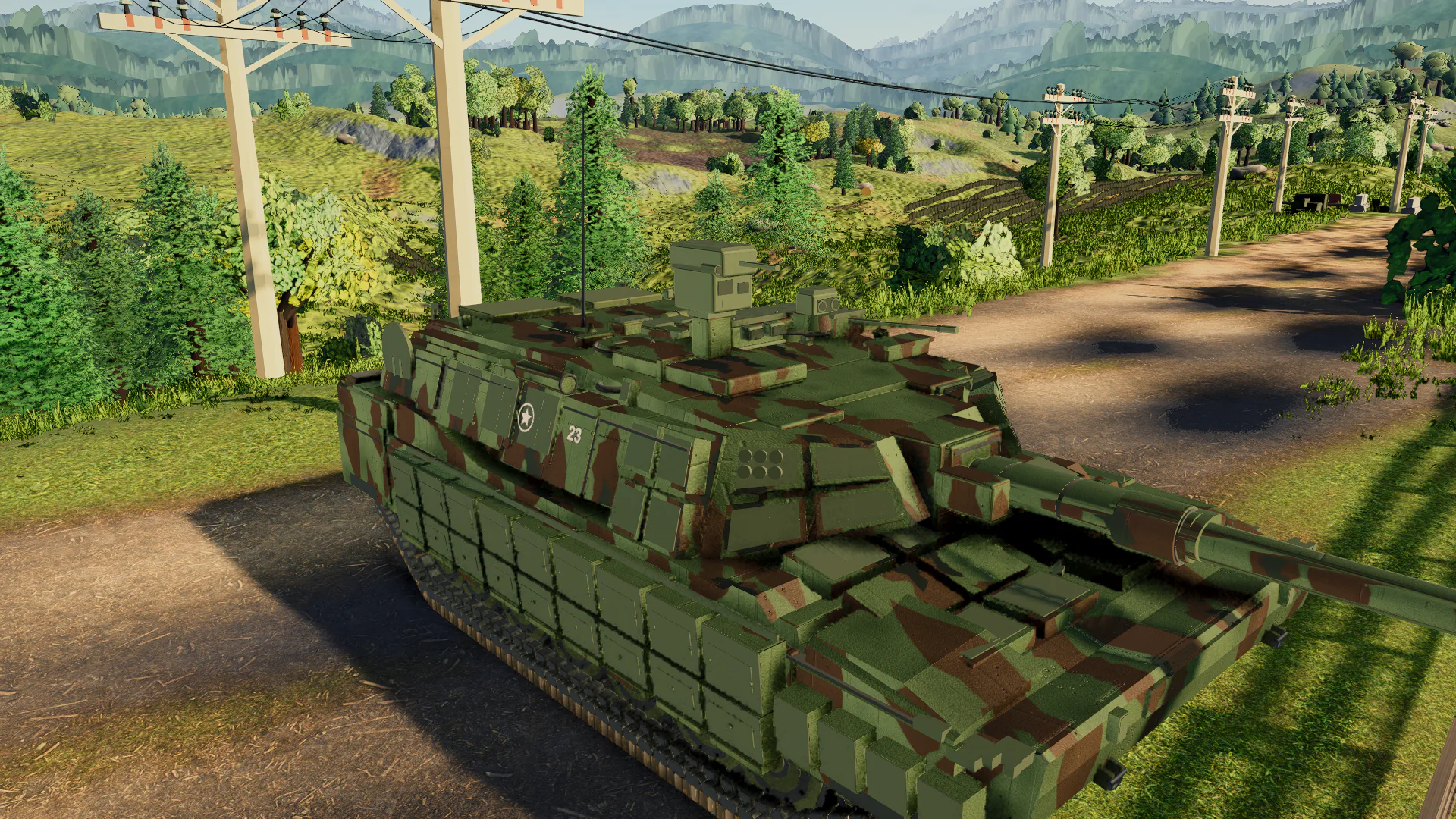 Shared vehicle specification: geometry, armor, modules, gun limits, ammunition, mobility, garage cards, bots, icons, diagrams, Gallery, and Studio. |
Every playable hull, turret, gun, fitting, suspension, road wheel, and track run is assembled by the repository's first-party vehicle pipeline. Vehicle changes pass combat-anatomy receipts, generated technical diagrams, geometry checks, visual fingerprints, and a targeted release gate.
Ten Garage environments

The Garage is its own authored presentation system. Verdant retains the enclosed Motor Pool; the other nine locations use lightweight scene packs derived from a real battlefield's terrain, structures, PBR materials, detailed trees, approach route, horizon, sky, and atmosphere without loading that battlefield. One immutable hero pose keeps the tank and camera comparable across the complete set, while connected maintenance stations, heavy-lift equipment, real fleet exhibits, and full-detail tank parts establish a distinct service story around every platform.
The release gate reviews every location from four orbit angles and responsive layouts, rejects unsupported or floating parts, certifies geometry-derived structure collision, and requires a score of at least 90/100 with bounded draw calls, triangles, transitions, cache residency, and repeated-cycle memory. See the Garage environments guide for the complete visual, lifecycle, and verification contract.
Renderer, drivers, and performance

The renderer treats quality as a device contract instead of a single desktop preset. It selects a GPU/driver-aware profile, caps pixel density, prewarms shader paths, adapts costly effects, and can recover from a black frame or WebGL context loss. The current presentation path combines:
- four quality-scaled, stable texel-anchored shadow cascades with articulation-aware tank shadow hulls;
- fused output grading, anti-aliasing, adaptive render scale, fog/atmosphere, and bounded transparent depth work;
- instance/batch paths for repeated world objects, pooled particles, and explicit GPU resource disposal;
- reusable hot-loop scratch state, fixed-step simulation, render interpolation, and high-refresh presentation;
- an in-game diagnostics surface for FPS, ping, frame timing, draw calls, triangles, memory, network telemetry, quality, and renderer/driver identity.
The renderer reached 120 FPS on the certified test hardware. Actual performance depends on refresh rate, browser, thermal limits, GPU and driver, resolution, and quality level. Combat rules remain fixed at 60 Hz at every render rate.
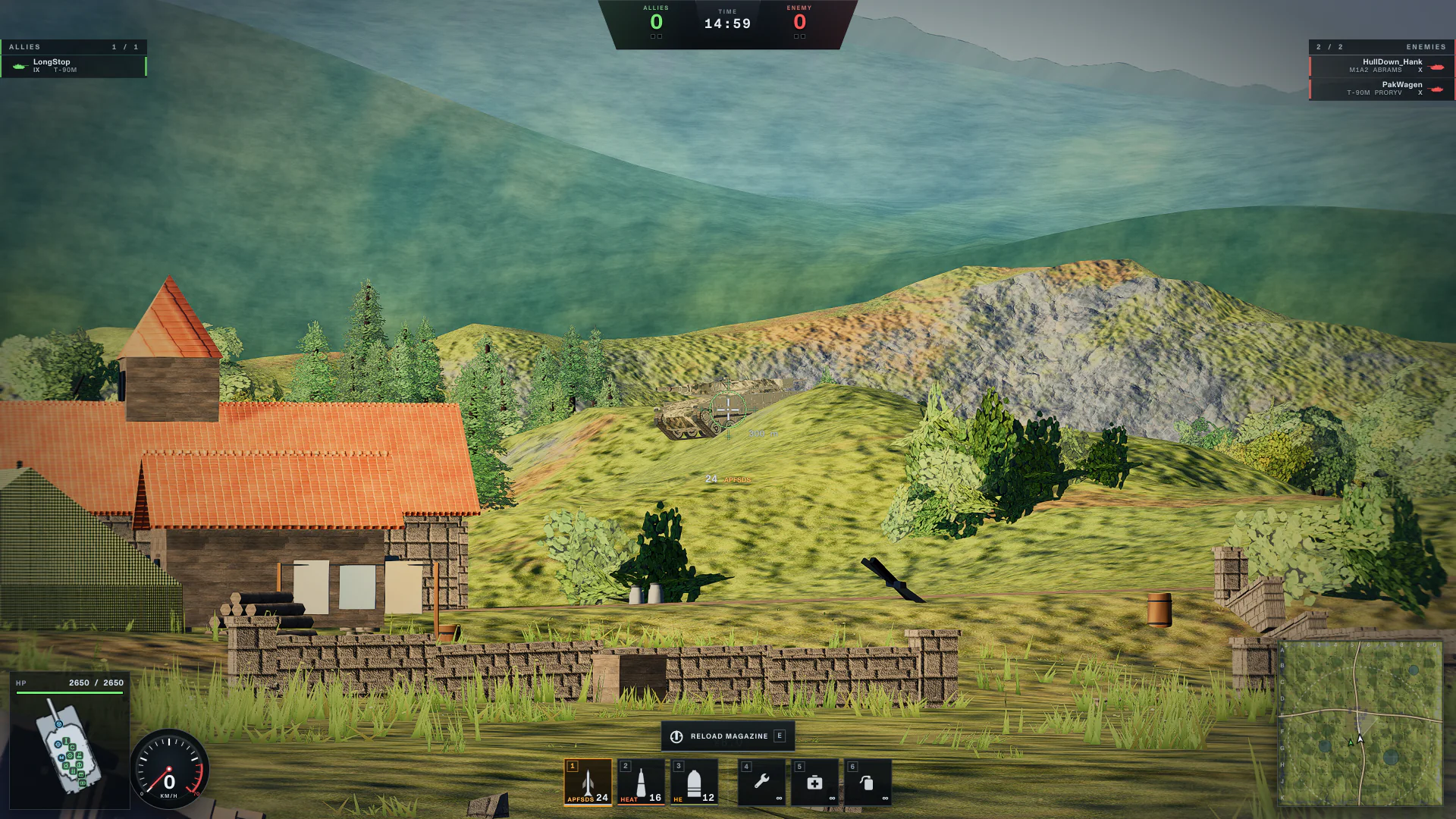 Presentation: high-resolution scope, stable shadowing, post AA, bounded depth copies, and readable combat overlays. | 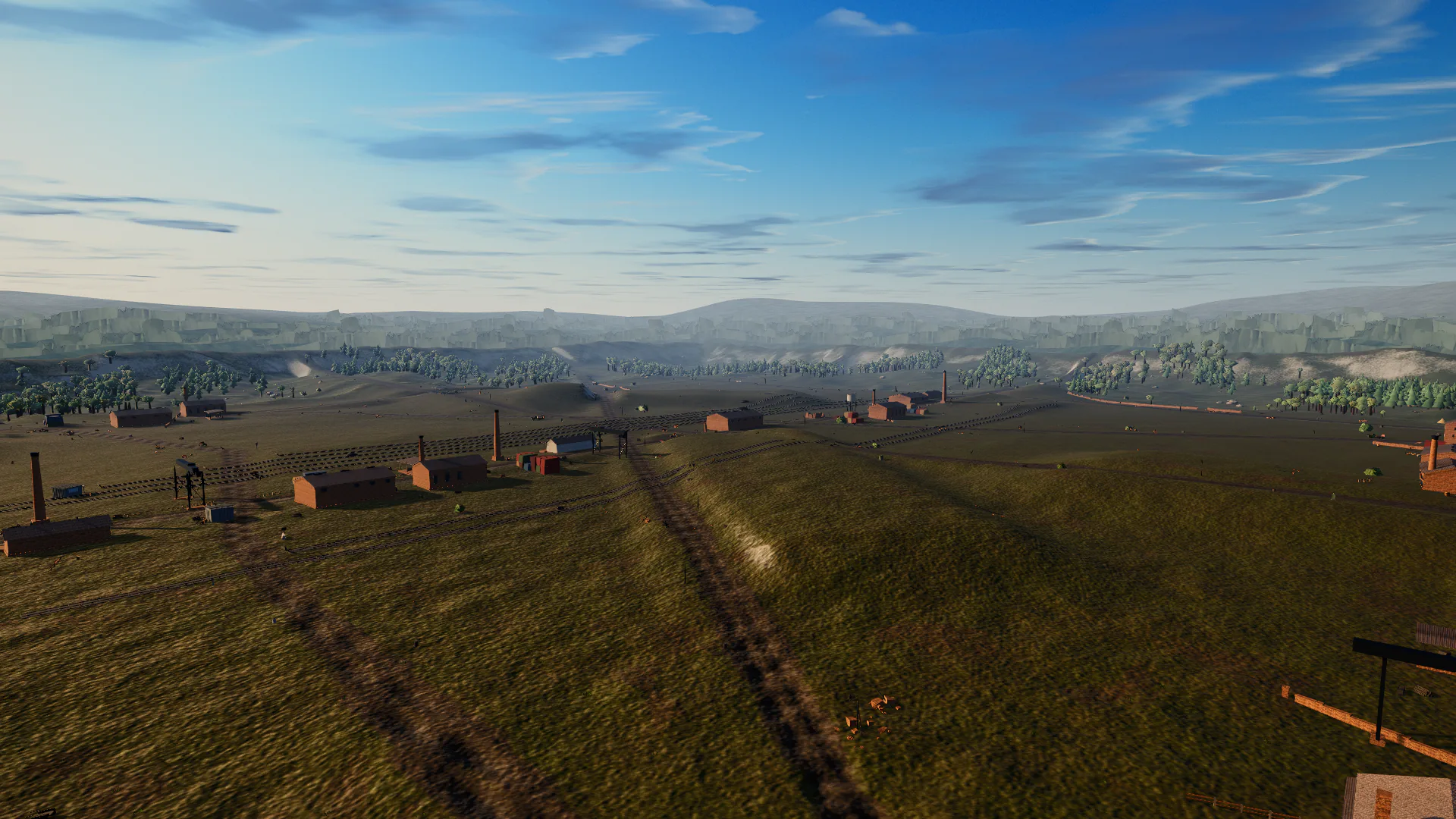 World rendering: authored layouts and detailed environments use adaptive quality, instancing, culling, and streaming. |
Multiplayer

LAN and browser-hosted private rooms use the shared renderer-free movement and combat rules. No database or dedicated game server is required; Internet room codes need a lightweight signaling endpoint, and restricted networks may need TURN relay. Ranked tooling remains internal rather than a player-facing mode. See multiplayer hosting. Clients send intent, never trusted hits or damage. Snapshot filtering, local prediction/reconciliation, bounded remote interpolation, reliable fire edges, reconnectable room state, and separate control/chat delivery keep a moving and firing 7v7 battle responsive without giving the client authority.
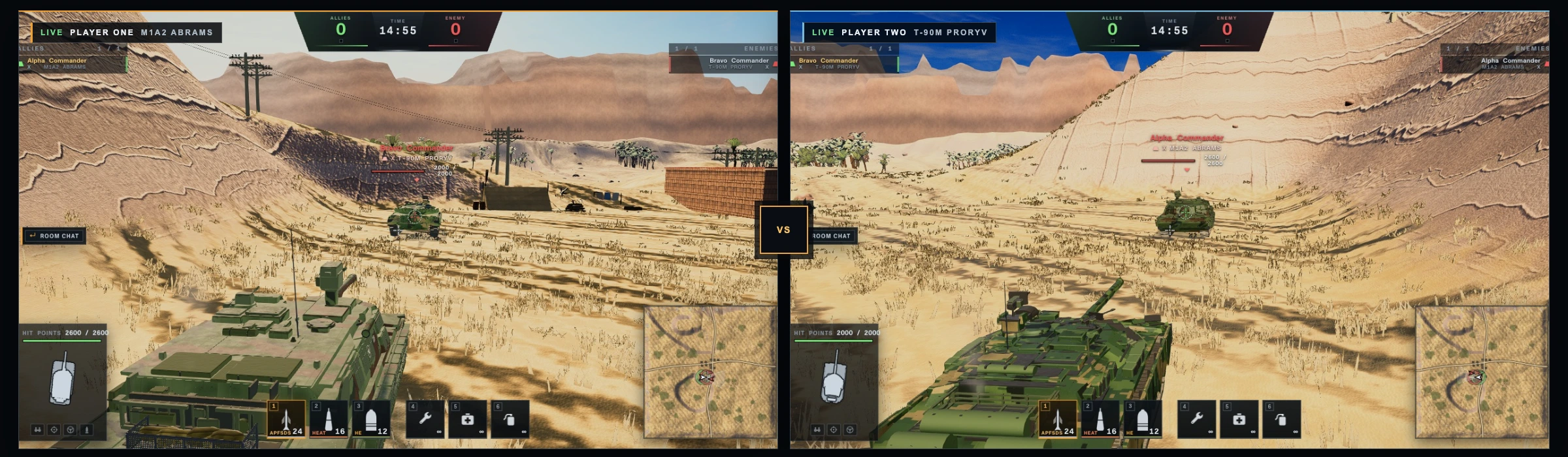
Two screens, opposing sights: paired live 1v1 captures preserve the real battle HUD, authoritative simulation, filtered snapshots, and each commander's view.
Controls at a glance
| Action | Keyboard and mouse | Standard controller |
|---|---|---|
| Drive and steer | WASD or arrow keys | Left stick |
| Aim and fire | Mouse + LMB | Right stick + RT |
| Precision sight | Hold RMB by default; wheel in also enters | LT |
| Free look without moving the turret | Hold Shift or Left Alt | RB |
| Select ammunition | 1 / 2 / 3 | D-pad |
| Vehicle-specific action | E | LB |
| Reload a partial magazine | C | Remappable |
| Consumables | 4 / 5 / 6 | Remappable |
| Handbrake | Space | A |
| Shot log / performance / menu | L / F8 / Esc | Interface controls |
Every desktop action is remappable. RMB can use hold-to-aim, toggle-aim, or classic free-look behavior. Touch devices
receive dedicated movement, aim, scope, fire, ammunition, equipment, and special-action controls rather than a scaled
desktop HUD.
Production tools
For procedural vehicle creation, use the tank-generation handbook: source-file and Gallery-markup intake, measured geometry and negative space, independent review gates, reusable agent briefs, and handoff templates.
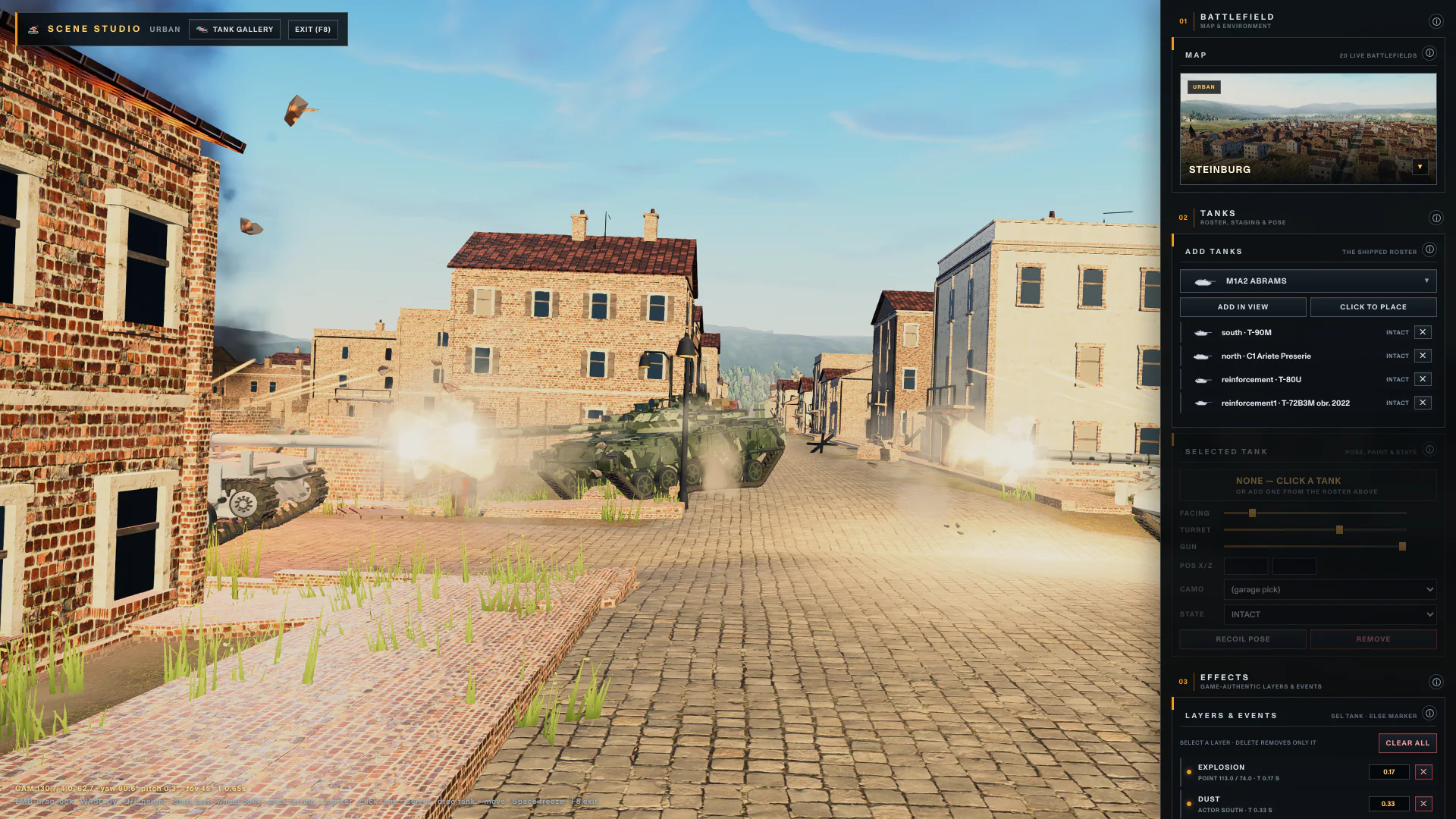 Scene Studio: place any roster vehicle on any map, conform it to terrain, set its pose within physical limits, schedule game effects on a deterministic timeline, and capture the current renderer. | 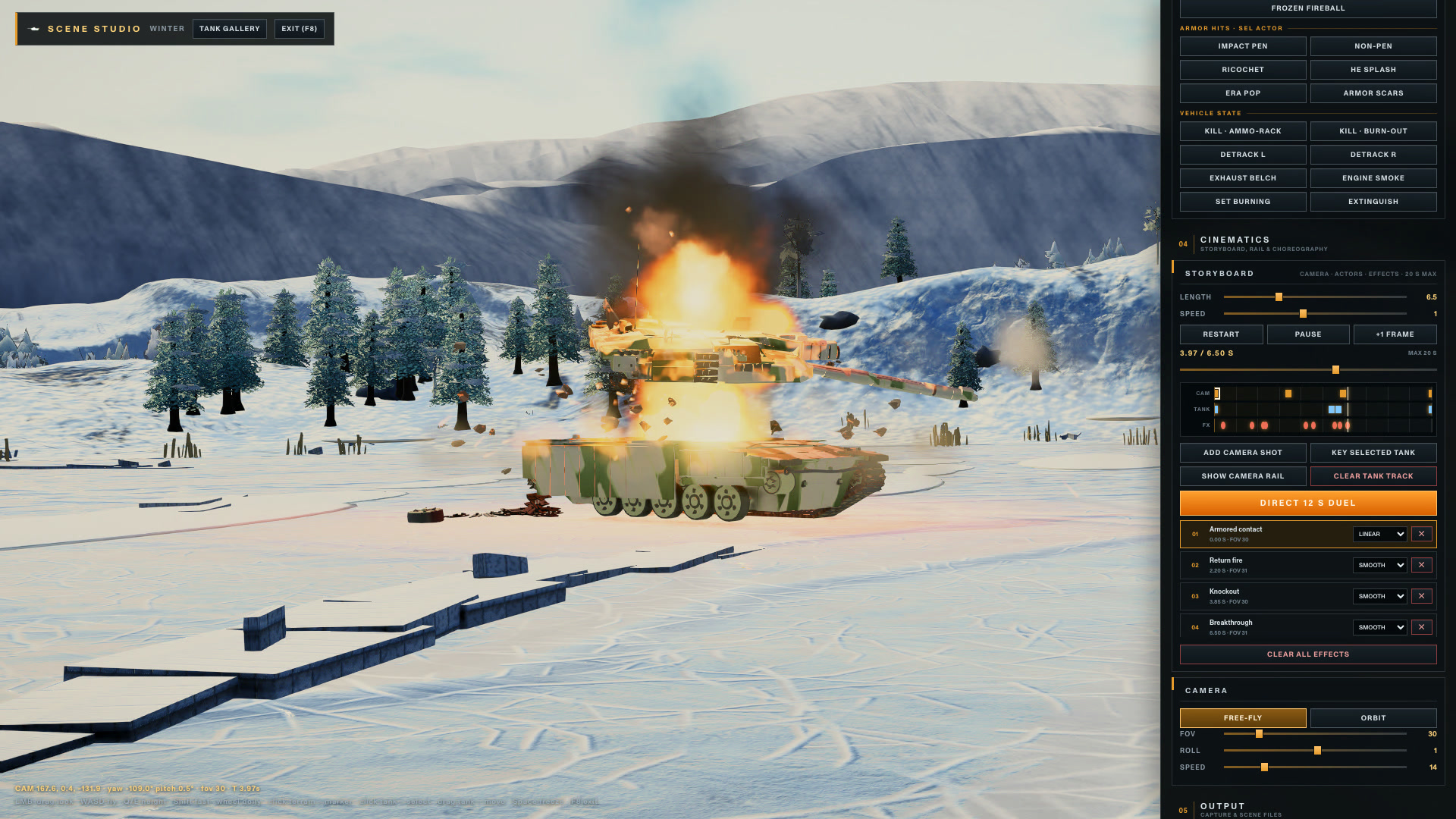 Directed destruction: this 1080p timeline moves both actors, fires the Strv 122, resolves impacts, detaches the Leclerc track, and triggers its ammunition-rack blast. |
Scene Studio works with the runtime rather than a separate cinematic renderer. Vehicles, camouflage, camera, lighting, recoil, tracers, explosions, sparks, smoke, debris, wreck state, and timeline events remain scene data. A saved scene can be replayed, scrubbed, edited, exported as JSON, captured as a high-resolution still, or recorded as a video.
Regenerate the current public archive:
npm run shots:battle:generate
npm run shots:battle:grade -- --root shots/marketing-battles-r3
node tools/marketing-shots/capture-multiplayer-dual-screen.mjs
npm run studio:action:render
npm run showcase:publish
npm run showcase:check
npm run landing:media:publish
The capture harness serializes concurrent jobs, starts a clean local game, verifies the requested state, and records
current rendering diagnostics. public/media/showcase-r1/manifest.json defines the source archive;
public/media/landing-r1/manifest.json records the public hero, rail, mosaic, and Studio selections with their actor,
effect, duration, dimensions, and byte receipts.
The same run is reviewed in contact sheets before any frame becomes a 4K master. These collection views make weak silhouettes, obstructed cameras, repeated compositions, and overpowered effects obvious before automated grading.
 Action review: ten multi-tank compositions inspected together. |  Foreground review: anchor-tank readability checked against battle depth. |
Open all six review sheets and the complete admission contract.
Selected field frames
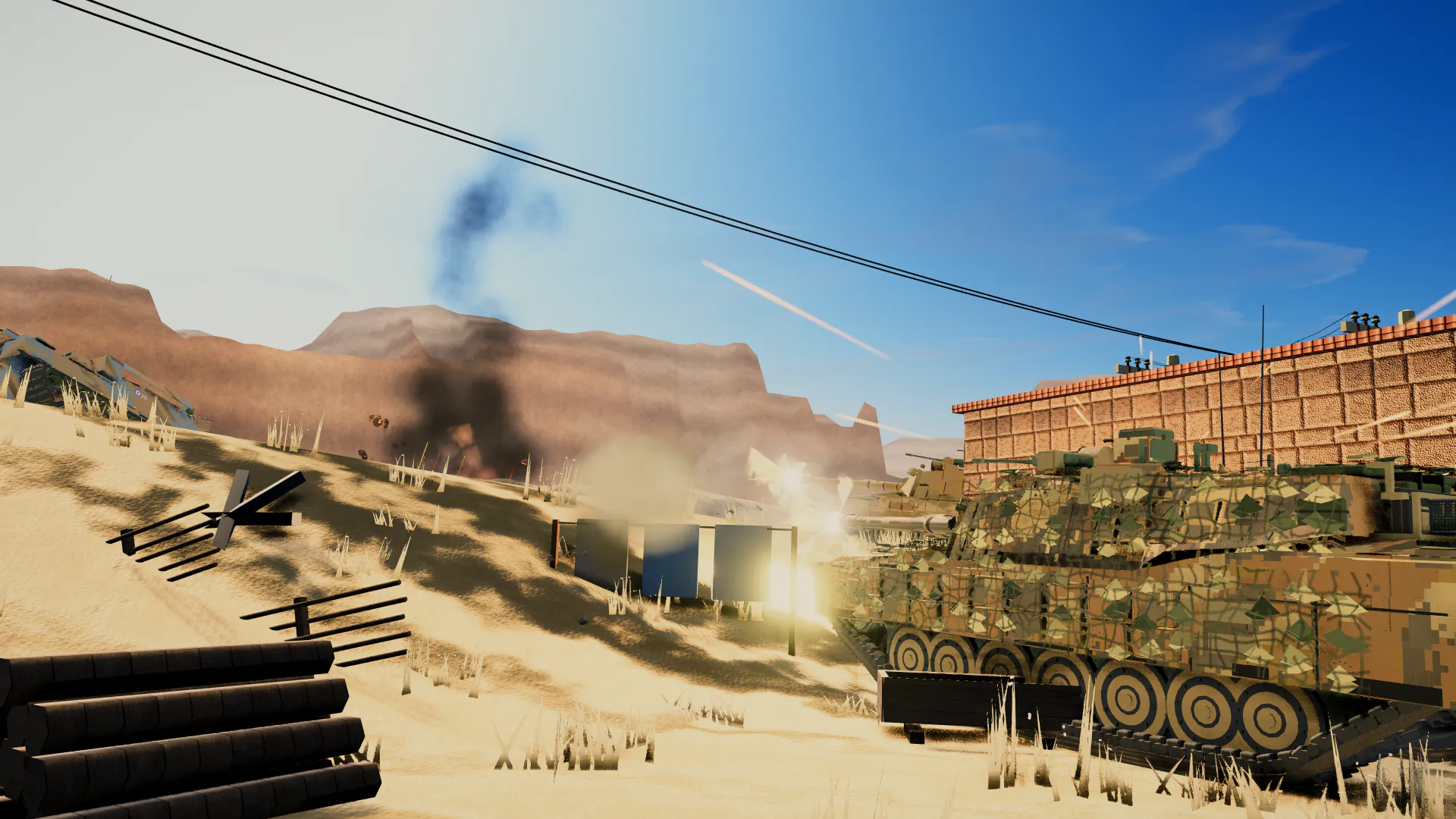
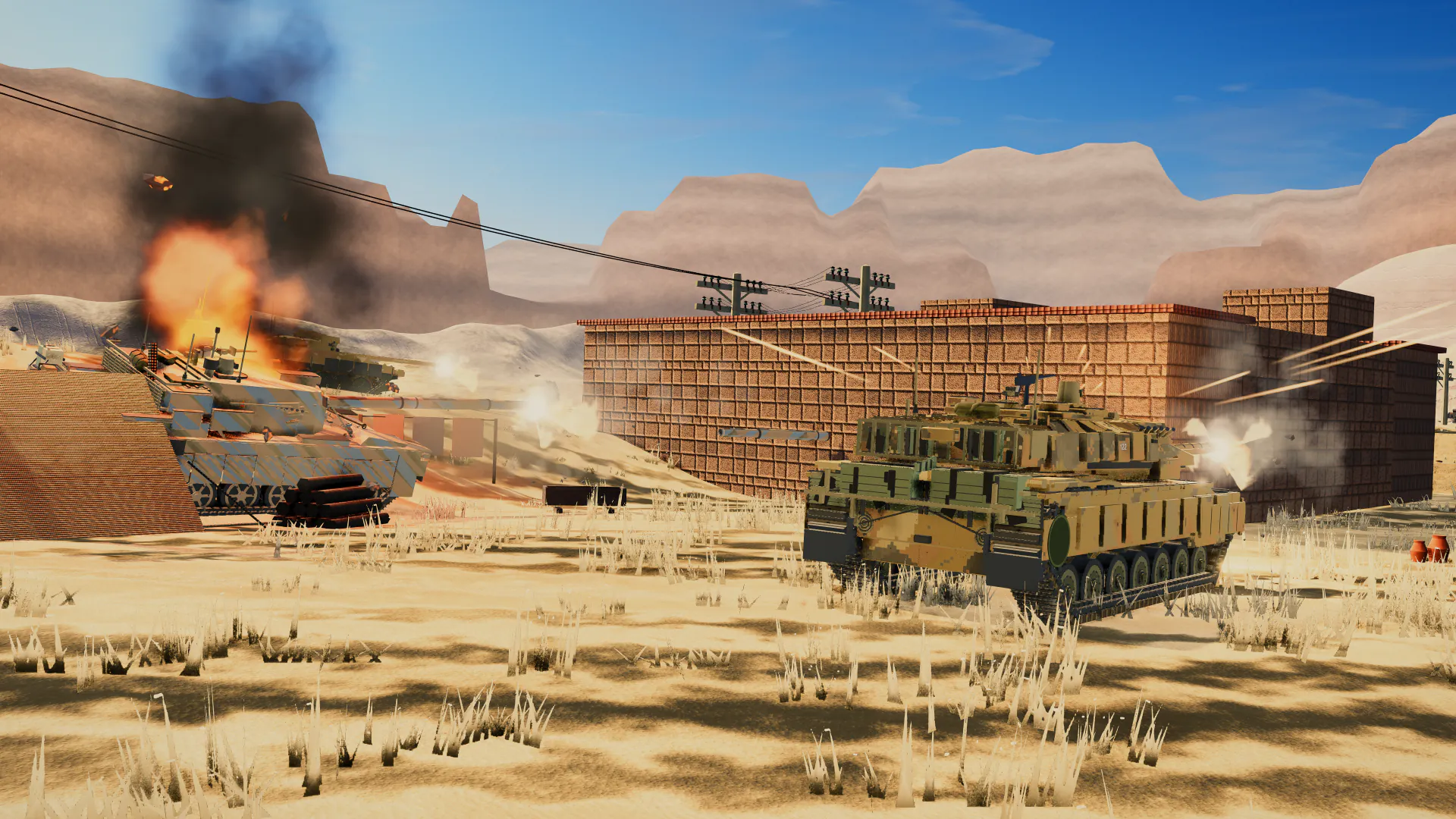
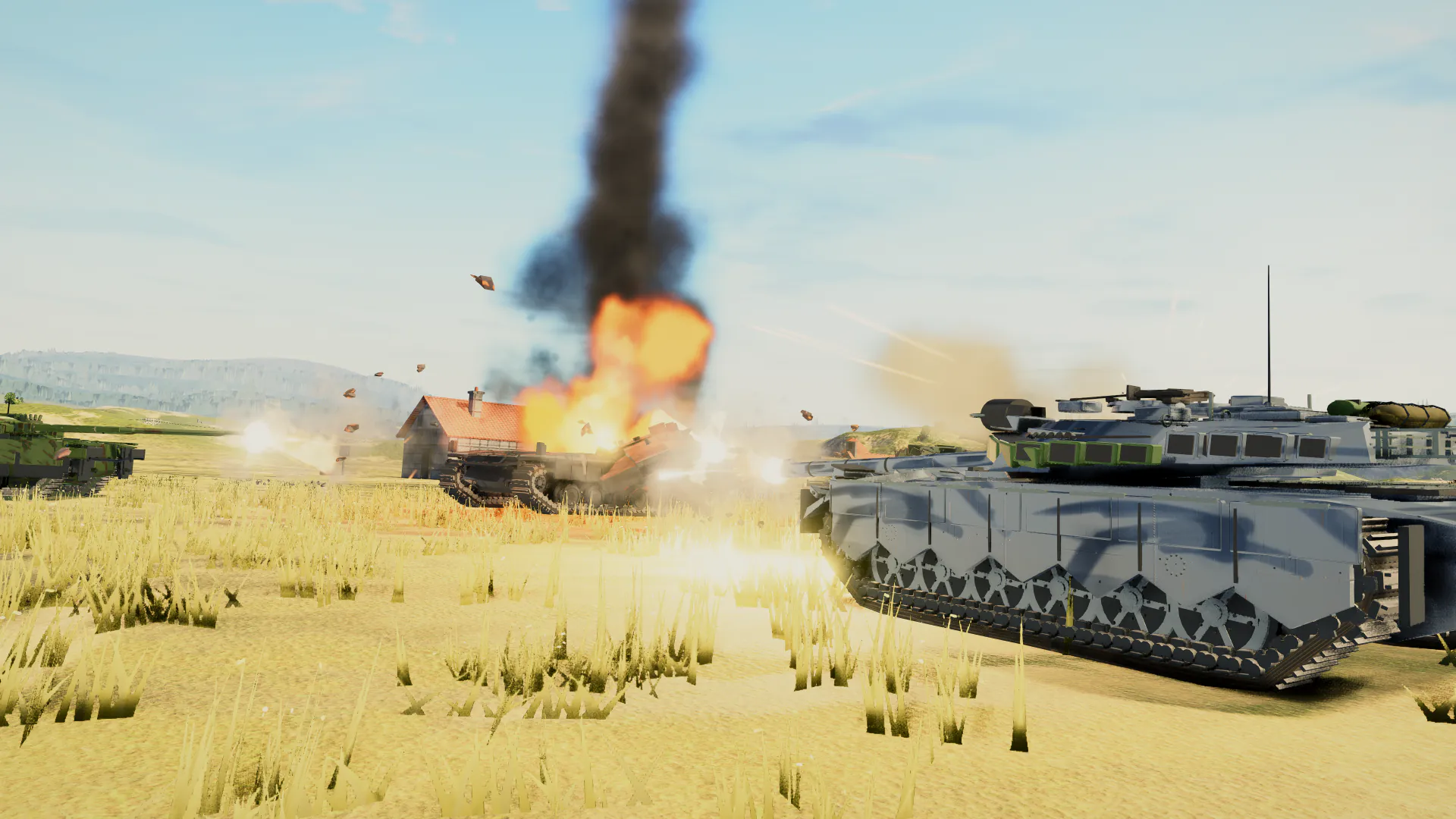
The landing page publishes a larger responsive mosaic. This smaller wall samples the action and foreground collections without repeating the six hero frames.
 |  | 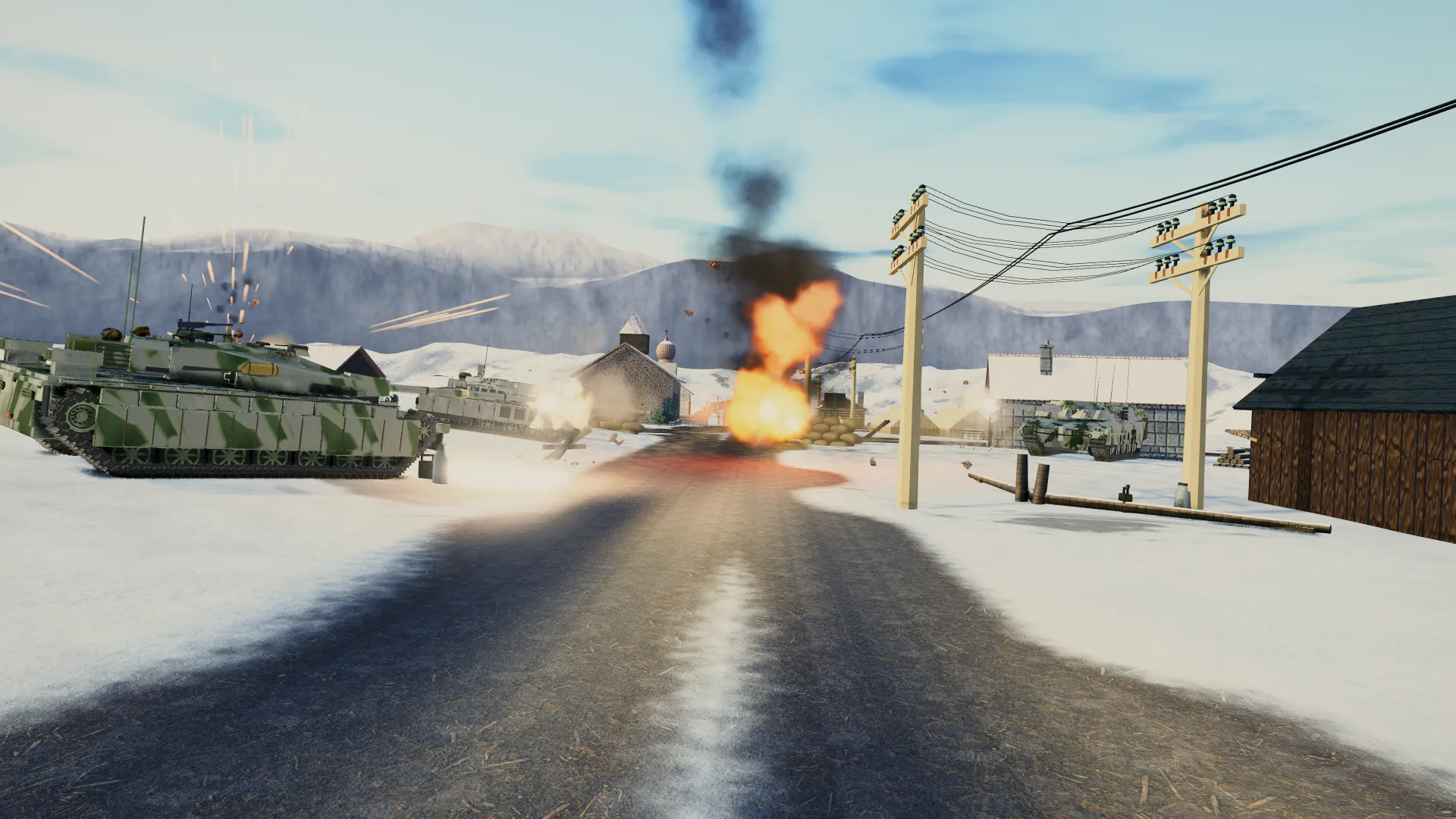 | 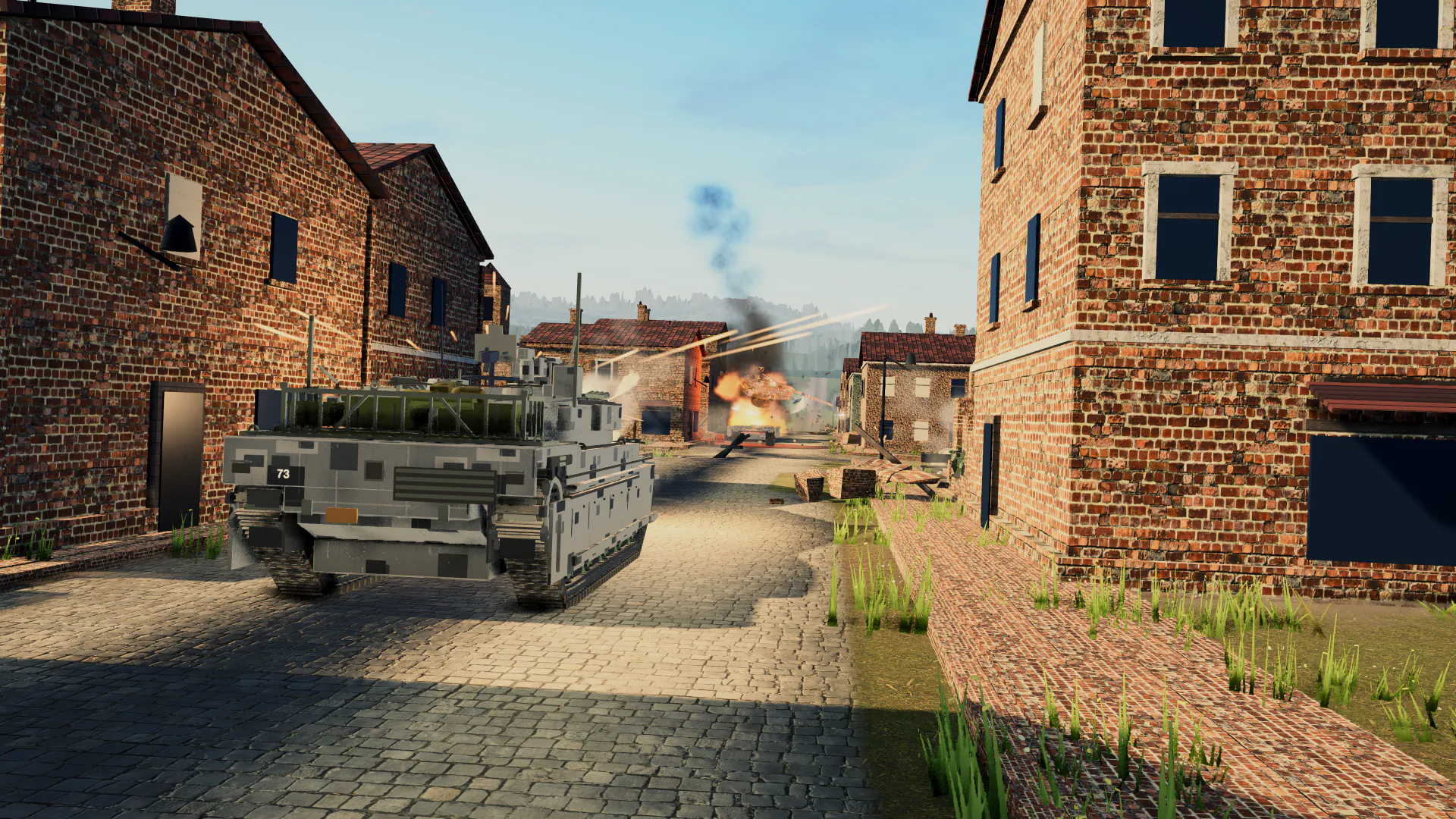 |
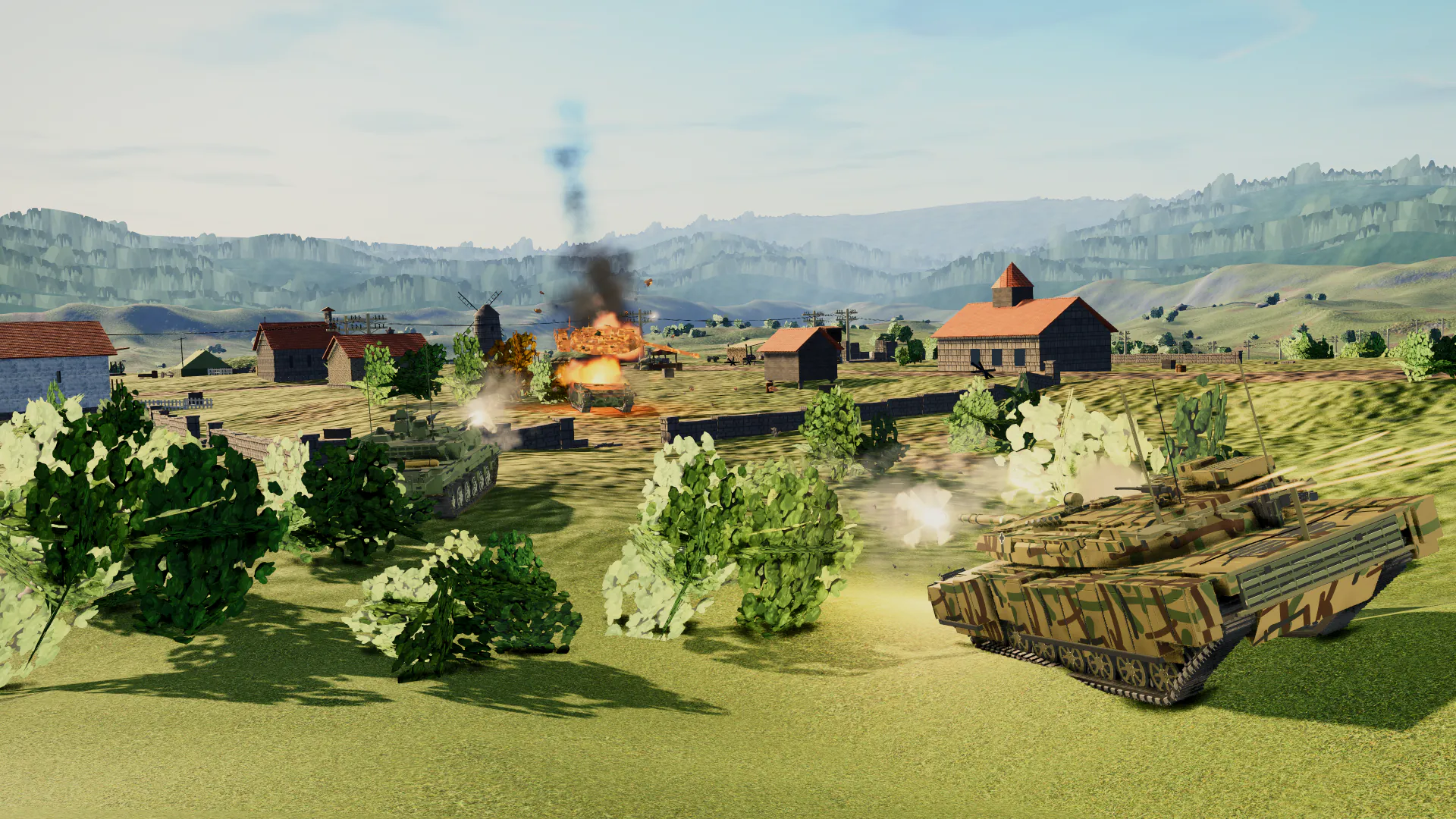 | 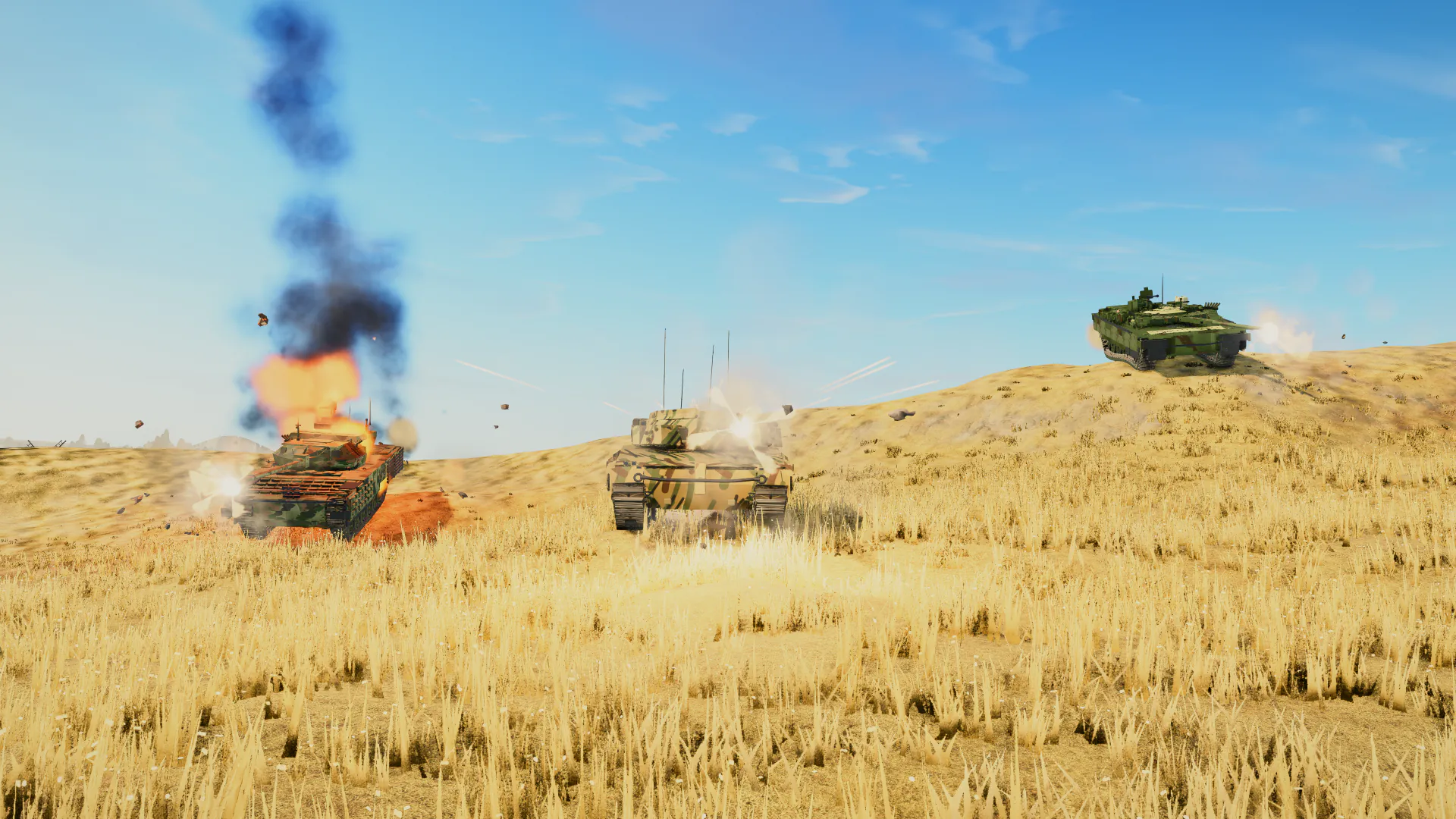 |  | 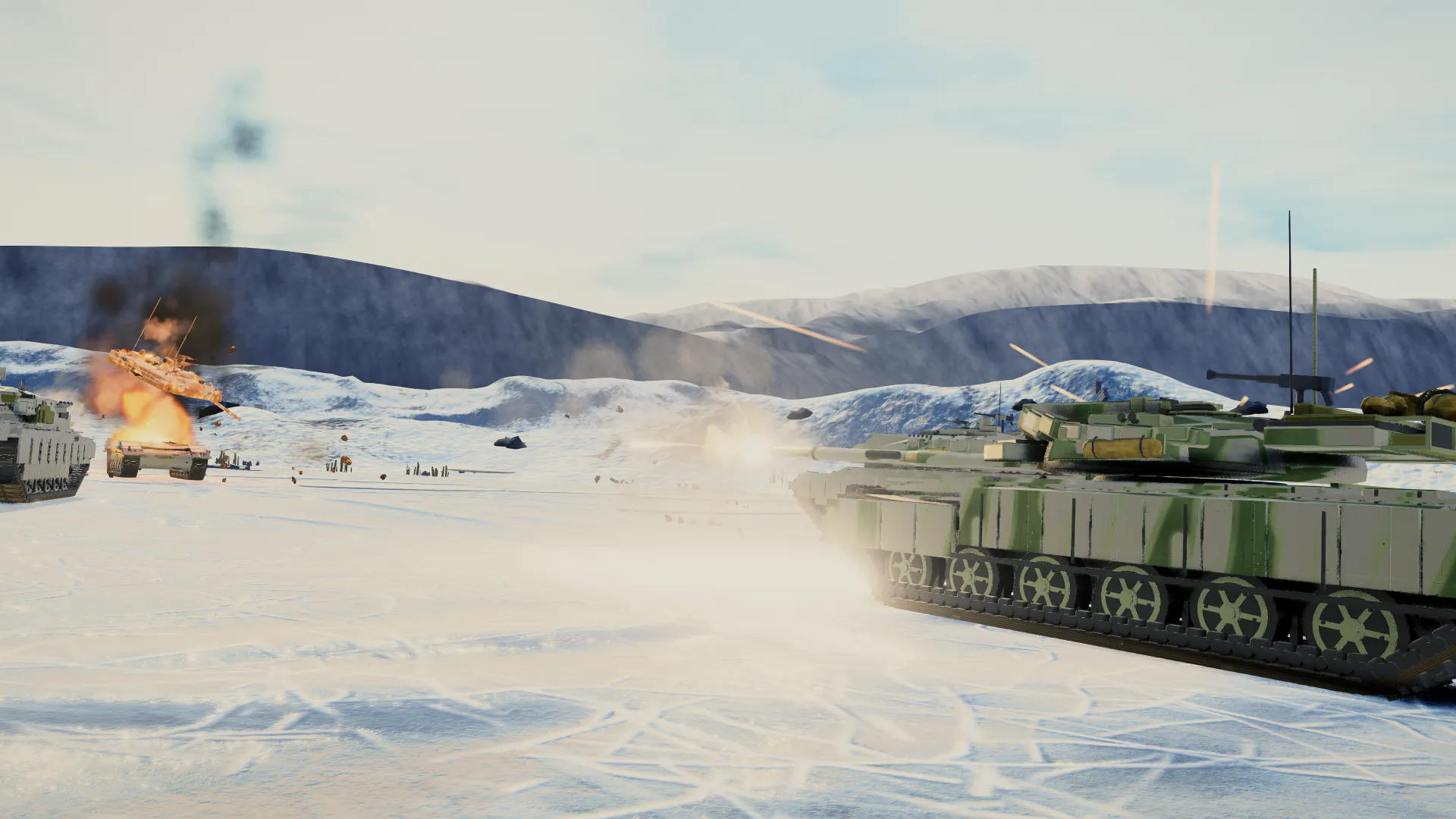 |
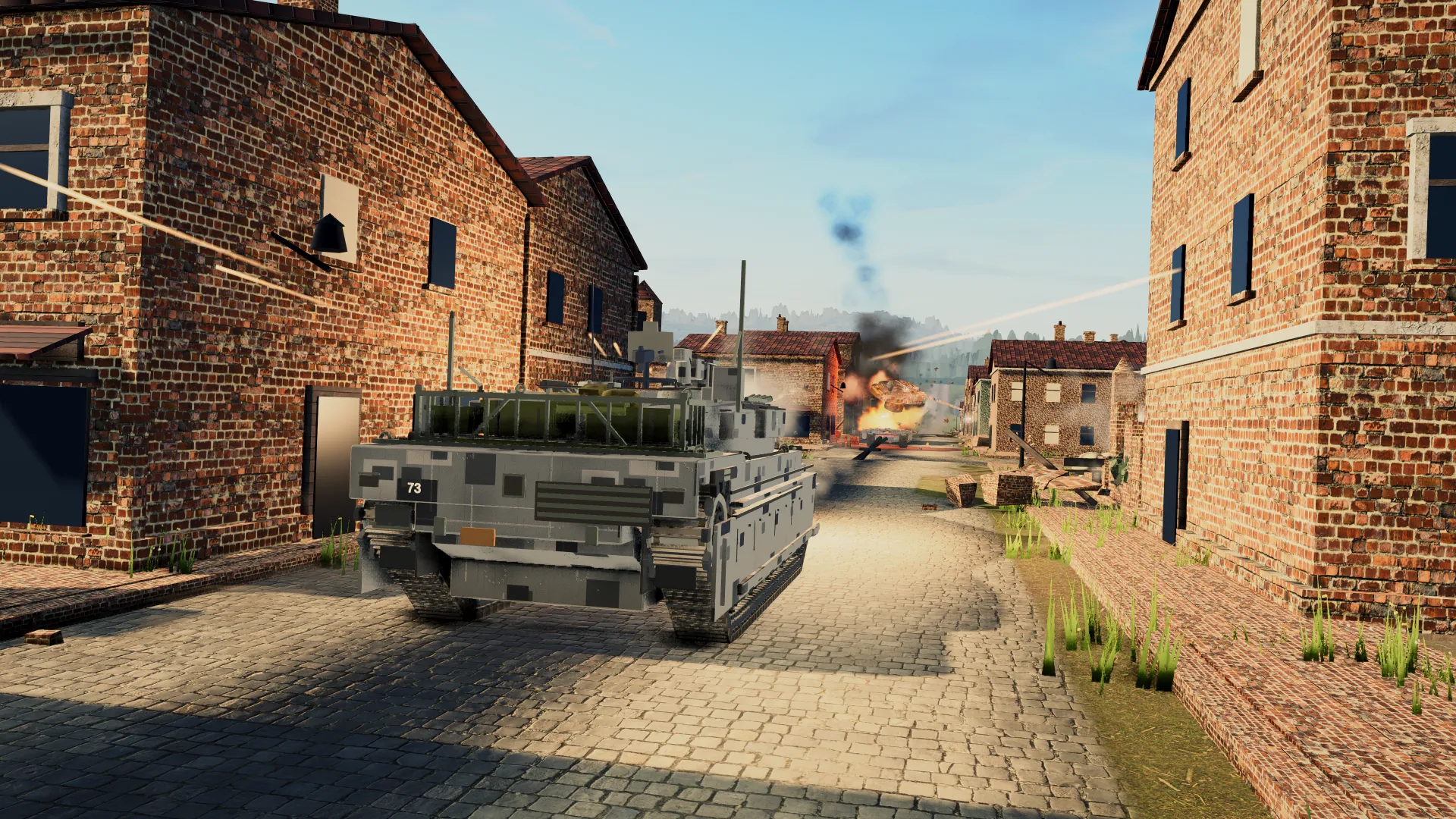 | 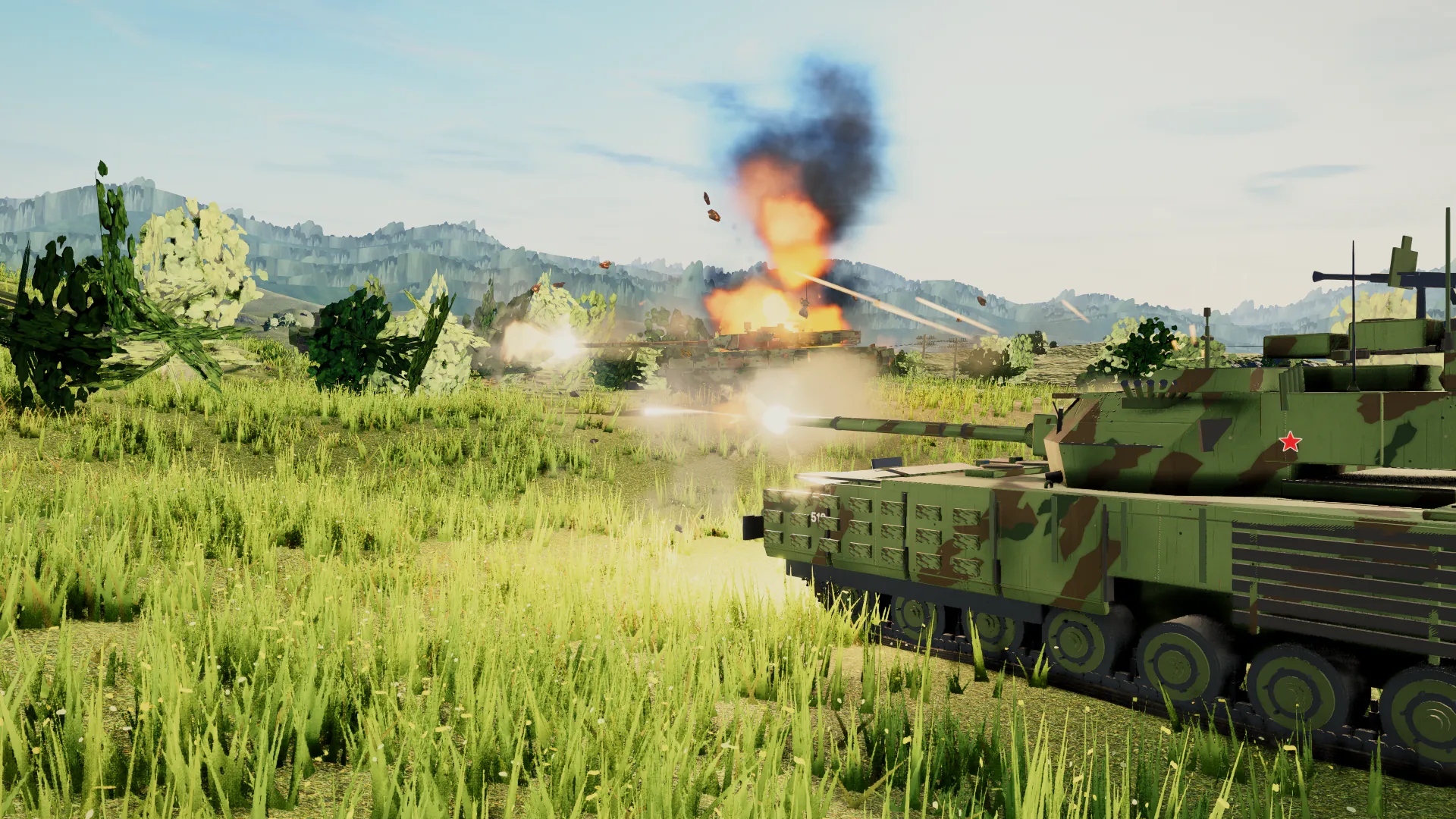 | 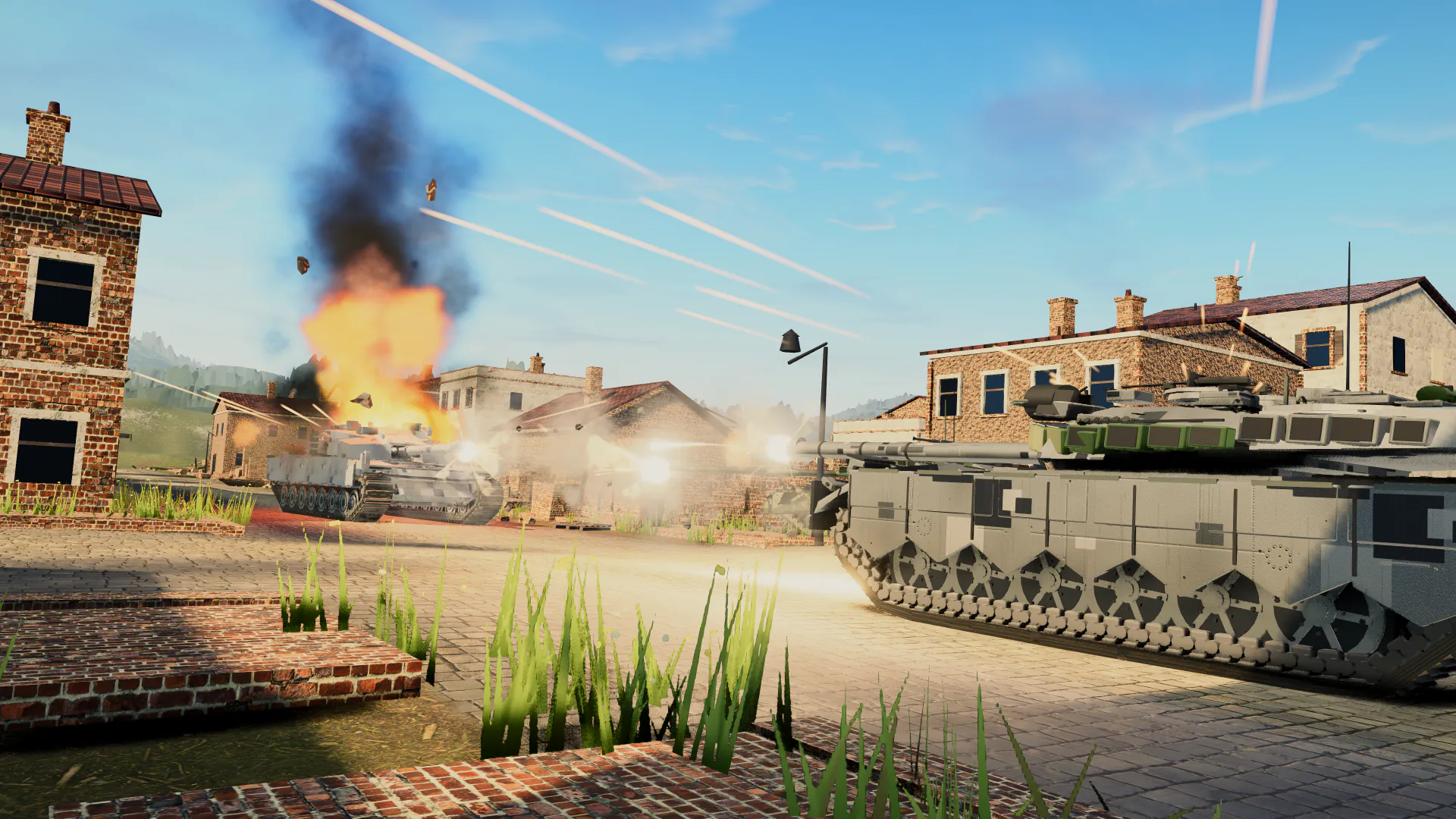 | 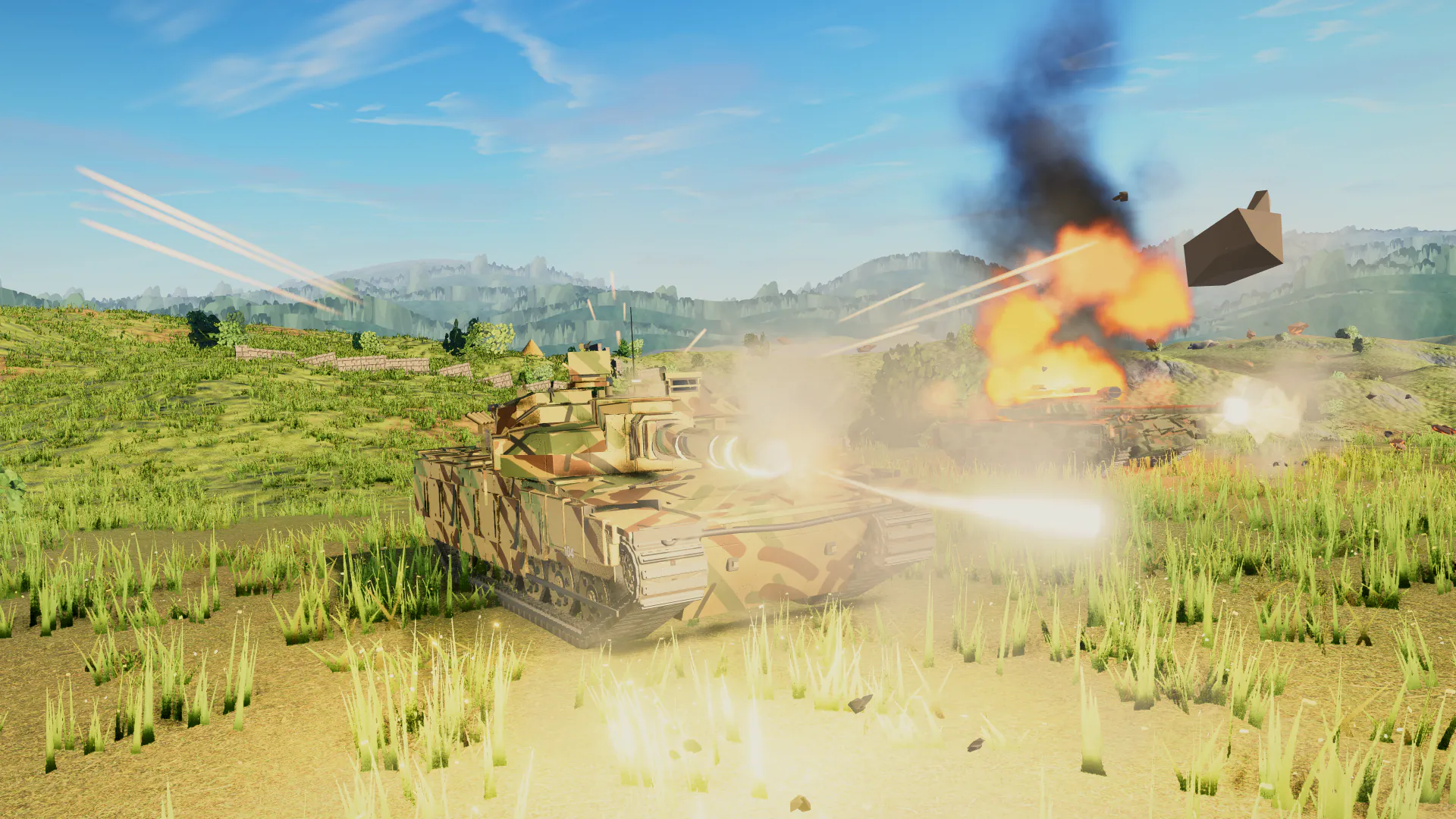 |
Browse the full showcase manifest, open the public Tank Gallery, or build a new shot in Scene Studio.
Architecture
controls ──► deterministic authority ──► filtered state + reliable events ──► presentation
                 │                                                           │
                 ├─ movement / terrain / collision                            ├─ procedural vehicles
                 ├─ aim / ballistics / armor / anatomy                        ├─ tracks / suspension / FX
                 ├─ spotting / concealment / bots                             ├─ HUD / audio / killcam
                 └─ destructibles / match result                              └─ Three.js / post / Studio
src/engine/    renderer, camera, lighting, post, quality, telemetry, GPU recovery
src/world/     thirty maps, terrain, vegetation, props, collision, destruction
src/vehicles/  specs, procedural geometry, materials, profiles, asset verification
src/sim/       DOM-free movement, aiming, ballistics, armor, damage, spotting
src/game/      local composition, bots, input, profile, killcam, Scene Studio
src/net/       protocol, rooms, chat, snapshots, prediction, WebRTC/WebSocket
src/ui/        garage, battle HUD, reports, settings, diagnostics, touch controls
server/        signaling, persistent rooms, dedicated authority, ranked service
Start with Technical overview, Product features, How it works, Multiplayer architecture, Performance, Scene Studio, and Tank Gallery.
Develop and verify
npm install
npx vite
npm test
npm run test:net:browser
npm run tank:native:check
npm run build
npm run build:private
The public build strips quarantined comparison assets. Simulation, networking, browser multiplayer, maps, collision, destruction, rendering policy, UI, mobile controls, vehicle provenance, anatomy, generated assets, and both build variants have executable checks.
Credits and licensing
Kevin B. Liu created, designed, and directed the project. Claude and Codex assisted with research, vehicle authoring, simulation, networking, design, performance, quality assurance, documentation, and deployment. They are development tools, not co-authors or copyright holders.
All gameplay code and every selectable procedural vehicle model are original first-party work by Kevin B. Liu. The
repository is MIT-licensed by default, with procedural vehicle and battlefield source, fleet and map data, generated game
assets, capture recipes, authored media, and first-party branding expressly excluded as proprietary Reserved Content.
Earlier public revisions remain available under the MIT terms under which they were released. See LICENSE, LICENSE-POLICY.md,
NOTICE.md, and docs/ATTRIBUTION.md before reusing any file. External models may be
retained only as quarantined research references; they are never loaded as playable geometry.
Contributors

3,759 commits
See what people are saying
Hacker News (1)
Similar repos


Languages
TypeScript
63.6%
JavaScript
32.9%
HTML
1.9%
Python
1.1%
A World of Tanks-style, Vite-powered, engine-free pure Three.js armored combat simulator resolving plate-level armor, ballistics, modules, spotting, and physics, with 121 tanks and 20 destructible battlefields. Playable entirely in the browser on desktop and mobile devices. Built end-to-end by a multi-agent Claude/Codex pipeline.
403
stars
3,759
commits
TypeScript
primary language
Sep 12, 2026
updated
README
CLAUDE OF TANKS
Free browser-native armored combat built with Three.js. Take 171 production-visible first-party procedural vehicles across 30 battlefields with physical gunnery, plate-level armor, internal damage, guided missiles, magazine autoloaders, terrain-following suspension, X-ray killcams, multiplayer rooms, and Scene Studio.
| |
| |
These are handmade, deterministic scenes captured with the current game renderer—not concept art. The 88-frame showcase archive contains 13 owner-selected scenes, 30 action frames, 30 close foreground compositions, five directed Studio frames, and ten interface states. The landing selection records the six hero frames, feature reel, five camera-rail films, 24-shot mosaic, and directed Strv 122 versus Leclerc sequence now published on the site.
Fight, inspect, and direct
- Fight: enter Standard Battle, Capture the Flag, Zone Control, armed super-speed Turbo Ball, or cooperative Endless Horde in solo or multiplayer, with physical shell travel, armor geometry, component damage, spotting, terrain, collision, destructible structures, persistent wrecks, mode-specific respawns, and authority-owned results.
- Inspect: open any vehicle in Tank Gallery, articulate the live rig, isolate armor or internal anatomy, and export an exact-surface review packet from the same specification used in combat.
- Direct: stage any roster vehicle on any battlefield in Scene Studio, animate actors and cameras, schedule game FX, and capture stills or video from reproducible scene data.
Current release
| Current runtime | |
|---|---|
| Fleet | 171 production-visible and 208 keyed local-development procedural vehicles across 210 saved roster records; 0 GLB-sourced playables |
| Worlds | 30 authored battlefields with shared structures, wrecks, utility networks, loose props, placement, collision, and destruction |
| Authority | Fixed 60 Hz movement, ballistics, armor, damage, spotting, bots, destructibles, and result |
| Presentation | Direct Three.js/WebGL renderer with a measured 120 FPS test path, adaptive quality, stable shadows, SMAA/FSR, and GPU recovery |
| Play | Five battle rules, solo bots, browser-hosted private rooms, LAN rooms, room chat, spectators, respawns, and rematches |
| Platforms | Mouse/keyboard and complete touch controls with safe-area layout and device-adaptive rendering |
| Languages | English and Simplified Chinese across the game, Garage, Studio, Gallery, and public docs; local reviewed catalogs managed with General Translation |
| Tools | Scene Studio, Tank Gallery, exact-surface review, deterministic capture, vehicle anatomy, and release gates |
Language selection lives under Settings → Graphics → Language. See the localization guide for coverage, intentional exclusions, the General Translation workflow, and release gates.
The provenance gate currently reports 181 first-party procedural battle playables, 0 GLB-sourced playables, and 7 tracked external comparison models with exact source records. Comparison inputs are never a playable loading path and are stripped from public builds.
Field footage
Each frame below opens a looping WebM recorded from the game. The camera rails use live vehicles, maps, ballistics, recoil, impacts, sparks, smoke, debris, and destruction effects.
Desert Ground Rush: a low camera threads moving armor and incoming fire. | Urban Overhead Dive: a rail camera drops into a close street engagement. |
Winter Ice Orbit: tanks exchange fire while the camera circles the frozen contact line. | Coastal Shell Skim: a fast lateral pass follows the shell path through a beach assault. |
OPEN THE FULL LANDING SHOWCASE
Vehicle-specific mechanics
The fleet does not reduce every vehicle to the same gun and movement model. Specifications can add their own loading, guidance, suspension, ammunition, anatomy, and control behavior while remaining inside the fixed-step authority.
Swedish siege suspension: the Strv 103A, Strv 103B, and UDES 03 aim their fixed guns by pitching the physical hull. Wheels and both loaded track runs reshape around the solved pose. | Guided weapons: the MBT-70 fires the Shillelagh as its primary round. IFVs carry vehicle-specific TOW, MILAN, Spike, Konkurs, Arkan, and Jyu-MAT launchers. |
Internal anatomy: the Gallery shows crew, gun, turret ring, engine, fuel, ammunition, tracks, optics, radio, and vehicle-specific feed or missile systems. | One shared fleet: battle, garage, Gallery, Studio, bots, icons, diagrams, and technical dossiers read the same vehicle specifications—171 in production or 208 in keyed local development. |
- Magazine autoloaders track ready rounds, intra-magazine cycle time, full replenishment, manual magazine reloads, shell changes, and damage to the loading mechanism. The Leclerc, Type 90, PL-01, and four-round PL-01 105 each carry their own magazine timings.
- Guided missiles travel at visible weapon-specific speeds and steer toward the authority-owned aim point. Launcher damage, rack damage, ammunition count, reload state, guidance, impact, and presentation all remain synchronized.
- Hydropneumatic aim uses the same canonical pose for armor, muzzle, collision, wheels, tracks, remote snapshots, and the camera; there is no separate visual-only tank tilt.
- Free look keeps the sight and turret on target while the camera moves. Hold
Shifton keyboard,RBon a standard controller, or assign another binding in settings.
Combat systems
Battle HUD: dual reticle, ammunition, modules, teams, minimap, chat, performance, and authority-owned combat feedback. | X-ray killcam: the resolved shell path, struck plate, effective protection, penetration result, damaged modules, and crew. |
Physical gunnery: finite world aim, bore convergence, resolved muzzle transform, visible recoil, dispersion, travel time, and gravity. | Destruction: fire, sparks, smoke, detached remnants, persistent wreck state, and pooled effects driven by the completed hit. |
- Plate-level armor resolves the actual plate, slope, impact angle, normalization, ricochet, overmatch, spaced armor, composites, ERA, and separate kinetic/chemical protection.
- Five ammunition families model muzzle velocity, gravity, penetration loss, ricochet, and damage differently.
- Internal anatomy tracks crew, ammunition racks, engine, fuel, gun, turret ring, optics, radio, and tracks.
- Tank-specific mobility combines drivetrain, terrain resistance, per-wheel support, suspension-damped hull attitude, flexible terrain-following tracks, collision, ramming, and crushable cover.
- Real battlefield knowledge combines view range, concealment, movement/firing bloom, foliage, radio sharing, and the 15 m bush rule. Multiplayer authority filters hidden enemies before serializing a snapshot.
Worlds and vehicle design
Thirty worlds: terrain, roads, structures, foliage, fog, sky, lighting, cover, collision, minimap, and dedicated-server descriptors. | Shared world kit: destructible buildings, camps, wreck families, debris, utility lines, loose physical props, and narrow hitboxes. |
Tank Gallery: search 171 production vehicles or 208 with the local development fleet enabled, orbit and articulate the current vehicle rig, inspect armor, modules, and crew, and export exact-surface review packets. | Shared vehicle specification: geometry, armor, modules, gun limits, ammunition, mobility, garage cards, bots, icons, diagrams, Gallery, and Studio. |
Every playable hull, turret, gun, fitting, suspension, road wheel, and track run is assembled by the repository's first-party vehicle pipeline. Vehicle changes pass combat-anatomy receipts, generated technical diagrams, geometry checks, visual fingerprints, and a targeted release gate.
Ten Garage environments
The Garage is its own authored presentation system. Verdant retains the enclosed Motor Pool; the other nine locations use lightweight scene packs derived from a real battlefield's terrain, structures, PBR materials, detailed trees, approach route, horizon, sky, and atmosphere without loading that battlefield. One immutable hero pose keeps the tank and camera comparable across the complete set, while connected maintenance stations, heavy-lift equipment, real fleet exhibits, and full-detail tank parts establish a distinct service story around every platform.
The release gate reviews every location from four orbit angles and responsive layouts, rejects unsupported or floating parts, certifies geometry-derived structure collision, and requires a score of at least 90/100 with bounded draw calls, triangles, transitions, cache residency, and repeated-cycle memory. See the Garage environments guide for the complete visual, lifecycle, and verification contract.
Renderer, drivers, and performance
The renderer treats quality as a device contract instead of a single desktop preset. It selects a GPU/driver-aware profile, caps pixel density, prewarms shader paths, adapts costly effects, and can recover from a black frame or WebGL context loss. The current presentation path combines:
- four quality-scaled, stable texel-anchored shadow cascades with articulation-aware tank shadow hulls;
- fused output grading, anti-aliasing, adaptive render scale, fog/atmosphere, and bounded transparent depth work;
- instance/batch paths for repeated world objects, pooled particles, and explicit GPU resource disposal;
- reusable hot-loop scratch state, fixed-step simulation, render interpolation, and high-refresh presentation;
- an in-game diagnostics surface for FPS, ping, frame timing, draw calls, triangles, memory, network telemetry, quality, and renderer/driver identity.
The renderer reached 120 FPS on the certified test hardware. Actual performance depends on refresh rate, browser, thermal limits, GPU and driver, resolution, and quality level. Combat rules remain fixed at 60 Hz at every render rate.
Presentation: high-resolution scope, stable shadowing, post AA, bounded depth copies, and readable combat overlays. | World rendering: authored layouts and detailed environments use adaptive quality, instancing, culling, and streaming. |
Multiplayer
LAN and browser-hosted private rooms use the shared renderer-free movement and combat rules. No database or dedicated game server is required; Internet room codes need a lightweight signaling endpoint, and restricted networks may need TURN relay. Ranked tooling remains internal rather than a player-facing mode. See multiplayer hosting. Clients send intent, never trusted hits or damage. Snapshot filtering, local prediction/reconciliation, bounded remote interpolation, reliable fire edges, reconnectable room state, and separate control/chat delivery keep a moving and firing 7v7 battle responsive without giving the client authority.
Two screens, opposing sights: paired live 1v1 captures preserve the real battle HUD, authoritative simulation, filtered snapshots, and each commander's view.
Controls at a glance
| Action | Keyboard and mouse | Standard controller |
|---|---|---|
| Drive and steer | WASD or arrow keys | Left stick |
| Aim and fire | Mouse + LMB | Right stick + RT |
| Precision sight | Hold RMB by default; wheel in also enters | LT |
| Free look without moving the turret | Hold Shift or Left Alt | RB |
| Select ammunition | 1 / 2 / 3 | D-pad |
| Vehicle-specific action | E | LB |
| Reload a partial magazine | C | Remappable |
| Consumables | 4 / 5 / 6 | Remappable |
| Handbrake | Space | A |
| Shot log / performance / menu | L / F8 / Esc | Interface controls |
Every desktop action is remappable. RMB can use hold-to-aim, toggle-aim, or classic free-look behavior. Touch devices
receive dedicated movement, aim, scope, fire, ammunition, equipment, and special-action controls rather than a scaled
desktop HUD.
Production tools
For procedural vehicle creation, use the tank-generation handbook: source-file and Gallery-markup intake, measured geometry and negative space, independent review gates, reusable agent briefs, and handoff templates.
Scene Studio: place any roster vehicle on any map, conform it to terrain, set its pose within physical limits, schedule game effects on a deterministic timeline, and capture the current renderer. | Directed destruction: this 1080p timeline moves both actors, fires the Strv 122, resolves impacts, detaches the Leclerc track, and triggers its ammunition-rack blast. |
Scene Studio works with the runtime rather than a separate cinematic renderer. Vehicles, camouflage, camera, lighting, recoil, tracers, explosions, sparks, smoke, debris, wreck state, and timeline events remain scene data. A saved scene can be replayed, scrubbed, edited, exported as JSON, captured as a high-resolution still, or recorded as a video.
Regenerate the current public archive:
npm run shots:battle:generate
npm run shots:battle:grade -- --root shots/marketing-battles-r3
node tools/marketing-shots/capture-multiplayer-dual-screen.mjs
npm run studio:action:render
npm run showcase:publish
npm run showcase:check
npm run landing:media:publish
The capture harness serializes concurrent jobs, starts a clean local game, verifies the requested state, and records
current rendering diagnostics. public/media/showcase-r1/manifest.json defines the source archive;
public/media/landing-r1/manifest.json records the public hero, rail, mosaic, and Studio selections with their actor,
effect, duration, dimensions, and byte receipts.
The same run is reviewed in contact sheets before any frame becomes a 4K master. These collection views make weak silhouettes, obstructed cameras, repeated compositions, and overpowered effects obvious before automated grading.
Action review: ten multi-tank compositions inspected together. | Foreground review: anchor-tank readability checked against battle depth. |
Open all six review sheets and the complete admission contract.
Selected field frames
The landing page publishes a larger responsive mosaic. This smaller wall samples the action and foreground collections without repeating the six hero frames.
| | | |
| | | |
| | | |
Browse the full showcase manifest, open the public Tank Gallery, or build a new shot in Scene Studio.
Architecture
controls ──► deterministic authority ──► filtered state + reliable events ──► presentation
                 │                                                           │
                 ├─ movement / terrain / collision                            ├─ procedural vehicles
                 ├─ aim / ballistics / armor / anatomy                        ├─ tracks / suspension / FX
                 ├─ spotting / concealment / bots                             ├─ HUD / audio / killcam
                 └─ destructibles / match result                              └─ Three.js / post / Studio
src/engine/    renderer, camera, lighting, post, quality, telemetry, GPU recovery
src/world/     thirty maps, terrain, vegetation, props, collision, destruction
src/vehicles/  specs, procedural geometry, materials, profiles, asset verification
src/sim/       DOM-free movement, aiming, ballistics, armor, damage, spotting
src/game/      local composition, bots, input, profile, killcam, Scene Studio
src/net/       protocol, rooms, chat, snapshots, prediction, WebRTC/WebSocket
src/ui/        garage, battle HUD, reports, settings, diagnostics, touch controls
server/        signaling, persistent rooms, dedicated authority, ranked service
Start with Technical overview, Product features, How it works, Multiplayer architecture, Performance, Scene Studio, and Tank Gallery.
Develop and verify
npm install
npx vite
npm test
npm run test:net:browser
npm run tank:native:check
npm run build
npm run build:private
The public build strips quarantined comparison assets. Simulation, networking, browser multiplayer, maps, collision, destruction, rendering policy, UI, mobile controls, vehicle provenance, anatomy, generated assets, and both build variants have executable checks.
Credits and licensing
Kevin B. Liu created, designed, and directed the project. Claude and Codex assisted with research, vehicle authoring, simulation, networking, design, performance, quality assurance, documentation, and deployment. They are development tools, not co-authors or copyright holders.
All gameplay code and every selectable procedural vehicle model are original first-party work by Kevin B. Liu. The
repository is MIT-licensed by default, with procedural vehicle and battlefield source, fleet and map data, generated game
assets, capture recipes, authored media, and first-party branding expressly excluded as proprietary Reserved Content.
Earlier public revisions remain available under the MIT terms under which they were released. See LICENSE, LICENSE-POLICY.md,
NOTICE.md, and docs/ATTRIBUTION.md before reusing any file. External models may be
retained only as quarantined research references; they are never loaded as playable geometry.
See what people are saying
Hacker News (1)
Similar repos
Contributors
3,759 commits
Languages
TypeScript
63.6%
JavaScript
32.9%
HTML
1.9%
Python
1.1%