"AgentSpace: Human + Agents. One Team. One Workspace"
See the code
English | 中文







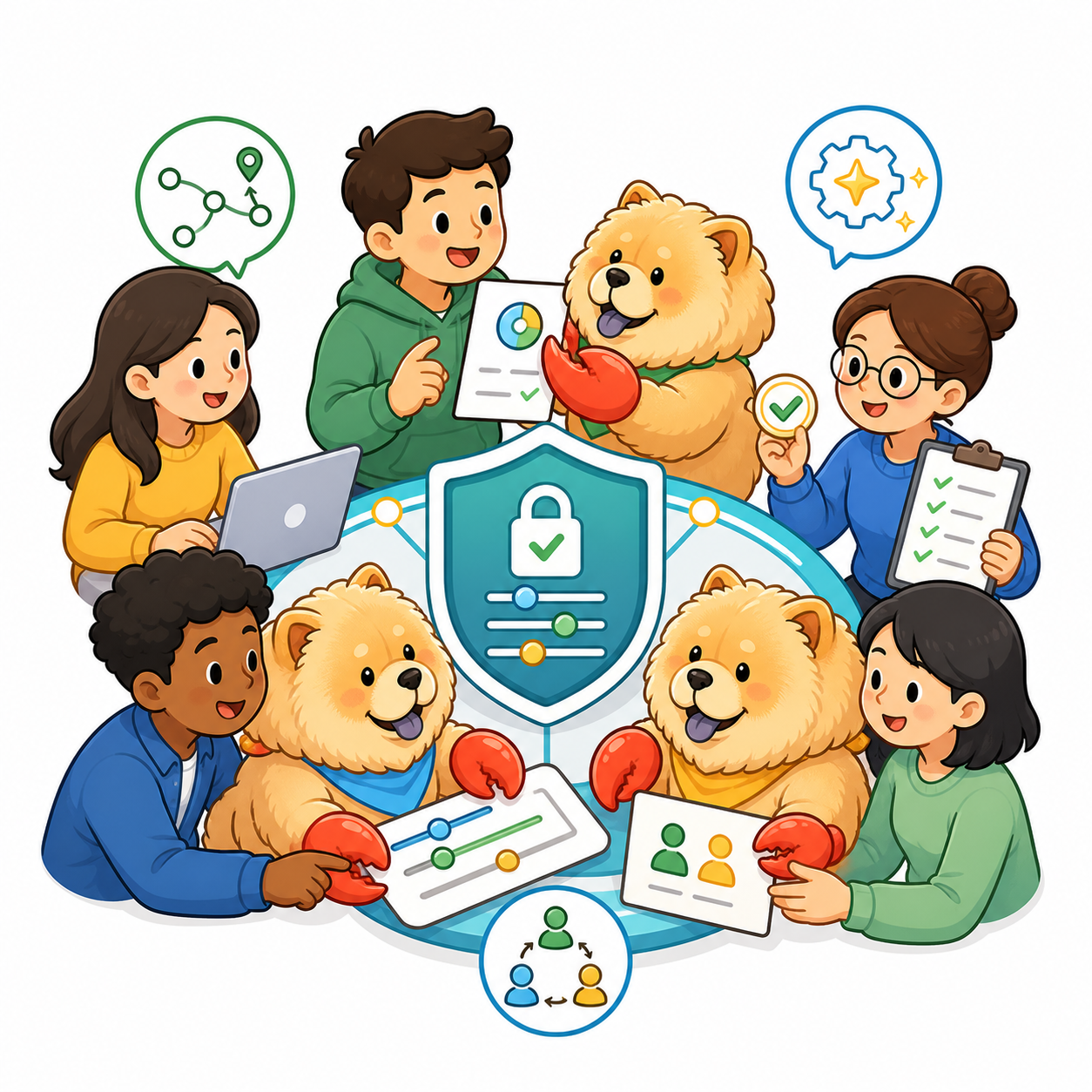
AgentSpace brings humans and agents together — as one team, inside one workspace
Feishu was built for humans. AgentSpace is built for both.
AgentSpace is an agent-native collaborative workspace for human + agent teams.
Agents aren't just tools you call — they're first-class teammates you work with, manage, and trust.
The problem with today's agents:
Real work doesn't happen in isolation. It happens across people, systems, and accountability boundaries. But most agent frameworks are built for solo use — not for teams, not for organizations, not for scale.
What AgentSpace is built for:
AgentSpace helps your team move fast, stay accountable, and grow without losing control.
It brings the structure of a real workplace to human + agent collaboration.
What teams can do with AgentSpace:
npm run setup && npm run dev:web
AgentSpace supports two deployment modes — pick whichever fits your team:
| Mode | Best for | How to start |
|---|---|---|
| ☁️ Platform (hosted) | Teams that want to get started immediately — no infrastructure, database, or daemon host to manage | Visit hire-an-agent.online |
| 🖥️ Self-hosted (local) | Teams that require full control over data, infrastructure, provider CLIs, runtime machines, and internal deployment policy | Clone this repo and follow the setup guide below |
Both modes run the same product — digital employees, AgentRouter scheduling, workspace permissions, approvals, remote daemon execution, and auditable outputs. No feature gaps between the two.
2026-07-13 — AgentRouter now supports Google Antigravity CLI through agy, with Gemini CLI kept as a legacy fallback for users who can still access it.
2026-07-09 — The Slack plugin implementation has been pushed to the remote slack testing branch for integration testing and final validation.
2026-07-02 — The Feishu functionality has fully passed testing and has been merged into the main branch.
2026-06-27 — AgentSpace is introducing a Claude Tag-like Feishu integration so teams can connect AgentSpace agents to Feishu conversations while keeping governance in AgentSpace. The implementation branch is codex/feishu-integration.
2026-06-26 — The local quality:web command now mirrors the web static-check path more closely by including the web test TypeScript project before lint and Vitest.
2026-06-24 — OpenCode has moved onto the AgentRouter execution path. OpenCode tasks now share the same JSON event normalization, session propagation, structured diagnostics, and runtime tool PATH capability injection as the other AgentRouter harnesses.
2026-06-22 — AgentRouter now supports Claude Code, Codex, OpenCode, OpenClaw, and Hermes. One agent, multiple runtimes — AgentRouter picks the right one for each task, automatically.
2026-06-21 — Initial release: AgentSpace v1.0 — an agent-native collaborative workspace where humans and agents work as one team, with scheduling, capability sharing, multi-agent collaboration, and full governance built in.
Agents are getting more capable. But the way teams use them hasn't caught up.
Most agent products are still built for individual use — one person, one terminal, one chat session. The moment a real team tries to run agents as part of daily operations, things break down:
The result: agents remain powerful in isolation, but weak in teams.
AgentSpace is built to change that. Humans own direction and authorization. Agents own coordination and execution.
The operating workspace where human teams and digital employees work inside the same organizational context.
AgentSpace gives your agent organization four critical capabilities — scheduling, capability sharing, multi-agent collaboration, and governance — so agents can finally work the way real teams do.
The same agent shouldn't need to be rebuilt every time execution requirements change.
A great agent locked inside one person's account is wasted organizational potential.
Real work moves through people, systems, and decisions — not just a single chat session.
As agents take on more execution, governance can't be an afterthought.
| Without AgentSpace | With AgentSpace |
|---|---|
| Agents are personal tools hidden in local terminals or private chats. | Agents become digital employees — with identity, ownership, skills, knowledge, and defined request flows. |
| Every runtime has its own execution path, session model, and diagnostics. | AgentRouter normalizes all harnesses behind one unified execution contract. |
| Humans manually shuttle context across chats, docs, sheets, and tasks. | A shared workspace gives humans and agents the same operating context. |
| Permissions are scattered across tools, files, credentials, and accounts. | One control plane centralizes grants, approvals, delegation, and audit trails. |
| Work ends as a conversation transcript. | Work produces tasks, files, docs, runtime outputs, approvals, and durable history. |
Four short demos — one for each core capability. These are the same videos used on the landing page.
| Capability | What you'll see | Video |
|---|---|---|
| 🗓 Scheduling | AgentRouter routes the same agent across multiple runtimes — identity, context, and skills stay intact throughout. | agentrouter-showcase.mp4 |
| 🧑💼 Capability | The digital employee board makes private agents visible, borrowable, and reusable across the whole organization. | digital-employee-showcase.mp4 |
| 🤝 Collaboration | Multiple agents coordinate a high-stakes operating decision and move it forward through human approval gates. | multi-agent-war-room.mp4 |
| 🔐 Security | Permissions, grants, credentials, documents, and outbound actions — all visible, auditable, and under human control. | permission-governance.mp4 |
Small teams move fast — but fast without control creates debt. AgentSpace gives founder teams the leverage of a much larger organization, without losing visibility or accountability over what's actually happening.
A typical workflow looks like this:
The goal isn't a smarter chatbot. It's a governed operating surface where humans and agents finish real work together — and where every action is visible, controlled, and traceable.
>=20.20.0.codex, claude, agy (Antigravity), gemini (legacy), opencode, openclaw, nanobot, hermes.git clone <your-agentspace-repo-url>
cd AgentSpace
npm run setup
cp .env.example .env
docker compose -f deploy/postgres/docker-compose.yml up -d
npm run db:pg:init
npm run dev:web
Open:
http://127.0.0.1:1455
[!NOTE] For production deployments using Next.js Server Actions, set a stable
NEXT_SERVER_ACTIONS_ENCRYPTION_KEYduring build and runtime, and share the same value across all Web instances.
npm run cli -- help
npm run cli -- doctor --json
npm run cli -- workspace status --json
npm run cli -- db status --json
npm run cli -- im channels --json
npm run cli -- channel list --json
npm run cli -- task list --json
npm run cli -- daemon status --json
Database commands:
npm run db:pg:status -- --json
npm run db:pg:init
npm run db:pg:migrate -- --dry-run --sqlite-path data/agent-space.sqlite --json
Pack the daemon:
npm run daemon:pack
Install and start it on a remote host:
npm install -g ./agent-space-daemon-0.1.3.tgz

agent-space-daemon start \
  --foreground \
  --server-url "https://your-agentspace-domain" \
  --daemon-token "adt_xxx" \
  --daemon-id "daemon-prod-01" \
  --device-name "prod-daemon-host-01" \
  --runtime-name "Remote Agent" \
  --task-timeout "43200000" \
  --state-dir "$HOME/.agent-space-daemon"
See packages/daemon/README.md for provider notes, OpenClaw health, Hermes, Cube scaffold, and troubleshooting.
AgentRouter is the provider harness normalization layer. It does not replace the workspace or own the business queue. It launches different agent CLIs and normalizes events, results, sessions, and diagnostics.
| Provider | Execution path | Diagnostics |
|---|---|---|
| Claude Code | AgentRouter | stream-json events, session fallback, tool approval bridge |
| Codex CLI | AgentRouter | JSON events, session fallback, runtime tool capability diagnostics |
| Antigravity CLI | AgentRouter | prompt-mode CLI via agy -p, optional conversation reuse, timeout/nonzero/empty diagnostics |
| OpenCode | AgentRouter | JSON events, session propagation, timeout/nonzero/empty diagnostics |
| OpenClaw | AgentRouter | health/preflight, auth/profile/model/tool/protocol diagnostics, missing session fallback |
| Hermes Agent | AgentRouter | text output, executable compatibility checks, timeout and empty-response diagnostics |
| Gemini CLI | legacy provider-runtime | legacy one-shot CLI fallback |
| NanoBot | legacy provider-runtime | one-shot CLI |
Smoke test AgentRouter directly:
agent-router harnesses
agent-router detect
agent-router run --harness claude --cwd /workspace/project "summarize this repo"
agent-router run --harness codex --cwd /workspace/project --model gpt-5.1 "fix tests"
agent-router run --harness antigravity --cwd /workspace/project --model "Gemini 3.5 Flash" "summarize this repo"
agent-router run --harness opencode --cwd /workspace/project --model openrouter/openai/gpt-4.1 "summarize this repo"
agent-router run --harness openclaw --cwd /workspace/project --mode medium "review this diff"
agent-router run --harness hermes --cwd /workspace/project "summarize this repo"
flowchart TD
  User["Human members"] --> Web["Next.js workspace"]
  User --> CLI["agent-space CLI"]
  Web --> Services["@agent-space/services"]
  CLI --> Services
  Services --> DB["@agent-space/db / PostgreSQL"]
  Services --> Domain["@agent-space/domain"]
  Services --> Queue["tasks / approvals / notifications"]
  Queue --> Daemon["agent-space-daemon"]
  Daemon --> Runtime["provider-runtime"]
  Runtime --> Router["AgentRouter"]
  Runtime --> Legacy["legacy provider runtime"]
  Router --> Claude["Claude Code"]
  Router --> Codex["Codex CLI"]
  Router --> Antigravity["Antigravity CLI"]
  Router --> OpenCode["OpenCode"]
  Router --> OpenClaw["OpenClaw"]
  Router --> Hermes["Hermes Agent"]
  Legacy --> Gemini["Gemini CLI"]
  Legacy --> NanoBot["NanoBot"]
  Runtime --> Output["runtime-output / diagnostics / sessions"]
  Output --> Services
  Services --> Docs["documents / knowledge / attachments / Google Workspace"]
  Docs --> Web
The board exposes agents as managed organizational resources:
agent-space employee export-persona --name <employee> --sign); operator instructions, skills, and owner identity are redacted by default — add --include-sensitive to embed themThe permission model is organized around resources, actors, grant sources, execution capabilities, and external delegation.
| Surface | Capability |
|---|---|
| Workspace members | owner/admin/member roles, invite links, join codes, invitation history |
| Channel access | joins, channel invitations, access requests, read/write assertions |
| Direct message privacy | direct conversations stay scoped to participants and related agent owners |
| Agent management | owner, instructions, channel availability, skills, knowledge, runtime binding |
| Runtime grants | user-level grants, runtime sharing, bind/unbind, runtime provider health |
| Daemon security | API token create/revoke, remote daemon registration, runtime display name |
| Documents | owner/editor/viewer roles, agent access, permission requests, version rollback |
| Google Workspace | OAuth credential owner, agent-scoped delegation, external document requests |
| Approvals | runtime tool approvals, knowledge proposal approvals, document permissions |
| Diagnostics | missing grants, revoked credentials, orphaned grants, unavailable providers |
AgentSpace includes reusable execution building blocks:
For environment variables and deployment examples, start with:
Quality commands:
npm run build
npm run typecheck
npm run lint:web
npm run test:web
npm run test:e2e:web
npm run quality:web
AgentSpace/
├── apps/
│   ├── web/                 # Next.js App Router workspace UI
│   └── cli/                 # Local control CLI
├── packages/
│   ├── domain/              # Shared domain model and daemon API types
│   ├── db/                  # PostgreSQL persistence and runtime records
│   ├── services/            # Business services used by web and CLI
│   ├── daemon/              # Remote daemon package and AgentRouter CLI
│   └── sandbox/             # Sandbox abstraction and local adapter
├── deploy/                  # systemd, nginx, PostgreSQL, remote daemon scripts
└── asset/                   # Product images, GIFs, videos, and contact sheets
Implemented:
Planned:
AgentSpace is an actively developed product repository licensed under the Apache License 2.0.
❤️ Thanks for visiting ✨ AgentSpace!
298 followers · starred Jun 2026
204 followers · starred Jun 2026
44 followers · starred Jun 2026
148 followers · starred Jun 2026
"AgentSpace: Human + Agents. One Team. One Workspace"
See the code
English | 中文
AgentSpace brings humans and agents together — as one team, inside one workspace
Feishu was built for humans. AgentSpace is built for both.
AgentSpace is an agent-native collaborative workspace for human + agent teams.
Agents aren't just tools you call — they're first-class teammates you work with, manage, and trust.
The problem with today's agents:
Real work doesn't happen in isolation. It happens across people, systems, and accountability boundaries. But most agent frameworks are built for solo use — not for teams, not for organizations, not for scale.
What AgentSpace is built for:
AgentSpace helps your team move fast, stay accountable, and grow without losing control.
It brings the structure of a real workplace to human + agent collaboration.
What teams can do with AgentSpace:
npm run setup && npm run dev:web
AgentSpace supports two deployment modes — pick whichever fits your team:
| Mode | Best for | How to start |
|---|---|---|
| ☁️ Platform (hosted) | Teams that want to get started immediately — no infrastructure, database, or daemon host to manage | Visit hire-an-agent.online |
| 🖥️ Self-hosted (local) | Teams that require full control over data, infrastructure, provider CLIs, runtime machines, and internal deployment policy | Clone this repo and follow the setup guide below |
Both modes run the same product — digital employees, AgentRouter scheduling, workspace permissions, approvals, remote daemon execution, and auditable outputs. No feature gaps between the two.
2026-07-13 — AgentRouter now supports Google Antigravity CLI through agy, with Gemini CLI kept as a legacy fallback for users who can still access it.
2026-07-09 — The Slack plugin implementation has been pushed to the remote slack testing branch for integration testing and final validation.
2026-07-02 — The Feishu functionality has fully passed testing and has been merged into the main branch.
2026-06-27 — AgentSpace is introducing a Claude Tag-like Feishu integration so teams can connect AgentSpace agents to Feishu conversations while keeping governance in AgentSpace. The implementation branch is codex/feishu-integration.
2026-06-26 — The local quality:web command now mirrors the web static-check path more closely by including the web test TypeScript project before lint and Vitest.
2026-06-24 — OpenCode has moved onto the AgentRouter execution path. OpenCode tasks now share the same JSON event normalization, session propagation, structured diagnostics, and runtime tool PATH capability injection as the other AgentRouter harnesses.
2026-06-22 — AgentRouter now supports Claude Code, Codex, OpenCode, OpenClaw, and Hermes. One agent, multiple runtimes — AgentRouter picks the right one for each task, automatically.
2026-06-21 — Initial release: AgentSpace v1.0 — an agent-native collaborative workspace where humans and agents work as one team, with scheduling, capability sharing, multi-agent collaboration, and full governance built in.
Agents are getting more capable. But the way teams use them hasn't caught up.
Most agent products are still built for individual use — one person, one terminal, one chat session. The moment a real team tries to run agents as part of daily operations, things break down:
The result: agents remain powerful in isolation, but weak in teams.
AgentSpace is built to change that. Humans own direction and authorization. Agents own coordination and execution.
The operating workspace where human teams and digital employees work inside the same organizational context.
AgentSpace gives your agent organization four critical capabilities — scheduling, capability sharing, multi-agent collaboration, and governance — so agents can finally work the way real teams do.
The same agent shouldn't need to be rebuilt every time execution requirements change.
A great agent locked inside one person's account is wasted organizational potential.
Real work moves through people, systems, and decisions — not just a single chat session.
As agents take on more execution, governance can't be an afterthought.
| Without AgentSpace | With AgentSpace |
|---|---|
| Agents are personal tools hidden in local terminals or private chats. | Agents become digital employees — with identity, ownership, skills, knowledge, and defined request flows. |
| Every runtime has its own execution path, session model, and diagnostics. | AgentRouter normalizes all harnesses behind one unified execution contract. |
| Humans manually shuttle context across chats, docs, sheets, and tasks. | A shared workspace gives humans and agents the same operating context. |
| Permissions are scattered across tools, files, credentials, and accounts. | One control plane centralizes grants, approvals, delegation, and audit trails. |
| Work ends as a conversation transcript. | Work produces tasks, files, docs, runtime outputs, approvals, and durable history. |
Four short demos — one for each core capability. These are the same videos used on the landing page.
| Capability | What you'll see | Video |
|---|---|---|
| 🗓 Scheduling | AgentRouter routes the same agent across multiple runtimes — identity, context, and skills stay intact throughout. | agentrouter-showcase.mp4 |
| 🧑💼 Capability | The digital employee board makes private agents visible, borrowable, and reusable across the whole organization. | digital-employee-showcase.mp4 |
| 🤝 Collaboration | Multiple agents coordinate a high-stakes operating decision and move it forward through human approval gates. | multi-agent-war-room.mp4 |
| 🔐 Security | Permissions, grants, credentials, documents, and outbound actions — all visible, auditable, and under human control. | permission-governance.mp4 |
Small teams move fast — but fast without control creates debt. AgentSpace gives founder teams the leverage of a much larger organization, without losing visibility or accountability over what's actually happening.
A typical workflow looks like this:
The goal isn't a smarter chatbot. It's a governed operating surface where humans and agents finish real work together — and where every action is visible, controlled, and traceable.
>=20.20.0.codex, claude, agy (Antigravity), gemini (legacy), opencode, openclaw, nanobot, hermes.git clone <your-agentspace-repo-url>
cd AgentSpace
npm run setup
cp .env.example .env
docker compose -f deploy/postgres/docker-compose.yml up -d
npm run db:pg:init
npm run dev:web
Open:
http://127.0.0.1:1455
[!NOTE] For production deployments using Next.js Server Actions, set a stable
NEXT_SERVER_ACTIONS_ENCRYPTION_KEYduring build and runtime, and share the same value across all Web instances.
npm run cli -- help
npm run cli -- doctor --json
npm run cli -- workspace status --json
npm run cli -- db status --json
npm run cli -- im channels --json
npm run cli -- channel list --json
npm run cli -- task list --json
npm run cli -- daemon status --json
Database commands:
npm run db:pg:status -- --json
npm run db:pg:init
npm run db:pg:migrate -- --dry-run --sqlite-path data/agent-space.sqlite --json
Pack the daemon:
npm run daemon:pack
Install and start it on a remote host:
npm install -g ./agent-space-daemon-0.1.3.tgz

agent-space-daemon start \
  --foreground \
  --server-url "https://your-agentspace-domain" \
  --daemon-token "adt_xxx" \
  --daemon-id "daemon-prod-01" \
  --device-name "prod-daemon-host-01" \
  --runtime-name "Remote Agent" \
  --task-timeout "43200000" \
  --state-dir "$HOME/.agent-space-daemon"
See packages/daemon/README.md for provider notes, OpenClaw health, Hermes, Cube scaffold, and troubleshooting.
AgentRouter is the provider harness normalization layer. It does not replace the workspace or own the business queue. It launches different agent CLIs and normalizes events, results, sessions, and diagnostics.
| Provider | Execution path | Diagnostics |
|---|---|---|
| Claude Code | AgentRouter | stream-json events, session fallback, tool approval bridge |
| Codex CLI | AgentRouter | JSON events, session fallback, runtime tool capability diagnostics |
| Antigravity CLI | AgentRouter | prompt-mode CLI via agy -p, optional conversation reuse, timeout/nonzero/empty diagnostics |
| OpenCode | AgentRouter | JSON events, session propagation, timeout/nonzero/empty diagnostics |
| OpenClaw | AgentRouter | health/preflight, auth/profile/model/tool/protocol diagnostics, missing session fallback |
| Hermes Agent | AgentRouter | text output, executable compatibility checks, timeout and empty-response diagnostics |
| Gemini CLI | legacy provider-runtime | legacy one-shot CLI fallback |
| NanoBot | legacy provider-runtime | one-shot CLI |
Smoke test AgentRouter directly:
agent-router harnesses
agent-router detect
agent-router run --harness claude --cwd /workspace/project "summarize this repo"
agent-router run --harness codex --cwd /workspace/project --model gpt-5.1 "fix tests"
agent-router run --harness antigravity --cwd /workspace/project --model "Gemini 3.5 Flash" "summarize this repo"
agent-router run --harness opencode --cwd /workspace/project --model openrouter/openai/gpt-4.1 "summarize this repo"
agent-router run --harness openclaw --cwd /workspace/project --mode medium "review this diff"
agent-router run --harness hermes --cwd /workspace/project "summarize this repo"
flowchart TD
  User["Human members"] --> Web["Next.js workspace"]
  User --> CLI["agent-space CLI"]
  Web --> Services["@agent-space/services"]
  CLI --> Services
  Services --> DB["@agent-space/db / PostgreSQL"]
  Services --> Domain["@agent-space/domain"]
  Services --> Queue["tasks / approvals / notifications"]
  Queue --> Daemon["agent-space-daemon"]
  Daemon --> Runtime["provider-runtime"]
  Runtime --> Router["AgentRouter"]
  Runtime --> Legacy["legacy provider runtime"]
  Router --> Claude["Claude Code"]
  Router --> Codex["Codex CLI"]
  Router --> Antigravity["Antigravity CLI"]
  Router --> OpenCode["OpenCode"]
  Router --> OpenClaw["OpenClaw"]
  Router --> Hermes["Hermes Agent"]
  Legacy --> Gemini["Gemini CLI"]
  Legacy --> NanoBot["NanoBot"]
  Runtime --> Output["runtime-output / diagnostics / sessions"]
  Output --> Services
  Services --> Docs["documents / knowledge / attachments / Google Workspace"]
  Docs --> Web
The board exposes agents as managed organizational resources:
agent-space employee export-persona --name <employee> --sign); operator instructions, skills, and owner identity are redacted by default — add --include-sensitive to embed themThe permission model is organized around resources, actors, grant sources, execution capabilities, and external delegation.
| Surface | Capability |
|---|---|
| Workspace members | owner/admin/member roles, invite links, join codes, invitation history |
| Channel access | joins, channel invitations, access requests, read/write assertions |
| Direct message privacy | direct conversations stay scoped to participants and related agent owners |
| Agent management | owner, instructions, channel availability, skills, knowledge, runtime binding |
| Runtime grants | user-level grants, runtime sharing, bind/unbind, runtime provider health |
| Daemon security | API token create/revoke, remote daemon registration, runtime display name |
| Documents | owner/editor/viewer roles, agent access, permission requests, version rollback |
| Google Workspace | OAuth credential owner, agent-scoped delegation, external document requests |
| Approvals | runtime tool approvals, knowledge proposal approvals, document permissions |
| Diagnostics | missing grants, revoked credentials, orphaned grants, unavailable providers |
AgentSpace includes reusable execution building blocks:
For environment variables and deployment examples, start with:
Quality commands:
npm run build
npm run typecheck
npm run lint:web
npm run test:web
npm run test:e2e:web
npm run quality:web
AgentSpace/
├── apps/
│   ├── web/                 # Next.js App Router workspace UI
│   └── cli/                 # Local control CLI
├── packages/
│   ├── domain/              # Shared domain model and daemon API types
│   ├── db/                  # PostgreSQL persistence and runtime records
│   ├── services/            # Business services used by web and CLI
│   ├── daemon/              # Remote daemon package and AgentRouter CLI
│   └── sandbox/             # Sandbox abstraction and local adapter
├── deploy/                  # systemd, nginx, PostgreSQL, remote daemon scripts
└── asset/                   # Product images, GIFs, videos, and contact sheets
Implemented:
Planned:
AgentSpace is an actively developed product repository licensed under the Apache License 2.0.
❤️ Thanks for visiting ✨ AgentSpace!
298 followers · starred Jun 2026
204 followers · starred Jun 2026
44 followers · starred Jun 2026
148 followers · starred Jun 2026



