
Boosted trees in Julia
See the codeREADME
EvoTrees 
| Documentation | CI Status | DOI |
|---|---|---|
  |  |  |
A Julia implementation of boosted trees with CPU and GPU support. Efficient histogram based algorithms with support for multiple loss functions (notably multi-target objectives such as max likelihood methods).
Installation
Latest:
julia> Pkg.add(url="https://github.com/Evovest/EvoTrees.jl")
From General Registry:
julia> Pkg.add("EvoTrees")
Performance
Data consists of randomly generated Matrix{Float64}. Training is performed on 200 iterations.
Code to reproduce is available in benchmarks/regressor.jl.
- Run Environment:
- CPU: 12 threads on AMD Ryzen 5900X
- GPU: NVIDIA RTX A4000
- Julia: v1.10.8
- Package versions:
- EvoTrees: v0.18.3
- XGBoost: v3.1.2 (Using the
histalgorithm)
CPU:
| nobs | nfeats | max_depth | train_evo | infer_evo | train_xgb | infer_xgb |
|---|---|---|---|---|---|---|
| 100k | 10 | 6 | 0.36 | 0.06 | 0.21 | 0.03 |
| 100k | 10 | 11 | 1.28 | 0.08 | 0.63 | 0.06 |
| 100k | 100 | 6 | 0.79 | 0.08 | 0.79 | 0.03 |
| 100k | 100 | 11 | 4.91 | 0.12 | 3.67 | 0.07 |
| 1M | 10 | 6 | 2.49 | 0.31 | 1.60 | 0.24 |
| 1M | 10 | 11 | 5.07 | 0.63 | 3.16 | 0.58 |
| 1M | 100 | 6 | 5.82 | 0.69 | 5.53 | 0.26 |
| 1M | 100 | 11 | 18.78 | 1.19 | 13.40 | 0.57 |
| 10M | 10 | 6 | 26.45 | 3.34 | 30.99 | 1.76 |
| 10M | 10 | 11 | 51.88 | 6.27 | 55.20 | 5.57 |
| 10M | 100 | 6 | 85.05 | 6.44 | 65.90 | 2.56 |
| 10M | 100 | 11 | 192.58 | 12.18 | 111.69 | 6.02 |
GPU:
| nobs | nfeats | max_depth | train_evo | infer_evo | train_xgb | infer_xgb |
|---|---|---|---|---|---|---|
| 100k | 10 | 6 | 0.66 | 0.01 | 0.24 | 0.00 |
| 100k | 10 | 11 | 1.43 | 0.01 | 1.12 | 0.01 |
| 100k | 100 | 6 | 0.93 | 0.03 | 0.47 | 0.03 |
| 100k | 100 | 11 | 2.17 | 0.03 | 2.92 | 0.06 |
| 1M | 10 | 6 | 1.37 | 0.05 | 0.58 | 0.03 |
| 1M | 10 | 11 | 2.45 | 0.05 | 2.14 | 0.04 |
| 1M | 100 | 6 | 2.77 | 0.30 | 2.30 | 0.28 |
| 1M | 100 | 11 | 5.07 | 0.32 | 6.80 | 0.58 |
| 10M | 10 | 6 | 7.53 | 0.44 | 3.83 | 0.18 |
| 10M | 10 | 11 | 12.60 | 0.53 | 8.66 | 0.31 |
| 10M | 100 | 6 | 21.93 | 3.33 | 21.42 | 2.88 |
| 10M | 100 | 11 | 37.25 | 3.57 | 41.98 | 5.91 |
MLJ Integration
See official project page for more info.
Quick start with internal API
A model configuration must first be defined, using one of the model constructor:
EvoTreeRegressorEvoTreeClassifierEvoTreeCountEvoTreeMLE
Model training is performed using fit.
It supports additional keyword arguments to track evaluation metric and perform early stopping.
Look at the docs for more details on available hyper-parameters for each of the above constructors and other options training options.
Matrix features input
using EvoTrees
using EvoTrees: fit

config = EvoTreeRegressor(
    loss=:mse,
    nrounds=100,
    max_depth=6,
    nbins=32,
    eta=0.1)

x_train, y_train = rand(1_000, 10), rand(1_000)
m = fit(config; x_train, y_train)
preds = m(x_train)
DataFrames input
When using a DataFrames as input, features with elements types Real (incl. Bool) and Categorical are automatically recognized as input features. Alternatively, fnames kwarg can be used to specify the variables to be used as features.
Categorical features are treated accordingly by the algorithm: ordered variables are treated as numerical features, using ≤ split rule, while unordered variables are using ==. Support is currently limited to a maximum of 255 levels. Bool variables are treated as unordered, 2-levels categorical variables.
dtrain = DataFrame(x_train, :auto)
dtrain.y .= y_train
m = fit(config, dtrain; target_name="y");
m = fit(config, dtrain; target_name="y", fnames=["x1", "x3"]);
Shap
EvoTrees includes a Julia implementation of Linear TreeShap by Yu et al. (2022). It computes exact Shapley values for decision trees in O(LD) time.
shap_effects = EvoTrees.shap(m, dtrain)
Reference
Peng Yu, Chao Xu, Albert Bifet, Jesse Read Linear Tree Shap (2022). In Proceedings of 36th Conference on Neural Information Processing Systems.
Feature importance
Returns the normalized gain by feature.
features_gain = EvoTrees.importance(m)
Plot
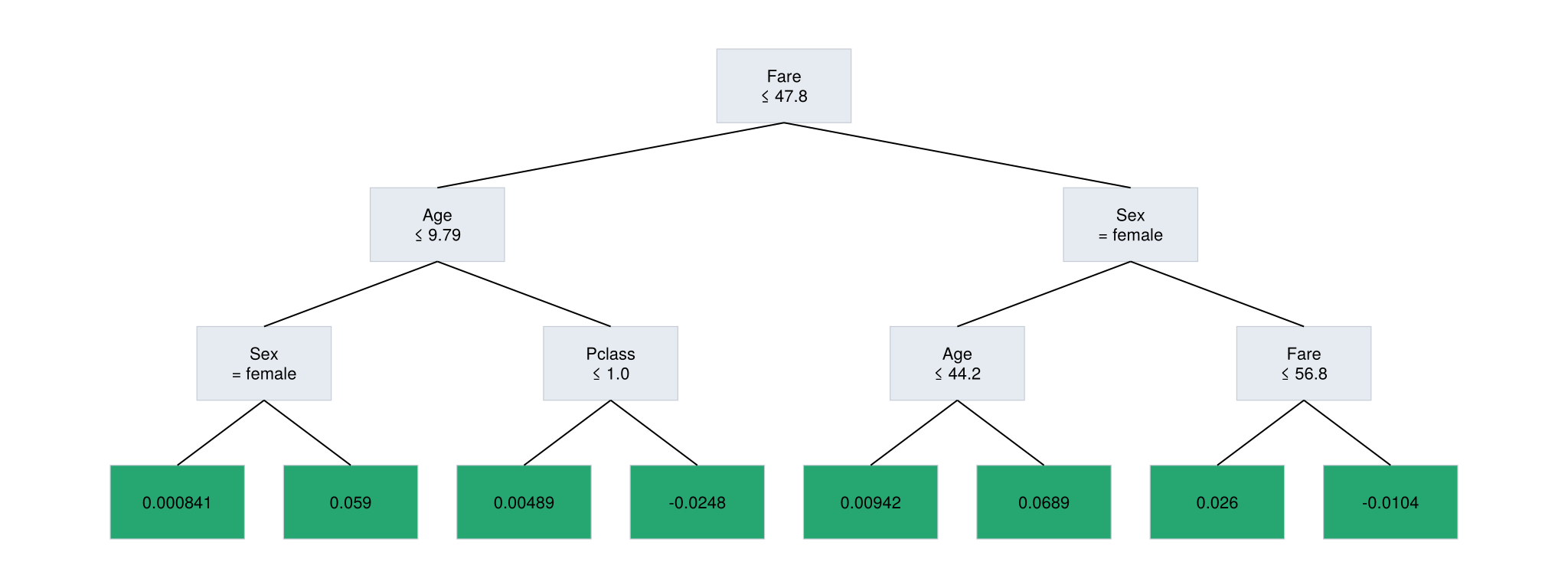
Plot a model's ith tree. Plotting uses a Makie recipe and requires a backend such as CairoMakie or GLMakie:
using CairoMakie
treeplot(m)       # first boosting tree
treeplot(m, 2)
# equivalently, once a backend is loaded:
plot(m)
plot(m, 2)
Save/Load
EvoTrees.save(m, "data/model.bson")
m = EvoTrees.load("data/model.bson");
Contributors


Similar repos





Languages
Julia
100.0%
Boosted trees in Julia
See the codeREADME
EvoTrees
| Documentation | CI Status | DOI |
|---|---|---|
| | | |
A Julia implementation of boosted trees with CPU and GPU support. Efficient histogram based algorithms with support for multiple loss functions (notably multi-target objectives such as max likelihood methods).
Installation
Latest:
julia> Pkg.add(url="https://github.com/Evovest/EvoTrees.jl")
From General Registry:
julia> Pkg.add("EvoTrees")
Performance
Data consists of randomly generated Matrix{Float64}. Training is performed on 200 iterations.
Code to reproduce is available in benchmarks/regressor.jl.
- Run Environment:
- CPU: 12 threads on AMD Ryzen 5900X
- GPU: NVIDIA RTX A4000
- Julia: v1.10.8
- Package versions:
- EvoTrees: v0.18.3
- XGBoost: v3.1.2 (Using the
histalgorithm)
CPU:
| nobs | nfeats | max_depth | train_evo | infer_evo | train_xgb | infer_xgb |
|---|---|---|---|---|---|---|
| 100k | 10 | 6 | 0.36 | 0.06 | 0.21 | 0.03 |
| 100k | 10 | 11 | 1.28 | 0.08 | 0.63 | 0.06 |
| 100k | 100 | 6 | 0.79 | 0.08 | 0.79 | 0.03 |
| 100k | 100 | 11 | 4.91 | 0.12 | 3.67 | 0.07 |
| 1M | 10 | 6 | 2.49 | 0.31 | 1.60 | 0.24 |
| 1M | 10 | 11 | 5.07 | 0.63 | 3.16 | 0.58 |
| 1M | 100 | 6 | 5.82 | 0.69 | 5.53 | 0.26 |
| 1M | 100 | 11 | 18.78 | 1.19 | 13.40 | 0.57 |
| 10M | 10 | 6 | 26.45 | 3.34 | 30.99 | 1.76 |
| 10M | 10 | 11 | 51.88 | 6.27 | 55.20 | 5.57 |
| 10M | 100 | 6 | 85.05 | 6.44 | 65.90 | 2.56 |
| 10M | 100 | 11 | 192.58 | 12.18 | 111.69 | 6.02 |
GPU:
| nobs | nfeats | max_depth | train_evo | infer_evo | train_xgb | infer_xgb |
|---|---|---|---|---|---|---|
| 100k | 10 | 6 | 0.66 | 0.01 | 0.24 | 0.00 |
| 100k | 10 | 11 | 1.43 | 0.01 | 1.12 | 0.01 |
| 100k | 100 | 6 | 0.93 | 0.03 | 0.47 | 0.03 |
| 100k | 100 | 11 | 2.17 | 0.03 | 2.92 | 0.06 |
| 1M | 10 | 6 | 1.37 | 0.05 | 0.58 | 0.03 |
| 1M | 10 | 11 | 2.45 | 0.05 | 2.14 | 0.04 |
| 1M | 100 | 6 | 2.77 | 0.30 | 2.30 | 0.28 |
| 1M | 100 | 11 | 5.07 | 0.32 | 6.80 | 0.58 |
| 10M | 10 | 6 | 7.53 | 0.44 | 3.83 | 0.18 |
| 10M | 10 | 11 | 12.60 | 0.53 | 8.66 | 0.31 |
| 10M | 100 | 6 | 21.93 | 3.33 | 21.42 | 2.88 |
| 10M | 100 | 11 | 37.25 | 3.57 | 41.98 | 5.91 |
MLJ Integration
See official project page for more info.
Quick start with internal API
A model configuration must first be defined, using one of the model constructor:
EvoTreeRegressorEvoTreeClassifierEvoTreeCountEvoTreeMLE
Model training is performed using fit.
It supports additional keyword arguments to track evaluation metric and perform early stopping.
Look at the docs for more details on available hyper-parameters for each of the above constructors and other options training options.
Matrix features input
using EvoTrees
using EvoTrees: fit

config = EvoTreeRegressor(
    loss=:mse,
    nrounds=100,
    max_depth=6,
    nbins=32,
    eta=0.1)

x_train, y_train = rand(1_000, 10), rand(1_000)
m = fit(config; x_train, y_train)
preds = m(x_train)
DataFrames input
When using a DataFrames as input, features with elements types Real (incl. Bool) and Categorical are automatically recognized as input features. Alternatively, fnames kwarg can be used to specify the variables to be used as features.
Categorical features are treated accordingly by the algorithm: ordered variables are treated as numerical features, using ≤ split rule, while unordered variables are using ==. Support is currently limited to a maximum of 255 levels. Bool variables are treated as unordered, 2-levels categorical variables.
dtrain = DataFrame(x_train, :auto)
dtrain.y .= y_train
m = fit(config, dtrain; target_name="y");
m = fit(config, dtrain; target_name="y", fnames=["x1", "x3"]);
Shap
EvoTrees includes a Julia implementation of Linear TreeShap by Yu et al. (2022). It computes exact Shapley values for decision trees in O(LD) time.
shap_effects = EvoTrees.shap(m, dtrain)
Reference
Peng Yu, Chao Xu, Albert Bifet, Jesse Read Linear Tree Shap (2022). In Proceedings of 36th Conference on Neural Information Processing Systems.
Feature importance
Returns the normalized gain by feature.
features_gain = EvoTrees.importance(m)
Plot
Plot a model's ith tree. Plotting uses a Makie recipe and requires a backend such as CairoMakie or GLMakie:
using CairoMakie
treeplot(m)       # first boosting tree
treeplot(m, 2)
# equivalently, once a backend is loaded:
plot(m)
plot(m, 2)
Save/Load
EvoTrees.save(m, "data/model.bson")
m = EvoTrees.load("data/model.bson");
Similar repos
Contributors
Languages
Julia
100.0%